Patrick Lencioni: 5 Dysfunctions of a Team, How to Turn Conflict into a Leadership Advantage | Leadership | E394
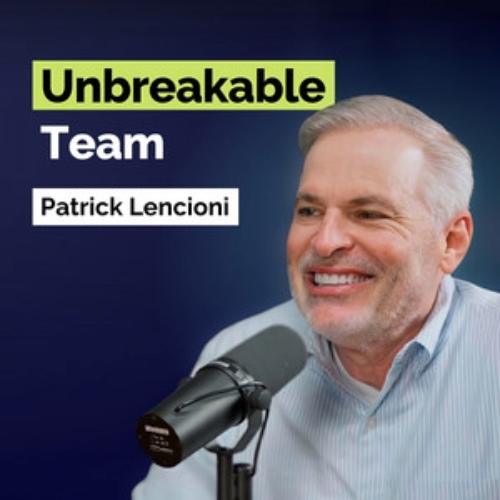
With over 25 years of experience working with leadership teams, Patrick Lencioni has seen successful companies crumble; not because of strategy, but due to poor organizational health. Behind the success were team members who were afraid to open up, make mistakes, or disagree. This insight led Patrick to dedicate his career to creating frameworks that help entrepreneurs and leaders build healthy teams. In this episode, Patrick breaks down the five dysfunctions of a team and shows how embracing healthy conflict can foster trust, boost productivity, and improve decision-making.
In this episode, Hala and Patrick will discuss:
(00:00) Introduction(03:52) What Is Organizational Health?(09:24) Healthy vs. Unhealthy Team Culture(17:20) The Five Dysfunctions of a Team(23:57) The Power of Peer Accountability at the Workplace(26:50) Diagnosing Dysfunctions with Real Scenarios(41:41) How to Run Effective Team Meetings(54:55) How Working Genius Improves Productivity(01:06:51) The Truth About Entrepreneurship and Success
Patrick Lencioni is a founder of The Table Group and a pioneer of the organizational health movement. He is the author of 13 books, which have sold over 8 million copies and been translated into more than 30 languages. Patrick has spent over 25 years helping organizations and leaders improve their team dynamics, decision-making, and productivity.
Sponsored By:
Huel – Get over $50 in savings with the Discovery Bundle from Huel. Use my exclusive code YAP15 for 15% off at huel.com/yap15.
Indeed – Get a $75 sponsored job credit to boost your job’s visibility at Indeed.com/profiting
Shopify – Start your $1/month trial at Shopify.com/profiting.
Quo – Run your business communications the smart way. Try Quo for free, plus get 20% off your first 6 months when you go to quo.com/profiting
Experian – Manage and cancel your unwanted subscriptions and reduce your bills. Get started now with the Experian App and let your Big Financial Friend do the work for you. See experian.com for details.
Intuit – Start paying bills the smart way, not the hard way. Learn more at QuickBooks.com/billpay
AT&T Business – Power your small business with reliable connectivity from AT&T. Switch today at business.att.com.
Fabric – Protect your family with term life insurance from Fabric by Gerber Life. Apply today in just minutes at meetfabric.com/profiting
ZocDoc – Stop putting off those doctors’ appointments. Find and instantly book a doctor you love today at Zocdoc.com/PROFITING
Blinkist – Turn the world’s best nonfiction books into quick 15-minute reads or listens. Grab your free trial plus an exclusive 30% discount at blinkist.com/profiting
Resources Mentioned:
Patrick’s Book, The Five Dysfunctions of a Team: bit.ly/-TFDOAT
Patrick’s Book, Death by Meeting: bit.ly/PL-DBM
Patrick’s Book, The 6 Types of Working Genius: bit.ly/T6TOWG
Working Genius Assessment: workinggenius.com/profiting
Patrick’s Instagram: instagram.com/patricklencioniofficial/
YAP E305 with Patrick Lencioni: youngandprofiting.co/PL-E305
YAP E306 with Patrick Lencioni: youngandprofiting.co/PL-E306
Active Deals – youngandprofiting.com/deals
Key YAP Links
Reviews – ratethispodcast.com/yap
YouTube – youtube.com/c/YoungandProfiting
Newsletter – youngandprofiting.co/newsletter
LinkedIn – linkedin.com/in/htaha/
Instagram – instagram.com/yapwithhala/
Social + Podcast Services: yapmedia.com
Transcripts – youngandprofiting.com/episodes-new
Entrepreneurship, Entrepreneurship Podcast, Business, Business Podcast, Self Improvement, Self-Improvement, Personal Development, Starting a Business, Strategy, Investing, Sales, Selling, Psychology, Productivity, Entrepreneurs, AI, Artificial Intelligence, Technology, Marketing, Negotiation, Money, Finance, Side Hustle, Mental Health, Career, Leadership, Mindset, Health, Growth Mindset, ChatGPT, AI Marketing, Prompt, AI in Action, AI in Business, Generative AI, AI for Entrepreneurs, AI Podcast
Patrick Lencioni: [00:00:00] A vibrant organization is one that's healthy. I can't tell you how many really brilliant groups of people failed because they were smart and they knew their business, but they weren't healthy.
Hala Taha: Patrick Lencioni, a bestselling author and founder of the Table Group, the pioneer of the organizational health movement.
He spent his career helping leaders build healthy, high performing teams.
Patrick Lencioni: The people that run the organization have to be behaviorally aligned and cohesive, and you have to put a little bit of structure in place just a little. That's what a healthy organization is.
Hala Taha: What do you actually do when you go into these companies and try to determine whether they have an unhealthy or a healthy culture?
Patrick Lencioni: When you go into an organization and they're talking about, well, marketing doesn't do this, or sales doesn't do this, or engineering can't do this, you're like, oh, that's a problem.
Hala Taha: One of the things that I wanted to dive deep on today was the five dysfunctions of a team.
Patrick Lencioni: Okay. The five dysfunctions are very straightforward.
At the base of the triangle is trust. Trust leads to conflict, which leads to commitment, which leads to [00:01:00] accountability, which leads to the collective results of the team. If people don't trust each other, the other four dysfunctions are not gonna be overcome.
Hala Taha: So when it comes to trust, what are some things that leaders do that really sabotage trust where they don't realize that they're doing it?
Patrick Lencioni: The biggest one is that
Hala Taha: what's up young and profiting family? Here's something most leaders don't realize. When businesses fail, it's not always because of strategy. More often it comes down to one thing, an unhealthy team. As a founder of a leading team of 60, I'm fired up for today's conversation with Patrick Lencioni.
This is an extra special episode because we recorded it live and in person in Nashville. So if you want the full. Human connection and experience. You can actually watch this episode on YouTube or Spotify video. Patrick is a bestselling business author and one of the sharpest minds on organizational health.
Today we're getting into why smart teams still fall apart, what healthy team leadership looks like and how to spot dysfunction before it quietly destroys our culture. [00:02:00] Longtime listeners, you already know Patrick, and we loved his last episode so much that we're replaying it this Friday, so stay tuned for that.
And if you're new here and you're all about listening, learning, and profiting, hit that follow button so you never miss what's coming next. Pat, I am so excited for this conversation. First of all, I'm so excited that we finally get to meet in person, in person.
Patrick Lencioni: I know
Hala Taha: we've done like hours, literally hours of content together online.
I interviewed you about two years ago, and that's when I first discovered your work in working Genius. I did a webinar with you. What was that, three weeks ago?
Patrick Lencioni: Yeah, yeah, yeah. And we keep hearing from people that have seen it
and
Hala Taha: oh my God, I'm getting such good feedback from it. Oh,
Patrick Lencioni: that's
Hala Taha: great. That was probably one of the most fun web, probably, definitely the most fun webinar I ever did.
Patrick Lencioni: That's wonderful.
Hala Taha: It was just so cool to have a co-host and And you did so great.
Patrick Lencioni: And for us too. I mean, we were all saying like, man, we love that. You know our stuff so well.
Hala Taha: Yeah.
Patrick Lencioni: And when you talk to somebody who's passionate and knowledgeable, it just makes it fun and interesting.
Hala Taha: Now, something that's interesting from my listeners is [00:03:00] I am part of a lot of entrepreneurship groups.
Patrick Lencioni: Yep.
Hala Taha: And when I told them I was doing this webinar with Patrick Lencioni. Everyone was like, oh my God, I can't believe you're doing, you're like a God to other entrepreneurs. Like, like you really are. People just love your stuff. Everybody that I talk to that's an entrepreneur, like my favorite entrepreneurs that I'm friends with, that I know are so good, they all have read your books and like, they treat it like it's a Bible and you should just be so proud of everything that you've put out in the world, uh, for entrepreneurs.
Patrick Lencioni: Well, that's very kind. And as a lover of God, I know I'm not him. I know you're not God, but I know you didn't mean that. But, um, it's really wonderful to know that so many people are using our stuff and I meet people that I've never met before who go, I've been using your stuff to run my business for 15 years.
And it's like, thank you God, that I get to, to serve people and help people and, and doing what I love. Yeah. So it's a, it's a blast.
Hala Taha: And speaking of what you love, how would you describe the problem that you actually try to solve? Like, like what is your mission?
Patrick Lencioni: Oh, I [00:04:00] love that question. So it started, and for the first 24 years of my business, it was simply this.
I was a kid and I saw that my dad was frustrated at work and I didn't like that 'cause I loved my dad and I learned that there was something called management and business. And when I got outta college and had my first experience, I, I decided, oh my gosh, there's a lot of dysfunction in the bus in the workplace.
And I wanted to make work fulfilling and dignifying. And I knew that I needed to help companies be successful, but so that they could combine success with the dignity of their employees. Hmm. And so what I was really trying to do is make work a good experience for people to make their lives better. And I didn't want it to be.
To, to cause them to lose dignity. So that was really what we were setting out to do. But since I started my career at Bain, I knew that if I couldn't help CEOs make their companies more successful, they wouldn't actually want to invest in making it healthier too.
Hala Taha: So let's stick on that word [00:05:00] health. Can you define organizational health in your own words?
Patrick Lencioni: Yeah. You know, we struggled for years holla on trying to figure out what the right word is. 'cause it's wholeness, it's it's soundness, it's, it's making it functional. And we were like, we don't want it to sound like healthcare, but we really said it really is a, a vibrant organization is one that's healthy and that means it makes sense.
And it really comes down to four things. The first one is the people that run the organization have to be behaviorally aligned and cohesive. They have to treat each other well. Yep. And that comes, you know, they have to have trust and good conflict and hold each other accountable and commit to things and, and get results.
But it they, to do that, they had to be intellectually aligned too. They had to. They had to be like, yeah, this is why we do this. This is what success looks like. This is how we're gonna get there, and that's what we spent most of our life doing at the table Group is helping companies get behaviorally and intellectually strategically aligned.
But beyond [00:06:00] those first two things, then they have to communicate the heck outta that. They have to just talk about it all the time, repeat themselves. We always say CEOs are CROs chief reminding officers. Too many of them don't like to do that. And finally, you have to put a little bit of structure in place, just a little to reinforce all that.
That's what a healthy organization is. Now, most organizations, the vast majority of healthy organizations are really successful because they figure out how to get smarter because they're healthy. I used to live in the California and work with a lot of startups. I can't tell you how many really brilliant groups of people failed.
Because they were smart and they knew their business, but they weren't healthy.
Hala Taha: Yeah.
Patrick Lencioni: There was infighting, politics, misalignment, and it was so weird 'cause I thought all these smart people are failing and some companies that don't seem all that smart were succeeding because they were just so much healthier and aligned.
Hala Taha: Yeah. So when [00:07:00] people prioritize strategy and knowledge over organizational health, would that never win? Even if you have the smartest people, the best strategy organizational health comes first in your mind?
Patrick Lencioni: Yeah, it can. You can succeed for one cycle.
Hala Taha: Okay.
Patrick Lencioni: Especially if it's a business that lives on like pure innovation.
So maybe you come out with a product and for a year or or two you can get through it, but ultimately the dysfunction starts to invade. And I remember, I was just thinking about this the other day. I think it was Peter Drucker who said, culture eats strategy for breakfast. I think it was him who
Hala Taha: said that.
Yeah, I, I remember that one.
Patrick Lencioni: And it is so true now. Now the problem is CEOs adhere that, then they go to work with a consultant who's super touchy feely. And I'm not that, I'm so glad that I started my career at Bain, which was all about analysis and strategy because I said, okay, that's important. And if you can combine a healthy culture with that, any CEO will buy into it.
But if you come in and say, let's get naked and hold [00:08:00] hands and sing and fall each other out, catch each other, falling out of a chair, that's, that's just dumb.
Hala Taha: Yeah. So what do you actually do when you go into these companies and try to determine whether they have an unhealthy or a healthy culture?
Patrick Lencioni: You know, it's so funny 'cause everybody wants to come up with an assessment or a survey and what, what, what I like to do is if I can observe the team in a meeting,
Hala Taha: that's all you need.
Patrick Lencioni: I can see the behaviors. And, and in other words, do they debate with passion? Do they ask tough questions? Do they have hard conversations around the business? And is there like some level of what we call healthy conflict, which an outsider might think, whoa, this is kind of an uncomfortable conversation, but they're not uncomfortable, they're just going after it.
So we can tell like that. The other thing you can do is you can talk to people in the organization at every level and just find out like, do you come to work and, and have a sense of where you belong and what you're all trying to do, and are you aligned or do you ever compete with people in the organization?
Healthy organizations don't [00:09:00] have people competing internally. They're, they're focused externally on their competition and on serving their customers. And when you go into an organization and they're talking about, well, marketing doesn't do this, or sales doesn't do this, or engineering can't do this, you're like, oh, that's a problem.
And honestly, if I observe an executive staff meeting. For 45 minutes or an hour, I usually can see the signs that that's happening.
Hala Taha: So what does healthy conflict actually look like? So not just the conflict itself, but over time, like how do people in business handle conflict in a way that's healthy?
Patrick Lencioni: It's a great question because, and, and the, the, the key is this, it's always a little uncomfortable.
I've been married for 33 years, and if tonight I go home and my wife and I have a discussion, an an argument, a debate, a disagreement around something important, which is what we do in our companies, it will be a little uncomfortable because there's that moment where you're like, how come you don't understand this and we have to do this, and there will be a little bit of tension and [00:10:00] discomfort, and that's a sign that it's real.
Mm. Healthy conflict though, you know, when you're engaging in it that it's not the end of the relationship. Hmm. You're not worried that like this is, this is it. You're just worried that like, this is gonna be uncomfortable, but you know, we've been through this before, this is how the sausage gets made. And it's by virtue of the fact that we're, we're willing to do this, that we know we're gonna come to the right answer.
And afterward we'll be really glad we did. But while we're going through it, it's not fun.
Hala Taha: Yeah.
Patrick Lencioni: But running a company is not supposed to be fun. It's supposed to be real marriage is is wonderful, but there's a lot of real moments that are kind of uncomfortable
Hala Taha: and, and once the decision is made, even if it wasn't the decision that you wanted, it's all about committing to that decision.
Correct?
Patrick Lencioni: Yes. And if you don't have that conflict at the end of the conversation, you don't really commit. I've seen teams do this. It's like they don't want to have conflict. So the leader goes, okay, we're going with plan A and I don't, I know plan B and plan C or possibilities, but we don't [00:11:00] need to talk about them.
I've chosen Plan A. People don't weigh in because they wanna avoid having disagreement. Nobody really buys in. Hmm. And they go back to their team and here's how you know it too. And their team goes, how was the meeting? They go, well, we're doing plan A. What do you think I'd have done? Plan B. And now people aren't really in, but if everybody debates at that meeting, the leader can then go, we're going with plan A or plan B because of what you said.
People will go back to their office and go, we're doing plan B. And we argued about it and they heard me. It wasn't what I wanted, but I think it's right. And we're in, so conflict is actually necessary to get to commitment. And when we skip conflict, people don't really buy in. They, they smile and nod and, and it's called artificial harmony.
And then they go back and they, they don't really agree.
Hala Taha: I, I loved hearing about this term, artificial harmony. I actually just learned about it when I was studying for this interview. Oh, wow. So, so what is artificial harmony? Exactly. How does it show up?
Patrick Lencioni: And, you know, I think it's a bigger [00:12:00] problem in our society today than it's ever been.
And that is when we get together and we think my job is to affirm that person and make them feel good, and to avoid any discomfort here, the problem is, and there's something left to be said, and the organizations that struggle with artificial harmony, the worst are churches. Mm. Because they think we're supposed to get along because we're supposed to be nice all the time.
And so you go to a meeting at a church and people are smiling and nodding, and then they go out in the parking lot and they go, that lady's a ding bat. Or That guy's a, he's a jerk. And it's like, oh, actually you should have said that in a kind way, but in a direct way and worked through it. So it's when we trade off in the moment, disagreement and discomfort.
For long-term disagreement. And what happens when we go with artificial harmony, we end up, it's so interesting when we don't have conflict around ideas, it ferments over time into conflict around people. Hmm. So, so it's so funny. It's like [00:13:00] people in a, on a team that care about each other actually argue in the meeting and then afterward they feel like it's been said.
People that can't argue in the meeting, it lingers and eventually people find out, what are you saying about me in the parking lot? And now they've really hurt one another. Hmm. So what we say is, don't kick that can down the street, have that conversation there, continue to build on that trust and, and then you get so much more used to it, the next difficult conversation you lean into.
And it leads to really good things.
Hala Taha: Why do you think it's a worst problem now? Do you think it's just younger generations not knowing how to have conflict or, I
Patrick Lencioni: think social media, I think. I think because, and so I have four kids all between 27 and 19 and it's, I can't, it's so funny over the years I'm like, why don't you just pick up the phone and call him?
And they're like, oh, no, I don't need to do that. I'm like, do you think the tone of his voice, like, 'cause they're they're buddies. I was like, or, or even like in re I have four boys. I'm like, well, maybe you should call her and ask her if she wants it. No, no, no. We [00:14:00] just text. If I put a period at the end of the sentence, she'll know I'm not happy.
I'm like, I don't get it. And I think that society has become more separated and COVID certainly accelerated some of that. And I think that human beings desire depth of interaction. It's like you and I talked about, even though we had these great conversations on Zoom, there's something about finally being together in three dimensions.
That allows you to take to that next level.
Hala Taha: Yeah.
Patrick Lencioni: And so I just think that it's, there's too many other options and society has kind of made it okay. And there's so many, I was talking to a guy yesterday whose entire company is virtual, and I know he was kind of sad about that. Now. Some of that's necessary and, and man, the things we can do on Zoom these days is great, but there's something about getting to see people on a regular basis.
It's wonderful. Yeah, and, and so I think it's just the nature of society.
Hala Taha: Young and profits raise your hand if you've ever Googled one tiny symptom and then five minutes later you're convinced [00:15:00] that you're dying. I know I have been there done that way too many times, but instead of guessing and spiraling, I use Zocdoc.
In fact, I've been using DocDoc for like 10 years. I literally don't know how to book doctor's appointments any other way. That's the way that I schedule my doctor's appointments. It's a free app and a website that helps you find and book high quality in-network doctors based on your needs. You can search by symptom or specialty.
Read verified patient reviews and see doctors with available appointments right away. If you're a busy entrepreneur and you need to squeeze in a doctor appointment on a random time, you can find the doctors that have availability. When you have availability. When an in-person or video visit, it's no problem.
With Zocdoc, there are over 150,000 providers across all 50 states and over 200 specialties. Any doctor you could imagine, any visit that you need, Zocdoc will have you covered. And most appointments happen within 24 to 72 hours. So next time you start doom scrolling your symptoms, skip the stress and book a real appointment with a real [00:16:00] doctor on Zocdoc, stop putting off those doctor's appointments and go to zocdoc.com/profiting to find and instantly book a doctor that you love today, zocdoc.com/profiting.
And thanks to Zocdoc for sponsoring this message. What's up young and profits? When I started building Yap Media, I had to figure out everything on my own, branding, operations, finance, marketing. Some days it felt like I had five different jobs and a never ending to-do list. Now, as the founder of an almost eight figure company, I can tell you that running a business can be extremely overwhelming.
What makes the biggest difference is having the right platform from day one and for millions of entrepreneurs, that platform is Shopify. Shopify is the all-in-one commerce platform that helps you build, run, and grow your business. You can design a beautiful online store with ready to use templates. You can use AI tools to write product descriptions and marketing copy.
You can run email campaigns, manage inventory, handle shipping, and returns, and so much more. Everything lives in one [00:17:00] dashboard. That means less chaos and more time. Actually growing your business. Start your business today with the industry's best business partner, Shopify, and start hearing. Sign up for your $1 per month trial today at shopify.com/profiting.
Go to shopify.com/profiting. That's shopify.com/profiting. So one of the things that I wanted to dive deep on today was the five dysfunctions of a team, which I think we've been talking a little bit about. But I'd love for you to just go over each five at a high level and then I'll ask you some follow up questions.
And I wanna do some scenarios where I give you a scenario of a team and then you tell me what's their primary dysfunction, their secondary dysfunction, how fun and and how we can solve it.
Patrick Lencioni: I love this. Okay? The five dysfunctions are very straightforward. At the base of the triangle or pyramid, however you wanna describe it, is trust.
And that is if people don't trust each other, the other four dysfunctions are not gonna be overcome. So the lack of trust needs to be addressed. And when we talk about trust, we're talking about vulnerability based trust. [00:18:00] Like if you and I are going to trust each other, we have to know that the other person's willing to say things like, I don't know the answer.
I think you're smarter than me. Can you tell me how you did that? I think I screwed up. I'm sorry. I was kind of rude yesterday. Like buck naked about, I'm not gonna cover up who I am. We're gonna be really raw. And that is what leads to trust. Some people think trust is just, I've known them for a long time.
And so I can predict their behavior. It's, it's about vulnerability. So you can build trust with somebody in a matter of weeks. If you work on it, you can work with somebody for years and never have trust.
Hala Taha: Hmm.
Patrick Lencioni: So it's vulnerability.
Hala Taha: Okay.
Patrick Lencioni: Um, trust enables conflict.
Hala Taha: Okay.
Patrick Lencioni: Because when I know that you, we trust each other, we're vulnerable.
I can debate with you about something and you know, and I know that if you're right, I'm gonna go, oh wait, I think you're right. Oh, I'm so glad you kept arguing with me about that, and I know you will too. So we don't think that disagreement and conflict is a threat to our relationship. It's actually the pursuit of truth, [00:19:00] which is good for our relationship.
Mm-hmm. Make sense?
Hala Taha: Yeah. To make total sense,
Patrick Lencioni: trust leads to conflict. Without trust, conflict is bad. Mm-hmm. Now I'm just trying to win the argument or maybe even manipulate you.
Hala Taha: Okay.
Patrick Lencioni: Okay. Conflict is what allows us to have commitment, like we talked about before. So you, you argue with one another. At the end of the argument, you either convince somebody or the leader goes, okay, we've, we've had every argument we could have.
I'm gonna break the tie. People will buy into that commitment is necessary to overcome the hardest dysfunction, which is the fourth, which is the unwillingness to hold people accountable. Accountability is key, and the, the thing is, we're just not gonna turn to each other in a meeting and say, Hey, holla, I think you, you're not doing what we agreed to or pat, I, I think you kind of violated something right there, because if, you know, I never really committed to it.
How much confidence are you gonna have to, to remind me that I, I fell short? But if we all committed, then it's like, Hey, we committed together, so what's going on? That is the hardest one in [00:20:00] society. I think. This is human nature. People don't like to say, I think you need to do better. And then the final one seems so obvious, but it's, it's about results.
And the last dysfunction of a team is when people aren't paying attention to the collective results of the team, but rather their own results. And this is natural. I'm, I'm more worried about my department or my career, or my reputation, or my status, or my bonus. Real teamwork means overcoming that dysfunction to focus on my results rather than ours.
So those are the five dysfunctions trust leads to conflict, which leads to commitment, which leads to accountability, which leads to the collective results of the team.
Hala Taha: So well explained. Good, very well explained. So when it comes to trust, what are some things that leaders do that really sabotage trust?
Oh, where they don't realize that it's that they're doing it?
Patrick Lencioni: The biggest one is that they are invulnerable. In other words, they buy into that saying that a leader's job is to always be on. To be confident [00:21:00] and, and I always like to say, there's that old saying, when I was a kid, there was this deodorant commercial that said, don't let him see you sweat.
Hala Taha: Oh yeah.
Patrick Lencioni: And the best leaders are the ones that go check this out, because you go so you know you're sweat. Of course we're all sweaty. And then people go, oh, well if you can acknowledge your flaws or shortcomings, then all of us can, and we can enter in this together. See, the leader has to dive into the pool first.
But many leaders are like, well, if I'm vulnerable, I could lose credibility. They could take advantage of me. And that's why one of the greatest things a leader can do is say, I have the confidence and the faith and trust to go first. I will be vulnerable. Years ago after I wrote my first book, I worked with a very famous CEO first client.
He stood up in front of his entire team and nobody would ever dis disagree with him. And he stood there and I, he did 360 feedback reluctantly, and I administered the tool. And he stood up to [00:22:00] go over the results with his team, and he read out the first flaw he had, and he said, what do you guys think? And they all said, no, I don't think you have that flaw.
And they went around the room and all confirmed and affirmed him and that he didn't have the, and I interrupted and I said, you're the only people who filled out this survey. And he just didn't want to hear it. And they didn't want to tell him. And that was the day he basically said, don't, don't expect me to be vulnerable, and nobody else did.
So they'd go around in meetings and they'd say, I'm doing fine. I'm doing fine. Nobody ever wanted to say, I think I'm, I'm struggling. I need help. Alan Mulally, the CEO of Ford, the guy who turned around Ford years ago said that was the hardest thing is getting people to admit when they had a problem.
'cause they go to meetings and try to project confidence.
Hala Taha: That's so interesting. Something that we do at my company, I think I told you this before, every single team meeting that we have, we open it up with our one word and you're allowed to say, I'm tired, I'm cranky, I'm, but a lot of times it's, I'm happy, I'm excited.
But [00:23:00] sometimes people are like, I'm sick today. Yeah. You know, and then you just kind of know where everyone's coming from. And maybe that's a good thing, I guess for, for vulnerability.
Patrick Lencioni: It, it's absolutely good. And it's not until people start to say the negative ones sometimes that you realize the positive ones are real.
Hala Taha: Mm-hmm.
Patrick Lencioni: If everybody comes and goes, I'm fine. And it's like, you don't look fine. It's like, actually I'm really grumpy today.
Hala Taha: Yeah.
Patrick Lencioni: And then they're like, okay, you're human. That's what we want, is we wanna know that the other person is, is authentically human. You don't trust people that can't be human and, and it's just like the Christmas card thing.
When people send a Christmas card said, our family's perfect. You're just like, I'm not learning a lot from them. And it's when that person finally goes, you know, we struggle with this, don't you? And you're like, oh, thank you for being authentic. Now I can be authentic and we can actually love one another in truth.
Hala Taha: Something else that I found really interesting when studying this, this book, which was really the first time I really went deep on it, was was studying for this interview was this idea of [00:24:00] peer accountability and why that's so important and why accountability can't just come from managers. So talk to us about why it's important for your actual peers to keep you accountable.
Patrick Lencioni: First of all, the leader can't be there all the time. And if the leader is the sole source of accountability, that's, that's a massive burden on them and it doesn't transfer responsibility to the team. And so peer pressure is a very powerful thing and it can be very powerful in a negative way. It, it's kind of like, think about kids, you know when your parents tell you to do something, but your peers are actually telling you to do the wrong thing.
The peers usually win.
Hala Taha: Mm-hmm.
Patrick Lencioni: But if you can create positive peer pressure. If you can agree with your friends, like, and, and you see this in life, my son who just moved here, he's gonna join this group called, that's called F three. And it's a bunch of guys who get together at five 30 in the morning. I'm glad they didn't ask me.
And they get together and they work out for half hour and then they, they get to know each other, they pray, and then they go live their lives. That kind of, um, [00:25:00] not authoritative peer pressure is so powerful in making wanna people do the right thing. So on a team, if, if your teammate, and this is true in sports, when a teammate says, Hey, you need to, you need to go harder during the game, it's, that's even more powerful than the coach telling you.
Hala Taha: Now, how do you improve peer accountability or how do you know it's a problem?
Patrick Lencioni: Um, if you never see it happening? And this is where meetings are so big, because remember I told you before I'd, I'd observe a meeting if I never see people on a leadership team or on any kind of a team. Holding each other saying like, Hey, by the way, I think you're, you guys need to do a better job on that.
It wasn't up to snuff. If that never happens, you know that something isn't going on because everybody is gonna have that sometimes. So the question is, how often do people give each other tough feedback? And, and like I tell people, it's actually a sign of love for a peer to actually tell somebody something hard.
I used to think, when you don't hold people [00:26:00] accountable, it's 'cause you cared about them. It's actually selfishness. It's actually, I don't want you to dislike me and I don't wanna feel uncomfortable. I'd rather let you suffer through poor performance than me have to take a risk to tell you something. And you know what's so funny?
When I, when I say that to teams, they usually get it. I, I say, if you're never pushing each other, you don't love each other. And they're like, well, we do. And I'm like, so do you ever tell somebody they're not doing enough? No. 'cause I care. And I'm like, about who? And they're like, yeah. About me. So, so that's how you know, you know it because you see it.
And I said before, it's, it's uncomfortable, but it's, it's after you go through that with somebody, you know this, you have dear friends that have gone there with you. Mm-hmm. Afterward you're like, you cared more about me than others who wouldn't.
Hala Taha: Yeah.
Patrick Lencioni: So that's what we have to teach in our organizations as well.
Hala Taha: Cool. Um, okay. Let's do scenarios. I have a game called Diagnose the Dysfunction. Ooh.
Patrick Lencioni: And I'll admit if I don't know.
Hala Taha: Yeah. I'm sure you're gonna know everything. Mm-hmm. [00:27:00] Okay. Let's start with the first one.
Patrick Lencioni: Alright.
Hala Taha: A senior leadership team meets weekly meetings are polite and efficient, nobody interrupts.
Disagreements are rare after meetings. Executives privately complain that decisions are unclear and priorities keep changing. Execution is inconsistent, but nobody raises it in the room.
Patrick Lencioni: Classic, common, comfortable, and dangerous.
Hala Taha: Mm.
Patrick Lencioni: Because eventually there's gonna be so much resentment. And that's why what they're doing is they're trading near-term discomfort for long-term discomfort or maybe failure.
And, and it's funny if people go, oh gee, we never get on each other's nerves and nobody ever complains, but we failed. And it's like, then people are really, really upset. So that what, that, what has to happen there? It starts with the leader. Mm-hmm. And what we say is you need to be vulnerable first, and then you need, need to become a minor of conflict.
You have to mine for disagreement. So you have to go to meetings and go. [00:28:00] And when you, when you suspect that two people aren't on the same page, you have to go, you guys don't agree to you. And they're gonna go, oh no, no, we're fine. No, I don't want you to be fine. I wanna know what you really think. So I want you to take different sides of this issue, and I wanna hear from you.
So, if a leader is neither vulnerable, nor is inviting and mining for conflict, that scenario is what they're gonna get. And when, if they say, well, I just, we just don't, nobody ever challenges one another. It's because you're not making it impossible for them not to. I was just with the leader of a big organization and he would just never enter into the difficult conversation.
And I was consulting to them and he wanted me to provoke it, and I would tee up something and somebody would say something and he would not participate. So everybody else sat back too, and I just realized he has some wound that cannot allow him to participate in conflict. Nobody on his team is gonna do it.
Hala Taha: Mm.
Patrick Lencioni: They think that they're gonna get punished for doing it. [00:29:00]
Hala Taha: Yeah. That's so important. What about the fact that so many meetings are virtual now? Do you think cameras need to be on?
Patrick Lencioni: This is very interesting. I remember right after COVID started, we, we had probably our third meeting on Zoom, and I remember sitting there.
I said I have to do this. And one of my great employees who I've worked with for 30 years, I mean, she is like a part of my family. I said to her, I don't think that you're doing this right and I'm a little concerned that you're not stepping up on this. And I, and we talk about it later, it's like, that's when, what's that saying?
This shit just got real because we had the first difficult zoom con. 'cause zoom two dimensions make it so much easier not to go there.
Hala Taha: Yeah.
Patrick Lencioni: Because one, after the meeting's over, you can't go check in with somebody very easily. So we're like, oh, I don't want to go there. So on Zoom you have to be even more intentional about having hard [00:30:00] conversations.
And it's harder.
Hala Taha: Hmm.
Patrick Lencioni: It's just harder 'cause you just wanna get off the call and, and you just don't wanna go somewhere where you're gonna have to do, you have to have a call after the call and after the call. So. What this, you can do it. There's teams that are purely remote that are better than teams that work together.
Yeah. But they have to work harder to make sure they do it.
Hala Taha: Yeah. It sounded like a lot of it was like noticing people's body language. And so cameras do need to be on at the very least if you're gonna be doing virtual meetings.
Patrick Lencioni: You know what else? This is really interesting. I just thought of this. I think we should turn off our own camera so we can't see ourselves.
'cause how often in life have I been looking at my own face?
Hala Taha: Yeah. I do that all the time.
Patrick Lencioni: And we, and we all do. And so we're, we're over critiquing ourselves. We don't get lost in the moment and we're like, oh, look at me, I look like this. And yeah, for every 10% of meetings where it would be good to know that.
There's 90% where you need to be unaware of yourself and just there. Yeah. So I think that sometimes I think phone calls are better than Zoom. [00:31:00]
Hala Taha: Well, yeah. I mean, I have to be honest with my company only really client calls are cameras on. Every other call is cameras off and I find that we're really in the zone in productive and, uh, I don't feel like anyone's like not paying attention or anything, but to your point, I can't see what's really going on.
Patrick Lencioni: Yeah. I think that when there's trust, a phone call can be e messier. You have more fluidity. You can be doing things if you know they care.
Hala Taha: Yeah.
Patrick Lencioni: Sometimes on Zoom, if you don't. They have to be paying more attention. But you really wanna get at the underlying issue is I wanna trust them enough to know that we can be having this conversation with no visuals and it can be great.
Hala Taha: Yeah. Okay. That makes a lot of sense. Yeah. Okay. Scenario two, one. Executive delivers strong individual results, but repeatedly misses commitments to the team and behaves dismissively in meetings. Peers notice, but don't confront him. The leader handles it privately. Resentment quietly builds. Oh,
Patrick Lencioni: and the key to the word is privately.
And, and this is one of the things I've, I've been saying for years that [00:32:00] people al often say, but I, we were taught opposite of this. And I don't think it's true. And that is criticize privately praise publicly. Now, if we're talking about in front of a hundred people on stage at a, at a a meeting, that's different.
But in your teams, we need to have enough trust where we're. Cri, critiquing, criticizing, or correcting publicly and praising, because the problem is, so in that case, when the CEO doesn't say to that person in front of the team, Hey, I think you care more about your numbers than you do about the rest of the team, and it seems like you're you, you're focused on yourself and not about them.
If he or she says that in front of the team, two things happen. One, everybody knows that he or she is holding that team member accountable, so they're like, I'm so glad the leader is doing that. Secondly, everybody else around the team knows that if I do that, I'm gonna get called on it too.
Hala Taha: Yep.
Patrick Lencioni: When they don't do that, everybody assumes, well, the CEO isn't calling them on it, [00:33:00] and they feel like they have the permission to do that too, so.
And then they'll go to the CEO finally and they'll go, why don't you ever tell that person? And they'll go, oh, well, I, I do privately. It's like, well, how are we supposed to interact with that if we don't know? Is it uncomfortable? It is. I love my team. I've had some of them I worked with for years, I still will call them and they'll call me critical in front of people in a meeting.
And that's actually slightly uncomfortable and really productive.
Hala Taha: Now, what is, isn't there some line that you crossed though, where it could get inappropriate reprimanding? Somebody, I, I know that even with my own company, like we're uncomfortable to call somebody out on Slack, in a Slack channel in front of other people.
So talk to me about how we can navigate that.
Patrick Lencioni: Okay. And, and I, I, I used to be like, yeah, what, what is that? Here's the line. If, if they're, you're starting to have doubts about whether they belong on the team, another, if it's a real corrective action, not a correction. Like if I know you belong on the team and you're a good team player and [00:34:00] I call you out on something, I'm not.
Threatening your status on the team, that's great. But if I am actually starting to think that I need, I need to rethink whether they belong here or make, I'm starting to have doubts. This is the interesting part, then you need to handle that part of the conversation offline. But you still need to go to the rest of the team and let them know you're doing it.
'cause you're, you're, you're, you're protecting their dignity. But once again, if, if there's a person on a team and they're a bad performer and nobody thinks you're addressing it, they're gonna start to get frustrated.
Hala Taha: Yeah.
Patrick Lencioni: So you have to kindly go, listen, we love that person on our team. I'm taking them through corrective action.
I really hope they make it and we're gonna do everything we can. I just want you guys to know I'm not ignoring it. Mm-hmm. And some people will say, well, is that like talking out of school? And it's like, no. If we're on a team, we should have that level of trust. But again, calling someone out in front of the team when you're starting to doubt whether they belong there is cruel.
Hala Taha: Yeah.
Patrick Lencioni: And that's hard because sometimes you're like, I don't know. And when in doubt, air on the side of dignity.
Hala Taha: Yeah. Makes sense. Makes, that's really [00:35:00] helpful. Yeah. Uh, during planning meetings, a leadership team argues intensely. People challenge assumptions. Once a decision is made, everybody commits and executes in alignment.
When results dip, they revisit the decision together without blame
Patrick Lencioni: heaven,
Hala Taha: perfect world. Right?
Patrick Lencioni: That, but, and, and, and you know what, but, but it says they're gonna fail sometimes and they revisit the decision without blame, but they front load the di so there's discomfort in there, which means when things don't go well, it's not uncomfortable.
It's like, okay. I've seen companies, teams of all kinds that fail and, and recover faster than their competitors do. That never failed. But they went so slow and they were so tepid because they didn't wanna have arguments better to better, to make a decision as a team, execute, fail correct quickly than to sit around and avoid.
Difficult conversations and be slow.
Hala Taha: Mm-hmm. Now, is there any situation [00:36:00] where, or like something common where people think it's a problem, but really it's one of the five dysfunctions? Like are there any common scenarios where leaders are trying to solve for one thing but it's really one of the dysfunctions?
Patrick Lencioni: I think often people will say that because, because the, they'll look at it some external thing, like, oh, the problem is is customer service. And then you'll talk to people on customer service and they're, and they'll go, you know, we're not sure what we're supposed to do. Or they'll say, we have a problem going to market.
And then the problem is sales and marketing are not aligned. And, and the sale, I've been in a room and they'll say that like, well, we're having a problem with going to market and they're, they're just not working together. And I'm like, so all the go-to market people, do they report to somebody in this room and they'll go, yeah, they all do.
I'm like, yeah. So here's the question. Are you guys completely aligned? 'cause if you are not. You're leaving them to fight bloody unwinnable battles with each other. And oftentimes this is very [00:37:00] common, hala two leaders at the top are agreeing to disagree and they think that's mature. The problem is they're then giving marching orders to their people that are not necessarily aligned and they'll go, it's not that different though.
And a little disagreement up here at the top looks like massive confusion, even one level below. So oftentimes what I find is that a lack of conflict and commitment is what the problem is at the executive level, and it's leading to what looked like operational or executional errors down below. But it's really a behavioral thing at the top more often than not.
And, and yet the leaders will go, and I'll hear this all the time, people in our organization aren't working well together. They need to be better at teamwork. It's almost always either a sin of commission, which means they're doing something wrong or omission. They're allowing things to happen and not doing something about it.
So it's very, very common.
Hala Taha: Now, a lot of people that tune into the show [00:38:00] are entrepreneurs. Yeah. And they're small business owners. They probably have one to 50 employees. Is it easier or harder to solve for these dysfunctions in a small team or a big team?
Patrick Lencioni: It's easier and more imp more important
Hala Taha: in a small team.
Patrick Lencioni: Yeah. Because what big companies, they can take a hit to the ship and still stay, stay alive. A smaller company like one, hiring one bad person or allowing one poor performer on the leadership team. If you have seven people on your team, one of them that's not trustworthy and that the other people get frustrated by, and, and, and when that person is there, it creates problems that is hugely problematic so they can get sunk quicker.
But the beauty is, and I love working with, I, I think small to medium sized business is the lifeblood of our society and economy. The great news is if you, you have an easier opportunity to create a real culture in those organizations and to use that culture to create a competitive advantage. So, so it's, the upside is much higher.
Hala Taha: Mm-hmm. [00:39:00]
Patrick Lencioni: The downside is lower, but I think most people that start businesses like that 'cause they want that risk and that reward working in a really big organization kind of sucks 'cause it's hard to make a difference and you can tolerate a lot of dysfunction over the years and still survive.
Hala Taha: Yeah.
Patrick Lencioni: It would be better if it actually hurt more so you'd fix it.
So, so I think this is easier and more critical in small to medium sized companies.
Hala Taha: Yeah, that totally makes sense. So when you think about these five Dysfunctions, you wrote this book in 2002, so over 20 years ago, still more relevant than ever. Like, you know, reading this, it still feels like
Patrick Lencioni: crazy.
Hala Taha: It, it hasn't really changed, but has it changed?
Do you think about it differently? Like, are, is one dysfunction more important than ever because of the, always on Slack and remote work, global teams? Like, has anything changed the way that you think about the five dysfunctions?
Patrick Lencioni: So we have the five dysfunctions assessment that people take, like a whole team takes it.
They feel it doesn't [00:40:00] take very long and it, it gives them their results in, in the five dysfunctions, are we green? We're really good at that one. Are we yellow? Are we red? We have found over the years that by far the lowest score in general is on accountability. And that's even more than conflict. People willing to say, I think I need more from you, or, I don't think you're doing, I think you could do better.
There's just something about human beings that just don't like to say that.
Hala Taha: Yeah.
Patrick Lencioni: Um, I think that trust and conflict one is the one that's struggled more over time and for the reasons we talked about before. I think younger generations just aren't. I think that, like my kids grew up on social media. They then they went through COVID and even in college there's less, you know, my kids can do their work from their room.
I was in the library. 'cause that's, I had to do that. I had to work in groups and it is a lot easier to go through school and through work on your own.
Hala Taha: Yeah.
Patrick Lencioni: And so they're, they've adjusted to that, which is not [00:41:00] necessarily good. So I think trust and the conflict are the, the ones that are suffering the most.
And you know what's interesting, Hala? Is that because we're not very good at having interpersonal conflict, the conflict we have publicly is really ugly. Mm. You know, I know people that would never sit down with somebody and go, Hey, I, I think I disagree with you politically on this, or, tell me what you're thinking about this.
Let's talk about that. They avoid that, but then they'll go online and just flame someone.
Hala Taha: Yeah. In the comments. You're right.
Patrick Lencioni: And it's like, really? Why don't you go talk to 'em? I'm not gonna talk to me. In fact, I'll smile and nod at them and then I'll know and I'll go and say, it's crazy. It's it really not very
Hala Taha: healthy.
That's saying, it's like basically everybody just took it online, all their conflict. That is so crazy. Okay, let's talk about meetings. So you also wrote a very, very popular book about meetings and, um, death by meeting. Yeah. I've heard about this book so many times. Really? Yeah. I always hear about this book.
Um, and so talk to us about meetings and the like, the. I [00:42:00] am somebody. So one thing that we, we've, you know, is that I'm a galvanizer. Right? Right. I like to galvanize. So I love meetings.
Patrick Lencioni: Right.
Hala Taha: And I love daily meetings. Um, and you
Patrick Lencioni: make 'em interesting too.
Hala Taha: Yeah. And I have a business partner, uh, one of my business partners hates meetings.
And one of the things that he did was like, remove a lot of the meetings and I felt like I was, you know, less effective because I stopped having so many meetings. So talk to us about the right balance of meetings, when we should have meetings when we shouldn't. And also do certain personality types do better in meetings than than others?
Patrick Lencioni: You know, I remember the day I decided to, to not write this book. 'cause I don't ever sit down and go, I'm gonna write a book. I think, oh my gosh, I wanna figure that out. And then I write a book about it and I write a story about it too. 'cause they're all fiction except for one. I remember sitting with a client in a meeting and everybody there was so bored.
And I was too, and they were a client. And this is when I was doing a lot more like, and. In the business with clients. You know, this was, uh, 20, [00:43:00] oh gosh, my kids were, it was 26 years ago because my sons were almost born, my first kids. 'cause I was at this client both when my wife went into the hospital and then was there for a month.
And then when, when she went into labor, both times I was at this client and they said, get to the hospital right now.
Hala Taha: Oh my God.
Patrick Lencioni: So I'm in this meeting with the CEO and his executive team and I'm sitting there just going there. This is a problem. Somebody's gotta, what is the deal with meetings? And I remember that day sitting there thinking, okay, there's two things going on here.
One, it's boring and boredom is not a good answer for anything. And I remember thinking, 'cause I was, I, I took a screenwriting class in college and said a boring movie is a bad movie and boredom. Allows people, their minds to drift and they, they start to evaluate, this is a terrible movie in the first 10 minutes.
And I remember thinking, if you can't get people's attention in the first 10 minutes of a meeting, they're gonna spend the rest of the time checked out. So, so we gotta do a good job of hooking the people into the [00:44:00] meeting. Like, Hey, you guys, this is what matters. But then I thought, but there's another problem.
What is going on here? And I thought, actually they're having four different kinds of meetings in one, and people are never, we're never clear about that. It's like, are we brainstorming or are we just reviewing this? Are we supposed to be voting on it? Are we just supposed to be listening? Should I be taking notes or is this just a check-in?
And the answer is yes. I remember comparing it to family life and being in the bathroom with my wife in the morning, getting ready for, to leave for work and her to take the kids to school. And I thought it would be like, we would be both brushing our teeth and imagine, I call it meeting stew and imagine if my wife and I were like, Hey, who's picking the kids up from school?
Should we have another baby? Where are we going on vacation this year? Hey, who's gonna take the kids to soccer practice tonight? And then we leave. Were we making a decision? Were we, were we, and, and we were doing it on the fly. And, and of course I like to say, and then you come home from work and my wife says, I'm pregnant.
And I'm like, did we decide [00:45:00] that? 'cause I thought we were having chicken for dinner tonight. And, and I would go to meetings at companies and they were doing the same thing. They were combining like administrative discussions with strategic ones. With personnel matters and tactical decisions, and they were doing it interchangeably and nobody's good at that.
We're not good at it at home, we're not good at at work, we're not good at it in social situations. And so everybody would leave the meeting equally frustrated, but for different reasons. The strategic people would go, we didn't give enough time to that strategic thing. The the administrative people go, we didn't decide on when the Christmas party's gonna be.
Somebody else would say, we never really wrestled that issue to the ground. And I thought, oh, you can't do it at once. And, and in death by meeting what I decided was the problem isn't meetings, it's bad meetings, and that we've all come to accept that, oh, they're just bad. Like CEOs go, yeah, I hate 'em too.
It's just corporate pants. We just do it. And I realized, no, no, no, no, no. It is the number one thing you do if you're a leader. The number one [00:46:00] activity is running a meeting, and which it sounds so depressing to leaders, but I remember saying if you were a football player and you told me, oh, I just hate games and practices.
Or you were a surgeon. It's like operating these people. I hate it. Or if you're a teacher, it's like, if it weren't for the classroom, I would love this job. When you're a leader, meetings are where you lead. It's where you make decisions, where you get people hooked in, where you debate, where you orchestrate the company.
And we had an entire thing called business where the people running business hated meetings. And so what I realized was, it's your fault that they're boring and mine as a leader, and it's your fault for confusing them all and trying to do a bunch of things at once. So I came up with this model that just said, you need to have four different meetings and everybody go, not more meetings.
And I'm like, yeah, 10, 10 minutes a day, huddle up and just talk about what everybody's working on. That's all. Don't sit down. Secondly, once a week, go through the tactics. How are we looking this week? What do we need to do to solve near term [00:47:00] problems? And then every few weeks, it's really ad hoc, but take on that big hairy.
Topic that every, and get into a room, get some beers, get some pizza, and argue and clear out your schedule. And then once a quarter go off and step back from the business and reassess when anybody tried it. This, this model, they were like, it's changed everything. Because what people said is, we didn't hate meetings.
We just hated the fact that they were so confusing. And if I go to a 10 minute meeting and know that all we're doing is checking in, I'm going back to work. I don't mind that. Or if I go to a meeting and know we're only gonna talk about tactical things. And if somebody brings up some long-term strategic things, we'll carve out two hours to go over it on Thursday.
I can do that. Everybody loves the strategic meetings. And then the offsite meetings were more just to like take a breath and check in. Separating them out actually reduced the amount of time people spent in meetings. And more importantly, it reduced the stress of feeling people pe people feeling like they didn't know what [00:48:00] was going on.
So that was a long answer to the question, but. Separating them out made them actually fun. Mm-hmm. Or, or, or clear. And then the leader had to make 'em interesting. And I, you're a galvanizer, so you're like, come on, everybody. There are certain people that are like, okay, where's the minutes and we're gonna go through the first thing.
And it's like, no, nobody loves that. So find a person that likes to galvanize and get people rolling and help them. Let them help with the meeting.
Hala Taha: Yeah. I'd love to follow up with you on that. So, in terms of having fun meetings, like what have you seen work the best to make meeting? Like, do you think like every meeting should have a presentation that goes along with it?
No. Or, yeah. It's what? What's some good ways to have a fun meeting?
Patrick Lencioni: I love this. It's gonna come right full circle to something else. You know what makes a good movie? I was a screenwriter and I still do love to write screenplays. Um. The essence of every great movie, story, book, TV show, anything is conflict.
Hmm. And you know, to, to go back to, to, to literature and [00:49:00] class when we were, it's man versus man, or woman versus woman, you know, man versus nature, man versus himself. There's a conflict where, where there's some tension that needs to be resolved. And every one of your meetings, by definition, should involve tension.
Like, like I think we should start our meetings and go, Hey, if we mail it in today, or we're bored, or we're checked out, we're probably gonna make decisions that aren't very good. Our competitors will be really happy, our employees are gonna be really confused and we're gonna feel bad two weeks from now when we have to live with that.
So let's do this. Let's lean in for the next 45 minutes or two hours or 10 minutes and really pay attention because if we don't, something really bad could happen. I. That alone would make people go, okay,
Hala Taha: let's focus.
Patrick Lencioni: Well, we get to the meetings and how do we start the first 10 minutes? Okay. Um, so let's go through the most boring things first.
Um, what's the schedule look like? And people are just like, [00:50:00] oh, no. So get people hooked into the fact that what you're about to do is the most important part of your job. And even the CEO could say, and I'm gonna evaluate this team based on how we perform here. We're not just trying to get time off the clock.
Hala Taha: And who's in charge of preparing for the meetings?
Patrick Lencioni: Okay. That's a great question. The leader is, is responsibility for making sure that happens. So they are accountable for making sure that happens. They can delegate something based on a person's strength, skills, their working genius to say, I want you to be responsible for this and you to be, but they cannot.
You can delegate that, but you can't abdicate it. They can't say, Susan's gonna run our meetings. So Susan, what are we talking about? No, you're the leader. And as far as preparing goes, I'm actually believer in not over preparing, but coming there and, and reviewing what's going on in the first 10 minutes.
Like so where do we stand on our key things that we're [00:51:00] working on? Mm-hmm. And going around, so how do you think we're doing? How do you think we're doing? And then as a result of that first 10 or 15, which is really fun, then going, okay, what are the things that are red? What are the things that are yellow?
What are the things that are green? We should talk about the red ones. So what people do during meetings is they go around and they go, okay, marketing, you have 15 minutes sales, you have 15 minutes. Uh, accounting, you have 15 minutes to operations. Well, maybe we should spend 45 minutes on sales. 'cause that's the big issue.
'cause we're not there to represent our department. We're rep there to run the company.
Hala Taha: Yeah.
Patrick Lencioni: And so when it's too structured, like everybody gets a certain amount of time and there's an agenda. Half the time, people don't know what the agenda should be till they get there and look at what's going on. And somebody goes, did you guys know about that fire that happened yesterday within the business?
And they're like, no, we should probably address that today. So I, I think what we call it's create a real time agenda and that gets people interested 'cause they're actually trying to figure it out together rather than going and putting a piece of paper on the board or a slide up that says, here's the agenda.
Yeah. Which is, [00:52:00] which is at best a guess at what we should talk about.
Hala Taha: Yeah. For us, when we doing, we're doing a weekly standup, we have like a discussion item section. So as we go fast, everybody gets one minute to say what they're working on.
Patrick Lencioni: We call that the lightning round.
Hala Taha: Yeah. And then we just do put a discussion item and focus on perfect.
And,
Patrick Lencioni: and, and it's good to give people a lightning, but it's one minute.
Hala Taha: Yeah. That's called a lightning round. I like that.
Patrick Lencioni: Yeah. And then, and then you look at what's on the lightning or what people said, and everybody goes, oh wait, that thing, she said, we should talk about that. As opposed to, oh no, are we gonna have to spend time talking about the other nine things before we get to that?
And are we gonna have three minutes left to talk about that? So that's great.
Hala Taha: Yeah. Okay. Hey, young and profits, if you've been around for a while, you know that this show has leveled up more in-person content, more mind-blowing guests, better production. And that only happened because of the incredible team we have behind the show when it comes to hiring great talent.
I trust Indeed, sponsored jobs. Every time sponsored jobs, boost your listing to the top of search results and matches you with [00:53:00] candidates based on the exact skills, certifications and location that you need. And you only pay when it works. Spend less time searching and more time actually interviewing candidates who check all of your boxes.
Less stress, less time, more results when you need the right person to cut through the chaos. This is a job for Indeed sponsored jobs and listeners of this show will get a $75 sponsored job credit to help get your job the premium status it deserves at indeed.com/podcast. Just go to indeed.com/podcast right now and support our show by saying you heard about Indeed on this podcast.
indeed.com/podcast. Terms and conditions apply. Need a hiring hero. This is a job for Indeed sponsored jobs. Yap gang. Here's a reality of scaling a business that nobody's talking about. More vendors, more invoices, more payments flying around. And if you don't have a clean system for managing bills, things can get very messy quickly.
That's where Intuit QuickBooks Bill Pay comes in. It helps you manage and pay your business bills [00:54:00] directly inside QuickBooks so everything stays organized in one place. You can see what's due control approvals, and understand how payments affect your cash flow. Vendors can also add their payment details, which saves you from chasing them down for info instead of spending hours managing payments.
Wouldn't you rather stay focused on actually running and building your business? Start paying bills the smart way, not the hard way. Learn more at quickbooks.com/billpay. Again, that's quickbooks.com/billpay terms apply. Money Movement services are provided by Intuit Payments Incorporated, licensed as a money transmitter by the New York State Department of Financial Services.
So let's talk about,
Patrick Lencioni: this is a blast for me. Oh, thank
Hala Taha: you. Yeah,
Patrick Lencioni: it's been years since I talked about it all together.
Hala Taha: Yeah, I wanted to just, I felt like we didn't do an actual interview. On all your different work. Yeah, we always focus on working genius, so I was excited about that, but bringing us to working genius.
So as I was thinking about meetings, one of the things that stuck out to me was how all the [00:55:00] different working genius types. So you've got six different working genius types are good for all different kinds of meetings. Like brainstorming meetings, I
Patrick Lencioni: love it,
Hala Taha: are great for like inventors and wonders, but then the tactical meetings are better for tenacity.
Talk to us about working Genius, the six types and by now you guys should all know about working Genius 'cause I've talked about it so much on the podcast, but in case they don't, what is working genius and how does it tie together with the five dysfunctions of a team and death by meetings?
Patrick Lencioni: Well, if this whole podcasting and, uh, idea Empire doesn't work out for you, you'd be a great consultant, but you got a lot of good stuff going on because you're asking great questions.
So every meeting really does focus on different working geniuses. Like the, the quarterly offsite is a big part of w and i. And a little bit of d my wife's a wi, I know a lot of CEOs and they love to step back and go, let's go. Let's go to that hotel in the, in the mountains, and sit there and go, what should our business be?
I [00:56:00] wonder if there's something else we could do. Oh, where are we in the history of this industry? And there's a place for that. It's really important, but it's not at your weekly tactical. Yeah. And so what we, what we think people should do is when they go to a meeting of any kind, even if they're just having a conversation with somebody sitting down, they should say, Hey, what are the letters that are really at play here?
So I'm an inventor, discerner. You know what that means? Every meeting is a strategic conversation, but it's not appropriate. And so when we have our weekly meeting where we're just going through how things are going, I have to kind of put that on hold and go more to GENT. And when I, and I used to do this all the time, we'd have a meeting about launching a product the next day, and I'd be like, Hey, I have an idea.
And they'd say, no, this isn't an idea. Meeting similarly, you'd have a brainstorming session like, Hey, what, what are we gonna do next year with this new product? And you'd go to have a meeting and the the ET in the room would go, I don't think we have the budget for that. It's like, no, we're not trying to [00:57:00] evaluate the realism of it.
We're actually trying to throw things against the wall. If we don't know what letters are at play, the people that are there don't know. When they should lean into their natural letters, or maybe when they need to go, oh, I need to put it aside and, and, and be a little more intentional about, about being part of this kind of conversation.
Hala Taha: Yeah. As a leader, it's really helped me because I feel like I'm less chaotic and less Yes. Um, more organized and clear to my team.
Patrick Lencioni: Right.
Hala Taha: Because I have a daily sales meeting, like my primary responsibility to this day is sales. So I have a daily sales meeting. How long is it? It's 30 minutes. It's, it's really tactical.
Just that's a tactical, yeah. It's just going through deals, them, like asking me questions and just really tactical. But sometimes I would have ideas. I'm an inventor, so I'd be like, oh, let's do this recruitment campaign, the sales campaign, and the team would just go. Go with it. I'm the CEO, they're not gonna debate me about it.
Patrick Lencioni: Right.
Hala Taha: But now I catch myself and I'm like, okay, I need to have invention [00:58:00] meetings, right? Where we just talk about new ideas with the same team, but it's just a different angle. It's not me going over deals. So that's been really helpful. I feel like my team feels like things are just more clear, more organized, and that it's not just like shooting at the hip all the time
Patrick Lencioni: because we generally, we, we gravitate toward the things we do naturally.
Hala Taha: Yeah.
Patrick Lencioni: And it's great that you're naturally good at that, but you, it's good to hold that back until you're at the right. A right forum for that. Yeah. And, and you know, if that 30 minute meeting goes to 45 because of the deals, you're like, fine.
Hala Taha: Yeah.
Patrick Lencioni: Because we're engaged in the, it matters. It's not like when people go, well, we got out on time, we're efficient.
No, you should be, your meeting should be, as long as they're interesting, passionate, and they're getting things done.
Hala Taha: To be honest, sometimes it just runs as long as we need it. Good. 45 minutes, 50 minutes, whatever. It's good.
Patrick Lencioni: The only one, when, when executive teams get together in the like once a day for, for five or 10 minutes just to go, okay, where is everybody today?
What are you working on? Administrative stuff. That's the only, only one where we go try [00:59:00] not to let that one bleed. 'cause then people are gonna start not wanting to come, but the other ones should be as long as we need to get things done. And you know what? People that, that change the way they do meetings, find going to meetings is actually the most fun thing they do.
Literally they're like, our meetings are actually, I look forward to them now 'cause it's where we solve problems, eliminate obstacles, and get stuff done. It goes from the worst thing to the best thing. But, um, but you gotta know what you're doing. And there's a very big difference between a tactical meeting and a strategic meeting and a long term.
I don't have w as a genius, which is the highest mo the wonder one. So I'm like ready to solve a problem right away. And I need people with wonder to go.
Hala Taha: Me too.
Patrick Lencioni: Hey. Maybe this isn't the right direction at all, but if they say that during my tactical meeting, I'm like, no, no, not right now.
Hala Taha: Yeah.
Patrick Lencioni: So I think it's really good to understand that different meetings correspond to different letters.
That doesn't mean people get to opt out based on their letters. It means they arrive knowing what they're supposed to do.
Hala Taha: Yeah. So working [01:00:00] genius is six different working types. Yep. Everybody has two working geniuses that they're really naturally good at.
Patrick Lencioni: And it, it's, and they're naturally good at it.
'cause it actually gives them joy and energy. Yeah. That's
Hala Taha: the
Patrick Lencioni: thing. It's not like I'm just good at it. It's just like it fires me up to get to do those things. Mm-hmm.
Hala Taha: Yeah. So for example, mine is galvanizing an invention. I can do that all day and never get tired.
Patrick Lencioni: Exactly.
Hala Taha: And just feels like a dream job.
Right. Right. Then there's competencies. Everybody has two competencies,
Patrick Lencioni: which means you, you, it doesn't kill you to do 'em. You can sustain yourself as long as you're not doing 'em all the time. And if your job involves some of that. That's fine.
Hala Taha: Mm-hmm.
Patrick Lencioni: As long as you're getting to do some of the things. And you're genius too.
So competencies, you're in the middle.
Hala Taha: Yeah. So for me, I think it was, um,
Patrick Lencioni: discernment.
Hala Taha: Discernment and tenacity.
Patrick Lencioni: Yes.
Hala Taha: I'm good at tenacity. I, I guess shit done.
Patrick Lencioni: Yes.
Hala Taha: But over time it's not really what I wanna do.
Patrick Lencioni: Exactly. And, and you get it done because, you know, that's, that's how to activate things. But like finishing things just to finish them doesn't [01:01:00] necessarily float your boat.
Hala Taha: Yeah.
Patrick Lencioni: There are people in the world who wake up every day and go, I wanna finish things. Mm-hmm. And I love them because I love them. None of it.
Hala Taha: I need a lot of tenacity on my team.
Patrick Lencioni: Yeah.
Hala Taha: Uh, and then the last two are frustrations.
Patrick Lencioni: These are so important 'cause this is where you. Lose energy and joy and, and, and, and most people aren't good at those things.
And so if they have a job that's calling them to do the two activities that they, they that frustrate them and drain them, that's a recipe for burnout. There are people whose wounds make them really good at the things that they hate because they're afraid to fail. And that's a real bad recipe. 'cause that means they're gonna keep doing it.
People are gonna ask them to do more of it.
Hala Taha: Yep.
Patrick Lencioni: And yet they are gonna get burned out, not because they're working too hard, but they're doing the kind of work that drains and frustrates them.
Hala Taha: Yeah. So burnout is really, when you're have misaligned work, it's not, it's not really about overwork too many hours.
It's really about doing the wrong thing that you're not naturally wired to actually [01:02:00] do. Which is why working genius is so powerful. You
Patrick Lencioni: know what's funny? I'm 60 years old. I can't believe I'm saying that. I mean, I mean, not that I'm saying it out loud. I don't care if I'm, I can't believe I'm 60, but one of the things we talked about, I was like, in the new year.
We tell everybody in our company, spend more time in your area of genius. My capacity for work isn't lower now as long as I'm doing the work that I'm naturally drawn to. Which doesn't mean I don't have to do some of the other stuff, but like as I get older, maybe I get less energy, so I should do the things that feed me.
Hala Taha: Yeah, that's true. When
Patrick Lencioni: I was in my twenties, I had jobs where I was doing things I hated. Yeah. Which is never a good idea, but I could power through
Hala Taha: that. Yeah, that makes sense.
Patrick Lencioni: When you're young, find out the things that feed you. Find out the things that drain you and work as much as you can in the area of where you're, where you're
Hala Taha: Yeah.
Well, I love the Working Genius assessment. I actually made my whole team take it now. It's part of our hiring process.
Patrick Lencioni: That is a
Hala Taha: great idea. So we're actually buying credits for people and saying, take this test before, and Kate was [01:03:00] just, uh, you just met Kate, one of my business partner the, the other day.
She was like, oh, he's, she's, it's an et he's an et. And I'm like, oh, that's perfect for the rule. Right. So it's so helpful to know what people are naturally good at when you're looking at hiring.
Patrick Lencioni: Do you know, years ago. A guy came into our office and his team of, of lawyers, wonderful people, and he was the guy who argued the case to the Texas Supreme Court that made it illegal to use assessments and hiring because there was a time where people were like, are they biased?
Are they really this? And so he was that guy. And we did work in Genius with his team. And then we went around and gave people feedback based on, he was like, oh wow, this works, this all the feedback. He was like, this is really mirroring the things that I get from them. And the key to using it for hiring is to know that nobody wants to get hired in a job they're gonna hate.
Hala Taha: Yeah.
Patrick Lencioni: So when you sit down, the first thing is, I hired an assistant eight months ago and I said, I need somebody with discernment. So she's gonna see me and know what I need. I, I can't, I [01:04:00] don't just tell her. And it'd be great if she had tenacity and finished things. It would be great if she had enablement too, which means she's really supportive.
Yeah. She doesn't have that one at all. You know, what I could do is I could hire and say, you're gonna be great at the things I need, but there's one thing I need that you're not good at. I'm not gonna punish you for that. I'm gonna adjust my expectations and that she's doing great and I'm not disappointed because I know what I was getting.
Hala Taha: Yeah. That makes so much sense.
Patrick Lencioni: Whereas before, I would be, why don't you do this? And it's like, I look at a working genius 'cause God didn't make her that way. Mm-hmm. And so to know what a person is, that's a great act of love. You see them for who they are and put them in a position on the bus, give them the seat on the bus where they're gonna be best.
Hala Taha: Yeah.
Patrick Lencioni: So to me this is like an assessment that allows you to avoid them being miserable and you having to reject them for reasons that aren't a flawed, it's just who they are.
Hala Taha: And one of the best things about it is that it's so affordable. Like you made it in a way. I, I remember taking other assessments.[01:05:00]
They're like $250 or, or something. Or at least $60 a seat. Yeah. Working Genius is is like 18. Yeah. 20 bucks, 18 bucks with code profiting if you guys wanna use it, working genius.com/profiting, and you get 20% off, it's less than 20 bucks.
Patrick Lencioni: And we, I, when I did this, I had friends go, pat, you should charge a lot more
Hala Taha: for this.
I mean, it's worse. A lot more than 20 bucks. Love it. Like it really is.
Patrick Lencioni: And I love, and we said, but this is a mission. And remember we go back to my dad and I was like, we, we, one of our, one of our strategic anchors is Mission Over Money. And that is we want somebody to go, I have three kids. We have a student version for high school and college students.
We don't want them to go, oh, how much does this cost? We don't want somebody whose, whose company doesn't have a lot of money to think, oh, we can't afford this. And so we gave off some of the profits. But, but I, it, it ultimately comes around to benefit people. One of the things we're doing is we're creating a movement of people in the world.
Who are using this in their own work?
Hala Taha: Yeah.
Patrick Lencioni: So we've had over 5,000 people [01:06:00] get certified. We do a certification program for people and in two days on a Zoom call, they learn all about it and then they go out and use it in their own practice. So we've decided let's make it affordable and let's empower other people to use it out there.
And that's good for everybody. We will do fine, but more importantly, it's gonna change the world. 'cause when we started, we said we want work to be fulfilling. Anything that prevents people from experiencing that is not good.
Hala Taha: Well, it just makes it a no-brainer.
Patrick Lencioni: Yes.
Hala Taha: Uh, it makes it a no-brainer. Like my whole team's taking it, my charity project that I have that has like 12 people in it, I'm making them take it.
Right. It just makes it a no-brainer to, to use it. Yeah. So I love it.
Patrick Lencioni: We are so glad that more people we've we're, I, I think this year we'll get at least 2 million people to, to have used it in, in just a few years. So
Hala Taha: yeah, it's, it's incredible. So great job working on that.
Patrick Lencioni: Thank you.
Hala Taha: Um, okay, so my last couple questions to you.
What is one truth about entrepreneurship that most people learn far too late?
Patrick Lencioni: Oh, okay. I think I have two answers [01:07:00] to this. Okay. The good one is there's a lot of people that don't do it. 'cause it seems scary. I, I grew up. Not with a family profile of entrepreneurship. My dad had one job, essentially my whole childhood, and it was about, we were relatively poor and so he was, it was like, get benefits, stability matters.
And that was his Myers-Briggs and working genius and all that stuff. And so I never thought I would, should do this when I went out and did my own thing. And, and by the way, people say, how do, how do I do what you do? And it's like, oh, the first thing we did, we enjoyed. If we had just been this little consulting firm regionally working with small companies in our area, we'd have loved that.
So, but, but being in charge of yourself and, and, and having a little bit more responsibility and risk, but actually being in control of that is wonderful. So there's a lot of people who don't become an entrepreneur 'cause they think it's too crazy. And actually there's, it's, to me, it's more peaceful. Hmm.
Than when I worked in a big company, I was dependent on a bunch of people doing things that I didn't even know. And I would go, oh God, help us make [01:08:00] our revenue. I don't even know how to help. So I like being an entrepreneur. So for some people I would, they need to learn that earlier in life. Hmm. The other thing is know that it, there is a certain amount of loneliness that goes in of not having a boss.
Because a lot of people start their own business and they go, oh yeah, where's that person that I'm supposed to go to and say, did I do a good job today? And it's like, oh, that's me. And so there is this sense we get used to, we like having coaches and tutors and mentors and parents and teachers. And then you get to a place where it's you.
And that's why it's good to have consultants and mentors that can help you and relationships because sometimes it you, it's late in life and you go, gosh, I've been carrying this by myself for too long. Mm-hmm. So that's what I would say, know that it can be lonely, do stuff about that, but know the risk of it is not.
As bad as people think it is, because there's something about saying, I can work harder to affect the outcome. Yeah. And I like that. So those would be the two things about entrepreneurship.
Hala Taha: I love it.
Patrick Lencioni: Yeah.
Hala Taha: This is gonna be an awesome question. I think moving [01:09:00] forward, um, yeah, yeah, yeah. What does one actionable thing our young and profits can do today to become more profitable to tomorrow?
One actionable thing?
Patrick Lencioni: You know, I just think it's so interesting. I mean, there's this, I can think of many things, but I am surprised at how people that aren't too close to your business will have insights that you can't see. And I know that as a consultant over the years, whenever I worked with CEOs, I was never an expert in their business.
And that was a benefit. And I was willing to ask dumb questions and I'd go in and go, have you guys thought about this? And, and probably if I did it 10 times, four of 'em were dumb because I didn't know their business. Four of 'em were like, yeah, we thought about that. And two of them, they were like. Wait, they would look at each other and go, how come we didn't think about that?
And the answer was because they're too close to it. So what I would say is look for advice and, and answers and solutions outside of the knowledge [01:10:00] base within your own organization. Go to people that do other things. Tell them enough about your business and say, what would you do? And for, for every 10 answers, there's gonna be two that it's gonna be like, we would've never thought of that had we not asked the baker down the street or the doctor how to run this business.
And four are gonna be dumb. Four are gonna be like, yeah, we thought of that, but look for answers outside of your normal domain.
Hala Taha: Yeah.
Patrick Lencioni: Because there's something about having that naive insight that can really, and and they're usually pretty like fundamental changes.
Hala Taha: Yeah. I think it's really important for entrepreneurs to be in other entrepreneurship groups.
Patrick Lencioni: Yes. And not in the same industry.
Hala Taha: Mm-hmm.
Patrick Lencioni: I've learned so much from people in different businesses.
Hala Taha: Yeah. So interesting. Okay, last one. What is your secret to profiting in life? And this can go beyond financial and business
Patrick Lencioni: for me, and I was going through this today, talking to a counselor. It's sitting in silence with God and knowing that I am loved.[01:11:00]
And that's taken me many years to understand this because sometimes my, my wounds have been superpowers. The things that were hard for me, I thought, oh, look at me. I'm wounded by this. I'm gonna try harder than everybody else. And when in the place I am right now, not because I'm getting older, but because I needed to do it in like the last five years, I've really leaned into thinking I don't have to prove myself all the time.
I used to always think it's never enough. When you start with this place of like, God loves me and he made me to do this, then I don't feel like I'm coming from a place of fear, but a place of joy. So profiting is working from a place of joy and excitement, not from fear and worry.
Hala Taha: Yeah.
Patrick Lencioni: So that would be mine.
Hala Taha: I feel like you talk a lot about wounds lately.
Patrick Lencioni: Yeah.
Hala Taha: Talk to us about what we need to look out for or how wounds show up in business and, and you know, just some of your new thought around wounds.
Patrick Lencioni: So many successful business people, so many of the CEOs I've worked with, so many are [01:12:00] successful. And part of it is because they have this desire to succeed and a fear of failure.
And over time they start to realize, like, I was just talking okay, yesterday, maybe it's never gonna be enough. Am I ever gonna get to that place where it's enough? And they, and athletes are like this and, and stars are, you know, celebrities are like this. What propels them to be the goat is that they're never enough.
They never stop. And, and so what I've tried to help them with is to realize your success is not predicated on being afraid of failing. It's coming to terms with the fact that you want to have peace. And so address those wounds. They're not your superpower. Your superpower is your ability that you, the God-given talents you have.
And you don't need that running away from failure to do that. So I guess what I'm trying to say is a lot of successful people secretly when I talk to them, feel like it's never gonna be enough. And I'm, I'm terrified of failure. Many of them will say, what? Every time I succeed, it's more of a relief that I didn't [01:13:00] fail as opposed to the joy that something worked out.
So I, I just am surprised at how many leaders, and I went through that myself. Are operating from that place that my wounds are my superpower.
Hala Taha: Hmm.
Patrick Lencioni: And you can be successful and have more peace and success when you get over that.
Hala Taha: Yeah. So good. Pat, where can everybody learn more about you and everything that you do?
Where do you wanna point people to?
Patrick Lencioni: Well, I think this podcast is probably the place to start because this was fantastic.
Hala Taha: Thank you.
Patrick Lencioni: Really whole holistic. I love it. But the table group is my company table group.com, and there's, we, we love what we do for our clients and wonderful people there. And then working Genius is its own thing, although it's part of the table group and working genius.com is where you can go buy the assessments and learn more about working genius.
And then I guess there's stuff on YouTube if you just. Google my stuff and their Instagram. And
Hala Taha: you have a podcast too?
Patrick Lencioni: Yes. I have a podcast called At the Table. Mm-hmm. And then we do have a working Genius podcast where we all we do is for Oh
Hala Taha: cool.
Patrick Lencioni: People that love to nerd out around working genius and it's really grown 'cause there's a lot of people that love to talk about [01:14:00] it, so.
Oh amazing. We alternate it once a week on each at the table, which is more about just business in the world of work and then working genius, which is going deep into that.
Hala Taha: Amazing. So we'll stick all those links in the show notes. Pat, it is always such a pleasure. You are so great. Thank you so much. It's
Patrick Lencioni: my pleasure.
Thank you.
Hala Taha: Yeah. Bam. Patrick just handed us the operating system for a team that actually wins. No more excuses for running a dysfunctional team. So here's what I want you to take back to your business starting today. Healthy teams beat smart teams every time. If your people are smiling in meetings, but venting in private, that's artificial harmony and it's quietly killing your execution.
Great leaders make it safe to disagree out loud, debate it out openly and still leave room for the aligned. Next, fix your meetings. Most meetings fail because we mix everything together. Brainstorming, strategy, updates, decision, it becomes meeting soup. Patrick's solution is simple. Run quick daily check-ins for alignment.
Hold weekly tactical meetings to solve immediate problems and schedule separate [01:15:00] strategic sessions for the big complex conversations when everybody knows the purpose of the meeting, people show up focused and decisions actually get made and don't sleep on working. Genius. When you put people in roles that energize them, they don't just perform better, they stop burning out.
That's how you create a team that people actually wanna be a part of. Now, go build something worth being proud of. All right, young and profits, as always, thank you for showing up and investing in yourself by tuning into this conversation today. If this episode hit home, share it with a leader or entrepreneur who needs to hear it.
And if you're loving the show, drop us a five star review on Apple, Spotify, castbox, wherever you listen to the show. It means the world to me. And every single one of you who have taken time to leave a review are the heartbeat of this community. And the reason that we keep going, and by the way, we're bringing so much more in-person content, just like this conversation with Patrick.
So if you're not yet subscribed to YouTube, just search Young and profiting, find us on YouTube. You can also find us on Spotify video. You can also find me hanging out on Instagram at YAP with [01:16:00] Hala or LinkedIn by searching my name, Hala Taha. Until next time, this is your host, Hala Taha, AKA, the podcast princess signing off.
Episode Transcription
Enter your name and email address below and I'll send you periodic updates about the podcast.

