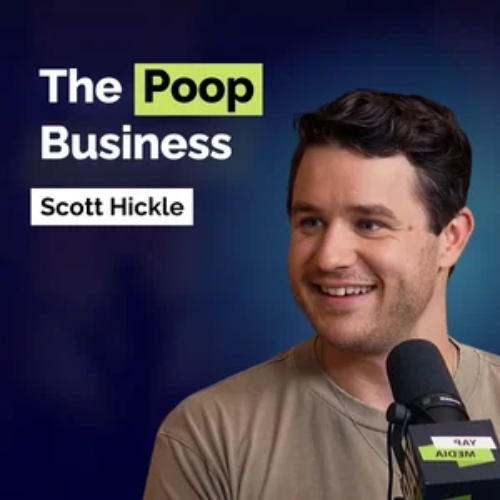
This Startup Plans to Save a Million Lives Using Your Toilet | Entrepreneurship | How We Profit | E7
Scott Hickle built Throne Science around a startup idea most investors thought was too unconventional: a device that transforms your toilet into a health tracker, monitoring your health as effortlessly as a smartwatch. After nearly 100 investor rejections, he and his team kept refining the product, driven by a mission to detect early signs of diseases like colorectal cancer before symptoms appear. That persistence helped them raise $4 million in seed funding. In this episode, Scott shares how entrepreneurs can validate unconventional products, raise capital despite rejection, and build demand in a market consumers don’t yet understand.
In this episode, Hala and Scott will discuss:
(00:00) Introduction
(01:27) How Throne’s Smart Toilet Device Works
(07:56) Throne’s Mission to Detect Cancer Early
(17:22) Launching Throne in a New Product Category
(23:55) Pivoting Away From a Failed Nurse-Staffing Startup
(32:27) How Scott Raised Millions After Pivoting
(42:35) Marketing a Product Customers Don’t Understand Yet
(49:46) Lessons From Scott’s Costliest Business Mistakes
(1:00:03) Throne Science’s SWOT Analysis
(1:08:37) Smart Toilet Costs, Pricing, and Margins
(1:13:14) Building a Mission-Driven Hardware Startup
Scott Hickle is the co-founder and CEO of Throne Science, a health technology company building a device that attaches to a toilet and tracks gut health, hydration, bathroom habits, and prostate health. Before Throne, Scott and his co-founder, Tim, built a nurse-staffing marketplace called Pineway before pivoting into consumer health hardware. Throne’s long-term mission is to develop technology that can help detect early signs of colon cancer, bladder cancer, and other cancers of the lower gastrointestinal and urinary tracts.
Sponsored By:
Indeed – Get a $75 sponsored job credit to boost your job’s visibility at Indeed.com/profiting
Shopify – Start your $1/month trial at Shopify.com/profiting.
Northwest Registered Agent – Get a complete business identity with Northwest. Visit northwestregisteredagent.com/YAPFree and start using free resources to build something amazing.
Mindstone – Master practical AI skills without the complexity with Mindstone’s AI Competency Programme. Head to experience.mindstone.com/yap and get 10% off.
AT&T – Stay connected with reliable, secure internet built for entrepreneurs. Switch to AT&T Business at business.att.com.
Quince – Make your summer wardrobe feel easier. Go to Quince.com/profiting for free shipping on your order and 365-day returns. Now available in Canada, too.
Sponsored By:
Indeed – Get a $75 sponsored job credit to boost your job’s visibility at Indeed.com/profiting
Shopify – Start your $1/month trial at Shopify.com/profiting.
Northwest Registered Agent – Get a complete business identity with Northwest. Visit northwestregisteredagent.com/YAPFree and start using free resources to build something amazing.
Mindstone – Master practical AI skills without the complexity with Mindstone’s AI Competency Programme. Head to experience.mindstone.com/yap and get 10% off.
AT&T – Stay connected with reliable, secure internet built for entrepreneurs. Switch to AT&T Business at business.att.com.
Quince – Make your summer wardrobe feel easier. Go to Quince.com/profiting for free shipping on your order and 365-day returns. Now available in Canada, too.
Resources Mentioned:
Scott’s Company, Throne Science: thronescience.com
Scott’s LinkedIn: linkedin.com/in/scotthickle
Scott’s Instagram: instagram.com/scotthickle/
Scott’s Twitter: x.com/ScottHickle
Active Deals – youngandprofiting.com/deals
Key YAP Links
Reviews – ratethispodcast.com/yap
YouTube – youtube.com/c/YoungandProfiting
Newsletter – youngandprofiting.co/newsletter
LinkedIn – linkedin.com/in/htaha/
Instagram – instagram.com/yapwithhala/
Social + Podcast Services: yapmedia.com
Transcripts – youngandprofiting.com/episodes-new
Entrepreneurship, Entrepreneurship Podcast, Business, Business Podcast, Self Improvement, Self-Improvement, Personal Development, Starting a Business, Strategy, Investing, Sales, Selling, Psychology, Productivity, Entrepreneurs, AI, Artificial Intelligence, Technology, Marketing, Negotiation, Money, Finance, Side Hustle, Startup, Mental Health, Career, Leadership, Mindset, Health, Growth Mindset, Passive Income, Online Business, Solopreneur, Networking
Scott Hickel: [00:00:00] Last year, 42,000 Americans died in car crashes. 50,000 Americans died of colorectal cancer, right? Oh my gosh. Like, all traffic accidents combined.
Hala Taha: Jeez.
Scott Hickel: For our generation, it is the deadliest cancer in Americans under 50. We are putting cameras in toilets to improve people health- Yeah ... and one day save lives, and that is a new concept, and people need to get comfortable with that.
Hala Taha: Scott Hickle is the co-founder and CEO of Throne Science, a company that uses AI-powered toilet technology to track gut health, hydration, bathroom habits, and urinary function. And what makes this story so interesting is that Scott is building a real business around something most people would rather not talk about.
Scott Hickel: This is a crazy fact. There is a 10% risk, one in 10 people will be diagnosed with a cancer of the lower GI or urinary tract at some point in their lives. One in 10, like-
Hala Taha: Yeah ...
Scott Hickel: a lot of our friends.
Hala Taha: You got rejected by 100 investors. Why couldn't they see the vision? Because for me, when I got introduced to Throne, I was like, "Maybe can I invest?"
Because everybody should have this on their toilet. I [00:01:00] don't understand how investors wouldn't have thought that too. It's
Scott Hickel: a great question, and I think at the end of the day, we are consumer health hardware, and-
Hala Taha: What was your worst product decision?
Scott Hickel: The cost of, like, getting this wrong could kill the company because if we have to recall these, it's over.
So when you're building hardware, you go through a, like, three-step process, and that is-
Hala Taha: Scott, welcome to Young and Profiting podcast
Scott Hickel: Paula, thanks for having me.
Hala Taha: It is so exciting to have you here. You're actually one of my friends. You're my boyfriend's best friend, and it's so cool to live in Austin and be around all these amazing entrepreneurs.
And I always tell Mike, like, "Hey, can I invest in Scott's business? Like, I feel like it's gonna blow up." So congratulations on everything you've been building with Thron. You're kind of like a legend in Austin for what you've been building, and just really excited to break it down with everyone for the How We Profit series.
Scott Hickel: That is the warmest intro. Thank you so much. This, I'm... I love Mike, love you, love being in Austin, love what I do. I'm excited to have this chat.
Hala Taha: [00:02:00] Yeah. So Thron Science is the name of your company, and you essentially have, uh, a smart toilet, but it goes, like, so much more beyond just, like, a smart toilet device.
So in your own words, how would you describe Thron?
Scott Hickel: Yeah. So Thron is a wearable for your toilet that tracks your gut health, hydration, bathroom habits, and for men, your prostate health, hands-free, automatically every time you go to the bathroom. It's like Oura for your flora or Whoop for your poop, we joke.
But the whole idea is that there is a untapped world of health information in what's happening in your gut that you just flush away, and we track that so you don't have to think about it and help you tie the dots between what's happening in your diet and your lifestyle and what's showing up in your gut health.
And ultimately, our vision is to build not just a wellness device for understanding gut health, but what will ultimately be the first continuous cancer screener, looking for early signs of colon cancer and bladder cancer every time you go to the bathroom.
Hala Taha: That is amazing. And so when I first heard about this product, I was thinking you were gonna make money off the hardware sales.
But then actually, my boyfriend Mike has a Thron device, and he's talking about how he's, like, [00:03:00] looking at his app, and he's, like, monitoring his progress, and it's actually, like, a subscription model too, right? That's, that's part of the plan?
Scott Hickel: It's ex- it's the Oura model. So we charge for both the hardware and the subscription.
One of the unique things about our product compared to other wearables is, like, your Oura or your Apple Watch, you're gonna be the only person wearing that device, right? It's a one-to-one relationship, whereas with a Thron, it's a one-to-many relationship- Mm-hmm ... and a many-to-one relationship, 'cause you can have up to six members in a home using the same Thron.
Hala Taha: Oh.
Scott Hickel: Or you can use multiple Throns all to one account- Yeah, 'cause- ... and it syncs up seamlessly ... s-
Hala Taha: so everybody has, like, three, four bathrooms when they have a house.
Scott Hickel: Exactly. So, like, we have three bathrooms at the office, and I have two at home, and they all have Throns, and it all goes to my account, whichever one I'm using.
Hala Taha: And so how does Thron work exactly? Uh, from my understanding, it's a camera and a microphone.
Scott Hickel: Yeah. So can I take it out-
Hala Taha: Yeah ... and walk through it? Okay.
Scott Hickel: And so basically, it's a little device that clips onto the side of your toilet. Okay. So, you know, if the water's down here, and this is a proximity sensor that determines when someone is standing or sitting on the toilet, [00:04:00] and then it uses your phone's Bluetooth to know this is Scott versus Hala.
Hala Taha: Mm.
Scott Hickel: And then once it identifies who's there, it turns on. And so this camera and microphone's pointing down into this toilet bowl- Okay ... so it records everything happening inside the toilet. You leave, it turns itself off, and then you walk away, and you get a push notification a few minutes later with basically a report card that tells you, "Here's how hydrated you were- Mm
here's what your gut health looked like." And most importantly, it allows you to see the trends over time because your gut is super responsive to changes in, like, diet and lifestyle. For me, it's stress.
Hala Taha: Yeah.
Scott Hickel: It's, like, frictionless. You just go to the bathroom with your phone already, right?
Hala Taha: Yeah, most of us.
Scott Hickel: And most of us most of the time. And so the whole idea is that that is how we identify you, so it stays off for guests.
Hala Taha: Mm.
Scott Hickel: Uh, if you have members of your home that don't want it s- on, it just stays off for them. So it's, like, really an elegant solution to tracking gut health for people who want to understand their digestive health better or their hydration better for any number of reasons.
Hala Taha: Yeah, and I know a lot of these, like, microbiome tests are really popular now. [00:05:00] You go and you send in your stool, or you send in your saliva, and you get all this information. But this actually allows you to track a really important part of your health on a daily basis, right?
Scott Hickel: That's exactly right. So the whole idea is it's hands-free automatic every time you go, instead of a point-in-time test.
So, like, I like to think of Thron as we are to a microbiome test what, like, your wearable device is to, like, a blood draw or, like- Mm ... from Function or, you know, any of the other big blood draw companies, in the sense that, like, with your Whoop or your Oura or your Apple Watch, you are getting, you know, 15 to 20 biomarkers every single day.
Same with Thron. And then when you wanna dive deeper, you can go get a microbiome test or a blood test- Mm-hmm ... that'll d- get you 120 biomarkers, but, like, that's a one-time point-in-time test, and you have to pay for the next one a year later.
Hala Taha: Yeah, so what can Thron measure today, and what do you hope it measures, like, in the near future?
Scott Hickel: That's great question. So four categories today. Gut health. So like, when you think about it, take a step back. Mm-hmm. What does gut health mean? It's patterns, right? If you are [00:06:00] having regular healthy bowel movements, that's good gut health.
Hala Taha: Yep.
Scott Hickel: Anything outside of that, you know, too loose, too firm, is not good, you know?
Constipated or diarrhetic. And those are defined by patterns. Like, you don't know how your gut health is just by looking at one sample, and that's... You know, a microbiome test can tell you what's living in your stomach.
Hala Taha: Mm-hmm.
Scott Hickel: But it doesn't tell you how your gut health is over time and how that's changing.
So we look at stool frequency, stool consistency or form on the Bristol stool scale. We look at color, volume, buoyancy, which can tell you about fat content. Uh, and then the next big category is we look at your hydration.
Hala Taha: Yeah.
Scott Hickel: So every time you go to the bathroom, we can measure your pee and- Uh-huh ... look at the color and volume and, uh, the clarity of your pee, and that tells you about hydration, or what's called estimated urine osmolality.
And yeah.
Hala Taha: You've become a real poop expert- Oh,
Scott Hickel: yeah. Oh my
Hala Taha: gosh ...
Scott Hickel: and pee expert. I did not think that I would grow up to be this. But, like, seven-year-old me is stoked right now. And so then we look at, uh, what we call bathroom habits, so your [00:07:00] timelines on the toilet. So the two most relevant there are the time to first evacuation, is the technical term again.
That is a proxy for constipation or urgency. And then the other big one is your total time you spend on the toilet is highly correlated to hemorrhoid risk.
Hala Taha: Mm.
Scott Hickel: And so we can send you a push notification and say, "Hey, stop doom scrolling." And then the last big category is for men, and you were asking about the microphone earlier.
When you pee standing up as a man, because it has to go straight into the middle of the water, we can turn the acoustics of that pee stream into what's called a urinary flow rate curve. Ah. And that flow rate curve is the most important marker for prostate health, and that is a men's health metric. Only men have prostates, so it kinda works out that the science and the physics of it all meshes together.
But-
Hala Taha: Yeah ...
Scott Hickel: uh, you know, f- something like 50% of men by age 50, and 80% of men by age 70 have enlarged prostates that make it harder to pee. Mm. And this is a great way of measuring that.
Hala Taha: Wow, that's so interesting. So it can already do so much, and I know colorectal cancer is something that you feel really passionate [00:08:00] about, and cancer in general.
So how do you imagine something like Throne helping with cancer detection?
Scott Hickel: And so that's our ultimate mission as a company, is to build the smoke detector for colon cancer, bladder cancer. Basically, any cancer of the lower GI or urinary tract whose earliest manifestation is microscopic blood in your waste.
Hala Taha: Mm.
Scott Hickel: So let me take a step back and just share some of the numbers, 'cause it's like- Yeah ... actually mind-blowing. So last year, 42,000 Americans died in car crashes. 50,000 Americans died of colorectal cancer, right? Oh, my gosh. Like, all traffic accidents combined-
Hala Taha: Geez ...
Scott Hickel: and still, like, 20% more- And that's just in America
died of colon cancer. And that's just in the United States. Around 900,000 people globally died of colon cancer last year. Wow. And it is the only cancer in the United States whose incidence is rising. The only one. Every other cancer is on the decline except for colorectal cancer. Wow. It is now... I- it used to be for, like, our parents' generation, they thought of it as like an old person's disease, right?
Hala Taha: Mm.
Scott Hickel: For our generation, it is the deadliest cancer in Americans under 50. And the crazy [00:09:00] pernicious shape of this disease is that on average, it takes seven to 10 years before what's called a malig- or a precancerous polyp, like a little wart on the inside of your colon.
Hala Taha: Yeah.
Scott Hickel: It takes seven to 10 years before that becomes a malignant tumor that's actually a cancer.
Hala Taha: Mm.
Scott Hickel: And life-threatening.
Hala Taha: So it's, like, very preventative.
Scott Hickel: Exactly. And, like, the... If you got a colonoscopy every year, and they looked for those warts on the inside of your colon, you would never get colorectal cancer. Mm. The only reason people die of cancer, and by the way, one in three people diagnosed with colon cancer dies from it.
Because we wait too long. We, we d- Yeah, it's
Hala Taha: too late of a stage,
Scott Hickel: right? Exactly. Like, the earliest way that people can identify colorectal cancer is by looking for what's called fecal occult blood. Mm-hmm. So that's microscopic blood, that's the occult part, it's invisible to the naked eye, in your stool. And we are building a future version of this device, and our mission is to build a version of this device that is looking for that fecal occult blood and able to identify the patterns of bleeding in your stool, because there's so many things that can cause blood in your stool, right?
Like-
Hala Taha: Hemorrhoids.
Scott Hickel: Yeah, hemorrhoids, fissures, fistulas, ulcers, viral infections. [00:10:00] Like, you know, got food poisoning or, like, drank too much alcohol. There's so many things. But, like, the important thing is looking at the pattern over the course of months.
Hala Taha: Mm-hmm.
Scott Hickel: If you can look at a pattern over three, six months and see that it's increasing, you know, day over day, week over week-
Hala Taha: Yep
Scott Hickel: that is totally different than something that's like, you know, comes and it goes. And that is definitely worth throwing up a yellow flag.
Hala Taha: Mm.
Scott Hickel: And so that's ultimately where this is headed, is, like, I believe that product belongs in every toilet in the world.
Hala Taha: Yep, gang. I built an app in 15 minutes, and before you ask, I did not suddenly become a software engineer.
I've actually never written a line of code. This all happened through Mindstone, an AI transformation company that helps close the gap between having access to AI and actually getting value from it. I attended their AI Breakthrough Weekend, and I had no idea what to expect. I was completely blown away, and this weekend was life-transforming.
I left that weekend thinking about how I need to implement AI across my company, thinking about all the training that I need to [00:11:00] implement. I used to use AI for one-off tasks: draft this email, summarize this doc, give me a few ideas here and there. And that's not the right way to use AI in 2026. There's so much more that you can do.
I now use AI as a second brain. AI is going through all of my emails, is going through all of my call transcripts, is going through my Slack messages, and knows everything about me, every article that I've ever written, every webinar that I've ever wrote. Mindstone gives you these tools, but first you've got to actually do the training so that you know how to use AI appropriately, and that's their AI competency program.
That's where most people start. It's a four-week online program, no code. It's totally hands-on. This is what I put my whole company through, so all 60 of my employees just got this four-week program, and they learned so much about how to prompt AI, how to use AI correctly, make sure that you're giving AI enough context, and then how to actually use their Mindstone [00:12:00] platform, which you get access to.
It's called Rebel. I use Rebel every single day, and it's helped me become so much more productive, and it's helped my whole company become more efficient that we've actually froze hiring. So if you guys want to learn how to use AI in your company, if you want to roll out AI and you don't know where to start, this is a great program.
It's really affordable, and it's something that I highly recommend that everybody do for their teams. You can get 10% off the AI competency program. Head to experience.mindstone.com/yapp to start. That's experience.mindstone.com/yapp to get 10% off the four-week AI competency program. Yeah, think about all these wearable devices and how popular they are, and I feel like it could be, like, something that's mandatory in everyone's home because it's such, like, a huge
Like, your, your poop is, is a really big health indicator.
Scott Hickel: It's universal and human. Like, people don't talk about it, but, like, that's also just, like, such a uniquely Western attitude, right?
Hala Taha: Like- Yeah ...
Scott Hickel: [00:13:00] I, I, I gave a TED Talk about this last year, but, like, the idea that poop is taboo is, like- Yes ... a relatively new thing in human history, right?
Like- Mm-hmm.
Hala Taha: And we're flushing away all this amazing health data.
Scott Hickel: Exactly. And- The advent of the toilet was actually like a great sanitation innovation that saved hundreds of millions of lives. Like, the deadliest diseases in the 18th and 19th centuries were diarrheal diseases- Mm ... dysentery and cholera.
And so looking at poop was like one of the most important diagnostic tools we had for most of human history, especially recent history. And then the introduction of the toilet pushed that out of sight and out of mind, and that all converged with the Victorian era when, like, you know, we had prim and proper attitudes- Mm-hmm
and modesty, and you know, talking about privates was, like, not allowed. Mm-hmm. And so now we're at a point where, like, you know, Dr. Curran, our chief of science, has this beautiful phrase where he says, "People are dying of embarrassment."
Hala Taha: Oh my gosh, it's so true, especially certain cultures and women. That actually just reminded me of a really crazy story.
Um, I know somebody, their parents were very conservative, [00:14:00] their mother was very conservative, and her breast was literally... Like, she had breast cancer, and her breast was oozing, and she was too embarrassed to go to a doctor and even show them her breast. And she passed away very shortly because they caught it so late, 'cause she was so embarrassed to have to go to the doctor and, and talk to him about that.
But how great is it to have, like, a device in your home that can flag to you so even if you are a little bit embarrassed about talking about it, at least you can go to the doctor knowing something is flagged.
Scott Hickel: Exactly. And I think the... There's a statistic on this that I think is really important, which is, so Aetna, the big health insurance company, sends out a million prophylactic, so, like, preventative, what's called FIT tests, fecal immunochemical, which is testing for that fecal occult blood, but you have to collect a sample and send it off in the mail, and people hate doing that, as you might imagine, right?
Yeah,
Hala Taha: yeah.
Scott Hickel: Like, it is not a user-friendly experience.
Hala Taha: No. Like, that's a horrible thing to have to do.
Scott Hickel: The return rate on those FIT tests is, like, 3 to 6%, like microscopic, right? Like-
Hala Taha: Oh, like so people don't end [00:15:00] up
Scott Hickel: actually doing it Yeah, they send out 100, they get like 3 or 6 back.
Hala Taha: Oh, wow.
Scott Hickel: Yes. The other side of this, though, is Cologuard, which makes a more advanced test that also looks at not just for microscopic blood, but is also looking for, uh, like DNA mutations in your stool associated with colon cancer.
Same thing, that you have to collect a sample and send it off to a mail. They get a return rate of, like, 66%, because that's prescribed by your doctor, and they're, like, barking down your neck-
Hala Taha: Yeah ...
Scott Hickel: telling you, like, "Take this thing. It could save your life." And- I think it, there's a really, like, n- you know, negative interpretation of that, right?
Which is like still one in three people won't take this thing that their doctor says, "This could save your life." On the other hand, when your doctor says, "This could save your life," it increases compliance by an order of magnitude. 10 times more people send these back- Hmm ... when their doctors are saying, "Hey, please do this."
And it's, to me, that just says there's so much power behind probable cause, right? Yeah. When you show someone, and to your point, having this in your toilet every day that's telling you useful things about hydration and, like, your, how your diet's [00:16:00] impacting your gut health, and one day it says, "Hey, by the way, like, there's a yellow flag here, like, you should be aware of this," and, like, don't be embarrassed.
Like, it's not embarrassing. It's human, it's natural. And, like, this is a crazy fact. There is a 10% risk, one in 10 people will be diagnosed with a cancer of the lower GI or urinary tract- Hmm ... at some point in their lives. Like, one in 10. Like-
Hala Taha: Yeah ...
Scott Hickel: a lot of our friends-
Hala Taha: That's really sad ...
Scott Hickel: it, it's sad, but it's also, like, it's universal, and it's human, and it's random, and we shouldn't be embarrassed about it, and we should talk about it because, to your point, like, when you wait too long, I can't, especially with colon cancer, which is like, you know, breast cancer is like- I can understand how that is private and, you know, taboo culturally, but, like, colon cancer is even, like-
Hala Taha: Even more taboo
Scott Hickel: even more so, right? Yeah. Like, there's so many stories about, particularly, like, to your point, women, men, it's universal, but, like, people are- It's just,
Hala Taha: like, embarrassing. Exactly. Right? It's embarrassing. It'd be embarrassing to say that something's wrong with you down there, and, and yeah, it's scary. But hopefully you are kind of [00:17:00] de-tabooing everything that's going on with our poop health.
Scott Hickel: 100%, and that's the, one, it's one of our secondary missions is, like, A, we wanna build this product and get it out in the world, but B, we wanna make it okay to, for people to talk about it- Yeah ... because it's totally not a, like, embarrassing thing. It's human and universal, and it's, like, everyone does it. Why would you be ashamed?
Hala Taha: Let's talk about the actual business behind creating a healthcare hardware device. What would you say is the most difficult part about the type of business that you're creating right now?
Scott Hickel: Creating a new category, by far. Like, this does not exist. We are putting cameras in toilets to improve people's health- Yeah
and one day save lives, and that is a new concept, and people need to get comfortable with that.
Hala Taha: Mm-hmm. Yeah, and I know that, uh, when you first, uh, had this idea, you and your co-founder went to Trader Joe's. Yes. And you started asking people at the grocery store how they felt about a camera in [00:18:00] their toilet.
What was some of the concerns of privacy that people have and, and what made you realize, "Okay, like, I think we could make this happen and people could be okay with this"?
Scott Hickel: Man, that is a deep cut. That's an amazing recall on your part. So yeah, that's exactly what, like... We thought this was a crazy idea at first, and then we had to go out and convince ourselves that, like, "No, this actually has legs and people will do this."
And a huge part of that, we ran some surveys on, like, Facebook and SurveyMonkey, and those surveys kept coming back, and people were interested, but we were like, "No."
Hala Taha: Like, are they sure they're okay- Ex- ex- exactly ... with a camera- Exactly ...
Scott Hickel: in the toilet? Those are just, like, pixels on a screen. I didn't know those people, right?
And so we were like, "We gotta go look in some people's eyes, and, like, actually confirm that, like, we're not losing our minds here." So we went outside of Trader Joe's, and of course, we, you know, asked people, "Do you wear wearables? Like, what, how do you track your health?" And then we'd ask them, "Okay, like, would you be interested in tracking your gut health, your hydration?"
And, like, almost universally people were like, "Yeah, absolutely." Like, um, you know, a shocking amount of people have gut health issues that they would like more insights into. And [00:19:00] then we'd always ask them at the end, "Okay, but now let's say we're doing this with a camera in your toilet, and the lens is facing down."
Hala Taha: Yeah. "
Scott Hickel: How do you feel about that?" And not a single person was offended by that. They're like, "Oh, if the lens is facing down, who cares?" And what
Hala Taha: we-
Scott Hickel: They're
Hala Taha: like, "You do what you gotta do."
Scott Hickel: Exactly. Like, I don't, you know, there's nothing special about that. And what we found is that people assume other people will have an issue with it, but then you ask, like, "How do you feel about it?"
And they're like, "Oh, I don't care." And like, that's a really interesting psychological thing where everyone assumes that other people will be more worried about it than they are, but then they themselves are not worried about it, but that's true of almost everyone.
Hala Taha: So you were able to convince yourself that this was a good idea.
Scott Hickel: Mm-hmm.
Hala Taha: I wanna talk about fundraising, and I know you got rejected by 100 investors, so we definitely wanna talk about your fundraising. But first let's talk about the origin story 'cause it's, it's quite a cute story, and you also pivoted from an original business. So, uh, from, from my understanding, you actually were making a joke, boys' night poker game, and you guys were [00:20:00] talking about i- what are the worst ideas you ever had in terms of a startup.
It- Tell us about that.
Scott Hickel: Yeah. Uh, so Mike was there.
Hala Taha: And- Oh, really?
Scott Hickel: Yeah, of course. He was there-
Hala Taha: I'm just wondering, like, is that a poker night, like the same poker boys that, that I know about? Okay.
Scott Hickel: The same poker group that's been around for, like, six years. And so the question wasn't the worst. It was, what is a startup idea you would love to start but wouldn't want your name associated with?
Hmm. Which is even more fun. And everyone else is pitching, like, sex, drugs, rock and roll, vice industry type stuff. Yeah. Right? There's a lot of OnlyFans adjacent stuff in the world.
Hala Taha: Yeah.
Scott Hickel: And my co-founder, Tim, was like, "No, no, no. Like, the actual, like, legitimate answer to this question is smart toilets." I was like, "Oh, that's so good.
Like, clearly- ... you name that company Throne and put a leaderboard on it, and there's your go-to-market."
Hala Taha: You came up with the name Throne on the- Immediately ... on the spot? I
Scott Hickel: mean, it's the perfect name.
Hala Taha: Yeah, it really is.
Scott Hickel: And so fast-forward, Tim and I ended up working together. We joined a company that was selling crypto roy- or music royalties on the blockchain, so it was like a crypto company.
And [00:21:00] very 2021-
Hala Taha: Yeah ...
Scott Hickel: era of, you know, technology. Very fun. But we wanted to leave and go do something a little bit more grounded in reality. And so we both come from healthcare families. My dad's a medical device inventor. My mom is a geriatrician, so like a- Hmm ... primary care physician for, you know, aging adults.
And Tim has a mom and three sisters that are all nurses. And so, you know, this was, like, peak COVID, right? 2022. And- Nurse staffing was a, that was the problem in healthcare. Like, and so we were like, "Let's go build a h- healthcare staffing marketplace," like Uber for nurses, basically.
Hala Taha: Yeah.
Scott Hickel: But, like, treats the nurses really, really good, 'cause that seemed to be one of the big problems- Mm
is that all the nurses felt like they were treated like cattle and not people, or, like, just numbers on a page, but not, you know, there's no humanity behind it. Yeah. And we were like, "Let's go do that." And so we went and built a whole two-sided marketplace. This is before you could vibe code stuff, so, like, Tim actually, like, you know-
Hala Taha: Hand-coded.
Scott Hickel: Exactly. All, h- like hand-rolled this whole thing. Fast-forward, we went and raised our first million dollars from previous investors in [00:22:00] my last company and friends who'd told me they wanted to invest when we started a company. That was quick. And then we tried to launch that company and, like, this was, you know, now early 2023, and COVID was ending, and the nurse staffing crisis was ending with it.
Hala Taha: And that was just, like, six weeks into you creating this business, right? It was just- Totally.
Scott Hickel: Yeah ... six weeks. It was, it was... W- we had one fac- So we got, like, 90 nurses to sign up in, like, two months. Like yeah, just under two months.
Hala Taha: Okay.
Scott Hickel: And that was amazing. Our nurse recruiter was a killer. And then the actual, like, sales of getting facilities to sign up- Mm
for the platform, they'd been burned by so many temp staffing agencies- Mm ... over the past three years. It was a very cutthroat business.
Hala Taha: Yeah.
Scott Hickel: And most importantly, as COVID was ending, the, like, burning need for, like, all hands on deck was kinda going away, and people were moving back into, like, full-time roles.
And so one of these facilities that we had under contract was like, "Oh my God, we just made our first full-time hire for the first time in two and a half years." And I was like-
Hala Taha: You raised money. You were telling everybody about this idea.
Scott Hickel: Mm-hmm.
Hala Taha: It takes a lot of, [00:23:00] like, I guess confidence, um, courage to be like, "I was wrong."
"Here's your money back. Like, we're not doing this anymore." Did you feel, like, embarrassment? Or, or, I mean, it's actually really smart that you pivoted, but some people wait way too long. So, like, how did you know like, "Okay, I'm pulling the plug, I'm moving forward, I'm doing something different"? So
Scott Hickel: I, I think about this a lot.
If we had started the nurse staffing business six months beforehand and gotten just, like, a little bit of traction-
Hala Taha: You would've been stuck in that business ...
Scott Hickel: it would've killed my soul.
Hala Taha: Yeah. You would've been- You ex- And you probably would've stayed in it for, like, years, like, chasing the initial rush.
Scott Hickel: Exactly. So it's just, like, the fact that, in hindsight, the fact that it wasn't meant to be and the timing of it all is just, like, the biggest blessing. Mm. And, like- Mm ... this is so clearly what I was put on this planet to do. This is my passion. And it, it, I stumbled backwards into it just by pure luck,
Hala Taha: right?
Yeah. So you guys had this joke at the poker night, and then two years later, it came full circle when you went and tried to go get, uh, basically you were [00:24:00] telling your investors, like, "We're not doing this nursing idea anymore," and it just happened organically. Tell us that story.
Scott Hickel: I had to go back to all my investors and say, "Hey, this nurse staffing thing's not gonna make.
We're gonna spend the next couple months, we'd let go of the whole team. We're spending two months figuring out what comes next. And if we can't figure something out by the end of summer, we're just gonna give you your money back." And we had, like, a whole list of 30 ideas. Throne wasn't even on that list.
We spent a lot of time. Like, we were looking for more serious ideas, right?
Hala Taha: Were you telling your investors, like, "These are the ideas that we have to pivot"?
Scott Hickel: No, we just told them, like, "We know this is not the right idea. We have a list of, you know, a bunch of ideas. We're gonna spend some time exploring all these, and if we can find the right one, great, we're gonna go do it.
And if not, we'll give you your money back."
Hala Taha: Got it. Okay.
Scott Hickel: But, like... And everybody was... We, we had one investor ask for their money back, and that was, like, painful, but okay, fair enough. We had everybody else was like, "Let us know
Hala Taha: what you're chasing next." They probably trusted you more because they were like, "These guys are not afraid of, you know, going back on [00:25:00] their word, learning something new."
They probably liked you more.
Scott Hickel: So two good stories came out of this. One is one investor offered to host us at his ranch in California. He was like, "Come out to California, let's spend some time brainstorming." So we booked our flights. By the time we got out there, like a week and a half later, we'd kind of just, like, decided Throne might be the thing, and we hadn't committed to it yet.
We hadn't gone to Trader Joe's. Yeah. But we had this idea of, like, "Wait, the smart toilet thing might actually be good." And he, like, sits us down. He's like I hate hardware, but if you think this is the right thing, I got your back. And he's invested more since then, and his, he and his wife are just, like, some of our biggest supporters.
They've... Were early beta users, which has been just amazing. Like, and then another investor came back, and he was like, "I have been waiting to invest in smart toilet companies for my whole career. I just haven't found the right one, but, like, please go build that thing." And it turns out, like, another nurse staffing platform, you know, there's a dime a dozen of those, but like- Yeah
a legitimate smart toilet platform [00:26:00] that can promise to improve health and save the lives of millions of people is, like, a much bigger mission. Mm-hmm. And, like, my biggest learning in all of this is the size of the mission is directly proportional to the quality of the people you're able to attract to the team.
Hala Taha: Mm. It's so true because I get to meet, like, really successful billionaires pretty much every week at this point, and they all really care about improving humanity. Like, and they're all super mission driven, where, like, they have this huge ambitious goal. And very rarely do I meet somebody who's very successful that doesn't actually wanna help people, and, like, their goal is, like, to make money.
It's like money is the, like, the after effect of everything that they're doing.
Scott Hickel: Totally, and, like, like I have reoriented around this mission. Like, it, it's something I hold so sacred, and if it works, inevitably this will make money. Yeah. But, like, we are here in service of a larger mission that is there are You know, tens of millions of people with chronic digestive diseases, and tens of millions of people with chronic urinary tract conditions, [00:27:00] and, like, a life-saving mission for cancer prevention.
Like, that is the type of thing that people can rally around.
Hala Taha: Young and Profiters, I love scrappy founders, but one thing I don't love is sloppy business setup. When I first started YAP, I cared about all the fun stuff: content, clients, growth, building the team. I was not thinking, "Is my home address private?
Who receives my legal notices? Do I actually understand my registered agent?" Honestly, I had one on auto-renewal, and I didn't realize how important that decision was. I learned the hard way, and that's why I started using Northwest Registered Agent. Northwest helps you form your business, serves as your registered agent, which is the company that receives your official mail and legal notices.
It is super important for you to have a reliable registered agent as your company grows. Again, I learned that the hard way. And registered agent gives you the identity pieces that make you look legit: a business address, website, domain, email, phone number, and free [00:28:00] legal docs. What I love is that it turns the boring founder stuff into one clear setup.
Not 10 vendors, no putting your personal phone number everywhere, no guessing through operating agreements. Build the dream, YAP fam, but set it up like a real business from day one, and pick a good registered agent. Don't pay hundreds or thousands of dollars from lawyers and legal fees when you can get that from Northwest for free.
Visit northwestregisteredagent.com/yapfree. That's northwestregisteredagent.com/yapfree, and start using free resources to build something amazing. Get more with Northwest Registered Agent at northwestregisteredagent.com/yapfree. YAP fam, attention is not income. I learned that the hard way. Before YAP, I had the Sorority of Hip Hop, over 100 female bloggers, a buzzing site, MTV interested in a reality TV show twice, but I didn't get to turn that attention into an offer that people could easily buy.
So when I launched my LinkedIn Secrets [00:29:00] Masterclass, I did it differently. I needed a storefront that looked credible, explained the offer, took payments, and made checkout simple. That's where Shopify comes in. Shopify is a commerce platform that gives you your own online store, checkout payments, and business tools all in one place.
What I love is how fast my Yap Academy storefront felt real. It wasn't coding or duct-taping tools together. I could just focus on the course content and the marketing and helping my students. Shopify's templates and AI tools help you launch fast. Shopify Checkout helps buyers move with less friction, including one-click checkout for returning shoppers, and Sidekick is Shopify's built-in AI assistant for questions while you're building.
That course went on to generate nearly half a million dollars, and Shopify made it simple for people to buy. Young and profiters, your skill is not a business until somebody can pay for it. Start at shopify.com/profiting. All you need is the idea. Shopify handles the rest. Start your free trial at [00:30:00] shopify.com/profiting.
Again, that's shopify.com/profiting. Go to shopify.com/profiting and start building your dream business today. So you pivoted.
Scott Hickel: Yep.
Hala Taha: What's your advice to all the young and profiters tuning in who may have raised money, or they bootstrapped a company and it's been, you know, a year or so, and they haven't gotten traction?
What is your advice about pivoting, whether to pivot or stick through it?
Scott Hickel: For us, we pivoted. I think in general, my advice is life is too short to spin your wheels. If it's not working, go find something that's gonna work. There is zero shame. Like, the, the whole beauty of America- Yes ... is that we get second chances and third chances and fourth chances and fifth chances.
I have started so many businesses, and this is finally the one that stuck Go do that
Hala Taha: I agree. It's like once you find something that actually has traction, like for me, I have YAP Media, it's been easy [00:31:00] since day one. I had failed. Like, I had a blog site that I couldn't monetize, and I had an event business that, like, I barely made money and I had too many employees.
And now I have YAP Media, and it's like everything is so much more, like, effortless because it's, like, the right market. We're... Uh, it's, like, scalable, right? And it's got all this that's just, like, working for me organically and naturally, and I feel like that's what people really need to find is something that, like, works more effortlessly than not.
Scott Hickel: 100%. When you find that thing that actually suits you like a glove, it's the most motiva- You wake up every morning, like, so excited to go do what has to be done. Yeah. Whereas, like, when you are swimming upstream, it's exhausting, and that's how it was with the nurse staffing is, like, we saw that we were gonna be swimming up a freaking waterfall.
Yeah.
Hala Taha: And like- It's like you don't have to. You've got choice.
Scott Hickel: Yeah.
Hala Taha: You've got choice. Even when you raise money on a specific idea, like you proved, you've got choice where you can just go back to your investors and explain it and see if they wanna ride with you or not. And
Scott Hickel: as long as you [00:32:00] have these conversations with integrity and candor and say, "Hey, we gave it a college try."
Yeah. And what it is, I wrote a pors- postmortem memo. So I just said, "Here is everything that we came into this. Here were all the assumptions we had. Here is what we've learned since. Here's what this means. I don't think this is a good idea."
Hala Taha: Yeah. "
Scott Hickel: We're gonna go find a better idea," and nobody was offended by that.
Hala Taha: Yeah. So you raised $4 million, or a little bit over $4 million in your first round for Throne.
Scott Hickel: That was our seed round. We'd raised-
Hala Taha: That was your seed round. We,
Scott Hickel: yes,
Hala Taha: so- I don't, I, I'm not a VC backed company- It's okay. It's okay ... so, like, I don't know, like, what round is what, but you tell us.
Scott Hickel: So we raised a $1.2 million pre-seed.
Okay. That was Pineway, the nurse staffing. That was the nurse staffing. And then we pivoted to Throne immediately.
Hala Taha: Okay.
Scott Hickel: And then we raised, uh, like- $500,000 and $250,000. Like, we, we're raising on SAFEs, right? Okay. Which are these, like, convertible notes. Ba- basically it's a very quick and easy way to, for investors to invest in the company-
Hala Taha: Okay
Scott Hickel: without you [00:33:00] having to involve too many lawyers, and it's, you know, instead of it taking-
Hala Taha: What is that called?
Scott Hickel: It's called a SAFE. It's- A
Hala Taha: SAFE.
Scott Hickel: It's a simple agreement for future equity. And it's, there's a standard template on Y Combinator's website that everybody in technology uses. Okay. And so you can go to an investor and they say, "Yes, I will put in, you know, $250,000 on a $10 million cap."
Hala Taha: Okay.
Scott Hickel: And it's quick and easy, and you get the money the next week or the next day. So we raised, like, $750,000 on SAFEs, and then we went out to raise our proper seed round, and we raised $4 million in that round. Okay. And by that point, we had, like, a prototype. So it wasn't this. What, like... I'm very proud of how attractive this
Hala Taha: is.
It's, it looks pretty nice. It's very sleek.
Scott Hickel: Yeah. What we had before this, the prototype was, like, this big- Mm ... and, like, the camera in the toilet was, like, massive. And you, it, it wasn't waterproof, so, like, you know, one instance of bad aim, it was all over.
Hala Taha: W- wasn't waterproof. That's hilarious.
Scott Hickel: But it was enough to show that, like, we could build hardware, and the app worked, and, like, we had the whole experience.
Like, we could kind [00:34:00] of, you know, paint the vision of where this was headed. And that
Hala Taha: was when you were raising the 4 million.
Scott Hickel: Exactly.
Hala Taha: Okay.
Scott Hickel: But, like, seeing is believing, right? Yes. Like, showing up with, like, the actual thing built was so important. And so we raised that money,
Hala Taha: and- But let's pause there.
Scott Hickel: Okay.
Hala Taha: You got rejected by 100 investors.
Scott Hickel: Oh, yeah. It's gut-wrenching.
Hala Taha: Why couldn't they see the vision? Because for me, when I got introduced to Throné, I was like, "Can I invest?" Because everybody should have this on their toilet. I don't understand how investors wouldn't have thought that too.
Scott Hickel: It's a great question.
And I think at the end of the day, we are consumer health hardware. And any venture capital investor, most of them are allergic to, like, one of those three categories-
Hala Taha: Okay ...
Scott Hickel: much less, like, the convergence of those three categories- Got it ... right?
Hala Taha: Like- So they're... Why, why? Are they just, like, hard, they're hard categories?
Scott Hickel: Um, consumer's a notoriously hard category. Healthcare is a notoriously hard category, and, like, VCs specialize in consumer or healthcare, but, like, very few do consumer healthcare. Then hardware is [00:35:00] also a notoriously hard category.
Hala Taha: Yeah,
Scott Hickel: it's expensive. The, like, the quick money is in, like, B2B SaaS- Mm ... or, like, you know, the big money now is in, like, these foundational AI labs.
Yeah,
Hala Taha: the AI companies.
Scott Hickel: Exactly. And so this is much riskier, and a lot of investors, like- Kind of saw the vision. At that point also, we had no progress on blood detection. We just had like a f- you know, a notion that like-
Hala Taha: Yeah ...
Scott Hickel: we think we should be able to identify microscopic blood using these advanced imaging techniques and, you know, here's some papers we can point you to, but we hadn't built anything like that ourselves yet.
And so we had like proven out like the basic technology, but like the advanced stuff that's like, you know, ultimate. 'Cause I think everyone a- agrees with the premise that like lifesaving-
Hala Taha: But they're like, "Can your thing actually do that?"
Scott Hickel: Exactly. And like at that time it couldn't, and we just got very lucky.
Again, like going back to the size of the mission, one of our, not one of, our lead investor in that round When she offered to invest, I was like, "Why?" You know? Like, "I can feel your [00:36:00] excitement and your passion for what we're building. Where does that come from?" And she shared, you know, "My husband died of cancer in his early 50s, and all I can think about is, like, what could we have done to catch it sooner?"
And again, just like thank God she was put in my life, you know?
Hala Taha: Like- Yeah, so people who aligned with the mission even if you weren't there yet-
Scott Hickel: Mm-hmm ...
Hala Taha: invested. And then what was the difference between people that you cold outreached to versus people you were introduced to? How was that different in terms of fundraising?
Scott Hickel: So Marc Andreessen has a very famous perspective on this, which is that if you are a serious founder, it is your job to find a way to get in touch with me. Because if you can't go through the hoops of getting in touch with me, and it's not that hard, then how are you gonna break through all of the walls that it takes to build a company- Yeah
into something successful? So I ran a very disciplined process. I had a spreadsheet. I had my wish list of like here are all the [00:37:00] investors that I wanna get introduced to, here's the firm they're at, here's the specific investor I wanna invest in, here's the other similar companies like Whoop, Aura, Eight Sleep levels that they've invested in, you know, so I know why I wanna get in touch with them.
Here's the list of all the people that I have mutual contacts to who might be able to introduce me to that person. Hmm.
Hala Taha: That's really smart.
Scott Hickel: I got coached on this by Eric Bahn, who's a- Okay ... investor at Hustle Fund, and he, he... When he caught wind that I was in- about to go fundraise, he called me and he was like, "Do not fundraise yet until I coach you through how to do it."
And he walked me through this master class. And then he was like, "And then you have your list of all of the other founder friends you have, and you get on a call with every single one of them and say, 'Hey, who are the investors you can introduce me to?' And you keep a list of all them." And so, you know, like, let's say you, Chala, give me five names.
He's like, "Great. Keep track of all that. And then, this is important, the sequencing of it, 'cause you wanna build momentum in a fundraise. You want the, you know, the valley to be talking about you." Yeah. Other... 'Cause investors chirp. That's true. And he was, like, very specific about you get this whole list compiled, but you don't let people make introductions [00:38:00] for you yet.
And then you say on the same day, like make it a Thursday, like go to all 500 people, or f- it's more like 50 people, but, like, go to all 50 people and say, "Hey, here's the five people you told me you could introduce me to, and here's the eight people you told me you could introduce me to. Like, here's my blurb.
Please send this to these eight people."
Hala Taha: Hmm. So it's like a blitz.
Scott Hickel: Exactly. It's a blitz. And then you get a bunch of these double opt-ins coming back in saying, "Oh, I'd love to meet Scott" or like, "Uh, no, I'm, I'm gonna pass" and, like, a lot of people just passed, right? Yeah. Like, it was just like not a fit. And, like, by the way, that's, like, my second favorite investor.
My first favorite investors are the ones who give me money. My second favorite investors are the ones who say upfront, "Not a fit." My third and distant least favorite investors are the one who waste a bunch of time and then say no. So you blitz everyone, and then you get all these returns coming in and you schedule them so that you have, like, you know, your tier two investors are the first calls you take so you can, like, warm up your pitch.
Hala Taha: Hmm.
Scott Hickel: Because, like- When you're, if you do this right, you're pitching, you know, five, six, eight times a day, and you're responding to what their faces are [00:39:00] showing, right? Yeah. The questions and, you know, you can s- like-
Hala Taha: You get your story right after you practice.
Scott Hickel: Exactly.
Hala Taha: You figure out, like, what story you're telling, what data points, what questions people ask.
Scott Hickel: A- and I'll tell you a g- a huge learning for me about the story is so many people gave me the well-intended advice to start with the big vision first-
Hala Taha: Mm ...
Scott Hickel: and then pitch how we get there.
Hala Taha: Yeah.
Scott Hickel: And so the original pitch was we're building this smoke detector for colon cancer, and the way we get there is step one, we build this device that tracks gut health and hydration.
And what I found after pitching that 80 times is that when you pitch here's the $10 billion thing, and here is, you know, the step-by-step process for how to get there, gen one is not a medical device. This is a health and wellness device. People are like, "Well, why don't you go straight for that?"
Hala Taha: Yeah. And it's like-
Scott Hickel: You're setting yourself back.
Mm-hmm. But when you say, "Hey, we're building this device that tracks gut health and hydration, and by the way, eventually, the mission is to become the smoke detector for colon cancer, and we think we know how to get there," and that's the note that [00:40:00] you end on-
Hala Taha: Mm.
Scott Hickel: Infinitely more compelling.
Hala Taha: So you went out to these investors, and you were pitching, but you did have a lot of setbacks.
So talk to us about the hundred nos that you got. What, what were they concerned about?
Scott Hickel: Privacy. People didn't believe that there was a market for this device. People didn't think it was technically feasible to do a smoke detector for colon cancer that could look for fecal occult blood or microhematuria.
People, you know, worry about the ick factor. Like, uh, there's so many reasons someone says no.
Hala Taha: Mm-hmm.
Scott Hickel: And at the end of the day, like, it doesn't really matter to you as a, a founder like why they said no. Just take the no and move on. The... I will say, the hard part about fundraising is, like, it is emotionally gutting.
Hala Taha: Just like any sales job, right?
Scott Hickel: Exactly. And, like, the, the only thing I can compare it to if you've never worked in sales or, like, done a fundraise is, like, dating. But the difference is, like, you know, if you're dating really actively, it's, like, one, maybe two dates a week, and you get rejected from those.
Like, this is, like, eight a day. And, like, you're [00:41:00] so emotionally invested in this 'cause it's your baby.
Hala Taha: Yeah.
Scott Hickel: And, like, to your point, someone says, "No, thanks," and then you have to jump on the next call. Like, "All right, let me tell you why this is the greatest thing ever." It is such a emotional rollercoaster. I...
It, it's really hard to describe.
Hala Taha: But now you've got an amazing leadership team. You've got somebody from Whoop on your executive team. How did that change the perception of everything that you're doing?
Scott Hickel: My co-founder and chief product officer is the former co-founder and chief technology officer from Whoop.
Hala Taha: Oh, wow, I didn't realize he was a co-founder of Whoop.
Scott Hickel: Yeah, so John Cappitello- That's crazy ... dropped out of Harvard his sophomore year to go found Whoop. He built that from 2012 to 2022. He left after a decade, and he is now my co-founder and chief product officer. He, along the way of building Whoop, was diagnosed with pan colitis, which is the worst form you can have of ulcerative colitis, a form of, um, inflammatory bowel disease.
Hala Taha: Mm.
Scott Hickel: And so he's very passionate about gut health- Okay ... and continuous health tracking.
Hala Taha: Perfect.
Scott Hickel: Was like, [00:42:00] yeah, there's-
Hala Taha: Couldn't be a better fit.
Scott Hickel: I literally don't think there's a more perfect person on the face of the planet- ... for what we're doing- Yeah ... than John.
Hala Taha: That's amazing.
Scott Hickel: And so he joined us originally as an angel investor.
Then we made him an advisor. And then he, I added him to our Slack group, and he was, like, in every conversation. Like, could not help himself.
Hala Taha: Yeah.
Scott Hickel: I was like, "John, you- You gonna come join us full time? And he was like, "Eh, I think I'm good." And then a few months later he was like, "Yeah, I think I should come join you guys full time."
Hala Taha: That's amazing. I'm, I'm so happy for you. It's so great when you have, like, a leadership team that you just feel, like, so locked in with. Let's talk about the marketing. So you guys are officially launched. You launched in March.
Scott Hickel: Yes, March 10th.
Hala Taha: Um, you took it to the Consumer Electronics Show.
Scott Hickel: Yeah, so CES was in January.
We were there with some preview devices. We didn't actually have, like, devices rolling off the assembly line until the end, beginning of March, and that's when we were able to ship them. CES was an amazing experience. 500 people a day coming by the booth, talking to you. Like, there's a lot of amazing innovation happening in the world of consumer
Hala Taha: electronics.
Did that make it feel real for you, that moment? [00:43:00] 'Cause I remember seeing images and stuff, and I was just like, "Oh, wow," like, "This is really a thing." Did, did it feel like a, a real, like, turning point for you?
Scott Hickel: When you talk to, like, literally probably, me personally, 130, 150 people a day, and you see the switch flip in their minds where they come in skeptical about like, "What is this thing on the toilet with the flowers in it?"
'Cause we put the flowers in it because people come and talk to you, and they're like, "What's going- ... what's the flowers in the toilet?" But then you say, "Hey," like, "No, this is actually to help you connect the dots between your diet, your lifestyle, and what's happening in your gut health." People think about it and they go, "Oh, wow," like, "Either I need that or I know someone who needs that."
Hala Taha: How did you generate interest for Thrown? Like, what are your marketing strategies right now? What has not worked, and what is working?
Scott Hickel: Yeah, great question. So definitely by far the best thing that works for us is referrals. Like-
Hala Taha: Word of mouth ...
Scott Hickel: word of mouth is the number one thing. People use the device.
Like, it's a very sticky product. [00:44:00] People, like, th- there's this ratio called a DAU/MAU, which is, like, of your people who used the product in the last month, how many have used it in the last day?
Hala Taha: Mm.
Scott Hickel: And on average, we're like 0.6, which is phenomenal. It's-
Hala Taha: So you're like hab- you build habits.
Scott Hickel: Exactly. It's, it's very habit-forming- Mm
'cause it's frictionless, right?
Hala Taha: Yeah.
Scott Hickel: And, like, people use the product on average four or five times a day, and they check the app every time they go. Mm. 'Cause, like, you wanna see, what's my hydration score?
Hala Taha: Yeah.
Scott Hickel: And like, you know, you wake up dehydrated, you get better hydration score at 11:00 AM, and you love to see your scores move up and to the right.
Who doesn't love up and to the right? Yeah. Progress, right?
Hala Taha: Gamifying it.
Scott Hickel: Referrals is a big, big mover for us. The other big one is we've gotten a lot of press, and we've had some viral moments on, like, TikTok and Instagram. Those have been great for us. What hasn't worked for us is, like, paid meta marketing.
Hala Taha: Mm.
Scott Hickel: And that's just- Like
Hala Taha: paid ads.
Scott Hickel: Paid ads, exactly. So paying for TikTok and Instagram reels doesn't work nearly as well because if a influencer who you gave a free device to posts about it or a journalist [00:45:00] who you already trust posts about it, like, that's a totally different thing than a brand that you maybe have never heard of putting an ad on your feed, and you're like, "This is interesting.
What's the thing on the toilet?" But, you know, you're just... We can show you the statistics. Most people watch, like, six seconds of a 30-second reel.
Hala Taha: Yeah.
Scott Hickel: And so they just really have only the faintest glimpse of what we're actually doing, and there's so many legitimate questions people have that aren't answered when they, by the time they get to our website.
And so what we're doing now, you, you know, going back to, like, what our marketing is- Yeah ... what's working, is we're building a long form content engine because we know that's how you build a category, and this is a brand-new category. One of the best examples of this is a company called Levels that was the first to put continuous glucose monitors, those, like, sticky patches on the- Oh, those,
Hala Taha: like, circle little-
Scott Hickel: Exactly.
Hala Taha: I see them everywhere.
Scott Hickel: Yeah, so Levels was the first company to put those on non-diabetics, and, like, half the Level team is here in Austin.
Hala Taha: Mm.
Scott Hickel: And so I'm good friends with their f- former head of growth, who now is our VP of growth.
Hala Taha: Oh, cool. [00:46:00] Look at you building that rockstar team.
Scott Hickel: Ag- again, like, it's this, this big mission attracts great people.
Hala Taha: Mm-hmm.
Scott Hickel: And Levels grew their YouTube to, like, 330,000 subscribers and an average watch time of 15 minutes. And you think about, like, that's a ton of great attention and great traffic that when someone goes from that YouTube page to Levels, they know infinitely more-
Hala Taha: Mm ...
Scott Hickel: about what that company is, what the product is, what they're about- than if they'd come to them through a paid ad.
Hala Taha: So you're really just witnessing that your consumers need to be educated. They need to have, like, a real reason. 'Cause it's not cheap, right? It's, like, 400 bucks.
Scott Hickel: Exactly. So it's- This is not an impulse buy.
Hala Taha: So it's like, it's not an impulse buy. You've gotta really help them understand, like, why they need this, and educate them.
And you've, you've been feeling like the long form content it's, is what's pushing the needle. How about influencers that they already trust? Has that been working?
Scott Hickel: Yeah, so our chief of science is Dr. Curran, who has, like, the biggest [00:47:00] following of any GI doctor on the internet. And when he posts, we see huge spikes in our traffic.
Like, I don't know if you've watched his content. He's a, just a gifted speaker- Mm-hmm ... about health issues. Health is one of those things that anybody can talk about. It's universal. But also, like, when you start and getting into, like, real medicine, and, like, human anatomy and physiology, and, like, how these systems work under the hood, it is so complex.
Mm-hmm. And to talk about those subjects that are deeply interesting, but make it also Educational and entertaining at the same time is like a gift
Hala Taha: Influencers can, when they're really trusted, they reduce the time to buy, right? Or like the thought or the risk associated with spending $400 on something because you trust that influencer so much.
A good idea for you would be whitelisted ads. So do you know about this?
Scott Hickel: Oh, yeah. So that's something that we know we are going to experiment with. We're redoing the website right now and doing all our life cycle marketing so that when we start spending on ads again, it's, [00:48:00] we are doing more efficient capture on the back end of it.
But yes- Yeah ... whitelist is high on my to-do list.
Hala Taha: So basically this is like something that I've noticed is becoming way more popular, 'cause I'm in the influencer marketing space, right? I have a podcast network. I grow and monetize like 45 shows. And more and more brands wanna actually put their own money behind our creators' posts.
So it's like the creator puts up a post. Um, you know, they might have talking points or whatever it is. It go- grows organically, but then the brand actually puts paid ads money behind it, and that's what a whitelisted ad is for those who don't know. So that's really cool. So, uh, is there any other branding/marketing tactic that you've been leaning into?
Scott Hickel: The other big one for us is just long form editorial, like written content. Yeah. And the two reasons for that is, A, traditional SEO, but the other big one is AI search.
Hala Taha: Mm.
Scott Hickel: And we've had a surprising number of customers come to us because they found out about us through ChatGPT.
Hala Taha: Wow. That's so interesting because they're probably being like, [00:49:00] "What's wrong with my
Scott Hickel: bathroom habits?"
Exactly. Exactly. Like, there's a very big difference in the intentionality from like push marketing, which is like, you know, meta, you know, Instagram, TikTok. That's push marketing. Yeah. We are pushing this onto you. Whereas like if you're going to ChatGPT or Claude or Google and asking like, "What's wrong with me?"
That's pull marketing.
Hala Taha: Yeah.
Scott Hickel: And like when we can find people in those pull moments, it's way more intentional.
Hala Taha: Mm-hmm. They're already like down the funnel because they're looking for the solution. You're not having to educate them. They have like a real burning need of figuring out the solution, so really interesting stuff.
Okay, so I want to, um, do a segment with you called Founder Failure. It's a new thing that I'm trying out for this series where basically I ask you like what your biggest marketing mistake was, your biggest manufacturing mistake, whatever it is, and you tell me some of your failures because we all learn so much from failure, especially as founders, right?
This is why these founder peer groups work so well.
Scott Hickel: [00:50:00] Mm-hmm.
Hala Taha: Scott, what was your worst product decision?
Scott Hickel: Oof. That's a tough question because the reality is with hardware, like there, there's the, there's the s- hardware side of the product, and then there's the software side of the product. Yeah. In the software side of the product, the cost of making a mistake is very low-
Hala Taha: Mm
Scott Hickel: 'cause you can go and fix it the next day, right? Mm-hmm. Like you just go update the code. With hardware, the cost of making a mistake is very high-
Hala Taha: Hmm ...
Scott Hickel: because, like, best case scenario, you recut the molds that the plastic is molded in.
Hala Taha: Yeah, so you've gotta be really careful- And that costs like- ... before you say-
$100,000 ...
Scott Hickel: go produce all these things. Yeah. Exactly. It's just very expensive. And so we were... So when you're building hardware, you go through a, like, three-step process: design validation testing, electronics validation testing, and product validation testing. You can't skip. It's actually electronics, then design, then P.
And You can't skip any steps, and it takes, like, a year- Mm ... to go through manufacturing because they don't want you having any mistakes because catching them after the [00:51:00] fact is so expensive. So we were very lucky to have a very professional manufacturing group that we're partnered with. I, I'll, I'll say actually for the beta product, the not waterproof-
Hala Taha: Yeah
Scott Hickel: was terrible because, like, we, we knew that, like, if a guy peed on it that would kill the product, what we didn't realize was that the humidity of just sitting above the toilet would also kill the product.
Hala Taha: Hmm.
Scott Hickel: And so, like, the average lifetime of one of those beta devices was, like, six months before it would short out.
Hala Taha: Got it.
Scott Hickel: And that's why you do betas before you move into mass production. Like, it also just... You know, we realized, like, the cost of, like, getting this wrong could kill the company because if we have to recall these-
Hala Taha: Yeah ... it's over. So you took it... The lesson in that is, like, take your time, find a professional manufacturing partner, learn processes, have a coach, like-
Scott Hickel: Yes
Hala Taha: don't waste your money.
Scott Hickel: Move fast, break things only works when the cost of breaking things is, like, near zero.
Hala Taha: What would you say your biggest marketing flop was so far?
Scott Hickel: Instagram. We spent way too much money on Instagram to learn the lesson that Instagram is [00:52:00] a horrible fit for our stage of awareness- Mm
because I'll, I'll give you a really specific example here. There's a company... Are you familiar with Nood, the, uh, like, laser hair removal product? And it costs, like, basically the same as our product, $400. It's direct to consumer, and it's laser hair removal, and it really works. And the founder of Nood is a good friend, and he was like, "Oh, well, here's how we market," and, you know, we were like, "Oh, let's just go copy and paste- Yeah
that playbook," because, you know, on paper we look very similar. It's a white device roughly this size.
Hala Taha: Yep.
Scott Hickel: Uh, $400, like, you know, similar audience. We're like, "Let's just go do what they do," and what we realized, you know, after, like, two months and, you know, losing $100,000 is that, wait a second, laser hair removal has been around for m- two decades.
Hala Taha: It's not a new category.
Scott Hickel: Exactly. L- And, like, when you... All you need to see is a before and after, and you're like, "Oh, I get what this is about," and then like it- Yeah, and
Hala Taha: women spend a lot on beauty. Like, they're happy to shell out [00:53:00] 400 bucks because going to a medical place to do it is 400 bucks a session.
Scott Hickel: Exactly, and so the, the whole idea is, like, there's this preexisting awareness. Like, there, there's this framework called stage of awareness where people are unaware, and then they're problem aware, and then they're solution aware, and then they're product aware, they're brand aware, and they know about you, and then all they need at that last stage when they're most aware is just a nudge, right?
Mm-hmm. Like, what's the deal? What's the hook that's gonna get me in? And for laser hair removal, anybody in the market for laser hair removal, like, A, everyone's aware of that market.
Hala Taha: Yeah.
Scott Hickel: And then if you're in the market, you're probably aware of the leading brands. You probably know there's at home la- laser hair removal, and now you're just waiting for, like, that sale.
Mm. You're like, you know, to your point, "I'm gonna spend $400 on this anyway. Next time there's a $50 coupon, like, I'm in."
Hala Taha: Yeah.
Scott Hickel: Totally different marketing challenge than ours. And that was an expensive mistake.
Hala Taha: What is the most unexpected thing that happened so far in your journey creating Throne? I
Scott Hickel: have been amazed [00:54:00] at the deeply intimate conversations that I've gotten to be a part of, too, because of the health implications of what we're building, right?
Like, there's so many people with inflammatory bowel disease, Crohn's, and ulcerative colitis, or IBS, and when they find out I'm building a gut health tracker, they start talking to me like I am their doctor.
Hala Taha: Hmm.
Scott Hickel: And they'll share their most intimate... And they'll tell me things like, they're like, "I don't talk to anyone about this, but because you're so in this area, I'll tell you."
And it's like, there's an NPR podcast episode on Invisibilia called Poop Friends, and the whole podcast just talks about how, like, your most innermost circle of friends are the people you can talk about your poop with. And what I found, I didn't plan for this, but, like, I get to be strangers' poop friend, and, like, there's something deeply special about that.
Hala Taha: Yeah. Like,
Scott Hickel: ironic as it sounds, like, people... You know, 'cause like think about someone who has IBD. Like, one woman stopped me [00:55:00] at a conference, and she was like, "I wish I'd had this product when I was going through my gut health journey, because there were days my doctor told me to keep a stool log, which is humiliating, and I would, like, go 40, 50 times a day, and I knew exactly how many tiles were on my bathroom floor 'cause that's how much time I was spending in the bathroom.
And to have something that would track all that for me so I didn't have to would've been, like, spared me so much humiliation."
Hala Taha: Hmm.
Scott Hickel: And, like, for her to open up to me, and she was like, she was like, "Can I give you a hug? Like, I am so excited this exists." And like-
Hala Taha: Yeah, that's incredible ...
Scott Hickel: you know? Like-
Hala Taha: Yeah ...
Scott Hickel: it, it's just, like, been such a beautiful window into humanity and, like, some of the most intimate parts of humanity.
I don't know. It's very special.
Hala Taha: Okay. What was the most unexpected financial thing that you encountered?
Scott Hickel: Probably every founder you talk to will share this, and you even kind of alluded to it earlier, having a team that was too big, but, like, the number one thing that eats away at your balance sheet is headcount.
Hala Taha: Mm-hmm. [00:56:00]
Scott Hickel: Like they say, hire slow, fire fast.
Hala Taha: Yeah.
Scott Hickel: And that is just actually great advice.
Hala Taha: It is.
Scott Hickel: And we have been very careful to be very lean, and that has saved us. Like, we would not have survived c- You know, think about, like, we pivoted in 2023 and launched our product in 2026. Yeah,
Hala Taha: two years or so.
Scott Hickel: Yeah, two and a half years of being, like, heads down in the trenches without a product, and, like, for most of that time, the team was four people.
Hala Taha: Mm.
Scott Hickel: And-
Hala Taha: Now how big is the team?
Scott Hickel: Nine people. So
Hala Taha: yeah. And it's- So you've been really conservative about hiring. I-
Scott Hickel: incredibly, and it's because... A- and actually, another surprising financial reality is that when you find experts, they are cheaper and work faster.
Hala Taha: Yeah, they're worth, like, three or four people.
Scott Hickel: For example, for us, for, like, the specific types of engineering we needed for this, like optical engineering, we got burned by two product development firms that, like, [00:57:00] I hate them. They, they market to you, and they... Like, their biz dev guys sell you on, like, "Oh," like, "we've got this crack team of, like, A players," and then they end up staffing with, like, C players who are literally learning how to code- Mm
on the job.
Hala Taha: So they got... They like... It's, uh, like a bait and switch.
Scott Hickel: Exactly, and that happened to us twice. And we were like, "Okay," like, "no more of that. We need to go, like, actually find the engineers themselves who have this explicit, specific set of expertise." And when we found those people, they worked faster.
They got the work done in a week instead of a month, and their rate was lower because you're not paying for, like, a project manager on top of this whole thing- Mm. .. . and, like, they're not learning on the job. It was mind-blowing to me that you could work with someone who was 10 times more talented, and pay half as much.
Hala Taha: So basically, you went to hire them directly rather than working through an agency.
Scott Hickel: Uh, funny enough, we found an agency whose model was more aligned with that. Got it. So there are some agencies... 'Cause, like, the typical, like, agency model is they have people on staff, [00:58:00] and they need to staff all of those hands, right?
They can't have idle hands. And so they, that's why they sell you on the A team, and then the A team ends, ends up supervising work, but it's done by the B or the C team-
Hala Taha: Mm-hmm ...
Scott Hickel: the junior people. And we found an agency whose whole model is, "We don't have any employees. We have a network of freelancers- Mm.
and we will match you with as many freelancers as you wanna interview with, and we just take a cut on whoever you end up working with."
Hala Taha: Cool. Which is- That's
Scott Hickel: a
Hala Taha: great model.
Scott Hickel: It's a great model, and, like, I wish I knew that existed a year before.
Hala Taha: Yeah. What would you say was the slowest decision that you made, or a decision you made too slowly?
Scott Hickel: Just hired the wrong people, let them sit in the role for too long, dragged my feet on it. Like, you know within... Really, you know within a week- Yeah ... if someone is gonna work out. Like-
Hala Taha: Yeah.
Scott Hickel: You tell yourself- It's so true ... like, "All right. I'm gonna, I'm gonna watch how this warms up," and then, like, it never does.
It just never does.
Hala Taha: And it always feels better Once they're gone, right? It's- It's like the impact is [00:59:00] immediate and you feel so dumb for- It's
Scott Hickel: offensive how f- Yeah ... much better it feels.
Hala Taha: Yeah.
Scott Hickel: And like that, that's definitely the biggest mistake is like we had just the wrong people in the wrong chairs. My dad's an entrepreneur, and he told me this years ago.
He was like, "Look, like when you set out to build a company, you tell yourself and you tell your investors and you tell your team, like, 'I am building a world-class team.' And when you find yourself in the position of having someone on the team who's not world-class, you have to let them go-
Hala Taha: Yeah ...
Scott Hickel: because you either let them go or you are a liar."
Hala Taha: That's such a good lesson. Okay, so let's play something I call SWOT Sprint, okay? We're gonna go over all your strengths and weaknesses and opportunities and threats, which I'm pretty interested in learning about. So what would you say are your biggest strengths right now at Throne?
Scott Hickel: We have an amazing team.
We have a strong brand. We have a product that works. It's super sticky. People love it. Those are the biggest ones, definitely, is like the product works, [01:00:00] the team is outstanding. We're building a world-class marketing team to m- match our world-class product team, 'cause like, you know, we've had a very small team for this last- Yeah
two and a half years, but it was all product and engineering. It was like- But like overpowered, and we just had underinvested marketing because we hadn't, you know, launched yet.
Hala Taha: I think one of your biggest strengths is like your silly marketing. Like the fact that you called it Thrown, and like you're such a personable guy, and like I feel like it's just gonna be a really funny brand.
And I feel like you're making something really serious really light-hearted, and I feel like that's a big strength.
Scott Hickel: I, I appreciate that, and that's exactly what I mean by brand is like it's a tightrope walk. Because on the one hand, yes, this is poop, and it's funny, and it's, you know, light-hearted and levity, and like you can't not have like puns in every conversation.
Hala Taha: Yeah. I mean, it's so easy. I was... I like introduced you to Naveen Jain because I was like, "That would be such a great contact for you." And even in the email, I found myself like being like, "This is a match made in bathroom heaven." You, you
Scott Hickel: just can't. Like it's so easy. You, you can't help yourself. And then on the other hand, to your [01:01:00] point, it's serious and like, you know, people who have conditions that like really impact their gut health, like their worst days are really bad.
And so like, uh, navigating that with appropriate like reverence-
Hala Taha: Yeah, you don't wanna be... Yeah, you don't wanna be like insensitive.
Scott Hickel: Exactly. And like, but that's some- something that I think our team does really well, in part because like so many people on our team are personally affected or know. And like we're all just people.
Hala Taha: So next is weakness. What do you feel like are your biggest weaknesses right now?
Scott Hickel: If you'd asked me six weeks ago, I would've told you, maybe eight weeks ago, I would've told you marketing. Like that was definitely the biggest thing like we didn't have. Now we have the right people, and so it's gonna take probably two, three months to ramp up the full marketing engine and get everyone working, you know, in symphony together, and-
Hala Taha: Yeah
Scott Hickel: you know, we have one person who's gonna be shooting the content, another person editing the content, another person's posting and distributing the content. Like that doesn't happen overnight.
Hala Taha: Yeah.
Scott Hickel: But... And so right now our, our... I would say that's still our weakness is marketing, but we have momentum. Yeah.
And it's so exciting to feel it coming together. Here's
Hala Taha: a... I mean, you're building out a podcast studio. Yeah. I can't wait to find out more [01:02:00] about that. Opportunities. What are your biggest opportunities?
Scott Hickel: Our biggest opportunity is all the stuff that we're already talking about
Hala Taha: with marketing, right? Yeah.
And you've got the- It- You've got such a big market to kinda tackle ...
Scott Hickel: and we... Exactly. We, we just like-
Hala Taha: How big is the market?
Scott Hickel: Let's talk about, like, this product, right? Okay. Like tracking the basics of gut health.
Hala Taha: Mm-hmm.
Scott Hickel: The most motivated people are people with IBS and inflammatory bowel disease. IBS is like 35 to 50 million Americans, depending on who you ask.
Probably 45 m- million Americans caps out. IBD is another 3 million Americans, so let's call that, like, you know, 45 to 50 million Americans. Uh, and then people with urinary tract conditions is another roughly 50 million Americans. And then, like, everybody should track hydration. And like- Yeah ... anybody who wears an Oura Ring or a Whoop would benefit from tracking their hydration and their gut health and seeing it.
Like, I just ran an analysis yesterday, like, of the last, like, 420 days of my gut health and hydration against my Whoop metrics, and I was able to show that, like, my gut health is hugely impacted by my stress.
Hala Taha: Yeah.
Scott Hickel: And you can [01:03:00] see that, like, the days I have stress, I have bad gut health. Same thing, like, my hydration and my recovery, I expected my hydration to drive my recovery more, but on the days that I am dehydrated, it really hur- hammers my recovery even more.
It's less of an effect on good days, but a huge detriment on bad days. And there's just so many inter- interesting physiological lessons at the intersection of, like, sleep and hydration and gut health and stress and gut health and diet. Like, the market's really everybody.
Hala Taha: Yeah, so you're like, it's, it's pretty much everyone.
Do you know how many toilets are in America? Like, did you do research, like, at that level? No. Like, what were the things that you researched?
Scott Hickel: That's a great question. It was, it was more understanding, like- Who has a motivation? You know, like we think about it more for, about the- Like
Hala Taha: GLP-1s too, right?
Scott Hickel: Exactly.
That's a, that's a huge one. Like, so many candidly, a lot of our investors have told us like, "Oh, I've tried GLP-1s, and like, I am getting wrecked by the digestive side effects."
Hala Taha: Mm.
Scott Hickel: And it's interesting, GLP-1s, like, will change people's digestive [01:04:00] in both constipation and diarrhea. It can, like, tip you in either direction.
Hala Taha: Yeah.
Scott Hickel: And so, like, I think that's a huge market for us.
Hala Taha: So like medication, um, what is that called? Like, medication effects, like-
Scott Hickel: Yeah, side effects ...
Hala Taha: it can have. Yeah, yeah, side effects.
Scott Hickel: Yeah. And so that, that's a huge opportunity for us. So there's, like, everybody has episodes of bad gut health in their life.
Mm-hmm. And at the end of the day, I don't think you should drive, you should, like, drive your life based on what your wearables are telling you, right? Like, that's a common, uh, critique of wearables is people say like, "Oh, you shouldn't live your life based on what your recovery score is or your sleep score was."
And I agree, right? Like, but it is nice to have check engine lights
Hala Taha: Yeah ...
Scott Hickel: on your car that tell you like, "Hey, this might be worth looking into," and just raising things to your awareness that, like, you wouldn't think about 'cause you couldn't feel it.
Hala Taha: Okay, let's move on to threats. Talk to us about the competition.
What, what is, what is threatening to you?
Scott Hickel: So there are several startup competitors. This is, like, a very interesting space that's, like, weirdly heated and-
Hala Taha: Were you, like, the [01:05:00] first one and then people followed?
Scott Hickel: So we came up with this idea all on our own, but once we got into it, we found that there had been several attempts at this.
Mm. Different attempts. Some people have tried to do whole toilets. Some people have had, have tried to do just iPhone apps, and there's a whole universe of, like, poop-tracking phone apps, and the reality is, like, that's not gonna ever catch on because people aren't gonna take pictures of their poop with their phone because-
Hala Taha: Yeah
Scott Hickel: the user experience is bad. You have to, like, go and then, like, take a picture before you wipe, and that's, like, awkward.
Hala Taha: Yeah.
Scott Hickel: And so having it, like, that's what motivated the hardware is, like, making this truly frictionless and effortless. Mm-hmm. And so there are a few companies that are trying to do this.
Our biggest competitor is Kohler. They're, you know, massive, privately
Hala Taha: owned. Yeah, this is one of the most popular toilet brands in the world.
Scott Hickel: They do, like, a billion year, or a billion dollars a year in revenue. They're privately held. They have their own town in Wisconsin named after them. That's their headquarter is Kohler, Wisconsin.
And they released a product very similar to ours Like a few months before we [01:06:00] did, and totally caught us off guard.
Hala Taha: Damn.
Scott Hickel: We knew they'd been working on something like this. They acquired a company out of Israel, like years ago, but, you know, it went Zero Dark Thirty, didn't hear anything from them. Whereas we've been very public since basically day one- Yeah
about, like, here's what we're doing, here's who we are, here's what we're building, here's the mission. They, they took a very different approach, and their product is beautiful, but it's not hands-free. It's not effortless. It has, like, a one-week battery life, which means you have to charge it every week.
That's a lot of maintenance for your
Hala Taha: toilet. Yeah, that's a lot of maintenance. Yours is once every 30 days, right?
Scott Hickel: That's what we advertise. In practice, we find the average battery life is 56 days.
Hala Taha: Oh, cool.
Scott Hickel: Which is, like, six charges a year. That's awesome.
Hala Taha: Yeah.
Scott Hickel: There's, you know... It limits your session to five minutes.
So they're just like-
Hala Taha: You have a better product.
Scott Hickel: I'm very proud of the
Hala Taha: product we've built. And better branding. I think that's the key. Like, I think your, your way of going against the big dogs is gonna be community-
Scott Hickel: Yes ...
Hala Taha: and branding, and personality, and mission, and your team. Like, that's what I think is gonna help you really compete.
Scott Hickel: And we have a lot of personality. And that's-
Hala Taha: Yeah ...
Scott Hickel: and then [01:07:00] there's a bunch of little startups that are trying to do things, and, like, I don't know how real those are. You know? Like, we, we've seen a bunch of them at the conferences-
Hala Taha: Mm ...
Scott Hickel: but, you know, f- I know for a fact one of them copied our design of our beta device, 'cause it looks identical.
Yeah. And we're just like, "All right. Good luck." But they made it black, and we're like, "Okay. Well..." You know, and, like, you know, we saw them pre-order devices from us, and we're like, "Ugh, skip." Honestly, I think the biggest threat is not a competitor. It's that- We fail to educate this market.
Hala Taha: Mm.
Scott Hickel: Like, the only way this really fails is not a competitor comes in and kills us, 'cause like right now we're all trying to create this market, right?
And I think this is a market that's big enough. The same with, like, health trackers, right? Mm-hmm. You've got Apple Watch- That's so smart ... and Whoop and Oura. It's like there's so many watches
Hala Taha: and watch-
Scott Hickel: Exactly, and like-
Hala Taha: Yeah ...
Scott Hickel: there, there's w- Garmin and Coros. There's so many brands that-
Hala Taha: So you're not afraid of having a competing brand.
It's like-
Scott Hickel: No ...
Hala Taha: almost like proof that it's worth it to keep
Scott Hickel: going. 100%. My biggest hope was that Kohler would come out and spend hundreds of millions of dollars [01:08:00] educating the market-
Hala Taha: Mm ...
Scott Hickel: and we would get to ride their coattails.
Hala Taha: Oh, that's such a great point.
Scott Hickel: Yeah. If you're listening, please do that. I, I can help you spend that money.
Hala Taha: I love it. Let's go back to money. So this is called Hally Profit. I wanna understand, what are your biggest costs associated with creating a hardware device for, for health like this? Like, what were your biggest cost centers?
Scott Hickel: People, right? Like-
Hala Taha: Head count.
Scott Hickel: Head count, number one. And for the first two and a half years of the company it was just developing the product, and that's still by far our biggest cost center.
As we continue to ramp up our marketing engine, it's gonna move into marketing.
Hala Taha: Okay.
Scott Hickel: And a big part of that is gonna be, you know, we're hiring head count for marketing.
Hala Taha: Mm-hmm.
Scott Hickel: But we're also gonna be spending more on marketing projects, right? You know, like we're, you just mentioned the podcast studio earlier.
Yeah. We're building out our own podcast studio that's gonna look not quite as fancy as this- ... but we're very excited about it. And the whole idea there is, like, one of our biggest challenges as a company is people see this product. When they receive the product they're like, [01:09:00] "Wow, this feels like something Apple or Microsoft would have made."
And like- Yeah ... that is the highest praise possible.
Hala Taha: Mm-hmm.
Scott Hickel: But they're surprised because our marketing is not yet at the level of- Yeah ... Apple or Microsoft. And the whole level, the whole point of marketing is to set people's expectations.
Hala Taha: Mm-hmm.
Scott Hickel: And if your expectation is like, "Whoa, this is better than I expected," that means our marketing failed.
And so we have to level up and spend more on marketing, so we're redoing the website, redoing all of our email flows. Like, l- literally the last thing I saw in my car before I came out here, I got a text and it was screenshots of our new emails and it's like, oh, that's why you spend money- Mm ... on marketing, you know?
Mm-hmm. Just, it-
Hala Taha: Marketing makes everything easier ...
Scott Hickel: it just elevates you- Yeah ... in such a real way, and, like, for something
Hala Taha: that is- Especially at your price point, right? Not that it's so expensive, but it's not cheap, so it needs to seem, like, premium.
Scott Hickel: Yes. And like I say this all the time, like- The consumer is used to buying Apple.
Hala Taha: Yeah.
Scott Hickel: You know? Like- Yep ... if you're buying, if you're spending $400, it better feel like it's worth $400.
Hala Taha: Yeah.
Scott Hickel: It's gotta have some weight to it.
Hala Taha: Yeah. So [01:10:00] would, would you tell us how much it costs to make?
Scott Hickel: Yeah, it costs us about $130 to make.
Hala Taha: And then you're selling it for about 400.
Scott Hickel: Yeah, so it's about a 70% gross margin on the hardware itself, and then we charge a $6 a month membership.
Hala Taha: And you're doing annual memberships too?
Scott Hickel: Yes. I think that's $70 a year or $6 a month.
Hala Taha: Okay. What do you think is gonna make more money in the long term, like the hardware device or the subscriptions?
Scott Hickel: Hmm. That is a great... Uh, ultimate- it's, it's gonna be the hardware device for us, right? Yeah. Like-
Hala Taha: Because people will buy multiple hardware devices- Exactly
Scott Hickel: in their house. We'll say, we'll upgrade. You know, we'll- Mm ... in the future we'll do upgrades. Like so many people, like I have an Oura Ring on, and so many Oura customers get the next Oura Ring just because they love Oura Ring- Yeah, it's like the- ... and they want the, the latest and greatest ... the next... Yeah. And- That's
Hala Taha: so true.
So it's like you're gonna... It's gonna be like the iPhone. You're gonna get a new one every three years or something
Scott Hickel: too. Exactly, and we're gonna add new sensors to this. We'll eventually do like things like, you know, we've talked about adding gas detection. We're gonna do the, you know, uh, one day we'll have multi-spectral imaging that'll be able to do, you know, blood detection, like-
Hala Taha: Mm-hmm
Scott Hickel: you know, those are gonna be real [01:11:00] innovations. Yeah. And like I'm so excited about those.
Hala Taha: I love this. I feel like we've had such a great conversation. I'd love to talk about how somebody else, of course, I don't want anybody competing with Throne, and I think there's enough competition in the space, but somebody else who has a mission-based company that is like a hardware-based device, how could they copy you?
Like what are the first steps that they should take?
Scott Hickel: The first thing you should do is just reach out to me. I'm [email protected]. And I'm happy to s- hear about your idea and help you however I can. I think- The first step you should take is make a prototype. Our first prototype was a Raspberry Pi, which is like a cheap $40 hobbyist computer-
Hala Taha: Okay
Scott Hickel: in a Tupperware jar, like little bucket that we would tape on top of people's toilets. It had one button on it, and it was record, and you would have to push it again to turn it off, and there's a little light that blinked when it was on. And we put that, we plugged a little webcam, like with a 3D-printed enclosure so we could like-
Hala Taha: Who made it?
Scott Hickel: Us.
Hala Taha: You and your co-founder. Me and my
Scott Hickel: co-founder, [01:12:00] Tim.
Hala Taha: That had, that had to have influence from your dad, who was like a medical device inventor. Like, do you... Like, I feel like that's not normal to like wanna cre- actually create the prototype yourself.
Scott Hickel: I mean, so I knew the process from my dad. I've watched him, you know, be a medical device inventor since I was like, you know, that tall.
Hala Taha: Yeah.
Scott Hickel: But we just had this deep intuitive sense that like we have to see this work. Yeah. We have to actually understand, like how people interact with this product, even if it's a inferior version of the product. Like, you know, fun fact, the first time I pitched that this would be hands-free was on an investor call, and Tim pulled me aside afterwards.
He was like, "What do you mean it's gonna be hands-free?" Like, we've never talked about that before. And I was like, "Oh, well I'm pretty sure we can make it hands-free with like these types of sensors, and you can do Bluetooth." He was like, "No." And of course it's hands-free now.
Hala Taha: So build a prototype.
Scott Hickel: Build a prototype.
Hala Taha: And in the healthcare space, like what kind of things should they validate first? Like, how can they determine whether it's like something to actually go after? Like, you, you decided that this was a new category you're gonna invent. [01:13:00] If somebody has some other healthcare device, like what were some of the considerations that you had before you actually went full steam ahead?
Scott Hickel: So we did three things that were really helpful. Number one is we ran meta ads at like a landing page just to understand, like could people sign up for an email list around this concept?
Hala Taha: Mm-hmm.
Scott Hickel: And this was back in 2023 when like landing pages you would make on Wix or Squarespace. It wasn't like, you couldn't vibe code a beautiful landing page.
Yeah. Like, it would be a very different experience now. So you could do this in like two hours now. So go throw up a landing page, point some meta ads at it, and just see if people will sign up for like less than $5 an email.
Hala Taha: Mm.
Scott Hickel: The next thing you do is every single time somebody email or signs up for email, send them an email that says, "Hey, I'm blah, blah, blah, and here's, you know, the product we're building.
Why did you sign up for this?" Like open-ended question. What, what are you hoping- Get that customer- ... to get out of this? ...
Hala Taha: feedback,
Scott Hickel: yeah. Exactly, and then have engage in those conversations. Mm-hmm. And we have like hundreds [01:14:00] of those. And that was... I, I called it our wall of love, 'cause like we heard from so many people all these different use cases that I was like, oh wow, like this is actually- Something the world wants Mm.
And that was a huge piece of it. And then the last piece is build the prototype and put it in people's hands and see how they interact with it.
Hala Taha: Yeah. Is your ultimate goal to sell this company?
Scott Hickel: No. My, I wanna run this company for the next 20 years of my life. Mm. Like, I want... My mission is to save a million lives, personally.
And the math on that is basically saving 50,000 lives a year over the course of 20 years adds up to a million lives, and I think if we scale this to the scale that it belongs, like, globally, like, you can't do that in the United States alone, right? Like, 50,000 lives a year would be every single one with colon cancer, and, like, roughly 100,000 year, lives a year when you include other cancers of the lower GI and urinary tract.
But, like, let's say we start saving lives in, like, five years, right? We get through FDA. We're, like, in a place where we can actually market this as a lifesaving device. Then we go global.
Hala Taha: Yeah.
Scott Hickel: And, like, 900,000 [01:15:00] deaths a year globally and, like, you know, that'll probably be closer to a million by the time we're at that point.
And let's say we can save, you know, 10% of those, like- That adds up fast. And so- Yeah ... I, I think if I do my job right, I will get to be doing this for the next 15, 20, 30 years of my life. I hit that number, and like-
Hala Taha: Then you're good.
Scott Hickel: Yeah.
Hala Taha: I love that. What advice do you have to, for founders out there or, or wanna be founders who have a big idea, they might be creating a category, but you know, they're gearing up to actually start their journey.
What is your best advice for them?
Scott Hickel: So the best advice I have for other founders came from a different founder, and he told me entrepreneurship is a exercise in spiritual growth masquerading as a money-making opportunity. And I think about that at least every week, most days, just because there are really hard days, and there are, like, strings of really hard days.
And companies don't die [01:16:00] because of competition. They don't die because of co-founder disputes. They die because you gave up on the company.
Hala Taha: Mm.
Scott Hickel: Like, you can run out of money and find ways to make the company work again, and the only reason you give up on the company is because you're, spiritually you're not there anymore.
And, like, when you're in a hole for two and a half years building a product, like, it's really easy to have a bad day or two, and I learned somewhere in that time that the most important thing for the health of the company was for me to maintain my own health, both mentally, physically, because if I'm not healthy, then I will not show up and bring my A game- Mm
to company building and being a leader. And when I show up and I'm healthy, happy, have good energy, positive, stoked about what we're doing, everything else follows.
Hala Taha: I love it. Scott, before we go, where can everybody learn more about you and everything that you do?
Scott Hickel: So we are at thronescience.com. We're @thronescience on Instagram, Twitter, every social media channel, [01:17:00] and then I'm personally @scothickle.
It's pickle but with an H, so H-I-C-K-L-E, everywhere that you would find people on social media.
Hala Taha: Amazing. Thank you so much for joining us on Young and Profiting podcast.
Scott Hickel: Hala, thank you.
Hala Taha: Well, yeah, fam, that's how Scott Hickle and Throne profit, and I just love this series because it opens up so many real-life lessons hidden inside every business story.
I learn so much every episode. And today, Scott showed us that some of the biggest opportunities come from problems most people overlook, avoid, or feel too uncomfortable to talk about. What started as a joke between friends on a poker night became a mission-driven company helping people better understand their health through behavior we all share every day.
Throne is quite literally saving lives with every flush. Thanks for listening to How We Profit Wednesdays, the Young and Profiting series where real entrepreneurs share real numbers, real margins, and the real story of how their businesses actually work. I'm Hala Taha, and I'll see you next time
Episode Transcription
Enter your name and email address below and I'll send you periodic updates about the podcast.

