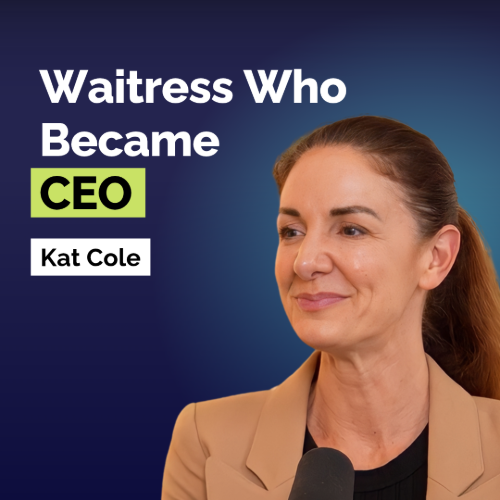
Kat Cole: How to Fast-Track Your Career, Get Promoted, and Earn Bigger Opportunities | Career | E425
What does it take to build a mindset that can withstand life’s toughest setbacks? Hal Elrod survived a near-fatal car accident at 20, lost more than half his income during the 2008 recession, and later battled a rare, aggressive cancer. When his coaching business nearly collapsed, he realized that changing his circumstances meant changing himself first. He created the Miracle Morning, combining six daily practices that helped him rebuild his life and business. In this episode, Hal shares how to use the SAVERS routine, turn goals into daily action, and build lasting habits for greater productivity.
In this episode, Hala and Hal will discuss:
(00:00) Introduction
(02:17) Turning Life’s Hardest Setbacks Into Purpose
(07:54) Surviving Financial Collapse, Cancer, and Burnout
(15:56) The Power of Self-Belief in Achieving Success
(18:35) The SAVERS Framework for Better Mornings
(24:10) How to Make Effective Affirmations
(30:04) Using Visualization to Achieve Goals
(36:10) How Morning Exercise Boosts Productivity
(38:37) Reading and Scribing for Personal Development
(43:58) Why Entrepreneurs Need Intentional Morning Habits
(48:55) The 30-Day Habit Formation Framework
Hal Elrod is an entrepreneur, keynote speaker, bestselling author, and host of the Achieve Your Goals podcast. He is best known for creating The Miracle Morning, a bestselling book that inspired a global personal development movement and has sold more than two million copies worldwide. His six-step SAVERS framework has helped people develop intentional morning routines and lasting habits.
Sponsored By:
Indeed – Get a $75 sponsored job credit to boost your job’s visibility at Indeed.com/profiting
Shopify – Start your $1/month trial at Shopify.com/profiting.
Northwest Registered Agent – Get a complete business identity with Northwest. Visit northwestregisteredagent.com/YAPFree and start using free resources to build something amazing.
HeyGen – Create AI avatar videos without constantly being behind the camera. Get your first three videos free at HeyGen.com/profiting.
AG1 Next Gen – Support your nutritional foundation with vitamins, minerals, prebiotics, probiotics, and superfoods. Get a free Immune Support Bundle with your first subscription order at DrinkAG1.com/PROFITING.
Whatnot – Grow your business through live shopping, community, and real-time connections with buyers. Search Whatnot, W H A T N O T, in the App Store and start selling today.
MOD – Connect with licensed medical providers for modafinil to support sustained energy, focus, and alertness. Visit MOD.com for a free consultation and get 10% off your first order plus free shipping with code PROFITING. See the website for important safety information.
Prenuvo – Get a radiation-free whole-body MRI in about an hour, with no contrast dye or needles. To learn more about Prenuvo and get $300 off your scan, visit Prenuvo.com/hala. Terms and conditions apply.
CallRail – Track which marketing campaigns drive calls, texts, and leads, and use AI to turn more leads into customers. Start your free trial at CallRail.com/profiting.
Resources Mentioned:
Hal’s Book, The Miracle Morning: bit.ly/The_MiracleMorning
Hal’s Book, Taking Life Head On: bit.ly/LifeHeadOn
Hal’s Podcast, Achieve Your Goals: bit.ly/AYG-apple Hal’s Website: halelrod.com
Psycho-Cybernetics by Maxwell Maltz: bit.ly/Psycho_Cybernetics
The Non-Runner’s Marathon Trainer by David A. Whitsett: bit.ly/Marathon-Trainer
Active Deals – youngandprofiting.com/deals
Key YAP Links
Reviews – ratethispodcast.com/yap
YouTube – youtube.com/c/YoungandProfiting
Newsletter – youngandprofiting.co/newsletter
LinkedIn – linkedin.com/in/htaha/
Instagram – instagram.com/yapwithhala/
Social + Podcast Services: yapmedia.com
Transcripts – youngandprofiting.com/episodes-new
LinkedIn Creator Club – Skool.com/linkedin-creator-club
Entrepreneurship, Entrepreneurship Podcast, Business, Business Podcast, Self Improvement, Self-Improvement, Personal Development, Starting a Business, Strategy, Investing, Sales, Selling, Psychology, Productivity, Entrepreneurs, AI, Artificial Intelligence, Technology, Marketing, Negotiation, Money, Finance, Side Hustle, Startup, Mental Health, Career, Leadership, Mindset, Health, Growth Mindset, Work-Life Balance, Work Life Balance, Team Building, Motivation, Manifestation, Time Management, Life Balance, Goal Setting, Resolutions
Kat Cole: [00:00:00] Many times I've had leaders come to me and say, "I want that promotion." And I will ask, "Can you tell me why?" Which sounds like a funny thing, and maybe even rude, but I have learned many people sometimes don't know what they're asking for. What if what they want is money, but the promotion doesn't come with much more income?
Or what they want is to show progress on their resume, but it requires skills they absolutely have not demonstrated.
Hala Taha: Most of us were taught that careers are built one rung at a time, but what if the fastest way up doesn't look like a ladder at all? Today's guest is Cat Coale. Cat started as a Hooters waitress, became VP of Hooters by 26, and president of Cinnabon by 32, and today she's the CEO of AG1.
Kat Cole: The first set of decisions and thought exercises is about money. What do you want? What do you need, within reason? Everybody wants, you know, all the things. This is an exercise not just for people in careers, but also for business decisions. What are your business' financial needs and financial opportunities?
Said another way, what can you afford to do, and what are your goals?
Hala Taha: I know you talk about, like, three buckets in choosing a career.
Kat Cole: The next is [00:01:00] a longer list, a bigger bucket. It's ego, optics, and affiliations. Is public recognition important? If you're not honest, you may make it about money, but it's actually about
Hala Taha: 26 years old is extremely young to be a VP. I have to imagine you were the youngest person in the room. How did you approach confidence and, like, imposter syndrome and speaking up?
Kat Cole: So there were a few things that I did that helped. I wouldn't say they're necessary, but they helped me. One
Hala Taha: Kat, welcome to Young and Profiting podcast.
Kat Cole: Thank you for having me.
Hala Taha: You are so impressive. I just love everything that you've done with your career.
Kat Cole: Thank you.
Hala Taha: And you've really had this amazing ability to just acquire roles that I feel like you're not- ... necessarily ready for.
Kat Cole: So-
Hala Taha: Or
Kat Cole: was I?
Hala Taha: You might... You, you obviously were ready, but on paper-
Kat Cole: Yeah
Hala Taha: you didn't look ready. For
Kat Cole: sure.
Hala Taha: So help me understand how you were able to have people, like, take those chances on you.
Kat Cole: [00:02:00] Well, I, I'll never know for sure-
Hala Taha: Yeah ...
Kat Cole: everything that goes on in someone's mind or behind the scenes from a leadership team. There are a few things that, as I've reflected, I don't think you could remove from the conditions and have the same outcome.
Hala Taha: Mm.
Kat Cole: So highly likely to have contributed. Um, one is that I have always joined high-growth companies. When a company is growing, they have more needs, they have more open roles, or they have more work they need people to step into, and if it's in hyper-growth, there's only so much of an ability for someone to fill that many roles with external hires effectively.
Said another way, companies that are in high-growth mode often have a disproportionate leaning or openness to internal advancement.
Hala Taha: Mm.
Kat Cole: Because there's a value. You know the culture, you know the team. Now, you still need the skills, but there seem to just be more opportunity in high-growth companies. So I think that's variable one- Yep
is I was not in slow-growing or [00:03:00] static- Mm-hmm ... businesses.
Hala Taha: So smart.
Kat Cole: Variable two, the culture in the businesses that I was in or where I took, you know, significant advancement or had big leaps in roles, either, like Cinnabon, when I joined as president at 31 of this global business, it was in turmoil. It was a bakery franchise in malls and airports, and this was 2010, so the h- near the end, but still in the Great Recession.
Hala Taha: Mm.
Kat Cole: And so there was, I imagine, a willingness or a desire to take a chance-
Hala Taha: Yep ...
Kat Cole: to bring someone in who wasn't typical. I was the least experienced of the candidate slate, at least the ones I had come to learn were in the process. So there was something about that business that caused the owners to say, "This is worth taking a chance.
We want something different."
Hala Taha: Mm.
Kat Cole: On the other hand, when I was at Hooters restaurants, there were people who, in leadership, who deeply valued [00:04:00] internal operational expertise. It was Hoot- Hooters restaurants. It's not as if there were Wharton MBAs beating down the door to come work- Yeah ... at Hooters restaurants.
And so... And it was a nuanced concept. Who better to take on strong, high-influence, high-impact leadership roles than someone who had worked almost every job-
Hala Taha: Mm-hmm ...
Kat Cole: in the business. Yeah. So in that case- The conditions were such that internal experience, maybe for reasons of the concept, maybe for just who these leaders were, but internal experience was highly prioritized and valued.
So number one, high growth. Number two, condition of the company creating a desire for different.
Hala Taha: Yep.
Kat Cole: And then the third is the me part, and there is something obviously to the me part. So when I look back, I think, "Well, what did I do differently?" Those are just the conditions that would've made it possible for anyone to advance.
There were a few things in, uh, how I showed up and worked- Mm-hmm ... that I am fairly certain [00:05:00] contributed, um, over time, not just in those early days, but over time.
Hala Taha: Yeah.
Kat Cole: Uh, one, I stayed very close to the customer. Anything I did, advocated for, suggested, whether it was as a president of Cinnabon, um, or when I would become president and COO of the parent company doing 3 billion annual revenue, or when I was a Hooters girl transitioning into being a new store openings trainer when I was 19 and my first corporate job with that company at 20.
Hala Taha: Hmm.
Kat Cole: Almost every pitch, idea, um, or big initiative, I always rooted in the customer. I either talked to them, interviewed them, had worked with them a ton. I made it about the customer, not about me, the person who's trying to get attention or be heard. It was, "Here's what the customers are saying." Yeah. Or other parts of the stakeholder group that might be internal customers, such as team members or franchisees or, you know, retail partners, whatever it might be.
And so I stayed very close to the customer. Even when I became CEO-
Hala Taha: Mm-hmm ...
Kat Cole: [00:06:00] I remained and remain today obsessed with staying close to customers, and that's refreshing. It almost is disarming, so it doesn't make people think, "Oh, you're trying to prove yourself- Mm-hmm ... or oh, you think you should... You know, you just got here, and you wanna be president tomorrow."
You're really making it about what the business is actually about, which sometimes even very senior leaders forget- Yeah ... over time. So I stayed close to the action and made things about the customer. Two, I never said, "It's not my job."
Hala Taha: Mm.
Kat Cole: Many things were outside of my job description.
Hala Taha: That is so different from how Gen Z, I think, operates in their career.
Kat Cole: Yeah, and part of it is not that I believed everything is my job. It's that I had so much pride and gratitude for all the opportunities-
Hala Taha: Mm-hmm ...
Kat Cole: that I have had at each of these moments-
Hala Taha: Yeah ...
Kat Cole: that it creates almost like a founder's mentality.
Hala Taha: Mm-hmm.
Kat Cole: An owner's mentality. If you really are an [00:07:00] owner, if you're actually an entrepreneur- You have massive responsibilities, and if you don't do stuff, no one will, in some cases.
And so even though I was very intrapreneurial, um, you know, we're talking corporate wo- roles- Yeah ... and corporate advancement, but I felt like I owned the place.
Hala Taha: Mm.
Kat Cole: And that showed. I would clean up the trash. I would take out the trash. I would call out an employee, even if they're a peer, of something they weren't doing that was right for the business.
I would ask how I would, could help. I would suggest changes to the business. You don't do that if you're punching in and out.
Hala Taha: Yeah.
Kat Cole: You know, nine to five.
Hala Taha: Exactly.
Kat Cole: So that's one. I had a owner's mentality, and people would observe it and reflect it back to me. Mm-hmm. When I was a waitress, my customers would say, "You act like you run, you own this place."
Mm. "You're gonna run this place one day." And at the time, I thought, "No, no, no. I'm the first person in my family to get into college." I
Hala Taha: got chills- ... when you just said that. I love that.
Kat Cole: But I would say, "You know, I'm, I'm the first person in my family to get into college. This is just a way for me to pay my bills."
But the reality is, those were my [00:08:00] words, but that is not how I felt. Mm. I felt a sense of pride- Yeah ... and gratitude, so I took care of the place in a way that reflected that. That is often something you only see from owners- Yeah ... or heavily equity-holding employees. And then the third was, I think in part because of how I grew up, I loved work.
Like, work was honorable. I wasn't trying to do less work. Work was my ticket out of my past. Work was my path to freedom and flexibility, in part because I was learning and I knew, and learning was my currency. Mm-hmm. But it also s- in the early days when I was working hourly roles, was literally my income.
The two were directly correlated. More hours equaled more money-
Hala Taha: Yeah ...
Kat Cole: equaled more independence.
Hala Taha: Mm.
Kat Cole: And so that was a very rewarding feedback loop, um, to drive. And so of course you put those together, then the high-growth companies with people who want different [00:09:00] see someone like me stand out and think, "That's a smart risk to take."
Hala Taha: Oh my gosh, I feel like question one in itself was a master class, so I can't wait for the rest of this interview. You were talking about your me factor, and I know a big part of that was the way that you grew up. Yeah. You actually grew up quite poor. Mm-hmm. From what I researched, your mother had a grocery budget of 30 bucks a week.
So talk to us about how that frugality and resourcefulness, like, impacted your work ethic and, and how you really looked at the world.
Kat Cole: Yeah. So we left my dad when I was nine. He was an alcoholic. Um, and what was interesting is almost everyone in my family- They were abusing substances. It was just the way things were- Hmm
in my community. And a lot of overdoses, suicide, people are on, on drugs, in jail, on the street. And if people were productive members of society, they had good, honest blue collar [00:10:00] jobs, except my dad, who had a fancy job. He was an executive at an auto imports company. So we were actually middle to upper middle class for the first part of my life.
Um, but my dad was the only person on either side of my family to have a more technical role, a knowledge worker- Mm ... an executive role, but he was an alcoholic just like everybody else. And so over time, I grew a disdain for money. Now, I would learn to get over that and have a healthier relationship with money over time, but to me, he had money, and it was still bad He had high income.
We had a house, we had cars, we had h- presents at every holiday, and things were terrible. And so for my mom, she thought, "I'm, I'm the lucky one." My aunts, my uncles, my cousins, they all had to deal with alcoholism, but none of them had a nice house.
Hala Taha: Mm.
Kat Cole: And so for many years she thought, "I'm [00:11:00] lucky. Everyone has it bad.
It could be worse. I should not rock the boat. We'll figure it out." And then one day, another weekend of the same stuff, nothing worse, um, she just decided no more. Like, it, it actually could get really bad. My kids could be in danger. I need to leave. So she came to me and said we were leaving with no plan, no help.
She worked an hourly job at the time. She would later move up in her own business, similar to the way I would go on to do it, but it was a huge risk and leap. Mm. And she figured it out. She worked multiple jobs, nights, weekends, in addition to her assistant job at the time, and over time, as she moved up, she could drop those ancillary roles, but by then I had turned 18 and was moving out of the house.
And in that window from when I was 9 and we left until I left as an 18-year-old, now financially independent, what I observed in her was extreme frugality, as you mentioned. People will ask, like, "How do you [00:12:00] feed a kid on a food budget of $10 a week?" And look, it's some things that many people wouldn't wanna eat today.
Potted meat, you know, was less than a dollar a can, Beanie Weenies, um, scraps from the butcher, some treats like occasionally big frozen lasagna. Um, and sh- she made it work. Like, you can do a lot with spreads and bread, and we ate a lot of spreads and bread-
Hala Taha: Hmm ...
Kat Cole: at that time. And so I watched her just make it work, and we were able to afford a house with her jobs, and she did it.
She figured it out. Again, no playbook, no help. Her dad died when she was three years old. She's the youngest of three kids. Um, and she just did it, and I don't In addition to her frugality and her resourcefulness, which I absorbed by osmosis-
Hala Taha: Yeah ...
Kat Cole: I just don't ever remember her speaking ill of our father, and she had every [00:13:00] right to.
Like, he never paid child support, and then he lost everything, and it was, it got worse before it got better for him and with him. Mm. And I just, maybe she did, but I have no recollection. I remember her, um, praising people who looked like they had nice things, like when we would drive through and look at holiday lights- Mm-hmm
at the holiday season, and she would, I remember with us being in the car, you know, her, my mom and the three girls, and we'd look at these beautiful Christmas lights, and she'd be like, "Isn't that beautiful? They must have worked very hard." Not, "Oh, if your dad hadn't have," or, "Those people probably don't deserve," just, I don't even know what the words are
Hala Taha: It's
Kat Cole: like
Hala Taha: she wanted you to be inspired
Kat Cole: Yes
Hala Taha: She wanted you to be inspired and not, like, envious.
Kat Cole: Yes, and just appreciation. Mm-hmm. Respect- Mm-hmm ... and appreciation. And that then taught me to work a lot of jobs and save my money and [00:14:00] not spend money on things I didn't need. And I just, it was from watching her. I, you know, unfortunately didn't have personal finance education, and there weren't a lot of role models around me, of course-
Hala Taha: Yeah
Kat Cole: um, who modeled investing and savings. But the one thing I got from her is, "I don't want you to ever owe anyone anything." Mm. Which meant you work for your needs, and you take on no debt.
Hala Taha: Yeah, no debt.
Kat Cole: And, um, that, wow, what a gift- Yeah ... just from her decision-making.
Hala Taha: And so you ended up getting your first, like, I guess, gateway into corporate from Hooters restaurants.
Yeah,
Kat Cole: when I was 20 years
old.
Hala Taha: And you started as a hostess. Yeah. Uh, so I guess walk us through that journey. Um, obviously you were there for a long time.
Kat Cole: Yeah, 14 and a half years.
Hala Taha: But talk to us about, like, how did you end up getting to VP of training at that company?
Kat Cole: So I started [00:15:00] as a hostess at 17, and then a waitress at 18.
As soon as I turned 18, I could legally serve alcohol, and, uh, so I became a waitress. And then, and that was when I was 18 years old and a senior in high school and saving up for college. And so very quickly, once I could work the front of house jobs, I could work any job in the restaurant. And so the short version of some really fun and hilarious stories is within six months, I had worked every job in the restaurant: cook, shift leader, uh, promo manager, trainer.
I would train new hires. I just raised my hand for every shift and became a leader amongst my peers very quickly, which then put me on the radar of management and regional management and the corporate training department because they were always looking for responsible leaders who knew many jobs- Mm-hmm
but not usually all.
Hala Taha: Yeah.
Kat Cole: I was unusual in that regard, but many jobs, so they could [00:16:00] send these tenured employees to new stores to train the new hires. Very common in retail, right? You gotta train a new staff. You need people who know the job to teach the job. So I started getting opportunities to travel within the state and then out of the state.
And by the time I was 19, even though I'd never been on a plane-
Hala Taha: Mm-hmm ...
Kat Cole: and did not have a passport, the corporate office called and asked my manager for a recommendation to send a certified trainer, which I was, to Sydney, Australia, to be a part of the training team to open the first Hooters in Sydney.
And I said yes. And then I got a passport.
Hala Taha: Mm.
Kat Cole: So I said yes without ever having been on a plane, I've never opened a restaurant, and I couldn't legally exit the country. But it just felt right.
Hala Taha: Yeah.
Kat Cole: And then I called my mom and said, "I need to figure out how to get a passport in, like, a couple weeks." And so took all my paperwork, bought my first plane ticket to Miami, uh, where I waited in line at the passport agency to get it expedited.
Um, and then I left a few weeks later for Sydney That would keep happening. Month after month, quarter after quarter, new opening, [00:17:00] new country, and by the time I was 20, I was in college, but I was traveling so much I was failing, so I'm a college dropout. I quit when I was 20 years old because I, I was more energized by the opportunity to continue to do openings- Yeah
even though I had no contract, no salary. This was all still hourly, could have gone away in a second. Are
Hala Taha: you serious?
Kat Cole: All hourly. I didn't
Hala Taha: realize
Kat Cole: that.
Hala Taha: Yep.
Kat Cole: Um, but I was more excited about the potential- Yeah ... of it continuing than I was concerned about dropping out of college- Yeah ... which devastated my mom temporarily, as you can imagine.
Uh, she was very proud, and I was very proud, um, to be the first person in my family to be going to college. Um, I was at the University of North Florida. Uh, I was electrical engineering and computer sciences major, and I thought I was gonna go to school and get my engineering degrees, and then go on to law school.
Hala Taha: Mm-hmm.
Kat Cole: And it turned out very different. And so by the time I was 20, I'd done so many of these openings. The corporate office was of course expanding because of the company's growth, and they asked me to interview to be head of employee [00:18:00] training. I interviewed, I got the job when I was 20. I moved from Jacksonville to Atlanta, and the short version is every few years as the company grew, I grew.
By the time I was 26, I was one of the vice presidents of the company when we were doing around 800 million in revenue, and I continued to grow and expand in the company until we sold it into private equity before I left.
Hala Taha: That is, like, such an incredible story, and, um, I have a bunch of questions for you, but first, 26 years old is extremely young to be a VP.
I have to imagine you were the youngest person in the room oftentimes.
Kat Cole: By a mile. Youngest in the industry at that level that I was aware of, of any company of that scale.
Hala Taha: Yeah. How did you approach confidence and, like, imposter syndrome and, and speaking up, uh, knowing that you had all this experience, you had rightfully earned that spot, but I, I can imagine 26 years old, you just didn't have even the experience to, to really know how to be confident or...
in those rooms.
Kat Cole: One thing that helped is that I was in that corporate office from the time I was [00:19:00] 20 years old.
Hala Taha: Mm.
Kat Cole: And so six years is a good amount of time to, um, learn-
Hala Taha: Yeah, get your reps in ...
Kat Cole: and build relationships and make mistakes and earn credibility and trust. Otherwise I... the CEO would not have put me in that role.
So I had an unfair advantage because that's actually a long on-ramp. What's unusual is I just started so early. You usually don't have a six-year period to build relationships heading into being an executive starting when you're 20 years old. Mm-hmm. Um, but it was an incredible on-ramp. I had great mentors and leaders and some executives, I saw the way they behaved, and I wanted to be like them, and others, I saw the way they behaved, it, either all the time or in moments, and I didn't wanna be like them.
It's an incredible training ground- Yeah ... to be able to be in such proximity to many different types of leaders- Mm-hmm ... at a high-growth time. So that's part of it. Mm-hmm. That gave me some comfort and ease that I'd s- [00:20:00] I'd seen people lose their cool.
Hala Taha: Yeah.
Kat Cole: And I'd seen people, um, hold a room beautifully, and I'd seen people make really hard decisions and make some bad ones.
And so that's very comforting when you have that many reps, in a way.
Hala Taha: Yeah.
Kat Cole: Um, and when I'm the recipient of some of those decisions, and now I'm in the leadership position and I wanna be as good as the good and better than the not good. So that brought some confidence. The other, it's less what I did when I was 26.
Again, I'd had six years to kinda find my groove and my style, but when I was a director and senior director, you know, I was 23 years old. I mean, I could barely legally drink. You don't
Hala Taha: even have your frontal lobe developed. No. Totally. That's what I mean, like, you're so
Kat Cole: young. Totally. And so there were a few things that I did that helped.
I wouldn't say they're necessary, but they helped me. One, the age gap was much more stark than the gender gap in leadership there. One, the company was [00:21:00] full of women. Most of the f- all of the front of house employees are female. That's a majority of the workforce, so many of the people in management were women- Mm
which most people don't know. Every person I worked for, with the exception of one GM, one district manager, and the CEO, all my bosses were women.
Hala Taha: Wow, I did not realize
Kat Cole: that. Yeah. So again, I didn't realize how special that was then. Yeah. But when I look back, I think about, wow, I never had to figure out how to be a man because I saw so many ways to be a woman.
Mm-hmm. There were rude ones, and loud ones, and giant ones, and little ones, and educated ones, and scrappy ones. And so I saw that whole spectrum of women in leadership, and normally, in, in, at least at that time, in many industries, most people in leadership were men.
Hala Taha: Yeah.
Kat Cole: And I had incredible male mentors, but that can also lead to having a hard time finding your way- Mm
when you finally get your [00:22:00] shot because you're so different. I had been around so many women leaders, I didn't feel different at all. Mm. Um, and so I felt like an operator. I was an operator at the table. I grew up in the business. I knew the hourly employees better than other people who came from lifelong executive tenure in other- Mm
restaurant companies. So I was reminded, I reminded myself, and I was reminded by great mentors, that that was my special sauce.
Hala Taha: Mm.
Kat Cole: That no one knew that business better than me.
Hala Taha: Yeah.
Kat Cole: I had literally just worked there in all those jobs. Um, so that was, that brought me comfort. But some things I did is I dressed a little more professionally than required in the office.
It's Hooters. It's a casual dining restaurant chain. People wear jeans or khakis and polos. I always wore a blazer. I always wore a blazer. Jeans, skirt, didn't matter. Blazers were not required. In fact, it was a little odd to see it. I also had very... I have a lot of hair. Yeah. I have half the hair I used to have because I'm now [00:23:00] 48 and have had two kids.
But I still have a, all this AG1-fueled hair.
Hala Taha: Yeah.
Kat Cole: But back then, I had a lot of hair, and I felt that having so much hair and having so much body was potentially a distraction. Mm. And so I tightened it all up. I kept my hair in a ponytail. I wore structured jackets. No one told me to. It's just what made me feel that it helped me balance out my professionalism- Mm
because I was young.
Hala Taha: Yeah.
Kat Cole: There were pictures of me in the hallway in orange shorts. Like, there are reminders that I was a waitress, and to some- Yeah ... people, that was something they thought was so rad, and there were other people who thought, "What is she doing here?"
Hala Taha: Hmm.
Kat Cole: And so dressing a little more for the professional side of the dress code made me feel good.
Hala Taha: Yeah.
Kat Cole: It helped me feel a little more confident. And it probably was helpful in some settings to [00:24:00] balance out the, "Wait, she's how old?"
Hala Taha: Mm-hmm.
Kat Cole: And I've always looked a little older than my age, uh, when I was younger, and so I think there was a perceived maturity between- Mm-hmm ... the calm, the confidence, the attire, um, that bought me a little extra trust and credibility and calm while my experience caught up to that.
Hala Taha: Yeah. I absolutely love the fact that you were always raising your hand, and it didn't seem like you really cared about the money, because like you said, you were flying around at an hourly wage. What were some of the lateral moves- Yeah ... or the moves that you did that didn't necessarily equate more pay, but you knew were gonna be good opportunities for you?
Not
Kat Cole: only lateral moves. That job that I first said yes to when I was 20 years old Was half of my income of being a waitress. Really? I made more, yes. 'Cause you can pick up shifts.
Hala Taha: Mm.
Kat Cole: I set the record for close/opens, at least that I was aware of [00:25:00] in my city or in my store. I mean, I think it was 20- 18, 19, 20, 21, somewhere in there, back to back.
Close the restaurant, show up and open the restaurant, close the restaurant, show up and open the restaurant. Because I had the flexibility, and I wanted to make money.
Hala Taha: Mm.
Kat Cole: I wanted to be free and independent, and so if there was a shift, if somebody called out, if somebody had a sick kid, or they were just tired, or they didn't need the money, I'm like, "I'll take your tables.
I'll pick up your shift. I'll work that kitchen shift if I'm full of waitress shifts." And so there is many people n- once you say it out loud, you're like, oh yeah, I guess you can make a lot of money if you're in a hourly role and you are willing to work more.
Hala Taha: Yeah.
Kat Cole: And so when I took a corporate job, which by the way is not cash in the pocket, it's a paycheck with taxes pre-deducted.
Mm-hmm. I think my last year as an hourly employee, which in fairness was not only waitressing, but it was the openings and travel and kitchen shifts and [00:26:00] supervisor shifts, I was close to $40,000 a year, and this was in '98-ish. Um, when I took my corporate job, my salary, my pre-tax salary was $22,000 a year.
No kidding. And that was my leap. I felt that that move, even though I grossly underestimated the shift in income, I was so enamored by moving out of the restaurants into the corporate office, that I kinda didn't think about it. And
Hala Taha: especially since you didn't have a college degree, so you're like, "This is my opportunity to get into corporate."
And
Kat Cole: I was 20. I'm like, "What do I need? I can get a cheap apartment."
Hala Taha: Yeah. "
Kat Cole: Love my car. It's almost paid off. Like, I'm good."
Hala Taha: Mm-hmm.
Kat Cole: But I underestimate. That's a massive shift, even if you have not a lot of fixed expenses, and it would be a early journey for me to learn how to manage my personal finances as a 20-year-old only making pre-tax [00:27:00] $22,000 a year.
And but it was worth it to me. Mm-hmm. It was the chance of being, and this was the word in my head, fancy. When you are, like, grinding it out, closing Friday night restaurant shifts and showing up Saturday morning, and then going to school, until I dropped out, that is, for this opportunity, it felt really important- Mm-hmm
to work in a cube.
Hala Taha: Yeah.
Kat Cole: To have a desk. Uh, to wear a skirt or a jacket, and that was more ego important for me. It was more rewarding for my sense of self, uh, because it felt like progress, even though it was an absolute, by any way you look at it, step backward financially.
Hala Taha: So you're teasing something which, uh, I know you talk about, like, three buckets- Mm.
in choosing a career. I think this is really important for our listeners, especially our, our younger young Profiterers who are really navigating their career. Maybe they haven't started their own companies yet. But they're trying to make choices. Like, do I [00:28:00] take the lateral move? Do I go down in salary for more experience and more skills?
Talk to us about these three buckets.
Kat Cole: For me, I was so clear that learning was my currency. I was so afraid of ending up like parts of my family that it was less about money and more about learning and opportunity. I was very clear that that's what drove me, so I could prioritize it and weight it appropriately over other pieces of the consideration set- Hmm
like income or what city I was in. And so this was an immediate opportunity. I, I was opportunistic. I didn't know that I could apply for this job. I was asked to interview because the leaders saw me perform. They had seen me lead training at these new store openings. They had seen me perform flying around the world as a 19-year-old and believed I had the potential and encouraged me to apply-
Hala Taha: Hmm
Kat Cole: and interview, and thank goodness I did. And [00:29:00] I literally went to The Limited and bought a suit and went into the kitchen at the Hooters at the Jacksonville Landing, which is no longer there, and did the phone interview in a suit because I wanted to feel ready. Hmm. And I got the job. And so as I think about what led to some of the confidence or the comfort in making those decisions, that became a part of my three-column framework, is, first of all, I kept my financial needs very low Very low.
I lived super simply. I do believe in that early part of my life, it was a gift to have an unhealthy relationship with income from my dad because I didn't want anything that looked like money. I didn't want nice clothes. I didn't want a nice car. I didn't want money. Now, that is not a good relationship to have with money.
I would learn to have a much healthier relationship later, but because of that, I kept my means very [00:30:00] simple.
Hala Taha: Mm.
Kat Cole: Which meant I could say "yes" to such a crazy awesome corporate opportunity even if it was half my annual salary.
Hala Taha: Yeah.
Kat Cole: Um, and so the way that plays out in these three columns that I tell people to write when they are making any big life decision, but specifically it's relevant for career choices.
The first, um, set of decisions and, um, thought exercises is about money. What do you want? What do you need? Within reason. Everybody wants, you know, all the things. Next two to three years, what are your needs? Do you have to take care of a child? Um, a sick father? Do you have no responsibilities? Um, what does a rainy day fund look like for you?
Um, get three years of your expenses, so either save a lot or make your expenses very low. And so you write that down, money. And this is an exercise not just for people in careers, but also for business decisions. What are your business' financial needs and financial opportunities? Said [00:31:00] another way, what can you afford to do and what are your goals?
So you write that down and you don't allow yourself to think about anything else. Don't start trading, "But, but I love this city, but I love this job, but I love this boss. Oh, we really wanna launch that product." You just exhaust the conversation with yourself about money, and let it just be what it is, and own it, and be in it, and just sit in it until all the needs and near-term wants are on that piece of paper.
The next is a longer list, a bigger bucket, because it's a bit of a catch-all to solve for whatever anybody's dealing with, but it's ego, optics, and affiliations. Said another way, your sense of self. Is it important for you to work with a healthy company or do you care? Do you want, um, to do something or create a business that does good for the world, that's good for the planet, or does that matter less to you?
And you can see a little bit where this is going. Yeah. Eventually, you will negotiate. But it is important [00:32:00] to let yourself sit in only that place, because so many people are not honest about this part.
Hala Taha: Yeah.
Kat Cole: Do you wanna be with a company or do something that people will know you for? Is public recognition important?
Hala Taha: Mm.
Kat Cole: It doesn't make you a bad person. If that's important to you, you better know it because it's driving your psychology. It's driving what you gravitate to or away from. And if you're not honest, you may make it about money, you may make it about something else. But it's actually about what gives you your sense of self.
And so do you need a big team? Is it important for you to have a team? Um, do you wanna be alone? Do you not like people very much? Mm-hmm. Um, and so just spend time in ego, opt what gives you your sense of self, the optics, what's gonna make you proud, affiliations, right? What will you be proximate to that is going to matter?
The third column is capabilities, but it has two parts. Capabilities part A are the ones you have. Capabilities part B are the ones you wanna stretch into. If you only do [00:33:00] what you've always done, you won't grow, and you'll get bored or become bitter or resentful and start seeking, and you won't be all in.
But if you only do something you have no skills to do, you're a risk, right? Yeah. It's a stretch. And so it's important as a business, as a leader, or for your own personal decisions to be honest about what are those capabilities that any... almost anyone would say, "You know, she's kinda good at that no matter what."
It's your sauce. And the more you can listen to yourself and the more you can put yourself in a position to try different things, over time, that will become apparent to you. People reflect it to you. They just say, "You're so good at this," and you think, "Wow, that's funny. I heard that in my last job from a very different person."
Hala Taha: Mm.
Kat Cole: Yeah. And you just become aware. If you can love yourself enough to hear that feedback-
Hala Taha: Mm-hmm ...
Kat Cole: and to feel how you feel For the things that are easier for you with less effort than other people.
Hala Taha: Yeah.
Kat Cole: And man, it's so cool to think about how varied that is. For some people, it's singing. For others, it's public speaking.
For some, it's, like, grinding out and [00:34:00] launching business ideas. But the second part is where do I wanna grow? To learn, to stretch my business, to not be stuck in the past, and that has its value also. And you only think about capabilities. Then, of course, you start blending these things together. Would I take a little less money?
Would I compromise on my financial goals for something that really feeds my ego and sense of self? Or would I step into something that is higher on the financial scale, but it doesn't make me as proud to say it's what I'm doing? And you think about it, right? Do I have the skills to do this? Do we have the capabilities to do this?
Um, and so those three columns, if you... The power in the exercise is the topics themselves, but it is allowing yourself to be honest without judging yourself-
Hala Taha: Mm-hmm ...
Kat Cole: or feeling any judgment of what you put in that column. And the exercise doesn't work if you aren't [00:35:00] honest. Mm. Because many times I've had leaders come to me and say, "I want that promotion And I will ask, "Can you tell me why?"
Which sounds like a funny thing, and maybe even rude, to ask someone who's courageous enough to say, "I want the promotion." But I have learned many people sometimes don't know what they're asking for. What if what they want is money, but the promotion doesn't come with much more income?
Hala Taha: Mm.
Kat Cole: Or what they want is to show progress on their resume, but it requires skills they absolutely have not demonstrated.
Hala Taha: Mm.
Kat Cole: And so this idea of writing it out, sitting in it honestly, and then trading through the opportunities, either when you have an opportunity to consider or change, or just once a year when you wanna reflect on where you are, and is your ego and sense of self being filled? Do you feel good about what you're doing?
How do you feel about your financial progress? Are you stretching and growing? Do you have the ability to shine in the things you're good at? And it is an unlock. It is a major [00:36:00] unlock. So I would use this for people who would say, "I wanna be promoted." Yeah. Or, "I'm considering changing jobs." Let me help you think through truly getting to know what's underneath what you're saying, but what do you really mean?
And it'll help you love what you do next much, much more.
Hala Taha: And not be so worried about the exact amount of money that you're getting to do it. Because, like you said, learning is currency. So if a job is giving you these- Yeah ... set B skills-
Kat Cole: Big time ...
Hala Taha: that you haven't been able to learn before, you can generate millions of dollars on those skills years later on, like, like-
Kat Cole: Totally, especially if it's a future-oriented skill.
Hala Taha: Exactly. I do wanna talk about mentors. Because it seems like you not only had mentors, it seems like you had, like, sponsors in your career, like people who really looked after you and gave you good advice.
Kat Cole: Yeah.
Hala Taha: And kinda pushed you. What did you do? What were the things that you did that made you, [00:37:00] uh, like people gravitate towards helping you?
Kat Cole: One of the things I did, um, I believed, probably incorrectly, but I convinced myself because I was the child of a single parent, alcoholic father, college dropout, and had worked at Hooters my whole life, I convinced myself no one would want to be my mentor.
Hala Taha: Mm.
Kat Cole: Now, I had great advocates in my company, to your point, clearly.
Hala Taha: Yeah.
Kat Cole: But in order to get the benefit to stretch and grow of people from outside my company and outside my ener- my industry, I told myself, "I am not attractive on paper." I used to have jokes that if you sent my resume through the HR department's fax machine at any company, it would catch on fire. Like, they'd be like, "Ah."
Um, because it was fax back then. And because of that, I did not seek mentors in any form. I had tried a formal mentor program at a, a women's development nonprofit, and it was nice, and I did get a mentor, but it [00:38:00] didn't feel connected.
Hala Taha: Mm-hmm.
Kat Cole: And it was helpful, but not enduring. And so I became obsessed with mentoring moments, mini, M-I-N-I, and many, M-A-N-Y, mentoring moments.
So I would go... I would find people who were good at something, and I would send them an email or just go up and ask them, "Hey, I heard about this thing that you've done. It's incredibly impressive. I have three questions I would love to ask you about it. Could I buy you a coffee, or can I come sit with you at lunch?"
Tiny, and I would honor the time. Mm. I would only take the time. Whatever it was I said I was asking, 15 minutes, five minutes, I would be very specific in my questions. Not, "Tell me how to be you."
Hala Taha: Mm. "
Kat Cole: Tell me how to be great." W- you know? That's... how- Yeah ... how do you even answer that? Mm-hmm. I would ask specific questions about something I read or heard that they were good at, and I would internalize their experience and put it to work.
And then if it was helpful, I would let them know that. That's it. And I would do that over and over, [00:39:00] and sometimes I would approach common people over the years. And they would then take an interest in me, and it would turn into less of mini mentoring moments and them actually reaching out proactively and saying, "Hey, I thought about you for this."
Hala Taha: Hmm.
Kat Cole: Or, "Have you thought about this?" Or, "I just heard this went this way in this meeting. Can I give you some feedback? I don't think anybody's gonna tell you, but- I, if it were me, I'd hope somebody would tell me
Hala Taha: Mm.
Kat Cole: You can call them whatever you want, guardian angels, advocates, sponsors. That is earned. Most people will not do that, not for very long, for a stranger who just asks and takes.
Hala Taha: Yeah.
Kat Cole: But they saw me working hard. They saw me giving to other people, and I can think of a few instances, actually many. One, when I was a waitress, there was a manager who's very quiet, very petite, underestimated because of her stature, and she was a [00:40:00] boss, and everyone respected Bonnie, and this is when I was working multiple jobs, and she called me out for being late.
I, I was always coming from my other jobs, and she sat me down. She said, "Can you come into the office?" And she said, look, I was 18, um, and she said, "You're one of the best here, and I wanna give you more shifts and more responsibility, but I have to know I can rely on you, and I understand you have other jobs, but when you're late, other people have to pick up the slack, and if your other jobs are your priority, I need to change the shifts you're going to have."
Hala Taha: Mm.
Kat Cole: She treated me like an adult. She explained the consequences of my actions, even though I felt like I was so in the right because I'm just working so hard. And I quit my other jobs, and that was also consequential. And then when I was 21, 22, um, my, uh, leaders at the time, Kimmy, who was the vice president, Colleen, who was a director, asked me to come into Kimmy's office, shut the [00:41:00] door, and they said, "Hey, we're concerned about you.
We think we know what's going on." And I started bawling. I had an eating disorder, and I was briefly bulimic. I'm one of the lucky ones, and these two women, who were just my bosses Never said the words out loud. Never embarrassed me, never shamed me, but Kimi said, "We think we know what's going on, and if you aren't healthy and taking care of yourself, we can't keep sending you all over the world to represent the company, and we'd like you to get help."
And I just bawled. And they set me up with a nutritionist and a therapist who then scared the shit out of me, showed me pictures of what would happen to my teeth and my hair and how sick I would get, and then did a whole psychological analysis and helped me understand I had changed environments so quickly, gone from being in the action, in the operations, to quietly behind [00:42:00] the scenes in an office making training materials, and that this was my brain and body's way of seeking control.
Mm. I was doing two-a-day workouts. I was running 10Ks every weekend. I looked great. I felt great. There was lots of validation for how strong I looked, but I was doing something very harmful.
Hala Taha: Mm.
Kat Cole: And that is both a credit to me because I can be confronted with the- Yeah ... dark side of something and pull away from the ledge, but man, is it a credit to Kimi and Colleen.
And they brought in my former regional manager, who I loved, Mike, flew him to Atlanta, or he drove up, one of the two, from Jacksonville, and wrapped me in this like, "We love you, and we..." Or, "We respect you," or, "We care about you." Whatever the words were- Yeah ... I felt it. I took them up on help. That's another type of advocate and guardian angel.
Yeah. They didn't fire me, they didn't take... But they, but she kept it in this perfectly professional circle. Yeah. Right? Care and concern, but obligation to the company.
Hala Taha: Mm.
Kat Cole: And then it was on me to do [00:43:00] something about it. And then later, when I would make huge mistakes as a president of multi-billion dollar brands, I had franchisees who I could rely on to ask for their counsel.
If I made a huge mistake, I had high integrity leaders and private equity firm members. Believe it or not, I had high integrity. I worked for a high integrity private equity firm, and when things went wrong, they supported me making them right. Mm. And all throughout... And I don't think that is necessarily particularly unique or special, but I did the work to earn their advocacy, and they were amazing people.
They deserve to be where they are as leaders. And then as I moved up, imagine now I'm in accumulation. All of these experiences, and of course I worked with jerky people. Mm-hmm. And of course, there were people who thought I was too young to be in the role. There were some real jerks that I've worked with along the way who made no secret about their feelings that I was too young and shouldn't be in the role.[00:44:00]
So it's not that that didn't exist, it's just I focus on and connected with those who were believers, gave them more of a chance to believe, and then passed that on in how I would develop other people over time.
Hala Taha: Yeah. And I know that you've got so much amazing leadership advice that I hope we can touch on later on, but I wanna keep moving towards the later stages in your career because they're so impressive.
So you went from VP of training at Hooters to the president of Cinnabon, which to me is just, like- ... such a big jump. Like, it, it, it makes- It is on paper. It makes sense that you were the VP of training because you had all those positions, and you moved up the company. You were there for six years or whatever it was.
How did you get that role at Cinnabon?
Kat Cole: So again, some things don't get reflected on paper. You're right, it is this huge jump. But what actually occurred between being VP of training and [00:45:00] development, my first executive role ever, and at Hooters, and becoming president of Cinnabon, is that I took on increasing responsibility at Hooters.
Mm. So I started running more teams and more departments, um, and then I was just vice president. And- Mm ... um, so much change happened at Hooters at that time. The CEO died suddenly. His son had to step in. Um, the company went through a tremendous amount of market transition and industry transition. We shut down our airline.
We ended up needing to sell our company into private equity to settle the estate of our deceased CEO. Mm. And I was instrumental in leading A good bit of that.
Hala Taha: Got it.
Kat Cole: So I didn't get the title of president of Hooters, but I was running a lot more than would be reflected. And so now on one hand you go, "Well, how would anybody know that if it's not on paper?"
It shows. You know, when you have that much experience across multiple teams, when you're talking to other people [00:46:00] interested in hiring a president, they could feel they were talking to someone who was ready. The other thing that helped is when we were selling our company into private equity, I was part of the leadership team pitching our company to all these PE firms.
Hala Taha: Mm.
Kat Cole: So they got to see me be so much broader than my title The other piece that's way under-discussed in my story is the industry nonprofit organizations that I was a volunteer for, the National Restaurant Association, the Women's Foodservice Forum. I did fundraising for restaurant-friendly candidates.
I helped other restaurateurs, including the types of companies I would later go work for, with policies and with shaping the industry in the state, in Georgia. So they also had personal experience with me, seeing me outside of my company, being a leader of industry.
Hala Taha: Mm.
Kat Cole: And so those experiences and those relationships built over years of me volunteering my time-
Hala Taha: Mm-hmm
Kat Cole: [00:47:00] also opened doors, had people see me as more than my resume, and created an interaction and an understanding of my mind, my integrity, um, and my drive-
Hala Taha: Mm-hmm ...
Kat Cole: that made it make so much more sense to have me at the table.
Hala Taha: Mm-hmm. And another example of you gaining skills not necessarily for money.
Kat Cole: Yes, exactly.
It was definitely no money.
Hala Taha: Yeah.
Kat Cole: And it cost me a lot of my time, nights, weekends, but I loved it. Mm-hmm. And it benefited my company because it was benefiting the industry, and it filled my bucket. You know, I met so many people outside my company who would become very informal- Mm-hmm ... but very real mentors who later would give me a call with opportunities, who would say a kind word on my behalf behind the scenes pr- in ways I will never know and in some ways I do know and appreciate.
And so the private equity firm, Roark Capital, met me in that context and reached out and actually asked me to interview to be a part of their firm. And when I [00:48:00] couldn't join at the time they needed, later they came back and said, "You know, we need a president for Cinnabon. The business is in a turnaround, and we're looking for non-traditional candidates.
We think you should interview." Very similar to when I was asked to interview for that first corporate role at Hooters, and I went to the CEO of Hooters at the time and I said, "Look, um, I have an opportunity to interview for another company to be a president, and I'm probably not gonna get it, so don't worry.
But I want you to know because I don't want you to hear about it from someone else." And we were in the process of selling the company, so I knew I, I didn't want to stay at Hooters. I'd been there for 13 years at the time. I was done. I was ready for the next chapter of my life. I was very proud of what we had done, and there was a l- there were a lot of people pulling me to stay.
"We're selling the company. It needs leaders like you. You could be the CEO."
Hala Taha: Hmm. "
Kat Cole: Stay here." I mean, offers from private equity firms if I would stay and be the CEO, but I just knew. I just knew I was done. I [00:49:00] knew someone else could do a better job with what that company needed and that my work was done, and but I didn't think I would get this job, and I did.
I was offered the role, and so I joined Cinnabon when I was 31, 32 as president of this global beloved brand in a turnaround situation in the heart of the recession.
Hala Taha: Hmm. And you actually got your executive MBA, I believe, in between that period?
Kat Cole: I was going to school nights and weekends, and, uh, graduated with my MBA from Georgia State and their executive MBA program in December, which was two months after I took the Cinnabon.
Hala Taha: And you actually, I guess... You, you didn't have an undergrad degree, so you had a scrappy way of actually getting into this MBA program, program.
Kat Cole: It's rare but possible and... But I did the extra work. You know, I recognized... There's a phrase I used to use a lot called hustle muscle, which is not work yourself into the ground.
It is if you have an opportunity where you do not meet all the [00:50:00] traditional requirements, those requirements are there for a reason, because they typically define what contributes to success in that job. So if you have some skills that are outside of that requirement, but you're missing some skills within it, it is your job to close the gap.
Hustle muscle. Something you haven't done, you need to learn it. Something you have a low experience in, you need to name it, get help, get support, get a mentor. Just because you're willing to say yes before you're ready doesn't mean that company should suffer with someone in a role who isn't capable.
That's a responsibility. I said yes to go to Australia before I had a passport. It was obviously my job to go get a passport. I became president of Cinnabon when I had not been a CEO. So I, I called out, "Hey, here's the functions I have not managed before. I know it because I've run my own P&Ls." But I need some support.
How will you support me-
Hala Taha: Hmm ...
Kat Cole: in this transition? Not, "Oh, I don't have it. I hope you still pick me." How will you [00:51:00] support me? Hmm. Because I know I had things that other candidates didn't.
Hala Taha: Yeah.
Kat Cole: But I had some things missing that other candidates had. Own it, name it, be responsible for closing the gap, because again, a company should not suffer just because someone took a chance on you.
Hmm. That's not what all this is. This, like, getting opportunities and, um, working your way up and saying yes before you're ready is never an excuse to not deliver. You still
Hala Taha: gotta close
Kat Cole: the gap. You still gotta, you still gotta execute- Yeah ... or you're just promote- being promoted into your termination.
Hala Taha: Yeah.
Kat Cole: Um, and so that desire for me to keep owning what I didn't know and closing the gap, whether it's mentors, training, support, building a great team around me eventually, that was also part of over-delivering on the opportunity so then the next one would come, and the next one would come.
Hala Taha: I love the story of you actually, I think you got, like, other CEOs to write letters for you to get into your MBA program.
There
Kat Cole: were, there was a requirement to have two recommendation [00:52:00] letters. Mm-hmm. And I got 10.
Hala Taha: Nice.
Kat Cole: Hustle muscle. Close the gap.
Hala Taha: Hustle
Kat Cole: muscle, yeah. I didn't have the undergrad, so I figured I should demonstrate extra confidence from established CEOs.
Hala Taha: So let's talk Cinnabon. You get there, and they're in a really transitional period, and a lot of things happened, especially when you guys tried to go into Costco.
Kat Cole: Yeah. Yeah.
Hala Taha: And you wanted to go into retail.
Kat Cole: Yeah.
Hala Taha: Tell us about what happened.
Kat Cole: One of the biggest leadership failures in my career. So I get there, the business is in trouble. It's a bunch of small mom-and-pop franchisees. They've had double-digit sales declines for a few years because people aren't shopping and traveling as much during the recession.
And I come in, and we figure out a way to innovate the business to have smaller portions and new products, and things that when the traffic would come back, the brand would be more relevant.
Hala Taha: Hmm.
Kat Cole: And it worked, and there was growth and success, and the franchisees were so grateful. And I went in with a great team, and we renegotiated their leases with [00:53:00] the mall landlords, and all was good.
The next driver of growth was expanding into new channels, which included putting versions of our product in grocery stores, and usually that meant working with a big manufacturer. Think Keurig Green Mountain to make Cinnabon-flavored K-Cups. Mm. Or working with White Wave to make Cinnabon-flavored International Delight coffee creamer.
It was taking a little bit of our ingredients and- Aromatics and flavor notes and putting it in less indulgent, higher frequency form factors because that's where the consumer was going, and that's where all the scale was. Cereals, and again, less indulgent than a once-a-year-
Hala Taha: Mm-hmm ...
Kat Cole: cinnamon roll the size of your face.
And it was a massive business. We added hundreds of millions in global sales- Wow ... um, in a very short period of time with the strategy. Eventually, one of the retailers we had a chance to work with was Costco, but they didn't want a packaged good. They wanted to take our ingredients and our recipes and actually have fresh-baked Cinnabon products.
And it was incremental, it was a great idea, they're [00:54:00] amazing bakers. It's a totally different occasion than an impulse in a mall, so we signed the deal. But in order to protect the business momentum that our franchisees had been enjoying, we agreed to make the product in Costco very different than what was in the franchise business.
Technically, that really didn't matter 'cause it's such a different occasion, but it made everyone feel better- Mm ... that we weren't trying to compete with the franchise business with this new, uh, channel and that the customer wouldn't be confused of is this the real product or-
Hala Taha: Yeah ...
Kat Cole: um, and to make a long and very painful story, uh, very short and to the point, um, I told the franchisees what it was gonna be in Costco.
They said, "We don't love it, but because of everything you've done for us, we trust you." And I had a very, uh, ambitious salesperson who, when Costco pushed back on the product being different and asked for the core legacy product, he said yes.
Hala Taha: Mm.
Kat Cole: And gave them the core product that I told the franchisees they would not get, and it's Costco, so they were selling it for half the price.
And the [00:55:00] franchisees, you can imagine, felt violated, uh, that I'd lied- Mm ... and, um, threatened to sue me and the company We had the legal right to do it, and the product was crushing it, but we didn't handle it right. But when the franchisees called me out and said, "What is this?" I had no idea. It had happened without my knowledge.
And it can happen very quickly when you're just sending recipes and ingredients.
Hala Taha: Mm-hmm.
Kat Cole: People will just bake the bigger thing.
Hala Taha: Yeah.
Kat Cole: Um, some people heard the story and they're like, "How could that happen?" Uh, you know, it can happen in 24 hours. Mm-hmm. And, um... Or maybe not that fast, but very fast. You can make the decision in 24 hours, and as long as they have the packaging, it fits.
Um, and it, I think it took a couple of weeks where there was a different label that had to be printed, and I was not aware.
Hala Taha: Hmm.
Kat Cole: And, but I realized that although that should've never happened, it was on me. I didn't have enough frequent checkpoints. I should've known that this channel, when you're only sending ingredients and recipes, could [00:56:00] change very quickly.
When you're making product that has to go through a manufacturing plant in a box, shipped into warehouses, shipped to grocers-
Hala Taha: Hmm ...
Kat Cole: that takes, like, 18 months. You have plenty of time-
Hala Taha: To figure out
Kat Cole: mistakes, yeah ... to figure it out, to communicate. You're, it's a massive amounts of capital going to work. Mm-hmm.
So everybody knows everything that's happening long before it gets committed and agreed to. This was much faster. And so I went to the franchisees and just owned it, and I was like, "I was not close enough to this. I didn't know what could've gone wrong. I should've known something could have because of how fast it moved."
And so we pulled the contract, and that was very expensive. I had to fire people who we had hired to manage it, walked away from millions in EBITDA, but gained the trust of our franchisees, who I had to say, um, you know, too, "I'm not pulling this because you complained. To be clear, this is not the way this is gonna work.
Just because you don't like something doesn't mean we'll stop. We had the legal right, so you have no legal standing." The product was right. We were selling tens of thousands of units a week. It was wildly [00:57:00] successful from day one, but we didn't handle it right, and that is more important for our long-term relationship.
It became, like, folklore in the business, this high-integrity decision, which is kinda rare in a lot of businesses. And because I could've just said, "Sorry, we'll do better next time, but we wanna keep our money," and I didn't. And, but a few months later we'd have an opportunity To do something actually far more scary for them, which is put a version of our cinnamon roll in thousands of fast food restaurants.
And that single decision, although they didn't love it, they said, "Because of how you handled Costco, we trust you." And it tripled the EBITDA of the business, uh, for the next few years, and we were able to put so much into marketing and innovation as a result of that partnership.
Hala Taha: What did you do differently so that they wouldn't feel like they were being undercut?
Kat Cole: Oh, um, one, so much more communication along the way. Here's what it is. Here's what it's going to be. Mm-hmm. Here's the pricing. Here's [00:58:00] how it's being described. Here's the marketing. Here's how we're gonna make sure the quality is fantastic. Here's how much I'm going to take from that revenue stream and invest it, literally give it to you.
Mm-hmm. There was a revenue-sharing plan. Mm-hmm. So it wasn't just, "We'll make the money over here," and you hope that it doesn't compete. It was a very similar product, so we agreed to distribute some of the proceeds into funds that supported their locations, their marketing needs. So put our money where our mouth was, in addition to just much better communication.
There were no surprises, and of course, I had a million checkpoints along the way.
Hala Taha: Yeah, you made sure you weren't gonna
Kat Cole: miss anything. So I probably micromanaged a little, uh, as a result of being, um, a bit PTSD from the way it went down the first time. But it then built a muscle for, wow, we know how to put our brand in many places at one time-
Hala Taha: Mm-hmm
Kat Cole: and do it in a very high-integrity way, in a way that's great for the customer, great for our partners, and ultimately, that builds our brand and builds trust with our franchisees. Mm-hmm. And it became a model for all of our brands, actually. [00:59:00]
Hala Taha: I love it. Now, when you were talking about your time at Hooters, you were saying, like, your secret sauce is that you had every job.
And I always love thinking about, I call it profit stacking or skill stacking, like, every experience, you, you get something from that experience, and you bring it from job to job. Totally. It's not, like we talked about all, this whole time, it's not always just money. Uh, so what was your secret sauce in Cinnabon that Hooters gave you?
Kat Cole: When I first joined Cinnabon, and again, the brand was beloved, but the business was in trouble. And so in the first 60 days, all I did was work in the bakeries. I drew on my operating waitress roots. Mm-hmm. I wanna be close to the customer. When you wait tables, what's so interesting about waiting tables, especially in a concept like Hooters, where it's a, it was an open kitchen, you are in the middle of the entire value chain.
The demand coming from customers, the production and sales happening right there, production happening right in front of you, distribution, [01:00:00] bringing product to the customer, customer satisfaction, and customer experience. It is literally all in a five-foot radius. It is such an incredible way to learn the entire value chain of business.
And then if you're lucky enough to work other jobs, you actually are breaking down boxes and receiving inventory- Mm-hmm ... that are the supplies that go into production. I mean, really just so much understanding of how to run a physical product business. You order the things to make the things. You manage the team to make the things.
You sell the things. You manage the team to sell the things. You take care of your customers. You respond when their needs aren't met. Rinse, wash, repeat, right? Like, um, you evolve the menu with seasons and their needs and, and so I took all that into Cinnabon. And so in the first 60 days, I just worked in the bakeries, and I asked people, "What's one thing we should stop doing to make the business better?"
And then finally, "Tell me one thing you would do differently if you were me to make the business better." I was in this position in, at 14 years working in that restaurant chain where I would be a peer with people, and then I would be [01:01:00] their leader. Mm. And then I was the peer, and then I was the leader.
Think about how many roles over time I moved up. I would, you know, however you wanna think about it, succeed my peer group over and over, um, which is a very interesting experience. It can create odd dynamics.
Hala Taha: Mm-hmm.
Kat Cole: People will call you out, "Oh, you're the boss now? You weren't perfect." And so one, it makes you better and better at all your jobs-
because you're waiting on someone to call you out on how you did that previous job. Gives you a lot of empathy for the work. And so to go in and turn around Cinnabon, I believed the answers were within, and that was my operating roots. Mm. That was my franchise roots. I... At, at Hooters, we were, you know, one-third corporately owned, so we ran our own locations, had to live and die off our own P&L and our own balance sheet, but we also were the franchisor, and so we had to support small and large franchisees in their expansion.
Mm. So I brought all of that, "I know how to run my own business," [01:02:00] um, profitably experience from just running a restaurant chain. Mm. But also, I understand the breadth and depth of, and the responsibility of being a great franchisor.
Hala Taha: Mm-hmm.
Kat Cole: And I need to be with you in this moment to learn the patterns that will help prioritize so we make the right, best, first-
Hala Taha: Mm
Kat Cole: decisions. So that's what I brought into Cinnabon from Hooters.
Hala Taha: So cool.
Kat Cole: Yeah. And then I became a group president of the licensing division. Mm. So what I brought there was the experience and the mistakes of expanding Cinnabon into new channels- Mm ... because that group president role was about only expanding all our brands into new channels.
Hala Taha: Like, you knew how to do that. So- Like a piece of cake.
Kat Cole: Right. You're like- So I had that scar tissue- Yeah ... from doing it poorly, and then doing it well. Mm-hmm. And so I worked with other presidents of brands to help them bring their brands to grocery stores, and hotel chains, and big CPG companies, to bring these brands to life in channels beyond the franchise business.
Hala Taha: Mm. [01:03:00]
Kat Cole: Then, uh, when I was Eight months pregnant with my first child when I was 39 years old, the CEO of the parent company came to me and said, "We're forming a new role, and we're gonna restructure our company, and we want you to be the president and COO of the parent company."
Hala Taha: Mm. "
Kat Cole: All nine presidents and CEOs reporting to you."
And I'm like, "You do know I'm leaving in four weeks, right?" Like, this thing's coming regardless
Hala Taha: of the job.
Kat Cole: And he said, "No, you're the only person who has worked all the jobs. You're the only person who knows every aspect of this business, the legacy operating business, the franchise business with small and large franchisees, the licensing and CPG business.
You are the person." And I was like, "I am the person."
Hala Taha: Yeah.
Kat Cole: And so what I brought to that role was- The very relevant, um, experience and respect of franchisees. They knew I understood [01:04:00] what really drove these businesses, but they also respected that I had built brands.
Hala Taha: Mm-hmm.
Kat Cole: And the only reason you get into a franchise and just don't come up with, like, Bubba's Bagels, your own shop, is you believe the brand you're investing in will be worth more, will add more value than you doing it alone.
Mm. Which means you must have a brand-
Hala Taha: Yeah ...
Kat Cole: that has value. And so they had seen me turn around, um, struggling brands. They had seen me accelerate growth of very contemporary r- brands that were on a tear.
Hala Taha: Mm-hmm.
Kat Cole: And so they trusted that I could lead the leaders of their brands- Mm ... and bring both of those to the table.
The private equity firm, of course, had also seen me lead through crisis, through the recession, accelerate growth in good times, and little would anyone know that the way I would end that 10-year career is, um, COVID. Mm. And the complete shutdown of our business. And so what they knew they had in me, that they absolutely got on full display, was [01:05:00] high-integrity leadership when times are tough.
I started when times were tough in 2010.
Hala Taha: Yep.
Kat Cole: I wrapped when times were tough in 2021, or when we came out of- Mm-hmm ... that tough period. I mean, billions in annual revenue decimated-
Hala Taha: Mm ...
Kat Cole: overnight. By that point, I had a second child. I had had several miscarriages in between. A lot of life... Got married, you know, met the love of my life.
Like, just this incredible, um, window of experience. But in that time period, one of the profit stacks that happened was a personal one.
Hala Taha: Mm.
Kat Cole: And I became obsessed with health and nutrition. My mom had breast cancer. I had several miscarriages. I was having kids later in life. I never wanted to live forever.
I'm not one of those people. But I wanted to stack the odds in my favor-
Hala Taha: Mm ...
Kat Cole: to live long and strong, for myself and for my kids. And so I started studying nutrition. I started following nutrition experts. I started with nutraceuticals and supplementation, vitamins, minerals. I became that girl.
Hala Taha: Mm.
Kat Cole: Like, I was that Whole Foods girly, [01:06:00] grabbing every bottle and supplement, until my husband confronted me with half of our pantry being expired supplements.
And he was like, "This isn't working. Try this," and he gave me a packet of AG1. So I was a customer of AG1 for two years while I was leading brands at Focus Brands, and a mom looking to take control of my health and im- reduce my bloating and improve my hair, skin, and nails, and everything I thought- Was postpartum.
Mm-hmm. It was actually my gut health and my nutrient status, and AG1 changed my life.
Hala Taha: Mm.
Kat Cole: And I decided then it was time for me to end my era, uh, of focus brands and franchising, and I wanted to lean into health. Mm-hmm. I had become an angel investor behind the scenes- Mm ... investing in early stage better-for-you businesses.
I started advising founders, and all that stacked to lead me to meeting the founder of AG1, him asking me to advise him, that advisory role turning into him saying, "Come help me build this."
Hala Taha: Mm-hmm. [01:07:00]
Kat Cole: And that was five years ago.
Hala Taha: Absolutely incredible. And it's so cool. Like, I'm just thinking about those columns that you were talking about, and health, like, went up way more in importance, and suddenly you weren't getting that fulfillment from...
even though you had this- Incredible portfolio ... amazing job. Yeah, and, like, y- you could have stayed there for a really long time, I'm sure.
Kat Cole: I could have. And in fact, while I was there, this was an interesting sign, I was working very hard to help the leaders of the brands I oversaw make their brands healthier.
And in some brands, that was a very logical pursuit. Jamba Juice, we took it private from being public. It was struggling. It was super sweet. It started the smoothie movement, then kinda lost its way as people's preferences moved to more green and plant-based- Mm-hmm ... and higher protein and less sugar. It had not made the transition.
So that, that brand made a ton of sense. I could really work my-
Hala Taha: Yeah ...
Kat Cole: nutrition desire muscle with that one. Like, let's lower the sugar, but still- Mm-hmm ... be true to who we are. Moe's [01:08:00] Southwest Grill, which was the number two, like, Mexican burrito chain, we were one of the first brands to launch keto bowls and paleo bowls, and that made a lot of sense for that brand.
Schlotzsky's similarly had, uh, the ability to do all these great salads and soups, but we also had Carvel and Auntie Anne's and Cinnabon. And so my portfolio was broad. There were some brands that I could really work with to make healthier, and that wasn't just a selfish desire. It is where I believe the consumer-
Hala Taha: It's, the market was going that
Kat Cole: way, yeah
was going, but I was push... It's like turning the Titanic- Mm-hmm ... these big brands. Mm-hmm. You really, without breaking the business, a business can only change at a pace that the customer can believe and that the financials can handle. That is, that is the governor on the speed. If the customer doesn't give you credit, you're throwing money away.
And if you tank the business and the economics, well, you're tanking the business.
Hala Taha: Mm-hmm.
Kat Cole: So that meant I could only go so fast for those brands. [01:09:00] And then for Cinnabon, it was like smaller portions. For Auntie Anne's, it was the bites and nuggets. There was a way- Yeah ... you know, to make indulgent brands, um, a, a smarter choice for people.
Mm. But to your point, I had this internal desire for not just better for you, but nutrition and health, and I was investing my personal income in startups, and I was advising better-for-you founders- Mm-hmm ... in my spare time very quietly. I wasn't advertising this. And that led me to just being heard and connected with, with someone truly pioneering the health and nutrition movement in the nutraceutical space.
Hala Taha: Hmm. So Athletic Greens, I've known it for a long time. They invest heavily in podcasts. Yay. And so they, they sponsor my podcast and a lot of my network podcasts.
Kat Cole: Yeah.
Hala Taha: And it was originally called Athletic Greens for a, a long time, and they really had like one hero product that they really centered on. So help us understand why you [01:10:00] guys decided to transition to AG1, and what were the big factors around that?
Kat Cole: So there were a few. So the work to transition to AG1 began right as I was advising the business. Um, and but I wasn't running the business at the time, and so it's a credit to the founder and the team at that time that they saw a few things coming. One, the founder wanted to change the name from Athletic Greens within the first few years-
Hala Taha: Hmm
Kat Cole: of starting the company. The business is 16 years old, started in 2010. Oh,
Hala Taha: wow.
Kat Cole: So by 2012, he wanted to change the name. The reason why is because even though it was green, it was so much more than greens.
Hala Taha: Mm-hmm.
Kat Cole: It's a full-stack multivitamin. Like an industry-leading research-backed pro and prebiotic, and yes, whole food sourced ingredients, the greens.
But he could tell that greens was going to be limiting, that eventually, as a premium product that literally replaces your gut support and your multivitamin, it could be potentially thought of as just an expensive [01:11:00] greens powder.
Hala Taha: Mm.
Kat Cole: And yet the business kept growing, and so he was like, "Well, I can't change it now.
Well, I can't do it now." Like, it started getting written in books about nutrition. Tim Ferriss put it in The 4-Hour Body in 2010 or '11. Podcast hosts have been talking about it, and it kind of grew into a thing of its own, but he always knew that it would have a limit, that it was neither only for athletes, nor was it only greens.
But the greens was the bigger problem. Athlete and athletic is still inspirational. It's still our core. We... This is still a daily health drink and daily health products for high performers, but it could be a busy mom-
Hala Taha: Mm-hmm ...
Kat Cole: or an Olympian or an amateur athlete or someone very early in their health journey.
And so he finally believed, with the business growing as fast as it was, accelerated by COVID-
Hala Taha: Mm-hmm ...
Kat Cole: the business was transforming beyond athletes. There were more women as customers, and it was a more research-backed supplement when there were so many competitors coming into the space. So [01:12:00] part of the thinking was move past greens into something more formulaic, two letters and a number.
The A and the G are the wink, the nod to Athletic Greens. The 1 is about more in one scoop- Mm ... being first in your day, owning your one spectacular life. Um, 1 also has a symbolism of being first in the category.
Hala Taha: Yep.
Kat Cole: And so we worked with a branding agency to help us dig into our history, to rename us for our future, which was AG1.
Um, we also felt it was more premium and more gender balanced in its appeal, more scientific, and it came along with a fresh rebrand, a just beautiful new packaging and look. And that... I joined the company at that time.
Hala Taha: Mm.
Kat Cole: And it accelerated our growth. We did our first and only fundraise, raised 120 million at a 1.3 billion post valuation.
Closed that in January of '22. We've since tripled the company-
Hala Taha: Wow ...
Kat Cole: invested in more human clinical trials. Between a single product, [01:13:00] AG1 has now been innovated 53 times. So AG1 Next Gen, our hero product, is the 53rd improvement in that formula, backed by four double-blind, randomized, placebo-controlled human trials, most of them already peer-reviewed and published.
Highest standard in scientific rigor in the supplement space. And then, even though we were leveling up with one product, it was very clear the consumer- One, our customers wanted more from us. Two, people were evolving how they were supplementing, and more people were open to proactive nutrition care because it's expensive to be sick.
Hala Taha: Yeah.
Kat Cole: It was very clear as I stepped in, it was time to build on that foundation of extreme focus to keep the rigor in third-party certifications. One of the only supplements companies where all of our products are NSF for Sport certified, so professional athletes can take it, Olympians. If it's good enough for them, it's good enough for me and you.
And we needed to meet our customer where they are. Not only in form factor, we now have an AG1 with creatine in it, which [01:14:00] as people have moved into- Mm-hmm ... supporting their muscle and metabolic health and their cognitive health. We have one of the only NSF for Sport certified gummies, so we have a simpler version of our formula in a gummy for people who want something on the more fun, simple side of the spectrum, and then AG1 Pro for the maximize the stack person with creatine.
Mm. Um, we have AG1 with caffeine and L-theanine for focused energy. We have other products now that we're expanding, but we also moved into retail from just e-commerce. We're in Costco, and Target, and Walmart, and Kroger, and H-E-B, and on Amazon. Still the broadest variety and the best total experience is subscribing at drinkag1.com.
But now we can meet people where they are. Mm-hmm. We're still very focused. We still only have about 12 products, which is still a small amount of products for a company doing over half a billion in annual revenue. Um, but we're meeting people where they are. And instead of saying, "Oh, well, real science-backed brands aren't at some of these retailers," or, "The science doesn't really [01:15:00] support gummy being the best version," we're like- Mm
"No, no, we should bring our quality to that form factor." Mm. "We should bring our expertise to simplify the stack to those retailers." And so once a thing that we said we're not going to do became exactly the right next thing to do, but without compromising our standards. So staying true to our past with quality- Mm-hmm
but evolving beyond it in form, in product, and in channel.
Hala Taha: And I think it was actually really important to actually scale AG1 to go into retail. And I know in, in years past it was like DTC was like the sexiest thing. Yeah. And-
Kat Cole: It's very expensive. DTC's very expensive.
Hala Taha: It's very expensive. But then also a lot of people like swore off retail that were in DTC.
Yeah. They, they, it basically like, no, DTC is the most profitable direct to like, you know, no middleman, no shelving fees, and all the different fees that are required for retail. There's
Kat Cole: always a fee no matter what shelf [01:16:00] you're in. And I tell people, look, like We are one of the greatest in terms of reaching scale with a simple formula in D2C only.
Mm-hmm. It's almost an unnatural scale in D2C. But if you think about it, it costs money to pick and pack and to put a package in the mail and ship it- Mm ... to millions of people's homes.
Hala Taha: That's true. There's the shipping cost.
Kat Cole: There's a real cost- Yeah ... to that, that if I'm sending pallets to a grocery store, if you prefer to go to Target or Costco, I don't have that cost.
But there are other costs, because it's wholesale. So it all kind of evens out in profitability if they're managed properly. It's really more about us recognizing, well, if we were gonna stay D2C only, 60% of purchases in this category happen through a retailer. Mm. Which would have meant we were saying, "We don't want you," to 60% of the people.
"You have to come to us." And these are people who trust Target and Costco and Walmart and Kroger and [01:17:00] Amazon and, and, right? They, they like the convenience of purchasing with that retailer, and there are also some people who view being on a shelf, whether it's a virtual one or a physical one, as a real marker of curation- Mm
and trust. If that buyer put that here, it must be legit. And in D2C, anyone can sell anything.
Hala Taha: Yeah.
Kat Cole: And so what I like about where retail has gone is many years ago we weren't ready for retail. We didn't have the supply chain to keep up with it. I don't think retail was ready for this complex and sophisticated and high quality of a premium product, but it is now.
Yeah. The consumer is absolutely looking in many places for top quality products. So it was... We kind of weren't ready for each other, until we were.
Hala Taha: So how did the products change once you put them on retail shelves? Mm. Like, what did you have to do to change the product?
Kat Cole: So first we had to ensure nothing about the powder was any different.
We have built, spent 15 years now, 16, building a brand and [01:18:00] trust for human clinical trial-backed finished formulas, and NSF for Sport certified, verified, like trusted, tested, verified quality. We made the decision that we would make no compromises. Even though we were going into wholesale and retail, we would maintain all those standards.
It also had to be the same formula- But it did need to be in different packaging. One out of two people in some of these retailers have never heard of AG1. Mm-hmm. If you come to our website, you've either heard of us or you're looking to learn more about us.
Hala Taha: It's not really the same customer. Like, it's like-
Kat Cole: No
Hala Taha: probably an older customer.
Kat Cole: It's just, it- some customers are more curious and less ready to be committed, and so are you ready to buy a 30-day supply or a 40-day supply? You might wanna try seven. Now, seven days of eating healthy doesn't make you healthy, and seven days of AG1 doesn't grow a halo. You do need to consistently ingest these vitamins- Mm-hmm
and minerals over time to get research-backed benefits. But people see benefits within [01:19:00] a week or two, and sometimes even sooner. So it was a little scary for that reason to sell a seven-count-
Hala Taha: Mm-hmm ...
Kat Cole: at Target. But we knew that that price point of a lower quantity was important to drive trial and discovery.
And so what did change is the pack size.
Hala Taha: Mm.
Kat Cole: And what did change is how quickly we ramped the flavor innovation, because if you aren't already convinced this is the high-quality supplement for you, and you already understand that it's gonna replace your multivitamin and your probiotic, so the math, it's actually a good deal if you think of it that way, $2.60 a serve, when it is replacing the multivitamin that is gonna expire, and the probiotic that may or may not be alive, and the greens powder that you put in, it's actually a great deal.
But if you don't see it that way yet, and you don't feel the benefits or believe that is important, that can be expensive to buy a 30-day supply. But you do need to drink it over time to get benefits- Mm-hmm ... like eating [01:20:00] healthy. And so that was scary for us. But we knew we needed more flavors, more trial packaging, and great retail promotions, bundling and offers, things that are about being in retail.
If you're gonna be in a channel, you have to play by the rules of the channel. You have to meet the customer with what they're used to, which is trial packs and promotional offers and showing up in their, in the Costco mailer and the, uh, Round Dell circular. Like, these are really important things. That was new.
That was different And then for the people who didn't know AG1, how do you communicate all those benefits- Without- ... in this much space? ...
Hala Taha: intimidating people too.
Kat Cole: Totally. It's a lot. Without overwhelming it. So we needed to pick a few of the many benefits to focus on: natural energy support, improving digestion, and supporting immune health.
It does much more than that. Mm-hmm. But there's no more room. And, and then it's like, wow, what do you call this thing? People who know AG1 know it's AG1, so we really leaned into, ah, it's the daily health drink for [01:21:00] high performers. It combines a multivitamin, probiotic, and greens powder. It replaces many of the things in your supplement stack.
It's the foundation of your nutritional sup- We, we got better at the words to describe what it is, and we also needed to lean in to retailers that would allow sampling.
Hala Taha: Mm-hmm.
Kat Cole: Because if it's green, for some people that says real, healthy- Mm ... growing. For other people, it's like, oh, boy. Yucky. Yeah. That says earthy-
Hala Taha: Yeah
Kat Cole: to put it kindly.
Hala Taha: Mm-hmm.
Kat Cole: And so we needed, because we win on taste compared to any other green powder, always have, and anything we make, whether it's green or our chocolate AGZ mint chocolate that's brown, uh, we win on taste. Taste is a part of quality, but you have to taste it to know that. So it really helped us to think about, how do we sample, drive sampling activity, invest in it, which costs millions of dollars throughout the year to pop up sampling all over- Mm-hmm
the country, and really help people think about this, not only as their supplement routine, but as a daily health ritual that they can actually enjoy.
Hala Taha: [01:22:00] Do you think about the customer journey differently now? Like, are you hoping that people who buy from retail continue to buy in retail, or is your hope that they, like, once they are hooked, they're going online and buying?
Kat Cole: Now that we are in so many retailers, my hope is that we remove the excuse that it's not easy for me to get it. From why people w-won't stick with their routine. Now, if you forget it or you run out, you can go to a grocery store and grab it. If you wanna stock up and you're already a Costco member, you can stock up there.
That is really my hope, it, that AG1 did so much to transform my health. It has for millions of people because it is that good, it is that high quality, and it's that simple.
Hala Taha: Mm-hmm.
Kat Cole: If it's simple and you can enjoy it, you're gonna stick with it. And if you stick with it, like anything, you're more likely to see the benefits.
They compound. One of the things we heard is of the people who tried and didn't return AG1, uh, to AG1 when we were just D2C, it's, "I got out of the [01:23:00] habit," or, "I forgot," or, "I ran out."
Hala Taha: Mm-hmm.
Kat Cole: And part of that is distribution, just not being convenient.
Hala Taha: Yeah.
Kat Cole: And so this idea is about enabling health ownership by making routines easier- Mm-hmm
and more convenient, whether that's now a gummy-
Hala Taha: Mm-hmm ...
Kat Cole: or if you were already stacking your creatine in your morning health drink, and now we made that easier because we have AG1 Pro. The product innovation and the retail strategy are just about simplicity.
Hala Taha: Hmm.
Kat Cole: That's it. With no compromises in quality, though.
And that, uh, at first, some of our customers, our subscribers, were like, "I saw you in Target." "Are you lowering your standards?" Hmm. Interesting question, right? Yeah. Is it the same thing? It is. It is, and we recognize many pe- the world is big. The market is huge. There are so many people who want this product delivered to their door, where they want, when they want it.
They wanna modify their subscription, they wanna change it from the citrus flavor to the berry flavor, to AG1 Pro. They wanna mix and match. And there are other [01:24:00] people who just wanna get it when they want it, and they want that control-
Hala Taha: Mm-hmm ...
Kat Cole: and they don't want anything coming anywhere. And now we can be the health solution for all of those customers.
Hala Taha: Why was it so important to you when you came, uh, on board AG1 to make sure there was clinical trials and science-backed studies?
Kat Cole: There were a few reasons. One, um, you could see how quickly the lookalikes, knock-offs, and competitors were coming, making bold, unsubstantiated claims. And we only made, called structure function claims, like what does this do for you, we only made claims off of ingredients at dose on the label that had multiple peer-reviewed trials supporting that benefit from that ingredient.
But what no one had in this space was human clinical trials on the finished formula.
Hala Taha: Hmm.
Kat Cole: So everyone uses ingredient research, say, "Oh, we have this much vitamin C and here's what that does for your immune system. We have this much vitamin B and here's what that does for mood or focus." But what no one had, and I mean no one with any [01:25:00] multi-ingredient formulas, no one had human clinical trials, proof of what happens when all these things are together.
And so it was clear that in order to continue to stand out as the best, we needed more proof And there wasn't more proof on ingredients. Everyone has access to the same research on ingredients. The question is, who chooses the quality? We already had the highest quality proof with NSF for Sport, so there's nothing more we could do there.
But we could add human clinical trials to prove the gut health benefit, to prove the feeling of energy, to prove that the vitamins end up in the bloodstream. Hmm. That it's not expensive pee, and it's not a waste, and it's not pixie dust. Like, over time people were like, you would see people say, "Well, does it have too much of something in it?
Does it have too little of something in it?" Well, it doesn't matter what your opinion is. What matters is what the research says the exact amount of what is in there actually does when it is actually consumed in a placebo-controlled trial. For anyone who says, "Oh, it's placebo. They are just feeling good [01:26:00] because Andrew Huberman said-
Hala Taha: Yeah
Kat Cole: it's good." No, no, we placebo-controlled it. So we literally make a green powder that tastes similar that is not AG1 and have a control group drink the placebo, and we measure the results. Run by a lab, not by us, by academic institutions. So the first real reason, the straight-up business reason, because it costs millions of dollars to do this, and you don't have results for two years that you can share.
Hala Taha: Hmm.
Kat Cole: So it is expensive, and it takes a long time. And that is why most people don't do it. Yeah. Um, the first real reason is you could see the muddiness in the category coming, and you could see people with all of the technological advances that would later get even faster with AI be able to stand up a website and make claims and even make a formula that kinda looks the same and sounds the same, if they're good at talking about it, for half the price.
And so not only are we AG1, so much more than greens, not only are [01:27:00] we NSF for sport, trusted, tested, verified by a third party, we are now the most clinically backed single multi-ingredient SKU in the category. And we have to keep push, you know- Yeah ... people will then keep emulating, and I hope- Mm-hmm ... they do.
I hope what we do makes more people run more human clinical trials. Good for the industry, good for customers. I hope the claims people make are only substantiated by multiple peer-reviewed bodies of literature, whether on the ingredient and/or on the product. So that was big reason number one. The second reason is it drives innovation.
The more clinical evidence we have of what happens in the body with this actual full formula, the more information we have to keep improving it.
Hala Taha: Mm.
Kat Cole: And the more we learn about ingredients that may not work as hard or ingredients that do work harder. And so we leveled up our probiotics as a result of our human clinical trials.
It now has a five-strain of five of the most clinically backed probiotics. We used to have a two-strain. And they were great probiotics, but they [01:28:00] got better with the research. We added creatine and HMB, at dose, on the label, on top of this clinically studied formula because we learned it could handle it, and it could support the gut health benefits that so many people who are taking creatine desire or are worried about.
So it was also an investment in the future so that we can learn more to make our innovation smarter.
Hala Taha: It's so incredible. And, like, I've been taking AG1 for years, but now I feel, like, even more excited- ... to take it 'cause I know that-
Kat Cole: It's the good stuff ... it's
Hala Taha: the good stuff.
Kat Cole: Yeah.
Hala Taha: It really is. Well, this has been such an incredible interview.
Um- Thank
Kat Cole: you for having me.
Hala Taha: It's been so great. I end my show with two questions I ask all of my guests.
Kat Cole: All right.
Hala Taha: The first one is what is one actionable thing our Young and Profitable-rs can do today to become more profitable tomorrow?
Kat Cole: One thing, uh, the audience can do is practice the hotshot rule. The hotshot rule is simply this.
I practice it every Sunday. Pick a cadence that works for you. Could be monthly, could be quarterly. Don't have to overwhelm yourself, and don't use it to make yourself feel [01:29:00] bad. Use it to be motivated. Think of your role, whatever is your role, your job, your business, and envision someone you admire.
Hala Taha: Mm.
Kat Cole: And then envision someone, that someone in your job tomorrow.
You're gone, and you're just watching, like in a movie. What is one thing and the first thing they would do differently-
Hala Taha: Hmm ...
Kat Cole: in your seat? They don't have your baggage, they don't have your fears, they don't have your worry. To you, this is the best things have ever been, but to them, this is the worst it'll ever be.
It's their day one. Take action on that thing in 24 hours, whatever it is. Say, "Thank you. I'm sorry." Ask for the thing. Stop doing the thing. Make the investment. Fire the person. Hire the person. Um, take action on that thing and use that idea of someone you admire to just do one more thing you might not have otherwise done.
Hala Taha: I'm so happy you said this, 'cause I literally was gonna ask you that question, but I wanted to be respectful- ... of your time, and I was like, "Ah, well, you're not gonna get to hotshot." But thankfully- Yeah ... you talked about it. So basically you're putting... You're, you're pretending that you're somebody. So, like, if I [01:30:00] admire, like, Steve Jobs, I'm pretending that Steve Jobs is me, and how would he solve this?
Kat Cole: You're pretending Steve Jobs is in your role and you're still you watching him.
Hala Taha: Mm.
Kat Cole: He takes over. For some people it's a competitiveness, like, "Well, why can they do it? I should be able to do that." For other people, it's a little healthy, like, pressure because it's something, "God, I know I should've done that, and now that's the thing I think that person would do."
It's like they would be the hotshot taking over your job. Mm. Why can't it be you? You are the hotshot. But we all get blinded by our own progress. We get comfortable when we have success. The things that used to be really hard for us aren't anymore, but it doesn't mean there aren't things that deserve day one-
Hala Taha: Mm
Kat Cole: energy.
Hala Taha: Day one
Kat Cole: energy, yeah. Sometimes it's little stuff, like, "You know, if somebody came in here, they would realize how special this teammate is that I have, and I haven't told her thank you in a while," or, "They would not tolerate the behavior that I'm tolerating, and I need to address it." And then you take action on it in 24 hours.
Sometimes it's little [01:31:00] things, but sometimes it's big, big. Like, I've made big changes as a result because I'm like, literally if someone stepped into my role... And say whatever you need to say to yourself to create the effect. Um, I like to view it in a really healthy way, but some people are like, "If I got fired and someone else came in here, what would they do?"
Mm. Or, um, "If I needed someone to save my company or transform my life, what would they do?" Like- Mm-hmm ... it's different talk tracks for everyone, but this is a tool, not a weapon. It should not be used to make you feel small or that you're a failure, because there is always something someone else would do better than you.
Like, always. And that's the power in it. It's liberating. Of course, there's always something someone would do. Of course, I could have a little more energy around conversations and decisions, and this is just a tool to help me do one more thing I would not have done. Every week, I do one more thing. 52 things a year I would not have done, or I wouldn't have [01:32:00] done as fast.
Hala Taha: You do that every... You
Kat Cole: do this
Hala Taha: every
Kat Cole: week. Every, every, every week. Every Sunday. And what's interesting, when you do it for this long, I've done it for almost 20 years- Mm-hmm ... it is my TED Talk. Yeah. So I've done it for a long time. Um, it becomes a bit of the way I think too, and so it makes me more decisive in the in-between moments, and my team sees me call myself out.
On Mondays, I will go to whoever's involved in the thing and say, I... Sometimes I say I practice the hotshot rule, but other times I just say, "I was thinking."
Hala Taha: Mm. "
Kat Cole: I was thinking this is something I know we need to do. I've drug my feet," or, "It wasn't that big of a deal to me," or, "I recognize how important it is, and we're doing it."
We book the flight. We make the call. We put it in motion. It shows vulnerability. It says, "I'm never done baking in this oven of life," um, and I have a bias for action. And you keep going. It's like a boxer. I get punched... I punch myself in the face, right?
Hala Taha: Yeah.
Kat Cole: It's like, that's something I should've done.
Shame on me. I'm gonna [01:33:00] do it. I'm not wallowing in it. I'm not... I'll... I'm not embarrassed. I'm just gonna do something about it. And but I don't formally practice the hotshot rule every day because I'm trying to just operate at a higher frequency in between, but use this as one more, one more thing.
Hala Taha: I love it.
Such good advice. I'm gonna use that myself as a founder. Every week, I'm gonna do it on Fridays. And my last question is- Mm ... what is your secret to profiting in life? And this can go beyond business- Mm ... of course, however you wanna take it.
Kat Cole: My secret to profiting in life is prioritizing And staying connected to energy.
My nutrition and health became important because I wanted to hold a lot for my kids, for my husband, for my business. I pay attention to how I feel in my body. Quiet moments, some people may meditate, some people may just have long drives, but be in silence with yourself a little bit every day if you can.
You will [01:34:00] start to feel stuff. Things will come up and you're like, "Do I really like it here?"
Hala Taha: Mm.
Kat Cole: Am I... Should I... You know, you don't... Many versions of the hotshot rule will almost come to your mind And, or am I feeling sad or low energy? Oh, I've been away from my kids for five days. I sh- probably shouldn't let that happen very often.
Stay in tune with the things that drain and give you energy, and do your best to build life and community and routines that are more on the energy-giving than they are on the energy-draining side.
Hala Taha: Kat, this has been an amazing interview. Thank you so much for sharing your wisdom on Young and Profiting podcast.
Kat Cole: My pleasure. Thanks for having me.
Hala Taha: Wow, yeah, fam, what a conversation with Kat. She was a Hooters waitress and a college dropout who joked that if you faxed her resume to a company, it would catch on fire, and yet she still became president of Cinnabon by the age of 32, and now she's the CEO of AG1. I loved that Kat pushed back on my very [01:35:00] first question when I said she'd built her career on opportunities she wasn't technically qualified for.
Her point was that she was ready in ways that just didn't show up on paper, but she also was clear that saying yes is only half the job. Kat calls this hustle muscle. If you take on a role that you don't fully qualify for, those requirements exist for a reason, so it's on you to fill that gap. Name what you've never done before and ask for support.
Find a mentor. When her MBA program asked for two CEO recommendations, she got 10 letters. Because if you don't fill the gap, as Kat put it, you're just being promoted to your termination. Kat also proved that the smartest move isn't always the biggest paycheck. She went from making close to $40,000 a year as a waitress to $22,000 in her first corporate job.
On paper, it was a step backward, but learning was her currency, and she kept her needs simple so she could afford to say yes. That's why I love her three-bucket exercise for any career decision. First is money. What do you [01:36:00] actually need over the next two to three years, and what does a rainy day look like for you?
Second, ego, optics, and affiliations. Does the title matter to you? Public recognition perhaps? Working for a company you're proud of? It's okay if those things matter. And third is capabilities, the skills you already bring and the ones you wanna grow into. The key is to be honest with yourself without judging yourself because the exercise only works if you tell the truth.
So this week, Gap fam, before you chase your next promotion or job offer, I want you to sit down and fill out all three buckets. Then look at the opportunity in front of you and ask which bucket it really serves. And if there's a gap- Try what Kat calls mini mentoring moments. Find one person who's done what you want to do, and send them three specific questions.
And yeah, fam, if you listened, learned, and profited from today's conversation, please share it with somebody who's about to make a big career decision. I think they'll find the episode valuable. And don't forget, you can now watch us on Apple Video, Spotify Video, and of course, YouTube. You can [01:37:00] also find my personal channels on Instagram, TikTok, and X at YapWithHala or LinkedIn.
Just search for my name, it's Hala Taha. This is your host, Hala Taha, AKA The Podcast Princess, signing off
Episode Transcription
Enter your name and email address below and I'll send you periodic updates about the podcast.

