AI Agents Will Change the Way We Shop and How Brands Must Adapt | Artificial Intelligence | Naveen Tewari | Presented by Glance
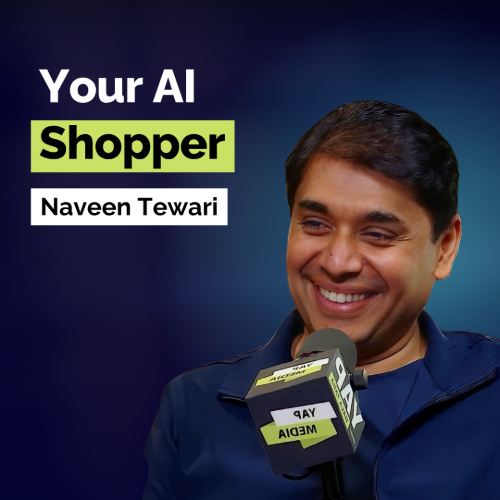
AI is changing how consumers discover and buy products, and Naveen Tewari believes traditional e-commerce is entering a new era. Years after betting early on the mobile internet and building InMobi, he launched Glance, an agentic commerce platform designed to help consumers shop with AI. Despite early resistance, he turned Glance into a standalone company, raised close to $1 billion, and became a two-time unicorn founder. In this episode, Naveen shares how AI agents will reshape buying decisions for consumers, how brands will need to adapt, and how entrepreneurs can position themselves early for this shift into the agentic commerce era.
In this episode, Hala and Naveen will discuss:
(00:00) Introduction
(00:00) Building Two Unicorn Companies
(03:23) Pivoting to AI and Agentic Commerce
(08:15) Naveen’s Leadership Principles and Mindset
(18:56) The Haircut vs. Tattoo Decision-Making Model
(22:40) How Agentic Commerce Changes Shopping
(32:56) Integrating Glance With Siri and Brands
(36:29) Marketing to AI Agents
(38:21) How AI Agents Will Change Branding
(42:27) Privacy and Trust in AI
(43:36) Choosing the Right Strategic Investor
(44:55) Founder Principles: Trust, Passion, and Growth
Naveen Tewari is the founder and CEO of InMobi and Glance. He founded InMobi in 2007, which became India’s first unicorn in 2011, and later built Glance, making him the first Indian entrepreneur to create two unicorns. Today, he leads both companies, with InMobi operating in digital advertising and Glance developing agentic commerce technology. Naveen is an alumnus of the Indian Institute of Technology Kanpur and Harvard Business School.
Sponsored By:
Glance: An agentic commerce platform designed to help consumers shop with AI. Visit glance.com/row to get started.
Resources Mentioned:
Naveen’s Platform, Glance: glance.com/row
Naveen’s LinkedIn: linkedin.com/in/naveentewari
Naveen’s Instagram: instagram.com/ntewari14
Active Deals – youngandprofiting.com/deals
Key YAP Links
Reviews – ratethispodcast.com/yap
YouTube – youtube.com/c/YoungandProfiting
Newsletter – youngandprofiting.co/newsletter
LinkedIn – linkedin.com/in/htaha/
Instagram – instagram.com/yapwithhala/
Social + Podcast Services: yapmedia.com
Transcripts – youngandprofiting.com/episodes-new
LinkedIn Creator Club – Skool.com/linkedin-creator-club
Disclaimer: This episode is a paid partnership with Glance. Sponsored content helps support our podcast and continue bringing valuable insights to our audience.
Entrepreneurship, Entrepreneurship Podcast, Business, Business Podcast, Self Improvement, Self-Improvement, Personal Development, Starting a Business, Strategy, Investing, Sales, Selling, Psychology, Productivity, Entrepreneurs, AI, Artificial Intelligence, Technology, Marketing, Negotiation, Money, Finance, Side Hustle, Startup, Mental Health, Career, Leadership, Mindset, Health, Growth Mindset, ChatGPT, AI Marketing, Prompt, AI in Action, AI in Business, Generative AI, AI for Entrepreneurs, Future of Work, AI Podcast
Naveen Tewari: [00:00:00] Because there is such a big change in the world on technology, you know, you have this massive shift of AI coming, and everything in the world is gonna change. Our belief is that e-commerce will now be replaced with agentic commerce.
Hala Taha: Navin is a technology pioneer who believes AI is about to reshape how consumers discover products, make decisions, and interact with brands.
Today, he's helping define an emerging category called agentic commerce.
Naveen Tewari: They kind of analyze your face, analyze your hair, analyze your body structure, and then basically go search the products that are trending out there, and then search for the products that fit best for you.
Hala Taha: Couldn't there be some incentives that might be unaligned in terms of the brands, like, working with the agents and being like, "Hey, like, I'll give you 10% commission if you push my product"?
Naveen Tewari: Those are things that are gonna happen in the world. No business can run, no technology, no platform can run if it doesn't make money. But the very important criteria here is-
Hala Taha: How is the internet and [00:01:00] shopping going to change when people need to market to agents?
Naveen Tewari: That's a whole new phenomena because agents will be supporting humans in their buying process.
Just like many years ago, everybody had to do search engine optimization, every brand and every, uh, retailer has to do agent engine optimization. The more you train the agent, the better it is for the brand because
Hala Taha: What's up, young and profiters? In this episode, we're exploring the next major evolution of the internet and consumer technology.
Joining us is Naveen Tewari, founder and CEO of InMobi and Glance, two unicorn companies built in India for the world. Naveen's latest company is Glance AI, which is an AI-native platform exploring a new way for consumers to discover and engage with products through agentic commerce. In today's conversation, Naveen shares how he stays ahead of disruption, what he's learned from building through failure, and how entrepreneurs can prepare for the next era of AI and commerce.
[00:02:00] Naveen, welcome to Young and Profiting podcast.
Naveen Tewari: I'm so excited to be here, Hala.
Hala Taha: I am so happy that you're here. I feel like we're gonna learn so much from you. I love talking about AI. I feel like all the things you're doing with AI is just so interesting. So we're gonna dig into that. But before we do that, I really wanna understand your, uh, journey as a founder.
You actually have two unicorn companies. You were one of the first unicorns coming out of India. Yeah. And you basically build companies for the world from India, which is just so cool- Yeah ... and unique. And you started with InMobi. That was your first unicorn. Uh, I want the listeners to understand, like, what does InMobi do, and I really wanna hear the story about how you pivoted when you first started, because when you first started, you were focused on SMS.
Naveen Tewari: Yeah.
Hala Taha: You saw the future of mobile- Oh,
Naveen Tewari: wow, you did, you did a lot of research.
Hala Taha: I did lots of research. Tell me about it.
Naveen Tewari: Well, you know, when we started, the mobile internet was just taking off. Mm.
Hala Taha: So
Naveen Tewari: we weren't sure whether to bet on it or not. Like, this is like [00:03:00] 2007, 2008. iPhone had just come out and, you know, we were trying to place the bet on mobile internet.
Would it take off or not take off? Very soon to realize, wait a minute, there is a huge thing coming our way, and that's mobile internet. And so, as with any economy, if you want a medium to reach everybody in the world, if you want the medium to be, you know, popular with the whole population, then you need something to make it free.
Hala Taha: Mm, mm-hmm.
Naveen Tewari: And that's where advertising platforms come in. Yeah. And so therefore we decided that, hey, let's support building and supporting the mobile ecosystem, and we built InMobi, um, as one of the earliest players in the world on, uh, on mobile advertising, and we are one of the largest players today, uh, across the world.
And you know, you're right. We build, uh, we build our companies from India to the world.
Hala Taha: Yep.
Naveen Tewari: Um, we like to use the expertise that is based out of the country, but [00:04:00] we believe that, you know, technology has no boundaries, and therefore they should be all-pervasive and, and- Mm ... and, you know. So today- You know, US is our largest market.
Uh- Oh,
Hala Taha: wow.
Naveen Tewari: We did not really know, by the way, Hala, that, you know, we would become a unicorn. Mm. We didn't really know what it meant- Yeah ... to be honest. It be- it happened too quickly. Um, and when it happened, we clearly did not know that we are the first unicorn.
Hala Taha: Oh, really? You didn't
Naveen Tewari: know? Yes, we did not know.
Like, when you start, like, you're like, "Okay, let it be a little... You know, we'll, we'll do well." That's it, right? We... Who? Like, you're just trying to survive.
Hala Taha: Yeah.
Naveen Tewari: You're not really trying to figure out, oh, I have this big massive vision, and, you know, you're just trying to survive, and you, you know, do a few things.
And they happen, you know, they, they go well, and then say, "Hey, wait a minute. Let me do a little bit more. Let me do a little bit more." And so-
Hala Taha: Mm-hmm ...
Naveen Tewari: you know, you kind of expand the, um Let me say the audacity of what you can dream of-
Hala Taha: Yeah ...
Naveen Tewari: with time, and that's pretty much what happened. And, and soon enough, you know,
Hala Taha: [00:05:00] good things happened.
And now you're expanding into AI from the mobile internet, which is, like, the next big shift. And so just to be clear, you basically subsidize the mobile internet with advertising. Yes. And, and you are a layer, and you work with other, uh, companies that distribute it for you. And I love that part of your model, that, like, you actually...
You're not in the business of distribution, you are the layer. Talk to us about why you did it that way.
Naveen Tewari: Well, so on the advertising side, what we do is we partner with developers first, and we s- we, we go to the developers and say, "Hey, do you want to, like, create a great application?" And as InMobi, we'll support it as a layer to, uh, you know, for, so that you can, you know, you can make money out of it.
Mm-hmm. And, you know, you can support it and you can create better, better products for consumers. And so that's what InMobi does. Now, when we moved to AI, as InMobi, we thought about the world to say, "Hey, wait a minute. There's this whole massive world of AI kicking in." Mm-hmm. And, [00:06:00] you know, advertising still has to support, uh, this world of AI.
And-
Hala Taha: Yeah. And now your, your business model has changed a bit because before you were business to business, and now you're catering to consumers. So what are the things that you're thinking about now that you are, uh, y- catering to consumers with Glance?
Naveen Tewari: So now, as we did this, we also thought about... You're right.
We also thought about, "Hey, wait a minute." Because there is such a big change in the world on technology, like, you know, you had this massive shift of AI coming in. So we said, "Look, we have a very good understanding of, you know, what could change." Yeah. And we, we kind of looked very deeply and we thought, uh, you know, the way people shop should change.
Uh, and so we went very deep into, uh, reimagining the world of shopping.
Hala Taha: Mm-hmm.
Naveen Tewari: Uh, and we created a new platform called Glance, uh, and that's doing phenomenally well- Mm-hmm ... because [00:07:00] it's a personal shopper. Um, and so we launched a personal shopper. Our belief is that e-commerce-
Hala Taha: Yep ...
Naveen Tewari: which has been phenomenal over the last 25 years or so, will now be replaced with agentic commerce-
Hala Taha: Yeah
Naveen Tewari: where an agent on behalf of you, Hala, would actually assist you in shopping.
Hala Taha: So help me understand, how big is Glance? Like, Glance is something that everybody can go download on their phones right now- Yeah ... right?
Naveen Tewari: Yes. So we launched about a year ago. We have had massive success in the United States. Um, roughly today, roughly about 10 million users use Glance and are using it for shopping.
They're using it for, like, making very intelligent decisions. Hmm. They're using it for discovering great products. We've just been amazed by the usage of it in, in across the US. We almost have people do about 120, uh, s- like, call them prompts or call them searches-
Hala Taha: Mm-hmm ...
Naveen Tewari: every month on the platform. Uh, so it's just been [00:08:00] mind-blowing.
Hala Taha: And people are actually purchasing, right? I think I read- Yes ... like 15% of those- Yes ... users actually go and purchase something- Yes, yes ... which is so cool, that intent-
Naveen Tewari: Yes ...
Hala Taha: which w- what we were
Naveen Tewari: talking. And that's what we wanted to see, that, like, are people gonna use this to just, like, know something, or are they really gonna convert that into, into buying?
And so yes, we are seeing people convert that into, into actual buying. Mm-hmm. And so that's been really exciting.
Hala Taha: I wanna spend the whole second half of the conversation just really understanding agentic shopping, how Glance works, how you envision the future. But first I wanna just understand-
Naveen Tewari: Very excited about telling you that.
Hala Taha: Yeah, I'm really excited about that too, but I really love all your principles as a leader, and I, and I really wanna dig deep on that for the entrepreneurs listening in.
Naveen Tewari: Sure.
Hala Taha: So you created Glance basically as, like, a, a project within InMobi- Yes ... and then you spun it out as a company. That's right. And you are really adamant about having, like, a day one energy at your company.
Naveen Tewari: Yeah.
Hala Taha: Tell us about why [00:09:00] that's so important to you, and how that kind of mentality actually led to the creation of Glance.
Naveen Tewari: You know, if you go back, like, 20, 30 years, uh, companies used to get created, and people would sit on those companies, and they would continue for, like, decades. And the reason why that would happen is because the world did not really change.
Hala Taha: Mm-hmm.
Naveen Tewari: We are now living in a world where the pace of change is faster and faster and faster. So as companies Your time to get disrupted is far shorter. It's not gonna be a few decades, it's gonna be a few years. So the way we think about this is we like to believe we are a startup. Doesn't matter how large we are or not, we- startup to me is a state of mind.
And in that state of mind, and some of the best companies on the planet, technology companies, are always a startup.
Hala Taha: Yeah.
Naveen Tewari: What does that mean? It means that we always think about the most cutting-edge of technology, [00:10:00] and we always think about how can consumers gain from it, and can we go and create that for consumers and give it to them.
So yes, we are a very innovative company. We are a chaotic company. Because we're always on the cutting edge of this, like, things that are happening, and so we get few things wro- right, we get many things wrong.
Hala Taha: Mm-hmm.
Naveen Tewari: Uh, and that's why it's chaotic, because, you know, somebody could sit there and ask a questions to me as a, as a CEO and a founder to say, "Hey, Naveen, what's your five-year vision?"
I may have one, but it'll change.
Hala Taha: Mm.
Naveen Tewari: And when people hear that, some are discomforted by it- Yeah ... because, you know, people don't like chaos. Some love chaos. So we have a set of people in the company, almost think of them as like being self-selected, who love this chaos, who love to think about that, oh, there is this massive change in technology that has just changed, that, that has made the world a level playing field.
So let's go, let's go really fast and build something phenomenal [00:11:00] and change the lives of consumers.
Hala Taha: Yeah.
Naveen Tewari: And make it even bigger.
Hala Taha: I love that mentality. And, and give us some actionable advice. How do you ensure that it's passion leading the way and not, not process?
Naveen Tewari: Oh, my God. Oh, that is such an important thing, because I think companies, especially in today's world- If they're process first, poof, I tell you, they're, they're gone.
Now, it's easier said than done because, you know, the world has... All the books teach you to, like, have a very solid process to everything.
Hala Taha: Yeah.
Naveen Tewari: I think it has to be led by the founder, by the senior people in the company- Yeah ... to enable a thinking of like, "Hey, what can you do different? What can you change?
Can you be disruptive in this? What, like, wh- why should this be done this way? Why are you telling me what you're telling me that has been done before?" And what that entails is an ability to fail. [00:12:00] So at our company, we don't reprimand anybody for failure.
Hala Taha: Mm.
Naveen Tewari: You know, nobody gets crucified for failure at all.
Yeah, we love people who succeed, but that requires people to continuously fail.
Hala Taha: One more founder principle that I wanna cover before- Yeah ... we go into agentic shopping, and we were just kind of talking about it, which is your decision-making. I read something, I'm not sure if you made it up or not, but I thought it was really helpful, where basically you look at decision-making as you've got haircut decisions and you've got tattoo decisions, and I love that.
'Cause I'm making decisions, all of us are making decisions- Yeah ... all the time, and it's such a great framework.
Naveen Tewari: Yeah.
Hala Taha: Tell us about that.
Naveen Tewari: So I, I, I stole that from somebody's- Okay ... some- I, I heard it somewhere. I really loved it myself.
Hala Taha: Mm-hmm.
Naveen Tewari: But now I, I've completely-
Hala Taha: Absorbed it.
Naveen Tewari: Yeah ... yeah, yeah, absolutely.
And so I think we all fret too much about the decisions we make. Every small decision and, you know, you're making decisions and everybody's making decisions. And so one of the things you realize that if you want to move really fast, [00:13:00] uh, and one of the things I realized that we were not doing really well, uh, a few years ago, was we were not making fast decisions.
Hala Taha: Mm.
Naveen Tewari: You know, we would get into a long debate and a lot of conversations and, you know, people would not make decisions because every- You were, you were
Hala Taha: turning corporate.
Naveen Tewari: Yeah. Can you imagine? Oh my God. It just... Oh, God, yes, you're right. And it was just like, it was painful to see, because for every decision, if there is data to back a decision, that's not called a decision.
Hala Taha: Mm.
Naveen Tewari: That's just, like, obvious. But the decision is when you, when there is no clear answer When there's no clear answer for any path you take, there will be pros and cons. And, you know, we had really smart people who would tell me the pros and cons for everything, but they would never make decisions. We changed.
We changed. We realized that there is no decision that's really hard. We don't make as many decisions that are-- Most of our decisions that everybody was fretting on was a haircut decision.
Hala Taha: Hmm.
Naveen Tewari: And, you know, I can live with a bad haircut.
Hala Taha: Your hair grows back, right?
Naveen Tewari: [00:14:00] Exactly. I think I live with that bad haircut anyway, but nonetheless, uh, you know.
And then there are a few which are like the tattoos. Few decisions that are very hard, they're not reversible, those are the ones you can deliberate a little bit longer on. So today I have a thesis at the company that no decision should take more than five minutes. And I know I say that figuratively, but it should be like make rapid decisions, be wrong, but move, move, move.
Very rarely on very few decisions we take a pause. Uh, and that's really helped the company move really fast, right? So, you know, we would have somebody come to me and say- Oh, you made this decision, uh, three months ago, and it's wrong. Say, "Okay, what's the new decision?" It's like, "This." "Okay, let's go." Because all we did, we, we probably lost, like, you know, a couple of months here and there, but we're now on the right path- Yeah
but we're always moving. And, you know, we're not as bad, and, like, people don't get bad haircuts all the time.
Hala Taha: [00:15:00] Yeah.
Naveen Tewari: You get it few times, right? Yeah. So therefore, this thing is only happening a few times. But imagine 99% of my decisions are being made, like, in five minutes, typically that day. And so we move really fast.
And therefore, I love that thesis of like- I love it ... and I have made sure that everybody in my leadership walks in... I, by the way, I-- you know, if you want a decision-making, uh, meeting with me, I have a sofa set outside of conference room. I do that there. Mm. So that we just, like, sit there for five minutes and, you know, say bye to each other.
Because the decision-- If you want me to make a decision, I'll make that in five minutes.
Hala Taha: So cool. I love that. I'm gonna use that in my business. Like, is this a haircut or is this a tattoo? And-
Naveen Tewari: Yeah ...
Hala Taha: try to be quicker about it. And it works.
Naveen Tewari: I tell you, it works.
Hala Taha: Yeah.
Naveen Tewari: It simplifies life.
Hala Taha: Yeah.
Naveen Tewari: And nobody is, like, too bothered.
Hala Taha: Mm-hmm. So we've got commerce, e-commerce, and now we have agentic commerce.
Naveen Tewari: That's right. That's the future.
Hala Taha: Yeah. And really, my first question about this is, is how... Like, talk to [00:16:00] us about the difference between predictability and dev- discoverability versus intent- Mm ... and how AI agentic shopping is going to actually transform the way that we shop into intent rather than just, like, discoverability.
Naveen Tewari: So think of it this way. Let me define how I think about- Yeah ... agentic, how I imagine the future.
Hala Taha: Okay.
Naveen Tewari: Okay? Today, the way we make decisions is we, we do discovery ourselves. We kind of go online, search we- different places. We, we read different content. We go, uh, you know, we, we look at the influencers and the creators we like, and we kind of l- like sift through a lot of this information, and then we say, "Okay, here is what I think I want."
Then we kinda sit on that decision because we're not really sure, and we're kind of like, "Oh my God." Then when we make that decision, we go, like, to figure out, where can I save some money on it? Can I get some discounts? Can I get this and that? And all of these three steps takes a lot of time for people to get.
So we believe that AI [00:17:00] should give a lot of time back to people.
Hala Taha: Mm-hmm.
Naveen Tewari: And AI should save people a lot of money, and AI should ensure that, you know, people buy better, okay? So the way this works now is e- everybody should have their own agent-
Hala Taha: Mm-hmm ...
Naveen Tewari: right? A- a- an assist- a personal assistant who can assist you in shopping.
So the way it works is- The first part of this is, hey, let me... If you want something, tell me about it. Tell the agent about it and the, or your personal shopper about it, and the shopper goes out and, you know, explores all the different brands that it can understand, it knows. Like you and I probably know 100 brands.
Yeah. Maybe you know 200, I know 100 and whatever. Something like that, right? Yeah. Some, some feas- feasibly small number. The agent actually knows, like, hundreds and thousands of brands. So then when you say, "Hey, I'm looking for this," it goes and searches through all of those different... discovers the products from all of those different brands, pulls out the right one for you.
Mm. And the way it does that is because the, [00:18:00] the agent and the, the personal shopper actually knows you a lot. Because, you know, you kind of talk about why you want something, what is the occasion. So you'll say, "Hey, I'm gonna go to Greece for my vacation, and I'm looking to buy some stuff for it." And now it knows, oh, oh, I'm gonna go there in June, and therefore...
You know, and kind of looks at, oh, you're gonna go to Greece, so you must be looking for these kind of things, or you're going in June, so it's clearly very hot out there. Mm-hmm. You know, and these are the things you want to do. So therefore it, it knows the context in which you're asking that question, and therefore knows who you are, how you look, you know, what you really like to do in the pa-- you know, what, what kind of, you know, stuff you like to buy.
So it makes a great decision for you. And then selects a few products for you. And when it selects a few products, it basically then puts them on you-
Hala Taha: Mm ...
Naveen Tewari: so that you can visualize them then and there. So th- this process just takes, like, few seconds now. Now when you've seen few products and you kind of say, "Oh, [00:19:00] I like this Then it go- runs around and goes and finds out how can it get you that product in the least possible-
Hala Taha: Mm
Naveen Tewari: uh, it, it gives you the most amount of saving. So then it goes out and says, "Oh, you have these credit cards, you have these loyalty programs. Let me go save you a lot of money." So in this process, you, you discover all these small little brands that you may not ever heard of, but they're best for you. They, it, it presents the product in you in a way that you have a choice that you can make with a lot of certainty.
It tells you why it looks good on you. And then it says, "Buy it from this retailer or this place, and use this credit card" and whatnot, so that you save money.
Hala Taha: Mm.
Naveen Tewari: And all of this thing is done in, like, seconds.
Hala Taha: Yeah.
Naveen Tewari: And therefore, as you keep on going and as you keep on, you know, uh, shopping using your a- personal agent and personal shopper, it learns.
Hala Taha: Yeah.
Naveen Tewari: It continuously learns. And therefore, you know, it can tell you, [00:20:00] "Oh, you know this favorite brand of yours?" Let's say, uh, Alice + Olivia. It just dropped a latest, uh, line of products.
Hala Taha: Mm.
Naveen Tewari: Y- you might not even remember that it just dropped its latest line of products, and it'll say, "Hey, do you wanna just see three of those products that they dropped that I think are best for you out of the many that they've dropped?"
Mm. And they show it to you then and there. So a lot of these are ways in which the agent, agentic shopping will come in, because, you know, my view is we are fundamentally adding intelligence into the way people shop.
Hala Taha: Mm.
Naveen Tewari: And that should change the way the world p- the world shops.
Hala Taha: Yeah. And it's gonna happen so quickly.
And, and when I was learning about it, the key difference that I see with it is, is the context, right? So before, when we'd go shopping, I might go onto either, like, a marketplace like Revolve or Google, and I'll just be like, "I need black shoes, 5.5 size," or whatever. Yeah. But with Glance platform, you guys actually have, like, five different agents that are working.
Yeah. And, like, you're, you're saying, [00:21:00] like, what location is she is? What's the weather like? Is it raining? Is it not raining? What is... What are people wearing locally? Yeah. Which is, like, so interesting. And then you're also even looking at, like, digital Body behavior, like, uh, body language.
Naveen Tewari: Exactly.
Hala Taha: Tell us about, uh, digital body language.
I think that's so interesting.
Naveen Tewari: Think of it this way, right? So every, every one of us, when we think about, uh, you know, shopping and think buying products, we like to see, you know, there are different agents, as you rightly said. You know, they kind of analyze your face, analyze your hair-
Hala Taha: Mm-hmm ...
Naveen Tewari: analyze your body structure- Yeah
and then basically go search the products that are trending out there, and then search for the products that fit best for you.
Hala Taha: Mm-hmm.
Naveen Tewari: And you know, there is enough and more data in the last 25 years of, of let's call it fashion, that it tells you what would look good on a certain-
Hala Taha: Mm-hmm ...
Naveen Tewari: body structure type and- Whether
Hala Taha: you're petite or w- wide or whatever, yeah.
Naveen Tewari: And by the way, it's not always true that you would [00:22:00] like exactly what the world has liked. So then it tries to tweak it around by learning from you. Mm-hmm. And if you say, "Hey, no, no, no, I like this," even though the world... And it learns that quickly. So in that example it just gave me, you said, hey, 5.5 your shoe size.
It'll know that now.
Hala Taha: Mm-hmm.
Naveen Tewari: You don't have to repeat that ever again.
Hala Taha: Mm-hmm. And it will say like, "Okay, this one runs small. This one runs big."
Naveen Tewari: Exactly. And it'll also say, "Hey, wait a minute, I know you bought this shoe like seven months ago. Do you really wanna buy this one? Instead you should buy this," because then you have like two different choices.
Hala Taha: Mm-hmm.
Naveen Tewari: And it can do so many things for you that you, it's like you're literally talking to it all the time.
Hala Taha: Yeah. And it's like any other algorithm. Basically, like let's say I see a dress from Alice + Olivia. We were just talking about this brand. Yeah. And I'm always spending more time looking at that dress.
It's gonna account for, okay, well Hala spends more time or swipes really fast, so we're not gonna show her that, which I just think is so cool. Yeah. And, and shopping is just gonna evolve in that way, where it's just gonna study your little behaviors to [00:23:00] know what is your taste so that you actually get something you like.
Naveen Tewari: Exactly. What it could also do is to say, "Oh, you really like Alice + Olivia. Let me tell you five other brands that you've never heard of, based out of New Zealand, based out of Spain, based out of Germany, that create very similar products."
Hala Taha: Mm.
Naveen Tewari: So suddenly it expands your discovery horizon and shows you products from other brands that, of similar quality that you may like to consider.
Uh, and you could say yes or no to that, and it'll take that input and then kind of figure things out, but it takes what you're really trying to do and ex- and s- and help you.
Hala Taha: Yeah.
Naveen Tewari: Just like a personal shopper would. Uh, and it's always listening to you, and it's, you buy better products. You select them so that you don't have to return them.
Hala Taha: Mm-hmm.
Naveen Tewari: And you pay less.
Hala Taha: Yeah. Now, do you feel like shopping is always gonna happen on the screen? How do you think that's going to evolve? Like, do you think that we're always gonna be on mobile, we're always gonna be on our computer? Or how do you think that shopping will be like [00:24:00] integrated into our daily life outside of the screen?
Naveen Tewari: It's a great question. The way we think about this is you can use your personal shopper when you have an intent, but what if I placed your personal shopper wherever you go? Okay, so for example, in the digital world, let's say you, uh, uh, in the screen world, let's say you're watching a, you're watching a TV show.
Let's say you're watching Emily in Paris.
Hala Taha: Mm-hmm.
Naveen Tewari: And let's say, uh, you know, in a certain s- scene you really liked the products that appear in the scene. Today, you can't do anything about it.
Hala Taha: Mm.
Naveen Tewari: Tomorrow, you could actually activate your agent, which is already placed on the TV, to say, "Hey, in the last 10 seconds, that's, that's the, you know, the, the scene.
I really love it. Can I go buy it?"
Hala Taha: Yeah.
Naveen Tewari: And it'll tell you, extract the products out of that scene, you know, show them how they would look on you, and then go find which retailer you can go buy that product from. Mm. So that's just a point where the inspiration didn't happen on your ph- mobile phone or [00:25:00] tablet, but happened on TV.
Mm. And that's a great example on how the personal shopper that we've built, which is Glance, actually goes, sits on different screens where if they belong to you, you can activate them there, and it's all interconnected with each other.
Hala Taha: And so you can download Glance on your phone. You can use it on your smart TV.
Yeah. And now you can basically ask Siri if you want help with shopping. Tell us about your new Apple integration.
Naveen Tewari: Yeah. Um, we're very excited about that. Glance was recently featured couple of days ago in the biggest, uh, tech event of Apple-
Hala Taha: Mm ...
Naveen Tewari: uh, as one of the few apps that have actually integrated very deeply with Siri.
So therefore- Mm ... on your, uh, iPhone, latest iPhone, what you could do is just, like, use Siri to activate Glance, and then use Siri to essentially buy directly using Siri.
Hala Taha: Mm.
Naveen Tewari: Um, and that's just, like, think about all the places, [00:26:00] uh, and different ways in which the whole ecosystem is coming together- Yeah ... to essentially leverage the intelligence of Glance and the intelligence of Apple to make sure that your, your buying process is smarter, better, and faster.
Hala Taha: So I'm wearing Alice + Olivia, and I know you actually just, uh, had an event with them at Fashion Week. So talk to me, like, if I saw this dress on somebody else at a party, how would I buy that dress?
Naveen Tewari: So yes, we did a big partnership with Alice + Olivia. Uh, they are now an agentic brand, and probably one of the first...
And it's an amazing brand, by the way. One of the first brands that actually has gone agentic. So therefore- Oh, wow ... what happens is if you were to see, let's say, a latest, uh, if you see somebody else wearing Alice + Olivia, or if you just, uh, you know, if you're interested in Alice + Olivia, their latest product, our, our model is trained on it.
Mm. Which means that if you show your interest in Alice + Olivia, either because you saw it somewhere or [00:27:00] you're just keen, you would actually be able to see yourself in Alice + Olivia- Mm ... latest product. And then you can e- you know, just like your s- your vis- you know, as I can see you right now, you can see the same, same image get generated, and then you can just buy it from there.
Hala Taha: So basically, like, if I'm online and I'm on Alice + Olivia, I can see myself as the model- Exactly ... in all the dresses. And if I am at the store- Could I use my Glance app and then see myself in all the dresses? Absolutely.
Naveen Tewari: Oh,
Hala Taha: so cool.
Naveen Tewari: Yes, absolutely. All of those things you could do. Because you could go to the store, you could use the app, and you can basically see, "Oh, this is how I would look in the same dress that you're looking at right now."
And so your buying process is far better. Wherever you're going to go, Hala, it is gonna support you in your, in your buying decision. Mm. And that's the ... That's how we have built it. So for example, I'll give you one more example.
Hala Taha: Yeah.
Naveen Tewari: So let's say you go ... Give me one of your favorite branch.
Hala Taha: Um, Love & Lemons.
Naveen Tewari: Oh, Love & Lemons, right? Let's say you go on the website. [00:28:00] So today when you go on the website, you see a bunch of products Tomorrow, if they were to integrate Glance in it and make themselves agentic, when you go there, the website would look very different because the website would actually have all the products, few of the products that the a- the-- your personal shopper believes is right for you shown upfront, and they would show those products on you.
Hala Taha: So cool. So you're the model now on
Naveen Tewari: the website. You are the model. Exactly. And now you can see those products on you. Hmm. So therefore, y- you know, the, the website goes from being personalized to being personal. The website goes from being non-agentic to being agentic, and that's the power of this.
Hala Taha: So we still might have the visual layer for humans because we enjoy shopping.
Yes. We enjoy looking at ourselves. But how is the internet and shopping going to change when people need to market to agents?
Naveen Tewari: Yeah. That's a, that's a whole new phenomena. First, [00:29:00] everybody has to believe that agents would be part of this new-- You know, we've been marketing to humans.
Hala Taha: Mm-hmm.
Naveen Tewari: You have to market to agents, right?
Yeah. Because agents will be supporting humans in their buying process. I am not of the belief that agents would take over the buying.
Hala Taha: Hmm.
Naveen Tewari: Agents would support, uh, humans and assist humans in their buying, just like our personal shopper does. And so therefore, as you think about this example that you just, just, just referred to, the marketers and the CMOs basically have to make sure that whatever their brand is can be understood by the agents.
Hala Taha: Yeah.
Naveen Tewari: So th- just like many years ago, everybody had to do search engine optimization.
Hala Taha: Mm-hmm.
Naveen Tewari: Every brand and every, uh, retailer has to do agent engine optimization-
Hala Taha: Hmm ...
Naveen Tewari: so that agents are well-trained-
Hala Taha: Yeah ...
Naveen Tewari: on what is part of their inventory, what is part of their store, what the brand stands for, uh, how would they want their products of their brands to [00:30:00] be showcased by AI-
Hala Taha: Yeah
Naveen Tewari: by the agent, right? Because it's very important. Every brand has a very deep ethos on what they stands for. And you know, they should actually-- The more you train the agent, the better it is for the brand because agent is not doing anything else except for assisting the user in making a better decision.
And so the more you train the agent and you, you partner with the agent, it'll actually help them.
Hala Taha: Couldn't there be some, uh, incentives that might be unaligned in terms of the brands, like, working with the agents and being like, "Hey, like, I'll give you 10% commission if you push my product"? How do you see that playing out?
Naveen Tewari: Oh, absolutely. Look, those are things that are gonna happen in the world, but the reality is at that point of time, humans will not trust that agent. And so therefore, it happens in the digital world too, and then you stop trusting that d- those, the advice. So therefore- Hmm ... for example, at Glance, we are very clear that it only works for the user It has to support the user, and if there is an economic incentive, we, [00:31:00] uh, will be transparent with the user to say, "Hey- Yeah
this decision, if you were to make, I have an economic incentive. Please make your decision knowing that I have, I have an economic incentive here." Uh, but because I think humans know and people know that, look, no business can run, no technology, no platform can run if it doesn't make money. So as long as you're transparent about the fact that, "Look, I have an economic incentive here," people will take that into account and assist and make the decision.
But the very important criteria here is don't ever make a decision that is not for the user.
Hala Taha: Yeah. And how do you think branding will change? Do you feel like it will be, like, a really big moat if, like, you've already built a brand with, like, lots of reviews and, um... Or do you actually feel like it's gonna be better for the smaller new brands?
Naveen Tewari: It's a great question. I think, uh- AA DL UA WN AS FR BA VS [00:32:00] U2 FZ SQ SU EY
QF[00:33:00]
Hala Taha: LH AF
Naveen Tewari: KL LX EI QJ 6H 3K DP XQ 9C
Hala Taha: MZ
Naveen Tewari: 5Y
4K 9W TP XJ JA XQ 3U 7M 2P At the end [00:34:00] of the day, it is a human-assisted, uh, you know, uh, workflow.
Hala Taha: Mm-hmm.
Naveen Tewari: It's not just that the agent is gonna go by on their own. They're gonna showcase something to the user, and the user is gonna make the final decision. So therefore, you now have to market to both the agent- Mm
and the humans.
Hala Taha: So fascinating. Yeah. How do you think about privacy with all this if, you know, AI is kind of capturing even, like, how long we're looking at something?
Naveen Tewari: Yeah.
Hala Taha: How do you think about privacy, since you're collecting so much data from people?
Naveen Tewari: Uh, and look, the privacy is, like, at the core of what every agentic solution is all about, right?
Mm-hmm.
Hala Taha: So
Naveen Tewari: the idea that, uh, the agentic platforms would function on and keeping your data just to itself is very important, because the model that is getting trained in the moment is just on you. And, and, you know, it will do what you need it to do. So therefore, privacy is the core of it. As long as [00:35:00] you can trust the agent to say, "It's not gonna, you know, release my data elsewhere," it should be fine.
Mm. And, you know, most high-quality agents would be very, very careful about what they're, how they're treating privacy because, again, trust is very, very central to all of this.
Hala Taha: Yeah. Well, it's so exciting to see, uh, agentic commerce, ambient commerce. Yeah. Uh, and I'm excited to see how Glance really transforms this whole industry.
You guys are obviously the leaders. Now, you guys actually just got a, a strategic investor. L Catterton, is that how you say it?
Naveen Tewari: L
Hala Taha: Catterton. L- Yes. Yeah. Tell us about that. How did you decide that they were the right partner for you?
Naveen Tewari: They have built some of the most iconic brands in the world-
Hala Taha: Mm-hmm ...
Naveen Tewari: are part of the process of building these brands for so many years.
So, uh, we partnered with them because, you know, we've been raising capital from a lot of, uh, tech investors. We're excited about raising capital from, um, a consumer investor. [00:36:00] Because at the end of the day, what we're building is at the intersection of consumer retail-
Hala Taha: Mm-hmm ... and
Naveen Tewari: technology.
Hala Taha: Mm.
Naveen Tewari: And we felt that they bring in a unique insight into how brands think and how, you know, what is the future of, of commerce.
And we had a huge alignment in the way both parties think about the future of where the shopping is headed, and-
Hala Taha: Mm ...
Naveen Tewari: they are, they are betting massively on agentic commerce as being the future, and we kinda just felt at home with them. And so therefore, yeah, we're very excited about the partnership.
Hala Taha: Yeah.
Well, I know that we don't have that much time left, but I, I wanna leave our listeners with one more founder principle, since we have some time. Go
Naveen Tewari: for it.
Hala Taha: So I know that trust is really big for you.
Naveen Tewari: Yeah.
Hala Taha: Help us understand why trust is so important to you, and how trust compounds to help scale your business.
Naveen Tewari: It's a, it's such important topic, and, you know, I can speak for hours on this, because it's, like, at the core of- How we've tried to build the company, I am a trust-first person. Like, you know, if I [00:37:00] meet somebody, if I-- somebody's on my team, I trust them a lot because I, I generally believe that, you know, every, every person has an interest in making something great with their life.
Hala Taha: Mm.
Naveen Tewari: Um, and they are very capable, and they wanna do something big and, you know, if you're... And then if they see that I'm trusting them, they give it back.
Hala Taha: Yeah.
Naveen Tewari: And therefore, what happens when trust compounds and, you know, they make bigger and bolder decisions, they take more risk, they tell you when things go wrong because they can trust you.
They give you, uh, all the confidence because they know you have-- you know, we have their back- Mm-hmm ... or I have their back. And that compounding is one of the things why we feel at the company We continue to scale. One of the outcomes of this is, you know, we started, as I said, 2007, 2008, uh, almost 18 years.
And, uh, one of the things we, [00:38:00] we see is a lot of our people have stayed with us.
Hala Taha: Mm.
Naveen Tewari: Because they love this, uh, relationship that we have with each other, which is very deeply rooted in trust. And so therefore, it gives us, not just me, but the whole set of company ability to make big decisions- It's like
Hala Taha: security
and bold decisions. It's like- Yeah ... you've got really strong security.
Naveen Tewari: Yes. And therefore, what you realize is you're asking people to make big, bold decisions. They're not gonna make it because bold decisions don't come from here, they come from the heart.
Hala Taha: Mm.
Naveen Tewari: And the only way they'll feel confident about is when they feel that they are, they have safety.
They have psychological safety. They know that they will not be let down. And so therefore, that's been one of the biggest, you know, blessings of-
Hala Taha: Mm-hmm ...
Naveen Tewari: what I have around my team. Yeah. And I couldn't have asked for something more. Like, I trust them blindly
Hala Taha: and- Mm-hmm, and [00:39:00] you're loyal ... I, I- I mean, you kept all your co-founders and even- Oh, yeah.
Absolutely ... after becoming a unicorn. It's amazing.
Naveen Tewari: Yeah.
Hala Taha: Well, I end my show with two questions that I ask all of my guests. This has been an incredible conversation. Uh, the first one is, what is one actionable thing our Young Improfeters can do today to become more profitable tomorrow?
Naveen Tewari: If you think about the...
It's, this is relatively easy, but-
Hala Taha: Yeah ...
Naveen Tewari: if you think about technology today, you have such amazing cap- like, technologies available to us that we, like, we gotta just think very differently about the world. If you are thinking incrementally about the world, you're actually creating company that will not exist more than a few years later.
And so therefore, you have to think disruptively about the company. And my view is that companies in the next few years that'll get created will not be small or mid-size. They'll be really large.
Hala Taha: Oh,
Naveen Tewari: really? It is impossible. It's, like, if you get the technol- like, or you'll shut down, right? So you, actually, [00:40:00] the next few years is all about creating really large companies, which basically means that you've created something that's just changing some aspect of the world, impacting users in a very, very significant way.
So therefore, I know it's not the exact answer to the question you're asking- No, that's
Hala Taha: okay ...
Naveen Tewari: but, but it, it, to me, this whole technology bend, this new trend of AI You just have to go crazy, and you just, like, cannot, like, hold yourself back
Hala Taha: So, like, think bigger.
Naveen Tewari: Go for it.
Hala Taha: Step back and figure out, like, how am I gonna get disrupted, and what can I do to solve big problems?
Naveen Tewari: Yes. And, and you're gonna just see the adoption, and you're gonna see the scale really quickly.
Hala Taha: And what would you say your secret to profiting in life is?
Naveen Tewari: I am all about living my life with very high level of passion.
Hala Taha: Mm.
Naveen Tewari: I think of it as, you know, one life, and, uh, I feel very blessed. [00:41:00] And, uh, I think about it as saying, like, I love what I do.
I love being an entrepreneur. I love creating, uh, you know, innovating and creating technologies. And I feel that there is just one life, and you have to live it very passionately. And if you live your life very passionately, you'll see success, you'll see failures, but you'll be happy.
Hala Taha: Mm.
Naveen Tewari: And, uh, you know, we've gone through our ups and downs and ups and downs, and there is no dearth of it.
Uh, but I've enjoyed every bit of it.
Hala Taha: Mm.
Naveen Tewari: And I would not trade it for anything. And, uh, I love the fact that, you know- my passion is something I can also follow, and, uh, and continue to work on it. And so therefore, I just feel blessed to be able to do what I passionately love, um, and also see success in it.
Because the reality is, if you see success in your passion, you do more of it.
Hala Taha: Mm.
Naveen Tewari: So it-- that's the compounding I want, and I'm just, [00:42:00] yeah, obsessed with being passionate and just doing what we are doing.
Hala Taha: I love it. Well, Naveen, this has been an incredible conversation. Thank you for joining us on Young and Profiting podcast.
Naveen Tewari: Thank you, Hala. Thank you for inviting me.
Hala Taha: Yeah, fam, I really learned a lot from Naveen today. Most people react to major technology shifts once the market has already started to change. But Naveen thinks differently. He tries to understand where human behavior and technology are heading early enough to build for what's coming next.
You can see that clearly in Glance AI, and how he thinks about agentic commerce. For the last 25 years, e-commerce has really put most of the work on us when it comes to shopping. We search marketplaces, compare products and prices. We're second-guessing our choices, and we're making a lot of returns.
Naveen believes that AI agents could take much more of that work off our plate by understanding intent, preferences, and context, and therein, helping us make better buying decisions. And for business owners, that could [00:43:00] change everything we know about marketing. We spent years learning search engine optimization, or SEO.
Now, Naveen believes brands may also need to think about agent engine optimization, making sure AI agents understand the brand's products, what they stand for, their values, and who they're best suited for. But staying ahead of change is not just about seeing what's coming. You also have to move fast enough to act on it.
I just loved Naveen's haircut versus tattoo framework for decision-making. Most business decisions are really just haircuts. If you get it wrong, your hair grows back, and you keep it moving. Tattoos are those rare decisions that are much harder to reverse, and deserve deeper deliberation. When you stop treating every decision like a tattoo, you give yourself and your team permission to move faster, learn, and course-correct.
And sometimes moving fast means getting things wrong in public. That may be one of the biggest takeaways from this conversation Innovation requires more than just [00:44:00] big ideas. It requires the ability to keep moving through uncertainty, make decisions without perfect information, and come back after failure with enough courage to try again.
A huge thank you to Naveen for stopping by the studio, and a special thanks to our partners at Glance AI for sponsoring today's episode. Since Naveen and I recorded this in person together, you can watch the full video conversation on YouTube or Spotify Video. And if this episode changed the way that you think about AI innovation or decision-making, share it with an entrepreneur who needs to hear it.
Make sure you subscribe to the show, drop us a five-star review wherever you listen, and connect with me on Instagram or TikTok at yapwithhala or LinkedIn, just search my name, it's Hala Taha. This is your host, Hala Taha, AKA The Podcast Princess, signing off
Episode Transcription
Enter your name and email address below and I'll send you periodic updates about the podcast.

