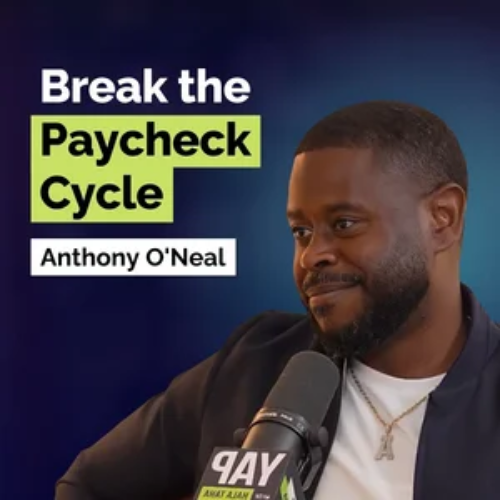
Anthony O’Neal: Tired of Living Paycheck to Paycheck? Break the Money Habits Blocking Your Financial Freedom | Finance | E413
Financial freedom felt out of reach for Anthony O’Neal at 19, when he was homeless and $35,000 in debt after spending money he didn’t have to look successful. Years later, he was earning six figures but lost his job with only $400 to his name, proving that even high earners can be broke if they lack financial literacy and money management skills. That realization pushed him to stop chasing the appearance of wealth, become debt-free, and build a career teaching others to take control of their finances. In this episode, Anthony shares how to stop living paycheck to paycheck, eliminate debt, create financial margin, and build a financially secure future.
In this episode, Hala and Anthony will discuss:
(00:00) Introduction
(00:00) Facing Homelessness and $35,000 in Debt
(07:20) Luxury Spending and Fake Wealth
(09:34) Credit Scores, Credit Cards, and Freedom
(18:03) How Anthony Finally Became Debt-Free
(25:10) How Big Is the Paycheck-to-Paycheck Problem?
(30:31) Budgeting and Building Financial Margin
(40:00) Protecting Personal Finances as an Entrepreneur
(44:52) Creating More Margin Through Entrepreneurship
(50:44) Generosity as a Wealth Principle
(55:16) Anthony’s Financial Escape Plan Explained
(1:11:17) Navigating Relationships, Prenups, and Finances
Anthony O’Neal is a personal finance expert, speaker, and host of the popular YouTube show and podcast, The Table with AO. A former Ramsey Solutions personality, he is known for helping young adults and entrepreneurs take control of their money through budgeting, saving, investing, and debt elimination. Anthony is also a national bestselling author, and his most recent book, Stop Living Paycheck to Paycheck, is a guide on how to break free from debt, build real wealth, and live free on any income.
Sponsored By:
Indeed – Get a $75 sponsored job credit to boost your job’s visibility at Indeed.com/profiting
Shopify – Start your $1/month trial at Shopify.com/profiting.
Northwest Registered Agent – Get a complete business identity with Northwest. Visit northwestregisteredagent.com/YAPFree and start using free resources to build something amazing.
Mindstone – Master practical AI skills without the complexity with Mindstone’s AI Competency Programme. Head to experience.mindstone.com/yap and get 10% off.
AT&T Business – Stay connected with reliable, secure internet built for entrepreneurs. Switch to AT&T Business at business.att.com.
HoneyLove – Treat yourself to the most advanced bras and shapewear on the market. Save 20% off Honeylove by going to honeylove.com/PROFITING! #honeylovepod
ElevenLabs – ElevenAgents by ElevenLabs helps businesses deliver better customer experiences. Start with a demo at ElevenLabs.io/profiting
Quo – Bring your calls, texts, and contacts together in one place. Try Quo for free, plus get 20% off your first 6 months when you go to quo.com/profiting.
Resources Mentioned:
Anthony’s Website: anthonyoneal.com
Anthony’s Instagram: instagram.com/anthonyoneal
Anthony’s Book, Stop Living Paycheck to Paycheck: bit.ly/-Paycheck2Paycheck
Anthony’s Book, Debt-Free Degree: bit.ly/-DebtFreeDegree
Rich Dad Poor Dad by Robert Kiyosaki: https://bit.ly/RichDad-RK
The Total Money Makeover by Dave Ramsey: bit.ly/TTMoneyMakeover
Active Deals – youngandprofiting.com/deals
Key YAP Links
Reviews – ratethispodcast.com/yap
YouTube – youtube.com/c/YoungandProfiting
Newsletter – youngandprofiting.co/newsletter
LinkedIn – linkedin.com/in/htaha/
Instagram – instagram.com/yapwithhala/
Social + Podcast Services: yapmedia.com
Transcripts – youngandprofiting.com/episodes-new
Entrepreneurship, Entrepreneurship Podcast, Business, Business Podcast, Self Improvement, Self-Improvement, Personal Development, Starting a Business, Strategy, Investing, Sales, Selling, Psychology, Productivity, Entrepreneurs, AI, Artificial Intelligence, Technology, Marketing, Negotiation, Money, Finance, Side Hustle, Startup, Mental Health, Career, Leadership, Mindset, Health, Growth Mindset, Stock Market, Scalability, Investment, Risk Management, Financial Planning, Business Coaching, Finance Podcast
Hala Taha:Anthony, welcome to Young and Profiting Podcast.
Anthony O'Neal: Man, holla. I, I've been excited about this one.
Hala Taha: Oh, thank you so much.
Anthony O'Neal: Oh my gosh. I flew in just to sit down with you.
Hala Taha: Oh, I'm so honored. I feel like our listeners are gonna learn so much from you. Yeah. Hope so. And I, I do wanna start from your origin story, because it was so powerful.
You've got this awesome rags to riches story. Oh,
Anthony O'Neal: man.
Hala Taha: So I found out that you were homeless at age 19.
Anthony O'Neal: Yeah, yeah.
Hala Taha: And one of the most pivotal moments for you was when a little girl saw you-
Anthony O'Neal: Mm-hmm ...
Hala Taha: and asked her dad, "Hey, Daddy, c- can we give him some money?" And, and he said- Yeah ... "No."
Anthony O'Neal: Yeah.
Hala Taha: What, what feelings did that bring up at the time?
What kind of shame were you going through at the time?
Anthony O'Neal: Um, a lot, if I'm being honest and transparent. You know, um, just a little, a little backstory. Right around that time, um, there were some tough issues happening within that particular city in O- Oceanside, California. Uh, we had just built the very first school that was named after the, [00:01:00] the first African American to really do big things, uh, from my knowledge- Mm-hmm
of it, Martin Luther King Jr. And so I felt like I was being judged, um, one, possibly for skin color, or two- Mm-hmm ... for, uh, that. But I also remember being the kid in the backseat asking my parents the same question when I was young.
Hala Taha: Mm-hmm.
Anthony O'Neal: And I was like, "Man, I'm not, I'm not a bad guy." Yeah. Like, I, I, I'm not gonna do drugs.
I literally wanted to go to Carl's Jr. and get me a d- a burger and some fries. And when I heard the father say, "We don't give them money-
Hala Taha: Mm ...
Anthony O'Neal: because they'll do bad things with it,"
Hala Taha: Mm.
Anthony O'Neal: Um, I remember walking back to my car, and I got in the backseat of my car, and, um, suicide came to, to thoughts. Um, I'm a Christian man, and I was like, "Man, God can't be real."
Hala Taha: Mm.
Anthony O'Neal: Um, I felt like my life didn't matter, and I felt like just giving [00:02:00] up on life. Um, clearly I didn't, um, 'cause I'm still here today, uh, but a part of me was like, "Man, I'm done."
Hala Taha: Yeah.
Anthony O'Neal: Uh, because if we re- rewind- All the money that I spent up until that point was on my friends, was on ladies I was trying to impress, was on a lifestyle that I was trying to maintain.
And not one person who I tried to impress, who I helped- Hmm ... who I bought things for, they never offered me a place to go lay my head. They never offered me a place to come and eat. Then here you go, I got my mom and my dad, who are these God-fearing people, and me and my father get into this argument that pretty much lands me outside of the home.
Hala Taha: Mm-hmm.
Anthony O'Neal: And so I'm looking at both sides of my worlds are saying, "Yeah, no, bye." And so it, it was a, it was a tough season, but I also do believe, Hala, that was the best season of my life.
Hala Taha: Mm. Because it led to everything else, like your, your purpose in life, [00:03:00] essentially.
Anthony O'Neal: It, it forced me to see who, see me.
Hala Taha: Yeah.
Anthony O'Neal: And to see the lack of information that I didn't have at the time.
Hala Taha: Mm-hmm.
Anthony O'Neal: Then it also made me be like, "Yo You don't really have real friends in your life.
Hala Taha: Mm-hmm.
Anthony O'Neal: You have users.
Hala Taha: Yeah.
Anthony O'Neal: You have placeholders, but you don't really have real friends. And three, it really made me understand that my parents did love me.
They were just trying to teach me the best that they could- Yeah ... with the information that they had. And then again, like I said, I'm a spiritual guy. I just, I just literally fell to my face and was like, "Okay, God, what do I need to do?"
Hala Taha: Mm. "
Anthony O'Neal: And how do I get back on my feet?"
Hala Taha: I really wanna talk about how you got back on your feet.
Yeah. But first of all, let's, let's talk about how bad it was. Oh. 'Cause you were $35,000 in debt.
Anthony O'Neal: 35,000 when I should've been, if we're gonna look at it from a practical perspective, I probably should've been in zero.
Hala Taha: Yeah.
Anthony O'Neal: You know, my [00:04:00] father, uh, my biological father. So I have a unique situation. Mm-hmm. I have four parents.
Mm-hmm. And my, um, biological parents had me outside of wedlock, so my biological father married my other mother, who's an amazing woman still to this day, and they lived in Fayetteville, North Carolina. My biological mother married my other father, had two more siblings, and we all lived in Oceanside, California.
Mm. Pretty much San Diego. And so, man, when I sit here and I tell you that I, I, I had a, a solid upbringing of, of people, it was just absolutely, absolutely amazing.
Hala Taha: Mm.
Anthony O'Neal: Um, but I'm grateful for those four parents that really sowed into me.
Hala Taha: Yeah, but, but they, they failed to kind of teach you financial literacy, right?
Because- Absolutely ... you ended up in debt. How did you end up in the $35,000 debt?
Anthony O'Neal: Well, the first part was, which was the craziest part, is my biological father, like I was saying, he, uh, was in the Army, right? So I had my father's GI Bill. Mm. So when I went to school, I didn't have [00:05:00] to borrow any money.
Hala Taha: Mm.
Anthony O'Neal: But because my parents, unfortunately, which I love, and they're, they're pretty sure they're gonna be watching this show, so I love you, Mom and Dad.
So just know I love you when I say this. Um, they didn't know what to do with their own money at the time. Yeah. And so the, the world taught me, "Well, hey, since you have access to this money, go borrow it."
Hala Taha: Mm-hmm.
Anthony O'Neal: And I'm like, "All right, bet. Cool, man. There's no problem." My school was already paid for with the GI Bill.
Hala Taha: Yeah.
Anthony O'Neal: So I take out $15,000 in student loans just to, just to live, just to have money, just to go buy nice things. Then I was like, "Okay, cool. Great." I get a credit card.
Hala Taha: Mm-hmm.
Anthony O'Neal: And I get that credit card very first day. My mama tells me, "Nah, bro, don't do that." And I said, "Mama, I'm, I'm good. I got it." Mm-hmm. And within 24 hours, I maxed out that first card.
And so back then in them days, you know, they were just giving away credit cards to college students, and so they upped that limit to about $1,500. I spent that on my car and a sound system. Mm. Then six, seven months later, you know, I'm in [00:06:00] another, what's that? About $20,000 worth of debt, renting from Aaron's sales and lease, renting a PlayStation and a big- heavy floor TV.
You know, I'm, I'm renting leather couches- ... that I was sweating on. I'm, I'm renting the bed inside of the apartment. Oh my God. And so I'm, I'm just racking up all this money. But if I'm being honest, my parents didn't teach me financial literacy because their parents and the school system didn't teach it.
Mm-hmm. So who taught me finance was BET. Who taught me finance was MTV Cribs. Mm. Uh, it was the music videos. It was the, the environment that I subscribed to that was showing me, "If you wanna be successful in life, you better drive this, you better have this kind of house, you better have the PlayStations."
And if I go really honest and vulnerable with you, if you wanna get a beautiful woman, you better have some money. Yeah. And so I said, "Well, let me go get this money," when it wasn't my money, it was borrowed money, and no one even taught me what... I just knew if you borrow money, you pay it back, but no one told me interest.
Hala Taha: Mm.
Anthony O'Neal: No one said, [00:07:00] "Hey, over a period of time, it's gonna be way more." If you borrowed 500, if you pay it over the minimum payments over three, four years, you gonna spend $2,000 for it. Mm. And so, uh, that's how I got into the $35,000 worth of debt. And, uh, uh, I would say about 32,000 of it went to collections.
Hala Taha: Mm.
There's so much to dig into there, but something that really hit me while you were talking is the fact that you felt like when you were down and out, you had nobody to turn to. Mm-hmm. Mm-hmm. Meanwhile, you did all this spending to impress those very same people. That's correct. Like, you were trying to put on a facade.
Anthony O'Neal: Yes.
Hala Taha: And it was the culture that you were in-
Anthony O'Neal: Mm-hmm ...
Hala Taha: that was really, I guess, pushing you to feel like you needed to buy all these things, have this image, look blessed. And I actually saw something on your social media. You said 76% of luxury buyers are actually broke.
Anthony O'Neal: For sure. Yeah, yeah. It, it's, it's when I look at social media, uh, when we look at what's [00:08:00] going on, we see that, um, uh, for an example, well, I won't say the name of the city 'cause I don't wanna be disrespectful, but there's, there's a s- there's some cities out there- Mm-hmm
to where everybody got a Rolls-Royce. Yeah. Everyone has a beautiful car. Everyone's a millionaire. Mm-hmm. Everyone is doing this. But the truth of the fact is, uh, when you really study it, 76% of them are faking. If you really look at the math, 71% of us are living paycheck to paycheck.
Hala Taha: Mm.
Anthony O'Neal: Out of that 71%, 90% of them are saying, "If I miss a paycheck, oh, all hell is about to break out when it comes to my life."
Mm. And so that was the case for me.
Hala Taha: Yeah.
Anthony O'Neal: I was looking good, man. I, I was driving a 1987 Nissan Maxima with 22-inch rims on it that was rented, uh, with two 12s and 1,000-watt amp that I did pay cash for. Now, I didn't pay cash for that. I put that on a credit card. Uh, the car could not go in reverse. It had a dent on the passenger door, and it was only worth maybe $500.
Hala Taha: Mm.
Anthony O'Neal: But I had [00:09:00] about $3,000 of extra stuff on the car.
Hala Taha: Mm.
Anthony O'Neal: And I was- So it can
Hala Taha: look good.
Anthony O'Neal: Yeah ... so I can look good, right? Yeah. And I was so upset because when I went to trade it in, they only gave me $500 for the car.
Hala Taha: Mm.
Anthony O'Neal: Didn't give me anything extra for what else I gave him when it comes to the rims. So I took the sound system out, couldn't take the rims out because I didn't know, well, if you're gonna put your, those on, you should keep the stock ones.
Like, it was a lack of information, so I learned from culture, not... I didn't learn from school. I didn't learn from my parents. And so, um, that's why I do what I do today.
Hala Taha: Yeah. And, uh, you might've thought that you were actually financially secure because you had good credit.
Anthony O'Neal: For sure.
Hala Taha: Like, you were able to get those things.
Anthony O'Neal: For sure.
Hala Taha: And a lot of people sit there and they're like, "Oh, I got a $800 credit, an 800 credit score- Right ... and I'm doing good," and people are always asking about other people's credit scores, especially in relationships, but that doesn't- That's horrible ... really mean anything, right?
Anthony O'Neal: No, it doesn't. I had a young lady ask me that, um, [00:10:00] what was my credit score on the first date, and I told her the truth.
I told her the truth. I told her the dead truth, and I'll never forget it. Um, I've never shared this story like this before, but I, I told her my credit score was a 510. She never went back out with me.
Hala Taha: Mm.
Anthony O'Neal: Never went back out.
Hala Taha: It's so funny, 'cause you could be making so much money and still have a bad credit score.
Anthony O'Neal: No, that's a fact. I had multiple six figures inside of my bank account. I w- I had just paid off all of my debt maybe about a few years before that timeframe, and my credit score was low because I didn't have any open trade lines. I wasn't even a homeowner. So there was nothing being reported to my credit report.
Mm. Which is why I'm not a huge fan of the credit system, uh, because it rewards you for borrowing money, but it doesn't reward you for investing, for saving, for living below your means. Mm-hmm. Uh, but when she asked me that, uh, I would never forget. I took her back home. Never got a phone call from her again.
She told her homegirl, her homegirl, uh, boyfriend, he and I play golf together. He [00:11:00] said, "Man, I, I really wanted to go after my girlfriend," because she's like, "How does Anthony have a 500?" And so he said, "Man, I asked, I asked her one question." I said, "What'd you, what'd you tell her, bro?" He said, "Did you ask him why- Mm
he has a 500 credit score?" And she went back and asked her friend, and her friend said, "No, I didn't." And then he went back and told both of them when she was on speakerphone, he says, um, "Anthony has a lot of money."
Hala Taha: Mm.
Anthony O'Neal: He doesn't really buy and put anything in, on credit anymore.
Hala Taha: Yep.
Anthony O'Neal: And so true story.
Hala Taha: Yeah.
Anthony O'Neal: I won't say the name.
She calls him back the next week. The ratchet side of me came out, I just ignored
Hala Taha: her. Good for you. Good for y- I mean, that happened to me too. I remember when, like, I, I decided that credit cards were bad, and when I started my company-
Anthony O'Neal: Yeah ...
Hala Taha: all the credit cards, first of all, were in my company's name that I did have.
Okay. And I had no personal credit. Yeah. And I remember I made almost a million dollars that year. Oh, okay. And I went [00:12:00] to go try to get an apartment that was like, I don't know, $7,000 a month or something. Facts. And they wouldn't give me the apartment because they said that I had bad cr- like, I didn't have good enough- Wow
I didn't have enough credit. For real. Like, I didn't start my credit, you know? Yeah, yeah, yeah. So I had to... You do need a balance, but that brings me to, are you aligned with Dave Ramsey's perspective on no credit card debt ever?
Anthony O'Neal: Um, you know, Dave Ramsey is, I believe he's a guru in the financial literacy space, and I had the opportunity to work for the man for years.
And so when I say aligned, no. Do I respect and agree with his stance? Absolutely. Mm. Um, since I have left his camp, um, went back to school, and I've evolved, I have a different philosophy, and I talk about this in my book, Stop Living Paycheck to Paycheck. I believe if you're drowning in debt-
Hala Taha: Mm-hmm ...
Anthony O'Neal: I'm 100% aligned with Dave.
You do not need a credit card. Yeah. Cut it up, run away from it, right?
Hala Taha: Yeah, 'cause you, you're not responsible.
Anthony O'Neal: Not responsible at all. And if we're gonna be honest, I think that's about 90% of the average, everyday people are not responsible to have a credit [00:13:00] card. So my philosophy is, get out of the credit card debt.
You need to be out of debt for the period minimum of 24 months before you even touch it. Because I believe money is not really a math problem, it's just habits.
Hala Taha: Yeah.
Anthony O'Neal: You know, i- can you build a healthy habit- Mm-hmm ... to where you treat your credit card like a debit card? Mm-hmm. So to this day, I only have one card, and that's a Amex, and I pay that off every single Monday.
Mm-hmm. Um, I will not let it go past- Every
Hala Taha: single Monday?
Anthony O'Neal: Every single Monday. I'm so... I, I don't like debt. Mm-hmm. I, I, I completely run away from consumer debt. Yeah. Uh, but I do understand, um, the, the benefits of having a credit card-
Hala Taha: Mm-hmm ...
Anthony O'Neal: uh, which I have Amex's charge card you gotta pay it off every single month.
You know, I won't even get a card that will let you pay it off over, you know what I'm saying? Over, over months, 'cause I don't wanna pay out any interest. I still do believe that paying out interest is a penalty, and it's not worth it. Mm-hmm. I wanna receive [00:14:00] interest- Mm-hmm ... rather than pay out interest.
Hala Taha: Yeah.
Anthony O'Neal: So I'ma put it on my Amex, get my points- Have the security, um, a- and I love the added benefits that come with the Amex. Yeah. Um, I had a trip g- come up and, uh, unfortunately it got canceled and Amex took care of it for me. Oh,
Hala Taha: nice.
Anthony O'Neal: Right? And so, um, I do. So I respect and love, and I believe that his system works, because the reason why I am consumer debt-free today is because of the baby steps, right?
Yeah. And so now with me evolving and I have just a different audience, um, I have veered off some things from what I used to teach with Dave.
Hala Taha: Yeah, so if you have good behavior with your credit card- For
Anthony O'Neal: sure ...
Hala Taha: use it. Use your points for flights, for hotels. Right. Now, why every Monday? I feel like that must be like a mindset thing with you.
Like, do you just hate seeing debt?
Anthony O'Neal: Yeah, and I just don't wanna be caught lying.
Hala Taha: Mm.
Anthony O'Neal: You know what I'm saying? So I think for me it's just more so of I build that habit. I just build the habit of making sure that I stay consumer debt-free. Yeah. Uh, because what Dave [00:15:00] teaches is honestly the truth. Um, you're gonna swipe it, you're gonna spend more.
Hala Taha: Yeah.
Anthony O'Neal: And I think for me, it's, I l- before I even swipe it, I look at my budget, and if it's in my budget, then I'll swipe it. If it's not in my budget-
Hala Taha: Mm ...
Anthony O'Neal: then I won't swipe it. Now, let me be completely honest, is that difficult though- Yeah ... to not swipe? Absolutely. Mm-hmm. I'm human, I got flesh. I want that.
Yeah. You know, but, you know, for me, here's what I've learned I want freedom more than I want to be impressed- Mm ... impressive. Um, and one thing I have learned, that debt robs us from freedom.
Hala Taha: Mm.
Anthony O'Neal: And the moment that you borrow money from somebody, you are now enslaved to them. They get to tell you if you can take off for a month and go enjoy time with your family.
And I just said, "I do not want to be enslaved to no other person but to my decisions and my habits."
Hala Taha: Mm, I love that.
Anthony O'Neal: And so [00:16:00] I, I refuse to allow my debt to be someone else's gain.
Hala Taha: Mm. And I just- That reminds me of one of my favorite quotes from you. It's, "The goal is not to be rich, the goal is to be free."
Anthony O'Neal: Free, yeah. Freedom is everything that I'm aiming for, you know. Um, I think this culture is driving off of like, "Oh, man, I wanna make a million dollars in a month," and- Mm-hmm ... "I wanna make this, I wanna make that." I'm like, "Man, I just wanna be free."
Hala Taha: Mm.
Anthony O'Neal: You know, I just came back from a two-week cruise, um, out in Greece that I paid cash for.
Hala Taha: Nice.
Anthony O'Neal: Right? And throughout the entire month of July, my company is off, and I pay all of my staff and my team members a full month, "Hey, go take it off." Why? Because-
Hala Taha: So cool ...
Anthony O'Neal: we've built a business without any consumer debt that allows us to have freedom.
Hala Taha: Mm.
Anthony O'Neal: And freedom for me may look different from freedom from what you may call freedom for yourself- Yeah
and for your family. But, uh, for me, it's if I wanna take off for the month of July, unplug, [00:17:00] go travel the world, let my team off and pay them their full salary for the month, man, I get to do that. Mm. But if I was just in debt, I couldn't do that.
Hala Taha: Yeah.
Anthony O'Neal: You know? And so, um, I'm single, and I'm looking forward to being married one day, and I wanna have the freedom, and I'm practicing that now because of my situation.
Like, every Friday I don't work.
Hala Taha: Mm.
Anthony O'Neal: So we're, we're recording this today. The- tomorrow will be Friday. I'm going home, and I'm playing golf in the morning. And I am going to, uh, take myself out to a movie and a nice little dinner on tomorrow night because I want to practice freedom. I desire freedom, so that way when I get a family, I can take my children to school if I get married with kids.
If, if I can say, "Hey, babe, after I play golf with my best friend on the morning, me and you going out every Friday night no matter what." Mm. Right? And so that's to me, that to me is way more important than rich. 'Cause rich is temporarily.
Hala Taha: Yeah.
Anthony O'Neal: You know? And, and I think wealth- [00:18:00] positions you to have true freedom.
Hala Taha: Yeah. Well, you've done an incredible job with your career, with acquiring wealth. Mm-hmm. And, you know, it all started from when you were 19- Yeah ... homeless in your car.
Anthony O'Neal: Yeah.
Hala Taha: How did you get to where you are today? Like, what were some of the first steps that you took?
Anthony O'Neal: You know, I had to be honest with myself, and I won't say that it started at 20, 21, 22 when I started changing things around.
It took me a while to really figure out some things. If I'm being honest, I think, um, the reason why a lot of people do not experience success is because they do not have a strategy or plan.
Hala Taha: Mm-hmm.
Anthony O'Neal: Um, I think that a lot of us, we know how to work hard, but we don't know how to steward that hard work and turn it and follow a solid plan.
So for me, when I was trying to get out of it, man, I was reading Rich Dad Poor Dad, uh, Robert Kiyosaki. Yeah. I seen you had him on your show. Yeah. Um, I was, uh, I read Total [00:19:00] Money Makeover by Dave Ramsey, and I've read so many books, and I was watching so many things on YouTube, and, and at that time, in that season, Yahoo was real live.
So I'd look up some things on Yahoo, and I had to teach myself, you know, these principles. And so I think for me, when I resonated with the seven baby steps, um, it just... I was like, "Okay, cool. This is what I wanna do. I'ma follow this," and that's what I did and, and this is what I tell everybody. Even if you don't agree with everything- Mm-hmm
you can seven baby steps, what you teach, but I- And
Hala Taha: that's to get out of debt. That's like Dave Ramsey's- Yeah ... famous saying, seven baby steps to get out of debt.
Anthony O'Neal: Yeah, and so it's like even if you don't agree with the stuff, still do it because it's a proven system that works. And so that's what I did. I literally followed that.
Some days I'll fall off, some months I will fall off, uh, but I'll get right back on it, and I did that until I was debt-free.
Hala Taha: Mm.
Anthony O'Neal: You know? And so for me, it's, it was I found a plan, I found a strategy, I worked the plan and the strategy [00:20:00] until I saw a difference in my finances.
Hala Taha: And how did you turn that into your purpose and your career?
Like, what were the first things that you did to start speaking about financial advice- Oh ... and getting your foot- Yeah ... into Ramsey?
Anthony O'Neal: Well, the, the foot into Ramsey was simply because, um, Dave and his team, um, noticed that I was teaching it. So I was a youth pastor for years. Mm. Um, and I would go around to different high schools.
We built m- probably one of the largest, uh, African American youth ministries in the world. We would have 3,000 to 4,000 people at a youth conference and see thousands come throughout the week. But it was because I was going inside the high schools during the day, so my pastor at the time, uh, would allow me, instead of coming into the church office, he would allow me to go into the schools.
Hala Taha: Mm.
Anthony O'Neal: When I would go into the schools, I would sub for some of the teachers. And when I say sub, I'm going in there while they may be doing work study or doing something like that, I can go in there, and I would talk to kids about how to look up scholarships. You know, what is a credit card? What is a credit report?
I was teaching [00:21:00] financial literacy- Mm ... to kids. Then what we end up doing, 'cause we saw that that was working, um, I would then come back and on Wednesdays for our mid-week days, instead of for me teaching, quote-unquote, the "Bible", I taught them life skills around finances.
Hala Taha: Oh, cool.
Anthony O'Neal: You know, teenagers wanna know how can I get a pair of Jordans at the time.
Mm-hmm. You know, how can I, how can I do this? What can I do? So Wednesdays was our life financial days, and Sundays was our biblical days. So when that started blowing up, man, I was getting calls from all kind of churches, from organizations, "Hey, can you come teach our students this?" Mm. And so then that was my journey to really build the talking, uh, I would say ministry and the talking platform around finances.
Mm. When I first joined Dave, I was the youth guy.
Hala Taha: Yeah.
Anthony O'Neal: Then of course I evolved, got too old to be speaking to young people. Mm-hmm. And so with... That's, that's one thing that I did there is just really started my youth career around, um- And,
Hala Taha: and how long did you work at Ramsey Solutions? It's like- I was there for
Anthony O'Neal: six years, I think.
Yeah.
Hala Taha: Six years. Six years,
Anthony O'Neal: yeah.
Hala Taha: And then at some point you decided you wanted to go [00:22:00] out on your own. What was- For sure ... what was the moment where you were like, "All right. It's time for me to go independent. I wanna be an entrepreneur"?
Anthony O'Neal: Yeah. I think for me it was, uh, Dave and I both agreed... I, I grew a, such a hard passion, always had it, but just didn't really have it that well- That established, I would say.
But I, I have a, uh, heart for the minority community.
Hala Taha: Mm-hmm.
Anthony O'Neal: And so I wanted to really learn more about some of our history, uh, to learn more about some of the struggles that we dealt with and some of the struggles we're still dealing with. And I'll never forget, I went back to my high school-
Hala Taha: Hmm ...
Anthony O'Neal: um, in Fayetteville, North Carolina, and I looked around, and there was not one curriculum around financial literacy The, a- and our counselors are, you got five counselors to 3, 4,000 students.
They can't talk to every kid.
Hala Taha: Yeah.
Anthony O'Neal: And I was like, wait a minute, we don't have access to certain things.
Hala Taha: Mm-hmm.
Anthony O'Neal: And, uh, and I [00:23:00] say this respectfully, but different cultures experience different things, and there's different messages for different cultures. And so I said, "You know what? I wanna do that." And, um, Dave and I and his t- his board agreed that it was just best for me just to do that, and they supported me in my transition, uh, because I really wanted to make sure that I can go back to the African American community, the minority community, and really speak our language to us-
Hala Taha: Hmm
Anthony O'Neal: to help us make some, some massive changes, which is important to me.
Hala Taha: Yeah. Help us understand the current situation of the African American community financially compared to other people in America. Like, how much worse is it?
Anthony O'Neal: Uh, man, it's, it's, it's interesting question. There's a stat that just came out here recently that from 2000 and, I would say, 2009 to 2017, um, the wealth gap didn't just stay, it got wider by $50,000.
Hala Taha: Whoa.
Anthony O'Neal: Right. So we're not talking about this happened in the '60s and the '70s. We're talking [00:24:00] about in during the internet boom, dur- during this time, uh, that the wealth gap even got wider.
Hala Taha: Hmm.
Anthony O'Neal: And, and I think it's just because, one, the lack of information, the lack of access, um, and us really not really narrowing down and having the right plan.
Um, I have a lot of white friends and, and they be like, "Well, but do you want me to stop working?" I'm like, "Absolutely not."
Hala Taha: Yeah, no.
Anthony O'Neal: I don't want you to stop working because, I mean, that's important. And so my philosophy when I speak to my community is like, hey, w- I, we can't really close the wealth gap because if that's the case, then I gotta ask my friends to stop making money.
Mm-hmm. I don't want that. What we can do is focus on our family and narrow the wealth gap, meaning that Anthony O'Neal today, I'm thinking about my Black children, my Black great-grandchildren, and I'm putting in things so that way when they're born, they're already at 100,000, $200,000 of a head start- Hmm
rather than being at the negative when I graduated high school. Yeah. And so I wouldn't say it is worse. I would just say that we are behind. [00:25:00] Mm-hmm. And we gotta do some things on our end, um, to, to really close the n- the wealth gap, not close it, narrow it for our particular families.
Hala Taha: Yeah. Well, one of the first steps is to stop living paycheck to paycheck, which is- That's a
Anthony O'Neal: fact
Hala Taha: The, the, the theme of your new book.
Anthony O'Neal: Yeah, yeah, yeah.
Hala Taha: Uh, how big of a problem is this? How many Americans are living paycheck to paycheck?
Anthony O'Neal: Yeah. I mean, it was just, just on the news yesterday, I was watching this, um, preparing to f- fly here, and, uh, CNBC, um, really touched my heart and said that, uh, right now their, their numbers, their data is just showing close to 62% of people-
Hala Taha: Hmm
Anthony O'Neal: are living paycheck to paycheck.
Hala Taha: Geez.
Anthony O'Neal: Right. So that means the majority of them. Um, when you're looking at the paycheck, what's hurting them, um, is going to be car insurance, interesting; debt, which I looked at that as unnecessary debt.
Hala Taha: Mm-hmm.
Anthony O'Neal: Um, and then the other one was just the cost of living of today.
Hala Taha: Yeah.
Anthony O'Neal: And when you [00:26:00] really study that report, the, the average household is gonna be making in between 60 and $100,000 depending on where you are, right? And so it's really not the... It's really not because we lack income. It's, I believe it comes down to two things. Number one, uh, we're overspending in certain areas, right?
And then number two, we don't really just have an understanding of what to do. Hmm. When I really go back to myself, I was selling cars and I made $100,000 when I was 26.
Hala Taha: Okay.
Anthony O'Neal: Uh, 27, I made 130,000. 28, the car dealership closed down, I was fired. I called my dad and my dad says, "Well, you should be straight, son.
Your rent is only $500." Mm-hmm. "You, you, you made at least 10, $15,000 a month. You should be straight." I opened up... I didn't open, I called the bank 'cause apps wasn't really a thing back then yet. [00:27:00] I had $400 to my name And it was because I didn't have access.
Hala Taha: Mm-hmm.
Anthony O'Neal: I had the income.
Hala Taha: Yeah.
Anthony O'Neal: Like, I think I didn't have access, and so for me- Access
Hala Taha: to information.
Anthony O'Neal: Exactly. I had access to income. I didn't have access on what do I do with this kind of money.
Hala Taha: Mm-hmm.
Anthony O'Neal: But I was taking my money and going to strip clubs and doing all this type of stuff at a young age, and I really wasn't making the right decisions because, again, I was trying to be impressive.
Hala Taha: Yeah.
Anthony O'Neal: And so I think for me, which is so funny, and which is why I can understand it, at 26, 27, I'm making the most money I've ever made in my life at the time, and I'm still living paycheck to paycheck.
Hala Taha: So what are the three things people should do once they receive their paycheck?
Anthony O'Neal: The very first thing that I tell everyone who receive their paycheck is before you even receive it, the very first thing you should do is have a plan for your money. People don't like the term budget, um, and I can understand that.
In my book, I call it have a vision meeting for your [00:28:00] money and sit down and tell your money what to do. Hmm. There was this viral, um, post that went around with a young lady. She was being interviewed on a podcast, and the podcaster asked her about budgeting, and she said, "You know, one of my friends, we invited her to go on this trip with us," and her friend didn't say yes or no.
Her friend said, "Let me go check my budget first." Hmm. Well, when she said that, her friend said, "We never even called her back." And the podcast host says, "Well, why didn't you call her back?" "Because I don't wanna be on a trip with someone who's counting every single penny."
Hala Taha: Hmm.
Anthony O'Neal: And I was like, well, that has to be the dumbest thing I've ever heard.
Yeah. Like, you don't wanna budget, you don't wanna steward, you don't wanna know what you're doing with your money. And so for me, I actually enjoy budgeting. Like, it is, it is fun today. Mm-hmm. Uh, because I get to tell myself, um, I'ma- I'm... You know what? I'ma save to buy my dream car. I just purchased an estate home, a big home, um, out in Maryland, and I've been saving because I knew eventually I [00:29:00] would like to have a home on a golf course.
Hala Taha: Mm-hmm.
Anthony O'Neal: And so I was trying to wait until I got married. That didn't happen, so I just went and just bought me a wife. Anyways. Um, um, and so but for years I saved up for it, right? It was on my budget, and I love the fact that I'm able to sit down on paper, and sometimes when I'm really dreaming, I'll pull up the wall and I'll just write on my wall o- on a sheet of paper, and I'll say, "Okay, I wanna do this.
This is what I'm gonna do with my money this year. 2026, I wanna make this much money and pay myself this much money, and every single month, these are the categories- Hmm ... that I gotta cover." And I honestly get excited about it because when I go and, and drop money to be on a yacht, I'm not burdened by that because I gave myself permission to enjoy it.
Hala Taha: Mm-hmm.
Anthony O'Neal: And I already know when I got... when I get back, everything else is straight.
Hala Taha: Yeah. And it's also, like, visioning your future and plan- like, plan- making sure you get to do the things that you dream of doing.
Anthony O'Neal: That's, that's a fact, and it's like even on my budget- I have a line item on there for my, [00:30:00] my children who I haven't even met yet.
Hala Taha: Mm.
Anthony O'Neal: Every single month, I am setting aside money for them, and I see it getting bigger and bigger and bigger every single month.
Hala Taha: Mm.
Anthony O'Neal: But that's because I'm budgeting. It's because I'm putting it on paper and I see it. And on the 27th, in between the 27th and the 29th of the month, I always take myself to Ruth Chris.
I get me a nice cocktail, and I sit there and I write out my budget for the next month.
Hala Taha: Hmm. Now, one of the ways that we can make sure that we're not living paycheck to paycheck- Mm ... is making more money.
Anthony O'Neal: Yeah, yeah.
Hala Taha: Yeah. And, uh, you talk about this thing called financial margin.
Anthony O'Neal: Yeah.
Hala Taha: What is that?
Anthony O'Neal: Well, margin f- for me is, is your biggest wealth-building tool.
Everyone thinks that, oh my gosh, I need to make $100,000 to become a millionaire. No, no you don't. I know millionaires, and I mentor several, uh, athletes who make millions of dollars, right? And they are broke. They live paycheck to paycheck. [00:31:00] Mm-hmm. And one of the very first things when I'm sitting down with some of these athletes is, uh, and I'm just asking them the very first question, what is, what's your margin?
And I, I'm a professor at Virginia Union University in, uh, Richmond, v- uh, Virginia, and that's the very first thing that I, I write on the board on, on our very first day of class. I tell them, "Hey, listen, your biggest wealth-building tool is margin."
Hala Taha: Mm.
Anthony O'Neal: It is not the salary that you're gonna get from your job.
And you'll be so surprised when I say margin, my students on day one do not know what the word margin means- Mm-hmm ... when it comes to finances. And by the end of our semester, they, they totally get it. But I think for me, that's one thing that I, I work on now is how can I create more margin in my business?
How can I create more margin in my own personal home?
Hala Taha: Yeah.
Anthony O'Neal: And I, I, I have goals for my own personal... When I see my margins getting below this, like hold up, wait a minute, [00:32:00] what do I need to go back into my budget and fix so that way I'm not getting below this? Yeah. Because I wanna p- be prepared for what if, what if a brand deal says, "Hey, we don't, we no longer wanna partner- Mm-hmm
with you." Okay, cool, great. I have some margin within my income. Uh, I don't have to touch my emergency savings account, right? And so I think margin is just a solid, um, break in between your income, what you have coming in, and your outcome, what you have going out. And whatever's in between of that, that's where I play with and I invest and I strategize and I multiply.
Um, that is the tool that's gonna get me to... My goal is 50. When I turn 50, that's in eight years, um, I'm building a house in, um, Accra, Ghana. Mm. Uh, right now. Should be done by the end of this year. I wanna retire in Accra, Ghana, and the margin is going to be at a certain number inside of my portfolio, and I will live off of the interest- Mm
of that portfolio that my margin allowed me to have.
Hala Taha: So cool. I love this concept, 'cause [00:33:00] margin, we always think about it in business- Yeah ... but we don't actually look at our personal life and think margin. So what is, like, the practical way for people to figure out what their margin is? I know it seems like an easy question, but break it down
Anthony O'Neal: for people.
No, I mean, uh, uh, it's a easy, it's a easy question, but it's also not easy for people who really don't understand it.
Hala Taha: Yeah.
Anthony O'Neal: So I think for an example, let's say if you have, uh, let's just go round number. If you have $5,000, right, of income, your net income, not gross. Net income coming in, you write that down.
And then you're gonna look down, and this is, uh, what we call a zero-based budget. You're gonna write down all of your expenses. And I, and I tell everyone, man, write down your student loans, write down your hair, write down your makeup- Mm-hmm ... write down your shoes, write down the apps that you're, you're...
Every single thing that you're spending money on. If you're in a church and you tithe and offerings- Yeah ... you gotta write that down as an expense. And then you will see, once you get done with that, before you get to zero, you will see how much money you have left. Mm. I call that [00:34:00] margin, and sometimes the majority of us are at negative.
Hala Taha: Mm.
Anthony O'Neal: Because we're overspending what we have coming in.
Hala Taha: Yeah. That's living above your means, basically. Ex- exactly.
Anthony O'Neal: That's exactly
Hala Taha: what that is. Yes.
Anthony O'Neal: Yeah. So we're using, what, credit cards and payday loans and, and all type of stuff, and so I'm like, for me, that's how you can identify if you have margin. Margin is gonna build your net worth.
And if you are negative, then you gotta go back to your budget and you gotta figure out, okay, wait- Can I cut? And sometimes, a lot of times honestly, you can't cut nothing else.
Hala Taha: Mm-hmm.
Anthony O'Neal: Which goes back to what you said earlier, we gotta get some more income coming in.
Hala Taha: Yeah.
Anthony O'Neal: Um, and so but if you have, let's say 5,000 and you have let's say, uh, $3,500 going out, this means that you have $1,500 in margin.
Hala Taha: Mm-hmm.
Anthony O'Neal: So now you understand that, cool, great. Now on the paper, on your budget, go back and say, "How am I going to invest and spend this $1,500?"
Hala Taha: Yeah.
Anthony O'Neal: And this is what I tell everyone, man. I think for [00:35:00] years, I, I grew the, I grew the pr- uh, I would say people thought that I was very strict. Mm. Um, and I think that with that margin, you have to determine how much of that do you just wanna spend and enjoy.
Because I do believe that there has to be a moment and some time and resources in our life that we can just spend money on whatever we wanna spend it on-
Hala Taha: Yeah ...
Anthony O'Neal: and enjoy life.
Hala Taha: Yeah.
Anthony O'Neal: Because every single day, the majority of us are getting up every day working hard- Mm-hmm ... sun up to sun down. You're an entrepreneur.
We don't, we, we can't work 8:00 to 5:00. Yeah. Sometimes we gotta work 8:00 AM to 8:00 PM, right? And so I want to enjoy my life.
Hala Taha: Especially while we're young and we can do the fun things, right? That's a fact. Go traveling and everything like that. Yes. So we want it, but that means that we need to make sure that while we're young, we have a big enough margin, right, to do what we need to do.
Anthony O'Neal: A- and I just think this generation has the opportunity to do some things that, um, our parents and great-grandparents could not do.
Hala Taha: Mm-hmm.
Anthony O'Neal: You know, I think we can get to [00:36:00] margin quicker.
Hala Taha: Yep.
Anthony O'Neal: Um, um, all of my mentees who I mentor, um, they all sign a contract and an agreement with me, uh, that they will maintain a certain amount of margin.
And, uh, we just had one young guy, he is 26, started with me four years ago. Uh, he graduated college, got a job making about $62,000, and he's, he went back home He saved 1,380 a month-
Hala Taha: Mm ...
Anthony O'Neal: every single month. Um, and he did some extra things on the side. He's 26, just bought a home, put down $100,000, paid cash for a BMW, still has six figures inside of his account, and has a job now paying him about $82,000.
Hala Taha: Nice.
Anthony O'Neal: And he's, he's 26.
Hala Taha: Amazing.
Anthony O'Neal: So now he understands it, and we laugh all the time because he's like, "Man, everyone thinks because I had this BMW and I have this town [00:37:00] home, that I'm just gonna be balling out like that," and they still don't understand. I'm like, "No, no." Because he values traveling.
Hala Taha: Mm-hmm.
Anthony O'Neal: He values going to play basketball with his big brother, um, overseas.
So he can take off work for two weeks and go, go do that because he has the resources and the funds to do it. So- Mm-hmm ... I think this generation just has so much freedom that I didn't have, um, growing up, uh, and which I love though- Yeah ... 'cause now I'm able to utilize it.
Hala Taha: Let's stick on margin a bit. So when we have our margin- Mm-hmm
I'm assuming some of it goes to emergency savings- Yeah ... some of it goes to investing- Yes ... some of it goes to debt. Yes. Is, is that right? Am, am I missing anything? For
Anthony O'Neal: sure. I mean, here's my thing. If you have consumer debt, 90% of it should be going towards your consumer debt.
Hala Taha: Got it.
Anthony O'Neal: Right? Okay. Um, and then I would even say if you have consumer debt, this is where I differ from the guru himself, Dave, um, I do believe that you still should be maximizing on your 401match.
Mm-hmm. If they're giving you [00:38:00] a match, if, let's say if it's 3%, well, take some of your margin and give them 3% of your margin- Mm-hmm ... uh, to, to do that. But let me rewind. If you're drowning in debt, you really don't have margin, right? And so you need to utilize as much as the extra cash that, that's not going to mandatory bills, you need to utilize that to get you out of consumer debt.
Hala Taha: Got it. So c- uh, pay off your consumer debt- Yes ... and then you can focus on margin.
Anthony O'Neal: Absolutely.
Hala Taha: Got it.
Anthony O'Neal: Absolutely.
Hala Taha: Okay.
Anthony O'Neal: Yeah, yeah.
Hala Taha: Cool. And then how much of that do you think should go towards savings versus investing?
Anthony O'Neal: Yeah, so for me, I, I don't really have a certain amount, I have an amount that you should land on.
I believe that we should be at at least six months of our net pay inside of an emergency account.
Hala Taha: Okay.
Anthony O'Neal: Uh, and the reason why that is because it's taken, on average, about 90 days, 90 to about 120 days, for someone to lose their job to get a new job.
Hala Taha: Mm-hmm.
Anthony O'Neal: And so I want you to be comfortable and not have to change your lifestyle at all for those 90 days.
Because what studies are showing is that if [00:39:00] we, um, can operate off of our slow mind, we make better decisions. If I only have $1,000, right, to my name, and I just got fired-
Hala Taha: Yeah ...
Anthony O'Neal: I gotta operate off of my fast mind.
Hala Taha: Mm.
Anthony O'Neal: And that's when we tend to make the wrong decisions. And so for me, when I can just still be Anthony O'Neal and not stress, man, I'm, I'ma sit down, I'ma call you, "Hey, sis, I just, I thought, well, what do you think I should do?"
You know, because I have time to think, to process- Yeah,
Hala Taha: you're not, you're not just like-
Anthony O'Neal: I'm
Hala Taha: not stressed ... do- making, like, you know, crazy moves- Exactly ... that are gonna put you in a bad situation.
Anthony O'Neal: That's it. Yeah. And so I think six months. After six months, um, I say, uh, in my book, and I talk about this, some people may disagree with it, you should invest up to 22%- Mm
of your income. 22% of your income is gonna be 10% to tithe and offerings if you are practicing Christian, and then right around, uh, 12 to 15%, um, into, you know, investment accounts and portfolios.
Hala Taha: Nice. [00:40:00] Okay. So let's say you're a high income earner. A lot of our listeners are entrepreneurs. This is an entrepreneurship show.
Anthony O'Neal: Dope.
Hala Taha: And some of us are making millions of dollars a year. Yeah, yeah. And we have a lot of income. So for me, for example, if I was to save six months of my income, that's a lot of cash.
Anthony O'Neal: Good.
Hala Taha: And, like, would you want me to put that in a high yield savings account or, or- For sure ... or is stocks considered okay?
Or what-
Anthony O'Neal: No.
Hala Taha: Okay.
Anthony O'Neal: No, y- I need you to keep it liquid, you know? We're, we're blessed to do, you know, a lot of money as well, and I honestly have a year I have a year because of my expenses. Um, I still have a mortgage, so I still have debt. I don't really believe in the term good debt, bad debt. Mm-hmm. I have debt, uh, that's on an asset, right?
And so, um, I wanted to make sure that I have enough money to pay my mortgages- Mm-hmm ... right? 'Cause I have more than one. I have rental properties as well. Um, and then I can still play golf, right? I can [00:41:00] still do whatever I wanna do. So when I say your net pay, your net pay should be able to cover every single thing.
Hmm. So I keep that part into a high-yield savings account. Okay. There are several out there that's, if you have more than six figures, let's say for an example- Mm-hmm ... you can get up to, uh, about 5.5 to
Hala Taha: 6% on some of that. Ooh, which one? Um- 'Cause AMEX, I just ha- I was putting it in American Express and it just reduced it from, like, five and a half to three and a half or something like that.
Anthony O'Neal: Yeah, yeah, yeah, yeah, yeah. F- when I opened up mines, I was with Bank Purely.
Hala Taha: Okay.
Anthony O'Neal: And it was offering 5.7.
Hala Taha: Nice.
Anthony O'Neal: Um, I haven't checked them lately because I don't look at that account.
Hala Taha: Yeah. That's just-
Anthony O'Neal: Yeah, I just, I don't even wanna see that money ... rainy day money. Yeah. Right? You know? I know it's there. I don't even have a card to that account.
Hala Taha: Hmm.
Anthony O'Neal: Um, I just know that it's there, and if I ever have an emergency, then boom, I can go to it. But I haven't seen that account, honestly, in maybe about four years.
Hala Taha: Nice.
Anthony O'Neal: I just put the money in there and, and I let it sit there. Uh, but I, I get that a lot of people, especially in our bracket, they're fearful to let their money sit there liquid.
Totally. Yeah. Right? Yeah. Because it, they say it's [00:42:00] not growing. But in today's economy- You need some funds liquid- Mm-hmm ... to make sure that you're prepared for when the storm is coming.
Hala Taha: Yeah.
Anthony O'Neal: Because I, uh, it's coming. I mean, I've been doing this now on my own going on for now six years.
Hala Taha: Mm-hmm.
Anthony O'Neal: Right? And there's been some months that my business did not make any money.
Hala Taha: Mm-hmm.
Anthony O'Neal: There's been some months that my business made a little bit of money, right? And so because I had the funds liquid, I was able to pay my staff and my team and just didn't take a check for myself.
Hala Taha: Yeah.
Anthony O'Neal: And just lived off of my savings, right?
Hala Taha: Yeah. So important for entrepreneurs whose- For
Anthony O'Neal: sure ...
Hala Taha: income is always fluctuating and everything like that.
Yes, yes.
Anthony O'Neal: Yeah. Yeah, I think it's a, um... It's, it's bad management, and it's not really good entrepreneurship if your personal life is not taken care of. The reason why I can focus on my business and really excel in my business is because I know personally I'm g- I'm covered.
Hala Taha: Yeah.
Anthony O'Neal: And this is what I tell all the entrepreneurs.
Never go into your personal income to fund your business. Mm. I will let my [00:43:00] business go before I pull from my personal.
Hala Taha: Why?
Anthony O'Neal: Because my personal is my life. That's my livelihood. You know, that's my family. So I'm not gonna take money from my family to fund, I hate to say it like this, someone else's family.
Mm. No. Hey, I teach it to my staff. When yous first join my team, save money, bro. Because if I have to shut this down to protect my family, I'm gonna do that.
Hala Taha: Mm.
Anthony O'Neal: Right? And so I'm not gonna pull money out of that to go save this, because your business account should already have an emergency account.
Hala Taha: Yeah.
Anthony O'Neal: So we have an emergency fund.
If I have to use all that for some odd reason, I'm not gonna pull from my wife and my children to go fund this just to make payroll.
Hala Taha: In the beginning, though, you might wanna save up money to bootstrap your company.
Anthony O'Neal: For sure. I mean, for sure.
Hala Taha: And then at a certain point, you're like, okay, the... That's what happened to me.
Yeah. At a certain point, I was like, "Okay, the business needs to, like, work on its own now." For
Anthony O'Neal: sure.
Hala Taha: Yeah.
Anthony O'Neal: Yeah, yeah, absolutely. I mean, in the beginning, you should be your number one investor.
Hala Taha: Yeah.
Anthony O'Neal: Uh, but if we're talking about entrepreneurship and we've made millions-
Hala Taha: Mm-hmm ...
Anthony O'Neal: and [00:44:00] we still don't have an emergency account- Yeah, that's-
on that account.
Hala Taha: Yeah.
Anthony O'Neal: Yeah, no. Uh, uh, you, you unfortunately made a bad decision. Mm-hmm. And so I do not, I will not do that. And that was just one thing that my mentors told me. They said, "Hey, man." For those f- that first year when I stepped out on my own, man, I paid myself a very small fee. Um, and I put... I was so fearful, 'cause I was like, "Hey, man, entrepreneurship is not easy."
Hala Taha: Yeah.
Anthony O'Neal: And what you don't wanna do is build this, make all this money, and then you gotta rob from your future family just to make payroll. Mm. It's like, man, you need to have X amount of dollars sitting inside of a high yield savings account, not invested yet, and then really start building things. 'Cause I har- I already had the savings account on this, and I was about to pull money out of my emergency savings account to fund the business.
Hala Taha: Mm.
Anthony O'Neal: And my mentor told me, "No."
Hala Taha: Let's talk about making more margin. Mm. Which one, one of the ways that we can do that is by [00:45:00] taking a second job, becoming an entrepreneur where there's no ceiling. Mm-hmm, mm-hmm. And something really interesting that I heard you say is that you wouldn't advise people taking a high six-figure job, like a 350K job a year.
Mm. You wouldn't advise doing that because it's kind of like golden handcuffs, right?
Anthony O'Neal: Absolutely. Yeah, I mean, if, if I pay... If you come work for me and I'm paying you 150, and you don't pick up the phone call at, at 7:30 at night talking about you was with your husband, I'll be like, "No, ma'am, I pay you too much money for that."
Hala Taha: Mm.
Anthony O'Neal: And so my suggestion, right, for if we're speaking to your audience, right? Yeah. Um, the... We are in a unique time.
Hala Taha: Mm-hmm.
Anthony O'Neal: I think within the next five to 10 years, we're gonna see a major wealth transfer happening. And I, I had the opportunity to sit down with, um, the president of the Black Chambers in, uh, Washington, DC, and just listening to him talk, I was like, wait a minute.
Okay. For an example, we're living in a day and time to where people who know how to work AI, they're, they're gonna get some [00:46:00] good jobs.
Hala Taha: Yeah.
Anthony O'Neal: For sure, right? But AI can't touch the AC companies. AI can't touch roofing. Mm-hmm. AI can't touch plumbing. And so what I'm telling these young guys coming out, I'm like, "Hey, man, if I was you, I would go work for a trade company, learn the trade-" Yeah
right? Do that on the side and start your business. Because AI can't come in there and figure out why is it not getting cold. They can help you with some coding, lets you figure out, okay, this is the problem, but you gotta actually go in there and fix it. And we're in Austin. It's 98 degrees- Yeah, it's hot
here right now, right? So we know houses are running that AC and a AC unit is going out. And so I think when it comes to margining and growing more margin, if I'm an entrepreneur right now, and let's say I have a little bit of margin that I can invest, I'm going to go buy a AC company. I'm looking at any kind of trades that requires physical hands, and I'm going to talk to that 80-year-old, 90-year-old owner and say, "Hey, can I [00:47:00] come work with you for a year or two- Mm-hmm
and buy this company from you?"
Hala Taha: Mm.
Anthony O'Neal: Now that when I buy this company, man, one of my friends just did that. Company was making maybe about $700,000 a year. He, He added in new technology, brought in AI to run and to handle the other stuff. Last year, I think he told me he made, like, 1.3.
Hala Taha: Mm.
Anthony O'Neal: His investment in it was...
I think he said he paid one for it, one million for the business. I'm like, wait a minute, okay. So even if you can't buy it, if you need to make extra income, man, I would be working in that field right now because that's where a lot of... Nobody really wants to go out there in the heat. Nobody wants to do the plumbing.
And so a lot of people. And I, I will say this, and people may disagree with me, but I'll say it. I think that's probably the quickest way to become a net worth millionaire.
Hala Taha: Right now, is to, to go into, um, trade work.
Anthony O'Neal: Absolutely, because everybody wants to sit up in a AC and just do coding a- and figure out AI- Yeah
and do automations and stuff like that. [00:48:00] Mm-hmm. Great. I think that world is gonna be saturated.
Hala Taha: Mm-hmm.
Anthony O'Neal: I'm always looking for, if-- When I, when I'm doing my stuff, right? Uh, and I'm always trying to find different avenues. I'm saying, "What is the void and how can I fill it?" Even if it's unattractive, even if it looks horrible, if it's a void and I can fill it, oh, I'm gonna make a lot of money.
Hala Taha: Yeah.
Anthony O'Neal: Because nobody else wants to do it.
Hala Taha: Mm-hmm.
Anthony O'Neal: And because nobody else wants to do it, I can charge a premium price.
Hala Taha: Yeah.
Anthony O'Neal: But now everybody's in AI automations.
Hala Taha: Mm-hmm.
Anthony O'Neal: Everybody's coming out with this AI something, something. Wait a minute. Well, why should I go with you? Let me go... It's saturated. I can go to her and go to him.
I can go to her and get the best quote, boom. But n- but there's not a lot of trade companies out there.
Hala Taha: Yeah.
Anthony O'Neal: And so I really believe that if someone really wants to get some extra c- cash real quick, I'm looking into trade.
Hala Taha: Hmm. When I first started my company, YAP Media, I actually was working for Disney.
Anthony O'Neal: Hmm.
Hala Taha: And I had my podcast already, and I started building my [00:49:00] social media and podcast agency on the side. Okay. I had international employees, and I would finish work, and I would work on my social media business at night.
Anthony O'Neal: Yeah.
Hala Taha: And within six months, I was making over six figures a month. Wow. And I quit my job and, uh, you know, became a full-time entrepreneur.
Anthony O'Neal: Yeah.
Hala Taha: But those six months were amazing-
Anthony O'Neal: Yeah ...
Hala Taha: because it was COVID time, so, like, I, I was working from home.
Anthony O'Neal: Yeah, yeah.
Hala Taha: And I was, like, able to kind of build this new thing on the side. Mm-hmm. And it was because I was getting paid a little bit over six figures, but I wasn't, like, an executive yet. Yeah. If I was getting paid $300,000 a year, I would've felt like Disney's my identity, I've gotta do everything for this company, and I wouldn't have dared started anything on the side.
So it was sort of like- Right ... a blessing to have, like kind of like a lower level job so I could start my own thing.
Anthony O'Neal: I, I think that is what I said on that clip. I'm like, "Hey, if you're looking at this being your forever situation, I understand." But I never really looked at something and said, "I'm gonna [00:50:00] be here forever."
Mm. I've always looked at something to where I'm gonna be a good steward while I'm here, I'm gonna serve, I'm gonna grow, I'm gonna learn, and then step out eventually and do my own thing.
Hala Taha: Mm-hmm.
Anthony O'Neal: And I, I would advise that to anybody, man. If you can get you a job that's paying you 80 grand, 90 grand a year, and you can live way below your means and come home every single day, 8:00 to 5:00 you work for them, 5:00 to 9:00 you work for yourself- Yep
um, you, you will excel, and I believe you'll even pass- Yeah ... your goals and your dreams one day.
Hala Taha: Now I'm making, like, at least five times more than my VP was making at Disney, you know? Like, making so much more than I would've if I just stayed on that corporate track.
Anthony O'Neal: Yeah. I agree with you.
Hala Taha: So, so-
Anthony O'Neal: And it feels good.
Hala Taha: It does feel good.
Anthony O'Neal: It feels good.
Hala Taha: But you also have to be giving, right? As an entrepreneur-
Anthony O'Neal: Absolutely ...
Hala Taha: you were saying as a Christian that you're- Yeah ... you're very generous. Yeah. You even teach that, that you should give before you even in, start investing.
Anthony O'Neal: For sure. Um, I think generosity is one of the best kept, [00:51:00] um, I can't say wealth secrets, because every wealthy individual, even, uh, Dave, you had him on.
Mm-hmm. Um, I've never seen a more generous entrepreneur outside of Dave Ramsey.
Hala Taha: Yeah, he's the best.
Anthony O'Neal: Yeah, you know? And I believe... I'm like, "Okay, wait, wait, wait. If he's doing it, my parents, super generous- Mm-hmm ... at their income level." I'm like, "Wait a minute. Wait, wait, wait." And I've never seen my dad frown. I've never seen him miss a mortgage payment.
I've never seen him, like, go broke. And what I've learned with all of the individuals who are generous, yeah, they're at different levels, right- Mm-hmm ... income-wise, but they have so much joy in their life. And I said, "Okay." And, and a true story, when I first, uh, transitioned out on my own, um, you know, of course my paycheck stopped.
Hala Taha: Mm-hmm.
Anthony O'Neal: And so for the first three months, I didn't make any money, but every single month I still gave away. I paid myself out of my savings, [00:52:00] and I gave away 10%.
Hala Taha: Yeah.
Anthony O'Neal: Before I paid my mortgage, before I did anything else, I gave 10% away.
Hala Taha: Mm.
Anthony O'Neal: And I just believe, whether you believe in God or believe in universe, I'm a God-fearing man, and so I believe that God said, "You know what?
Anthony's being faithful with the few. Let me bless him with more." And I was like, "Okay." And so when I started noticing that my income was going up, and when my income would go flat, maybe sometimes down for a season, like for us in the money space, that June, July, August, that's when our, our money tends to go down.
Mm-hmm. Then it goes back down right around November and December because everyone is going for Christmas. I've never skipped a beat. I've never missed a payroll. I've never been able to not do what I wanna do. Um, and so our CFO, she understands that every single month, uh, we give away 10%, and specifically within our company, we give away 10% to single [00:53:00] mothers.
Hala Taha: Mm.
Anthony O'Neal: Um, and we just love it. We've, we've bought a single mother a car before. Sometimes we put it on social, sometimes we don't. But I just really do believe that if you're generous, it acts, it activates the spiritual realm for me. Mm-hmm. And I believe that is the greatest multiplier, quicker than stocks, bonds, real estate, because if God can trust me- Yeah
with this amount, then he'll enlarge my territory, and that's what I love.
Hala Taha: I totally agree with that. I'm actually 100% Palestinian.
Anthony O'Neal: Oh.
Hala Taha: Yeah. I love this. And so, um- I feel a lot of guilt because I'm like, "Oh, I should, like, use my platform to be an activist," but I already started my career- Mm ... before a lot of this happened.
Mm-hmm. And so something that I did is that I started a charity project called For Peace Media.
Facts.
And I donate, at first it was more, but now it's 10% of my sponsorship money every month. There you go. And I bas- and I basically just fund this project, and it's a whole other platform that basically speaks out [00:54:00] about human rights- Yeah
and things like that.
Yes.
And it does make me feel like I'm getting rewarded for doing that. And, and it helps me, like, mentally think about everything that I do, it, like, has a purpose, and the bigger that I get, the more impact that I'll make on the world, so. No,
Anthony O'Neal: that's a, that's a fact. Listen, uh, me and you are the same way, right?
And so I was like, "Man, I don't want to be, um, Black power on my show- Mm-hmm ... uh, with all the stuff that has happened," and so I did the same thing too. I started a nonprofit, and we donate to that, um, and we donate to that that creates and donates to some of the other causes out there, uh, because I, I, I wanna be a blessing to everybody.
Hala Taha: Yeah.
Anthony O'Neal: Uh, but I also understand that I am an African American male in the United States of America, and there are some issues that need to be corrected. That battle is mine, but I fight it differently. I fight it with my resources.
Hala Taha: Yeah.
Anthony O'Neal: And I've funded, and people don't really know where Anthony stands- Mm-hmm
uh, [00:55:00] because I respect and love everybody. But I, I think what you're doing, man, keep doing that.
Hala Taha: Thank you.
Anthony O'Neal: You know? And there's nothing wrong with that because we all gotta, we all gotta do it. I like that. Yeah. I like, I like her even more. Is that my camera right there? I like her even more now, y'all.
Hala Taha: Aw, thank you.
Thank you. Um, okay. So I want to play to, play a little game with you.
Anthony O'Neal: Okay, we're gonna play a game.
Hala Taha: Yeah, we're gonna play a game. I love games. But it looks like I gotta get my other- Yes ... document out here.
Anthony O'Neal: Let's do it
Hala Taha: You're gonna play a game. There we go Okay. We're gonna talk about... So in your book, you talk about escape plans.
Anthony O'Neal: Yes.
Hala Taha: Okay, and there's different stages. We don't have time to go over all the stages. Yes,
Anthony O'Neal: ma'am.
Hala Taha: But what I'm gonna do is I'm gonna give you a scenario, and you're gonna tell me what is the next step that the person should do.
Anthony O'Neal: Okay.
Hala Taha: Okay. So person in the scenario, what is the next step that they should do?
Okay. Okay. Somebody earns $90,000 a year-
Anthony O'Neal: Mm-hmm ...
Hala Taha: but has no idea where the paycheck goes each month. Hmm. What, what do they do? [00:56:00]
Anthony O'Neal: Uh, the very first thing is they gotta lay down the foundation. That's the very first thing. So, uh, that's phase one. So within our, my philosophy, right, is if you're making $90,000 and you have no idea where it's going, you need to step back and look at, okay, what am I doing with this money?
Um, one of my friends, I talk about this inside the book, she is a ER doctor, and, uh, she said one of her biggest complaints is that people will come in to see her. She- I, I forgot a correct term for it, but she's like stage two, like, gunshot wounds. It's something major. She goes and she deals with that, and she says, "The very first thing they ask me or the family asks me is to fix them."
And she said, "That's the wrong ask."
Hala Taha: Hmm. "
Anthony O'Neal: Because if I go in there thinking I'm fixing them, I could honestly kill this individual. The very first thing I, I, I gotta get him stable or get her stable, get her heart pumping without us having to pump the heart." Hmm. "Once I get you stable, then I can go in there [00:57:00] and assess what is wrong with you, what happened, how do we fix it?"
Hmm. And I think that's what we gotta do. If you got $90,000 and you don't know what's going on, okay, wait, we need to get you stable. And stabling is, all right, very first thing is you need to set aside at least one month of your net pay.
Hala Taha: Yep.
Anthony O'Neal: So that way you know exactly where one month of your money is going.
Then from there, we gotta sit down and look at your budget. If you don't know where it's going, what are you spending it on? Okay, well, what's your mortgage? You know, how much money are you spending on clothes? What's your transportation looking like? What's your food looking like? Do you have childcare, right?
Like, what, what's going on with your children over there? Let's lay down the priorities, and let's put everything honestly on the table, and I think this is where people mess up at. They're not honest with themselves. They guess. Yeah. No. Go pull up your last three months of your bank statements. Go pull up the last three months of your credit card statements.
Go pull up all of your credit reports, all three of them, and put it on the table and put the truth before you. Mm-hmm. Because we cannot fix [00:58:00] what we refuse to look at.
Hala Taha: Yeah. So
Anthony O'Neal: true. And so I- that's the very first thing I would do, uh, for that scenario.
Hala Taha: So good. A family invests consistently- Hmm ... but they don't have a will, trust, or life insurance.
Anthony O'Neal: Yeah, so that means your, your legacy is not cement. It, it's not, it's not locked in, right? Mm-hmm. And so we talk about this in phase five, that I believe that, um, everybody should be focusing on building a legacy.
Hala Taha: Hmm.
Anthony O'Neal: Right? And so, um, it just happened to me, it just snapped it on me personally five years ago- Um, I was investing, got no consumer debt, making a lot of money.
Um, and I woke up one morning feeling guilty that I did not have a trust. Mm. I didn't have a will. And I felt convicted that if I was to die today Because I have a unique situation, four parents, two siblings-
Hala Taha: Mm-hmm ...
Anthony O'Neal: um, a staff that depends on me, that my family would argue over what I want-
Hala Taha: [00:59:00] Yeah ...
Anthony O'Neal: and what I wanted them to do with my resources.
So I literally woke up, called my attorney and said, "Hey, I need to put an estate plan together. I need to get a will, I need to get a trust." And w- you know what's so funny is all of them was like, "Are you okay?"
Hala Taha: What's about to happen?
Anthony O'Neal: Right. It's like, "Do you need to tell us something?" And it's so sad that people think when we start talking about wills and trusts and medical power of attorneys and stuff like that, that something's wrong.
Like, we need to change the narrative. Like no, life can just happen. I mean, w- we, we see it all over the news, um, every single day, that you can think you're going somewhere, you can think you're gonna go back to sleep, and life can just happen. And I didn't want life to just happen to me without it being clear of what I want to do.
And so I put together my trust, my will, my power of attorneys, um, and even, watch this, I moved all of my beneficiaries to the trust.
Hala Taha: Mm.
Anthony O'Neal: So that way, when it goes to probate [01:00:00] court, it, it won't be as expensive for my family.
Hala Taha: Is there, like, a certain, like, milestone where people should be considering having a will and a trust?
No. Is it, like, an income level, or is it when you have kids?
Anthony O'Neal: No, no.
Hala Taha: Like, how old do you c- recommend people do this at? As soon
Anthony O'Neal: as you have a job.
Hala Taha: Really?
Anthony O'Neal: Yeah, uh, 'cause there's layers to it, right? And so if you're 22 years old, just got a job making 30,000, $35,000 a year, you got an apartment, you got a car, uh, start the process because here's why.
Yes, you may not have a lot-
Hala Taha: Mm-hmm ...
Anthony O'Neal: right? But you're building the habit for yourself. Yeah. And that's what I want you to do. So if you get a basic will, man, put on there, "Mom, Dad, hey, don't be crying at my w- at my funeral. You know, have a choir and sing some happy songs." Like, whether it's just something small, cool, great, but then as you get older, wiser, making more money, have more assets, have more things, then it's honestly gonna be even a bit cheaper for you just to go back and to add things to it rather than start from scratch from brand new.
And [01:01:00] so- Mm-hmm ... um, I, I tell everyone inside my book, the very first thing is, um, in phase one, as you're getting, you know, stable, hey, yes, go ahead and get a basic will, get a basic trust, right? And then build on it as your assets and have you ha- and as you have more income.
Hala Taha: Mm. Okay, this one's about debt.
Anthony O'Neal: Uh-oh.
Hala Taha: A couple has $40,000 in consumer debt, and I'd love for you to explain to us, 'cause we said it a bunch, like, what does consumer debt even mean?
Anthony O'Neal: Mm-hmm.
Hala Taha: And only $500 in savings. What should they do?
Anthony O'Neal: They have $40,000 in debt and only $500 in savings? Oh, man. Do they have income?
Hala Taha: Let's say they're making 100 grand together a year.
Anthony O'Neal: Okay, that's good. That's average. That's mid- that's middle, middle class. About, for the, um... I'd say about 83,000 for the middle class individual household income, $40,000 in debt, $500 in savings. Okay, cool, great. Very first thing I'm gonna tell you is consumer debt, to me, is anything [01:02:00] that is requiring me to spend money on a liability, right?
And then, uh, debt that I have is anything that is gonna be on an asset, um, like land, real estate, right?
Hala Taha: So house, car, is that... Is car-
Anthony O'Neal: I would not say car is a, is a, is a asset.
Hala Taha: Okay.
Anthony O'Neal: No, no, no. I, I have not financed a car in years. Um, but that is a, um... Oh, I'm sorry.
Hala Taha: Oh, that's okay.
Hala Taha: um. Okay. So we were talking about the couple has $40,000 in debt, only $500 in savings. Yes.
Anthony O'Neal: Yeah, yeah. So, so yes, to answer your question, a car is not, um, that, that would be for me considered consumer debt.
Hala Taha: Okay.
Anthony O'Neal: Some people say, "Well, wait a minute. If I'm using it for Uber, it's, it's still consumer debt," right? Mm-hmm. It's not an asset, uh, because it depreciates, right? So I think a car is one of the worst things you can actually borrow money for, respectfully saying that. Um, but for me, if I'm the couple, I'm making $100,000 a year, I have $40,000 in debt, and I only have $500 in savings, the very first thing I'm doing is I'm gonna put at least one month of my family's net pay inside of the savings.
So that's for me and my wife. If my wife makes 2,500 and I make 2,500, we putting $5,000 for an example- Mm ... inside that account.
Hala Taha: Yeah.
Anthony O'Neal: Then [01:04:00] from there, I'm sitting down with my wife and we're gonna list out all of the debt. Now, there's two type of ways. Some financial advisors argue with me all, all the time on this one, uh, but this is where I align with Dave.
I'm going to look at all my debt and I'm gonna line it all up from smallest to largest when it comes to the amount, not to the interest payments.
Hala Taha: And that's debt snowball- The
Anthony O'Neal: debt snowball- ... strategy, right? Right. Yeah. Okay. So I, I'm not a fan of the debt avalanche. Now, let's be honest, the debt avalanche does make sense.
Hala Taha: That's starting with the biggest. The
Anthony O'Neal: biggest interest rate- Yeah ... down to the smallest, right? Which
Hala Taha: makes sense 'cause you would save money, I guess, over time, right?
Anthony O'Neal: Well, if you do the math, yes. But if, if my interest rate is 28% on a $30,000 loan, yeah, no, I, I'ma pay this, this payment and I'm not gonna see it go down.
Hala Taha: Mm.
Anthony O'Neal: And so, um, we see success when people can honestly see quick wins. Um, I am, uh, in the process of getting my AFC, uh, for a financial counselor, and one of the [01:05:00] things they tell us is the one of the best things you can do is identify a quick win-
Hala Taha: Mm ...
Anthony O'Neal: for your, your client. And so if we can get people to see quick wins, man, they'll get through that debt snowball very quickly.
Hala Taha: 'Cause it's a behavior thing.
Anthony O'Neal: It's a behavior thing. It's a habit thing. And they can see it, they can see their, the fruit of their labor and their sacrifices and their hard work. They can see, "I'm gonna say no to McDonald's today for my family and go cook at home, and we're gonna take this money and put it on this debt."
They see the payment go down. Mm. So it creates this momentum and excitement, um, and I think that's what I would do for them. I'm getting on the debt snowball method. And watch this. Let me go deeper. You said family.
Hala Taha: Yeah.
Anthony O'Neal: Mom and Dad need to have a conversation with the kids and let them know, like, "Hey- We are in debt, and we wanna make sure that you, you understand of why we may not be able to go to Pizza Hut-
Hala Taha: Mm-hmm
Anthony O'Neal: this weekend. Why, um, we may not be able to cer- do certain things as a family. Mm. Because we want to make sure [01:06:00] that when you graduate high school, that we can give you a check, that we can help pay for school.
Hala Taha: Yeah.
Anthony O'Neal: And not just do it behind closed doors. Bring children in-
Hala Taha: Mm-hmm ...
Anthony O'Neal: uh, because they need to understand about money earlier on, and let them help.
"Hey, go cut some grass."
Hala Taha: Mm. "
Anthony O'Neal: And if you make $100 from cutting grass, you're gonna contribute $15 to this."
Hala Taha: Yeah. And now when the parents say no, the budget is the bad guy, not the parents.
Anthony O'Neal: And that's the thing, too, when it comes to marriage, man. Uh, uh, being a single person, I'm not qualified to give dating advice, right?
But I have a lot of married people come to me, and when they come to me with money arguments, what I've... I would say about 70% of the time It is not really money arguments, it's just a lack of a clear, defined vision- Mm-hmm ... for the finances of the family. Mm-hmm. She has her own vision for the money. He has his own vision for the money.
And so my philosophy is this, w- no matter what you said, if we sit down as a couple and as a family and say, "This is our vision for the family. [01:07:00] Son, you wanna go to school?" "Yes, sir." "Uh, you wanna go to school debt-free, taking no student loans?" "Yes, sir." "Cool, great. Mom, what you want? Wife, what you want?" Boom.
"Husband, Father, what you want?" Boom. Great, we put it on the table. Here's our b- goals, here's our vision. Now, when son comes to me and says, "Can I have this?" You don't gotta ask me, just ask the vision.
Hala Taha: Mm.
Anthony O'Neal: If, if my wife came to me and said, "Babe, I know we got the money." Okay, cool, great. But does that, if we buy that, does it stop us from accomplishing the vision that we set out for?
Yeah. Now it goes back to what you said. I don't have to tell my wife no. The vision told my wife no. Mm-hmm. My wife doesn't have to tell me no. The vision told me no. Yeah. And so I think that's very, very important for a family, that if you are in that amount of debt and you have that little bit of resources, the very first thing I'm doing is I'm getting money inside of that, and I'm sitting down, I'm getting a clear vision.
'Cause if you aim at something, you can get close to that or hit the target, but if you aim at nothing-
Hala Taha: Mm-hmm ...
Anthony O'Neal: you gonna hit that all the time.
Hala Taha: Yeah. I wanna move into relationship [01:08:00] advice, uh- Okay ... financial advice. Okay. But first I wanna talk about the debt snowball- Yeah ... because I never really understood what it meant, and then I did learn, and it was pretty interesting.
Yeah. Like, basically, you start with the smallest amount-
Anthony O'Neal: Right ...
Hala Taha: you pay that off- Mm-hmm ... and then you take, you go tackle the next one, and you roll in whatever you would've spent on the smallest amount-
Anthony O'Neal: Mm-hmm. Mm-hmm ...
Hala Taha: on the next debt payment.
Anthony O'Neal: Yes. Yeah.
Hala Taha: So it kinda makes it easier, because you're already used to s- spending that money, right?
Anthony O'Neal: Absolutely. So what happens is, let's say you have three items. One of them is, uh, $25 a month, the next one is $50 a month, and let's say the next one is $100 a month. So what I'm gonna do is I'm gonna make all the minimum payments on all of them. I'm paying that 25, right? But then the debt snowball really works when you can make extra money and put it on top of the very first one.
Mm. So let's say you go look at your budget, you're already paying $25 here, $50 here, $100 there, but let's say you found a extra, you t- you turned off Netflix, you turned off Spotify, you turned off some extra things, you got a extra- Mm-hmm ... $25- Yeah ... just for simple math. Well, I'm [01:09:00] already paying $25. I'm not gonna spend this $25 on food.
I'm gonna take this $25 and put it on top of the first 25. Mm-hmm. Now I'm paying 50. Okay, now I'm paying my regular bills. Now when this one gets done, I have $50 over here that I was paying.
Hala Taha: Yep.
Anthony O'Neal: Now I'm gonna take this 50, I'm gonna put it on top on the next 50 for the- Mm-hmm ... account number two.
Hala Taha: Yeah.
Anthony O'Neal: Now I'm paying $100, right?
And, and I think that's the secret to the debt snowball. It,
Hala Taha: like, gamifies it a bit.
Anthony O'Neal: For sure, right? And then I'm just, I'm just a guy to where, man, when I was getting out of debt, I was calling them. I would say, "Hey, listen, you know, I got, I got some extra money. Can I put it towards principal? Can I, can I cut a deal with you?
Can I, can I get out of this quicker?" Mm-hmm. Like, I wanna pay you back this money ASAP. Yeah. Um, I, I, I got excited. I got so excited too that I think ladies back then when I was dating, they didn't like me because I just would not spend any money. Wouldn't
Hala Taha: spend any money on
Anthony O'Neal: them? I wouldn't do it 'cause I'm like, well, if I...
Dang it, I took- Well, you
Hala Taha: gotta invest in your girl too, right?
Anthony O'Neal: Hey, man, listen. Listen, man, when I was getting out of debt, man, I, [01:10:00] back then in them days, it was Denny's. Um, we would go to Denny's. Sometimes we'd go to IHOP. And I was like, "Yo, I can't do it," you know? So I would literally go back to the crib. I'll make a peanut butter and jelly sandwich.
I remember taking a young lady on a date to the beach, and I had, uh, peanut butter and jelly sandwich, some Cheetos, um, and some Kool-Aid, and brought a blanket, and we had a blast. I mean, we, we didn't, we didn't last too long, but- But I mean, I, I think for me it was, I was s- I saw the fruit of me working two, three jobs at that time.
I saw my money actually making a impact on my life. Mm-hmm. And for the first time in my life working that, I saw freedom. Yeah. I didn't see more money. I saw like, wait, wait, wait. I could really be free here.
Hala Taha: Yeah. And- Well, you learned your lesson, 19 years old, right? For
Anthony O'Neal: sure. But shouldn't- And I learned it again at 23, and then learned it again.
Is that- Yeah. When I finally got it, I was like, "Wait- I, I could really be free, and I could be the first family, I could be the first person in my family-
Hala Taha: Mm ...
Anthony O'Neal: to have freedom. [01:11:00] I love that. And that meant a lot to me, more than having a girlfriend and more than impressing people, because I knew that with me being a man, I gotta provide for my family.
And, and I don't want to tell my children I can't buy them shoes because I was at IHOP and Denny's years ago.
Hala Taha: Mm. I love that. Okay, so speaking about family, uh, relationships- Say it ... how do you feel about prenups?
Anthony O'Neal: Oh, man, you know, uh, s- such a funny c- um, conversation. I feel as if prenups for a certain net worth, certain people, um, is, is wise.
I think prenups are good, right? Um, but I mean, if you're coming into something, you got nothing and she got nothing and you got nothing- Yeah ... mm-mm.
Hala Taha: I feel like that's the best, but so many of us are older and-
Anthony O'Neal: Yeah ...
Hala Taha: not in that situation. Yeah, yeah,
Anthony O'Neal: yeah. You know, my attorney, he told me, he was like, "Anthony, when you get married, uh, I'm not letting you get married without a prenup."
Hala Taha: Mm-hmm.
Anthony O'Neal: And, uh, the Christian side of me was like, "What? Nah, no. You're crazy, man. Man, I'm not getting into this expecting it." Yeah. He said, "Yeah, but 52% of marriages are [01:12:00] not working." Yeah. He said, "And out of all of the couples who come to me, they were in love day one. Uh, but the truth of the fact is we're all dating a different human being, and you never know."
Um, and um, I can say this respectfully without saying too many names, but someone in my family, I would've never thought they was going through a divorce. They're going through a divorce today. Mm. And it is Uh, it, it is emotional. I cried one night-
Hala Taha: Aw ...
Anthony O'Neal: uh, because 42 years of marriage and the hell that she's having to go through, the bills that comes with it- Mm-hmm
um, it's not, it's, it's just not fair. And because of their situation, it's looking like, uh, this particular family member will have to pay him something.
Hala Taha: Oh my gosh.
Anthony O'Neal: Yeah. And so I'm like, "Yeah, no, you ain't about to get me at, at this age- Yeah ... with that." So I think that it, it, it should be a healthy conversation that both parties bring to each other and just ask, "How do you feel about it?"
Hala Taha: [01:13:00] Mm-hmm.
Anthony O'Neal: You know, this is where I'm at in life, this is where you're, you are in life. And I would not, I would not go to the extent of saying that if she or he is not willing to sign a prenup, then you should walk away. I can't say that.
Hala Taha: Yeah.
Anthony O'Neal: Uh, but I think that it should be a serious conversation. Um, and I think we need to...
I know me, when I'm dating, like, "Hey, if we were to get married, what's the worst-case scenario?"
Hala Taha: Mm-hmm.
Anthony O'Neal: Like, what do you want?
Hala Taha: Yeah.
Anthony O'Neal: Like, if we were to get divorced, what would you want from your husband? Mm. Because n- right now we're happy, we're in our right minds, we're not hurt, we can be fair upfront, right?
Yeah. And I think that that's why I like prenups, because when things go wrong, man, even the good people can turn nasty at times.
Hala Taha: Yeah. How, how often do you think people in relationships should be talking about money? Like, should there be, like, a monthly meeting? Like, what do you suggest?
Anthony O'Neal: Married or just in general?
Hala Taha: Married. Let's say married.
Anthony O'Neal: Oh, yeah, it should be monthly. I mean, uh, one of my good friends, Darrell and his wife, they actually talk every Tuesday about money.
Hala Taha: Mm.
Anthony O'Neal: They [01:14:00] have a business meeting. I think that marriage- I wanna say this correctly. I'm not marrying someone who I only love. Love doesn't pay bills.
Love doesn't build legacy.
Hala Taha: Mm.
Anthony O'Neal: Um, I'm marrying someone that I love and that I can build a business, a dynasty, a family with. And her IQ when it comes to money is important to me.
Hala Taha: Yeah.
Anthony O'Neal: Um, her IQ when it comes to business. I'm not saying she has to be an entrepreneur. She has to understand how to have the conversation with me around business.
And so I think that every week, every other week, at least bare minimum monthly, we should be having a healthy conversation about money. Um, but if we rewind before then, by date three you should be talking about money.
Hala Taha: Oh, really?
Anthony O'Neal: For sure.
Hala Taha: What, what, what do you think the question should be? Like, what should you br- bring up on date three?
Hey,
Anthony O'Neal: man, hey tell me [01:15:00] how, how was your, um, upbringing when it came to your family? Mm-hmm. Like, what was your, what was your money philosophy?
Hala Taha: Mm.
Anthony O'Neal: You know, what do you, um... What are some of your goals with money? What do you... What are some of your goals right now with money?
Hala Taha: Can you ask, do you, do you suggest asking people, like, how much they make?
Anthony O'Neal: Why? Why? It doesn't, it doesn't matter.
Hala Taha: Mm.
Anthony O'Neal: Because he can make $200,000 and still be $300,000- True ... in debt.
Hala Taha: True.
Anthony O'Neal: She could be making $50,000 as a schoolteacher-
Hala Taha: She would be like, "What's your margin?"
Anthony O'Neal: But I'm just saying though, it's like if, if I ask a young lady today, "Hey, what are some of your money goals today that you're working on?"
And she tells me, "Yeah, man, you know, I'm trying to invest 15% of my income," she has margin. Mm-hmm. Uh, "I'm trying to save up for a house." Okay, she has margin, right? Or if she says, "I mean, I, I don't really, you know, I don't really got no goa-" Okay, so you, you, you ain't got no money.
Hala Taha: Mm.
Anthony O'Neal: Right? Yeah. And so for me, mindset, how people think around money can give you a ballpark of where they are with their money, right?
Mm-hmm. And so which goes back to what we [01:16:00] said in the very beginning, if the young lady would've asked me, well, when she asked me my credit score, that was on day one, and I told her the truth. If she would've came back with a second question-
Hala Taha: Yeah, she would've been- ...
Anthony O'Neal: she would've been highly impressed-
Hala Taha: Mm-hmm
Anthony O'Neal: that, okay, wait. And then it would've started a, I think, a conversation that probably would've been intriguing to her, 'cause one thing we do know about ladies, and correct me if I'm wrong, 'cause again, I'm still single for a reason, uh, but ladies love to learn something from the man who they're with.
Hala Taha: Yeah, totally.
Anthony O'Neal: And so I could have taught her some things about why I have this philosophy of I want more money in the savings. She would've saw my goals and the vision that I have for my life, and how a credit score to me just simply means that I know how to borrow money and pay it back.
Hala Taha: Yeah.
Anthony O'Neal: But you don't know what my portfolio is with a 800 credit score.
Hala Taha: Mm.
Anthony O'Neal: And so I think that when you're dating, man, have the questions around money because let's be honest, we talk about anything and everything else.
Hala Taha: Mm-hmm.
Anthony O'Neal: So if we can talk about anything and everything else, why [01:17:00] can't we talk about money?
Hala Taha: Yeah.
Anthony O'Neal: And, uh, and, and I've, there's been several ladies that I've, I've respectfully walked away from- Mm
just because we weren't aligned-
Hala Taha: Yeah ...
Anthony O'Neal: when it comes to the money thing.
Hala Taha: I love that. Well, Anthony, this has been such an incredible conversation and- Yes,
Anthony O'Neal: ma'am ...
Hala Taha: it really has been. I end my show with two questions I ask all of my guests.
Anthony O'Neal: Okay.
Hala Taha: The first one is, what is one actionable thing our young Profiters can do today- Mm
to become more profitable tomorrow?
Anthony O'Neal: Oh, man. That's a good question. Um- Make better decisions-
Hala Taha: Mm ...
Anthony O'Neal: when it comes to your money. I believe that the caliber of our financial futures will be determined by the choices that we make today.
Hala Taha: Mm.
Anthony O'Neal: So if you wanna make more money, be- become more profitable, sit back and look at what is a decision today that I can change that would change my tomorrow into my future?
Hala Taha: Mm. And what is your secret to profiting in life?
Anthony O'Neal: Profiting money or profiting just in general life?
Hala Taha: Can [01:18:00] be all aspects of your life other than money.
Anthony O'Neal: Uh, for me, and the, and the mic is gone.
Hala Taha: Let me ask you again. So Anthony, what is your secret to profiting in life?
Anthony O'Neal: Uh, for me, at this season of my life, um, every decision, uh, that I make now has to benefit my future tomorrow.
Hala Taha: Mm.
Anthony O'Neal: And so that's how I benefit in life. And benefit in life does not mean I make more money, it means does it get me closer to my freedom goal? And so if it does, I'm profiting.
Hala Taha: That's beautiful. Anthony, thank you so much for joining us on Young and Profiting podcast. All right.
Anthony O'Neal: Thank you for having me. I gotta have you on my show now.
Hala Taha: Oh, I'd love that. Cool. Great.
Can we do, like, 10 minutes of reels and then
Anthony O'Neal: we'll do- Yeah, let's do it. Cool. All right, let me just pause. How do you like the reels? Do they help you with your show and stuff?
Hala Taha: Oh, yeah.
Anthony O'Neal: For real.
Hala Taha: Yeah. Um-
Anthony O'Neal: So we just hired a new production company, and they, uh-
Hala Taha: Are they good?
Anthony O'Neal: Um, from what I see, yeah, for sure.
Um, [01:19:00] they told me, like, "You don't do any, like, promo reels?"
But it's like the YouTube channel has kind of, um, died down because I'm back in school and I, and I'm a professor now.
Hala Taha: Yeah.
Anthony O'Neal: And so the packaging hasn't been well, which is why I hired this production company to get back to the packaging, 'cause YouTube was like, "Hey bro, we really do believe in you."
Hala Taha: Yeah, I have seen a lot of traction from my Instagram Reels, from my TikTok. Wow. Um, it kinda took a while to, to figure it out, but- Okay. 'Cause I'm
really big on the audio channels. That was, like, where I started. So I have- Oh[01:20:00]
Started later, um, but now it's like fine
Anthony O'Neal: I'm trying- we're focusing on audio now with them too, so we're change- we're, we're m- we're taking the table off of audio, and every single day we're gonna drop five-minute snippets of just straight money principles, money advice.
Hala Taha: I'm, I, I'm totally, like, if you ever wanna talk about, I'm so good at growing audio channels.
For
Anthony O'Neal: real.
Hala Taha: Yeah, I'm really good. And even just, like, knowing, like, little things that would just m- help you make more money.
Anthony O'Neal: For real.
Hala Taha: Yeah, we should definitely talk about it.
Anthony O'Neal: I really would love that- Because- ... '
Hala Taha: cause we
Anthony O'Neal: start that soon ... yeah. '
Hala Taha: Cause your channels are huge. I'm sure you're making a ton of money, but-
Anthony O'Neal: We, we do well, but-
Hala Taha: Yeah
Anthony O'Neal: the audio side-
Hala Taha: Like, I make $2 million a year on just my show.
Anthony O'Neal: Just your- Just- On audio or just YouTube and audio now? Most, it's YouTube
Hala Taha: and audio. Um, but it's $2 million in just [01:21:00] sponsorship money.
Anthony O'Neal: Wow.
Hala Taha: So I punch way above my weight, even though I have- Yeah ... a pretty big show, but, like, I make as much as, like, people that have, like, I think three times as big of a show as me.
Anthony O'Neal: Yeah.
Hala Taha: B- but it's 'cause I have a network and I know how to, like- How to, how to work it ... how to do it, yeah. So I, I'm happy to help you or-
Anthony O'Neal: No, I'm for sure.
Hala Taha: Yeah.
Anthony O'Neal: I would love that. I would even, whatever that fee is too. I'm sure there's a fee. I love you guys.
Hala Taha: It's just a rev share.
Anthony O'Neal: All right. Let's do it.
Hala Taha: Yeah.
Anthony O'Neal: I'm so serious.
Hala Taha: Yeah. Okay. So I'm just gonna ask you, like, s- I, I have reels, and we might cut it into the interview. We might literally just use it as promo.
Anthony O'Neal: Okay.
Hala Taha: Um-
So Anthony, I heard you give a really great hack about when to buy a car.
Anthony O'Neal: Mm.
Hala Taha: There's a certain time of the year- Yes ... and a certain time of the month- Yeah ... that we should be buying cars.
Anthony O'Neal: Yes. It's simple. Uh, it's the last week of the month, specifically the last three days of the month- Mm-hmm ... any type of month, because those last three days, the salesperson is going to want to make sure that they can get their commission check, all right?
Mm-hmm. And then the [01:22:00] last month of the year, so December- Mm ... the last three days of December, you'll get the best deal ever, because now we're going into a new year. So let's say for an example, we're in 2026. If you can get a, a real good deal on a 2026 and younger, uh, vehicle on the last three days of December, because now we're going to 2027, so the new body styles may come out, the new cars may come out, so those cars are gonna depreciate in value- Mm
because they know they wanna sell the other ones, so. And
Hala Taha: we're only, and we're only leasing, right?
Anthony O'Neal: Oh, man, I'm paying cash.
Hala Taha: Oh, you're just buying in cash.
Anthony O'Neal: I'm buying cash.
Hala Taha: Oh, damn.
Anthony O'Neal: That's a
Hala Taha: good one. Okay. Uh-
Why do you re... Okay, let me do that again. Why do you recommend taking a 90K a year salary versus a high six-figure executive job that pays you, like, 350K? Why is it better to take a [01:23:00] lower salary?
Anthony O'Neal: The executive job is gonna require more of my time.
Hala Taha: Mm.
Anthony O'Neal: Just because I get off at 5:00, my boss, my office can still call me.
A lower job can... It still may require some time, for sure, but it won't require as much time. When I go home, I wanna be able to work for myself, not for my job.
Hala Taha: Mm.
Anthony O'Neal: So when I show up at my job at 9:00 AM and leave at 5:00 PM, I'ma work hard, serve there great, because I wanna be a good steward of that. Yeah. But at 5:01, I work for Anthony O'Neal.
Mm. And when I work for Anthony O'Neal, this is for my family. I'm sick and tired of our people, all people, coming home at 5:00 PM and not working for themselves and building something that they own. Ownership produces freedom. Mm. I wanna get us to freedom.
Hala Taha: Nice. Okay.
You mentioned that [01:24:00] 50% of people take vacations just for the pictures. That's insanity.
Anthony O'Neal: That's crazy. And out of those 50% of the people who take, uh, a vacation just for Instagram and TikTok, uh, 72% of them finance them on a credit card. Oh my God. And so for me, my thing is I'm not gonna go finance something and go travel somewhere just to get a picture one time.
I'll just take that picture at the house in a pool and put some trees up behind me.
Hala Taha: Mm.
I'm just trying to find good ones
Anthony O'Neal: No, you're good Ch-ch-ch
Hala Taha: I'm gonna ask you that again.
Anthony O'Neal: Okay.
Hala Taha: Or let's talk about the 76, um, okay.
Anthony O'Neal: I can go deeper into that one. How long do you want these to be? That's the thing I should've asked you at the beginning.
Hala Taha: They can be short, but we'll chop them up. Okay. Okay. So just like go, like say whatever, and then like we'll just chop it up.
Anthony O'Neal: Okay.
Hala Taha: Okay. So I heard you say that 50% of people are going on vacations just for the picture. [01:25:00]
Anthony O'Neal: Yeah, just for IG, just for TikTok, just to get the hearts and the likes. But out of that number-
Hala Taha: Mm ...
Anthony O'Neal: out of that 50%, about 76% of them are financing it on a credit card, and if we go deeper, it's taking them, watch this, a year to pay it off.
Hala Taha: Oh my
Anthony O'Neal: God. So by the time they go on the next trip, they just finished off p- they just finished paying off the last trip last month. Mm. To me, that's just backwards, man. I would just rather, if I can't afford to go, I'm gonna do a stayca- staycation, go to a pool, get around a nice little setting, snap that picture if you really want hearts like that.
Hala Taha: Mm. Love it. Okay, good. That was better. Okay. So you cited a study that 70 per- 76% of luxury items are bought by the middle class. Okay.
Okay
So I heard you cite a study that 70%, 76% of individuals... Okay. So I heard you cite a stud- study. I don't know why I'm fucking [01:26:00] this up.
Anthony O'Neal: Let me just,
Hala Taha: like, relax. Okay.
Anthony O'Neal: You're so funny.
Hala Taha: All right
So I heard you say that 76% of people who buy luxury items- Mm ... are actually middle class, so they're broke.
Anthony O'Neal: Yes. Um, and, and I think it's because middle class individuals, uh, want to look like they have money. Mm. Mm-hmm. So we'll go over to Louis, we'll go over to Gucci, we'll go over to Prada, we'll go over and buy all these real expensive things to look like we have money, when if we really look at it, they don't even advertise to the middle class individual.
Yeah. Right? And so for me, it's... It, it, it bothers me when I see something, when I see someone wearing a name brand and I know you're living paycheck to paycheck. Mm-hmm.
Hala Taha: It's like, okay- Who are you trying to impress?
Anthony O'Neal: Who and why?
Hala Taha: Mm-hmm.
Anthony O'Neal: Right? Because the people who you're trying to impress, they're really not impressed and they really don't care.
Yeah. Right? Uh, because we, we think that. And so for me, nothing wrong with those things. I [01:27:00] have some of those things. I mean, I like some of those things. But here's the truth. I did not buy my first name brand item until my best friend gave me some Gucci shoes.
Hala Taha: Mm.
Anthony O'Neal: And I already had multiple six figures inside my savings account.
Hala Taha: Mm.
Anthony O'Neal: Right? And so I just think, man, build the foundation first. Once you get there, then go enjoy it.
Hala Taha: Yeah. Get it when you're actually rich.
Anthony O'Neal: Absolutely.
Hala Taha: Okay, let's do that one one more time. It was good, but, like, just to see if we can get anything else from it.
Anthony O'Neal: Okay.
Hala Taha: Okay? Or any moments, you know?
Anthony O'Neal: Yeah.
Hala Taha: So I heard you say that 76% of luxury items are actually bought by the middle class, meaning they're, they're broke.
Anthony O'Neal: Yeah, and let's break it down. Middle class simply means that we're gonna be making anywhere between 55 to about $90,000 a year, right? So we're using our resources to go buy a name brand item rather than go maybe invest- Mm ... into the name brand item- Mm-hmm ... and let them buy their own products for ourselves.
Hala Taha: Yeah.
Anthony O'Neal: Right? And so I just think if we can really get to the point of let me not impress, let me take my money, [01:28:00] build margin, take that margin, invest it into these nice name brand companies, and allow the residuals of that income to buy the products- So- It's all good and gravy ...
Hala Taha: so don't buy the bag, buy the stocks.
Anthony O'Neal: Buy the stocks, for sure, and let the stocks buy the bag.
Hala Taha: Yeah. Oh. I like that. Cool. All right, awesome. I think we got it. Cool, awesome. Thank you.
Anthony O'Neal: That is amazing. Thank you so much for that.
Hala Taha: Yeah, that was great. Thanks
Anthony O'Neal: for allowing me to come. It was, it was amazing. Of course. I didn't even know Dave was on the show.
My team didn't tell me. I was like, "Oh, man. Yeah, that's
Hala Taha: good." Yeah, Dave has been on the show. I actually flew down to Nashville and I did it... I, I had him on twice. Oh. So I flew down to Nashville the second time, and he's so, he's so great. He gets so much hate.
Anthony O'Neal: He really does, and I don't understand why. Yeah. I understand why he does 'cause I've, I've worked with him and, and I'm real cool with him.
Um, and I just think some of his political views sometimes for certain people- Yeah,
Hala Taha: he's, he's like Republican, so I think a lot of, like, women hate him and stuff. Yeah.
Anthony O'Neal: Which I don't understand that [01:29:00] because, uh, some of his beliefs I don't really have a problem with him at all Do
Hala Taha: you know who Tori Dunlap is?
She used to work at Ramsey Solutions. Mm-hmm. So she used to be in my podcast network- Oh. ... and she left my podcast network because I had Dave Ramsey on the show. She-- And I didn't even know they had beef. I had no idea, and she was so mad. Tori does not like him. And she, she hates him. And so she literally, like, left my podcast network because
Anthony O'Neal: of him.
Wild.
Hala Taha: Yeah.
Anthony O'Neal: I mean, that's just crazy.
Hala Taha: She is crazy. I was making her a million dollars a year, and I'm, I-
Anthony O'Neal: And left?
Hala Taha: And she left 'cause she was just so pissed. Let's take a picture.
Anthony O'Neal: Yeah, let's do it.
Hala Taha: Like negative stuff?
Anthony O'Neal: Oh, yeah, everyone has because it's like, you know, it's just a, um... You know, who's Dave? You know, unfortunately.
Hala Taha: Well, I-
Anthony O'Neal: [01:30:00] I, I'd
Hala Taha: say the guy- I team Dave. Yeah, yeah. I just, I started blasting Dave everywhere after that. I was like- Oh, yeah ... "Well, I guess I got nothing to lose."
Anthony O'Neal: That's right.
Hala Taha: Yeah.
Cool, we'll do one standing
Anthony O'Neal: Okay.
Hala Taha: Right in the middle
Thank you, Anne.
Anthony O'Neal: No problem. No problem
No problem. And let me know too about, um, that conversation because-
Hala Taha: Oh, yeah. Let's-
Anthony O'Neal: I really wanna learn You wanna exchange numbers? Yeah, I'll give you my num- I, I, my phone is out there- Okay, sure ... by that thing. Um 615-571-9161 9161.
Hala Taha: Okay, cool. '
Anthony O'Neal: Cause all of my money comes from the, the show on YouTube.
Hala Taha: Okay. And I- Like just straight from
Anthony O'Neal: YouTube advertisers?
No. No, no, no. We
Episode Transcription
Enter your name and email address below and I'll send you periodic updates about the podcast.

