
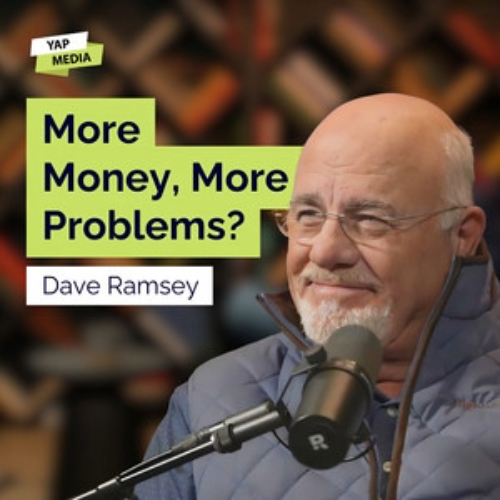
Dave Ramsey: Get Rich and Stay Rich, Financial Decisions That Help You Build Wealth | Finance | E388
Despite having a finance degree and achieving early success, Dave Ramsey experienced bankruptcy. Forced to rebuild from zero, he turned to timeless financial principles that not only restored his wealth but also helped him build a business that serves millions on their journey to financial freedom.
In this episode, Dave returns with some proven money management strategies to help high earners avoid costly financial mistakes, eliminate debt, and build lasting wealth.
In this episode, Hala and Dave will discuss:
(00:00) Introduction
(02:40) From Bankruptcy to Personal Finance Principles
(07:30) Credit Cards and Spending Psychology
(15:56) Is There Anything Like Good Debt?
(18:28) Debt Snowball vs. Avalanche Strategy
(20:17) Financial Planning for High Earners
(30:11) Money Mistakes Young People Make
(39:19) Ramsey Solutions’ Business and Revenue Model
(44:16) Creator Entrepreneurship and Succession Strategy
(49:21) Recurring Revenue Built on Trust
Dave Ramsey is a personal finance expert, radio personality, bestselling author, and founder and CEO of Ramsey Solutions. He is the host of The Ramsey Show with over 18 million listeners each week. Through decades of research on wealth-building and investing, Dave has helped millions achieve financial freedom using proven money management principles.
Sponsored By:
Indeed – Get a $75 sponsored job credit to boost your job’s visibility at Indeed.com/profiting
Shopify – Start your $1/month trial at Shopify.com/profiting.
Spectrum Business – Keep your business connected seamlessly with fast, reliable Internet, Phone, TV, and Mobile services. Visit https://spectrum.com/Business to learn more.
Northwest Registered Agent – Build your brand and get your complete business identity in just 10 clicks and 10 minutes at northwestregisteredagent.com/paidyap
Framer – Publish beautiful and production-ready websites. Go to Framer.com/profiting and get 30% off their Framer Pro annual plan.
Quo – Run your business communications the smart way. Try Quo for free, plus get 20% off your first 6 months when you go to quo.com/profiting
Experian – Manage and cancel your unwanted subscriptions and reduce your bills. Get started now with the Experian App and let your Big Financial Friend do the work for you. See experian.com for details.
Bitdefender – Start protecting your business today with Bitdefender Ultimate Small Business Security. Get 30% off your plan at bitdefender.com/profiting
Intuit – Start paying bills the smart way, not the hard way. Learn more at QuickBooks.com/billpay
Resources Mentioned:
Dave’s Website: ramseysolutions.com
Dave’s App, EveryDollar: everydollar.com
Dave’s Book, Build a Business You Love: bit.ly/BuildaBusinessYouLove
YAP E344 with Dave Ramsey: youngandprofiting.co/E344
Active Deals – youngandprofiting.com/deals
Key YAP Links
Reviews – ratethispodcast.com/yap
YouTube – youtube.com/c/YoungandProfiting
Newsletter – youngandprofiting.co/newsletter
LinkedIn – linkedin.com/in/htaha/
Instagram – instagram.com/yapwithhala/
Social + Podcast Services: yapmedia.com
Transcripts – youngandprofiting.com/episodes-new
Entrepreneurship, Entrepreneurship Podcast, Business, Business Podcast, Self Improvement, Self-Improvement, Personal Development, Starting a Business, Strategy, Investing, Sales, Selling, Psychology, Productivity, Entrepreneurs, AI, Artificial Intelligence, Technology, Marketing, Negotiation, Money, Finance, Side Hustle, Startup, Mental Health, Career, Leadership, Mindset, Health, Growth Mindset, Stock Market, Scalability, Investment, Risk Management, Business Coaching, Finance Podcast, Saving
Dave Ramsey: [00:00:00] I think it's an excellent time to be in business. I, I am so excited for a 25-year-old entrepreneur right now. You're gonna make some mistakes. You're gonna stub your toe, you're still gonna get a bloody nose. Oh, well have at it. Do it anyway, man. But this is the best time in human history.
VO: Personal finance expert, a host of the Dave Ramsey Show.
His
Hala Taha: name is Dave
VO: Ramsey. Dave Ramsey, Dave Ramsey.
Dave Ramsey: That was gonna be the real estate guy. We had $4 million worth of real estate and we lost it all. We lost everything. We were bankrupt and we figured out that what we've been doing, obviously. Didn't work, so we needed a new plan. I don't borrow money, period.
Dave Ramsey: 100% of the time. Debt equals risk.
Hala Taha: The argument is, especially for high earners, is that you can pay off your credit cards. A lot of people are really interested in points. Why is that still a hard line for you?
Dave Ramsey: There's tons of data, tons of pieces of research out there that show that a credit card versus cash is 12 to 21% more spending.
Dave Ramsey: And if you add to it, oh, I'm getting points, then I'll even increase my spending yet more. [00:01:00] So you gave up a dollar to get a penny.
Hala Taha: What do you feel is the biggest money mistake that younger people do right now?
Dave Ramsey: You grew up with this thing in your hand your entire life. That's a magic wand. You could push a button and anything happens.
Dave Ramsey: What that gives you guys is your abundance thinkers. You think anything's possible because anything has always been possible, and that's the good part. The bad part is.
Hala Taha: Yap gang. More income doesn't automatically mean more wealth. In fact, some of the highest earners are also the most financially stressed.
Hala Taha: So what's really going on? Well, I got the opportunity to fly down to Nashville and ask Dave Ramsey in his home studio this very question and this conversation today, Dave breaks down why making money and building wealth are two completely different skillset. We unpack the behavioral traps that keep high earners stuck.
Hala Taha: And the simple time-tested principles that create lasting wealth. By the way, Dave first joined us on episode 3 44 last year where we talked [00:02:00] all about how to build and scale a business that lasts. That was an incredible conversation. If you're an entrepreneur, you need to listen to that one, and we are replaying that conversation.
Hala Taha: This. Friday. So make sure you check it out. And if you're new here kindly take one second to follow us on YouTube and your favorite podcast app so you can keep listening, learning, and profiting. Dave, welcome back to Young and Profiting podcast.
Dave Ramsey: I'm honored to be with you again.
Hala Taha: I am so excited for this conversation.
Hala Taha: I'm so happy that we're getting to meet in person. Yes. You know, I got to spend an hour with you already. Our first interview was amazing. We're gonna play it again on Friday so everybody gets your background story. Oh, so everybody hears about. Your latest book Build a Business, but today I really wanna focus on money problems for high earners.
Hala Taha: Mm. Most of my listeners earn over $125,000. They're usually like between the ages of 35 and 45. And so I've got a lot of high achieving people tuning in. And a lot of these people, like they know all the steps. They know your baby [00:03:00] steps, they've listened to you for years, and other financial advisors. But they still don't change.
Hala Taha: So why do you think, uh, people change even when they know the rules? They, they have the knowledge?
Dave Ramsey: I'm not sure. I mean, I don't know why I still eat too many donuts. It's kind of the same thing, um, when I know it's not gonna help my figure. But, uh, you know, I, I. People don't change because they don't have a real reason to change.
Dave Ramsey: Mm-hmm. They don't think it's worth the effort. It's worth the sacrifice. It's, you know, it's a pain gain thing. Is there enough gain for the pain if I've gotta engage in this? And, and so we tend to take the, uh, the easy button. We tend to go the easy route. I think it's just human nature. I'm the same way. I do the same thing if I don't make myself stop and as an intellectual act of the will, say, wait a minute.
Dave Ramsey: I need to make better decisions on this particular subject, and so I get a better result. And I people, [00:04:00] you, you don't normally do that. You ha it, it's an act of the will.
Hala Taha: Yeah. Now, I know that you're really known for hard lines, right? You, you take hard stances. You've got hard rules. Why do you think that you're so, um, you know, absolutist in this way, in your thinking of having these hard lines, is it because of the things that have happened to you personally or because of all the callers that you've heard over the years?
Hala Taha: Thousands of people and just knowing kind of what's best for people?
Dave Ramsey: Yeah. Well, any hard line I take with anyone is, um, because I believe that's what's best for 'em. I'm not doing it just to make a stand.
Mm-hmm.
Dave Ramsey: I'm saying this is a. You know, if, if you were my best friend, if you were my little brother, my little sister, this is what I would tell you to do.
Hala Taha: Mm-hmm.
Dave Ramsey: And so that, that's not ever changed from the day we got on the air. And, and there are some, some tactical things that we don't take hard lines on. Uh, but then there's some principles and some processes that are now proven and so. [00:05:00] You know, I, I, I got eight grandkids and, um, if one of 'em standing on the edge of the roof, uh, I need to take a hard line.
Dave Ramsey: 'cause the law of gravity works every time. Mm. And it's gonna cause ha harm to them if they don't get away from the edge of the roof. And I love 'em, and I don't want 'em get hurt. So that's a hard line. But, but the law gravity's a principle. We can count on it. There's a principle that when you give all your money to Citibank or you give all your money to Ford Motor Company, you don't have any money.
Hala Taha: Yeah.
Dave Ramsey: Uh, and that's what debt does. It steals your most powerful wealth building tool, which is your income. And so that's a principle and I don't really need to think about that anymore. And it was certainly influenced than initially when we started teaching this stuff almost 40 years ago when we went broke.
Dave Ramsey: Um, yeah, that influences it. But uh, these days it's more influenced by tens of millions of people that have followed. What we asked them to do and it caused a positive result.
Hala Taha: Yeah,
Dave Ramsey: they succeeded because of it.
Hala Taha: Yeah. [00:06:00] So I know that you were on the show before, you talked a lot about your financial collapse, but for those who don't know about what happened to you personally, do you mind just going into it a little bit and then telling us.
Hala Taha: Some of the, the big lessons that you learned from that period?
Dave Ramsey: Well, I've got a degree in finance and a specialization in real estate. I was gonna be the real estate guy and I started buying real estate and nothing down flipped this house before Chip and Joanna were born. And so we've been doing this a long time and I went broke because I was so highly leveraged.
Dave Ramsey: I borrowed so much money and the bank called our notes.
Hala Taha: Mm-hmm.
Dave Ramsey: Um, we had $4 million worth of real estate and we lost it all. Uh, starting from nothing. And so I was 28 years old at the bottom. And, um, brand new baby, a toddler and a marriage hanging on by a thread. And, uh, we lost everything. We were bankrupt And, uh, in the process I had met God on the way up and I got to know God on the way down and someone said, Hey, here's what the Bible says about money.
Dave Ramsey: Now, that was weird to me 'cause I was a hell raising beer, drinking [00:07:00] hillbilly, and what the Bible got to do with money. And so I'm looking at these proverbs and they sounded like my grandmother. Like live on less than you make, you know, and have a plan. Mm-hmm. And, you know, basic common sense. Right. And so I started living our lives that way and uh, just because we figured out that what we'd been doing obviously didn't work, right.
Dave Ramsey: So we needed a new plan, and then we started sharing it with some people. And, you know, that was 30 years ago.
Hala Taha: Yeah. And that's how it all started. So like I mentioned, you're really known for it for these hard lines. And I feel like because we've already, you know, talked before for an hour, then maybe I can like push you on these hard lines, but tell you what other people say.
Hala Taha: Uh, against them and you tell me why you feel they're still a hard line, or if over the years you've conceded on this hard line.
Dave Ramsey: Okay.
Hala Taha: Okay,
Dave Ramsey: sure.
Hala Taha: So let's start with no credit cards ever.
Dave Ramsey: Mm-hmm.
Hala Taha: Now the argument is, especially for high earners, is that you can pay off your credit cards right away, pay off the [00:08:00] full balance.
Hala Taha: And a lot of people are really interested in points, especially. Gen Z millennials we're all about our points getting free travel free hotel free flights.
Dave Ramsey: Mm-hmm.
Hala Taha: Why is that still a hard line for you?
Dave Ramsey: Well, I, it the only reason is just, um, the data doesn't say that it works. Mm. There's two major problems with that.
Dave Ramsey: 78% of the airline miles are never redeemed. Hello. Okay. Yep. And, um, the, the data tells us any of us that do any digital marketing, and I've got a large firm mm-hmm. And we do a lot of digital marketing. We know that friction. Decreases spending. If it's harder to navigate the website to buy, you lose people.
Dave Ramsey: They, they abandon the cart, right? Yeah. And so you abandon purchases where there are friction, the less friction there is, the more increase in spending there is. And there's tons of data, tons of pieces of research out there that show that a credit card versus [00:09:00] cash, nobody carries cash. Yeah, right. But a credit card versus cash is 12 to 21% more spending.
Dave Ramsey: And if you add to it, oh, I'm getting points. Thank you Samuel Oil Jackson. Right. And I'm getting points, what's in your wallet? Then I'll even increase my spending yet more. Mm-hmm. And so, you know, and there's even examples of that in the commercials. They're advertising, oh, well I'll pay for this for you, so I get the points.
Hala Taha: Mm.
Dave Ramsey: And, and you know, so you gave up a dollar to get a penny? Yeah. How's that increase wealth. And then the second piece of this is, so you do increase spending is the biggest problem because you're, it's a less friction. And let's go all the way over to like Apple Pay. You don't even see an expenditure.
Dave Ramsey: It's just you wave a wand and stuff happens, right? Mm-hmm. And so that's the ultimate in psychological lack of friction. And, and so you're gonna spend more, you're gonna spend more. You're gonna spend more. It's easy. Just wave a wand. Wave a wand.
Hala Taha: Mm. And,
Dave Ramsey: and. I do too. I mean, you know, we were on a cruise the other day, Sharon and I, my wife, and you know, [00:10:00] your room key buys everything on the boat, right?
Dave Ramsey: 'cause they don't have any transactions. Not even your credit card. Not even your debit card. Not anything, no cash. And so, you know, I'm just buying stuff and I, and I'm like, I teach this and look at what I'm doing, you know? It's crazy. So anyway, that's thing one. Then thing two is, um, there's no. No credible data that says using points, causes wealth.
Hala Taha: Hmm.
Dave Ramsey: As a matter of fact, we have studied, we did the largest study a millionaires ever done at Ramsey Research, 10,167 of them, and the number of them that said I became a millionaire because of my points is zero
Hala Taha: mm
Dave Ramsey: none. And, and so it's a game and you're playing with a multi-billion dollar company who has more algorithms.
Dave Ramsey: Tracking your behavior patterns, then you can even imagine. And believe me, they're not coming out on the short end of this. Mm. The consumer is.
Hala Taha: Now, what about credit cards for, for a business, for companies? [00:11:00] How do you feel about that?
Dave Ramsey: I use debit cards here. Uh, we've got about 85 people inside Ramsey that have a Ramsey debit card.
Hala Taha: Mm,
Dave Ramsey: like a company card.
Hala Taha: Yeah.
Dave Ramsey: And so they spend it and it comes outta the account. And so the debit card does every single thing the credit card will do, and some debit cards even have points with 'em. Now, some of 'em even have airline miles and stuff, but I, but I, I just, I'm not gonna chase pennies with dollars.
Dave Ramsey: I, it doesn't, the logic of that, and, you know, I, I get, I get 2% back. So you spend a hundred thousand dollars and you got two grand. Yeah. How does that equate to wealth?
VO: Mm-hmm.
Dave Ramsey: It doesn't, it's bad math.
Hala Taha: Yeah. Bam. 2026 is the year I'm fully focused on growing my personal brand. I just started a new brand and content team, and that means I'm going to be intentional about.
Hala Taha: Every part of my business, especially my website, which I've been neglecting for years, and that's why so many companies from leading startups to mine to Fortune 500 brands are turning to framer [00:12:00] now that we're due for an upgrade. Framer is a powerful website builder and design tool that helps.
Hala Taha: Businesses create better websites faster. With framer, you can design and publish a beautiful high performing website without ever touching any code. It's a visual drag and drop builder with smart AI tools that help you create responsive layouts quickly. Everything you need is built in, including SEO support.
Hala Taha: Analytics and collaboration so you're not duct taping multiple tools together. It's one of the easiest ways to launch a website or a landing page that looks custom, polished and professional on any device. Framer is the modern way to launch a website. Learn how you can get more from your.com from a framer specialist or get started building for free today at framer.com/profiting, and you can get.
Hala Taha: 30% off a Framer Pro annual plan. Join companies like Gap Media and switch to framer. That's framer.com/profiting for 30% off framer.com/profiting. Rules and restrictions apply. [00:13:00] Yeah, fam, you just realized your business needs to hire somebody yesterday. How do you find great candidates? Fast, easy use indeed.
Hala Taha: When it comes to hiring, indeed is all you need. Stop struggling to get your job posts seen on other job sites. Indeed, sponsor jobs help you stand out and hire fast. With sponsored jobs, your posts jumps to the top of the page for relevant candidates, so you reach the people you actually want. Faster, and it works according to Indeed, data sponsored jobs posted directly on Indeed get 45% more applications than non-sponsored job.
Hala Taha: What I love about Indeed is knowing that my job post is getting the visibility that it requires. Plus, with Indeed sponsored jobs, there's no monthly subscriptions, no long-term contracts, and you only pay for results. So there's no need to wait any longer speed up your hiring right now. With Indeed and listeners of this show will get a $75 sponsored job credit.
Hala Taha: Just go to indeed.com/profiting right now and support our show by saying you heard about Indeed on this podcast indeed.com/profiting terms
VO: and conditions [00:14:00] apply. Hiring indeed is all you need.
Hala Taha: I interviewed Michael Mitz. Yeah. Recently, if you're familiar with him. And he taught me about something called the Parkinson's Law.
Dave Ramsey: Mm-hmm.
Hala Taha: Which basically as hirings get more money, um, when they have more money in their bank account, they just end up spending more because visibly they can see more money. Do you think it's the same thing with credit cards? Like if you know you've got a $20,000 limit than suddenly.
Dave Ramsey: Yeah, it's out, it's outta sight outta mind.
Dave Ramsey: And it's, it's, it's the same Parkinson's law applies to closet space too. If you, you know, in, in your home, if you have an empty closet, it's gonna fill up.
Hala Taha: Mm-hmm.
Dave Ramsey: There'll be some junk in there in about 10 months, you know, and so your garage does the same thing. Right. So that applies to everything. And, um, there's this sense of that.
Dave Ramsey: And the way we've seen it, like in the old days when I first started doing this on talk radio back in the day, we would've someone call in and say, Hey, I got a $300 a month raise. How'd you celebrate? I bought a $400 a month car payment. You know, it is the same. That's Parkinson's law too. Yeah. It's the same thing.
Dave Ramsey: If it's [00:15:00] there, I have to spend it, right? Mm-hmm. And so, yeah, I do agree with that. And, and I think you gotta watch that. And there's an interesting thing with the credit card too, that kind of goes with the same thing. And no one, again, no one spends cash. I I actually use cash sometimes. I, I'm a cash guy.
Dave Ramsey: Yeah. I'm an old guy, so that's possible. I, I don't, I understand everybody's not gonna do that. What's interesting is if I'm gonna buy something. I hand you money, you keep it and I get the item.
Hala Taha: Yeah.
Dave Ramsey: It's like when you're a little child, you were trading mm-hmm. Toys. Mm-hmm. It's interesting visual that when you hand someone a card, even if it's a debit card, they hand the card back and you get the thing.
Dave Ramsey: Mm. Isn't that an interesting visual? Yeah. There's no trade took place.
Hala Taha: Yeah, that is really interesting and it probably makes you feel like you're not really giving up anything to get it.
Dave Ramsey: Exactly. Yeah. That's that frictionless problem we're talking about.
Hala Taha: Yeah. Okay, so another hard line, which is on the same line, so we don't have to spend too much [00:16:00] time on it, but there's no such thing as good debt.
Hala Taha: So even like mortgages on a house, you believe there's no such thing as good debt.
Dave Ramsey: Uh, eventually, I mean, we don't yell at people for taking out a mortgage on our programs and in our processes. Um, I don't borrow money, period. I've never borrowed any money since I went broke.
Hala Taha: Hmm.
Dave Ramsey: And I built everything with organic cash along the way.
Dave Ramsey: A hundred percent. It means I had to go slower than some people. Mm-hmm. I'm not as big as some people, but, uh, I'm fine with that. I'm, I'm not gonna lose it either. So the thing that we don't equate with debt. Hardly anywhere in our society or in this discussion is 100% of the time. Debt equals risk.
Hala Taha: Mm,
Dave Ramsey: little debt, little risk.
Dave Ramsey: Small interest rate debt, small debt, little risk, big debt, big risk. But people don't think about it. Yeah. They only talk about debt as if there's one possible outcome and it's a positive outcome. And, um, [00:17:00] we always laugh and say there's been, we've done detailed research and a hundred percent of the foreclosures occur, occur on the home of the mortgage.
Dave Ramsey: So if you wanna destabilize your retirement, go into retirement with a mortgage,
Hala Taha: mm.
Dave Ramsey: Think about it because you know, you're 80 years old now and you got a house payment. You're 78 years old, you got a house payment. This is not a plan. Yeah. And again, referring back to that, uh, millionaire study, we found basically two things that caused people to get their first one to $5 million in net worth.
Dave Ramsey: It was a well-funded retirement plan, taking advantage of good mutual funds and compound interest, and that'd be seven, 800,000 bucks maybe after 10 or 12 years of working on it. Hard. Mm-hmm. And a paid off. 5, 6, 800, 900,000 house. Those two things combine. The number of them that have paid off houses as a big component of their first million dollars was huge.
Dave Ramsey: Mm. There's a correlation between it and wealth building.
Hala Taha: That makes sense. And uh, to that point, you don't believe that you should have any debt. Into [00:18:00] retirement. Like once you retire, you should be totally debt free.
Dave Ramsey: It's the best way, obviously to, uh, to have a stable situation. And, um, 'cause the number of times I talk to someone that, you know, they've got a mortgage and then they've run through their nest egg and now they got a mortgage.
Dave Ramsey: Mm-hmm. And they're trying to figure out how to, how they're gonna support that.
Hala Taha: Yeah.
Dave Ramsey: And so it, it's, it's devastating.
Hala Taha: Yeah. Okay, good advice. Okay, one more hard line debt snowball over avalanche. So the argument is that avalanche meth method could actually help you save more money, um, whereas you prefer, uh, the snowball method, which pays off the smallest balances first,
Dave Ramsey: right?
Dave Ramsey: The avalanche method pays off the highest interest rate to smallest interest rate, which is purported to be mathematically advantageous. Then the debt snowball pays off the smallest debt. To the largest debt, which is a feedback loop because personal finance is 80% behavior. It's only 20% head knowledge.[00:19:00]
Dave Ramsey: We started the discussion with why don't people do this? 'cause they don't get positive feedback. Mm-hmm. If you go on, if you go to the gym for three months and you don't lose weight and, and your goal was to go to the gym to lose weight, you quit going to the gym.
Hala Taha: Yeah.
Dave Ramsey: Because you got no feedback loop. So the positive on the, that snowball is the feedback loop.
Dave Ramsey: I pay off the little one. It's like, whoa. And then I'll pay off another one. Like, whoa. And hope starts to kick in. And, and as you get more excited, you'll sacrifice even deeper and the math gets better and better and better. But here's the big problem with the avalanche and people saying it's mathematically advantageous.
Dave Ramsey: It's actually not, because if you're gonna do the real math on it below the surface, you have to say, what's the probability of completion? Probability of completion because of the feedback loop with a snowball is way higher than the probability of completion on the avalanche. Mm-hmm. Most people don't finish it.
Hala Taha: Yeah.
Dave Ramsey: Because they don't get positive feedback.
Hala Taha: Yeah.
Dave Ramsey: And so if you add in prob probability of completion and you got a high probability of completion versus a low one, you put that in the math, [00:20:00] which is an actual proper. Uh, sophisticated way of looking at the mathematics, then you would say, oh, that snowball's actually mathematically advantageous.
Hala Taha: Yeah, well, you must be onto something because you've helped millions of people at this point get debt free and, and become financially free. So, um. I have a theme for this episode. I'm calling it mo money, Mo mo problems. So back to the fact, ah, I like it, uh, that my listeners are doing really well. They're high earners, a lot of them are entrepreneurs.
Hala Taha: They're earning, you know, well over six figures, some of them a million dollars a year or. Um, and so I wanna go through some financial scenarios that a lot of high earners might be facing. Mm-hmm. Not just people who are in, uh, I don't think my listeners are in, you know, so much debt and things like that.
Hala Taha: I think they're just worried about the right moves to do now that they actually have money.
Dave Ramsey: Mm-hmm.
Hala Taha: Um, so the first scenario I have is a 30 5-year-old, uh, person works in tech. They're making $300,000 a year. They've got a really high paying executive [00:21:00] job. Their lifestyle is built around their high paycheck.
Dave Ramsey: Mm-hmm.
Hala Taha: Uh, but they see layoffs happening.
Dave Ramsey: Yep.
Hala Taha: And they're worried that, you know, one day suddenly their high paying job will just go away. So what do you think their plan should be? How should they prepare knowing that job security today is an issue?
Dave Ramsey: Yeah. Well, job security is always an issue. And, um, you don't wanna fall for what we call the myth of continuity.
Dave Ramsey: The myth of continuity is because it's been this way, it's always gonna be this way. It's not, it's not always gonna stick that it doesn't always, sometimes it's gonna get, it's gonna change, it's gonna be better or worse a hundred percent of the time. So, you know, I think you, you need to work a plan that works when times are good and when times are bad.
Dave Ramsey: And that's the advantage of the, um, Luddite. Ramsey plan. Mm-hmm. You know the Ramsey plan, that's just so grandma basic. Live on lesson you make, have a written budget. Always be generous, always have an emergency fund. Get outta debt and stay outta debt. If you're doing that [00:22:00] and you make 300 K and you got an emergency fund, you don't have any payments.
Dave Ramsey: You're okay.
Hala Taha: Mm-hmm.
Dave Ramsey: You know, you're planning and, and you're investing for your future, and you're generous. You know the, you're gonna be okay and you have prepared properly. Oh, by the way, that works if you don't get laid off too.
Hala Taha: Yeah.
Dave Ramsey: You'll still end up with a bunch of money. Mm-hmm. It works out great.
Hala Taha: Yeah. How should you suggest that somebody who makes 300 grand a year budget, like, like what should their steps should be in terms of creating a sustainable budget?
Dave Ramsey: The only budgets that work, uh, is the married couple works together. They both have a vote and they both agree to it and stick to it. And you develop the plan before the month begins, and we call it a zero based budget.
Dave Ramsey: And that's where you take your income before the month begins, and you give every dollar an assignment, every dollar a name, down to zero. Now we're not talking about your checking account balance, we're talking about your budget. So if you've got $25,000 coming in. A month, 300,000 plus or minus taxes.
Dave Ramsey: Right. But I mean, if you got that [00:23:00] coming, 20,000 coming in, then we're gonna put 20 at the top of the page and we're gonna give every dollar an assignment, every dollar a name. That's why we named the, our budgeting app. Every dollar. Mm-hmm. So you give because, and, and then we're in agreement and then we stick to that.
Dave Ramsey: And all you're doing there is being intentional, a budget. John Maxwell used to say, a budget is people telling their money what to do instead of wondering where it went.
Hala Taha: Mm-hmm.
Dave Ramsey: And so, uh, we run about a $300 million company here, every profit center. Has a budget before the month begins, before the quarter begins, before the year begins, we lay out rolling 12, rolling 18, what we projecting revenues to be and where they're gonna go.
VO: Mm-hmm.
Dave Ramsey: And what the resulting profits are. And then we manage to that budget, we manage to that. And that's what you do in a household. And so we always say, you know, if you. Work for a company called You Incorporated, and you manage money for you incorporated the way you manage money for you. Now, would you fire you?
Dave Ramsey: Uh, and I would fire somebody here if they have budget p and l responsibility, and they don't do a budget. [00:24:00]
Hala Taha: Mm.
Dave Ramsey: And they don't stick to it. They just willy-nilly go do whatever they wanna do and impulse a Porsche, you know, I mean, you can't, you just can't operate that way and be successful. It's an intent.
Dave Ramsey: Winning is an intentional act and budget is where we become intentional with our money.
Hala Taha: Yeah. Now I know a lot of earners, high earners, you know, as they start to break, you know, $500,000 a year, a million a year, they might lose sight of like needing a budget. They might feel like, well, I make so much money, I don't need a budget anymore.
Hala Taha: Uh, do you feel like there's any problems with that kind of a thinking?
Dave Ramsey: Yeah, because it is just chaotic and wasteful is what ends up happening. You're not gonna go broke because of it. You know you're making a million dollars a year and you're spending like a crazy person, that's fine. You're probably gonna be okay until you quit making a million.
Dave Ramsey: But the problem is you just didn't get the best squeeze for the juice, right? Mm-hmm. I mean, you didn't get the best, you know, I don't want to have. I don't wanna make that kind of money and look up 10 years later and have nothing to show for it. That would be like having a hangover.
Hala Taha: Yeah.
Dave Ramsey: You know? That'd be awful.
Dave Ramsey: And so I, [00:25:00] I, I want you to win. I want you to get the most outta this as possible. All a budget is again, is a spending plan. It's none of that to be restrictive. You're telling your money what to do and then you stick to what you want to do.
Hala Taha: Mm-hmm.
Dave Ramsey: It's your deal. You decide. And the same thing's true in a company.
Dave Ramsey: And so, you know, if we were running a, instead of a $300 million company, if we were running a $3 billion company, we wouldn't say, oh, we don't need to do budgets now.
Hala Taha: Yeah. Okay, so let's take the scenario of somebody's been making a lot of money in their thirties. They haven't been saving that much, they haven't thought about retirement.
Hala Taha: They hit 40 and they realize they only have a couple hundred grand for retirement saved, even though they've been making a whole bunch of money in their thirties. What should they do next?
Dave Ramsey: Well, obviously you gotta play some catch up and, um, there's some urgency, but not panic. Um, I love urgency because it gets people moving.
Dave Ramsey: Mm-hmm. It gets me to change. I like urgency in my own life. I think it's a good thing. So, um. [00:26:00] You know, uh, let, let's just, again, I'm I, the framework we always use, and you're aware this is the baby steps, and so we're gonna make sure you're outta debt, have an emergency fund. Once you've done all that, then let's start socking some money away.
Dave Ramsey: Let's start putting 15% of your income away. If you're 40 years old, you make an average income and you start putting 15% of your income away, plus or minus a match and a good Roth IRA. In good mutual funds that give you market rates of return, you're gonna be a multimillionaire. Easily in 25 years and mathematically and so, but you've gotta do it.
Dave Ramsey: You can't just talk about it. It's not theory. The number one problem with retirement planning and, and, and retirement investing is not what people put money in. It's that they don't put money in. You gotta put money in there. Mm-hmm. For there to be some money in there. It's a pretty simple math thing. And so that's what you've gotta gear up here is just get some urgency and start, we gotta start socking some money away.
Dave Ramsey: We gotta get this 401k jacked up and we gotta learn a little bit about this and have some motivation and, um, quit. You know, quit spending like we're in Congress. Yeah. [00:27:00]
Hala Taha: Okay, last one is about taxes. So somebody owns a business, they're making, you know, let's say $5 million a year, and they've become obsessed with saving on taxes.
Hala Taha: They're like me, they moved to Austin to try to save on taxes and so much of their decision making energy around their business is saving on taxes. What's your thoughts about that?
Dave Ramsey: You have to, um, in business, make. First, good business and economic decisions while you're doing that. If you can do that in such a way that it saves on taxes, fine.
Dave Ramsey: But if you do something to save on taxes and when people get obsessed with us is what we do. I've, I've done it too, and the past, not in a long, long time, but I used to do it. If you get obsessed with, I hate taxes so bad that I'm gonna do this to save on taxes. But it's stupid. [00:28:00] It's bad business. It's a bad financial decision, but, you know, and so I, I won here, but I lost 10 over here and, and that's a bad idea.
Dave Ramsey: An example of that is the simple buying something that is not needed.
Hala Taha: Mm-hmm.
Dave Ramsey: Because you can write it off. Mm-hmm. I mean, if you spend a hundred thousand dollars on an item that is, that is expensible in that calendar year, depending on the category of the item, but let's call it expensible, and you're in a 25% tax bracket, you save $25,000 in taxes, you don't save a hundred thousand.
Hala Taha: Yeah.
Dave Ramsey: But you bought a hundred thousand dollars worth of stuff you didn't need. So you gave up a hundred to save 25.
Hala Taha: Mm-hmm.
Dave Ramsey: Because of your obsession with taxes. I mean, your accountant said something stupid like, you need a write off. Well, you don't need to write off that bad to trade a dollar for a quarter.
Hala Taha: Yep.
Dave Ramsey: That's dumb. And that, that's a very simplistic way of, of that motivation of tax savings. Getting outta hand and I've, I've seen a lot of small business people do that. Oh, I bought this 'cause of my accountants. Yep. I need [00:29:00] a write off. And no, not if you don't need it. All expenses coming off the bottom line of are coming outta the p and l of a business should be looked at through the lens of I need a return on that investment.
Dave Ramsey: Oh, and I can write it off.
Hala Taha: Yeah.
Dave Ramsey: Not. Zero return on investment, but I get to write it off. That's a dollar for a quarter. Don't make that trade.
Hala Taha: Yeah. I find myself, you know, thinking about taxes and, and making these decisions. Me too. All the time.
Dave Ramsey: I hate 'em. I get, I get really angry at that time of year. Yeah.
Dave Ramsey: It's really hard for me. I hate it, but I still, I, I have never been able to wait. You know, this idea, it always makes me angry too when people say, oh, the rich pay, no taxes. Well, I don't, I, I'm pretty rich and I don't, I pay a lot of taxes, so I don't know who those people are. I, I don't, I haven't been able to get out of it.
Dave Ramsey: So, um. We, you know, we're, we're very diligent and very careful. We try to learn any techniques we can, but it has to first be economically, give me a rate of return.
Hala Taha: Yeah.
Dave Ramsey: On the investment from a business expense perspective, then. [00:30:00] It's a good tax move, not, it's a good tax move and it sucks over here.
Hala Taha: Yeah, makes sense.
Hala Taha: Uh, so I feel like that was super helpful for everybody who's a high earner or has a business. Now, I also have listeners who are, you know, wanting to be high earners. They're Gen Z, they might be taking their first job, they're in college. What do you feel is the biggest money mistake that younger people do right now?
Dave Ramsey: Well, the Gen Z and millennials, we've got a thousand folks on our team and probably 700 of 'em fall in that category.
Hala Taha: Mm-hmm.
Dave Ramsey: And so I have become a huge fan of those two generations. And part of it is, um, from a business perspective and from a career and earning perspective. So here's what you've got at your advantage.
Dave Ramsey: If you're a Gen Z or a millennial, you grew up with this thing in your hand your entire life. That's a magic wand. You could push a button and anything happens, stuff shows up on your porch. You can access the world's knowledge, you can do anything with it. Find out what the weather [00:31:00] is, dodge a tornado, you know, whatever it is, right?
Dave Ramsey: It's all right there in your hand. And, and so because of that, that's not native to my generation. That's native to your generation. And what that gives you guys is your abundance thinkers. You think anything's possible? Mm-hmm. Because anything has always been possible. I just wave this wand and stuff happens.
Dave Ramsey: It's amazing. And you really, gosh, I, and that's the good part. The bad part is, um, sometimes what goes with that, and to answer your question long form, is, uh, impatience.
Hala Taha: Hmm.
Dave Ramsey: I want it right now. 'cause I've always gotten it right now. And you don't get good barbecue outta the microwave. Good barbecue has to be cooked a long time.
Dave Ramsey: Mm-hmm. Like all weekend. I mean, you're in Austin, Texas, good barbecue. Right. They, they, they don't, there's no such thing as microwave barbecue. Mm-hmm. That's good. There's not, that's not a sentence anywhere. And, and so look at your career like barbecue. You gotta cook it. It's gonna take a while. It's not gonna be [00:32:00] instant.
Dave Ramsey: It's gonna be. Sometimes frustratingly slow, and especially if you're used to not, things being slow, right? And so just guard against that and, and that that's normal immaturity, whether you're 55 or 25. Uh, the ability to delay pleasure for a greater good, but it's it's amplified. In this case, and it's not immaturity, but it's amplified by this fact that your reality has been, things are quick.
Hala Taha: Yeah.
Dave Ramsey: And, and quote unquote easy button and, and, you know, building a good career, building a brand, a depth of knowledge. I mean, you've been at this seven years.
Hala Taha: Yeah.
Dave Ramsey: And you're kicking it, girl. I mean, you, I'm so proud of you. You've done such a great job. And everybody knows who you are. It's, you know, you're blowing up, but seven years, not seven minutes.
Dave Ramsey: Yeah. And you, and you show up all the time and you're sharp and you're on it day after day, time after time. And every time we turn [00:33:00] it on, we get the same girl. Right. Same lady. And so that, that's why you're winning. It's this persistence over time.
Hala Taha: Yeah. Now you, you mentioned that you have eight grandkids.
Dave Ramsey: Mm-hmm.
Hala Taha: Are you worried about AI and technology and are, do you worry about their careers and their ability to get that experience, given that AI might be taking a lot of these I entry level jobs?
Dave Ramsey: I think ai, fabulous AI is, I, I wasn't worried about the internet when it came on, too. I started before the internet, right?
Dave Ramsey: Mm-hmm. I wasn't worried about that. I wasn't worried about when cable TV came on. It didn't bother me. I, every one of these things represent opportunity. They represent, there's gonna be more AI millionaires and Gen Z and more AI millionaires out of millennials than any group of millionaires we've ever seen because they're gonna take it as a tool and learn how to use it.
Dave Ramsey: It works for you. You don't work for.
Hala Taha: Yeah,
Dave Ramsey: period. And if you just look at it as a tool, you know, it's like, you know, am I worried that they, that Henry Ford started making cars and so we don't have to ride in a horse and buggy? No. It means I [00:34:00] can get to someplace faster. I can deliver my goods and services faster.
Dave Ramsey: It's called a business opportunity, man. Let's get with it.
Hala Taha: Yeah.
Dave Ramsey: This is efficient delivery mechanisms, right? And efficient work mechanisms. Now, if you're doing something that AI does now you may need to do something different. And make it work for you instead of it replacing your job. Mm-hmm. But hey, welcome to the world.
Dave Ramsey: I mean, if you used to make whips for horses and, and bridles for horses, you had to get a new job. 'cause Henry Ford put you out of business, you know?
Hala Taha: Mm-hmm.
Dave Ramsey: And so yeah. That's, that's cool that, but yeah, AI is wonderful. The thing I do worry about with my grandkids is the access to evil. That the phone and that the ai, uh, it, it gives a gateway into.
Dave Ramsey: Children's lives that, uh, of evil that shouldn't be there.
Hala Taha: Tell me more about that.
Dave Ramsey: Well, we end up with stuff like sex trafficking.
Hala Taha: Yeah.
Dave Ramsey: And we end up with people being groomed and we end up with, uh, 12 year olds bullying each other [00:35:00] and the misuse of, uh, of these wonderful technologies, uh, the evil misuse and, and some of it's just so horrendous.
Dave Ramsey: And so. We have, have to teach our kids to not get addicted to screens and to not think that everything on there is what it says it is. 'cause most of it isn't.
Hala Taha: Mm-hmm.
Dave Ramsey: Most of it's a lie, including your Instagram reel. 'cause your life's not really that pretty. None of it is. Right. You know, and so that's, uh, you know, I see me in the morning, right?
Dave Ramsey: My hair doesn't look this good. And so, uh, you know, that whole thing, right? So we gotta teach the kids that, that you know what's real and what's, what's artificial intelligence. Artificial sweetener is different than sweetener. You know what? What? You know. So we have to teach some good spiritual and philosophical foundations for those kids to not become victims.
Hala Taha: Yep.
Dave Ramsey: Of this. And I do worry about that with the little ones in particular. 'cause there's some real nasty stuff out there. Yeah.
Hala Taha: Well, hopefully it all works out and you know, kids get educated on how to tell [00:36:00] what's AI versus what I'm, I'm sure that will be like part of school moving forward. 'cause it's gonna be such a big part
Dave Ramsey: of our lives.
Dave Ramsey: I think you guys will catch on faster. It's my generation. I had a thing pop up on AI on me the other day and then it, it's a a, a fraudulent thing of me saying something I don't say, you know, of
Hala Taha: you actually like a video of
Dave Ramsey: you? Yeah, it's a video of me. Oh, wow. And it's, it's not even really good. It looks like a kung fu movie.
Dave Ramsey: Like it doesn't match Right. And the words don't match, but it went everywhere. And like my 65-year-old friends are emailing my wife going, what did Dave say that on Facebook for? And Dave didn't say that, you know? Oh
Hala Taha: no.
Dave Ramsey: They're more susceptible and naive.
Hala Taha: Yeah, for
Dave Ramsey: sure. I think your generation, your generation is naturally cynical for good reason about, you're like, is that real immediately first thing goes into your mind, which is awesome.
Dave Ramsey: So I think you're protected that way.
Hala Taha: Yeah. Yap gang. There are certain services you don't think about until they stop working, and internet and mobile are at the top of that list when connectivity is slow and unreliable. Everything from work to content creation to just basic communication gets so much harder, [00:37:00] and that's why Spectrum Business focuses on reliability.
Hala Taha: So it's not something you have to think about. For me, that peace of mind really matters. I want my internet quietly working in the background while I focus on growing my business. I do not ever wanna think about my internet. I just want it to work. And that's where Spectrum Business really shines. They keep businesses of all sizes connected with fast, reliable internet, advanced wifi, phone, tv, and mobile services.
Hala Taha: They also offer tailored connectivity solutions with packages built for your business budget, which matters when you're running a team. But here's what really sold me. If something ever does come up and there's an issue, they offer a hundred percent US-based customer support 24 7 to help you stay up and running.
Hala Taha: It's no surprise, millions of business owners trust spectrum business every day to stay connected. Visit spectrum.com/business to learn more restrictions. Apply services not available in all areas. Hey, yeah, bam. I know a lot of you are working hard to hit new financial goals this year. But it can be tough to get ahead when [00:38:00] subscription creep is quietly draining your bank account.
Hala Taha: I can't tell you how many times I thought I canceled something, only to realize later they were still charging me, or how many times I tried to cancel, but it was so difficult I couldn't figure it out. And if you're like me, you have way too many subscriptions and bills, and you're probably looking for a way to track and manage them all.
Hala Taha: Lucky for us, Experian handles all that heavy lifting. Check out Experian subscription cancellation and bill negotiation. Two powerful features that can help you save with minimal effort. Experian scans the accounts that you link, finds reoccurring charges, and puts the power in your hands. You can keep the subscriptions you want and cancel the ones that you no longer need or use.
Hala Taha: Experian can cancel over 200 eligible subscriptions from streaming services to entertainment apps and more, and it doesn't stop there. If you wanna also try saving on everyday bills. Experienced expert negotiators could help you by finding better rates on eligible bills Your. Already paying. The best part, you get to keep a hundred percent [00:39:00] of your savings.
Hala Taha: Get started now with the Experian app and let your BFF big financial friend do all the work for you. Disclaimer. Results will vary. Not all bills or subscriptions are eligible savings, not guaranteed paid. Membership with connected payment account required. See experian.com for details. Would you give us the lay of the land of Ramsey solutions?
Hala Taha: Like what are the different revenue generators? Where are you guys making the most money right now with all your products and offers?
Dave Ramsey: Uh, consumer facing, the fastest growing thing is the every dollar app. Um, it's exploding. And it's, we've spent an amazing amount of money, time, effort, intellectual, uh, calories on it, uh, iterating it and building it and iterating, and we do every day, and we're gonna every day making it better.
Dave Ramsey: And it's, it's going nuts. Um, the, uh, the broadcast properties is what we call them, but they're not really broadcast is, uh, we still have a talk radio show that is. [00:40:00] Also on YouTube and also on podcasts. The, the mothership, so to speak, the Ramsey show.
Hala Taha: Mm-hmm.
Dave Ramsey: Um, and those things through, uh, you know, all the different platforms we're able to monetize with ad revenues.
Dave Ramsey: Um, it's pretty substantial. Um, and that revenue is moved. Uh, we still have a lot of talk radio revenue. There's still people listening to talk radio. I dunno where they are, but they're out there And, um. So that that revenue is still very real and we've still got one of the largest talk radio networks. So that's, that stream is still there.
Dave Ramsey: I, I don't know how long it's gonna be there. I don't think in 10 years I'll be look the same. But, um, you know, the Spotifys and uh, YouTubes of the world have had a huge impact and so we're on everything. And we're monetizing it with ads and with, uh, product delivery mentions, uh, in integrated into show notes and integrated into the show bodies and so forth.
Dave Ramsey: Um, [00:41:00] uh, we have a high school curriculum that has been taught now in 48% of the high school. 7 million students have been through it.
Hala Taha: Oh, wow.
Dave Ramsey: Um, and it's continuing to grow. Uh, there's a real move in that world to adopt. Uh, the, the, uh, the adoption process to adopt curriculum in high schools has been, uh, mandated by the states and 38 states to teach personal finance.
Dave Ramsey: Oh wow. And, and we're the premier, uh, curriculum in that, the best by far. And so, um, that's continuing to grow, uh, thank goodness. And that's 'cause that's a great thing if you can get this stuff in high school. Um, obviously we've got the publishing arm. Uh, we're still putting out number one by selling books every year and have for decades.
Dave Ramsey: Um, uh, it's not a huge percentage of our revenue.
Hala Taha: Yeah.
Dave Ramsey: But it's still a great brand mix. Mm-hmm. And a great tip of the spear, so to speak. Um, as we go forward, we've got a, a, a thing called Smart Dollar that is our corporate. HR benefit [00:42:00] to teach our lessons. Uh, it's like the old financial Peace University, but taught in corporate America.
Dave Ramsey: And so like U-Haul has done it, Costco is doing it. Uh, companies like that, and a lot of small and medium sized companies are buying that. And that's a massive thing. It's real quiet, but it's b because it's B2B. Mm-hmm. So the consumer doesn't really see it that much, but, um, it, it's, uh, really massive and really moving.
Dave Ramsey: And then our entree leadership. Brand has exploded. It's gone crazy. Uh, where we co, we coach about 10,000 small businesses uh oh, really Cool. On how to run a business. And it came out the old book I did about, uh, 15 years ago called Entree Leadership. That was a number how we ran our business and we started teaching other people how to do it.
Hala Taha: Hmm.
Dave Ramsey: And um, so that's, I love entrepreneurs and I love small business people 'cause I've been one my whole life.
Hala Taha: Yeah. Um, now I learned, I was listening to some of your interviews that you've done recently, and I heard you say that the radio show lost money for like 10 years or something like that. [00:43:00] Like it, it was like not making money for, for many years.
Hala Taha: So how do you think of certain aspects of your business that actually don't make money? And can you talk about some of the biggest lead generators that might not really make money, but are still important to your business?
Dave Ramsey: Well, that's exactly what it was as lead generator. And so we didn't look at it as a, we did look at it as a p and l that was losing money.
Dave Ramsey: 'cause I wanted to fight through and actually get some ads sold. So to cover the cost of running the stinking thing. Mm-hmm. But it took forever. Um. But the reason we kept doing it and didn't close it, if we had another business unit that was doing that, we might close it, but it was generating all the leads.
Hala Taha: Mm-hmm.
Dave Ramsey: You know, we were getting, we were generating bestselling books because of the show. We were generating, uh, arenas full of people because of the show. We were generating all these other things because of the show. Because talk radio in those days was in enc synth. It was like a, like a podcast today, like one of the top podcasts.
Dave Ramsey: We were one of the top talk radio shows, so, um. [00:44:00] That's why we kept it going. Now, we've had other areas where we lost money, but it wasn't generating any. Wasn't causing any. Mm. You know, and so we just closed those. That's a, that's an failed experiment. Welcome to business.
Hala Taha: Yeah. Um, and so I know that you have a podcast, uh, network.
Hala Taha: You've got the, the Ramsey network. I'm not sure if you know this about me. I have a podcast network as well. I have the YAP Media Network. Yeah. Has 45. Shows. So I run some people like Jenna Kutcher and Russell Brunson and Trent Shelton, and wow. I've had Amy Porterfield and Lori Harder and all these really big business self-improvement podcasters in my network.
Hala Taha: I grow and monetize them. So Ramsey Network, uh, is an amazing network and you've got awesome personalities. I've interviewed a lot of people that have, uh, you know, shows under your network. How do you think about talent? Um. How did you start deciding, uh, that you wanted to have a network? In my mind, having a network is sort of the pinnacle of creator [00:45:00] entrepreneurship.
Hala Taha: Like you're not just a creator entrepreneur, now you monetize other creators. It's kind of the top of, you know, the mountain. Yeah. Uh, so to speak. So, so why did you decide to start a network and how did you first start picking your talent?
Dave Ramsey: Hmm. Really good way of saying that. Um, I hadn't actually looked at it that way.
Dave Ramsey: That's, that's really smart. Um. The reason we did it was because we started studying 18 years ago. Yeah, I'm 65. So 18 years ago we started studying, uh, succession planning. Um, on, on family businesses. And so we figured out, okay, you gotta train the next generation gen two of owners. You've gotta have a, a, a stable full of excellent leaders to be able to, when I'm not here to run the business and to run and and so forth.
Dave Ramsey: The thing we couldn't figure out and we couldn't find any best practices on was how to have this place survive when I die. If I'm the only talent.
Hala Taha: [00:46:00] Mm-hmm.
Dave Ramsey: And if I'm the only on air persona. Right. And um, 'cause Paul Harvey Jr. Usually doesn't make it and good guy, but he didn't make it. He wasn't his dad.
Dave Ramsey: You know, and sometimes that happens with a pastor when they pass away, uh, if their son or daughter tries to take the church, it doesn't work. Or sometimes it happens with a small business. So we started studying and we figured out Rachel, my daughter is a huge, uh, got a huge social footprint and does extremely well, uh, was really blowing up at that time, starting, and we said, well, I'd hate to put the hole.
Dave Ramsey: Place on her shoulders. Mm-hmm. Um, it's not very well diversified. It's also emotionally crushing to carry the whole weight of everything your dad built. And then if you, if you stumble, oh, it's, it's double hard, right? Mm-hmm. So I wouldn't do that to my own daughter. And so we started coming up with this idea of one to many rather than one-to-one handoff.
Dave Ramsey: And so it was a succession plan to, to brand handoff. And so. [00:47:00] We started studying, okay, what percentage of our revenue comes from me running my mouth? And in those days it was 98% right? And um, we said, well, what happens if I die? That means this whole place folds up. Bad idea for all the people that work here.
Dave Ramsey: Mm-hmm. You know, and bad idea for have worked 25 years to build something and it just dies when you do.
Hala Taha: Mm-hmm.
Dave Ramsey: Um, so. We said, all right, let, let's start building that today we've actually transitioned finally to where it's about 96% of the revenue would survive if I'm not here.
Hala Taha: Oh, wow.
Dave Ramsey: And so, um, hopefully people would be sad, but revenue wise, they're okay.
Hala Taha: Yeah. Do you suggest, um, that every business have some sort of show or, or way to get, get an audience in that, in, in the way that you guys do it? Ramsey?
Dave Ramsey: No. Um, you know, you need to think about how you can [00:48:00] interact with the public, but not, you know, like, uh, for instance, in entree leadership, we've got a bazillion heating and air companies.
Hala Taha: Yeah. What are they gonna
Dave Ramsey: talk about? The guy running the heat and air company doesn't need a show.
Hala Taha: That's
Dave Ramsey: true. Probably. He might, but he might not. Or she might not. Okay. Every dentist doesn't need a show. Mm-hmm. Um, but, but do they need some kind of interface? With technology and with these platforms. Yeah.
Dave Ramsey: Yeah. Some Instagram. Um, and, and, you know, whatever the platform is appropriate to where their audience is, to where their customer base is, they need to be there. And so, but when Twitter got hot a thousand years ago when it was a big deal mm-hmm. When it first started, uh, there was a whole period of time people ran around saying everyone needs a Twitter account and everybody doesn't need a Twitter account.
Dave Ramsey: You know? Yeah. They don't. So, and not for sure today they don't. But, uh, everybody doesn't need an Instagram account. Everybody doesn't need a podcast. But you know, you need to think about is there a place for. This. And do I have something to say that [00:49:00] somebody actually wants to hear?
Hala Taha: Mm-hmm.
Dave Ramsey: Can I provide a service?
Dave Ramsey: Can I give information That's helpful. And um, but Instagram reels will do that. You don't have to go all the way into the podcast world to do it.
Hala Taha: Yeah. And sometimes it could be real life having billboards or something like that. Exactly.
Dave Ramsey: Can work. Go back to old school analog stuff. Yeah.
Hala Taha: Yeah. Um. Okay. So you mentioned that you were really excited about this app.
Hala Taha: It's called the, is it called The Everyday App?
Dave Ramsey: Every Dollar.
Hala Taha: Every Dollar App. Every
Dave Ramsey: dollar has a name. Yeah.
Hala Taha: And is it a subscription model?
Dave Ramsey: Yes.
Hala Taha: Talk to us about why that excites you so much and, and why you focus so much on that in your business.
Dave Ramsey: Well, in this case, um. From a revenue perspective, it's wonderful because subscription model obviously are recurring revenue.
Hala Taha: Mm-hmm.
Dave Ramsey: Uh, I don't have to go leave the cave, kill something and drag it home every morning. It's already coming in. It's what we used to call in the old days, mailbox money, right?
Hala Taha: Mm-hmm.
Dave Ramsey: And so it's the beautiful thing about having some bestselling books. I still get royalty checks, literally in the mailbox and, um, from books.[00:50:00]
Dave Ramsey: Did 20 years ago. Uh, 'cause they're still out there selling at some level. Uh, so that's mailbox money in that sense. And so subscription is recurring revenue. That's a wonderful thing. The thing though, uh, in the digital setting, like an app or something like that, that subscription is, um, it forces me as the owner and my team to be of service.
Dave Ramsey: Every stinking day.
Hala Taha: Mm.
Dave Ramsey: Otherwise you get the churn dragon and they leave and they don't stay 'cause they didn't get helped. And so if I can be of service to you every day and be a little bit better tomorrow than I was today and a whole lot better this time next year than I was today, then you're gonna stick with it.
Dave Ramsey: And so it challenges me. To love my customer better.
Hala Taha: Mm-hmm.
Dave Ramsey: And to add value to their life better because the net business [00:51:00] result is they stick around.
Hala Taha: Yeah.
Dave Ramsey: And one of the things we have around here is if you help enough people, you don't have to worry about money.
Hala Taha: Mm-hmm.
Dave Ramsey: And so if you keep your app iterating, you keep your digital.
Dave Ramsey: Offering growing and getting better and changing with the market. 'cause a hundred percent of the time, tomorrow's different than today. Mm-hmm. Always getting better, always getting better, always serving more, always help. Being more helpful than you were. People will stay with you and then you have this wonderful thing called recurring revenue.
Dave Ramsey: If you don't meet that challenge, your subscription model will fold up like a Walmart tent.
Hala Taha: Mm-hmm.
Dave Ramsey: You'll crash. Because you're, you'll become so stinking irrelevant in 20 seconds. Uh, and the other good news is that you can fix it quickly.
Hala Taha: Mm.
Dave Ramsey: You can change it quick, easy. I print a book. It's analog. It's, I, I can't fix it.
Dave Ramsey: There's a mistyping. The thing, I can't fix it. I find it four years later. I can't fix it. I can't What am gonna recall all the books 'cause of one misspelled word? No. But I can jump on this stinking app or a website or [00:52:00] whatever, a digital product, and we can iterate, iterate, iterate, iterate, and get better.
Hala Taha: Mm.
Dave Ramsey: And test and test and test and test and work and help you, and let you yell at us and let you smile at us. And man, we have all this wonderful interaction with our customer.
Hala Taha: Yeah. Um, trust is so important, especially with a subscription model. A lot of the people tuning in here are creator entrepreneurs, and their whole business is basically.
Hala Taha: Trust and people. Yep. Buying their courses or their mastermind subscriptions. What are your thoughts about building trust with your audience? Like what are the key things that we need to do?
Dave Ramsey: Well, I mean, I think of it as just a relationship and how do you build trust in a relationship? What does it mean to be worthy as a dad or a husband or a mom?
Dave Ramsey: What does it mean to be worthy of trust? Well, one thing comes to mind immediately is obviously telling the truth.
Hala Taha: Mm-hmm.
Dave Ramsey: Uh, being authentic is another [00:53:00] thing that's a form of truth. Um, another thing is incredible consistency. You know, earlier you were challenging me on, uh, some of the things that are said about me negative all over the place about, he's a hard line on this.
Dave Ramsey: He never changes. He never changes. Mm-hmm. And for that reason, I'm very trustworthy.
Hala Taha: Mm-hmm.
Dave Ramsey: You may or may not agree with Ramsey, but you 100% know we're gonna say it again exactly the way we said it before, because we really do believe it and we really do believe it's best. And so it's a trustworthy source because it's, you can count on it, it's solid.
Dave Ramsey: We know what's gonna happen, it's repeatable. Um, and, and so if you think about someone you hire that's on your team. And you can trust them. Well, they're, they've proven their competence, they've proven their integrity, and it's all repeatable.
Hala Taha: Yeah. Um, okay. So I end my show with two questions that I ask all of my, [00:54:00] uh, guests.
Dave Ramsey: Okay.
Hala Taha: The first one is, what is one actionable thing our young and profits can do today to become more profitable tomorrow?
Dave Ramsey: Hmm. Quit trying to figure out, um. How to make money before you figure out how to help someone, figure out how to help them first, then figure out how to make money on it.
Hala Taha: Hmm. And what would you say your secret to profiting in life is?
Hala Taha: This can go beyond finance.
Dave Ramsey: Uh, open hand generosity. Um, again, if you can take other, put other people's best interest ahead of your own, God will take care of you. It works out and it has for 40 years. I, I prospered beyond my wildest imagination when I quit trying to take care of Dave first. Instead, I said, I'm gonna love that person.
Dave Ramsey: Well, I'm gonna love that [00:55:00] person. Well, somebody's not gonna like it, somebody's not gonna understand it. But I don't care. I'm, I'm gonna do what I think I would do for my little sister, my little brother, my, my mother, my dad. I'm gonna treat 'em like I would treat family, and I'm gonna do the right thing. And then I'm gonna try to figure out how to be wise about it, where I can actually stay open.
Hala Taha: Hmm.
Dave Ramsey: And that's worked out really well.
Hala Taha: Yeah. Any other last words for the entrepreneurs tuning in right now?
Dave Ramsey: Uh, yeah. I think it's an excellent time to be in business. Probably the best time in human history right now.
Hala Taha: Mm-hmm.
Dave Ramsey: I think, uh, if, if I am so excited for a 25-year-old entrepreneur right now. Uh, you're gonna make some mistakes.
Dave Ramsey: You're gonna stub your toe. You're still gonna get a bloody nose. Oh, well have at it. Do it anyway, man. But this is the best time in human history. You can get a product design idea to market so fast. Right now you can serve people so quickly and so easily. Right now, if you ever were gonna be an entrepreneur anytime since the sun came up [00:56:00] the first time.
Dave Ramsey: This is the time right now.
Hala Taha: Hmm. Where can everybody learn more about you and everything that you do?
Dave Ramsey: Oh, ramsay solutions.com. Yeah, it's all there.
Hala Taha: Amazing. Well, for all those links in the show notes, David, it is always such a pleasure to talk to you. I had so much fun today. Thank you so much.
Dave Ramsey: Thank you.
Dave Ramsey: Thanks for having me.
Hala Taha: Yeah, fam, I have to say it was super inspiring to sit down with Dave Ramsey face to face. Now Dave is somebody who's in my world, so he owns a media company. He's got over a thousand employees, and he's got a huge office in studios in Nashville, and this was one of the most. Inspiring moments for me as a podcaster, just flying out to Nashville, interviewing Dave Ramsey in the flesh, going to see his amazing studios and offices and everything that he's built.
Hala Taha: His company makes $300 million a year, and it's just so inspiring. And so I wanna go over some of the top things that I learned with him on that day. And here are the three things. That I want you to [00:57:00] remember from this conversation. Number one is adding friction to your spending. Dave broke down how easy swipe spending fuels lifestyle creep, especially for high earners, and why chasing points can distract you from the real goal.
Hala Taha: Make spending harder on purpose. That means removing saved cards. Stopping the mindless swipes and forcing every purchase to be more intentional. Second, treat debt like risk, not like a mask game. Dave's message was simple. Debt always increases your exposure. Bigger payments mean less breathing, room less peace, and fewer options when life hits.
Hala Taha: Entrepreneurs need optionality and optionality comes from fewer obligations. Third, build a plan that you will finish. Dave explained why the method that gets completed beats the optimal method that gets abandoned. That means a clear budget, quick wins, and automatic habits like consistently investing and staying focused on progress over perfection.
Hala Taha: So my challenge to you is to make a move today. Add friction, cut a payment, assign every dollar a job. [00:58:00] Small disciplines, choices compound into freedom. Alright, yap. Gang, if you enjoyed this episode as much as I did, share it with a friend who needs a money reset. Now. Yeah, fam, if you prefer to watch your podcast on videos.
Hala Taha: I'm doing a lot more in-person content this year. So this episode with Dave is uploaded to our YouTube channel. I highly recommend if you wanna level up your finances to rewatch this. And actually watch the video because I think there's something special about watching a real life conversation. So if you like to watch your videos, check out YouTube.
Hala Taha: You can also find me on LinkedIn. Just search for my name. It's Hala Taha, or Instagram at YAP with Hala, and I love interacting with you all. So make sure you DM me. Let me know what you think about the show. Let me know any feedback that you have. Until next time, this is your host, Hala Taha, AKA, the podcast Princess signing off.
Episode Transcription
Enter your name and email address below and I'll send you periodic updates about the podcast.

