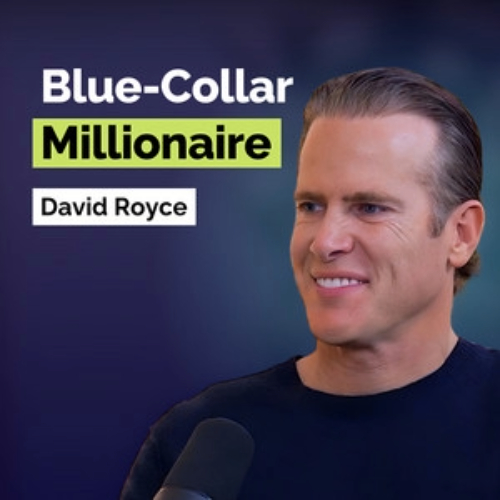
David Royce: How to Turn a Boring Idea into a 9-Figure Business | Entrepreneurship | E392
Starting a business was the last thing on David Royce’s mind as a broke college student working a door-to-door sales side hustle. But while working in the unglamorous pest control industry, he discovered that ‘boring’ businesses were quietly producing more millionaires than passion-driven or tech ventures. That insight drove him to build and sell multiple pest control companies, ultimately selling them for over a billion dollars in exit valuations. In this episode, David shares why boring, unsexy businesses are the real path to wealth and how to launch, scale, and sell one profitably.
In this episode, Hala and David will discuss:
(00:00) Introduction
(02:32) Key Lessons from Door-to-Door Sales
(06:06) Realizing Pest Control Could Scale
(10:55) Is Passion Overrated in Entrepreneurship?
(15:56) Why Unsexy Businesses Create More Millionaires
(31:35) Evaluating Blue-Collar Business Opportunities
(40:57) Developing Systems to Scale Your Business
(51:22) Managing Equity, Exits, and Generational Wealth
(01:01:41) Growth Mindset, Mentorship, and Longevity
(01:09:05) Hiring A-Players and Leading at Scale
(01:12:45) Designing Your Business for a Profitable Exit
David Royce is a serial entrepreneur and founder best known for building and selling several companies in the pest control industry, most notably Aptive Environmental. Starting from scratch, he scaled the business to $500 million in annual revenue across 34 states and 5,000 cities before a successful exit in 2024. David is a member of YPO (Young Presidents’ Organization) and serves as a mentor to aspiring entrepreneurs.
Sponsored By:
Indeed – Get a $75 sponsored job credit to boost your job’s visibility at Indeed.com/profiting
Shopify – Start your $1/month trial at Shopify.com/profiting.
Spectrum Business – Keep your business connected seamlessly with fast, reliable Internet, Phone, TV, and Mobile services. Visit https://spectrum.com/Business to learn more.
Northwest Registered Agent – Build your brand and get your complete business identity in just 10 clicks and 10 minutes at northwestregisteredagent.com/paidyap
Framer – Publish beautiful and production-ready websites. Go to Framer.com/profiting and get 30% off their Framer Pro annual plan.
Quo – Run your business communications the smart way. Try Quo for free, plus get 20% off your first 6 months when you go to quo.com/profiting
Experian – Manage and cancel your unwanted subscriptions and reduce your bills. Get started now with the Experian App and let your Big Financial Friend do the work for you. See experian.com for details.
Bitdefender – Start protecting your business today with Bitdefender Ultimate Small Business Security. Get 30% off your plan at bitdefender.com/profiting
Intuit – Start paying bills the smart way, not the hard way. Learn more at QuickBooks.com/billpay
Huel – Grab nutritionally complete meals you can drink. Get 15% off with code PROFITING at huel.com/PROFITING
Resources Mentioned:
David’s LinkedIn: linkedin.com/in/david-royce
Main Street Millionaire by Codie Sanchez: bit.ly/-MainStreet
Active Deals – youngandprofiting.com/deals
Key YAP Links
Reviews – ratethispodcast.com/yap
YouTube – youtube.com/c/YoungandProfiting
Newsletter – youngandprofiting.co/newsletter
LinkedIn – linkedin.com/in/htaha/
Instagram – instagram.com/yapwithhala/
Social + Podcast Services: yapmedia.com
Transcripts – youngandprofiting.com/episodes-new
Entrepreneurship, Entrepreneurship Podcast, Business, Business Podcast, Self Improvement, Self-Improvement, Personal Development, Starting a Business, Strategy, Investing, Sales, Selling, Psychology, Productivity, Entrepreneurs, AI, Artificial Intelligence, Technology, Marketing, Negotiation, Money, Finance, Side Hustle, Startup, Mental Health, Career, Leadership, Mindset, Health, Growth Mindset, Passive Income, Online Business, Solopreneur, Networking
David Royce: [00:00:00] What an amazing time to be an entrepreneur. The way back then you got information about business was in theory to go to college from take business classes. They held the keys to that sort of knowledge, but today you can get on chat GPT and ask it questions, and I cannot believe how accurate it is.
VO: David Royce is the founder and former chairman of AP Environmental, one of the largest residential pest control companies in North America. He's built and sold multiple companies in the same unsexy industry,
Hala Taha: scaling these blue collar businesses into a $500 million plus empire. Without raising venture capital or playing the Silicon Valley hype game,
David Royce: I believe that following one's passions is dangerous.
David Royce: I think it's important to be obsessed. Passion can kind of come and go, but if you make a choice to be obsessed and you keep working at it, you could find some things that are exciting.
Hala Taha: You took pest control and you built it into $500 million annually. What made pest control so scalable?
David Royce: So a, a few things.
David Royce: So one 43% [00:01:00] of everybody in the top 0.1%, not just 1%. The top 0.1 are in these boring traditional industries,
Hala Taha: how can we get better at starting to spot these really common everyday problems that nobody thinks about?
David Royce: The secret's no longer to know where to get the knowledge. It's pretty easy to find it. It's almost like what is your horsepower, your drive, your ability to just stay focused and work and build.
Hala Taha: How did becoming this rich impact you as a person? Like what changed? Good and bad?
David Royce: The greatest impact it had was.
Hala Taha: Young profit. What if the fastest path to massive wealth isn't chasing your passion, but mastering boring everyday problems better than anyone else? In today's episode of Young IMP Profiting, I sit down with David Royce, a four-time exited entrepreneur who built and sold multiple pest control companies.
Hala Taha: David breaks down how he spotted hidden opportunities in unsexy industries, turned door-to-door sales into repeatable growth engines, and explains why following your passion can actually hold you back [00:02:00] from building real durable wealth. If you're an entrepreneur who wants to win by focusing on fundamentals like systems, sales and people, then tune in because this is a masterclass on blue collar brilliance.
Hala Taha: Before we jump in, make sure you're following us on your favorite podcast app. If you're new here, you won't wanna miss what's coming. David, welcome to Young and Profiting podcast.
David Royce: Yeah, thanks for having me.
Hala Taha: So I was doing a little bit of research about you and I found out that your life really changed once you got this summer job going door to door and, uh, selling pest control.
David Royce: Right.
Hala Taha: So talk to us about that time in your life and how that really changed your trajectory.
David Royce: Yeah. So I was a broke college student trying to figure out what was the best way to get my way through school. Uh, and I'm working part-time. Uh, I had a friend come to me and say, you know, I made 25 grand last summer, you know, and we'd surf part-time and all this kind of thing.
David Royce: And all I heard was 25 grand. You know, it was 25 years ago, so it's like 50 grand in today's money. And I had [00:03:00] no idea really what it was. He said it was pest control, but I just, I literally drove out to Sacramento 10 hours, got an apartment, and was ready to go on that Monday morning. And it, it took me, man, it was like five days of selling zero.
David Royce: I was horrible at sales, but I started, um, but that weekend I went out to a bookstore. And everybody else around me is, you know, selling one to four accounts daily. So, uh, my, you know, my confidence was just really, really down and I clearly didn't know what I was doing. So I went to the bookstore and just committed myself.
David Royce: I said 90 days, or I'm sorry, 90 minutes a day, every day this summer I'm going to read this and I'm gonna get really, really good at this because it, you know, it was a commission job. And so there was the ability to make a lot if you, you know, improved your skillset.
Hala Taha: Yeah. So you were going door to door for five days and you didn't make any sales.
David Royce: Zero.
Hala Taha: What did that teach you about quitting Too early?
David Royce: Yeah. You know, I, I did have thoughts [00:04:00] about, you know, am I gonna be able to pull this off like at the end of the week? You know, you have a couple days to think about what you did, and it, it was rough. Uh, but, you know, my, my personality is if I can see others doing something, you know, if you can see it, you can be it.
David Royce: Mm-hmm. Right. And then, you know, the thing I learned is, you know, persistence is genius in disguise. You know, and I, I really do believe that talent is directly proportional to desire. And if you want it bad enough and you're willing to work for it and just keep going, eventually you'll figure it out.
Hala Taha: Yeah, I totally agree with that.
Hala Taha: I'm always teaching people to just learn as much as you can. Uh, competence is, confidence is something that I always say. I feel like that's so important and so important for young people to hear, to really, um, you know, spend the time to actually learn the skills. So you became a master at sales, so much so that you ended up like training other salespeople and being like one of the top rookies in sales on your team.
Hala Taha: So what did you, what did you learn, um, what are some of the key things that you remember today that are [00:05:00] still relevant in sales that you learned back then?
David Royce: Yeah, so a few of the things I was really struggling with was I, I was focusing on features instead of benefits. You know, people buy for the reason why, you know, something is there, you know, you don't just, don't just say, well, we do this, it's, we do this because, and this is why it's important to you.
David Royce: The second thing I was not closing, I would get to the end of the approach and just go. So what do you think they're like, well, and if, if you don't have that confidence to, to literally ask for the business, most people are like, eh, may, maybe next time, you know, so I, um, sort of do what I call an option close where I would say, well, so we're gonna be here tomorrow, you know, in the morning or the afternoon, which, which would work best for you?
David Royce: And both are in your best interest, right? And you're trying to help the customer make a decision to move forward with it. And most of the time they, they respect that confidence and they'll just say, Hey, I'll give you a shot. Why not?
Hala Taha: I love that. So not like, if you're gonna do it, just what time are you gonna do it?
David Royce: Right.
Hala Taha: Give them a different option. At what point were you like, okay, I think pest [00:06:00] control can scale. I think I can do this better.
David Royce: Yeah. So it was the furthest thing from my mind. It was a total 180. I was studying finance to go to New York, do m and a and um, yeah, it just. So the first year I was a top rookie.
David Royce: The next year I went to go work for a startup. The first company was a big large company, and the startup, I had no idea what I was getting into. It'd only been in business for one year. Um, you know, the operations were still, they were still dialing that in. And when I got there, there was no training manual, uh, for salespeople.
David Royce: And I had brought out friends as a sales manager and I wanted them to do well. I didn't want them to go through what I had gone through. So I asked my boss, I said, Hey, can I write your training manual? Um, and he was really great at training. Uh, he would work with us, but it's nice when you have something you read
Hala Taha: focus
David Royce: on.
David Royce: Yeah. Um, we started creating training videos to go along with it. And by the end of the summer, we were the top sales team. He had two different locations and we had doubled what the other team did. Oh,
Hala Taha: wow.
David Royce: And so he pulled me aside and said, Hey, why don't, why don't I give you a [00:07:00] cutoff? Everybody in the company, if you want to help me try to scale this, um, and make sure that they're doing, you know, as well as you guys were doing.
David Royce: So did that for the next few years. By the end of my, um, that, that last year, I, I was doing 200, I was making 225 grand a year. So almost a half a million dollars in today's money. Oh, wow. Uh, I was managing a hundred people and I went to my boss and said, I need a letter of recommendation from you. I want to go do investment banking in New York.
David Royce: It's finance. I'm not sure how they're gonna look at this pest control thing, but I need you to explain, you know, what I've done. You know, it's not just the money that I'm making, but you know, the, the management, the recruiting, the training, all these things I've done. And he's just, he looks at me and goes, what are you doing?
David Royce: Why would you go work for somebody else and work 8,000 hour weeks, all year long when you're doing what you're doing in just a short period of time? Like, you really should go think, you should think about starting your own company. And so that was the first time I thought about it. I, I'd never thought about it before.
David Royce: It just, you know, wasn't sophisticated. [00:08:00] I was getting a college degree. I thought, you know, I, I am really good at this. I'm in the top 1% of 1% in sales. Maybe, maybe I should consider it. Um, I know a lot. He, he said, you know, you know a lot of the business, you don't realize it. You think you just understand sales, but you've been around enough.
David Royce: You understand these other aspects and you have, if you have questions, you know, you can call me.
Hala Taha: What a cool boss. Yeah. As I'm listening to this story, it's, it's like you, you had somebody who really believed in you, who gave you opportunities. It probably foreshadowed how you ended up treating your own employees.
Hala Taha: Once you had employees. De definitely talk to us about, I, I guess looking back at this manager, the right things that he did that helped mold you to the person that you are today.
David Royce: Yeah, we really try to align our best interests with everybody's in best interests. So we wanted a triple win, one for the business, one, uh, two for the customers, and three for all of our employees.
David Royce: And if you can align all those incentives, you get a much better outcome, you know, uh, than just kind of focusing on one area or two areas. He was [00:09:00] okay at the operation side of things, but he had a family too, and he was very busy, um, with that side of. You know, life. And he really just said, look, here's, he gave me a list of things, actually.
David Royce: He gave me a list of 30 different things. He said, if I can improve the business, here's what I would do to make it better. Um, and then I had experience in, obviously I studied finance, I'd worked at a large company, so I saw what that looked like at a hundred million dollar level. And then I'd worked at a small company and really got to be more involved in the different areas.
David Royce: And so his allowing me to do that, I mean, part of it was for his best interest too. Yeah. But I got to see a lot of things. And then, I don't know, for some reason he just, it, it made sense to, um, and I actually, I got him to invest into my first company too. Um, he had talked about it. He kind of pitched, he is like, Hey, if you wanna go do it, you can go do your own thing.
David Royce: But then I was really nervous to do that, and I hate risk. I actually love to mitigate risk. A lot of people think entrepreneurs, they wanna jump out of a plane without a parachute. It's not true. Um, and [00:10:00] so I went on and um, I asked him, I said, Hey, would you mind investing in the company? I want to take it to a certain size and scale it.
David Royce: And he was like, uh, I'd love to do that. Um, he's like, but I wanna be a silent investor. If you have questions, you can call me. But, you know, I don't wanna do any other
Hala Taha: work. He didn't, he didn't want any more work.
David Royce: Yeah. And I just, he sold, he was selling his business too, to get out of it. So he sold his company for about 2 million bucks.
David Royce: And quite honestly, that was probably what made me go, okay, we were here for only four years.
Hala Taha: Yeah.
David Royce: Uh, that's a lot of money. I, I think I'll go try that.
Hala Taha: Yeah. It sounds like he was really inspiring. And then also he, he, uh, had control over his ego where he kind of let you shine and wasn't worried about you taking his, his customers and becoming competition.
Hala Taha: So I just feel like what a great boss, um, and experience that was for you. So one of the things that I've heard you say is that as an entrepreneur, you're really better off not following your passions. Why do you believe that?
David Royce: Right. So I, I believe that following one's passions is dangerous, or at least that it [00:11:00] can be dangerous.
David Royce: Um, no doubt. I was passionate, I became passionate about sales and I think that people can become passionate about anything they're good at. Um, I like to use the word obsession. I think it's important to be obsessed. Passion can kind of come and go, but if you make a choice to be obsessed and you keep working at it, you can find some things that are exciting.
David Royce: I think you can really build something off of that. Um, pa a lot of, there's a lot of passion industries, right? You know, the, you wanna go out and be in music or Hollywood, you know, or a lot of people want to go have their own restaurant, you know, 'cause they're passionate about food. But those industries, you gotta be in the top 1% of 1%, you know, to make a dent and, and to really make good money.
David Royce: And. A lot of people too, they, they wanna race into a business without the experience. And I, I'm also a big believer in, you know, getting experience.
Hala Taha: Why do you think following your passion is some of the worst advice somebody can get if they wanna be rich?
David Royce: Let's say I, I just love basketball, right? NBA is amazing.[00:12:00]
David Royce: Who would actually want to go up to LeBron James? Say, Hey LeBron, I want to challenge you to a game of one-on-one. I'm gonna invest everything I have. I've never played basketball before, but I want to, I want to put everything, all bets are on this, on this one game. That's insane. Nobody would make that bet, right.
David Royce: Except for LeBron.
Hala Taha: Hmm.
David Royce: So I feel like a lot of people, as they, uh, you know, they want to get passionate, uh, you know, or, or want to go do something that's passionate and they've, especially if they've never done it before.
Hala Taha: Mm-hmm.
David Royce: That's, that's really hard. I think you need to go out, develop a skillset first in some sort of a core competitive advantage, and then u utilize that competitive advantage to go off and, you know, do your own thing.
Hala Taha: Mm-hmm. If passion is overrated, what should people be optimizing for when it comes to their business?
David Royce: Yeah. So one of the best things about today is that you can get on chat GPT and ask it questions. You know, I, I found chat to be like one of the best mentors, uh, available. Uh, if you, if you're starting out [00:13:00] from nothing, you don't know anybody that's been an entrepreneur, get on chat.
David Royce: It's incredible. You can learn about what are the best business models, which ones have the highest margins, which ones are recurring revenue, which make it easier to scale something, uh, and which ones are doing well, which, you know, ones are getting rolled up by private equity or by strategics. I think that's a great way, you know, to, to find different ideas, you know, to I one, to be able to identify it.
David Royce: Right. Um, Seneca said that, uh. Luck is what happens, you know, when preparation meets opportunity. So you gotta figure out how to identify that first and then, you know, go out and put a lot hard work into it to make it luck.
Hala Taha: Yeah. So you took pest control and you built it into $500 million. Uh, was that annually?
David Royce: Yeah, annually.
Hala Taha: Wow. Like, that's incredible. That is a dream for so many entrepreneurs tuning in. So what made pest control so scalable?
David Royce: So a, a few things. So one, it's a re recurring, uh, revenue business model, right? So you [00:14:00] sign up a customer, you know, we typically go out every, you know, month, two months, or three months to service the home.
David Royce: And it's one of those things where, uh. The bugs don't read the Wall Street Journal. Right. And so if there's a recession, it's very, very resilient. You know, if someone has bugs, they're gonna keep having you come out and treat the home. And pests are a lot like weeds. You know, you can go out like a garner would and you know, get rid of 'em once, but they're going to come back.
David Royce: And so you have to have a service, you know, don't, or to maintain the house and the property.
Hala Taha: And it's probably really easy to find your clients. 'cause if one house has bugs, then the whole street probably has bugs. Right.
David Royce: Uh, that's very typical. Yeah.
Hala Taha: Yeah. Um, so what are some common things that people should look for when it comes to unsexy boring businesses?
Hala Taha: Like, like what's out there and how can people tell if this is gonna be an industry that can actually scale?
David Royce: Yeah, so recurring revenue, it's probably one of the easiest ones. 'cause once you get a customer, you know, you know they're gonna last for a certain period of time. You can literally look at the numbers and know, okay, the life of that customer is [00:15:00] X two.
David Royce: I look for, you know, uh, an industry that has high business margins. It's, it's funny, I don't necessarily understand why it's this way other than, you know, supply and demand. But if a lot of people want to get into an industry. You don't have to, you don't have to pay people that much right. To, to do that.
David Royce: Or the, the market won't pay you that much. It's just supply and demand. Same thing with Hollywood. You wanna get, in Hollywood, you're probably working for free for a long time, right. Or you're starting in the mail room, you know?
Hala Taha: Yep. That makes sense.
David Royce: That kind of a thing. So try to find a, a mar a business with a really, really high margin.
David Royce: And then three, like find some way to, uh, build a competitive advantage. For us, it was the sales model and pest control. Uh, typically, you know, most companies, I call 'em traditional pest control companies today, they just go through digital marketing and we have a digital marketing arm. We do that too. But back early on, I was early into the, the sales model of knocking door to door.
David Royce: Most people think it's antiquated. And a lot of the larger companies, even today, they haven't been able to figure out that model on how to do it well and. [00:16:00] Although the model had been around maybe for 10 years in the pest control world, nobody had really dialed it in to make it better. And for us, one of the advantages we had, I got so into sales, so passionate about it.
David Royce: If a salesperson came to work for us and they had worked somewhere else doing the same job at another company, they would sell 70% more with us that year than they did the previous year. And so we could grow, not only were we better at sales, but we could grow a lot faster as a company pest control company versus a traditional model.
David Royce: Um, we could grow se literally seven to 10 times as fast as a traditional pest control model.
Hala Taha: Well, what was the difference? Like what was, uh, you called yourself like the in and out, uh, like in and out burger of the pest control world. So what, what was different from your model compared to the traditional pest control model?
David Royce: Yeah, so the, the sales side is number one. Like we were hands down the very, very best at that. Two. I had knocked on 60,000 doors myself for four summers. And so I had heard a lot of what people were looking for that the current industry was [00:17:00] missing out on. And so we started, started to experiment with those different ideas.
David Royce: And then, um, third was software. We started developing software of 16 plus years ago, which is pretty rare, especially for a pest control company. Like, no, it was unheard of. And so it was kind of our way of differentiating and making us a, you know, front runner in the industry. So for example, uh, we started with software on the sale, on the sales side.
David Royce: And we noticed at towards the end of the summers, people started, you know, start, our employees started to get tired, didn't want to knock as much, or you know, they're just thinking about going home, getting back to college. And so what we did is we set up these tournaments where we could compete, uh, with our salespeople all over the country.
David Royce: And we tried to match up sales reps that were like just as good as the other individual to drive sales. And we could get our sales on a, you know, during. During, say a tournament week, we could drive sales an extra 30% higher. Oh, wow. By doing that, do you
Hala Taha: think? Because people got more competitive?
David Royce: Right. So the math, it made a lot of sense.
David Royce: It was thinking about it like March Madness for salespeople. Mm-hmm. So we turned our salespeople into athletes and we're able to. [00:18:00] Get a lot more sales.
Hala Taha: Yeah. Fam, you know that moment when it's 1:00 PM and you realize the only thing you had all day is coffee, or maybe coffee and a banana. That used to be me for many, many years.
Hala Taha: My mom used to make the joke that I used to fast every day, even though it wasn't Ramadan, busy mornings, back to back meetings, workouts, and somehow eating just always fell off the list. And that's why I'm currently obsessed with fuel. Fuel makes nutritionally complete meals that you can drink. In fact, fuel is so delicious and effective that both of my business partners are obsessed with Hue and have been for years, and they literally use Hue as a meal replacement every single day, and I'm jumping on the bandwagon.
Hala Taha: Their black edition Ready to Drink is packed with 35 grams of protein, 27 essential vitamins and minerals, no artificial sweeteners, all for under five bucks, and it actually tastes good. I think that's what really changed it for me, is that I was afraid it wasn't gonna taste good. And now that I know that it tastes good, I'm on the bandwagon too.
Hala Taha: I'm drinking fuel every day [00:19:00] as a meal replacement, and I'm getting my protein in. Consistent. Nutrition does not have to be complicated and Heal makes it stupidly simple. And now there's a limited time offer. Get Heal Today with my exclusive offer of 15% off online with MyCode profiting at hu.com/profiting.
Hala Taha: New customers only. Thank you to heal for partnering and supporting our. Yeah, bam. Today's episode is sponsored by Bitdefender, a global leader in cybersecurity. Now, running a small business means wearing a hundred hats at once. Sales, payroll, customers, taxes and scammers know that, especially during tax season, cyber criminals are sending fake audit letters, phony tax documents and emails that look painfully real.
Hala Taha: Just to grab access to your accounts while you're busy doing a hundred other things. That's why I use bitdefender Ultimate Small Business Security to keep my company safe. It protects every employee device, secure servers with customer data and shields daily activities like email and web browsing, whether you're in the office or working [00:20:00] from home.
Hala Taha: And the part I think is really smart is their AI powered scam prevention. It's trained on real small business attack patterns, so it blocks phishing, fake websites and shady messages before they ever reach your team. Plus, you also get a password manager, unlimited VPN and 24 7 expert support in one simple dashboard.
Hala Taha: Big companies have security teams you don't. Bitdefender fills that gap for you. Start protecting your business today with Bitdefender Ultimate Small Business Security. Get 30% off your plan at bitdefender.com/profiting. That's bitdefender.com/profiting for 30% off. So let's talk about. Rich entrepreneurs talk to us about this misconception that you get rich from tech.
Hala Taha: Like a lot of us see tech billionaires and that's who we wanna be. We look up to Elon Musk, we look up to, you know, Sam Altman, like Sam Altman, like all Steve Jobs. Yeah. Like everybody looks up to the tech guys.
David Royce: Yeah.
Hala Taha: Why do you think. [00:21:00] You know, boring, unsexy businesses are so overlooked because it turns out some of the richest people in the world are running unsexy boring businesses.
David Royce: That's right. So think about like, what gets headlines, right? Like if somebody says a pest control person made X amount of money, maybe it, it, it might make a headline. 'cause it's, it seems unusual, but it's actually not. It's far more common, um, for, you know, these traditional businesses. There was an article in the Wall Street Journal this past year.
David Royce: It was called the, uh, the Stealthy Wealthy. And in the article, uh, there's um, there's actually a professor outta Princeton that's labeled us the stealthy Wealthy. And he says that 43% of everybody in the top 0.1%. Not just 1%. The top 0.1, meaning you make $2.3 million or more per year are in these boring, traditional industries.
David Royce: It's almost half of everybody, you know, making a ton of money. But I, I just think in the news, you know, it, it doesn't make headlines. It's not good click bait. People aren't that understood. And it's also not new. [00:22:00] You know, it's, it's not something, uh, that really resonates, I think with, with the news.
Hala Taha: That's incredible.
Hala Taha: So nearly half of the people who make over $2 million a year are running, owning boring unsexy businesses.
David Royce: Yeah. The individual that they highlighted in that, uh, article, I think he made, um, some sort of a machine to rip up carpet. And the niche he found was schools, he's like, you know, in schools almost every year the carpets turns out kids are really dirty and you gotta rip up the carpets every year and replace 'em with new carpet.
David Royce: And he'd been doing it for, I think 35 years.
Hala Taha: Like. Who would've thought, right? These are problems that nobody thinks about.
David Royce: Yep.
Hala Taha: How can we get better at starting to spot these really common everyday problems that nobody thinks about?
David Royce: What an amazing time to be an entrepreneur. Right? When I went to college, which dates me, you know, the, the internet had, uh, blown up and then it blew up.
David Royce: Uh, we had a big recession in 2000. And so when I graduated in [00:23:00] 2004, tech actually wasn't as, um, sexy to want to go get into just because, you know, it was kind of at the low point, um, after the crash. And so the way back then you got information about business was, you know, in theory to go to college, right?
David Royce: And take business classes. They had, they hold, they held the keys to that sort of knowledge. Or maybe you go get an MBA, uh, but today, I mean, you can listen to podcasts, right? You can go on the, all these different master classes or things all over the internet about how to be an entrepreneur, how to build a business.
David Royce: And now with ai. Yeah, it, I mean, I do all of my research. I'm finally in my exploratory phase. I took a year off. I'm starting to explore other business ideas. Almost all my research is on chat, GPT, like figuring out the next thing. And I cannot believe how accurate it is. Um, every once in a while hallucinates.
David Royce: Yeah, for the most part. Incredible.
Hala Taha: Yeah. I use it constantly. Actually. I've been starting to get worried 'cause I'm like, can I even work without this anymore? I've been challenging myself. Um, I was working on a [00:24:00] course, uh, or like a webinar for a course earlier this week and I found myself like using chat gt so much and like had to step back and be like, wait, I am an expert and chat GPT is not gonna know more than me about this topic.
Hala Taha: It can help me like, refine it, make it stronger, more succinct or
David Royce: Yep,
Hala Taha: clearer. But in certain aspects I feel like we're like really losing our ability to think. It's starting to like worry me a bit.
David Royce: It's almost like the secret's no longer to know where to get the knowledge. It used to be, you just have to know where to get it.
David Royce: Now it's, it's pretty easy to find it. It's so, it's almost like what is your horsepower, your drive, uh, your ability to just stay focused and work and build and continue learning. Like those are really the, uh, you know, the assets or the, the keys to be able to grow.
Hala Taha: Yeah. Okay. So back on this topic of unsexy businesses, boring businesses.
Hala Taha: We were talking earlier about passion and you saying like, you know, you're not gonna get rich following your passion.
David Royce: [00:25:00] Right.
Hala Taha: In most instances, right. Some sometimes can get, yeah, sometimes you do. Sure. Yeah. Most instances. So how do you stay motivated and passionate if you feel like you're in, like for instance, like I'm sure you're not obsessed with pest control, right?
Hala Taha: So what did you get obsessed with in your business?
David Royce: So for me it was developing people. So when I first got into the industry, the, on the sales side, they had this, what I call a wet rag mentality. They'd throw wet rag against the wall, you know, see who stuck. And then after that just was what it was. And I thought that's a shame.
David Royce: Like how many people come out here and have a poor experience and then, uh, you know, don't become, don't help the company to be able to sell and build the business. And then they go online and write bad reviews about their employee experience. And I just thought. There's a better way to do that even if you're like, if you're self interested, take care of your people.
David Royce: Like I really found it to be a responsibility. Yeah. Um, right. Like if you have a bad boss, they can actually take years of your life away. Right? You can be three times more depressed. [00:26:00] There's all these stats. Um, so I got passionate about, uh, developing salespeople initially, and then it was about developing sales managers, and then it was about operations and then it was about entrepreneurship.
David Royce: So it wasn't so much the widget Yeah. That we were selling. It was more the game, you know, of business and being creative, using my mind to think, okay, how do you scale this and how do you build systems and processes so that you can scale it across the country, you know, and help thousands of people, not just on the customer side, but on the employee side.
Hala Taha: See, I feel like that is like the big idea in this conversation. It's not about the industry, it's not about what you do, it's about how you do it. And getting obsessed with actually. Being an entrepreneur and scaling a company, like that's exciting in itself. Yeah, and it doesn't really, as long as you're solving a problem, especially one that has a lot of market demand and you're getting rewarded because people want this problem, so you're making money.
Hala Taha: It like that in itself is a fun game. You know,
David Royce: there's two things that really do it for me. One is personal growth, you know, and learning. Two is service. Mm-hmm. And those were the two [00:27:00] key things I got out of, you know, being an entrepreneur. Uh, I got to be really creative and I, there was a point, um, you know, maybe six, well, I mean even from early on, but definitely like at the six year mark where I started to say, okay, like I've sold mul, built and sold multiple businesses.
David Royce: What can we do? I've got like millions of dollars now I can reinvest into the business. And I just started studying Silicon Valley because by that point it was really coming back. And I went toward Google and Meta and Zappos and all these different tech companies, uh, Tesla, um, later on, Tesla. And I just was like, okay, well what can you do?
David Royce: What ideas can we take? Because the, the hardest talent to recruit back then were software developers and they were building these amazing facilities. Um, they had amazing company cultures. They were doing incredible retreats and all these things. And so I said, all right, why don't we do that with pest control?
David Royce: So we built, you know, this incredible headquarters with the NCAA basketball court. You know, we had a a 30 person suite at the jazz arena. Everybody could go and [00:28:00] watch the NBA, uh, together. Uh, we had retreats where we go all over the world. Um, we started out in Hawaii and we do things like, you know, skydiving and, you know.
David Royce: Hiking up the volcanoes to see the lava and, you know, swimming with sharks or whatever, you know, it's a lot of college kids, so we're doing lots of, you know, fun kind of wild things. And it was just, I, I wanted to create experiences. I wanted to create memories. I wanted to be different than every else.
David Royce: Yeah.
Hala Taha: I'm sure it helped with recruitment because suddenly Absolutely. It was cool to be part of a pest control team.
David Royce: Yeah. If you walk in and like your office has, you know, ping pong, foosball, you know, a movie room, a golf simulator, a basketball court, it's like, wait, what is this? A lot of people thought we were a tech company.
David Royce: Mm-hmm. They're like, I had no idea. This is pest control. It doesn't make any sense. And you're like, I know. It's kind of fun, huh.
Hala Taha: You, you mentioned a few times that you guys developed a software, so I'm curious. What kind of software was it? Like where did it act? Did it help your customer or did it actually help you guys find customers?
Hala Taha: Like what was this software? Just so people can start to think about like if [00:29:00] they're in a boring industry or they, or they wanna disrupt a boring industry, what kind of ideas they could have?
David Royce: Yeah. Started on the sales side and we're like, okay, how can we make sure our training gets everybody? So we put sales training videos or sales training manual on there, so everybody had easy access to, I actually recorded an audible version of it just for us in-house.
David Royce: So if sales reps were driving out to the area, they could listen to it. Uh, and then it was, okay, let's develop the sales tournaments. Uh, and then we started expanding into other things like, um, determining which doors to knock on. We started to get, you can pull all this customer information. We actually can know, our salespeople didn't know, but internally we can know like who's paying their bills.
David Royce: You know, who's paying their mortgage, you know, do they have a pet, you know, do, do they have a family? And there were certain key factors that made our retention better. And so we're thinking, okay, well how do we, you know, create a more profitable, better? Uh, business that has more longevity. We, we took it all the way down to that level.
Hala Taha: Oh, very cool.
David Royce: And then other things too, like in-house, [00:30:00] uh, you know, we created a CRM, uh, actually more recently, we just barely released that. Uh, but yeah, you're just constantly looking for different ways to improve the business in terms of being more profitable, in terms of increasing revenues. Um, looking for efficiencies with routing, you know, making our, uh, service pros lives easier, you know, going from place to place.
David Royce: They don't wanna have to drive everywhere if it saves them gas and time and then get home earlier at the end of the day, you know, it's great.
Hala Taha: So basically, it wasn't even about any, like, external customer services, it was actually to help your own team operate better and make better decisions.
David Royce: Yeah, it was more internally and then in time, like we started thinking about the customers too, where we said, okay, what are things that we can do that other companies aren't doing?
David Royce: So one of the ideas we had was creating a customer app, and then every time a Service Pro was at someone's home. Whatever password there, they would take photos. A lot of times when we're at a home, the customers, um, they're not there two thirds of the time. They're at work, you know, doing something else.
David Royce: And so sometimes there's the question of, did [00:31:00] your technician come to our home? So by taking a photo, you, they know that they were there. And two, you, you kind of, um, give them that value. You show them here's where the pests are and what pests you're having, and then you can work as a team towards doing, you know, uh.
David Royce: Helping get rid of those pests. So like if someone has a bunch of firewood, you know, right up against their house that might attract spiders or rodents, and it's, and we can take a photo of it, show them, you know, the rodent droppings or you know, the spi spider webs mm-hmm. And be like, Hey, can we take this and maybe move to the back, backyard and back mm-hmm.
David Royce: Far back fence. So that way you don't have stuff trying to get into the house.
Hala Taha: Yeah.
David Royce: So it's a way to work together, a way to visually see that they're having problems. And I think that helps our customer attention too.
Hala Taha: Yeah. And it probably makes you guys more human. They get to connect with somebody.
Hala Taha: Right. They feel like you're going above and beyond.
David Royce: Absolutely.
Hala Taha: Uh, I love that. Okay, let's play a game. Let's play a game called Blue Collar Billion dollar business, or Nah. Okay. So I'm gonna say in industry you can say if it's, you know, [00:32:00] a billion dollar industry potential or no. Sure. And, you know, be honest.
Hala Taha: It could be that it's not a, it's not a great business to be in. Of course. And then let us know at the end. What, what industries I may have missed that you want us to make sure that we, that you wanna make sure that we know about.
David Royce: Great.
Hala Taha: Okay. Okay. So let's start with HVAC services. Billion dollar business or Nah.
David Royce: Yeah, definitely billion dollar business. Um, you can already see this private equity has actually been rolling up HVAC for quite a long time. If you think about why, so one, going back to kinda what I said before, uh, recurring revenue model, right? You can go out like maybe you need your filters change, you know, every quarter or whatever it is.
David Royce: Um, and so they'll make sure that they come out and do that, uh, for hvac. And then, you know, plumbing, if somebody, someone's got a problem with their plumbing, uh, it doesn't matter what recession you're in. Yeah. They're going to call you immediately and they want you out there yesterday, right? Like, get out here now.
Hala Taha: Yeah. So hvac, that's a good one. Um, so do [00:33:00] you recommend somebody buy. An HVAC existing company, or actually start one from scratch. Like if you could choose, would you say buy or start one from scratch?
David Royce: Yeah. So I was at, um, I was, I was just at another podcast and the, the host said, Hey, have you ever heard of Cody Sanchez?
David Royce: And I was like, I've never have. And he's like, you remind me a lot of her in terms of what you talk about. He's like, you should look her up. So I looked her up, I saw she had a book, main Street Millionaire. Mm-hmm. I just read it. I was like, this is incredible. I think her ideas are, they're even better than mine in the sense that instead of starting from scratch, like what I did and grow organically, buy a business that already exists.
David Royce: It's been around for 10, 20, 30 years. Right. Because they've done all the, they've mitigated all, almost all the risk. The the only risk you have is just continuing to operate it. And if you hire, if you buy a business maybe with like a, a small business loan or whatever, uh, yeah, you can continue. You already have like, it's kinda like training wheels, like you've already got something you've gotta baseline, mitigate, [00:34:00] mitigate that risk, right.
David Royce: It's, uh, if you look at franchise models, they're so successful, right? Like within five years, most businesses are out of business. Like new startups, uh, 80% of 'em are gone. But in franchise models, 80% still exist.
Hala Taha: Oh, wow.
David Royce: After five years. And the reason why you have the blueprint, right? Like they already have the, the, uh, processes and the systems.
David Royce: You have, uh, the KPIs already listed in terms of what you need to track. You've got a financial forecast that says, here's approximately what, what you should be doing as you grow. So experience really mitigates your risk. And I'm a big fan of that. I just don't, but
Hala Taha: don't you think there's something to like building something from the ground up and really know, like you knocked a door to door for four years and so you knew every customer problem you knew, you knew every customer desire.
Hala Taha: Don't you feel like there's.
David Royce: Oh yeah,
Hala Taha: advantage in that.
David Royce: There definitely is, but you can have the same advantage. So if you buy a business, you can get into that business and go learn all of it. And so I just think that's a much [00:35:00] better way than starting from scratch. I already had experience that was, you know, my competitive advantage.
David Royce: I knew how to build the business, and so it was more like, okay, I just need the capital. I need to firm up all the processes and systems and then I'll alert, you know, scale it from there. But I, I knew what I was doing because of that. And so, even if you buy another business, go into it with, Hey, the next six months I'm gonna go into this business.
David Royce: I'm gonna learn every little detail about it, so I understand it. And then you're, you're like a master that already has the perfect blueprint to be able to scale, and you can always work to improve it. Just like, you know, my boss would gimme 30 different things to work on. You can go in there and go, you can ask, you know, the, the former owner or the manager, whoever's there.
David Royce: What, what are you doing to, mm-hmm. What are your pain points?
Hala Taha: Yeah.
David Royce: How can we improve? If you had the time and you could just focus on improving the business, what would you do?
Hala Taha: Hmm. And I'm sure you could do customer surveys and all that good stuff to really, of course, really understand. Of
David Royce: course, employee surveys.
Hala Taha: Okay. Landscaping and lawn care. Billion dollar business or, nah, [00:36:00]
David Royce: I would say nah, right now. Um, the hard thing about lawn care and, and you've seen this in multiples with lawn care, I'm not sure where it is today. Like, I think 10 years ago, the multiples really came down in terms of what businesses were willing to pay for them.
David Royce: It's, it's hard. One is the retention's not as good as like pest control. Um, in fact, you've seen the larger public companies get rid of lawn care and take it out of their service or sell it off to somebody else. And then two, the, the hardest thing is, although it's recurring, it's visual. It's really easy to see if there's a problem, and if your lawn looks brown or you know, it's dying, they're gonna, they're gonna keep calling you to come back and eventually they can get frustrated with you and it tends to be a harder thing to manage and do really well at.
Hala Taha: Okay, interesting. Um, junk removal.
David Royce: So different model, not, not recurring revenue per se, but I do think there's a model there. I just don't, I don't know it as well, but what, why, you know, had junk removal. People come out before they're [00:37:00] really good. Like, they're like, take pictures of what you have and send it to us and we'll tell you whether we'll come out and pick it up.
David Royce: And so if you think about it, the only charge they really have other than you know, it, it's gas, you know, and an employee coming up, picking it up and taking it out. They're kind of just like a middleman in between, you know, selling off the items somewhere else. So if it's basically if they get it for free and they can sell it for, you know, a piece of furniture or whatever it is for a thousand bucks, 2000 bucks, it's not a bad business model.
Hala Taha: Yeah. Uh, one of my previous clients was the CEO of one 800. Got one 800, got junk. Brian Scudamore incredible business. And he actually, he, uh, created a franchise model out of it. Yeah. So he learned how to do it really well in a few cities and then started a franchise and does, does really well. I don't think it's quite a billion dollars though.
Hala Taha: Okay. Pool maintenance.
David Royce: Uh. I would say Nat, in the sense that if you're trying to build a billion dollar company, I haven't seen as many, uh, groups rolling up pool services yet, but I have heard that [00:38:00] pool margins have gotten a lot better. And so like if you have 20 or 30% margins, that's a really great business model.
David Royce: And then it's recurring, right? Like they need you out there on a weekly basis and it's either your pool company or another pool company. Like they have to have somebody. So if you have some sort of a strategy, maybe even going door to door could be a really great strategy, especially to set up really tight routes in the exact same, uh, neighborhood.
Hala Taha: Mm-hmm. You keep saying rolling up. What do you mean by that for people who are kind of new to this world?
David Royce: Sure. So, uh, what you see with private equity groups that are buying lots of companies, you know, private equity groups have funds, they have investors invested into 'em, and what they'll do is you can buy small companies for a lower multiple.
David Royce: So for less money, let's say, um. You know, the, a mar let, let's say a company is $10 million, just for the sake of, uh, whatever, you know, simplicity, it's 10 million bucks. Let's say you can buy it for 10 million bucks. It has a 20% profit margin. You're gonna buy it for five [00:39:00] times that profit margin, it's 10 million bucks.
David Royce: What they can do is if they attach it to a big company, like let's say they have got a hundred million dollars company, suddenly that 10 million now becomes 20 million or 30 million of value, because the bigger the company, the more values there. So, um, in, in my industry. The company that bought us was looking for a platform company and we were the third largest pest control company in the United States.
David Royce: You know, we're in 34 different states, 5,000 cities. And so what they wanted was to be able to bolt on, they wanted our current business, but they also wanted to be able to bolt on other companies where they could buy companies for less. And simply by attaching it, it was, they call it accretive. Now it's worth a lot more money.
David Royce: And so it's, it's a, it's a great business model, especially if, if you have private equity or other groups rolling up companies like that, bolting them onto a bigger platform company. Uh, you know, even if you're, if you're small, you can say, look, I want to take it, I want to go from the five x multiple, I want to get to a 10 x multiple.
David Royce: Um, you [00:40:00] know, you may not get to the 15 'cause you might have to have 20 companies rolled up into one. But it's an incredible, incredible way to make money arbitrage. Right.
Hala Taha: Yeah, that makes a lot of sense. So basically these companies are bundling up smaller companies. Do the smaller companies like. Take the other company, the bigger company's process and brand?
Hala Taha: Or does it stay typically?
David Royce: Yeah.
Hala Taha: Okay.
David Royce: Yeah, typically if they get to a certain size and they're bigger, I seen this in pest control. Like say if you're doing 30, 40, 50 million a year, they'll, they'll say, Hey, let's just keep the brand, like that's a good business and the brand is worth something. Let's let them keep, keep that and we'll, we'll have that run on its own.
David Royce: But we'll also they, they'll say, we'll, we'll take some of our best practices. We'll look at theirs and maybe there's a few things they can improve. Let's improve this, this, this. Right. And then they'll get what's called synergies where they'll say, we, we probably don't need their executives anymore. We'll just use the executives at the big company.
David Royce: You know, these ones are gonna retire. They probably had, you know, some equity in the business, they're gonna move on. Um, so there's a lot of ways to make [00:41:00] additional money.
Hala Taha: Yeah. I definitely wanna talk to you about your exit and what happened and, and everything like that. But let's move on and talk about, uh, systems and processes.
Hala Taha: So. Where did your discipline come from in terms of you, uh, being obsessed with operational excellence and you wanting to, uh, you know, systematize your processes?
David Royce: My obsession probably came from the poor experience I originally had in the history and realizing the responsibility you have as a business owner to train your people really well.
David Royce: Um, and to build a really incredible culture, you know, from the very start. Uh, but if I go all the way back when I started work when I was 14 at a pizza parlor, I worked at a mom and pop pizza parlor. Uh, got let go from there. Uh, after a year went to go work for McDonald's after that, uh, super embarrassed to hear whatever, but it was the one place that would hire me.
David Royce: I'm 15 years old.
Hala Taha: Yeah. Not embarrassing at 15.
David Royce: It was embarrassing for me, I promise. But what was amazing about it is I very quickly [00:42:00] realized that was a better business model because they had a best practice for everything. Uh, they had training manuals. They had training videos. The managers, they had logs to make sure you were trained in each little thing.
David Royce: Whereas, you know, at the other place it was just the owner, Hey, so here's kinda how you flip a pizza and here you do this and that, and just wasn't much, you know, there. So, um. I always, I always joke that if you, if you wanna know whether you have a scalable business, um, you know, leave for 30 days and see if it's still there later on.
David Royce: Uh, and McDonald's for, for what it's worth, the food's not great, but it is a well-oiled machine. You can't build a multi-billion dollar company and not have incredible best practices.
Hala Taha: Yeah. You go from, you know, one McDonald's in New Jersey to another in Cali, the chicken nugget. Is the same, right? Right.
Hala Taha: And you get the same product no matter where it is.
David Royce: It's very, very, it's very, very consistent.
Hala Taha: Yap Gang. Here's a hard truth. I had to learn the hard way. If you're running a [00:43:00] business and you don't have a clear picture of your cash flow, you're flying blind. There was a time I was approving expenses and making decisions without fully understanding what was going out of my account or when that's a dangerous place to operate from as a business owner.
Hala Taha: But all of that changed when I started using Intuit QuickBooks Bill Pay. It's a bill management tool inside of QuickBooks that brings all of your bills, vendors, and payment details into one organized dashboard so you can track and pay everything in one place. This is what you gotta do as you level up as a business owner.
Hala Taha: With QuickBooks Bill Pay, you can see what's due control approvals and understand how each payment impacts your cash flow. Now I make faster and smarter financial decisions because I actually know my numbers start paying bills the smart way, not the hard way. Learn more at quickbooks.com/billpay. Again, that's quickbooks.com/billpay terms apply.
Hala Taha: Money Movement services are provided by Intuit Payment Incorporated license as a money transmitter by the New York State Department of Financial Services. [00:44:00] What's up? Yap Gang. We're still at the start of a new year and you know what that means? New goals, new ideas. And maybe that little voice in your head saying, this is the year that I finally start my business, but let's be real.
Hala Taha: The what ifs. Show up fast. What if I fail? What if this is the wrong move? I've been there and what I learned is this. It makes a huge difference when you have the right partner from day one, and for many entrepreneurs, that partner is Shopify. Shopify is an all-in-one commerce platform that helps you build, run, and grow your business.
Hala Taha: You can create professional looking websites with ready to use templates, manage payments, and even use AI tools to write product descriptions so you can launch faster. What I love is how simple it makes everything. You don't need to be technical, you don't need to have it all figured out. It just lets you get started.
Hala Taha: Yeah. Bam. Don't kick yourself a year from now because you didn't take action today. Start your business on Shopify. It's time to turn those what ifs into with Shopify today. Sign up for your $1 [00:45:00] per month trial at shopify.com/profiting. Again, that's shopify.com/profiting shopify.com/inc. So you've got this, uh.
Hala Taha: Nail it, then scale it framework. Good. Talk to us about how you actually created these processes and rolled them out.
David Royce: Yeah. So most entrepreneurs, or you know what I'll call mom and pops, just like say you have a single location. What they struggle with is typically working in the business instead of on the business.
David Royce: Uh, they have a manager mentality instead of an operator mentality. And it's not the big things that hold us back, it's the little things and it's mistaking, um, movement for achievement. So what I started to do is I, I said, okay, I'm gonna organize my time into A's, B's, and C's, a's are the most important, but they're the least urgent.
David Royce: And then B'S are kind of somewhat important, somewhat urgent. And C's are, they are, uh, urgent, but they're the least [00:46:00] important.
Hala Taha: Okay.
David Royce: So a C for example, would be like paying your bills. You have to do it right. It's, it's urgent. You don't wanna be late. But is it impor? Um, is it important? Not really. It's not important that you do it as a business owner.
David Royce: You can hire somebody else to do it. You can set it up on auto pay, uh, a b hiring people. That is, that is more important, right? And you probably had to do it for a long time until you got good at it. But can you hire and train somebody else to do it? Yeah, you can do that. Uh, and then as are the most important thing that's gonna move the needle in your business.
David Royce: So it could be a new, new product, a new service line. It could be increasing the profitability of your business, increasing efficiencies, uh, you know, figuring out how to scale, uh, systems and pro creating systems and processes to scale better. And the problem is, is most people, it's not urgent. They are the most important and they get put aside.
David Royce: It's like, well, I'm too busy today. I'm working on this. I had [00:47:00] so and so not show up. I'm gonna deal with this. And the key is to get your business to run on its own and then to take all your best practices and put them into training manuals, which I realized is not that fun. And I had somebody on another podcast, they asked me recently, they said, um, so you were really good at doing training manuals.
David Royce: I'm like, no. I wouldn't say I was good at it or that I was passionate about it, but I realized how valuable it was and that's why I did it. And over time I got better and better at it and I was able to do it a lot quicker and. You know, you figure it out or everything's hard before it's easy. It gets easier.
Hala Taha: Yeah. How did you think about hiring, you know, your executive level leadership? Like what were the things that you looked for and, and how did that go throughout your journey?
David Royce: Yeah, so initially, you know, our executives, everybody was homegrown. Yeah. Um, in fact, our COO was my first employee, um, in insanely hard worker, very creative.
David Royce: Had worked in the industry for five or six years prior to coming over. Started out as just a technician, but quickly moved into service management, became an [00:48:00] operations manager, a regional manager, vp, and then, you know, COO, um, same thing like our bookkeeper became our, our person in charge of finance. And like, you know, it's just this is these, this is how you do business when you're small and, and you're growing.
David Royce: Yeah. We did get to a point around a couple hundred million where I said, okay, we've gotta bring in, uh, professional executives that, you know, have seen business at this higher level of the game. And it was nobody's fault. It's like we had. Done it all and nothing, but, you know, congratulations and kudos to all those that were able to get to that point.
David Royce: And, you know, we didn't lose them. We moved them into other positions, transition to other spots, uh, you know, in the company. But it was, it's, it's really important at a certain point to bring in professionals and the way we got there, it's one thing if you have maybe a CFO that you know is maybe 10 to 15% off on financials and you need one to 5% off to dial in, in, be better.
David Royce: It's another thing if you're sitting around the executive table and you have thou now thousands of people working for you, and you have a responsibility to be the very [00:49:00] best and in lead. So this, you know, ship doesn't go under at some point. It's important to have the very best people at that table. And if it's quiet and you don't hear a lot of new ideas coming up, that's where I typically get scared.
David Royce: I, I believe you have to always be growing where you're dying in business and you have to keep that same entrepreneurial ethos. And if you are not having any new ideas come up to continue to fight the fight and think better and, and grow better. Um. You gotta make some sort of a change. And so that's how we initially got into that.
Hala Taha: Yeah. Talk to us about that more deeply. Like, I know it must have been really hard, um, because I know for a, like with me, I've got a, uh, you know, I have a podcast network and agency. I'm scaling it with homegrown executives who are basically my best friends. Absolutely. Because it's so much time with them.
Hala Taha: I couldn't imagine, you know, becoming a hundred million dollar company and then just saying, Jason, Kate, sorry, you know, I'm gonna know. Yep. Bring some other C-suite executives in here. I'm [00:50:00] sure they, it was hard to break the news to them. It was hard to have that transition. Like how did you deal with it all?
Hala Taha: And, and, um, what was it that they couldn't do that these other executives could.
David Royce: So, um, again, like on the C FFO side, it's like we needed, uh, I'll give you an example. So
Hala Taha: yeah,
David Royce: sometimes it's hard for someone to replicate themself or build out a team underneath them. And, um, the, the individual that was doing our finances, ama amazing guy.
David Royce: So with the company, uh, it still oversees a large portion, you know, similar pay structure to what he had before. Um, but just in a different area. He needed a CFO, you know, a proven CFO to come in and show him how to do it, how do you scale, you know, the right size of department, you know, and have other people.
David Royce: What can you give away and what do you need to keep on your own to continue, uh, continue doing? And so sometimes you just, and even though we had hired like, for example, consultants and people to come in and train, sometimes it's [00:51:00] just hard and it takes time. And you need that per that upper level person to come in and show 'em how to do it.
David Royce: But yeah, it's, it's, it's really hard. My, my favorite days were the, you know, probably the first 10 years when you know everybody, you know their kids' names, you know, you know exactly what their desires are in the company. And we went to them too, you know, to the majority of them and said, Hey, we need, here's what we need from you.
David Royce: Can you learn this? Can you do this? And at some point, it's hard to learn what you just simply haven't ever been around before. Mm-hmm.
Hala Taha: So let's talk about, you know, your extreme level of success. So you built a company to $500 million. Uh, you bootstrapped it, so how much equity. Did you own it?
David Royce: So I owned a hundred percent on the first.
David Royce: Like, well, let's see. On the first one, I had my boss that invested into me and he owned, uh, I think it was, I think it was 30% if I go back.
Hala Taha: Okay.
David Royce: Um, and he was the, he invested 300 million or 300,000 and I invested 300,000. Um, and then on the next two, I owned [00:52:00] those a hundred percent. And then the last one I actually ended up giving 25% of the company away to all of our employees.
David Royce: Amazing. And I couldn't have done that unless I had kept all that equity previously. Um, the beauty of what my model was, I could build up the company, and this is the reason I sold multiple companies. I would build it and I would sell off. I do what's called an asset deal. And so I would just sell the customer base with the technicians to a large strategic, um, it was Terminex who bought my first three companies, and then they'd give you a bunch of money.
David Royce: And I would, I would keep my sales force, you know, my key operators in each location. Uh, my leaders and I would go start a new company and just put a different logo on, on the brand. So it was very, very unique and initially we couldn't go back in the same areas to compete. The second time, I, I negotiated with them and said, you know, I need to be creative here.
David Royce: I our people can't just keep moving everybody around. If you want the business, then you gotta, you know, agree to these terms. Uh, and, [00:53:00] and then it had, you know, tens of millions of dollars and then, you know, a hundred million dollars or whatever, uh, on the third one to be able to keep reinvesting into the business.
David Royce: And so it was nice because if I had been owned by somebody else or had investors to be as generous with all of our employees, it just wouldn't have happened. And then I got my CEO with a massive portion of the company as well. Yeah. So. I mean, I, I own about half the company or whatever by the time we sold, but it's, it's really amazing to when we sold, to give you an idea of how big we were, you know, we 500 million in revenue, uh, revenue per year.
David Royce: And, you know, the, based off those multiple, we were talking before, you know, a company in my industry, we'll just go off revenue. Uh, a company in my industry usually sells from one to three times revenues, right? So, um, you know, you know, it's usually dependent upon how big you are. Uh, and so I can easily say that, you know, we had nine digits that we gave away to all of our people, many of them making six and seven figures, uh, on the day we sold.
David Royce: So it was one of the [00:54:00] coolest moments actually in my career, is having people call me and said, you know, just say thank you. You know, I just paid off my, my home. I just paid off my school loans and my kids' school loans. Just put my parents' car. Um. Yeah. You see, it's almost emotional for me now.
Hala Taha: That's amazing.
Hala Taha: It's amazing what you've, you were able to do for your employees and it's impressive to me that in some of your first companies, like you were able to hold onto so much equity. Like I know, like for example, I'm building a company right now and like working through vesting agreements and going to be giving some of my key players some equity.
Hala Taha: Um, but I do think we're different. So for example, like I'm creating so much content and, and being like an influencer creator, it's hard to beat everything, right? Where that's kind of one of the benefits I think of having an unsexy boring business is that the customers are there. You don't need to like, keep drumming up so much marketing and advertising and like, [00:55:00] uh, in order to get these customers.
Hala Taha: So you were able to kind of hold onto all your equity because
David Royce: the recurring revenue model.
Hala Taha: Yeah.
David Royce: Right.
Hala Taha: Yeah.
David Royce: It's like there's always sales and you gotta keep, keep it scaling, but it, it definitely makes it easier.
Hala Taha: You just teared up because. You were thinking back to all the employees that you were able to help when you sold your business, 'cause you were able to give some of that money back.
Hala Taha: Um, you obviously have generated a lot of income way more than the average person and I think a lot of entrepreneurs tuning in right now are in a position where they're gonna be earning a lot of money and, you know, with the good always comes the bad and, and things that we need to kind of consider and think about.
Hala Taha: So how did becoming this rich impact you as a person? Like what changed? Good and bad?
David Royce: So, what's funny is the. The greatest impact it had was the first time I sold, right? Because to sell for, [00:56:00] let's say, $13 million, that's life changing. Mm-hmm. Right? When you're used to making whatever, even even though I was, I was doing well initially, I went for three and a half years where I almost made nothing in the, in the business.
David Royce: Um, you know, it was more of an equity play. We were growing so fast, I could not take a lot of money out of the business. And so it was one of the reasons I sold it was a way to be able to get cash, throw it into the next business, and grow even faster. Here's the thing I, I gotta warn people about. If you, um.
David Royce: If you think that having a bunch of money will solve every problem, you're, you're wrong, right? You still have to deal with who you are. Uh, you still probably have the same whatever trauma may have caused you to want to get into entrepreneurship there. Um, I had some financial trauma growing up. My mom told me we're almost probably gonna lose the house the next month.
David Royce: Um, when I was young and my, my dad was gone five days a week traveling. So my mom was basically a single mom, you know, uh, during that time. And, uh, it [00:57:00] really scared me. And I just now having, you know, worked with therapists and understanding, okay, we like really wanted financial control and that's why this was so important and maybe one of the reasons it drove me, but I've noticed most entrepreneurs have a chip on their shoulder about something that drives them to keep working.
David Royce: Uh, I do think that entrepreneurship is addictive. Uh, I think there's massive dopamine hits on a daily basis, and I love working 16 hour days when that was possible. I think things to watch out for are. If you start to have a family and deciding that you're gonna put time into what's important, uh, and it's not a bad thing.
David Royce: Your priorities start to shift.
Hala Taha: Mm-hmm.
David Royce: Right? It's a good thing to be able to put time into your family. But I do have other friends where, you know, similar situation, they built big companies, but they're still working. Right. Really, really hard, long days don't see their kids. And, um, it's like they're okay.
David Royce: They're financially like you can do it for a couple, couple reasons. One, [00:58:00] maybe because of whatever trauma you still have, but two, because it's really fun.
Hala Taha: Yeah.
David Royce: And you just have to make that decision, okay, am I gonna be there? I I never wanted to, uh, you know, look back someday and go, shoot, I really regret I should have spent more time with my kids.
David Royce: I only have such a long window. I, I grew up in a family where, um, the saying was, uh, no amount of success compensates for failure in the home.
Hala Taha: I love that.
David Royce: Yeah. I know your dad was really inspirational to
Hala Taha: you. He
David Royce: growing up, he was,
Hala Taha: he was, uh, bless his soul. He was, he was a really great father. Um, so you have two kids.
David Royce: I do.
Hala Taha: And you were just talking about how you worked at McDonald's when you were 15, right? You really earned your stripes. You knock door to door for four years, you know. What are your thoughts around teaching your kids how to be successful on their own? Or like what are your thoughts around [00:59:00] how to handle having kids when you're really wealthy and, and instilling really good values in hard work in them?
David Royce: I think it's really hard to give them the same experience I did. I've joked with, uh, my wife, maybe we need to fake a bankruptcy and go live in an apartment while we're in high school. So they have some of that financial insecurity to want to go do something. And
Hala Taha: that's so funny.
David Royce: Gain control, but it's.
David Royce: You know, it's, it's funny, but then at the same time it's like, it's not, but I don't, um, I don't wish upon them that experience, but for me it was a gift. Right? And, uh, I do want them to work. When they're 15 or whatever, as soon as they can go get a job, I want them to have something, even if it's just, you know, on Saturdays or, you know, a weekend thing, uh, or in the summertime.
David Royce: I think it's really healthy to learn how business operates, to get those communication skills, to see the systems and processes at a young age, and just be able to kind of connect the dots, uh, when you're younger. Um, I'm also, uh, I'm giving everything away when I die, so I'm telling my kids [01:00:00] like, you've gotta go break it on your own.
David Royce: Really.
Hala Taha: Everything.
David Royce: Mm-hmm. You're
Hala Taha: not gonna give a dime.
David Royce: I mean, maybe a dime, but, but what I'm telling you is like, look, your biggest advantage is you have two parents. My wife, uh, was an attorney for a bunch of years. Uh, obviously been in entrepreneurship. You can ask us any question, you know, we're, we're here to mentor you.
David Royce: Mm-hmm. And school will take care of your school and get you through that. Uh, that's another advantage I didn't have all the way through. Um, but yeah, I want them to have that desire to go do something I, I have seen. Children, like trust funders that have, it's just been crippling to them. Yeah. And they never, it's not just about having to go to work each day, but it's about finding passion in life and having purpose, you know, and being excited.
David Royce: Like, I, I really do believe that humans are here to work. Like, and that we drive a lot of value and community from that.
Hala Taha: Yeah. As you're saying that, the, the thing that popped in my mind when you said that, you know, humans, you know, we have the desire to [01:01:00] work and having passion is so important for mental health.
Hala Taha: You think about AI and taking so many jobs.
David Royce: Yeah.
Hala Taha: And what that might do to a lot of folks, especially younger folks who won't have those entry level jobs available to them.
David Royce: You know, the, the beautiful thing about blue collar businesses is I think it's gonna be really hard for AI to replace them. Mm-hmm.
David Royce: I can see, it's funny 'cause I see like the white collar jobs, like transactional lawyers or, um, accountants or a lot of those jobs being not completely going away but getting minimized. You just don't need as much help around them. Uh, but the blue collar, like you're gonna have to create robots and they're gonna have to be really, really good at what they do.
David Royce: We'll see if we can get to that point.
Hala Taha: That's a really good point. Um, okay, let's go back to entrepreneurship for a bit. So one of the things, so one of the principles that you have is to always be paranoid. And you're, uh, you know, proponent of 1% improvements. Yep. Why is that so important to you and, and how can we become more paranoid as entrepreneurs?[01:02:00]
David Royce: Yeah, so, uh, you know, only the paranoid survive is, is an old quote that's been around Silicon Valley for a long time. And the idea is that you're just, you're always trying to improve. If you're not growing, you're dying. If you think back to the Fortune 500, I think it was invented in 1955, and only 10% of the companies that were originally on that list are still on it today.
David Royce: So to me that's a really great reminder that you've gotta keep evolving and learning and growing. The, the most dangerous thing is when bigger companies get to a point where they're just like, you know what? We're the biggest, we don't have to do things differently. You know, and they start to kind of rest on their laurels.
David Royce: Uh, I joke that there's, there's three phases of business. There's a startup, a scale up, and a screw up.
Hala Taha: I love that,
David Royce: you know, where you start to become a dinosaur, uh, you know, startup's, probably that mom and pop phase, you're trying to dial in best practices. Once you have those, you scale up. But then at, at some point you start to lose that entrepreneurial ethos.
David Royce: Um, you start to lose the culture. People feel [01:03:00] like a number. Uh, we don't have to be better. We're good enough. And then, you know, I think pride cometh before the fall.
Hala Taha: Yeah. We've gotta make sure that we're not getting lazy in any way. Especially like, you know, once you're making money. Why do you feel like if you're not growing, you're dying?
Hala Taha: Like, couldn't you theoretically just stay the same?
David Royce: Think of it like an escalator. So, uh, the escalator is coming down and every competitor is trying to walk up it. And if you stop, you are now going backwards on the escalator and everybody else keeps walking up. So imagine if you said, oh, we don't need software back in the day.
David Royce: And I'm like, did it exist before? We're too good. We've always done it this way. We'll be fine. Well, if a company has software and you don't, it's a real easy to go, yeah, you're, that company's gonna die eventually. Mm-hmm. Same thing now with ai. If you don't adopt ai. You know, you're gonna be less profitable, eventually you're gonna go away.
David Royce: Everybody will be used to working, uh, with ai. They won't even want to go work the old school way. Know who [01:04:00] wants, who wants to sit, you know, and go through Google and different websites trying to find answers to whatever the question is. It's just not even, not even thinkable.
Hala Taha: Yeah. So you sold your company, uh, are you planning on starting another company ever again?
David Royce: Yeah. Yeah. This last year I said I'm gonna take a year off and I really wanna be intentional. And so now I'm in that second year and I'm starting to explore different business ideas and it's been all over the board. I didn't sell with the idea of I want to go do this specifically. I was more. I've got to a point where I'm not learning anymore myself, and we're in 5,000 cities.
David Royce: If I go scale another 5,000, I'm, it's gonna be the same for me.
Hala Taha: Yeah.
David Royce: Um, we also, we are getting so big that we are gonna have to go public if we didn't find a, uh, you know, a buyer. Mm-hmm. And for me, like once you become public, then you've gotta stay with business for a long period of time. You can't just sell all of your stock at once or, you know, it freaks out the market.
David Royce: And I thought, ah, do I really have another, you know, 10, 20 years in me to do this? And I'm like, you know what? I think I'm ready for a different challenge. [01:05:00] So it was a way to be able to get all the money out at once, you know, have help everybody have an, an incredible payday. And, um, I felt like we had the right team in place too, to be able to carry the business forward.
Hala Taha: Yeah. So how are you finding purpose now, and what does legacy mean to you?
David Royce: Legacy, you know, my, my kids really are my biggest focus. Um, I, uh, I have a home that I'm, I'm working on, I'm remodeling, uh. Just, it's funny how, uh, you, I still go into my office each day. Do you still go to the office? Do work? Yeah. I call it work, but it's like a lot of it's brainstorming new business ideas.
Hala Taha: Yeah.
David Royce: Um, and just a lot of the other things that I do. Uh, I'm involved in a organization called YPO, which I'm a huge fan of. Um, it's a, there's 38,000 members across the country, well across the world. And, uh, there's about a hundred people in our chapter. And it, it's broken up into all these different chapters, but you have all these other entrepreneurs.
David Royce: You have to do 15 million in revenue a year or more. Um, and then you need to be in a CEO or [01:06:00] chairman or whatever position after a certain amount of time. Then you can be in it forever. I think it's seven years. But it's such a great way to like, find mentors. Uh, I, I think mentors, uh, are really helpful and they're, they're more like peer mentors that you can bounce ideas.
David Royce: So it's almost like your personal board to ask questions. You can ask, you know, life or life questions about your family or whatever else. Or you can ask business questions. Uh, so. Great way. Like I, I definitely make sure to mention that trying to find other people who are in your sim situation is important.
David Royce: Uh, I always say, tell me who your friends are and I'll tell you where you'll be in five years. Right. And we're the average of our five closest friends. So super important to make sure you're surrounding yourself with other people that you can grow with, uh, over time.
Hala Taha: Yeah. I feel like that's so important for entrepreneurs.
Hala Taha: Um, I feel like it's important to have mentors and, um, you often have mentors at different stages.
David Royce: Mm-hmm.
Hala Taha: So like, uh, if I think back to my journey, I had a mentor that helped me start my [01:07:00] company. I had a mentor that helped me grow my pod, who is like a huge podcaster who helped me grow my podcast. Right.
Hala Taha: That's great. And then you just have like different mentors for different seasons. And then I think these entrepreneurship groups you're talking about like YPO, there's a new group called Hampton that I'm in that a lot of people are in now. Oh yeah, I've heard about it. Yeah. Uh, Sam Pars group. It's, it's, uh, it's called Hampton.
David Royce: My First Millionaire.
Hala Taha: Yeah, my first millionaire. Yeah. He's got a, he's got an entrepreneurship group. So I feel like that's also really important because even if they're not in the same industry, it's often even better. 'cause it's like you can really tell them everything and not feel like they're your competitors.
Hala Taha: Definitely. And they're coming from different perspectives and, um, entrepreneurship is lonely.
David Royce: They'll give you ideas that you didn't, you couldn't even have thought of or that nobody else in your industry has even thought of. And so that's what I love. It's this brain share of different ideas.
Hala Taha: Yeah. Um, okay.
Hala Taha: So I wanna ask you some last questions about the. Entrepreneurship. What's the one mistake you hope that the [01:08:00] next generation of entrepreneurs don't have to deal with?
David Royce: I would say be careful not to believe you are. Just that, like your identity. Be, be aware of having your identity completely wrapped in, in what you do.
David Royce: Uh, I realize in in our country we, we tend to think like that I am an attorney or I am an entrepreneur or whatever. And if you go to a lot of other countries, they don't necessarily think like that. You know, it's just, I am Dave and I go to work, but I also play and I do all these other things and I have hobbies and, and all that.
David Royce: And, uh, I think it is really fun and addictive, uh, as an entrepreneur, uh, to be all in all the time. But I think there's, there's times and seasons and that would be the one thing I'd say is just, just be aware not to be so wrapped up in it. Uh, because it can hurt too. When you have moments of failure, your reputation, you, you feel like it's your reputation [01:09:00] and it's probably more the company's reputation, especially if you're a really big company at that point.
David Royce: And, uh, it can, it can sting a little bit more than it probably needs to.
Hala Taha: What's the number one lesson you had to learn as a leader? Scaling such a big company?
David Royce: Always be growing. Constantly be growing. Uh, the, I was paranoid in the sense that if I didn't feel like I was learning, so I, I read a couple of books every month because of that.
David Royce: It's like I have to be growing. Uh, I don't ever want to get to a point where I can't be the leader of the business, you know, or the chairman founder, where, uh, it's okay to have other people know more, but I have to, you know, reasonably be smart enough, educated enough, have enough leadership skills to be able to be in that position.
David Royce: I don't want to be there just because I founded. Right. Or because, um, you know, somebody else put me in that position.
Hala Taha: I know that, you know, you've, you've mentioned throughout this interview like how important a team has been to [01:10:00] you. Uh, what are you looking for in an interview? Like what is the scale or the personality trait that you're really looking for when you're hiring for your companies?
David Royce: Yeah, I think every job description's gonna be different, uh, in terms of what you're looking for. And I think it's actually less about the job description. Like identify what all those key skills are and determine that the individual has them, but also like, are they an a player? Like how bad do they want this, you know, do you, do they believe in all of your cultural, your cultural values as well?
David Royce: Um, do they come from a field that rhymes with yours? It doesn't have to be the exact same industry, but is it something similar where you it's like, yes, I can see that they're gonna get it. And then the other thing too is when they first come on, uh, trust but verify. We, we had a CFO come over, um, when we originally hired, and he had worked at a billion dollar tech company prior, but.
David Royce: One of the, you know, it was a public company and one of the things we didn't realize is that he [01:11:00] had dozens of people underneath him at the other. So he was more the face of the company. And when you hire executives from, you know, half a billion, billion, multi-billion dollar companies, you gotta make sure that they're willing to get their hands dirty and really get in there, learn the business, you know, in, in depth as opposed to just hiring other people to do it.
David Royce: Um, we, we got in trouble and that one, uh, we started to notice our forecast. You created the forecast. Uh, but we, we noticed that we were missing our forecast over time, and it was actually worse than the previous individual who we had doing it. We're going, what's going on? To make matters even worse though, we had just signed up to run a process to sell half the business, and it wasn't as bad in the beginning.
David Royce: Then we got offers from six different companies. Ranging from a billion dollars to $1.6 billion. And we kept missing our forecast at, at a larger scale so much that over the next couple months as they were doing their due diligence to make a final offer and sign an LOI, [01:12:00] they, all of them pulled out and just said, you know what?
David Royce: We wanna see another year or two just to make sure you guys know what you're doing. And it's like, no, like we bought,
Hala Taha: and I'm sure you're paying this guy a million dollars a year too.
David Royce: We're we're paying a lot of money. Yeah. And so it was tough. It's just a, a really hard lesson. So one, trust but verify two, uh, never miss your numbers.
David Royce: If you're running a process to sell your business, the, the buyers hate it, and it also gives them leverage over you. And then third, you know, you only sell a business half the time when you run a process. Those are about the odds. And so it's okay, you're gonna learn so much running that process in terms of what the buyers want, that you can take that information back and go, okay, like, here's what we gotta work on.
David Royce: And then, you know, take it to market another two or three years later and you'll be in a much better spot. So,
Hala Taha: yeah. When you think about selling businesses, um, I feel like there's two types of entrepreneurs. There's entrepreneurs that start a company and they never even think about selling. They don't design their business for selling.
Hala Taha: They're just, [01:13:00] you know, they're not really thinking so long term. And then I feel like there's people who are creating companies to sell them. Yep. Right. And maybe there's in between, but how do you think about it and what are the key things that you need to do if you want to sell your business? Like, how do you make sure that it's a sellable business that people will want?
David Royce: I think it's always important in life to begin with, the end in mind. Because you may not wanna sell today or have no intentions of it, but you never know, is it five years, 10 years? It 20 years? For me, it was around the 20 year mark when I just said, you know what, I think I'm, I think I'm good. Or the company was a certain size.
David Royce: It's like, I've gotta sell If I, if I want certain things or you know, or it's gonna shape, it's gonna, I'm gonna have to be a public company. Yeah. Or whatever else. Or you don't know when you stop kind of learning if that's the thing that really does it for you. So it's a good idea. And most companies is they're going to get invest investors.
David Royce: They have to know what the end is going to look like. Yeah. 'cause no one's gonna invest into them just to kind of see how it goes. And if they're gonna make a little bit of money along the way, or whether they [01:14:00] can or can't make it, maybe you can get friends and family members to do that, but to really get like c series seed money or a money, you've gotta have a, a business model and show exactly where it's going and you have some good traction to be able to pull that off.
Hala Taha: Yeah. What did selling look like for you? What did it, like what were you just completely outta the business and you sold it and
David Royce: Yeah, I went, I went into the last one saying, you know, I'm, I'm ready to be out. My CEO's gonna continue on, um, and I'm going to. After 20 years pull out
Hala Taha: and were you CEO of your company for a very long time and then transition that role?
David Royce: The first three. So yeah, the first three of CEO and I just, I feel like I was kinda the same. We, we had a couple thousand locations and I'm like, okay, scaling a thousand another thousand locations. I'm not gonna learn anything new. And so I, uh. I had my protege who he had been top sales rep, top sales manager.
David Royce: Um, and then when he graduated college, I put him in charge of all of the recruiting for our company. Um, and he was recruiting thousands [01:15:00] of salespeople to come work for us. And he was the individual that I replaced myself with as CEO. And we, we would talk every week, you know, we, uh, maintained our, our cultures and our processes systems.
David Royce: Like initially the first few years he had to ask me for changes. He was more like a hired gun. And then over time, you know, as I became more comfortable, I was able to allow him to, you know, have more flexibility and, you know, anything over, say 0.1% that decision he could make on his own. But if it was over like a 500,000 decision, then, you know, we'd discuss it, you know, as a board.
David Royce: Work on it.
Hala Taha: It's so key. It's such like a full circle moment. It's like your manager, when you first started in pest control, kind of like brought you up and gave you responsibility and let you kind of work up the ladder and then you did the same thing
David Royce: definitely
Hala Taha: for somebody else.
David Royce: And then it allowed me to focus on the things I really enjoyed still.
David Royce: So the strategy, hiring key executives, um, and eventually, you know, working to find a buyer.
Hala Taha: Yeah. Well, I end my show with two questions that I ask all of my guests. Okay. Uh, the first one is, what [01:16:00] is one actionable thing our young and profits can do today to become more profitable tomorrow?
David Royce: Oh, that's a good one.
David Royce: I'll give you the easiest one I can think of. That's okay. Get on chat GPT and ask questions. If you have something. The, the more detail you give it, obviously the better. I mean, I don't have to tell a younger generation this.
Hala Taha: Yeah.
David Royce: I guess I'm just so amazed with it, uh, how much information you give it and it'll give you a very, uh, you know, specific answer.
David Royce: The other day I was asking you about if you have a certain amount of money Exactly how should you be invested? Why? And I started challenging it with my financial advisor's advice to the advice, uh, you know, with chat. And we just kind of kept going back and forth trying different things and it's fascinating.
Hala Taha: Yeah. Um, I agree with that. And I think also explore the other apps out there, like Claw it is really awesome. Like there's so many great apps out there. And honestly, if you're not spending like most of your time toggling between AI and your own work. You're [01:17:00] kind of behind at this point, I feel like. Yeah.
Hala Taha: Like if you're not really getting immersed in it and really learning how to prompt and, and use and experiment with tools and getting comfortable with it, I feel like you might be a little bit behind right now.
David Royce: Definitely.
Hala Taha: Uh, what would you say your secret to profiting in life is?
David Royce: You know, to me, I think the, the, there's two things that I've mentioned.
David Royce: Do it for me. One is personal growth and learning, and then the second is service. Um, so I, I think you've gotta figure out, like, if you wanna be happy in life, you know, I, I, I think we're happiest when we're striving for our true potential. Mm-hmm. And then two, like no one's ever gonna regret giving their best, you know, and those are the things that made me happiest.
David Royce: So as an entrepreneur, if, if people are looking into being that, it's great, but I also think it's great for any other aspect. You wanna be an athlete, you wanna be a, a parent, you know, just constantly be evolving. Constantly be learning. Constantly be serving.
Hala Taha: So true. David, thank you so much. Thank you for joining us on Young Profiting Podcast.
David Royce: You bet. It's great to be here. [01:18:00]
Hala Taha: Yeah, fam, I really enjoyed my conversation with David. He completely flipped the script on entrepreneurship by proving that real wealth isn't always just chasing sexy tech startups. It's also in mastering these boring, unsexy businesses that solve everyday problems, these recession proof businesses where people need these problems solved no matter how the economy is doing.
Hala Taha: And I personally took away so many lessons today, but one that's top of mind for me is his philosophy on passion. David said that following your passion is dangerous advice. If you wanna get rich, instead, develop a skillset first, build a competitive advantage, and then become obsessed with the game of entrepreneurship.
Hala Taha: So, for example, David's passion was not pest control. It was actually developing people, building systems, and scaling businesses. Now, here's what I want you to think about. If you're in the market to buy a business, think about a boring business, an unsexy business with bulletproof fundamentals. Look for recurring revenue models, high profit [01:19:00] margins, and recession resistant demand.
Hala Taha: Remember, 43% of people earning over $2.3 million a year run traditional unsexy businesses. Now, while the industry might be unsexy, making that much money is certainly really sexy. Next, I want you to think about whether you're buying a business or your existing business, how you can build more repeatable systems.
Hala Taha: David's competitive advantage, the thing that really separated him from other pest control companies, was training so effective that salespeople would sell 70% more at his company than they would at their previous company. So take a play from his playbook and commit to documenting every best practice in manuals and videos.
Hala Taha: Think about the thing that you're strongest at and how you can scale that to your team with a repeatable process or SOP. And here's another tip to test. If you've got enough SOPs and best practices for your team, try taking a vacation for 30 days. Like David suggested, if your business can't survive without you, you don't have a [01:20:00] scalable business, you have a job.
Hala Taha: Finally, the last thing I wanna point out is this concept of actually selling off assets in your business rather than your business itself. So this is something that I never really thought about or knew about before this conversation with David. That was really eye-opening for me. So essentially David had the same company that he basically sold off parts of it three times before he ultimately sold the whole company.
Hala Taha: So he would just sell off his customers and keep his sales team and rebrand, and he just kept doing that, which just so smart. It's such a great way to get cash. He knew he could just get more customers with his process and he was just able to kind of sell off his customers each time and do these asset deals.
Hala Taha: That's what it's called, asset deals. So that just got my wheels turning in terms of my own business. Like what could I actually sell off as an asset that I feel like I could just grow right back? Or is there anything in my business that I could actually just sell off that isn't my entire business so I can get a cash infusion?
Hala Taha: It got my wheels turning. I thought it would be worth reminding you guys to maybe get your wheels turning [01:21:00] too, and I'll leave you with this Yap gang. The path to wealth isn't always glamorous. Stop chasing passion industries where you're competing against millions and start building something boring potentially, that prints millions.
Hala Taha: A huge thanks for tuning into Young and Profiting as always. And today, before we go, I did wanna shout out an amazing listener who dropped us a heartfelt review. Mike BH says. As a beginner podcast creator and host of the Do You Ever Wonder podcast, I'm astounded by the guests, holla Brings to the party.
Hala Taha: Add to that, the value each episode provides and it's a must list and Channel Five stars for sure, only because there's no option for 10. Well, thank you so much, Mike. Feedback like this keeps us inspired to bring you the very best guess and content possible. If you wanna be like Mike and support the show drops a five star written review on Apple, Spotify, castbox, wherever you tune into the show.
Hala Taha: And also, we are leveling up our YouTube game. Make sure you subscribe to YouTube Young and Profiting. All of our episodes are published on there, and all of our in-person episodes are on Spotify [01:22:00] video. If you like Spotify video. Also, if you're on YouTube, make sure you drop us a comment. Let us know what resonated with you.
Hala Taha: I love to hear back from our listeners reviews. YouTube comments. Those are some of the only ways I get to hear from you, and if you guys wanna get to know me better, you can follow me on LinkedIn at Hala Taha, and I'm on Instagram at Yap with Hala. All right, guys. Until next time, this is your host, Hala Taha, AKA, the podcast princess signing off.
Episode Transcription
Enter your name and email address below and I'll send you periodic updates about the podcast.

