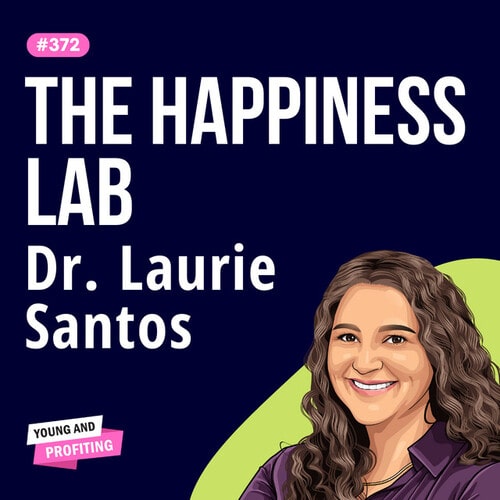
Dr. Laurie Santos: How to Break Free from the Mental Straps Stealing Your Happiness | Mental Health | E372
As a psychology professor at Yale University, Dr. Laurie Santos witnessed a severe mental health crisis among her students. One in four were too depressed to function on most days, and over 60% felt overwhelmingly anxious. This experience inspired her to create Yale’s most popular course, Psychology and the Good Life, which teaches evidence-based strategies to rewire one’s mindset and find true fulfillment. In this episode, Dr. Laurie dives into the science of happiness and shares practical, research-based techniques to break free from common happiness myths and mental traps that keep us from experiencing true joy.
In this episode, Hala and Dr. Laurie will discuss:
() Introduction
() The College Mental Health Crisis
() The Scientific Definitions of Happiness
() How Culture and Mindset Shape Happiness
() Debunking Common Happiness Myths
() Savoring Relationships and Valuing Health
() Turning What We Know Into Everyday Positivity
() Overcoming the Social Comparison Bias Trap
() Rewiring Your Mindset for Lasting Fulfillment
() Expert Takes on Modern Happiness Concepts
Dr. Laurie Santos is a cognitive scientist, psychology professor at Yale University, and host of The Happiness Lab podcast. Her Yale course, Psychology and the Good Life, became the most popular class in the university’s history and has reached millions worldwide. As a leading expert in the science of happiness, Dr. Laurie helps people understand why our brains mislead us and how to rewire our minds for overall wellness and genuine joy.
Sponsored By:
Indeed – Get a $75 sponsored job credit to boost your job’s visibility at Indeed.com/PROFITING
Shopify – Start your $1/month trial at Shopify.com/profiting.
Mercury streamlines your banking and finances in one place. Learn more at mercury.com/profiting. Mercury is a financial technology company, not a bank. Banking services provided through Choice Financial Group, Column N.A., and Evolve Bank & Trust; Members FDIC.
Quo – Get 20% off your first 6 months at Quo.com/PROFITING
Revolve – Head to REVOLVE.com/PROFITING and take 15% off your first order with code PROFITING
Framer- Go to Framer.com and use code PROFITING to launch your site for free.
Merit Beauty – Go to meritbeauty.com to get your free signature makeup bag with your first order.
Pipedrive – Get a 30-day free trial at pipedrive.com/profiting
Airbnb – Find yourself a cohost at airbnb.com/host
Resources Mentioned:
Dr. Laurie’s Podcast, The Happiness Lab: bit.ly/THL-apple
Dr. Laurie’s Website: drlauriesantos.com/
YAP E197 with Scott Galloway: youngandprofiting.co/StrugglngGen
YAP E247 with Arthur Brooks: youngandprofiting.co/Happiness
YAP E342 with Mark Manson: youngandprofiting.co/HardTruth
YAP E29 with Gretchen Rubin: youngandprofiting.co/Secret
Active Deals – youngandprofiting.com/deals
Key YAP Links
Reviews – ratethispodcast.com/yap
YouTube – youtube.com/c/YoungandProfiting
Newsletter – youngandprofiting.co/newsletter
LinkedIn – linkedin.com/in/htaha/
Instagram – instagram.com/yapwithhala/
Social + Podcast Services: yapmedia.com
Transcripts – youngandprofiting.com/episodes-new
Entrepreneurship, Entrepreneurship Podcast, Business, Business Podcast, Self Improvement, Self-Improvement, Personal Development, Starting a Business, Strategy, Investing, Sales, Selling, Psychology, Productivity, Entrepreneurs, AI, Artificial Intelligence, Technology, Marketing, Negotiation, Money, Finance, Side Hustle, Startup, Mental Health, Career, Leadership, Mindset, Health, Growth Mindset, Biohacking, Motivation, Manifestation, Brain Health, Life Balance, Self-Healing, Sleep, Diet
[00:00:00] [00:01:00]
Hala Taha: What's up? Yap. Gang. We live in a world that tells us happiness comes from chasing more, more money, more success, more picture perfect milestones. But what is a science shows? We've been getting it wrong all along Today on Young and Profiting, I'm joined by Dr. Lori Santos, Yale, professor and host of the Happiness Lab Podcast, whose groundbreaking course on the psychology of wellbeing has transformed millions of lives.
Lori is here to debunk the biggest myths about happiness and reveal why our brains constantly trick us into chasing things that don't deliver lasting joy. And this conversation will break down why the arrival fallacy leaves us disappointed. How we quickly get used to the good things in life until they stop feeling special.
Why [00:02:00] constant comparison robs us of contentment and so much more. But before we get into the good stuff, if you're a new listener, be sure to follow this show for more amazing conversations every week. Dr. Lori, welcome to Young and Profiting Podcast.
Thanks so much for having me on the show.
I'm so excited for this. I've seen your podcast top in the charts all the time, and I've always wanted to have you on the show, so happy you're finally here.
Dr. Laurie Santos: Yes, yes. Super happy to be here.
Hala Taha: I was doing some research about you and I found out that you've been a professor at Yale for a number of years, and you actually teach one of their most popular courses. One in four students are enrolled in this course, psychology and the Good Life is what the course is called. So talk to me about the spark that initially helped you come up with the idea of actually putting out this course at Yale.
Dr. Laurie Santos: I've been teaching at Yale in the psych department for a while now, but in just the last couple years, I took on this new role on campus where I became what's called the head of college, and that just [00:03:00] means a faculty member who lives on campus with students.
And so I was seeing student life really up close and personal. I was hanging out with students in the dining hall and. Seeing them in the courtyard, and honestly, I didn't really like what I was seeing. I was seeing this college student mental health crisis up close and personal. It's not just at Yale right now.
Nationally, more than one in four college students reports being too depressed to function most days. Over 60% of college students say that they're overwhelmingly anxious. More than one in 10 has seriously considered suicide in the last six months. Wow. It's a real national crisis. And that was what I was seeing in my community.
Right. I was this. Benevolent faculty person hanging out with these students, and so many of them were struggling. And that felt particularly frustrating as a professor of psychology because our field has so many things that you can do to improve your life, to have better habits, to feel less stressed out.
And so I said, well, let me just. Develop a whole class where I teach students this practical advice that we get from my field. I expected it to be popular, but I didn't know it was gonna be so popular. We had to teach the class in a concert hall the first time I [00:04:00] taught it. 'cause that, oh my God, in the football stadium, was the only spot where we fit.
But I think that's telling, right? I think it's important to notice college students are not liking the fact that so many of them are depressed and anxious. They want evidence-based strategies to do better.
Hala Taha: Do you think the happiness crisis is getting worse as time goes on, and what are some of the things that make it worse, especially for younger students and things like that?
Dr. Laurie Santos: Well, we have data on this. These like big national surveys that have been going on for decades now. Right now, young people's Happiness is the worst it's ever been since we've been collecting data, which is pretty sad. That's definitely true in the US and other English speaking countries. Similarly true in many parts of the world.
In terms of why that is, I feel like that's. The harder question, it'd be so much easier if there was like a smoking gun and like one thing that was bad and we could just fix it. But I think there's a bunch of stuff. The world is anxiety provoking and frustrating right now. I think the economy is anxiety provoking and frustrating right now, especially for young people thinking about.
Moving into the working world. That's happened [00:05:00] before in the history of economics, but I think right now it's in people's pockets in an anxiety provoking way, in a way that it's never been before. Right? People are hearing about politics and all the bad stuff in the world all the time, digging in their pockets, right?
So I think technology plays a role too, but I think also. A lot of times we see our young people are really going after the stuff that's not gonna matter, like money and prestige and accolades at the expense of something that will give them purpose and a sense of value, a sense of doing good in the world. And so I think priorities are off a little bit too.
Hala Taha: Yeah, we're gonna dig into all that, all the fallacies, the biases that people have about happiness. But first I really wanna talk about. Scientific definitions. 'cause I know you look at happiness in a really scientific way, and I know happiness is really twofold, right?
There's two big pieces of it. So talk to us about that.
Dr. Laurie Santos: I like to think of happiness as having these two parts of being happy in your life and being happy with your life. So being happy in your life is how it feels to you in the trenches to like be you, you know? [00:06:00] Do you have a lot of positive emotion or are you experiencing lots of negative emotion?
Ideally, we'd have the ratio of positive to negative. Feeling pretty good. This is what scientists call the affect. Or the emotional part of your happiness. But there's a second part too, which is how you think your life is going. This is what researchers call the cognitive part of happiness. All things considered, are you satisfied with your life?
Do you have meaning and purpose? Do you think things are going well? And like best case scenario, both of these are going up. You kind of feel good in your life, lots of positive emotions, laughter, joy, contentment, and so on. And you kind of have a sense that your life matters, that it's meaningful, that you're doing important stuff.
Hala Taha: That's so interesting. So it's, does your life feel meaningful and does it actually feel good in the moment? Those are the two sides of the coin. Okay, cool. And talk to us about the difference between happiness and pleasure. 'cause sometimes people get those two things mixed up.
Dr. Laurie Santos: I think the pleasure part is what's happening in your life.
It's part of the affective part. Pleasure is one of the affective states we can have. Right. So you're [00:07:00] doing something that you experience as good. It causes positive emotions. You don't experience it as frustrating or anxiety provoking or sad, right? But I think that. Pleasure on its own. Might miss out on the thinking.
Your life is good. Obviously, you probably think your life is going better if you have lots of pleasure. But like if you only have pleasure, you know, if you don't have any challenges or interesting things you're pushing yourself towards, then you're probably not gonna wind up thinking your life is going really well.
So I think we need to not just purely go for pleasure, we definitely want a life filled with lots of pleasure. But pleasure seeking alone might not lead to the most flourishing of lives.
Hala Taha: So, I know you just mentioned that for younger generations, they're the unhappiest they've ever been. You also mentioned that worldwide, it seems like everyone is generally more unhappy.
However, like we hear about these studies of Norway being really happy, people who live a more simple life in maybe a third world country, they don't know any better in terms of. What life could look like and they're more happy [00:08:00] because life is just more simple. Talk to us about western culture and maybe how that impacts our happiness and how other cultures might have a different perspective in terms of what a good life might look like.
Dr. Laurie Santos: Yeah, we know a lot of this from this world Happiness report that comes out each year in March, right? Where they kind of rank different countries. And so that's where the Scandinavian countries always kill it. I think Norway is the current leader. It's usually Norway or Denmark or something. And that raises a question of what are they doing differently?
And I think there's two things. One is they have different structural features of their culture that make things easier. They have universal healthcare and the kinds of things that like are. Safety net that allow people to do what they wanna do, but they also have these cultural things that matter.
There's a real cultural value on free time. One of the things I think we'll talk about that seems to matter a lot for happiness. We get so obsessed with being wealthy in terms of money, but we forget the importance of being wealthy in terms of time and in Scandinavian companie. People go home from work at five o'clock, they have clubs and [00:09:00] things that they do.
It's not weird if you have to go pick your kids up for childcare afterwards. Right. It's just like part of the culture that you prioritize that and do that. I think there's also a big prioritization of social connection, especially in these cold countries and the cold months. There's a lot of huga. You know, it's comfort and comfortness with the people around you that you care about, and so there's a real prioritizing of time with the people you care about too, and so I think it's some.
Features that are structural, like, oh my gosh, we should have policies and governments that do better for us in terms of happiness in Western cultures. But I think also we as individuals can promote different kinds of things that would be more likely to make us feel happier. Often the things that we don't think really matter.
Hala Taha: So I hear you talking about your environment. Your culture plays a role, but then also our own minds. You say that our own minds can sabotage our happiness and we're wired to sabotage this happiness. So talk just a little bit about what are some of the things that make us evolutionary more likely to be [00:10:00] unhappy.
Dr. Laurie Santos: I think our minds are not built for happiness. You know, if you think of what natural selection was going for, it doesn't really care about happiness. It just wants us to survive and pop babies into the next generation. Happiness doesn't matter so much for that. If anything, it's really paying attention to the negative stuff and the threats and the anxiety provoking stuff that would matter.
Some ancestor that was super happy and content all the time, but didn't notice the tiger lurking to get you, that's not really gonna help for happiness, right? And so I think that's one thing to remember. We're not built evolutionarily to be happy. We're built evolutionarily to be like crazy, anxious, threat focused individuals.
Right? But in terms of some of the specifics, I think there's some ways our minds are wired to mess us up. A big one is that we're built to get used to stuff over time, right? This is what psychologists call he don adaptation, which is just a fancy way of saying if you have something for a while, you stop noticing how good it is.
Over time, you know that if you get a new phone, a new tech gadget, when you. Hit a certain salary level at work. At first, that feels [00:11:00] amazing, but you know, six months in, it's just your phone. It's just what you make, right? You're kind of ready for the next change. That's all well and good when it comes to the bad things in life that you know, it's good that we get used to the yucky stuff, but it's really bad when we get used to all the great things in life.
That means you could have. An amazing salary, an amazing job, amazing colleagues at work, and you can stop getting the pleasure from those things because you've gotten used to it over time. Another big thing that we do is that we socially compare, right? We don't tend to think in terms of how we're doing objectively well, like if we have, you know, just overall a good salary or overall good accolades or we're performing well, we tend to compare ourselves with the people around us.
Across every metric, whether it's money or material possessions or our looks or whatever, we're constantly not thinking in terms of just getting better ourselves, but keeping up with the Joneses. And that just causes a ton of misery because many billion people on the planet, obviously, on every metric we look at, somebody's gonna be better than us.
Yeah. We tend to find the one person who's doing [00:12:00] better and look to them, and then that makes us feel crappy. And so these are just some biases of the mind that really. Mess up how happy we can feel over time because we're getting used to all the good stuff out there and we're comparing ourselves in ways that we don't really need to.
Hala Taha: I feel like this is a perfect moment to go into a game that I have prepared called Happiness Fallacies. Okay? Hmm. So I'm gonna read a belief. You are gonna tell me what fallacy it is, or what bias or phenomenon it is, why it kind of messes us up or trips us up and what we could do instead. And I might love it, ask some follow up questions for each one.
So I'm gonna read each belief and then you tell me what it is. Okay, the first one, belief number one, if I just doubled my salary, life would be perfect. Money buys happiness, right?
Dr. Laurie Santos: No big fallacy. Well, I should clarify. It kind of depends on where you are in the salary level, right? If you don't have enough money to put food on the table or put a roof over your head, yeah, doubling your salary would probably really impact your happiness.
But I'm guessing for most of [00:13:00] the YAP fans who are listening right now, doubling their salary isn't gonna matter very much. And researchers, like the late Danny Kahneman actually did nerdy detail about what salary does, getting more, not really matter anymore, and he finds in. 20 $10 that at around 75,000 US dollars, any more money than that, is not gonna improve your overall happiness.
It's not gonna reduce your stress levels, it's not gonna make you have any more positive emotion, which is definitely not what we think, but it's what the research really shows. So for most of the people listening, doubling your salary not gonna really help your happys.
Hala Taha: And digging a little deeper, tell us about the concept of mis wanting, right?
This is what this is. It's mis wanting you think. doubling your salary is gonna make you happy.
Dr. Laurie Santos: and I love this term, right, because we do it not just for salary, but for all kinds of things. Our brain is constantly telling us, oh, if I could just get this other thing, then I would be happier.
But it turns out that our minds are wired to go after stuff that's just not gonna matter. And I think this happens in the work context all the [00:14:00] time, whether it's salary. A new promotion or an accolade at work, the new project, some level on your quarterly report. We're constantly making predictions of if this happens, I would feel happier, but a lot of those are mis wants.
We're just going after the wrong stuff.
Hala Taha: And then how do we find out what we actually need to make us happy?
Dr. Laurie Santos: I think that's where the science really comes in, right? We can't rely on our minds. We're kind of in this position where we're like all the things that we think we should go for, all the stuff that we crave might not be doing the work we think it's doing.
That's where I think the science and some of the stuff I teach on my podcast and my class come in because it's, there are behaviors and mindset shifts that we can make to feel happier, but our mind doesn't necessarily lead us towards those naturally.
Hala Taha: Okay. Next one. Belief number two. The day I get that promotion, that dream house or the perfect partner, that's when I'll finally live happily ever after.
Dr. Laurie Santos: Boom. Not true. This is a fallacy known as the Arrival fallacy. I like to call it the Happily Ever After [00:15:00] Fallacy, right? I get that thing and then I'll be happy if I get married, if I get the promotion and so on. It's just another case of Miss wanting, but miss wanting for a really specific thing. We often think that happiness is a destination, like get the promotion and then I'll be happily ever after.
But of course, happiness is much more like a journey. It's much more changing over time. Soon as you get that good thing that you like, you might just get used to it. And so we gotta watch out for these moments of arrival. It again causes us to go for specific things that aren't really gonna make us feel as happy as we think.
Hala Taha: What actually happens when we achieve a big milestone biologically in our brains.
Dr. Laurie Santos: Well, I think you get the one moment of dopamine, like, oh my gosh, this is awesome. I get this reward. But remember that that's not an objective measure, right? We're comparing that accolade once we got it to what we thought it was gonna be like.
And because of mis wanting, because our expectations are so high. Often, it's not nearly as good as we think. And this is something that researchers like Dan [00:16:00] Gilbert call the impact bias. The impact of the good things that we get in life are not gonna be as good as we think, and they're not gonna feel as good for as long as we think.
So it's both in the magnitude of how good we think something is, and then in the duration of how long we think that good thing will last and give us pleasure. We're usually biased in both of those.
Hala Taha: We always hear that phrase. You've gotta enjoy the journey, right? Enjoy the process, and it goes back to what you had said earlier in terms of the part of happiness that really matters when it comes to like having goals or having a fulfilling life.
So is there importance in enjoying the journey when it comes to yours?
Dr. Laurie Santos: Yeah, I think so. I mean, the journey is where we can get some of these positive emotions, right? Even if the journey's not great, right? Even if those positive emotions don't come immediately, right? You know, think of the last time you really had a tough project that you are working on in the job, or a tough thing that you were trying to learn.
You're trying to learn an instrument or some sort of new way to code something you, at first that might be really frustrating is you don't understand it, [00:17:00] but that moment where you get in the flow or you're learning something, you're getting that positive feeling, and then at the end when you finish it.
That's the kind of thing that really matters. It's not because you're gonna get to some end point of turn something in or get a perfect grade or get a perfect quarterly report. It's really those mini challenges where you get those hits of accomplishment along the way. That's what we really wanna be building towards rather than this sort of big thing at the end.
Hala Taha: Is there any downfall of tying ourself to a goal in terms of our identity?
Dr. Laurie Santos: What we don't wanna do is get really caught up in the arrival in specific things, specific accolades. Again, in part because we're misp predicting how good they're gonna feel. They're not gonna feel as good as we think. I think we're better off kind of tying ourselves to the journey.
In fact, several researchers at Stanford have studied what they call the journey mindset, which is really just taking on this mindset of, I'm just gonna try to be present and pay attention to how it feels along the way. I'm just gonna try to notice these things as we go, and their studies [00:18:00] show that in fact, you wind up happier if you can focus on the journey rather than the goal at the end.
Now, does that mean that we need to be like not goal oriented at all? No, of course not. Right? We always have to have goals. The key is just not to get messed up in terms of just how much pleasure and how much you put at the end stage. There's a lot of pleasure and happiness to be reaped on the way there, and so you just don't wanna leave that on the table.
Hala Taha: Let's give an example. Let's actually reframe tying yourself identity to a goal versus tying yourself to the journey of a goal. Like what would be different in the way that we talk about it?
Dr. Laurie Santos: So let's say you're really obsessed with getting a promotion. Oh my God, I just wanna get this promotion at work so I get this new salary.
Right? Tying yourself to that goal is not great, right? Because first of all, you're tying all your happiness to like, whether you get it or not, maybe you'll get it. Great. Not that great because as we just talked about, with hedonic adaptation, it won't feel as good as you expect for very long, and you're probably expecting it to be really awesome 'cause you're mis wanting and all of a sudden, oh, it's [00:19:00] not as great as I thought.
So even if you get it, it's a let down, but of course you might not get it right and then there's no happiness. If anything, if you're expecting to get it now you feel terrible because you have this comparison point of getting it and now you feel crappy because. I didn't get there, and we see this so much in so many different studies that have looked at field cases where people don't get what they're expecting.
One of my favorite ones happens not in the work context, but in sports researchers look at Olympic athletes and what happens when they get different medals. You get the gold medal best in the world, you feel super happy. What happens when you get the silver medal? It's not that you feel slightly less happy.
In fact, you are showing visible signs of emotions like sadness, deep pain, contempt. You're showing emotions that aren't just. A little bit less happy. You're showing actively terrible negative emotions. Why? It's not 'cause you didn't do well. You're objectively second best in the world. But because you set this expectation of only gold is gonna matter, now you feel terrible.
So [00:20:00] maybe you didn't get the promotion, but you did really well and your boss was like, you know, we couldn't pick everyone, but now you're gonna get a salary raise even though you don't get the promotions. Like none of those things will feel good just because you were so focused on this one thing. Right.
That's if you focus on the goal at the end, what if you focus on the journey? Well, now you're paying attention to what it feels like to learn things along the way, to push through the probably many tiny challenges you have to do to get there, right? You have time to be present and notice what's happening.
So many studies show the importance of presence and just noticing flow when you're going through things, you get to kinda enjoy the parts of it that are most of what it is, as opposed to the one moment where you get the big email that. Something great came through, and so if you can find ways to enjoy that journey, you'll wind up being a lot happier overall.
Hala Taha: That makes a lot of sense. So maybe some of the things that we could tell ourselves is, I'm somebody who's a problem solver or Yeah. Mm-hmm. I'm a hard worker. So it's more about who you are and the traits that you have and the things [00:21:00] that you do, rather than I'm the VP of whatever.
Dr. Laurie Santos: And I think what you wanna do in that is really find the things that allow you to show off the things that you value.
There's some lovely work by the Wharton Business School professor Amy Rasinski, who talks about what she calls job crafting. And so this is thinking of your job, not in terms of a particular job description, but thinking of your job in terms of the way it allows you to exercise some of your strengths, some of your virtues, right?
I get to execute humor or leadership or bravery or curiosity. Or I get to like learn, and I really love learning. I get to appreciate beauty. I get to show my integrity. I get to show off my social intelligence or my empathy or kindness, right? These are all values that we have, and in fact, we differ in how much those things mean to us.
Her work finds that if you can. Redescribe your job and even put more into your job where you're executing those values, you wind up more likely thinking your job is a calling. You wind up happier at work and your supervisors think you're performing [00:22:00] better on your regular job description because you're bringing in these values that matter to you.
And I love her work so much because she studies job crafting, not in probably some of the many, you know, interesting. Young professional careers that you talk about on this podcast. She studies job crafting in hospital janitorial staff workers. So these are people who are like mopping the floor in a hospital and so on.
But she finds, some of them find ways to bring in their strengths. You know, they'll bring in humor and chat with a patient and that's what makes them wanna come to work in the morning. 'cause they get to execute that strength or they'll be. Really into creativity, right? And then they'll, every day at work move the plants and the paintings around.
They don't really have to do for their job, but it lets them bring a little creativity into the work that they do. And that means the mopping and the linen and all the stuff they have to do, they do that better. And so I think this is a thing that we forget about the journey. It's the journey is a real opportunity to execute all this stuff that just makes us feel alive and good when we're doing it.
But we forget and leave on the table real [00:23:00] opportunities to do that more often.
Hala Taha: Okay. Belief number three. If I keep booking vacations, shopping sprees, and fancy dinners, I'll stay blissfully happy for.
Dr. Laurie Santos: Big fallacy. I think this is confusing, the importance of spending money to get happiness, right?
We assume that buying stuff is gonna make us a little bit happier, but in practice it's just not gonna make us as happy as we think. Money can give us a little bit of happiness, but we tend to need to spend it on other people rather than ourselves. This is the fallacy, like I often call it like the treat yourself fallacy, right?
We think if we just spend on ourselves, we'll wind up feeling happier, but in fact, actually spending on other people and doing nice things for others winds up influencing our happiness more than we think. And I think this is something that we forget at work too, right? We're often at work out for our own individual success and individual performance, but giving a nod to a colleague expressing gratitude to a colleague, you know, asking for help where a colleague can [00:24:00] shine.
Help us out a little bit. Those are all ways to not only make other people feel good in the world, there are ways to make ourselves feel good too.
Hala Taha: I've heard you speak about this concept of savoring. Mm, when something good happens, how can we actually stretch that joy a bit?
Dr. Laurie Santos: And this is one of the reasons that buying stuff doesn't make us feel so happy is we'll buy ourselves, I don't know, like a nice fancy latte.
The other day I just got, you know, super hot, like, oh, you know, with the little sprinkles of cinnamon and all this stuff. But then I slammed it back while I was reading my email. I was like, wait, I just. Slug that thing, and I wasn't even present to notice it. Right? And so savoring is the act of fighting.
Back at that. When I bought that latte, I could think, oh, let me focus on this. How does this taste? You know, how warm is this? Oh, it's so creamy. How would I describe this to someone? It's really the act of taking time to notice. So that you can enjoy the good things. And I think this is something that we need to do on the job more often because in the hustle culture life, we're doing a million things at once and we feel [00:25:00] like, oh, we're just getting the hit of productivity.
I'm doing more. But again, it's a moment where you're leaving opportunities for pleasure on the table just 'cause you didn't take time to like notice the good things that are going on. So. Take a break, walk outside, notice the pretty weather, sip your latte and notice it. All of these things are acts of savoring, which can make the good experiences that you purchase in life or have the time for in life feel a little bit better.
Hala Taha: You had mentioned hedonic adaptation earlier. Mm-hmm. And I wanna dig deeper on this. Can you also adapt to things like relationships and what are some of the things that we need to look out for in terms of. Things in our life that we might take for granted and later regret that we did that.
Dr. Laurie Santos: That's the terrible thing about hedonic adaptation is we pretty much adapt to everything, all the good stuff in life, and that includes our relationships.
You meet a new coworker who you really love when they first come in, you kind of appreciate them. Oh my God, this person has my back this week. That was so nice. Right? [00:26:00] But then you just get used to it. That great boss that you really, oh my gosh, I'm so glad this person took over from my other boss.
Great at first, but then you can stop noticing it. Even worse, maybe in our personal relationships, right? You have a great marriage. The day that you have your wedding, everything's perfect and beautiful, and you're really like, oh my God, I love you. I love you. But two years in, three years in, you just get used to it.
It's not that anything's gotten bad, it's just that you stopped getting the same pleasure out of stuff. That's good. And this can be really problematic for relationships because it means you're not enjoying the stuff that really is objectively still good. But there are ways we can do better with that.
You know, you mentioned savoring and savoring is something that you really can do in a marriage, right? Just go back to your partner's, looks of like, oh my gosh, I do love my husband's smile. Or you know, he just has a cute butt. I love the way he looks in that shirt, or just something silly. You just take nime to some time to notice the good parts again.
But there's also something we can do in terms of expressing gratitude to notice. What we're thankful for about our sparse is [00:27:00] the fact that their blessings in our lives, and I think this is something that the research has shown to be really powerful. In fact, couples who express gratitude to one another wind up having much higher, significantly higher marital satisfaction.
And so just think about thanking your spouse. Thank you for emptying the dishwasher. Thank you for being there. You're a blessing in my life. It sounds cheesy, but those things wind up changing our mindset so our brains can notice the stuff that's really good about our relationships.
Hala Taha: Something else that's been on my mind as I've been studying you is this idea that nothing really matters when your health goes haywire, right?
Mm-hmm. That's one of the things I think we take most for granted is really our health. How can we. Be more grateful for our health. Be more conscious of the fact that we're healthy and young if we are so that we can take care of ourselves and make sure that we have good health for as long as possible.
Dr. Laurie Santos: I think there's some ways to break up the fact that we've gotten used to young health and so on, right? One is [00:28:00] this strategy of what's called negative visualization, which is just you quickly imagine the opposite of the good thing that's happening in life. You visualize what would happen negatively, like.
Maybe I have pancreatic cancer, eventually I'm gonna get old and gray. What would 90-year-old you tell you today to like do? Right? And I think just those quick moments of using your imagination to think about the bad thing can actually make you realize, oh my gosh, I gotta get to the gym today. Or I gotta get a little bit more sleep.
I have to take care of myself. And so I think those momentary spots where you take time to like imagine the reverse, this isn't like being anxious about your health. Being paranoid all the time. This is just taking time to realize it doesn't have to be this way. This isn't a given. Even the ancients had this idea of memento worry.
Remember that you're going to die, right? Which sounds really morbid, but studies show that just the simple act of remembering this can lead to better health behaviors. Now it can make it easier for you. To hit the gym, to eat healthier, to sleep better, and so on. So yeah, [00:29:00] a little bit of thinking about the possibility that you're not gonna stay young and fit forever can remind you to do this stuff that will actually keep you young and fit.
Hala Taha: Okay, next one. I already know gratitude and exercise are good for me. Knowing it is enough, right?
Dr. Laurie Santos: Another big fallacy, this is a fallacy that researchers call the GI Joe Fallacy, which for YAP listeners out there was a cartoon in the eighties about these army guys called GI Joe who would go out there.
But the famous thing about the cartoon is that it ended with this public service announcement where the GI Joes would tell people things like. Don't talk to strangers or look both ways when you cross the street and things. And they had this famous tagline where the kids would say, thank you GI Joe. Now I know.
And they'd say, and knowing is half the battle, go GI Joe. You have to cut that from the podcast fair users mean. But the point is, this idea we, this is what we often think knowing is half the battle. I know I'm supposed to be savoring these things. I know I'm supposed to experience gratitude. I know I'm supposed to sleep eight hours a night.
But that doesn't necessarily [00:30:00] translate into you doing it. And so this is where we need to really prioritize actual behavior change. It's one thing to hear this on a podcast, it's another to really commit and put it into your life, right? Are you gonna stick a little reminder in your calendar to notice and savor things are you're gonna give yourself?
Some time with friends so that you can engage in more social connection. You know, maybe you literally have in your gal time to write in your gratitude journal. These are just simple things we can do, but it helps us actually do the behaviors that really matter. It's one thing to know it, but knowing it isn't half the battle,
Hala Taha: what are some things that you do personally to make sure that you're doing the work that you need to do to be as happy as possible?
Dr. Laurie Santos: One great thing for me is that I have a whole classroom of students who are really checking if I'm being a hypocrite and not like practicing what I preach. That's great. You know, if they see me not being savoring and being on my phone all the time, they'll be like, you know, professor Santos, I thought you were supposed to talk to people and stuff.
So yeah. So it's nice to be the preacher with the [00:31:00] congregation of students who are there. Looking at whether I practice what I preach. But no, it's hard for me too. Again, I know this stuff, but it doesn't fall into place unless I really put these things into practice. And so I think advanced scheduling has been really helpful for me.
I literally have time in my calendar for things like rest and engaging in savoring. I also like the hack where whenever you have a free few minutes, that's really a nice opportunity to put some of these things into practice at work and in our. Personal lives. There's always things where like something ends a little early, like a meeting ends early, or you're doing some task and you finish it and you have this five, 10 minutes before the next meeting.
For me, those are little great moments of what the journalist, Bridget Schultz calls time confetti, these little pieces of time that you could just blow away. But those are really great moments to use for the practices we've just been talking about. You know, that's maybe a moment where you just. Think of how grateful you are for your spouse and just text them something of like, Hey, you know, I just had this five minutes.
I was just thinking, you know, I'm so glad you picked up the kids yesterday. Thank you so much. Or that's the time maybe where you set up some social [00:32:00] connection with a friend or just take a moment to like do a deep breath where you can be a little bit present. Making good use of these kind of stupid moments that nothing else was scheduled anyway, for me, that's been a big one for making sure I have some time to put these things into practice.
Hala Taha: I love that scheduling is just so important, especially for high achievers entrepreneurs. A lot of the people that listen on to this show, you need to schedule it if you wanna make sure you've got time to do it.
Dr. Laurie Santos: Or make sure you're using the time that you do have. Well, one of the things researcher Ashley Willens at Harvard Business School finds is that even though we think we're busier than ever, and this includes young people and millennials, we're less busy than people have been in previous generations.
Mm. The difference is that our time blocks are broken up in really stupid ways. So 10, 20 years ago, you'd get long free chunks of time. Now we have free chunks of time, but again, it's. 10 minutes in between meetings or the 20 minutes here and there, or the five minutes when your kid falls asleep early, or you know, you use AI and you finish your task quickly and you're like, oh my God, I just have this random [00:33:00] 15 minutes.
Those are the time blocks we have. They're more of them, but they're in smaller chunks, and those are the ones we tend to blow off. So if you talk to a lot of people who say, oh, I don't have time, it's like, well, let's add up all the time you spent screwing around on Instagram in between tasks or refreshing the email four extra times when you already kind of know what's in there.
Right. Those are the little time confetti moments that you could use for something else. So I think scheduling, get it in your calendar for sure. For type A individuals, like the folks that are listening, that's what's going to get it on your calendar. But when you have these open moments, surprise moments, don't blow them because they actually do add up.
And so you can use them for productive things, but maybe not productive for your work things. Maybe that's not three more emails you answer. Mm-hmm. Maybe that's really, really try to focus on what would be good for you and your mental health.
Hala Taha: I'm curious, why is it that we actually have more time than previous generations?
Because to your point, we all think that we are busier than ever, that we're in a rat race. Why is that not true?
Dr. Laurie Santos: Yeah. I [00:34:00] mean, I think we have these ways to save our time that we forget we can type out an email real quickly these days. We have AI to help us with all these tasks, right? I think we forget that we've put in all these time savers, we forget that they're building us more time.
But then. When we don't use the time productively, it kind of doesn't feel like it. This is one of the funniest things I think about this work. I mentioned Ashley Will's name. She does all this work on what's called time affluence. Mm-hmm. This subjective sense that you have free time. Usually what's affecting us isn't the objective amount of free time we have.
It's the subjective sense of how overwhelmed we are. Hmm. And those two things don't always match up. Right. There's sometimes when we feel really busy, but if you really went in and look, okay, how many actual free moments could you carve out? It's gonna be more than we think. And so there's all these things we can do to hack the subjective sense of like, oh my gosh, I'm just feeling really burned out and overwhelmed even if you can't objectively open up more free time.
Hala Taha: That's so true. Everybody knows that person that just acts like they never have [00:35:00] any time to do anything. Let's say like they're like a mom, like a new mom, for example. Mm-hmm. I know they don't have a lot of time because it's really hard being a new mom, but I feel like a lot of people like get very overwhelmed with a new responsibility or something, and then they feel like they have absolutely no time for anything else.
Dr. Laurie Santos: and I think you really need to get creative about seeing these little time confetti pieces around. You're like, oh man, that's a little piece of time confetti that I could use as well. Again, not to add more to your plate and add more hustle, like I think that's the time that you use to rejuvenate.
You know, we know anyone who does fitness knows the importance of rest. In terms of performance, like when you're running or if you're playing pickleball or something, like we talk about these ideas of active rest or you have to scale back, but we forget the importance of active rest in hustle culture.
The studies show that you actually perform better if you allow yourself to take some time off and to sleep if you just feel a little bit more time affluent. And so I [00:36:00] think, you know, if we wanna perform better on the job, we need to take this more seriously and really build in more time for active rest for our work performance too.
Hala Taha: I remember I interviewed Laura Vander Cam a long time ago, and she talks about doing a time audit and actually looking to see like how much time are you actually spending scrolling on social media? How much time are you spending? Just, I think she calls it like wandering, where you're just. Doing nothing.
Literally doing nothing and pacing around the house or whatever you're doing, and these little pockets of time, if you rearranged your schedule, could enable you to start a side hustle or to learn a new skill or do something that's actually gonna really advance your life, rather than just wasting away the time because you're not conscious of where you're spending that time.
Dr. Laurie Santos: Yeah. And I think not being intentional has a real cost, right? That seven minutes that you putter away, that could be like the seven minute New York Times workout. Mm-hmm. That could be a seven minute meditation period, which is huge if you've never meditated before. And so I think what we often do is. We don't wanna [00:37:00] really admit that it's free time or we just think it's not that much so we blow it off.
But it can be really useful if you can find and harness those moments of free time. One of the hacks that I do, 'cause I'm very prone to, like, if this conversation ends a little bit early, I'm totally gonna feel the need to like. Oh, I'm gonna check my email now or something, but it's like I just checked my email an hour ago, like I'm probably not gonna learn anything new, but it's helpful to use that five minutes for something really restful and I queued up, you can do this on YouTube, or there's like little apps of these little five minute cheer yoga sessions.
And so if I get five minutes, even if I'm on calls all day and sitting at my desk at work, it's like, oh, I'm gonna do this five minutes to like. Breathe and stretch and take a breath, and I can't tell you the difference that makes going for the next. You know, if I just blew off those five minutes with email, I wouldn't feel any more productive.
I wouldn't feel rested and ready to go for the next meeting, but five minutes of just simple breathing and stretching. Oh my gosh. I'm just so much more energized. So just finding whatever [00:38:00] that is for you, whether that's something relaxing or something energizing. You know, put on your favorite hair metal song and bop out to it.
Get step away from your desk and dance around the room for three minutes. I promise you'll go to your next meeting. A lot more energized, but that's just using this time intentionally rather than just blowing it off and going around. Yeah, waste taking away.
Hala Taha: Okay. Last belief. As long as I'm doing better than my neighbor or coworker, I'll be happy.
It's about winning the race.
Dr. Laurie Santos: Hmm. Social comparison bias, right? I think we assume it's winning the waste, but really obviously, don't you just objectively wanna be doing better in terms of your time? Mm-hmm. I think the other thing we forget is that our social comparison isn't exactly under our control.
Lots of studies show that our reference points just. Go ballistic. In other words, who we're comparing ourselves to just happens automatically. So as soon as you learn of somebody who's prettier than you or has a better salary than you, or a better car than you, you just pay attention to that. You know?
Our brains never find the person who's [00:39:00] doing worse than us. They're really on the lookout for people that are doing better than us. I saw this back in the day, I was doing some consulting with a basketball team. I won't say which one it is, but I was walking through, you know, what's your social comparison point for?
The best salary. You know, they'll say like, oh, you know, maybe it's like Steph Curry or something like that, or what's your social comparison point for the most three pointers, it's like, oh, it's Steph Curry. It's like, well, what's your social comparison for? What's the best height to be in the NBA? Nobody said Steph Curry.
'cause he is on the shorter side. You know, they're saying like, oh, taco fail, or something like that. And it's like. Well, why isn't he your comparison point for height? Like you would've beat him on height and they're like, oh, we don't even think of him for that. And that just shows how our brains work, right?
We find the one person who makes us feel crappy on whatever metric we happen to be thinking about at the time. And so. Yeah, this bias of as long as I do better than others, I'll feel good. There's probably gonna be somebody out there that's doing better than you, unless you're, I don't even know who the richest person is right now, Elon Musk today, or whether there's Larry Ellison or whoever it is.
Unless you're him, you're not gonna feel [00:40:00] good. There's always gonna be a second place in life. So finding ways to notice your objective changes how you're doing better than you were doing before, and that's a way to harness comparison, to feel a little bit better about your happiness.
Hala Taha: What are some of the things that you tell your students to do to stop being in this comparison trap, especially with social media and things like that?
Dr. Laurie Santos: A big one is to try to get off social media if that's the kind of thing that makes you feel a little bit less than, and for so many of my students, it is, right. Who's getting the best internships, have the best vacations, or getting the best parties. That's just the kind of stuff we see on social media.
And I think in the workplace it can be similar, you know? When was the last time you felt crappy about your own ability to take a good vacation? You know, if you're me, it's the last time you saw. Your friend's picture is on Facebook or some like gorgeous thing someone was doing on Instagram. And so I think the key is not necessarily to like lose all technology in social media.
The key is to notice how it makes us feel. And if you feel that envy bug creeping up [00:41:00] whenever you're on these platforms, that's usually a signal that you might need to step away a little bit. You know, you probably won't lose the ability to get the information if you just hang back ever so slightly. So another thing I tell them to do is.
We are prone to find comparisons that make us feel bad. But for most of us, there are comparisons that make us feel really good, you know? And the sad thing is if you look out in the world, there's probably folks who are doing much worse than you when it comes to their job security, when it comes to their safety.
You know, when it comes to politics, right? And so, not like you wanna fill your feed with bummer stuff, but sometimes it's helpful to see those. Negative situations and remind yourself, wait, I've been complaining about this stupid thing at work, but actually it is not that bad.
Hala Taha: so let's talk about rewiring.
This is something that you talk about a lot, rewire meant what do we need to know in terms of how that plays out with our happiness?
Dr. Laurie Santos: Yeah, so rewires are just practices that we can do to rewire our happiness, and just the fact that we can [00:42:00] rewire our happiness is an important thing that I think we need to take on.
You know, so often we assume our happiness is our circumstances or our money, or maybe it's just genetically built in. But what the studies show is that you can impact your happiness. With a little bit of work and changes, and that's what the rewires are. They're practices that are there to help us do a little bit better, and they tend to have three different flavors.
Some of the rewires are really about changing your behaviors. We talked about some of these things already. Things like. Getting a little bit more free time, getting some social connection, taking time to notice and savor, right? Those are all ways we can behave differently when it comes to happiness. But there are also requirements that are about changing our thought patterns, so feeling a little bit more grateful, taking a little bit more time for presence, stopping the strategy of beating yourself up all the time, right?
Those are thought pattern changes that we can use. To feel a little bit better. And then finally, there are requirements that have to do with our emotions. Can you seek out more positive emotions and can you take time to accept and regulate the negative [00:43:00] situations and negative emotions in your life? The flavor of these and what the science shows is that if you take time to engage in these kinds of rewires, you'll wind up feeling significantly happier.
And so we put them in the syllabus. For my students, they're given these homework rewire ment activities that they're supposed to do throughout the semester.
Hala Taha: What do you find is the hardest thing to rewire ourselves to do? What is the biggest challenge people have?
Dr. Laurie Santos: For sure for my Type A Yale students, and I'm guessing for the listeners of this podcast.
Yeah, it's a lot about rewiring your thought patterns. The biggest one is our perfectionism and our self-criticism. I think we have this mistaken like drill sergeant theory of our brains where like if I just. Scream at myself all the time and really push myself and I act these completely over the top standards, then I'll just do better in life.
Right? I think we know that that's not necessarily gonna make us feel good, but I think it, we think it's gonna make us perform better. But research by folks like Kristin Neff and others have gone out and studied this and they find, nope, [00:44:00] lo and behold doesn't make you perform better. You actually procrastinate more, you're more likely to do worse 'cause you're just feeling anxious in most settings 'cause you're beating yourself up on the inside.
Turns out that pushing ourselves so hard that we have impossible standards is not really actually good for performance. Much better strategy is one of self-compassion of. Being kind to yourself, treating yourself like a friend. And I think we don't like, especially driven, people don't like self-compassion because they confuse it with self-indulgence.
They think it's, oh, I'll just let myself off the hook. But that's why defining self-compassion is treating yourself like you'd treat a friend. Because if you had a good friend that was. Really screwing up that really wasn't putting their all in. I hope you wouldn't scream at them like a drill instructor, but I hope you'd get curious and like problem solving about, okay, I think you can do better than this.
What can we do to fix this? What can we do to figure this out? What can we figure out? What's holding you back? And that's really different than just being like, you suck. Why aren't you doing this? And so this is self-compassion. It's treating yourself [00:45:00] like you're a coach, like you're a good friend who cares about the performance, but is gonna care about performance in like a reasonable way.
And all these studies show that that is the key to performing better. It's the key to actually succeeding at work, to not procrastinating over time. It makes you a better team member at work because if you're compassionate with yourself. Self, and it's really easy to be compassionate and problem solving mindset and coach mindset with your employees and your other teammates at work.
It also is super helpful in relationships. It's a way to be nicer to your kids and your spouse, and you just feel better, which we know also helps people perform better. So that's the biggest one for I think my students, and my guess is. A lot of the folks listening, if you're prone to like hustle, hustle, hustle, never give yourself a break.
Perfectionism at all costs. If you can just lighten up and just try to talk to yourself more like a friend, all the studies show that you'll of course feel better, but maybe more surprisingly, you'll probably perform better too.
Hala Taha: I [00:46:00] was unhappy in the last couple of years because I'm a hundred percent Palestinian and all this stuff was happening in the world and it was really impacting me, especially the first year that it happened and I was struggling because I'm so blessed.
I've got this huge company, I've got this top podcast, great relationships. So like my life was actually really happy, but then I was like very unhappy about this. External situation that it had no control over, and the only way that I was able to get out of that unhappiness was I actually started a charity project.
Mm-hmm. I was like, listen, I just need to educate people. I brought other people who were also struggling together. And we created this documentary project and social media channel. And then suddenly, you know, I was still very unhappy about everything, but at least I felt like I was contributing and making a difference.
And it's called Four Piece Media is what I created. Love it. So what is it about volunteering and doing things for other people that actually can make us more happy? [00:47:00]
Dr. Laurie Santos: I think this is another bias that we have, that our happiness is all about us. It's like a treat yourself bias. That what I want is me, me, me, my salary, my good things in life, my positive emotion.
But all the studies show the people who self-report being happiest are the people who are the most other oriented, so controlled for income. People who donate more money to charity, wind up being happier than those that don't, right? Controlled for the amount of free time that people have. People who spend that free time volunteering wind up being happier than those who spend it.
Doing selfish things. The key is that other people matter a lot for our happiness, and that's other people, like our friends and family members. It's people who are in need across on the other side of the world, right? Just doing for others winds up making us happier, but we absolutely don't realize that, you know, when you have a crappy day at work, it's very easy to.
I'm just gonna buy myself this little treat, like I'm gonna go out for a drink myself, or I'm gonna get a massage or a manicure or something, right? Mm-hmm. But like actually, what would make you happier is to spend that equivalent amount of money on a friend, buy a [00:48:00] massage for your coworker, or donate that money to people in need somewhere around the world.
That's not what our minds predict, but that's what the research really shows. A second thing that, especially the kind of thing that you did can do for happiness, which I think is so important right now, is that what you find is that we often think of hope as. Something that you have or you don't have, like you're either a hopeful person or not.
But a lot of the studies show that hope is something that we build through our actions. So like if you're feeling hopeless and you take action, you know, you donate money to a cause, you care about, you do something to help the crappy thing that's happening in the world. What happens is not just that you do something good for the world, you wind up starting to feel more hopeful because you took action.
It's this kind of interesting virtuous cycle, so if you're feeling hopeless about whatever it is that's going on in the world, the way to fix that is to actually do something about that. This is true for lots of things that make us unhappy. Loneliness is another one of these things. Often when people are feeling lonely, they think, oh, I need to wait for a [00:49:00] friend to reach out to me.
But a really fast way to overcome loneliness is to do something nice for somebody else. Reach out to somebody else who you think might be lonely, and what happens is you wind up feeling less lonely. So I think that's exactly what you did with your charity, which sounds awesome. Right? Taking action to build your hope, and you're also spending your time and your energy on people who are less fortunate than you, which winds up making you feel good.
Hala Taha: I love this conversation. So I wanna close on my interview talking about some of the past conversations that I've had on the podcast about happiness and some of your perspectives on that. So, somebody who I spoke with, not necessarily about happiness, but we talked about young men in this country, and I talked about that with Scott Galloway.
We were talking about how men nowadays are more lonely. More women are entering college, women are making more money. Men are actually, especially young men, making less money, less men are actually graduating from college. They're not getting married as often. And so there's a big epidemic in terms of [00:50:00] unhappiness with men.
And we see that translate into shootings like mm-hmm. We just saw with Charlie Kirk, for example. Right. Yep. What is your perspective on. Happiness and young men and some of the things that they specifically need to look out for.
Dr. Laurie Santos: Well, I mean, I agree with you that this really is a crisis right now. You know, especially if you look at things like sense of purpose in young men, loneliness in young men, so on.
Again, we're seeing young men suffering at rates that we've never seen them suffering since we've been taking data on this. Right? So I think we need to. Take action and try to fix this. And I think that this is the kind of thing that if you're feeling that way as a young man, you can do something about yourself.
Right? We were just talking about how loneliness you can fix if you just reach out to someone and try to help. I think one of the problems for young men right now is that the self-improvement advice you often get on different podcasts, not this podcast, but on other podcasts, is well, go for yourself, fix yourself, make your bed, you know, get to the gym, work out, and [00:51:00] so on.
It's not to say those things don't work. It's just to say that you'd actually get more bang for your time book if you were focused a little bit more on other people. I think a lot of the solutions that are presented to young men are very individual solutions, like Treat yourself, do yourself, you, you, you.
But thus, studies show that you're gonna get so much more out of it if you think about connecting with other people and doing for other people. And so I would say if you're in that position, really reach out to someone. Ask. How you can help a cause that you care about or someone else that you care about.
If you are feeling lonely, pick in your office or your friend group or your life the loneliest person that you could think about and just send them a text or email just to check in. This seems to be the path out. There's a really interesting new sociologist book on the manosphere that digs into these kind of internet cultures where people are really like, you know, angry about women and like very lonely young men, and they say what a irony it is because these folks in these communities are often.
Entering these internet communities because they wanna get [00:52:00] community because they wanna get belonging often. 'cause we wanna also help other people, right? These are communities where people on forums are giving advice to other people, like really helping the people out there. But then the advice they give is work on your own jaw.
Like work out or make your own bet. It's all these individual solutions and I'm like, oh my gosh, there's such an obvious way to feel better here. And it's about connection. It's about being more other oriented.
Hala Taha: I feel like. Is definitely the solution when it comes to loneliness. It's like be the glue that brings everybody together.
Exactly. Be the instigator. Mm-hmm. If you wanna get invited to the party, throw the party. Yes, yes. You know, you know, create the group, the organization. I wish more people would do that. Okay. So I spoke with Gretchen Rubin quite a few times and her whole thing is outer order, inner calmer is what she talks about.
And the importance of being organized in your environment and how that actually translates internally. Do you align to that? Thought.
Dr. Laurie Santos: Yeah, definitely. I think we often forget how much our spaces are affecting our happiness. [00:53:00] Even just simple things like how much they're affecting our attention, right? You know, if your workplace has a ton of clutter and everything around you, there's studies showing that subtly your eyes are being attracted to that, and it becomes harder to focus on the task that you really want to be focused on when you're doing it.
So, yeah, I think it really is important to assess your environment, maybe do a little bit of a audit of your spaces and try to think about what you can do to make things a little bit less cluttered, a little bit less complicated. I think another thing we can do for our spaces to make them better, and this is something I know Gretchen talks about a lot, is to hack our sensory experience.
You know, often. If you're like me and you're having a bad day, you're like, oh my God, I wanna like eat something. You know, it should feel better, but we forget. We can use all kinds of senses to feel better. What would it do to like get a nice smell candle or a nice smelling thing or something that feels soft, right?
Even if it's like soft socks or like a softer chair or something like that. Curating your sensory experience can be a powerful way to feel a little bit better. And so this is a [00:54:00] hack I use now if I have some project at work that feels like us. Slog. Like there's some paper I have to edit that I don't feel like, I'm like, I'm gonna put on some nice fuzzy socks.
I'm gonna put on some soothing music. I'm gonna have that soft, cuddly blanket. Especially we're, we're chatting when it's autumn, so it's just starting to get cold. Where I am here, I'm like, I'm gonna make my sensory experience around doing this paper as comfy as possible, and that will gimme a little bit of pleasure while I do it.
So yeah, definitely outer spaces matter a lot and they can definitely change our inside experience.
Hala Taha: I totally notice that if I'm not feeling great, if I'm not at my best, my environment gets more messy.
Dr. Laurie Santos: Yes. So there, there are definitely non-virtuous cycles that can happen here too. For sure. Yeah.
Hala Taha: I had Arthur Brooks on the show a few times, and one of the things that I never forgot that he told me about was this concept between fluid intelligence and crystallized intelligence. Mm-hmm. And that some of the most successful people in the world get really unhappy as they grow older.
Because they're really trying to chase their fluid intelligence. [00:55:00] That's when they're under 40 years old. They can think really quickly. They can innovate, they can build, they're really like quick as a whip and they try to chase that until they die, basically. Mm-hmm. And when they get older, 60, 70, they can't keep up anymore.
But really they need to flip the switch and start teaching younger people and being more of like a mentor and a teacher and embracing crystallized intelligence if they wanna be happy. Do you prescribe to this.
Dr. Laurie Santos: Yeah, I mean, I think there's a little bit about what's happening with your own intelligence, which is shifting around and kind of honoring that.
But I think what Arthur is talking about is the act of doing for others, right? Getting ahead in your career and feeling good about your career by making sure you're impacting the next generation. And I think we just don't do this enough. Grab any opportunity that you have to mentor folks, and I think that's definitely true if you're on the older side and entering the crystallized intelligence phase.
But I think it's not something you have to do to wait till then. Right. A lot of the [00:56:00] benefits of this kind of sharing your knowledge come to you through the act of just being mentory coaching and kind to the next generation, whether that's in your office, in your personal life, and so on.
Hala Taha: I actually wanna do one more with Mark Manson. Okay. Please. Yeah. So Mark Manson, he talks about the backwards law. So he says happiness isn't about eliminating problems, but solving better ones.
Dr. Laurie Santos: Yeah. Yeah.
Hala Taha: He says this paradox is the paradox that the more we chase positive emotions like happiness, the more elusive they become.
Dr. Laurie Santos: I see this so much in the young people that I work with at Yale, right?
This kind of good vibes only mindset, right? You're chasing this good stuff and anything feels kind of a little bit crummy, a little bit anxiety provoking, a little bit sad. You feel like you've done something wrong, like you've failed. And I think that this just isn't the way to like live a flourishing, productive, successful life, right?
A successful life is gonna come with. Pushing yourself and experiencing a bit of discomfort. A successful life is gonna come with trying things that [00:57:00] you're gonna screw up on, which isn't gonna feel great, right? And so I think we gotta overcome this good vibes only bias. We need to find ways to embrace the challenge to embrace that thing, because often at the end of that.
We wind up feeling a little bit more satisfied, right? You push yourself and you do the kind of uncomfortable thing now, and at the end you're like, oh my gosh, that was so great. You know, I experienced this in the fitness domain all the time where it's like, even just this morning I got up early and I didn't sleep so well, and I was like going to the gym and like five minutes into my workout, my brain was just like, hate this.
Uncomfortable, sucks, sucks, sucks. Right? But of course if you push through, you know, minute 15, minute 30, minute 45, I'm like, oh my God, my body feels so great. I feel so light and so on. But the problem is if you never push through it, you kind of never get there. And so, yeah, totally agree with Mark Manson on this one.
If we're just focused on the positive, we might never get to the challenging stuff that's gonna give us a bigger, richer, positive experience afterwards.
Hala Taha: [00:58:00] I feel like we covered so much ground I know. In this interview. You're so great. It was so good. So I end my show with two questions that I ask all my guests.
You can answer from your heart. It doesn't have to be about today's topic or anything that we talked about. So what is one actionable thing are young and profits can do today to become more profitable tomorrow?
Dr. Laurie Santos: I think this will be maybe a surprising one, but I think you should ask for help. Mm. You should ask for help because we often don't admit.
Humbly that we need some help, right? And you'll probably get it. The other reason to ask for help is it's a really nice thing to do to someone else. Usually the person you ask for help feels flattered that you've asked them for some advice or that you want them to help you. And it's also a way to strengthen a relationship.
So you're getting some advice that you might need. You're kind of learning something new, you're doing something nice for other people. You're strengthening a connection that might be really useful for you. And the studies show that when we ask for help, we're often perceived as better. There's this lovely phenomenon called the beautiful mess [00:59:00] effect that when you seem a little messy, when you seem like you need a little bit of help, people end up liking you more.
So that would be my unexpected thing for young professionals to do. Ask for more help.
Hala Taha: It's such a goodtip, especially for entrepreneurs. And what is your secret to profiting in life? And this can go beyond financial.
Dr. Laurie Santos: My secret to profiting in life is prioritizing my time affluence over my wealth affluence study after study shows if you spend your money to get back more time, you wind up being happier.
But it can be so hard to do in the rat race for entrepreneurs to realize that your time is valuable. But that's the spot where you're gonna come up with innovation. That's the spot where you're gonna get active rest, which is gonna be so important for your performance later on. Prioritize your time affluence over your wealth affluence.
Hala Taha: I love that, Dr. Lori, where can everybody learn more about you and everything that you do?
Dr. Laurie Santos: So if you wanna check out my podcast, it's called The Happiness Lab. Lots of useful tips for young professionals of the kind that we talked about [01:00:00] and beyond, and you can learn more about me and my [email protected].
Hala Taha: Amazing. I'll stick all those links in the show notes. Thank you so much for your time today.
Dr. Laurie Santos: Thanks for so much for having me on the show.
Hala Taha: What a phenomenal conversation with Dr. Lori Santos. She didn't just talk about happiness. She broke down the hidden traps that keep us from feeling it and gave us a playbook to actually rewire our daily lives. One of my biggest takeaways is the concept of miss, wanting that false belief that more money, another promotion, or the next big milestone, will finally deliver lasting joy.
Lori reminded us that the brain constantly overestimates how good achievements will feel, and when the excitement fades, we're left chasing again. The real win is finding out what genuinely fulfills us. Second, I loved her insight on how quickly we get used to the good things in life. That new salary, new car, or even a great relationship, eventually becomes our new normal.
The [01:01:00] solution is to fight adaptation by savoring what we already have, pausing to notice small wins and practicing gratitude intentionally. Finally, Lori made it crystal clear that happiness is not a solo pursuit time affluence authentic connection and doing for others consistently produce more satisfaction than chasing personal accolades ever will.
As entrepreneurs and high performers, we need to ask ourselves not just how much money we're making, but how much time, purpose and service we're building into our lives. So here's the challenge, young and profits, I'll leave you with this. Stop waiting for happiness to arrive at some future milestone.
Start designing happiness into your everyday routine, whether that means thanking a teammate, spending money to buy back time, or simply savoring. Your morning coffee instead of rushing through it. All right, gang. I'm so glad you tuned into this episode of Young and Profiting. If Lori's insights opened your eyes about happiness, I'd be so grateful if you dropped us a five star review on Apple [01:02:00] Podcast, Spotify cast box, wherever you listen to the show.
Don't just tap the stars. Write us a few words about what resonated with you the most. In this episode. I read all of our reviews. They fuel me to keep bringing you these powerhouse conversations each and every week. And don't forget, you can watch this entire conversation on YouTube at Young and Profiting.
We're closing in on 60,000 subscribers on YouTube. We just started that channel, and if you're new here, hit that subscribe button and officially join our Growing YAP community. You guys can chat in the comments and get to know other listeners. It's just a way different experience on YouTube. I'd also love to connect with you guys personally, so come hang out with me on Instagram at YAP with holla or.
Find me on LinkedIn. Just search for my name. It's Hala Taha. And of course, I've gotta give a big shout out to my team. Today I wanna recognize the guest outreach team. You guys have been trying to get Lori Santos for years now, and you guys just keep getting amazing guest after guest. I'm so thankful for everything you guys do for the show.
[01:03:00] You are the real MVPs. Until next time, this is your host, Hala Taha, AKA, the podcast princess signing off
Episode Transcription
Enter your name and email address below and I'll send you periodic updates about the podcast.

