How a $99 Fitness Program Turned Into a Seven Figure Business | Entrepreneurship | How We Profit | E2
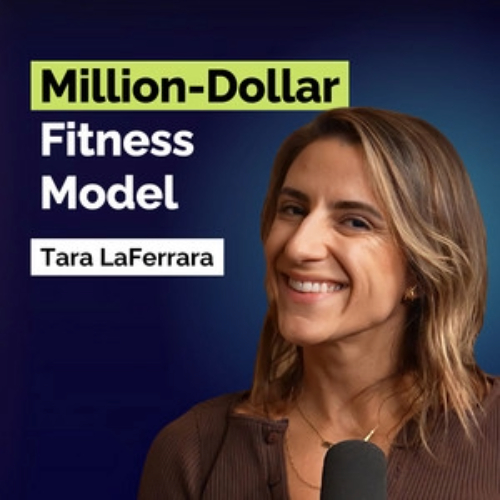
Entrepreneurship became Tara LaFerrara’s way forward after she got laid off from her corporate job and had to decide whether her fitness and content creation side hustle could become a real business. With a small online following and plenty of uncertainty, she learned the ins and outs of business operations, ultimately scaling her $99 programs into a seven figure fitness brand. In this episode of How We Profit, Tara shares the realities of building a coaching business from scratch, how she bounced back after a six figure mistake, and the strategies that helped her generate multiple income streams as a creator entrepreneur.
In this episode, Hala and Tara will discuss:
(00:00) Introduction
(04:29) How Tara’s Business Makes Money
(07:33) Going All-In on Entrepreneurship
(14:25) Converting Followers Into Paying Customers
(17:35) App vs. Coaching Business Economics
(24:22) Niching Down to Women 35+
(29:42) Building the Broads App
(37:15) Using Webinars to Drive Sales
(41:00) Pricing Creator Brand Partnerships
(48:26) Scaling Beyond Founder Bottlenecks
Tara LaFerrara is the founder of Broads, a fitness app and coaching company. She is a personal trainer, creator, and host of the Broads podcast, where she blends fitness education with a bold, relatable approach to women’s health and wellness. Through her platforms, Tara offers one-on-one coaching, group programming, and app-based workouts designed especially for women 35 and older.
Sponsored By:
Indeed – Get a $75 sponsored job credit to boost your job’s visibility at Indeed.com/profiting
Shopify – Start your $1/month trial at Shopify.com/profiting.
Quo – Run your business communications the smart way. Try Quo for free, plus get 20% off your first 6 months when you go to quo.com/profiting
Remitly – Transfer money internationally across 100+ currencies with no hidden fees. Download the Remitly app or visit remitly.com to get started. Use code BUSINESS to get a $100 bonus after you send $300 or more. New customers only.
Prolon – Reset your body with Prolon’s five-day plant-based program. Go to ProlonLife.com/PROFITING for 15% off sitewide plus a $40 bonus gift when you subscribe to their 5-Day Program.
Northwest Registered Agent – Get a complete business identity with Northwest. Visit northwestregisteredagent.com/YAPFree and start using free resources to build something amazing.
Cash App – If you’ve been curious about bitcoin but haven’t made the jump yet, Cash App makes it easy. Sign up at https://click.cash.app/ui6m/qmgmlraz
Resources Mentioned:
Tara’s Website: taralaferrara.com
Tara’s Instagram: instagram.com/taralaferrara
Tara’s TikTok: tiktok.com/@taralaferrara
Tara’s Podcast, Broads: bit.ly/Broads-apple
Active Deals – youngandprofiting.com/deals
Key YAP Links
Reviews – ratethispodcast.com/yap
YouTube – youtube.com/c/YoungandProfiting
Newsletter – youngandprofiting.co/newsletter
LinkedIn – linkedin.com/in/htaha/
Instagram – instagram.com/yapwithhala/
Social + Podcast Services: yapmedia.com
Transcripts – youngandprofiting.com/episodes-new
Entrepreneurship, Entrepreneurship Podcast, Business, Business Podcast, Self Improvement, Self-Improvement, Personal Development, Starting a Business, Strategy, Investing, Sales, Selling, Psychology, Productivity, Entrepreneurs, AI, Artificial Intelligence, Technology, Marketing, Negotiation, Money, Finance, Side Hustle, Startup, Mental Health, Career, Leadership, Mindset, Health, Growth Mindset, Passive Income, Solopreneur, Networking
Learn more about your ad choices. Visit megaphone.fm/adchoices
Hala Taha: [00:00:00] How do you decide, like, how much to charge brands?
Tara LaFerrara: It depends on what it is. Reel and posts, and they need extra photos. Also whitelisting, that's where you can always charge more.
Hala Taha: You think you can charge more for whitelisting?
Tara LaFerrara: Yeah, I would say that. The minimum for me right now for one reel on my page is about 5,000.
An extra 1,000 to 1,500 for stories. I've also done, like, a six-month deal that has been, like, 35K.
Hala Taha: Today's guest is a fitness influencer that generates multi-six figures off her personal brand every year. There's a big difference between being a fitness influencer on Instagram and building a fitness brand that actually makes money.
Tara Laferrera has done both. Do you think that there's any underserved markets in the fitness category, fitness industry, that you would recommend that other people tackle?
Tara LaFerrara: Whatever you are passionate in, like, there is a niche for that. PMDD, endometriosis, a lot more menopause coaches I think could be out there, for sure.
There's always opportunity.
Hala Taha: You ever felt like your personal brand became a trap where [00:01:00] clients only wanted to work with you? Mm-hmm. Or do you feel like you've fully been able to create a brand that, that doesn't need your face anymore?
Tara LaFerrara: This is such a great question. I wasn't sure where you were going with the trap version.
Um, but yes.
Hala Taha: So you're doing over a million a year as a creator. What's a profit margin on, like, an app subscriber? How much money are you making per person typically?
Tara LaFerrara: When it was just me, I think the furthest I could go was around 500, 450 for the year.
Hala Taha: Okay.
Tara LaFerrara: Right now we're almost-
Hala Taha: YAP fam, welcome to a brand new format on Young and Profiting called How We Profit Wednesdays.
On our flagship YAP episodes, I sit down with world-class entrepreneurs, billionaires, CEOs, authors, and experts to pull out all their big lessons. But on Wednesdays, we're gonna be doing something totally different. How We Profit is where we zoom in on real businesses in real time. These are entrepreneurs who are listeners in the YAP community from all different industries.
Founders, business owners who are [00:02:00] still in the middle of building, and they're opening up about what most people keep private. We're not just asking, "What's your story?" We're asking, "How does your business actually make money? What are your margins? How do you get customers? And what are your sales secrets and marketing strategies?"
These conversations are not gonna be a polished highlight reel or a vague success story. It's gonna be a behind-the-scenes business breakdown with all the receipts open. Because Young and Profiting has always been about helping you learn from the best. But becoming successful doesn't only come from studying entrepreneurs at the finish line.
Sometimes the most useful lessons come from somebody who's just a few steps ahead of you, figuring it all out in real time. So every Wednesday, we're going inside a real business to uncover the numbers, decisions, mistakes, and strategies so that you can apply the same things to your business. This is How We Profit Wednesdays.
Welcome to the show.
Tara LaFerrara: Thank you so much for having me. I appreciate it.
Hala Taha: I'm super excited. You are one of my first guests on the How We Profit Wednesday [00:03:00] format. And I immediately thought of you when I was thinking about this because you're an awesome creator. I, uh, now you're part of our podcast network, the YAP Media podcast network, but I knew about you, like, way before because your posts would always show up on Instagram.
And you just have such unique, uh, business. Like, you've got multiple revenue streams. So I really wanted to invite you on and kind of unpack all of that. So thank you for joining us.
Tara LaFerrara: Yeah. Thanks so much for having me.
Hala Taha: Okay, Tara. So you are a creator entrepreneur. You make money in multiple different ways.
You've got a business, Broads, and you also make money with your personal brand as well. So talk to us about all the different ways that you make money.
Tara LaFerrara: Yes. I would say, like, the umbrella is my name, but I have Broads, which is my fitness app. We have group programming, one-on-one coaching, and also some program one-off, like PDFs.
Then we do, um, I have some content creation on my Instagram, TikTok, a lot of that user-generated content as well. So there's tons of different revenue streams, like both on the broads [00:04:00] business side, and then also on the TL side.
Hala Taha: I love that. Now, what is your biggest revenue generator out of all the things that you do?
Tara LaFerrara: Our one-on-one premium coaching.
Hala Taha: So let's stick on broads for a minute. Love it. Okay. So do you think about it as like a life cycle, where you have people, like, buying something really low ticket, and then you're kind of like upselling them to coaching, which you just mentioned is the most way that you make money?
Like, how do you think about customer acquisition?
Tara LaFerrara: It's actually the opposite. Most people come in on the one-on-one side. They stay with us for a certain period of time. I have 4, 8, and 12-month programs. We like to retain them for at least a year, typically on like the two-year mark, and then maybe they'll downgrade.
Sometimes they go from high to low, back up to high, but I would say for the most part, they come in on like that one-on-one high touchpoint.
Hala Taha: Hmm. And how do you bring those customers in initially?
Tara LaFerrara: Yeah, so we do a lot on Instagram, email, podcast. People find me in different ways. I've been online for a very long time.
Hala Taha: Yeah.
Tara LaFerrara: So some people have been following me on Instagram [00:05:00] for five, six years, and they feel like they know me and our ethos with broads. And so w- when they get on a call with us for, you know, to work with us, they're like, "It's kind of a no-brainer."
Hala Taha: Hmm. So you already warm them up on your podcast, on your Instagram, and it could be years later before they actually contact you?
Tara LaFerrara: Yeah, for sure. I mean, and sometimes it will be. They'll be like, "Oh yeah, I've li- been listening to your podcast for like two years." And I'm like, "And you're just signing up with us now?" Fitness and wellness is, like, one of those things that you, a lot of people don't think that they need or should need- Mm
some sort of trainer in their life because they think, "Oh, I'm gonna work out by myself. I got this." And then it's hard, you know. It's hard to keep up with it. And so our one-on-one really allows them to, like, be held accountable and stick with their actual goals, and we see a lot more results on the one-on-one side than we do on the group side.
Hala Taha: Now, if you're funneling people from multiple different places, like, are you sending them to some sort of, like, landing page where they learn more? Like, how do people actually buy from you?
Tara LaFerrara: Yeah, great question. So I do have a landing page for, like, the [00:06:00] group programming side of things. We also have a bunch of lead magnets.
So lead magnets, anything from, um, how to deadlift to how to do mobility, macronutrient guide. They get in our email series. We funnel them in to book a call with us. Mm. That's how we do it on the one-on-one side. Uh, on the group side or, like, one-off programs, we will have, like, a, a series that will basically set them up for that.
We also do webinars and workshops and challenges, so a, kind of a bunch of different ways to do it.
Hala Taha: Cool. Okay, I'll get back to all that. Yeah. I wanna talk about your entrepreneurship journey. I learned that you got laid off at some point. Yeah. And that's what really triggered you to become an entrepreneur and start creating online.
So talk to us about what initially got you posting on Instagram and starting off as a creator.
Tara LaFerrara: Yeah. I've been on Instagram since probably, oh, gosh, 2014 or something, like a very long time. Wow. I don't know about you. You're
Hala Taha: an OG, yeah.
Tara LaFerrara: OG. Well, you're,
Hala Taha: you're like an OG fitness influencer.
Tara LaFerrara: For sure. Yeah.
Yeah. And really, I only started because I wanted to, like, connect with other people. [00:07:00]
Hala Taha: Mm-hmm.
Tara LaFerrara: But I s- I used to work in advertising, and I'm ... Like, my whole goal was to be like ... Uh, did you ever watch Mad Men?
Hala Taha: Mm-hmm.
Tara LaFerrara: I wanted to be like Joan on Mad Men- ... just without the boobs. And anyways- ... so I got laid off, and I was like, all right, well, fitness needs to be my full-time thing, or I'm gonna go get another, you know, job with a salary and 401, and that's what I thought I had to do.
Hala Taha: And you were, like, really good at sports growing up, so that was always, like, a skill that you had.
Tara LaFerrara: Yeah, um, from the fitness, like, and athletic side?
Hala Taha: Yeah.
Tara LaFerrara: Yeah, yeah. I mean, I would say that, but I never knew anything about business, and so I just thought that, like, fitness was just, like, a side job or a side
Like, I was waiting tables, and I was doing all these other things, and I'm like, "I can't make fitness or content creation a full-time thing." Um, but yeah, I did get laid off, and I was like, all right, I, I gotta go all in. And so I did have a bunch of different jobs that led me to making fitness full time. Um, I was co-owner of a studio.
I did some marketing consulting on the side, and then I fully went, like, really all in in 2018 when I started my monthly, uh, subscription-based program.
Hala Taha: [00:08:00] So for our Yap listeners who are interested in becoming influencers in whatever niche on Instagram and on social media, what would you recommend they do to get started?
Like, how did you get started?
Tara LaFerrara: Yeah, you build trust. That's the, the biggest thing is that you have to be yourself, build trust, build loyalty, build education, gives people something to come back to, and people need to get to know you. Like we had mentioned earlier, you know, they ... Some people listen or watch for years before they b- become clients.
Mm-hmm. Like, it's ... There's a lot of noise out there, and so if you can find your way that people actually, like, reach out to you, that's where people can really see, "Oh, I am gonna see the results. This is going to work for me."
Hala Taha: So you got laid off.
Tara LaFerrara: Yeah.
Hala Taha: What happened next? Like, what was the first way that you started to make money?
Tara LaFerrara: Online or just in general?
Hala Taha: Online Yeah ... like as an entrepreneur.
Tara LaFerrara: Yeah. Uh, well, yeah, I was, I was teaching some group fitness classes. I was doing a lot of one-on-one coaching, and then the first thing I ever did was February of 2018, I launched my first [00:09:00] eight-week program. Okay. It was just a PDF that I sent out.
We had a bunch of, um, videos associated with them. Did you
Hala Taha: have a following at that point, or no?
Tara LaFerrara: I did. It was fairly small at that point. Okay. Yeah, it was a $99 eight-week program that I launched online and put it on my Squarespace website and just, you know, put it out there, and I ended up getting, like, almost 100 people the first time I did it- Wow
which was awesome. And then I basically just took that profit and made another one. So right after that eight weeks, we just did another eight weeks, and then I was like, "Oh, this is actually working. Let's make this, like, a bigger thing." Then we created the monthly thing on Shopify- Mm-hmm ... is where we started it, uh, in July of 2018.
Hala Taha: I love that you mentioned Shopify. Actually, our guest yesterday also mentioned that she started scaling with Shopify. It's such a great, uh, platform for folks to really get started with their first e-commerce business. So how are you using Shopify for fitness? Like, what ... How are you selling on Shopify?
Tara LaFerrara: Yeah. It was [00:10:00] actually really hard to build. Well, we ... I, I don't use it currently anymore, 'cause I have my own fitness app. You have your own app,
Hala Taha: yeah.
Tara LaFerrara: Um, but it was w- I had to hire someone to help me kind of do it in the back end where you can just see the workouts and not anything else. Mm. But then we would add some merch or some one-off programs there.
But it was basically just, like, a blocked website. Yeah. So you can kind of do that anywhere, but.
Hala Taha: So you, like, leveraged Shopify even though it wasn't perfect for your use case, and that's why- Oh,
Tara LaFerrara: yeah ...
Hala Taha: you eventually launched The Broad's app.
Tara LaFerrara: Yeah, and I mean, what is perfect at the end of the day? Like- Yeah
every app or anything you do isn't gonna be exactly the way you want it to. But I knew that, like, if I didn't take that messy action and keep that momentum going, it was gonna be so hard for me to, like, jump back into it.
Hala Taha: What's up, young End Profiters? When you start a business, nobody warns you that you are about to become the creator, the marketer, the finance team, the customer support, and the person who's ChatGPT-ing why checkout is not working.
And that's exactly why, if you're [00:11:00] serious about starting a business, I always say start with Shopify. Shopify has been a real business partner for me as I've grown Yap Academy and launched products like my LinkedIn Secrets Masterclass. It powers millions of businesses worldwide, and 10% of all e-commerce in the US.
Whether you're a household name or just getting started, they've got you covered. Because let's be real, your business should not require 17 tabs, five logins, and a minor emotional breakdown just to sell a product. Shopify lets you build a store, market your products, manage payments, track analytics, handle shipping, returns, inventory all in one place.
Shopify does this all so you don't have to do it alone. Start your business today with the industry's best business partner, Shopify, and start hearing . Sign up for your $1 per month trial today at shopify.com/profiting. Go to shopify.com/profiting. That's shopify.com/profiting. Young N Profiters, I started my business as a side hustle and while I was working at [00:12:00] HP and later Disney.
And once I started landing clients and bringing in some good money, I knew it was time to go full time into entrepreneurship. But nobody warns you about all the unsexy, complicated stuff you need to handle, like the paperwork it takes to start a business or having a business address that is not the same as your apartment, for example.
Luckily, that is exactly what Northwest Registered Agent is built for. They are the largest registered agent and LLC service in the United States, and they've been helping entrepreneurs launch and grow legit protected businesses for nearly 30 years. When you form with Northwest, you get a complete business identity, a business address, registered agent service, operating agreement, professional email, domain, website, phone number, and built-in privacy.
They do it all in one place, all handled in-house. And the best part, you get thousands of free guides, tools, and attorney-drafted documents to help you run your business with confidence. Don't [00:13:00] pay hundreds or thousands of dollars for what you can get with Northwest for free. Visit northwestregisteredagent.com/yapfree and start using free resources to build something amazing.
Get more with Northwest Registered Agent at northwestregisteredagent.com/yapfree. That's northwestregisteredagent.com/yapfree. Okay, let's stick on Instagram for a minute, because I feel like so much of what you've built is off the back of your popularity on Instagram. Like, you're really well known there.
Your posts do really well What was like the evolu- like how did you decide like, "I'm gonna start..." 'Cause I think you started with like workouts, right? And now you do more like POV, and it's not just workouts. Talk to us about the evolution of your content, how you thought about it at first, some of the things that you learned over time in terms of like how to convert followers into customers.
Tara LaFerrara: Yeah. I, like I said, in the beginning it was just kinda like to post, post to post. You know, bringing in community and just like connecting with other people. Then it was a lot of [00:14:00] workouts, and then it got into like, uh, this or that. Very educational based. I do, I did a lotta skits, a lotta skits with my husband.
Um, you know, kind of funny ways to teach people how to move their body.
Hala Taha: Mm.
Tara LaFerrara: Those actually always did really well, because people loved that edutainment- Mm-hmm ... I would say. And so it did, I, I did that for a couple years really, then I shifted a little bit more into like longer how-to videos. Then I shifted into like, um, quick, easy fixes, maybe hacks.
Now that I have Broadz and it's this bigger business and I realize that like- Fitness and wellness isn't just, like, how to deadlift, and it's nutrition and mindset and how you talk to yourself and how you show up for yourself. There's a lot more, like, of that content now. So I've really ingrained it in part of my lifestyle so that people can see that it doesn't just have to be the workouts, and all these other components really come into play.
Hala Taha: A lot of listeners that listen to this podcast, they're really interested in [00:15:00] becoming creator entrepreneurs, but something that they might not realize is that sometimes that can become a trap. With your business, have you ever felt like your personal brand became a trap, where clients only wanted to work with you- Mm
or, you know, you felt like you had to keep posting content in order for the business to survive? Or do you feel like you've fully been able to create a brand that, that doesn't need your face anymore?
Tara LaFerrara: This is such a great question. I wasn't sure where you were going with the trap version. Um, but yes, uh, before I started Broadz, I had a brand, TL Method.
It was the Tara Laferrara Method, and all of the workout programs and everything was just based off of me and my name, and me showing up as the coach. And I realized very quickly that you burn out really fast when it comes to that. You know this. A lot of people, I'm sure, hearing this and, like, there's only so far you can scale by yourself.
And in order to step away from the business at all, like take any time off, you need to be able to, like, have this brand. I still, to this day, I launched Broadz almost two years ago, [00:16:00] still feel like it's, it's my brand. Mm-hmm. Like, I'm the face of it. But we are slowly starting to peel back from it. Um, I definitely think that I trapped myself in, in that place for a long time, but you have to, like, slowly kind of peel away to- Yeah
step fully away. So I guess to your, to answer your question, yes, it is easy to get in that trap.
Hala Taha: Mm-hmm.
Tara LaFerrara: And you can also kinda introduce and peel away other layers so that people can see that it's not just me, and that we can create the same experience with my coaches and my team as well.
Hala Taha: Okay, let's compare and contrast the economics of the app versus coaching versus
Well, let's stick with that, app versus the coaching program. Yeah. So, like, how much do people pay to be a part of the app? How many subscribers do you have? Like, what are the economics there?
Tara LaFerrara: So I do a free trial, um, so seven days free, and it's $49 a month after that. Um, I have basically a bunch of different [00:17:00] workouts, plans, different scenarios there, but anyone can join at any time.
So I mean, like, membership base, it ranges. It just depends on, like, the, the cycle of what we're promoting at that time. On the one-on-one, like more premium coaching side, we do, uh, four months for 3,000, and then we have different programs after that. So they retain on for like an eight or a 12-month program after that.
Hala Taha: What's the profit margin on like an app subscriber? Like, do you track like how long they stay for, and like, like what are the KPIs that you're looking at, and how much money are you making per person typically?
Tara LaFerrara: Yeah, that's a great question. So we have, um, like monthly, and then we have annual. Mm-hmm. So the annual is just more affordable for a lot of people.
Mm-hmm. So we have more people on the annual. We, we always sell more of those in the December, January, and so we kind of, when we look at the profit for the year, it's always a little bit heavier in the first of the year- Mm-hmm ... for both one-on-one and the group coaching side. Um, as far as the fr- like the retention, the long time- or the client lifestyle or the client life [00:18:00] cycle, we're about nine months for our group program right, right now- Mm-hmm
for a not even two-year app at this point, too. And then, um, on the one-on-w- one, one-on-one side, we're about six months.
Hala Taha: Do you feel comfortable sharing revenue numbers so that people like understand how much a creator like you could make?
Tara LaFerrara: Um, I'll, I'll give you a range.
Hala Taha: Tell me. Okay. Tell me how much, like how much your app makes per month versus your group coaching per month, or like your yearly revenue, just so people get an idea of like, if I'm able to grow my Instagram to
Tara LaFerrara: 300,000- Yeah
Hala Taha: and put out these programs, like this is how much a creator can make independently, like-
Tara LaFerrara: For sure. Yeah. Yeah. I mean, it's interesting because like I've, we've had a lot of growth since I've built the app, but s- that was when I hired help, and that was when I really like stepped away and was like, it wasn't, I wasn't trapping myself in this- Mm-hmm
in just me. When it was just me, I think my, my total, like the furthest I could go was around 500, 450 for the year.
Hala Taha: Okay.
Tara LaFerrara: Right [00:19:00] now, we're- Almost triple that at this point- That's great ... based on having these different revenue streams, and also me stepping away and now ha- hi- hiring a team.
Hala Taha: Amazing. Yeah. And hopefully I put 300K from your podcast ads.
Now that you're doing ads on your podcast. There you go. That's what we're hoping for.
Tara LaFerrara: Yes. I mean, that would be amazing.
Hala Taha: Yeah. So you're doing over a million, uh, a year as a creator. You've got a, a ... Like, let's talk about your team. So you've got coaches.
Tara LaFerrara: I do.
Hala Taha: What is the business model behind the coaches? Are they contractors?
Are they employees? How do you pay them?
Tara LaFerrara: So everyone's a contractor right now. Um, at the end of the day, I would love to have more actual employees on the team, but at this point, since I'm still growing and still figuring out the business model, we do have contractors. So I have, I have three coaches that work for me, then I also have a marketing team, I have an operations, and then a sales team.
Hala Taha: And then are your coaches helping you close clients? Is that part of their job, or, like, what's their role?
Tara LaFerrara: They're on [00:20:00] the fulfillment side, so they actually work directly with the clients, with the programming, nutrition, mindset, and, like, making sure that the client has a good experience. Mm-hmm. So I would say more client experience rather than sales.
That's where the sales team comes in. Got it. So I do have, like, a few people that work on the sales side of things.
Hala Taha: And the sales side of things, are they mostly doing, like, DM setting and then calls? Like, how ... Like, walk us through. Like, give us specifics.
Tara LaFerrara: Yeah, for sure. So I do have DM setters. I have a closer.
We have some triage, like, kind of salespeople as well. Um, and that's, that's where most of the sales happen, but then of course, people do, can purchase or can buy other things through email as well.
Hala Taha: Are these people, like, international, your sales folks?
Tara LaFerrara: They're not.
Hala Taha: They're, they're US-based.
Tara LaFerrara: All US. Everyone's US.
Hala Taha: How much are you paying them hourly? Like, like, just curious, 'cause-
Tara LaFerrara: Yeah ...
Hala Taha: couldn't ... Doesn't that get expensive?
Tara LaFerrara: It depends. Like, uh, a lot of the salespeople that we do is based off of, um, you [00:21:00] know, how many clients come in, so- So
Hala Taha: they get commission.
Tara LaFerrara: They do get commission. Okay. So there's a smaller base, and more of a p- uh, commission, so they have way more incentive to want to bring in more clients and get more sales.
Hala Taha: And how do you communicate with your team right now? Like, what's the way that you guys communicate with each other?
Tara LaFerrara: Yeah, we, we use Slack. Okay. Um, we use ClickUp, GoHighLevel. Yeah.
Hala Taha: So how many people are on your team right now?
Tara LaFerrara: I have eight people on our team right now. Eight,
Hala Taha: eight people. Yeah. Cool.
Tara LaFerrara: Yeah.
Hala Taha: Including the coaches.
Tara LaFerrara: Yes.
Hala Taha: So it's a small team and you guys are able to pull over a million dollars a year, which is awesome. Yep, gang, do you wanna look and feel your best this summer? And I don't just mean looking good on the outside, I mean feeling amazing from the inside all the way down to your cells.
Yep, your cells. It's ProLon's five-day fasting mimicking diet. ProLon is a plant-based nutrition program with soups, snacks, and beverages that keep your body in a fasting state while still nourishing you. It is so cool. It is the only nutrition program clinically [00:22:00] proven to trigger autophagy, your body's natural cellular cleanup mechanism.
And I learned about autophagy from Dave Asprey and other biohackers who have been on the show. And autophagy can support longevity, and it can even reverse your biological age. But I was always scared to do a real fast. I work out a lot, I didn't wanna lose my muscle, and not eating for days, well, it scared me.
It sounds too hard. Then with my birthday coming up, I wanted a reset, and I wanted to lose about five pounds. I wanted to feel lighter, I wanted to feel my best, and that's how I came across ProLon. Everything comes prepackaged, labeled day by day. There's no prep, no planning, no guessing. I wasn't hungry during the fast, and I had so much energy.
I loved it so much that now I'm planning to do it three times a year. With ProLon, I'll be young and profiting forever because with three resets, you can actually reverse your age by 2.5 years, which is just insane. That means every year I'll basically be getting younger. And if you're ready for your own reset, for a limited time, ProLon is offering Young and [00:23:00] Profiting listeners 15% off sitewide plus a $40 bonus gift when you subscribe to their five-day program.
Just visit prolonlife.com/profiting to claim your 15% off discount and your bonus gift. Prolonlife.com/profiting. So let's talk about your brand. So you've niched to women.
Tara LaFerrara: Women 35 plus.
Hala Taha: How did you land on that? Like, why did you s- decide women 35 plus?
Tara LaFerrara: Well, I don't work with any men
Hala Taha: You don't want to?
Tara LaFerrara: No. None.
Like, zero. Um- Sorry, guys. If you're listening to this, send it to your wife or girlfriend. Um, yeah, I, I've been a coach for a really long time now, and I just relate so much more to them. I understand their experiences, their bodies, what they're going through. Every woman in their life is going to go through perimenopause and menopause.
Not all will have a baby. So there are a lot of pre and postnatal coaches out there. I have one of them my, on my team. They're great, but every woman goes through [00:24:00] menopause and feels very alone and invisible, and I want them to feel seen. So my whole goal with women is to make them feel strong, empowered, and confident as they age so that they can, in their 40s and 50s, feel like a badass.
And so I really, really niche- niched down to that in the last, like, two or three years. Like, has to be 35 plus. Typically, like, our average range is about 40, 41 right now, too.
Hala Taha: So if somebody who was under 35 wanted to be in the coaching program, would you turn them away?
Tara LaFerrara: It depends. Um, if they're under 30, usually yeah.
Hala Taha: Hmm. '
Tara LaFerrara: Cause perimenopause can come basically anytime after 30. I mean, typically it's usually 35 plus, but some people have a hysterectomy or they go into surge- like, anything can happen.
Hala Taha: Yeah.
Tara LaFerrara: And so they might need that extra support, but I would just say, for the most part, it's usually 35 plus.
Hala Taha: Now, was picking your niche, um, purely, like, a passion decision, where, like, that's what you wanted to treat, kind of, like, that's [00:25:00] where you wanted to focus?
Or was there any sort of, like, economical- part of the decision-making. Like, do, do those women have more money?
Tara LaFerrara: Yes, in general, yeah, I would say that. Um, I would also say that it is definitely a passion for me, but people also relate to that because I'm in that age bracket as well.
Hala Taha: Yeah.
Tara LaFerrara: Not saying that I'm in perimenopause, but I'm very vocal about who I talk to, what we specialize in, um, and people really resonate with that, and I don't feel like there's a ton of coaches that talk to that.
And so there was kind of, it was a mixture of passion, where I'm at, they're economic, and also the need for it.
Hala Taha: Yeah. Do you think that there's any underserved markets in the fitness, um, category, fitness industry, that you would recommend that other people tackle?
Tara LaFerrara: Yeah, 100%. I think that a lot of people think that there's so many coaches or there's so many people doing entrepreneurship, why would I start mine?
It's like there's always a need for you and how [00:26:00] you talk to people, right? Of course, there's other, other women coaches that work with women 35 plus or perimenopause or, you know, we have a mutual friend that works with t- women. Yep. There's so many of those, but there's only one person that talks to them like you.
Yeah. And so, uh, I would always say that, like, whatever you are passionate in, like, there is a niche for that. In the fitness industry, I mean, yeah, I mean, I would say, like, anyone going through, um, PMDD, endometriosis, a lot more menopause coaches I think could be out there for sure. Um, a lot of mental health, mental illnesses, you know, uh, there could always be more pre- and postnatal.
I think just women in general don't feel seen, and they just need a space to do that. And so if you, you're hearing any of these and you're like, "Oh, maybe I could do that," there's always opportunity.
Hala Taha: I wanna talk about the app, but first I want a couple more questions- Okay ... on the coaching business, because I feel- Yeah
like there's a lot of people who might not wanna start a fitness coaching [00:27:00] business, but coaching is a really easy stepping stone as a creator no matter what you focus on to kind of go to the next level and do like one to many sales. So what are some of the key challenges with having a coaching business?
Tara LaFerrara: The control, I'd say. Like, right, I, I've built this on my own, and so having them speak as the business, um, really aligning with the brand and mission and values is, is really important. For the coaching side of things, um, they are with the clients, and so that's the most important people really that you have because they are directly impacting.
Mm-hmm. And so sometimes for me it feels like a lot harder of a hire-
Hala Taha: Yeah ...
Tara LaFerrara: than maybe like more admin or op side. So I'd say that's, that's probably the biggest thing. And then it's always evolving just with new clients coming in the door in the experience side of things. So having someone, um, on the team that's, that can be proactive in the [00:28:00] evolution of the program is really helpful, too.
Hala Taha: Yeah. Did you ever have a problem, like, letting go of control when it was you, you know, as the lead coach, and then suddenly you had other coaches that maybe wanted to put their own flair on things? Or did you ever have a situation where it was hard to let go of control?
Tara LaFerrara: For sure, yeah. I mean, like, I've definitely hired some of the wrong people over the, the last few years, for sure.
And you learn it sometimes the hard way, and sometimes, like, in an easy okay that we can step out of this. Um, but you don't know until you try. And that's kind of what I've been just really leaning into the most this last couple years.
Hala Taha: So what made you decide to launch the Broads app?
Tara LaFerrara: Gosh, the, a million reasons that I've already-
spoken about today, but I guess the, the main thing is that I wanted to be able to reach more women in a place that felt, uh, really good for them. So I, I launched it for the monthly program, right, the group app, but then it's of, it's the same app, it's just a different dashboard for the one-on-one coaching.
Okay. So it's [00:29:00] really easy to go- Back and forth, like the experience doesn't really change that much. Mm-hmm. You're just getting more out of the app, um, with the one-on-one side. So I wanted to build it to have a place where women can actually see their workouts, and see their progress, and see everything in one place, but also be a part of a community that is very like-minded and empowering, non-judgment, uh, and inspiring for them.
Hala Taha: How do you foster community within the app? Is there like a forum or something like that?
Tara LaFerrara: Yeah, so we do have a f- like, forum within the app, but we actually use WhatsApp through our- Oh, cool ... our community, and it's been really, really great to see other women in the community connect with each other and, um, and really have a lot of success there.
I've done Facebook groups. I do have a Facebook group for my, like, group program. I do personally feel like Facebook is not the place to be anymore. A lot of people don't want another social media app, and so we wanted to test out WhatsApp, and it's actually been a really great spot for them.
Hala Taha: Yeah. I'm sure there's a lot of people listening that wanna start [00:30:00] their own app.
Tara LaFerrara: Yeah.
Hala Taha: I believe that I read that, that it was quite a challenge for you to launch your app at first.
Tara LaFerrara: For sure. Gosh, yeah.
Hala Taha: Talk to us about that. Yeah. Give us the, the nitty-gritty. Spill the s- spill the beans.
Tara LaFerrara: I had... So TL Method was on Shopify, and then we built a custom web app. That was the monthly program that I had before Broad's.
Um, it was on a custom web app, and everyone always asked for an, their own app. Web app, and I don't know how much, I'm sure a lot of people know, that web app and an actual app are different, but really in the grand scheme of things they're not that different, right?
Hala Taha: I don't know if people really know what you mean.
What do you mean?
Tara LaFerrara: Okay. So, uh, like an, a web app is just like an application that you have on Safari or Google Chrome. It looks like an app. You can actually save it on your phone as the home screen, and it'll show up like a little app icon.
Hala Taha: Mm.
Tara LaFerrara: However, you are getting on the internet to actually, like, or you're getting on, like, a, a website- Got it
to pull that up.
Hala Taha: Okay.
Tara LaFerrara: Those are different. And yes, there are a lot of, like, intricacies there that are different, but it's the difference [00:31:00] between being on a website and an actual mobile app. Okay? So people asked for that for a long time. So I said, "Okay, we're gonna do this." I spent a lot of money, a lot of time.
How much
Hala Taha: money did you spend on the app?
Tara LaFerrara: Over 100 grand, 130 grand or so.
Hala Taha: Okay.
Tara LaFerrara: Um, and we don't use that app anymore.
Hala Taha: And, okay. So you spent $130 grand- ... on an app that you don't use anymore.
Tara LaFerrara: Yeah.
Hala Taha: Um- It didn't
Tara LaFerrara: work ...
Hala Taha: did you, like, hire a vendor, or, like, did you... Like, h- who did you hire to build this?
Tara LaFerrara: Yeah, I hired a team, a development team.
Hala Taha: Okay.
Tara LaFerrara: I hired a designer. Like, we had the whole thing planned out. Okay. And we launched it in November of '24, and for the first, like, three months, everything broke. Like, people were signing up, and things were just breaking, breaking, breaking. It was just miserable. And then I hired an outside resource to be like, "How are we gonna fix this?"
I had to freelance. There was so many things happening behind the scenes, and basically, the more people I was having look at how it was built, the more people were like, "Why did you do it [00:32:00] this way?" And it had already been seven months and six figures, and I was like, "We need to change." So we scrapped it, and rebuilt it through another platform.
Hala Taha: In hindsight, what would you say were the big learnings from having that failed app experience? Like, what do you wish you had done first before, like, engaging a team to build an app?
Tara LaFerrara: Yeah. You know what? Like, at, at the beginning, I was so upset and so regretful of the experience, and then I realized I really truly did as much due diligence as I possibly could around this app, how I was gonna build it, the research, the competitors.
And I wish it was maybe a year later, where there's apps like Lovable, where you can create an app- Yeah ... in two seconds. I
Hala Taha: was just gonna say. I was gonna ask you about that.
Tara LaFerrara: There's so many opportunities now that I wish that I had. It was... Yeah, I mean, it was, like, probably six months too ear- and y- probably a year too early.
Hala Taha: When did you launch it?
Tara LaFerrara: November of '24. [00:33:00]
Hala Taha: Wow. And how much did you spend the s- tell me about the second time you built the app. Like, what was different?
Tara LaFerrara: Yeah. So I actually... It's, um, through a dashboard called exercise.com. So now it's just white-labeled. So it's, it's all my own, and it looks like my app, but it's just on someone else's dashboard, but no one o- else would know that it was on that platform.
Hala Taha: Got it.
Tara LaFerrara: Yeah.
Hala Taha: That's, like... I think GoHighLevel is, like, really similar for other coaches and things like that.
Tara LaFerrara: Yeah, yeah. I mean, like, there's Kajabi. But not for fitness.
Hala Taha: Yeah.
Tara LaFerrara: There's, there's, like, so many other ones out there, but this was, like, this is specifically for fitness. Got
Hala Taha: it.
Tara LaFerrara: Uh, and now it's just...
Like, when I was building that app, I was just like- Yeah, I guess in hindsight- The
Hala Taha: cost difference must have been insane
Tara LaFerrara: Oh, it was ridiculous. And I, at the end of the day, I didn't wanna be a tech CEO, and that's what I was starting to be with this app build-out. I was... I just didn't know that much about it, and it was very naive of me.
Um, but now that I see that I can do the same thing [00:34:00] but in, stay in my own lane of coaching and the experience for the client, it's such a better opportunity for me. Yeah. But yeah.
Hala Taha: That sounds like a smarter way to go about it. And I was gonna ask, like, now that anybody can cr- I'm creating AI apps now.
Tara LaFerrara: Yeah. Mm-hmm. You're like, "
Hala Taha: I'm doing it." Do you feel like people... I'm like, yeah, I'm not, nobody, nothing special, you know? Like, anybody can create an app now. Anybody. So how does that make you feel about the Broadz app? Do you feel like that's threatening to you, or is it just like we've got a moat, I've got my personal brand and the brand itself?
Like, how do you think about that now?
Tara LaFerrara: Yeah, it's interesting. I hear that a lot. And at the end of the day, there's a lot of really great things that are coming, and our tech world is going to change.
Hala Taha: Yeah.
Tara LaFerrara: Things, AI is going to take over, and things are going to change. People are like, "Are you worried about being a coach 'cause AI is gonna take over?"
There will always be the need for human experience- Mm ... and we create that in a very intentional and purposeful way. [00:35:00] I do also feel like the women that we work with are, want that. You know, like I'd mentioned, these women are, they're feeling lonely as they age. They feel, you know, they don't wanna be on a screen all day talking to some random bot.
Hala Taha: Yeah.
Tara LaFerrara: You know? So there, there will always be that need for us at least For the next five to 10 years, I believe. Um, I do think that there's a lot more opportunity for people, which is really exciting for them. But for me personally, that doesn't feel, like, uh, scary.
Hala Taha: So are you closely monitoring, like, how many active users you have and, and, like, are, are there certain KPIs that you're really focusing on with the app specifically?
Tara LaFerrara: Yeah, definitely active users. We focus a lot on retention right now, so, like, how long can we keep a client in. Mm-hmm. Because typically, like, with fitness and wellness, like, you're not seeing real, the real results you wanna see until nine, 12 months' time. Yeah. And so that's really the number that we're focusing a little bit more on, rather than [00:36:00] active users.
We also look at how many people are coming in through lead magnets, how many sales calls, who's showing up to the calls, how many people we're closing. So a lot of, like, numbers when it comes down to that.
Hala Taha: Are you doing webinars?
Tara LaFerrara: Yes, we do one a quarter.
Hala Taha: What is your sales cycle like? Like, do you have, like, certain times of the year where you're doing, like, big pushes?
Like, what does your sales cycle look like?
Tara LaFerrara: Yeah, so we do, um, one webinar a quarter, and that's usually when we have, like, our cohorts, when, like, all the- Okay ... women start at the same time. Okay. Um, we did one, we do... Yeah, one in the spring. We have one in June that's coming up, and that'll usually be, like, a bigger cycle.
Then we always do one for Black Friday, Cyber Monday, 'cause that's just a, a big time for people to come in, and then around the New Year's. Those are two major ones, yeah How
Hala Taha: many people do you... L- like, how do you get people to the webinar, and how many people actually show up, and are you doing the webinar yourself?
Tara LaFerrara: Yeah, great questions. Um, just like the coaching experience, it's evolved a lot over time. Uh, it's been me, it's been me and the [00:37:00] coaches. The next one will just be back to me. At the end of the day, like when you were mentioning earlier, like, it is still my brand, and people really resonate with me, and they're coming from my page.
So we're actually... This will be our first time we do ads for the webinar. Um- Paid ads ... yeah, I've never done them before, actually. They've all been o- organic, so I'm excited to see what that's gonna look like. Um, but yeah, so I will actually run this one, and we'll see how that goes.
Hala Taha: I can give you some, uh, context.
I- I do a lot of webinars. Yeah. And I also tried paid ads, and it... I had very bad results. Uh, and the reason why I had bad results is because webinars are great for trust-building, and often, like, you can shave off, like, a lot of time in terms of getting people to actually convert.
Tara LaFerrara: Yeah.
Hala Taha: Like, two hours on a webinar is the equivalent of somebody following you on social media for, like, three months.
Okay. You know what I mean, in terms of the trust. But sometimes that's still not enough. So- Yeah ... I would have, uh, people would not show up as often- Yeah ... who are coming through paid ads because you didn't build that trust with [00:38:00] them. And then they may show up to the webinar, but they're less likely to convert 'cause you haven't built up that trust because they don't know you from social or from your podcast.
And so we saw, like, really bad results with paid ads with the webinars for me because, like, I'm not a huge celebrity yet. It might work for, like, a really big celebrity. Um, so the way to combat this is, like, making sure your email, uh, before the webinar is really great, that you're giving them podcast content, and, like, making sure they're really building up that trust before you actually get them on the webinar so that they're really warmed up just like anybody else would be from your social.
So that's just my two cents on- Yeah,
Tara LaFerrara: yeah ... yeah We have, like, a, a four-week kinda leading up to it email series And then even after as well.
Hala Taha: Perfect.
Tara LaFerrara: Yeah, so this is all new, and so we're gonna test it out and see how it works. But yeah, that's all good to know.
Hala Taha: Are you using text?
Tara LaFerrara: No. M- not, not at this point right now.
Hala Taha: You know that you can collect phone numbers from Zoom as well.
Tara LaFerrara: Okay.
Hala Taha: [00:39:00] Yeah.
Tara LaFerrara: Okay.
Hala Taha: When you're, when you're getting- See,
Tara LaFerrara: I'm learning on here. ...
Hala Taha: webinar signups. I know a lot about webinars. Um, okay. So webinars are a big thing for you.
Tara LaFerrara: Just new, though. Mostly organic, just, like, through social right now.
Hala Taha: Getting the webinar signups are mostly through social.
Tara LaFerrara: Or just, like, in, like, sales cycles in general.
Hala Taha: Got it, so, like, you putting up posts. What kind of posts work the best when you're promoting something?
Tara LaFerrara: Stories. Stories do the best, yeah.
Hala Taha: Like, actually posting up stories, or you telling stories?
Tara LaFerrara: Um, oh, no. So yeah, Instagram Stories is usually when I'm, like, getting the most people in the door.
Yeah. I would say talk to camera, reels, storytelling. Those do pretty well, too, especially when it's a very controversial, opinionated hot take. That'll definitely get people in the door. But I would say, yeah, for the most part, it's like Instagram Stories. If I can show up there in a way that really resonates with someone in that moment in time, those do really well.
Hala Taha: Okay, let's talk about sponsorships. So like I mentioned, your podcast just joined [00:40:00] the Yap Media podcast network. Yeah. So you weren't really monetizing too much with ads before, so I'm gonna help you get commercials. But you've been monetizing your personal brand for a long time. So talk to us about brand partnerships, how you think about them, how you typically price them, and some of the trends that you've been seeing working with brands lately.
Tara LaFerrara: Yeah. I love brands partnerships now. In the beginning, I was kinda just like, "Yeah, I'll work with anyone and do anything," and now I'm, been doing this long enough to know that that's doesn't work, and doesn't work well. Uh, I typically work with brands for at least three, six, nine, 12 months at a time, because that's how long not only I need to trust the brand, but also my audience does, too, especially since they've been around for, m- a lot of them have been around for a long time.
Um, I work with brands that just feel very organic and authentic to me. I definitely will try out everything, or I'll be already working with the brand beforehand as well. Uh, and then [00:41:00] we basically test it out with the brand for three months at least, and then we'll do a renewal if it feels like it is a good fit moving forward.
Hala Taha: Yeah. Yeah. And how do you decide, like, how much to charge brands?
Tara LaFerrara: I do have a brand manager now. So he actually finds the deals. We talk to each other and kinda negotiate the price of it. Um, and they take 20%, so we're always, like, looking for the price that I'm trying to get- Yeah ... and then theirs on top of it.
Hala Taha: Does it change based on, like, your reach or your followers, or is it more like a flat fee that you're like, "This is my time and this is how much I wanna charge"? Like, do you think about it- Based on numbers or, or based on your time?
Tara LaFerrara: It depends on what it is. There's so many different ways to look at it. I would say for the most part, it's Um, based on time, experience, what they're actually looking for, how much is involved in the deliverables.
Like, is it stories, a newsletter, and reel, and posts, and they need extra photos.
Hala Taha: Mm-hmm.
Tara LaFerrara: Also, whitelisting
Hala Taha: is
Tara LaFerrara: huge
Hala Taha: now
Tara LaFerrara: too.
Hala Taha: Yeah, whitelisting is really, [00:42:00] really popular. So that's when a brand is basically boosting a post that you put up, and that's becoming really popular.
Tara LaFerrara: Yeah, and that's where you can always charge more.
Hala Taha: Mm-hmm.
Tara LaFerrara: Um, exclusivity, you can charge more for that. Uh, there's-
Hala Taha: So you think you can char- so that's, this is interesting, 'cause I'm trying to figure out how to- Yeah ... how to, how to charge for whitelisting across the network. You think you can charge more for whitelisting? To me, I feel like it's a benefit for the influencer, 'cause you're getting so much promotion.
Tara LaFerrara: It's still their brand. Hmm. And it depends on how you actually structure the video. Like, I've done a couple whitelisting recently where it feels very ad-centric. So yeah, it's still me in it, but it's like, "Oh, this is the brand that I'm promoting, not, like, me, my brand, the services I do- That's true ... at all."
Yeah. So yeah, 100%. If they're gonna make me their, like, spokesperson, that means that I'm, like, their model, so I should be charging more for that.
Hala Taha: Talk to us through, like, what a whitelisting deal is. Like, are you just shooting, like, hooks and giving them B-roll? Are [00:43:00] you giving them, like, a set video? Give us example pricing.
Like, try to give us, like, some real details.
Tara LaFerrara: Yeah, let's do a couple different examples. So I've been working with a company recently, I am Eight. I'll actually- Mm-hmm ... I'll create the reel for them. I'll post it on my feed, and they'll actually just boost that post.
Hala Taha: Mm-hmm.
Tara LaFerrara: That would be an example of whitelisting.
I've also done some where I actually create the video. I don't have to post it at all on my feed, and they use it on their side, where they'll actually promote it. I've also done, um... Those are typically talk to camera/B-roll. It's a little mix of both. They're around 30 to 45 seconds.
Hala Taha: Okay.
Tara LaFerrara: I've also done some just VO for...
I was doing one- That
Hala Taha: stands for voiceover.
Tara LaFerrara: Oh, sorry, yeah. Um, just, just voiceover, and that's, I've done that with, like, user-generated content. Mm-hmm. So I don't have to be, uh, much in that, but I'm creating the content for the brand, and they can do basically what they want for it, with it, for a certain amount of time.
Um, that's usually in the contract of where they put it and how long they get use of [00:44:00] it.
Hala Taha: Yeah.
Tara LaFerrara: There's the exclusivity piece, so if you're working with a supplement brand or something like that, you're not allowed to post for another brand for a certain amount of time. You can always charge more, more for that- Yeah
typically, because obviously there's a million different supplements. Mm-hmm. And it's like you've gotta be very strict on what that specific brand is. Yeah. But I would say for the most part, the minimum for me right now for one reel on my page is about 5,000.
Hala Taha: Yeah.
Tara LaFerrara: Um, if we're doing a package deal where maybe they get some stories involved in that, the stories, it ranges.
This is hard, 'cause story views are, they go all over the board. But I typically would say, like, an extra 1,000 to 1,500 for stories- Mm-hmm ... within that month. Yep. You can also do, like, a package deal with that. Sometimes if it's like, okay, let's do this for three, six months, maybe we have this whole package for like, I don't know, 20K for three months.
Um, I've also done like a six-month deal that has been like 35K, but it's like, you know, three reels and then three UGC pieces of content. So [00:45:00] it's not like I'm posting this same brand for six months. There's kind of like a little bit of backend. Like, there's not as much on my feed, so it doesn't look like it's super branded.
Hala Taha: Yeah.
Tara LaFerrara: You can also format it with like, uh, just stories. Sometimes I'll add in newsletters. Sometimes we'll add in the podcast as like a piece of that too. Yeah. So there's a ton of different like packages, but I would say like- Just base level reel is usually, like, 5K. Um, and stories around 1,000 to 1,500.
TikTok, if we're doing crossover-
Hala Taha: Yep ...
Tara LaFerrara: it's usually 15 to 2,000.
Hala Taha: Yep.
Tara LaFerrara: Um, yeah. Yeah.
Hala Taha: That was super helpful.
Tara LaFerrara: Yeah. And
Hala Taha: I feel like that's super helpful for people to just have some sort of gauge of, like, how much they can charge, you know, depending on their following, and, and their endorsement, and the level of effort it takes to create whatever they're creating.
For whitelisting, um, we, we charge, like, a monthly fee, and typically what I charge is about 25% of what we, we'd charge for the reel per month.
Tara LaFerrara: Okay. [00:46:00]
Hala Taha: That's how we do it.
Tara LaFerrara: I haven't heard of it like that, but I like that actually.
Hala Taha: Yeah. Yeah. And you just charge a flat fee per month for whitelisting or, or
Tara LaFerrara: paid apps?
It wouldn't be for month. It would just be for however long. We'll just add, like, a percentage on top of that. I think it's around 20% more. Yeah.
Hala Taha: Okay.
Tara LaFerrara: Yeah.
Hala Taha: Okay, so it's kinda similar.
Tara LaFerrara: Similar, yeah, but we just don't do it per month. But yeah.
Hala Taha: Per month.
Tara LaFerrara: Yeah, yeah. Okay. Sounds about right.
Hala Taha: What would you say is your m- most expensive part of running your business as a creator?
Like, what ta- what is the most, uh, where are all the costs coming from, for the most part?
Tara LaFerrara: From the creator side, not from the coaching side.
Hala Taha: From all your businesses, like, where are you spending the most money?
Tara LaFerrara: People.
Hala Taha: People. For sure. On your employees.
Tara LaFerrara: Yeah, yeah. Uh, yeah, I would say on the employees on the coaching side.
On the content creation side, I am very thankful that my husband helps me a lot with, like, creating videos. He helps me edit them. It's really helpful, but I, I, he does have a full-time job, and I do need a little bit more help, so that is definitely an expense. Hiring a videographer, getting an editor, someone to help with that.
But [00:47:00] also trusting them enough to s- that's, that's where maybe the control comes in. I'm like, "No, that's not the way I want it to be." Yeah. Uh, that would probably be on the content side, the video and
Hala Taha: the
Tara LaFerrara: editing.
Hala Taha: How lucky are you that your husband was editing your videos? What a dream.
Tara LaFerrara: For, uh, over a decade- Oh my God
he's been doing this, yeah. And right now, like any brands that I work with, he now gets a commission. Like, we're-
Hala Taha: Aw.
Tara LaFerrara: I'm definitely paying him now. Thank you. Uh, but yeah, I would say, like, when you wanna work with brands, you wanna have some, like, really solid content that they can reuse and continue to work with them.
And so I would highly recommend, like, working with someone like that.
Hala Taha: I agree. I, I find with me, I also have a creator-led business, as you know. And like, for me, I feel like I just always try to think, like, "How do I just reduce the amount of time that I have to actually work on the business instead of-" What I do to create content, how do I make that creation of content as seamless as possible.
Mm-hmm. So now I have people that help me [00:48:00] script things, and, like, just I have so many different video editors, like, whatever I need so that I'm not doing anything unnecessary other than what I, nobody else can do, which is sit there and record, right?
Tara LaFerrara: Yes. Yeah. And that's hard to do, because then, like, somebody's el- else is writing your script, and I've had people do that for me too, and I'm like, "Ugh, it doesn't sound like me."
Ah, it's so
Hala Taha: t- that's the hardest thing. Yeah. That's the hardest thing to hire for, um-
Tara LaFerrara: Yeah.
Hala Taha: I, I feel bad for the people that are script-writing on my team, 'cause I feel like that's the most, like, anal that I... I'm so anal about it. Yeah. And so it's just, like, such, like, a high-stakes thing is to script for another creator.
Tara LaFerrara: Yeah, and you're the one reading off of it. Yeah. And if it doesn't sound like you, you're gonna feel it right away, and then everyone else is gonna know.
Hala Taha: Yeah, exactly.
Tara LaFerrara: Yeah.
Hala Taha: So if you were to double your business today, what do you think you would need to do?
Tara LaFerrara: Hire, like, four more people probably right off the
Hala Taha: bat.
As coaches or, like, DMs, uh, sales people?
Tara LaFerrara: Sales, um, operational. [00:49:00] Yeah, I would say m- maybe even someone, another me probably.
Hala Taha: What does that mean?
Tara LaFerrara: Someone that can do what I'm doing in... I'm very much, like, a visionary person. I, I like to say my head's in the clouds. I need someone that's, like, will ground me more and be like, "This is where we need to go to move forward."
Hala Taha: So, like, in operations, like a COO.
Tara LaFerrara: For sure.
Hala Taha: Yeah.
Tara LaFerrara: Yeah. That is what I would do.
Hala Taha: And where do you envision the, how do you envision the company, like, s- growing? Like, do you envision launching something new? Are you gonna stay doing these revenue streams for a while? Like, how do you envision things evolving?
Tara LaFerrara: Yeah. Th- since this has been, like, a really big growth year, and we are evolving a lot with the business, this is where I wanna be at least for the next year or two. Mm-hmm. And then we can kind of, like, see where we wanna go next. But definitely increasing the coaching staff, having more availability for clients to come in, which then, you know, broadens our horizon on the sales team and then the ops team.
And at the end of the day, all the [00:50:00] systems need to be in process for it to be really tight and to be able to stream, um, long term.
Hala Taha: What advice do you have for a person that's tuning in that is working a corporate job but wants to start being a creator- Mm ... and eventually launching businesses? Somebody wants to start creating online.
They're already creating online. How do you suggest that they make their first, like, sale online? Like, what do you think they should start with?
Tara LaFerrara: Listen to your audience. Yeah, I mean, that's the biggest thing is, like, building the audience, building the trust. Well, first of all, put yourself out there more. I think that's the biggest thing is, like, put yourself in front of a camera and record yourself for 100 days straight.
Like, you're gonna get so much better at it. You are going to build trust really quickly. You are going to be a source that people can go to. Um, you are going to understand your audience. You're gonna understand their wants and needs. You're gonna find a problem, and you're gonna get the solution. I wouldn't say, like, don't just get online to sell something.
Get online to, like, help people, [00:51:00] and sometimes you don't know what they need until you actually do your own research. So at the end of the day, I would say just, like, put yourself in front of the camera.
Hala Taha: What's your favorite thing about being an entrepreneur?
Tara LaFerrara: That there is unlimited potential.
Hala Taha: Hmm.
Tara LaFerrara: And that, for me, not just means revenue, but it means more clients I get to work with, more people I get to help, more people that I get to bring on my team.
It's just unlocks more opportunities for everything really. And then there's the, you know, flexibility aspect of it and, um, freedom associated with it. Mm-hmm. And also hard to put down the phone and computer too. So there's always a pros and cons list, but it gives you so much more opportunity than a corporate job ever would.
Hala Taha: As we close out this episode, what is your, uh, best advice for those listening that wanna become entrepreneurs?
Tara LaFerrara: Um, just fucking do it. Uh, I've never been a perfectionist. I don't know about you. You, I, uh, you seem like- I'm a little bit of a- ... you are a perfectionist ... I'm a little bit [00:52:00] of a
Hala Taha: per- perfectionist.
Tara LaFerrara: So I've never really understood people that are like, "It has to be perfect before I put it out there."
Hala Taha: Yeah.
Tara LaFerrara: Take messy action.
Hala Taha: Yeah.
Tara LaFerrara: Do the thing, even if you feel like it's not perfect, uh, it's not exactly what you want because, as I've mentioned many times, I've made many, many mistakes, and I don't really regret any of them because I wouldn't be where I am today without those.
So put yourself out there. Do the cringe thing, and don't give a F about what anyone else thinks about you. If this is what you want, just go for it.
Hala Taha: I love it. Well, Tara, thank you for joining us on Young and Profiting podcast.
Tara LaFerrara: Thanks so much. Appreciate it.
Hala Taha: And that's how Tara and Broad's profit. This episode is such a good reminder that your passion can turn into a profitable business with multiple income streams.
For Tara, it all started with her passion for fitness. She could have stopped at fitness instructor, but instead she started a personal brand by putting content on Instagram, focused on a core niche of women 35 plus that she could relate to, and launched multiple products from an app to a coaching program to support women at all [00:53:00] stages of their fitness journey.
And while her personal brand was key to getting to where she is now, her next phase is scaling Broad's beyond herself and her personal brand. Until next time on How We Profit Wednesdays, this is your host, Hala Taha, signing off.
Episode Transcription
Enter your name and email address below and I'll send you periodic updates about the podcast.

