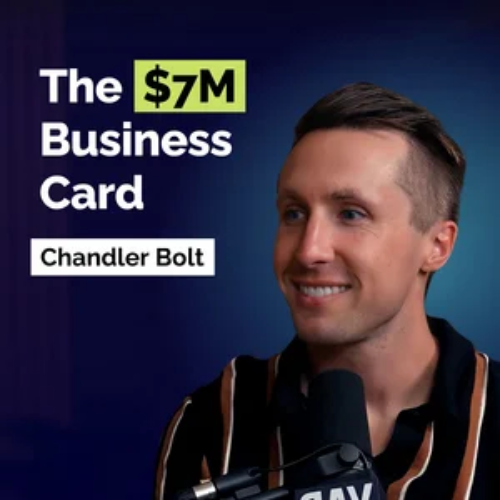
How One Book Generated $7 Million for This Business | Entrepreneurship | How We Profit | E5
Chandler Bolt built a $10 million business by challenging one of the biggest myths in publishing: that authors can only make money from book sales. As the founder of SelfPublishing.com, Chandler has helped many entrepreneurs use books to generate leads, attract high-value clients, and scale their businesses. In this episode, Chandler breaks down how one of his books generated $7 million in revenue for his business and reveals how to choose a profitable book idea, launch it successfully, and turn it into a driver of real business growth.
In this episode, Hala and Chandler will discuss:
(00:00) Introduction
(00:00) SelfPublishing.com’s Business Model
(04:24) Dropping Out to Build a Business
(08:42) The Power of SEO in Branding
(12:51) How SelfPublishing.com Generates Revenue
(18:20) Using AI to Scale Operations
(22:37) Finding the Highest-Margin Offers
(25:47) Chandler’s Customer Growth Strategy
(33:28) Why the Right Book Idea Matters
(40:11) Turning Books Into Client Funnels
(45:51) Maximizing ROI From Your Book
(56:12) The Journey to Business Mastery
Chandler Bolt is the founder and CEO of SelfPublishing.com, an online education and services company that helps people write, publish, and market books that grow their impact, income, and business. A Forbes 30 Under 30 honoree, he is the author of seven books, including his most recent release, Published. Under his leadership, SelfPublishing.com has earned a spot on the Inc. 5000 list of the fastest-growing private companies in the U.S. for multiple consecutive years.
Sponsored By:
Indeed – Get a $75 sponsored job credit to boost your job’s visibility at Indeed.com/profiting
Shopify – Start your $1/month trial at Shopify.com/profiting.
Northwest Registered Agent – Get a complete business identity with Northwest. Visit northwestregisteredagent.com/YAPFree and start using free resources to build something amazing.
Mindstone – Master practical AI skills without the complexity with Mindstone’s AI Competency Programme. Head to experience.mindstone.com/yap and get 10% off.
AT&T – Stay connected with reliable, secure internet built for entrepreneurs. Switch to AT&T Business at business.att.com.
Quince – Make your summer wardrobe feel easier. Go to Quince.com/profiting for free shipping on your order and 365-day returns. Now available in Canada, too.
Resources Mentioned:
Chandler’s Website: selfpublishing.com
Chandler’s Instagram: instagram.com/chandler.bolt
Chandler’s YouTube: youtube.com/@ChandlerBoltOfficial
Chandler’s Book, Published: bit.ly/CB-Published
Active Deals – youngandprofiting.com/deals
Key YAP Links
Reviews – ratethispodcast.com/yap
YouTube – youtube.com/c/YoungandProfiting
Newsletter – youngandprofiting.co/newsletter
LinkedIn – linkedin.com/in/htaha/
Instagram – instagram.com/yapwithhala/
Social + Podcast Services: yapmedia.com
Transcripts – youngandprofiting.com/episodes-new
Entrepreneurship, Entrepreneurship Podcast, Business, Business Podcast, Self Improvement, Self-Improvement, Personal Development, Starting a Business, Strategy, Investing, Sales, Selling, Psychology, Productivity, Entrepreneurs, AI, Artificial Intelligence, Technology, Marketing, Negotiation, Money, Finance, Side Hustle, Startup, Mental Health, Career, Leadership, Mindset, Health, Growth Mindset, Passive Income, Online Business, Solopreneur, Networking
Learn more about your ad choices. Visit megaphone.fm/adchoices
Hala Taha: [00:00:00] Chandler, welcome to Young and Profiting podcast.
Chandler Bolt: Great to be here. Thanks for having me.
Hala Taha: I'm excited for this conversation to talk about publishing, to talk about how authors make money, and this is our new How We Profit series where we basically spend the whole time unpacking your business model. So tell us what self-publishing is in your own words.
Explain it to me like I'm a 12-year-old.
Chandler Bolt: So selfpublishing.com, we help people write and publish books, typically that grow their business. That's the bread and butter of what we do. Instead of traditional publishers, us keeping all the profit, the IP, everything, we put the power back in the hands of the authors.
They pay us up front. We coach them through the process, do a lot of the hard work, and then help them make more money from the book.
Hala Taha: Is it just one offer, like, "I'm gonna help you publish your book," or do you have different levels of your offer?
Chandler Bolt: Yeah, we look at it as three phases. There's write the book, launch the book successfully, and then grow the business.
And so we have kinda products for, uh, products and services for each phase.
Hala Taha: Nice. [00:01:00] Uh, Bryce, is his mic too low? No, it's all good. Okay. Okay. Let's start over since we j- Cool ... since we just started. I feel like
we should just move it up a little bit. It looks too low.
Chandler Bolt: Also, Holly, do you maybe wanna cheat a little bit more towards the center camera?
Hala Taha: Like this? Yeah.
Chandler Bolt: Let me see.
Let me see.
Hala Taha: Can you help him, uh, with his mic? Make sure this- I think it needs to be up a little higher. It looked really low ...
Chandler Bolt: this guy. Oh, there we go.
I'm assuming that
Good. Cool, he's good. Nice. All right. Sweet
Hala Taha: And he's got water, right? Okay
Chandler Bolt: All right.
Hala Taha: I like to, I usually like to do the intros twice anyway, so. I'll set- Is it too high now?
Chandler Bolt: Uh-
Hala Taha: Or it feels good?
Chandler Bolt: I think it's good.
Hala Taha: Can you move your arms around?
Chandler Bolt: Check one, [00:02:00] two. Check one, two. There we go. That's perfect.
Hala Taha: All right.
We are all good. Okay, cool. Chandler, welcome to Young and Profiting podcast.
Chandler Bolt: Glad to be here.
Hala Taha: I am pumped for this interview because I feel like so many people wanna understand how to make money from books and how self-publishing works. And this is a new series called How We Profit, where we basically unpack business models.
So first I wanna unpack the business model of your company, selfpublishing.com, and then I wanna understand the business model behind authors and how you make money with books. Uh, so let's start with selfpublishing.com. What is your company? Who do you serve? And explain it to me like I'm a 12-year-old.
Chandler Bolt: So yeah.
So we're an online education and service company. We help people write and publish books that grow their impact and their business. And so our bread and butter is helping people write books that grow their business. We coach them through the process. We, there's a bunch of services involved. So whereas a traditional publisher takes all the l- rights and royalties and is super slow and antiquated and [00:03:00] boring- Mm-hmm
uh, we're kind of the best of both worlds for authors.
Hala Taha: Hmm. And who is your target customer? Like, what is your ideal, perfect customer?
Chandler Bolt: It's funny, I think when you get into business, you imagine that all of the customers are gonna be just like you .
Hala Taha: Yeah.
Chandler Bolt: And so I thought, oh, it's just gonna be younger guys trying to- Hmm
grow their online business. Now, there's certainly a pocket of that. So there's one bucket we would call Jeff. Mm. That's y- you know, people who wanna grow their business using a book. Then there's Suzy, where this was the most surprising pocket of the business. This is older women, often empty nesters, that wanna write a book about their life experience.
Hmm. And then we have fiction authors who wanna, you know, write fiction books. We have children's book authors. But really, the bread and butter is business books and older women .
Hala Taha: Interesting. Yeah. The older wom- women thing is, like- Yes ... really interesting. They're just, like, bored and they, they wanna write a book.
What kind of life experiences are they writing about?
Chandler Bolt: Uh, it's all kinds of stuff. A lot of trauma. Uh, a lot of, uh, what's [00:04:00] the narcissistic exes. Uh, but I mean, a l- a lot of it is at the same time that their husband is kinda wanting to wind down his career, she feels like, "Hey, my kids are out of the house."
Hala Taha: Mm, it's my turn.
Chandler Bolt: It's my turn. Yeah. Like, I want a second act. Yeah. And so, you know, these kids just got out, and so I've got this, I've got value to share, and I wanna help people. And so it's very service-minded, and so they kinda choose the medium of a book.
Hala Taha: Really cool. Well, from me just learning more about you as I was studying for this interview, I know that y- you're a huge proponent of books having ROI, right?
Yeah. Why is, um, you know, trying to s- to get rich off a book not the right way to go?
Chandler Bolt: Well, if you wanna get rich off of royalties, unless you're James Clear or Hal Elrod, you're prob- uh, p- It's probably not gonna happen. Mm. But so the book is not gonna make you rich, but publishing a book will. And so use the book to grow your business.
And so that's what we're all about is how do we use the book to get more leads, more [00:05:00] sales, more referrals, and create a revenue engine in the business. Mm-hmm. So this book has brought in roughly $7 million in revenue over the last 12 months for the business.
Wow.
But that's because we strategically use it inside the business.
And so that's all of what we're helping people do is say, "All right. Hey, don't just publish it and then forget about it, but then also don't just publish it and think that you're gonna get rich off the royalties." Yeah. Use it to fuel the business.
Hala Taha: Yeah. We'll get more into that and how authors make money.
But first, tell us how big selfpublishing.com is, like how many employees you have, what is your annual revenue?
Chandler Bolt: So we've got 53 employees currently. We're doing about 10 million a year. We've done roughly 80 million over the last decade. Trying to have as few, the fewest amount of employees as possible.
Hala Taha: Yeah, I mean, especially in the age of AI,
Chandler Bolt: right? Yeah. I mean, that, that's the funny thing is when you start growing your business, you think that employees are a proxy-
Hala Taha: Yep ...
Chandler Bolt: for how well you're doing. Yep. Because you show up to the entrepreneur meetups, and they say, "Oh, how many employees you got?" Mm-hmm. What they really wanna ask is, how much are you [00:06:00] profiting?
Hala Taha: Yeah.
Chandler Bolt: But they won't ask that. So then you think employees are a sign of success, when really it's just a sign of you having a lot of expenses. So- Yeah ... 53 employees, roughly 10 million a year. We've been at eight figures the last few years in a row. Uh, and trying to scale to
Hala Taha: 25. And you bootstrapped, right?
Chandler Bolt: 100% bootstrapped. I own the whole company. Uh, v- you know, bought out my business partner early on.
Hala Taha: Mm.
Chandler Bolt: Uh, never, never raised money except for, like, SBA loans early on that- Oh, cool ... we, we paid back and all that stuff. But yeah, very bootstrapped. Awesome.
Hala Taha: So tell us about the origin story because you dropped out of college- Yeah
sophomore year.
Chandler Bolt: Yeah.
Hala Taha: And you went to study entrepreneurship, but you decided that you'd do better off just being an entrepreneur. So talk to us about the origin story and, and you've been basically doing this since, since then, right?
Chandler Bolt: Yeah. It's funny, studying entrepreneurship is an oxymoron. It, it, I didn't know it at the time, but I went to school to learn business, and then two things happened.
First, they shove you in all the prerequisites, which are totally worthless, [00:07:00] but then, then they also d- have never ran businesses. Yeah. And so that was kind of the final straw for me, where none of my professors had ran businesses. I had ran businesses in high school and college, and when I was a freshman in college, I ran the number one painting business in the company for the company that I was working for.
Mm. So that gave me the confidence to drop out. And then as I was dropping out, I wrote a couple books about kind of my early entrepreneurial experience. Those books started popping off. And so I'll never forget, I was snowboarding in Austria on a study abroad that was, like, my last hurrah. I said, "I'm gonna study abroad, and then I'm gonna drop out of school."
And while I was studying abroad, I published the book, and I remember snowboarding and w- and realizing that the day I snowboarded, I made 400 bucks from the book. Nice. And it was, you know, it, not, n- not a, probably a significant amount of money to most people, but at the time it was, it was life-changing.
Yeah. And so that showed me that this is ac- there's something to this whole book thing. Then people started asking how to do it, and that's when I started teaching [00:08:00] it.
Hala Taha: And you actually started, like, a little pilot program, right? Yeah. Before you actually launched your company. Talk to us about that. Talk to us about how you started to really form the idea of having a publishing company and how you tested it at first.
Chandler Bolt: If you're thinking about starting a business Don't create a logo, don't create an LLC, don't, you don't even have to have a website. I
Hala Taha: totally
Chandler Bolt: agree. Get customers. Mm-hmm. If you don't have customers, you have a business idea, not a business. And so for us, we said, well, what's the fastest way that we can do this and validate the idea?
Mm-hmm. Is to enroll a group of people and teach them. It was 44 people over the course of six months that we taught, and so it did a bunch of things. First, it validated the idea, 'cause I had chased a lot of ideas that made no money, and- ... and I didn't want to do that again. But then it also showed proof of concept and created testimonials, and so we had that group of 44 people.
Over 60% of them published a book in the first six months. So that's what I would recommend to people watching or listening, is [00:09:00] sell then build.
Hala Taha: Mm.
Chandler Bolt: Validate, preferably in a group setting, not just selling one-on-one your time. But in, and then if you can do that, well, then you can productize that offering or that service or whatever to help a lot more people.
Hala Taha: Yeah. That actually reminds me about how I made my first big sale with my social media and podcast agency. So at the time, I had one client that I was basically doing her stuff for free, Heather Monahan, you might have heard of her. Yeah, yeah. She's like a big LinkedIn influencer. She's still my client. And I was basically doing her stuff for free, learning how to, like, productize everything that I was already doing for myself.
And I remember I had a billionaire who had me on his podcast, and at the end of the show, he's like, "Do you do podcast and social services?" And I was like, "Yeah, I actually do." I had no logo. I had no website. I had no company name. I put together a PowerPoint and pitched him services and won a $30,000 per month deal- Whoa
as my first deal, without even having a website. Or like real clients, you know? Yeah. I had like one test client, right? So it just goes to show, [00:10:00] like people just spend so much time on the wrong things- Yeah ... when really they just need to figure out their offer and try to get customers, like you said.
Chandler Bolt: And the best way to figure out your offer is to ask someone if they're willing to pay.
Hala Taha: Yeah.
Chandler Bolt: And so that's what I love about that story, is when someone asks you do you do the thing, just say yes-
Hala Taha: And
Chandler Bolt: figure it out ... and then figure it out. Come back with a price. If they instantly say yes, you probably priced too low. Uh, but, but if, if it's like, I mean, that's a great price and a great recurring retainer, I mean, that's a beautiful, beautiful first customer.
Hala Taha: Yeah. I mean, it set off everything. Uh- It's awesome ... I had a lot of social proof too. Yeah. So that's the other lesson. I actually had a very big personal brand already and a big podcast and a very big LinkedIn following, so I had built it myself and had that social proof so I could price higher. If you don't have that, you obviously can't price as high.
Uh, speaking of personal brand, how have you built the brand of your business? Because you're not like, it seems like the business itself has a big name, but you don't necessarily have a big personal brand yet.
Chandler Bolt: Yeah, exactly. [00:11:00] It's so funny because early on in business you follow all the advice, which is, "Hey, build something that you can sell."
Yeah. Oh. "You don't wanna keep in risk." And so early on it was the Chandler Bolt Show, and so pretty quickly I said, "Oh man, I can't do this because then I'll never be able to get out of this business." Mm. And so I kind of pushed the business brand to the front and pushed my personal brand to the back, which I think is really smart if you wanna sell a business, really dumb if you wanna build a long-term brand with equity- Mm-hmm
personally. Mm-hmm. And so, uh, then as of la- So then, but we got to eight figures without a personal brand. We did that multiple years in a row, and then now I just started kind of last year building out the personal brand. So I'm kinda late to this whole personal brand party. I think most people, it's easier to build the personal brand first- Mm-hmm
like you talked about, and then parlay that into a business than it is to go the other r- uh, the other way around. But now we're building out Bolt Media in kind of a, a seven-figure startup inside of an eight-figure company, is how I'm looking at it, and then that'll service both the company brand [00:12:00] and the personal brand on, on a lot more social.
But I mean, we've had a big... The company's had a big brand in SEO and content for a long time, but that's al- uh, it's not really about as much of a brand as it is, I guess, just a big customer acquisition channel.
Hala Taha: Yeah, I mean, the name of your company, Self-Publishing, uh, that's the first thing that came to my mind is like, damn, he's got the best SEO.
The title of your company is so important, and people don't realize it. Even with podcast names, right? The title of your podcast is so important. Yeah. If you don't have a keyword, you're just always, like trying so hard to get people to listen, and you have to like tell them about it or advertise to them, where people are probably just searching up, "How do I self-publish?"
Chandler Bolt: Exactly.
Hala Taha: And you pop up. Exactly. Talk to us about that.
Chandler Bolt: So, I mean, early on it was Self-Publishing School, and then we realized our best customers don't wanna be students and go to school. Mm. And so we had, I had kinda negotiated the acquisition of the domain selfpublishing.com, and [00:13:00] that was rapidly growing, and that was probably 50 to 150 grand a month in revenue for Self-Publishing School just as an SEO and content play.
So that kept growing. People kept saying, "Yo, I don't wanna be a student." And so then eventually we said, "Hey, we need to rebrand- Yeah ... because, uh, Self-Publishing School is just not a premier brand in the space, and if we wanna own the space of self-publishing, well, selfpublishing.com. I mean, we literally own the domain.
Mm-hmm. So that's when we did a big rebrand. Uh, and I learned a lotta lessons. Like, I would say in some ways we still haven't done a good job of the rebrand. People still call us Self-Publishing School. A lotta people call us self-publishing, uh, self dash pu- I mean, it's like, I, I, th- I, I did learn that, you know, the longer you have a brand, the harder it is to get people to call you something else.
Mm.
Hala Taha: Well, I mean, at least you had self-publishing in the original title, right? Yeah. So at least you got that right.
Chandler Bolt: You got a great brand by... I mean, I, like, you talk about just branding something and owning a concept, [00:14:00] Young And Profiting and YAP I think is just, it's a really beautiful example of that
Hala Taha: Yes and no, actually.
So Young and Profiting is... I love YAP, and YAP Media I think is perfect.
Chandler Bolt: Mm-hmm.
Hala Taha: But nobody's searching Young and Profiting. Fair enough, yeah. So I get a lot of listeners that are like, "I'm too old to listen to your show." And I'm like- Oh, interesting ... "No, you're not. You know, you, you don't have to be young." Or people will wanna be guests and they'll be like, "I'll, I'm too old."
And I'm like, "Everybody I interview, like most people are like 50 plus." Oh. Like it has nothing- Interesting. Yeah, so titles are super important. For me, I've always like contemplated like should I change the name? Yeah. I haven't. Everything worked out. But but I think it would've been a lot quicker. I know a lot of friends who have podcasts like Self-Motivation Daily or, or Motivation Daily, and they get so many downloads.
Yeah. Have no online presence. They don't try hard, you know? Yeah. So make your life easier and put a keyword in your business name, I promise you guys. Um, okay, let's talk about how you actually make [00:15:00] money with your business. So what do you typically charge a client?
Chandler Bolt: Average order value is 10 grand. Uh, they could pay anywhere from six on the lowest end to 100K on the highest end.
Hala Taha: Okay, so what's the difference in terms of the services?
Chandler Bolt: Yeah, so the lowest end is coaching and content only with no services. The highest... It's, it's basically from done with you, or actually the, the, the lowest rung is we just show you how to do it, teach you how to do it, all the way to done for you ghost writing and we will write the book, we will do all, all the marketing stuff around it.
And obviously they gotta... As an author, you gotta market the book. Mm-hmm. I mean, that's a big lesson whether you go traditionally publish or self-publish, but that's our highest end ghost writing.
Hala Taha: What is the most cost-intensive piece of fulfilling delivery for your clients?
Chandler Bolt: Most cost-effective for... Or, or most-
Hala Taha: Cost...
Sorry, the, the most costly piece-
Chandler Bolt: Hmm ...
Hala Taha: of fulfilling for your clients.
Chandler Bolt: By far the services. I mean, it's, we live in such an interesting time with these online [00:16:00] ser- services businesses, coaches busin- coaching businesses, whatever else. 'Cause I think the early days of the gold rush, it was just co- it was just a course.
Just have a course.
Hala Taha: Yeah,
Chandler Bolt: I like the gold rush. And then it was, oh, well, we need some coaching. Okay, so let's have coaching. And I think we were the, one of the first people to really do coaching at scale. I mean, we have a team of seven to 10 coaches that have all written and published books that do it at a really, really high level.
But then you get to a point, and I think that's where people see the la- the landscape being so much more competitive these days, is done for you services, uh, which everybody else just calls services, by the way. I don't know why- Yeah ... in our, our weird w- weird world people call it done for you services.
But then you start adding that, that is really, really expensive. Mm-hmm. And so in the beginning we built out a lot of that in the Philippines, had some mixed results. Then we've onshored a bunch of that stuff. But it's still, it's, it's by far the most- Yep ... expensive delivery piece. So when you look at our COGS are more like 25 to [00:17:00] 30%, whereas a bunch of our competitors or people in the online coaching world would say, "Oh, my COGS are, like, 10%."
Mm-hmm. So that makes it a little tricky 'cause we can't spend as much to acquire a customer, and so there's just kind of more hard costs with the business.
Hala Taha: Yeah. So it's mostly because you have to hire talent.
Chandler Bolt: Exactly.
Hala Taha: And retain that talent and train that talent. And so what happened when you, uh, you said you had employees in the Philippines- Mm-hmm
and then you ended up doing US employees. Why did you make that change?
Chandler Bolt: Yeah, we still have employees in the Philippines, but I think anything customer-facing, I mean, like it or not, people in the US just don't wanna talk- Yeah ...
Hala Taha: to people in the Philippines. I've, I'm facing the same thing. We've got a lot of back-end folks that do- Yeah
copywriting and video editing internationally, but anybody client-facing has to be US.
Chandler Bolt: Yeah. Which is, I mean, you can call it whatever you want, but- Your customers make the rules. So, I mean, I'm not saying I agree with it, but my customers are making the rules. And so then we realize, oh, well, if they're c- talking to customers, [00:18:00] they can't be in the Philippines.
So then you build this complex network of training backend staff to then pass it off to the person who's talking to them, but then now you have double the labor. And now, especially in an age of AI, it's like, well, if you can train someone relatively quickly- Um, yep ... in the Philippines to do it, you could probably just build an AI agent to do it.
Hala Taha: Exactly,
Chandler Bolt: yeah. And so why would you do that? And so that's where... We still have people there, but we've onshored a lot of it.
Hala Taha: Yeah. I think people are really worried about job loss with AI, but for me, I'm hiring way more in the US than I used to because I- Yeah ... I'm doing the same thing. Instead of thinking about hiring more international people, I'm like, well, one US employee who could create like four agents- Yes
would be the same as one US employee- Yes ... and hiring four international supports for them, right?
Chandler Bolt: Yeah.
Hala Taha: So that's how I think about it too.
Chandler Bolt: It is interesting how the jobs that are getting eliminated with AI are the offshore jobs and the lowest paid jobs, typically, that are outside the US. And, and to your point, I can now [00:19:00] hire assistants that I would used to hire in the Philippines or in Latin America or whatever else, and I have four assistants-
Hala Taha: Mm-hmm
Chandler Bolt: for my key people on my team, but it's just all built with AI. So I agree. I think most people that... Sure, it's coming for a lot of white-collar work. Don't get me wrong.
Hala Taha: Yeah, it is. It is. But- Eventually, but right now this is, for, for agencies, I feel like this is what's happening. It's great. I'm starting to feel like...
Well, it's a, it's hard to manage a lot of people. It's like the headache- Oh my gosh, yeah ... of managing people and training people, and it's like, well, I'd rather just have somebody who's, like, in Austin, for example-
Chandler Bolt: Yes ...
Hala Taha: and using AI.
Chandler Bolt: Yeah. It's so funny 'cause we, we've built AI managers, and we're in the process, I mean, we're probably about halfway done, of replacing all of our managers with AI.
Wow.
And it's crazy because if you think about it, management is sameness, and it's repeating yourself. Mm-hmm. And so I'm kind of like you. I'm so tired of repeating myself for the hundredth time about the same exact thing to an imperfect human that then does it wrong again. No. And so I would rather just train the AI manager to do it, [00:20:00] and then I have really good and skilled leaders, but then now all of a sudden, there's way less ping-ponging and coordinating in the organization.
And maybe in a business like yours, it's like, okay, that account manager doesn't have to manage five people. So instead of having five clients per account manager, we have eight or- Mm-hmm ... whatever. It's, maybe it's 10 now- Mm ... and so they're twice as productive, and I pay them 30% more or 50% more. Mm-hmm. So then it's a win for the employee, it's a win for the business, it's a win for the client.
Hala Taha: I love that. Well, since we're on the topic, talk to us about how you've implemented AI. I know that you've done a lot with it.
Chandler Bolt: Oh my gosh. Everywhere. Everywhere, which is really controversial in, in my w- in my line of work with, with books and stuff. Yeah. But I think- W- so we're building AI managers. We've built this massive, we call it the hub, where everything for employees is inside of this AI hub.
Every call that we have in the business is recorded, reviewed, and scored. Automatic note-taking. We have, I mean, we have hundreds of one-on-one coaching calls a week. Mm. So now all of those are [00:21:00] recorded, documented. The recordings are sent to our customers. The action items are pulled out for them, so it makes our coaching more effective for our customers.
It saves our coaches time. We're building out the AI managers. We are... I mean, uh, it's just all kind of iteratively getting better. Mm-hmm. And then we build out kind of, uh, one-off, like I have my own setup in Obsidian and Claude, and, um, like Note Taker, and it's, and it's kinda disseminating information, helping me make better strategic decisions.
My assistant's building stuff alongside me to then pull notes or action items from meetings. Mm. So it runs the gamut from my personal productivity to ultimately trying to make every single person in the business more effective.
Hala Taha: Yeah. Talk to me about how you actually rolled it out, because I think you hired somebody on your team who, like, leads AI, right?
Chandler Bolt: Yeah. Yeah. So kind of, you know, there's the, all the headlines about Block- Mm ... laying off 4,000 people or 6,000 people and, and basically changing the org chart. And so we're in the middle of changing the org chart where [00:22:00] there's only three roles that exist. There's individual contributors, there's player coaches, and there's directly responsible individuals.
So think someone who owns an initiative for a limited period of time. But exactly what you said is the individual contributor, we've now broken that in half and said there's doers and there's builders. And so we have one or two builders in the company. Their job is to build AI tools that make everything else in the com- everyone else and everything else in the company more effective.
And so those people already worked for me, so I didn't have to... I, I guess I'm fortunate in that way. I didn't have to go out and hire, like, an AI- Mm ... implementer or something. But we just claimed back their time and then got them building things one at a time to where now all of a sudden they built something that saves them five hours a week.
So then they got five more hours to build, and then they use that to build something for somebody else that saves them five hours a week. And so it kinda just iteratively starts speeding up, and to the point where we are now, which is just It's basically their full-time job.
Hala Taha: That sounds incredible. It's crazy.
I feel like there's a lot to learn [00:23:00] from you on that front. So what's your advice to listeners tuning in who have their own businesses, they're using AI personally, and people on their team are using AI, but they haven't had, like, an organizational AI, like, revolution within their company. Mm. Like, what- where should they start?
What should they do first?
Chandler Bolt: You gotta start by identifying a builder in your company or hiring them externally, and so I was talking to a buddy about this the other day. I'm like, "Dude, y- you've gotta hire someone to start building this. You're leaving so much money on the table." Mm-hmm. And I think if your team is not adopting AI, it's your fault, and I would not expect them to build the thing that they're gonna use.
I think it's, it's my responsibility as the CEO of the company to structurally build stuff that our frontline people can use to make them more effective. Mm-hmm. And so that's, uh, uh, in the early days, you see all this stuff of, like, everybody needs to be AI native. Yeah. And it's like, okay, yeah, that's true, but are they really gonna be building innovative solutions?
Probably not. They're gonna, on the margins, [00:24:00] implement some things that slowly make their role better. Mm-hmm. That's great. I love that, and so we got the whole team using it and encouraged people to use it, but then where things really changed, it's where we started implementing the builders, and I started pointing them at problems and started having them come alongside people, starting with revenue first, 'cause obviously if you got more revenue, well, then you can kind of, uh, pay for everything else.
But then, so it was like, what are our highest revenue things? Doing that for people. What are our lowest margin, biggest time-wasters? Okay, let's build all that stuff- Mm-hmm ... so we automate it and kinda, you know, save employee time, save back-end stuff. We're able to trim our staff and be a little bit more leaner, uh, and stuff like that, and then it just starts kinda compounding.
Hala Taha: I love that. Okay, let's go back to your business, how you make money. So what would you say your highest margin services are? Like, what do you love to sell?
Chandler Bolt: Yeah, I would say, you know, it's so funny because when you, there's- I, I love this Keith Cunningham-ism [00:25:00] that's every number in your business, you, you should look at in three formats, which is dollar amount, a percentage, and a per unit.
So even when you think about profitable services, uh, uh, there's, you know, the ghostwriting would be our highest dollar amount-
Hala Taha: Mm ...
Chandler Bolt: but not our highest percentage, right? And, and, you know, on a per unit, maybe it's, it's about the same. But, uh, we try to break down the per unit profitability. I would say our 25K offer is probably our most profitable as a percentage at least, and maybe even as a dollar amount, 'cause there's just so much hard cost to ghostwriting.
Mm-hmm. But I'd say that's probably the-
Hala Taha: Yeah, I was gonna say, it's probably really expensive to find a good ghostwriter. Like, writing in general- Yeah ... I find, is very hard to hire for. Totally. There's not that many good writers. Yeah. So I imagine that that could be a very expensive part of your business, is actually the writing.
Chandler Bolt: That's a very expensive part of the business. Now, we're finding ways to implement AI tastefully- Mm-hmm ... uh, and with a process. 'Cause we think, we haven't f- fully figured it out yet, [00:26:00] but we believe that once we figure a lot of that stuff out, we'll actually write better books for our clients. Mm. Because it'll be...
The hardest part of ghostwriting a book for someone else is disseminating all of the information from them. Yeah. And so how'd you used to do it? Well, you would just interview them incessantly and look them up and research. And so you end up with 20 to 50 hours of research time to try and distill their voice and all that s- Well, AI's really good at that.
Yeah. So we're, we're figuring out ways to do that. But yeah, that's, that's our biggest cost center. And then in a weird way, our, probably actually our highest margin is our $6,000 product because there's no services.
Hala Taha: Mm. Yeah.
Chandler Bolt: So it's, I mean, it's a percentage, but it's not like we're gonna get rich, or de- certainly not gonna get to eight figures just slinging that price point.
Hala Taha: Mm-hmm.
Chandler Bolt: So.
Hala Taha: Yeah. Interesting. Is there ever a s- is there a service that you decided to turn off at some point, where you're like, "This is just not worth it"? Tell us about that.
Chandler Bolt: Course only.
Hala Taha: Mm.
Chandler Bolt: I think courses are dead
Hala Taha: I think courses are dead too. Yeah.
Chandler Bolt: [00:27:00] Which is so sad. RIP courses. And I mean, as someone who is a course creator and built a business off of that, but even before AI, we decided to shut down our course-only offerings because people just weren't implementing it.
Yeah.
And so sure, can we make money off of it? Yeah. But it's just not a good sustainable business. Like, I think if you were in business where your customers aren't successful, at best they're not successful, and at worst, they're pissed off and think you're just scamming them. That's not a sustainable business.
Mm-hmm. So we cut that off a long time ago, and we said, "We're not gonna sell anything above a threshold. Like, if it's 100 bucks or below, okay, cool."
Hala Taha: Yeah.
Chandler Bolt: But that's not really a major revenue driver for us. But if it's above a $1,000 threshold, we're not selling it without having some sort of coaching component.
Hala Taha: Yeah. I think that makes a lot of sense. I think there's one exception. I think AI courses-
Chandler Bolt: Totally ...
Hala Taha: are the only thing right now that can make money.
Chandler Bolt: Yeah. Yeah.
Hala Taha: Okay. Let's talk about how you get your customers- Mm-hmm ... your marketing channels. Um, what is the typical way that you're [00:28:00] acquiring a customer? How much, uh, are you willing to spend on acquiring a customer?
Chandler Bolt: It's funny because most people in our space only get customers through ads, and we get to eight figures without really doing much ads at all- Mm-hmm ... and without having a personal brand, which, I mean, those are the two playbooks. That's incredible, yeah. Right? If you're running a coaching business where you either have a massive personal brand and/or you get really good at spending money on ads, but for us, it's partnerships.
That is the, you know, that'll be probably 6 to 8 million this year, and so we go speak at events. We've got a speaking team of seven people or so that go out and speak on the company's behalf. Oh, wow. I'll, I'll speak at the, the big ones, but anything else, there's, um, the team's going to speak. We'll do webinars.
All kinds of stuff. So there's the partnership bucket. Then now we're starting to get good at ads, so we just, uh, last week passed a million for the year. Um, which is not crazy, but we're starting to pick up some momentum there. Uh, and then last is content. And, well, I've... If you're ranking [00:29:00] by revenue, it's, it, it would say secondly is content, but that's SEO, that's our blog, and then now obviously building out the media team that's, and the media company that's YouTube, social, Instagram, DM funnels, all that stuff.
And then how much we're willing to pay to get a customer, I'd say is roughly two grand. Okay. I'm like, we'll, we'll, we'll go higher depending on the terms and depending on if it's on the back end or the front end.
Hala Taha: Interesting. So let's, let's talk about the speaking engagements. I think that's, like, a marketing channel that I haven't heard of.
Chandler Bolt: Yeah.
Hala Taha: I'd love to, like, really unpack that. Talk to us about how you find these speakers. Are they your coaches? How you get them opportunities. Are they getting the opportunities or you? How are you paying them? How are they soliciting the offer? How are you closing the clients afterwards? Like, walk us through the whole thing.
Chandler Bolt: Yeah. I think a lot of people are sleeping on live events. Yeah. And it's crazy. I mean, what's old is new again, right? Mm-hmm. Like, I think pretty soon TV ads are actually gonna be very [00:30:00] profitable because everybody's went digital. Yeah. And so with events, what we do, uh, is we've got a whole playbook. So we do...
I, I just think of it as a B2B sales team, which obviously you're, you're, y- you know, you got a lot of experience in and are really good at. And I almost think, like, some, some of your podcast booking engine is kind of like a B2B sales team. Mm-hmm. But so it's B2B sales except we're selling events on having us come speak.
And so they do the outreach. We'll either do a sponsorship or a backend deal where th- we'll give them a cut. And then our speakers, we... They're all internal staff. So we take our best salespeople, we take our best coaches. Hmm. Um, predominantly best salespeople, 'cause if you can sell one-to-one, you can speak one-to-many.
And so we train them up. We have a whole... We have really intensive training that we send people through where they get a bunch of small at-bats and kind of work their way up depending on how well they do. Then we use that plus the book itself to then go speak. We've got a booth. We give away a ton of books, which means we capture the leads of almost a whole [00:31:00] room.
We book a ton of appointments. We'll do anywhere from 50 to 100K per event, typically on the spot. Uh, and then obviously some overflow revenue on the back end, and we'll do 50 to 70 events this year. Really cool. So that's kind of the, the core of that side. We did a video on my personal YouTube channel kind of breaking down that whole, uh, that whole blueprint, but that's the
Hala Taha: idea.
Yeah, I feel like that must be giving you guys some ideas for your own business. 'Cause I feel like that's just like a, a really unique model. Going to conferences, sponsoring them, getting on stage, using your own employees who are like your rockstar employees to be the speakers, and having a funnel that way.
And live events convert so well because there's just- Yeah ... something about being in the room with somebody who's really smart, who has the solution that you want. It builds the trust really fast. Yeah. Webinars are also awesome too. Big time. What are you guys doing with w- webinars? Are you, are you using your ads to funnel to the webinar?
Chandler Bolt: Yeah. W- well, we don't ... W- so we do a webinar every week. Okay. At least one, and that's sometimes me, sometimes people on the [00:32:00] team. Similarly, that's kind of like a speaking development funnel. Uh, but, uh, we, uh, don't often run ads to webinars just because it's a little ... the logistics are a little tricky, where, you know, if you're running an ad to a live webinar, well, then you're constantly refreshing your ads, the times, the creative.
Then you gotta deal with showrode, show rate. If we're spending money on Saturday for a webinar next Tuesday, like, are those ... It just, like, got really complicated, so we kind of just said screw that. We'll just run ads to a VSL- Okay ... uh, instead. And then we'll do a lot of our e- our webinars internally. But I want
I, I-
Hala Taha: And a VSL is a video sales letter, by the way, guys.
Chandler Bolt: Yeah. Yeah, so basically five-minute video, five to 10-minute video- Mm-hmm ... selling one to many, uh, what, what you do. It's funny you mention live events being one of the best sales mechanisms for people. I think if somebody's trying to get your first customer for your business, it's very simple.
Find a local event that is specific to what you do or tangential to what you do. Convince them to let you speak at that [00:33:00] event.
Mm-hmm.
And then plug what you do subtly, or maybe not so subtly if they let you, in that talk. And so this was actually one of the first... I was doing webinars. Yeah. And this is one of the first ways, first event that I spoke at, I went locally, spoke to 27 orthodontists.
Mm. Which you think, hold up, you publish books- ... like, why would you speak to orthodontists? But about creating a book that helps them grow their practice. Yep. And an hour later, I walk a- I walked out with 18 grand in sales.
Amazing.
And that was when the light bulb turned on for me, where I said, "Oh, hold up.
There's something to this one-to-many sales." Yes. And so whether it's a webinar, whether it's an in-person event, but especially an in-person event, as you mentioned, as the be- the, the best and the fastest way to build trust and sell at scale, even without being
Hala Taha: salesy. W- how do you go about finding these conferences and live events?
Like, what's your process for that?
Chandler Bolt: Yeah. So I, I think the question that we like to ask is, who is already talking to [00:34:00] our ideal customers? 'Cause somebody is. And either before or after they do business with us, or just topically, these are people who would wanna write books. Yeah. 'Cause I think a lot of people would think, oh, I gotta go to the industry events.
Like, they would think, oh, you probably go to a bunch of publishing and writing conferences. We go to none of those.
Oh, my gosh.
Those suck. Um- ... because it's, it's a red ocean. Mm. I, I don't wanna show up and be one in a line of 15 people that help people publish books. Mm. So we actually take the total opposite approach, and we say, who has the problem that we help solve?
And then let's go speak at those events. So we love real estate investing events. Those crush for us. We love, uh, mom events, mom blogger events, mompreneur events. Those are awesome. Faith-based events, where there's a, an angle towards faith-based business or faith-based leadership, those are really good. Any entrepreneur or self-help event.
Like, I mean, it's that type of event, and especially if the person running the event has done the thing that you help with, right? So obviously, uh, well, I'll just use my business as an [00:35:00] example. Like- Mm-hmm ... if the person running the event has published a book and it was really helpful for them, those are the best because everyone in the audience is there because they at least respect the person running the event- Yeah, yeah
and they wanna be like them. And so the, if we were able to just say, "Oh, hey, they published a book." Mm-hmm. "You should too. We help." You know, kind of drop the mic.
Hala Taha: Such a, like, that's an amazing idea for folks, for so many different types of businesses, to just think about the conferences where your target audience is, and not necessarily your industry conference- Yeah
right? So, so smart. I love that we went over that. So let's talk about your customer. Um, let's talk about writing a book and why people write books. Uh, we already talked about how if you're looking to make money off royalties, that's a really hard game unless you are- Yeah ... like, an influencer or you've got a large audience.
Yeah. Like, for example, I'm actually starting to write my book. I just hired an agent and a writer and working on it. Um, and I hope I make money off royalties. Yeah. But you got me thinking [00:36:00] about something else that I have to make sure in this proposal process that my book actually aligns to my main, uh, focus of my business, which is my podcast network.
Yeah. So I grow and monetize, like, 45 other podcasts, and I'm an expert in monetizing influencers- Hmm ... across all their channels, right? Mm-hmm, mm-hmm. And so I need to make sure my book aligns to that. Yes. And originally that was the plan. Yeah. But my agents were trying to make it more broad, and when I was, like- Yeah
just studying for this interview, I was like, "Damn it, I was right. I, it should be- " ... it should be about creator entrepreneurship- Yes ... and, like- Yeah ... and I should use it because, like, you know, even if the book I think the book will be successful, but even if it's mildly successful, having it be about creator entrepreneurship would, would ensure that I would get more leads.
Help us understand why it's, you know, it, it's not even worth releasing a book if you have the wrong idea.
Chandler Bolt: Mm. So I think the first question you gotta answer is, do you wanna sell books or do you wanna make money? And let's use you as [00:37:00] an example, right? I th- I see two very distinctly different books, which is I'm assuming is kinda how your agent's thinking- Yeah
about this. There is the I help you make more money as a creator book- Mm-hmm ... which is going to print revenue for your business, and then there's the young and profiting broad- Yeah, profit young there ... you know, how to... Yeah. Profit
Hala Taha: young.
Chandler Bolt: Profit young, how to start a business, and side hustle and whatever, which is great 'cause you can sell some books to your audience and all that, but I mean, doesn't align with the core business.
So I think you've got a kind of a fork-in-the-road choice, which is probably similar to some people watching or listening this, which is which one do I wanna do first?
Mm-hmm.
And I would argue, I mean, I'm, not that I'm biased or anything, uh, but I would argue d- to do the creator, make money as a creator book first.
Even maybe even the, in the lead up- Mm ... to, 'cause if you traditionally publish, cool, it's gonna be two years from now. I mean,
Hala Taha: it's gonna- It is g- It's gonna take- It literally is two years from now ...
Chandler Bolt: so dang long. And so in the mid- in the middle of that, well, let's just do the book that's gonna actually make us money.
Let's sell the rights to [00:38:00] the other one, and then in the process of self-publishing a book directly related to the business, that is gonna bring in a ton of customers. And the benefit is you're gonna learn how to write and publish and launch and all that as well. Mm-hmm. So that when it gets to maybe what's the more big leagues book, you know how to do it, and, and so you can go crush that big brand book.
Yeah. That's like, that's the excuse that you... Well, actually, I don't know, you could use the other one, too, but I would say the, the profit young, uh, uh, concept is the excuse to get on all the podcasts-
Hala Taha: Yeah ... do all the
Chandler Bolt: big shows and
Hala Taha: that. That's, I think that's what... And I, I really think I could go about it both ways, but to your point, I could self-publish the creator entrepreneurship book and just use that as like a network-
Chandler Bolt: Exactly.
Hala Taha: Exactly ... ROI tool.
Chandler Bolt: Yeah. Interesting. And I w- and I wouldn't get, I would say, and w- we should have you, uh, on, on our show. She's like, "
Hala Taha: I'm
Chandler Bolt: about to make this." Ready? Yeah. Uh, yeah. Yeah. We sh- we should have you on the show, and we'll do, we have this one, uh, one-page launch plan, and we'll, uh, we'll just map it out, uh, and do a video on it.
[00:39:00] But I would say you start with the core premise, which this is, uh, you're not gonna like this. is I don't even need to sell 5,000 copies, but I wanna get 50 customers. Mm-hmm. Or whatever the number is. Like, that's what we would back into the math on, and we would just do that. And then you don't get lost in the sauce of like, "This book's gotta sell a bajillion copies, and I gotta dedicate two years of my life to this and stop everything else."
Mm-hmm. And 'cause I think that's where people get hung up. They think, "Oh, I gotta do all this, and that's gonna be a massive distraction, make me no money." Yeah. "So yeah, I'm not doing that." But I think it, if we strategically did that, that book, which is the same thing I would say to anyone listening, especially if you're early on in your business, don't write the broad book.
Write the specific book that's gonna make you money, and then you can parlay the other stuff later.
Hala Taha: Yeah. I think I was talking to Dan Harris about, or Dan Henry, I believe his name is- Hmm. Yeah ... about this. He writes, uh, a lot of books. And the reason why he writes [00:40:00] books is so that he knows what he's gonna say for the next year.
Chandler Bolt: Hmm.
Hala Taha: And, like, he'll use it as like, "This is my main messaging for the next year. This is what I'm gonna write in my social posts. This is what I'm gonna put in my webinars. This is what I'm gonna talk on stage about." I like that. And a lot of people don't realize that their book is what allows them to go on a podcast- Yes
and, and have, you know, original content and, like, your tho- like, thinking. Uh, sorry, writing makes you understand how you think a lot better, right? And really helps you distill your ideas so that when you are put on the spot or when you're standing on a stage, you know how to captivate an audience and know what to say that's, like, actually meaningful and interesting.
Uh, so for me, one of the reasons why I wanna write a book is because Now that I don't do courses, I feel like I need another way to, like, write my ideas down- Yeah ... gather my thoughts- Yeah ... and, and really be able to distill them.
Chandler Bolt: Yeah, it's interesting, especially in a world of AI, you need hub IP. [00:41:00] Yeah. Which I think is exactly what Dan's doing, where you've got this hub of IP on a topic that you wanna talk about, and maybe previously it was a course, now it's a book, but then you use that hub IP to splinter everything else.
So you splinter the podcast that you're on, you're talking about that topic, and you're clipping that up, right? You're ... And the social post, and everything that you're doing- Mm-hmm ... is really just spinning off of that hub IP, and then maybe you decide to do it again and again. But you've, you've got kind of your source material, whereas I feel like most people are going about it backwards.
Hala Taha: Yeah.
Chandler Bolt: Where they're trying to kind of figure out what their hub IP- Like piecemeal
Hala Taha: it.
Chandler Bolt: Yeah, yeah.
Hala Taha: Piecemeal it every day, basically, instead of just working on the thing, and then you can really delegate to your team. Exactly. "Here's the book. Make me a webinar out- on chapter three," you know, or whatever it is.
Chandler Bolt: Long form video. I mean, the, we literally do this at our company. It's, that book is the instruction manual for new clients. That book is the onboarding manual for new employees. Mm. That book, we're splintering out and creating long form videos on it. We're creating [00:42:00] short form on that, and a lot of times we try to reinvent the wheel, and I'm like, "Hey, just go back to the book.
It's literally in the book. Exactly how I wanna say this is in the book." So then we, it just makes the content team's job easier. Everything gets easier when you crystallize your core IP or your core methodology into the book.
Hala Taha: What are the best practices to actually get clients from a book? Like, what are the key things that your clients need to do after they publish to get the clients?
Chandler Bolt: Mm. Well, I think the secret weapon is go speak at events and give away the book for free.
Hala Taha: Mm.
Chandler Bolt: Which, uh, people get super weird about. I don't know why, but they think, "Oh, I'm gonna go speak at this event and bring $1,500 worth of books?" And to which I ask them, "What is a customer worth to you?" A thousand bucks, 10,000 bucks, 25,000 bucks, 100 grand.
So if you just get one client, yeah, that's way worth it. And so I just look at, I reframe giving away my book as what is my cost to acquire a customer? So books, [00:43:00] that, that book will cost me maybe seven bucks a book. And so yeah, if I bring 100 copies, that's 700 bucks. So if I go speak at an event, few hundred people, well then I'll bring a couple hundred copies.
That creates some urgency and some scarcity around it. And so people are bum rushin' the booth and then bookin' appointments. I mean, it's just mayhem. We're signin' a bunch of books. And so that is the secret weapon. But if you're running more of a online business, let's say, well, use the book to get leads, sales, and referrals.
So integrate it into every opt-in to use it as surprise and delight. Get people to show up to webinars by giving them the book if they show up and stay to the end. Use it before or after sales calls, and you'll convert more people into customers. So just integrate it into the existing sales funnel that you have, and you'll see all of your numbers go up.
Hala Taha: Mm. What about somebody who's like, "If I put all my secrets in this book- "... no one's gonna buy from me. They're just gonna do it on their own."
Chandler Bolt: I love this quote. It's, "Give away all your best stuff for free, and people will pay you to tell it to them again." Mm. I mean, [00:44:00] people, and I've done this. You've probably done this.
Yeah. You read a book and you say, "Oh my gosh, this is really impressive. This is obviously the person to learn from on this, and I don't wanna do it."
Yeah.
Like, I wanna just pay them to do it for me. And so then I become a customer of that person- Mm ... because I just wanna write the check. Or I sign up to have that person mentor someone on my team because I'm trying to transmute that knowledge into my company as quickly and easily as possible.
So give away your best stuff for free. People will read, read it. Sometimes they won't even read it, and they'll just say, "Oh, well, I need to work with you on this." Uh, and so b- just by the pure act of them seeing the book or buying the book or whatever else. Mm-hmm. So give away your best stuff for free, uh, and it will be the best thing you do to grow your business.
Hala Taha: I totally agree. Do you ever get pushback that you're making book writing, like, no longer an art if it's more like- ... a marketing channel?
Chandler Bolt: Uh, you know, I've been called a lot of bad things. Uh, that's probably one of them. [00:45:00] You know, I think there's this weird, these people that romanticize writing, and those are the same people who- They would say, "Oh, I have the best looking book cover."
And to which we would say, "But that's not the best-selling book cover." Mm. So I don't care if it looks good if it doesn't convert. And same with, you know, Robert Kiyosaki would say it's not best written author, it's best-selling author. Mm. And so I think y- your ideas can be great, but if people don't buy them and read them, they're meaningless.
Mm. It's like a tree fell in the woods and nobody was there. Does, did he even make a sound? Because- Yeah ... and so, yeah, I think that's a totally fair argument that people can make, and I think the people making that argument are totally missing the point and just yelling into the void that no one's listening.
Hala Taha: Yeah Uh, well, you, you mentioned a word that really got my ears perking up, which was bestselling. And we know that everybody who's an author, they wanna be a New York Times bestselling author, a US Today, USA [00:46:00] Today- Yeah ... bestselling author. What are the hacks or, or secrets that you can tell us about becoming a bestseller?
Chandler Bolt: So the little-known hack about getting on The New York Times bestseller list is that you can pay someone 250 grand and buy 10 to 12,000 copies of your book, and they will game the algorithm and you have a chance. Now, this is, I, I've, it been happening-
Hala Taha: I've heard, I've, I've heard all about- ... this kind of stuff.
Like-
Chandler Bolt: I mean, that is, like, the thing- Mm-hmm ... where people say, "Well, I gotta hit the list." Well, you gotta sell 10 to 12,000 copies. There needs to be some in local bookstores. There needs to be-
Mm-hmm ...
some in physical bookstores, in Amazon, in bulk purchases. It's this complicated algorithm, and yet at the end of the day, it's so stupid.
It's, The New York Times is a joke, and The New York Times bestseller list is even more of a joke- Hmm ... because it's, it's editorial. Yeah. So I know plenty of people who have sold way more than enough copies. It's roughly 10 to 12,000 in week one, or in the lead up in week one, that's what you need to sell.
But they didn't make the list- Hmm ... [00:47:00] 'cause the editor said, "
Hala Taha: Hey"- So somebody, so it's, like, a person deciding. Oh, yeah. It's not, like, just, like, a formula.
Chandler Bolt: Yeah. And so that's where, in my personal opinion, the other lists are a better aspirational goal. Now, I think lists are a dumb- What,
Hala Taha: what are the other lists?
Chandler Bolt: Yeah. Which
Hala Taha: ones?
Chandler Bolt: Wall Street Journal bestseller list and USA Today bestseller list are the two that are actually merit-based. 'Cause there's merit-based and then there's editorial. New York Times, editorial. Merit-based, all the other ones, basically. USA Today, Wall Street Journal, Amazon obviously, but I feel like Amazon bestseller list has kinda become a joke- Mm-hmm
because people have just tried to game them so much. But I think the bestseller lists, chasing that is a dumb goal if the end goal is to grow your business. Mm-hmm. And so I'd rather have 100 customers than briefly hit number one on some list that, I mean, 'cause it just doesn't matter anymore. Yeah.
Hala Taha: I totally agree.
It's just an ego thing, I feel like.
Chandler Bolt: Yeah, yeah. It's your byline.
Hala Taha: Mm-hmm. So like I mentioned, I'm writing a book, and I'm in the proposal [00:48:00] process, and I'm really trying to laser in on the idea. Yeah. And I think you've got this great idea framework that you've talked about recently. Mm-hmm. Can you talk to us about how to, like, really think of the best book idea for our, to, to drive ROI for our business?
Chandler Bolt: Yeah. So we did this whole series on the YouTube channel about the million-dollar author. And then we did... So basically there's four components. You gotta come up with a million-dollar idea, then you gotta write a book that turns readers into customers, which that's, there's a lot of specifics there. Then you have a six-figure launch, and then you turn it into a seven-figure business card.
And then we did kind of some case studies on eight-figure books with Alex Hormozi and Cody Sanchez- Mm-hmm ... and a bunch of people like that. So if that's the aspirational end state, well then how do we reverse engineer all of those things? Well, you need something that speaks specifically to your ideal customers, right?
And so the way I would think about it is the four Ps, which is person, pain, promise, [00:49:00] price. Mm. So let's say maybe this is the creator, uh, that monetizes a creator book. Well then the person is someone who maybe has 100,000 followers or more. I'm just making this up. Yep. The pain that they have is, you know, there may be, their revenue's super lumpy and inconsistent.
They're tired of hand- being hand-to-mouth on brand deals, and they wanna find a more, uh, a better long-term strategy for revenue. And the promise that you can make is, I can help you convert the following that you already have into a better revenue stream and, and, and monetize your podcast or whatever else, right?
And then the price that you're pricing based on value. So then if I'm thinking about that book, well then I would think I would write specifically to the person that... And I would actually think of a real person. Mm-hmm. Like your best client.
Okay.
And you say, "All right. Awesome. I'm just writing this book to Sarah, who's my best client."
And then the pain that Sarah had when she started working with us is X, Y, Z. The promise that I made to her that compelled her to work with us was this. And so now I'm just gonna write the [00:50:00] book specifically to that person, and then I'm gonna use that book to find 20 more Sarahs, 100 more Sarahs, and so that's how I would kind of think about doing that.
Hala Taha: Mm. Uh, Alex Hormozi had a really exceptional book launch that I think- Yeah ... really made history. Everyb- every entrepreneur I know was talking about it- ... and, like, I, I heard about that. We're still trying to copy it. I know. I heard about that so many times. Why do you think what he did was so incredible? Or do you think it was incredible?
Chandler Bolt: I think, I think his launch was incredible. I think it is not replicable- Mm ... for 99.99% of most authors. And so there's a lot that we can learn from that launch itself, but I mean, uh, you put it on a bumper sticker, it- the bumper sticker would say, "Add value for five years." That's the strategy. And then sure, he did some smart things around how he, you know, pitched it as, like, this nonprofit thing, like, "Sponsor an author for newer by bulk buying books."
Uh-huh. But really, it was just a bulk book [00:51:00] buy pitch with a live event. Mm-hmm. And so I'm a big fan of live events. Uh, and I think live events or virtual live events are the best way to generate a ton of revenue on the back end of your book. Yeah. But I think the way that Alex did it is totally wrong and not the way that most people should do it.
And so I would reverse engineer, and we just created this video, it's called, like, The Million Dollar Event Model. Which is the goal of the book launch is to get people to show up to the event. The goal of the event is to sell your high-ticket offer. Mm-hmm. What Alex did totally different is he had a live book launch, which let's just be real, for most people- He doesn't
Hala Taha: need the money, so
Chandler Bolt: he- Well, he doesn't need the money.
Hala Taha: Yeah.
Chandler Bolt: But also for most people, no one cares.
Hala Taha: Yeah.
Chandler Bolt: But people showed up- And he has the audience, and he doesn't need
Hala Taha: the money. Yeah ...
Chandler Bolt: because, oh, it's Alex. Yeah. And he's done this a couple times before.
Hala Taha: Mm-hmm, and he shared so much value in the past that they're like, "I'm gonna learn something."
Chandler Bolt: I gotta see it.
Yeah. It's a spectacle, so I'm gonna show up to the thing. Whereas most people show up to my live book launch party, it's like, "Who cares?" "
Hala Taha: No, thank
Chandler Bolt: you." Yeah, I don't... I'm not interested in that. But if you [00:52:00] instead sold a book bundle up front, included in that is a ticket to a virtual event, then at that virtual event, it's around the topic of the content of your book, you can still get a bunch of people to show up, and that's where you make it rain on the back end.
Hala Taha: Mm-hmm. So interesting. Now, I have a lot of clients. I, I have two sides of my business. I have a podcast, social media agency where we produce podcasts, run people's social channels, and I have the network. On the agency side, I get a lot of author clients where I'm running their LinkedIn, their Instagram, their podcast, and a lot of them make money off speaking.
Yeah. And they always tell me like, "Oh, I'm writing a book so I can get more speaking engagements." Is that a, a, a main way that authors are making money right now?
Chandler Bolt: Yeah, I mean, it's a big way, and it's kind of the... What's beautiful about that is it's kind of a little bit circular, right? Where you write the book to increase your speaking fees, and then you go out and speak and you sell more books if you do it strategically.
Mm-hmm. And so it becomes kind of this flywheel. But where I think a lot of people are leaving money on the table is they're just getting paid a speaking fee.
Hala Taha: Yeah.
Chandler Bolt: [00:53:00] Which it's the dumbest way to make money as a speaker because you end up leaving probably millions of dollars on, on the table.
Hala Taha: Because they're not selling a high-ticket offer at the event you mean?
Chandler Bolt: They're not selling anything on the back end. They're not bundling in books, which is just such an easy thing that most people don't think about, which is, "Oh yeah, my speaking fee's 25 grand, but I need you to buy books for everyone in the audience when I come." Mm-hmm. "Oh, now I just added another 10 grand to that, especially if I self-publish that book.
I just added more money in royalties on the back end. Or maybe I'm, I'm making some sort of offer on the back end." And so the first year I ever spoke was 2018, and my goal was to do, go zero to a million.
Hala Taha: Yeah.
Chandler Bolt: And we did it on like the last day of the year, which was crazy. I, I don't, I think I got paid one speaking fee that whole year.
It was all in the back end sales. And then m- when most people hear that, they think, "Oh, you're just going... You speak to sell." Like, I'm going to some event and I'm yelling at people to run to the back of the room with their credit card. That's none of that. I don't, [00:54:00] we don't ever speak to sell. It's very low-key.
It's offering value. We speak. The last couple minutes is, "Hey, how many of y'all wanna write a book? Okay, awesome." How many of you it's next year? Great. Here's a free copy of my book. I don't have enough for everyone, but it's back at the booth. And so then everybody goes there. And then how many of you this is a priority?
Okay, scan this QR code. Book a call with my team. We'll see if we can help you. That's it.
Hala Taha: Amazing.
Chandler Bolt: And then on the back of that, though, that's 50 to 100 grand or more per speaking gig, which I think most speakers are leaving on the table.
Hala Taha: Are you trying to capture everyone's email at the event as well?
Yeah. I know something that I've done that's worked really well is I'll do, like, a presentation, and then I'll be like, "If you guys want the notes..."
Chandler Bolt: Smart.
Hala Taha: And I have, like, a lead capture- Super smart. Yeah ... to give them the notes of the presentation.
Chandler Bolt: Yeah, I like that.
Hala Taha: Yeah.
Chandler Bolt: I think that's great. Now, I think when you publish your book, I would say get the book for free, and the notes are included.
Hala Taha: Mm-hmm.
Chandler Bolt: So then, or, or you could go vice versa. Hey, if you want my slides, um, and then when you opt in, you'll get a free copy of, [00:55:00] of my book, just 'cause those leads are worth so much.
Hala Taha: Mm-hmm.
Chandler Bolt: I mean, if you think about, this is just another way that is really funny to me when people get weird about giving away their book for free.
I'm like, "Well, how, how much money are you spending
Hala Taha: on,
Chandler Bolt: on ads?" On ads. Yeah. What's your cost per lead?
Hala Taha: Yeah.
Chandler Bolt: 25 bucks a lead, 50 bucks a lead. Oh my gosh. Okay. Well, what if you just gave them- Yeah ... a book that costs you nothing digitally or a physical book that costs you seven bucks? And those are the best leads ever because then they hop on the plane, they're bringing my book with them.
Mm-hmm. And they're reading it on the plane.
Hala Taha: And it's marketing for you. And it,
Chandler Bolt: and it stays with them, you know? Yeah. They're, they're throwing away all these business cards that people give them, but they're not throwing away that book, and then every s- time they see that book, they think of you and your business.
Hala Taha: Mm. Maybe you can walk us through a case study of, like, maybe your favorite case study of somebody who published a book with you and the results that they got from it.
Chandler Bolt: Yeah, one of my favorite case studies in the business space is this guy named Bill Saroka.
Hala Taha: Mm-hmm.
Chandler Bolt: So hilarious. So he wrote a book on m- helping mobile notaries.
Hala Taha: [00:56:00] Okay.
Chandler Bolt: This is always my- Wait,
Hala Taha: helping what?
Chandler Bolt: Mobile notaries.
Hala Taha: Okay.
Chandler Bolt: Which I didn't know this was a thing either.
Hala Taha: I didn't even know. I, I
Chandler Bolt: never heard of it. It's like people who sh- you know, you got, like, an important document to sign.
Hala Taha: Yeah.
Chandler Bolt: They show up and then notarize it at your home. Oh, great,
Hala Taha: so you don't have to, like, go to the bank or wherever-
Chandler Bolt: Exactly
Hala Taha: you usually
Chandler Bolt: have to go, right? Exactly. Very niche. So we always say the riches are in the niches. People get weird about that k- in, in your instance, right? It's like you've got this, um, The Profit Young book or maybe the Get Rich As A Creator book.
Mm-hmm.
And but you might think, oh, creators with 100,000 people with b- b- like, is that too niche?
That's what Bill thought. Uh, or that's what Bill was kind of thinking and- And I said, "You know what, Bill? That actually might be too niche." But Bill went on to write that book anyway. I'm like, "I don't even know these people existed." And he wrote the book, and now the book has, I think, 1,500 reviews on Amazon.
He created a six-figure business off the back end of that book. I mean, it just opened up all of these doors. And so I think the lesson out of that and why it's one of my favorite stories is the riches are in the niches. [00:57:00] Write to a very specific audience connected to your business, and if you do it well, it'll be one of the best things you ever do.
Hala Taha: Mm. Would you consider your business to be a coaching business? Like, at its core, do you have a coaching business?
Chandler Bolt: It's complicated. I think re- honestly, yeah. I, I- if you boiled it all down, yeah, it's a coaching business. It's a
Hala Taha: coaching business on how to publish your book.
Chandler Bolt: Yeah, exactly. Now there's services, uh, but I even say, you know, we're a content business, but content is just coaching at scale.
Hala Taha: Yeah.
Chandler Bolt: It's documenting things-
Hala Taha: Well, I guess you're doing it for them, so you're like a coaching business with agency services.
Chandler Bolt: Yeah. Yeah, that's a good way to look at it. Yeah. And I would say that I, I would look at it as like a productized service, and the coaching is what gives us the margin. Better margin services, if that makes sense.
Mm-hmm. Like if we just went in and had a service-based business, it would be a race to the bottom. It's a total commodity. But the content and the coaching is what actually makes us differentiated and gives us a lot more margin. And so I think maybe the [00:58:00] lesson for people watching or listening is how can you create that component to your business?
Mm-hmm. 'Cause if it's just a commoditized service, you're probably not gonna make much money. But if you can somehow repackage it in a way that, where there's a higher level or higher margin, uh, component, then, then obviously the business will be way more profitable.
Hala Taha: Yeah. I mean, it's just such a great lesson.
Like, your story is such a great example of you learned a skill yourself, publishing books. You sort of s- you self-published your first book, correct? Mm-hmm.
Chandler Bolt: Yep.
Hala Taha: And then you got better and better at it. How d- was it getting the clients that made you better at it? Like, how did you get really good and really knowledgeable about being the core expert on self-publishing books to the point where you w- were able to, like, build this whole business and help so many other people?
Like, how did you get your mastery in publishing books?
Chandler Bolt: Lot of reps. Lot of reps. So I did it seven times. W- I personally helped dozens of people. But then I think one of the things you learn early on [00:59:00] is, well, you gotta know something well enough to do it, then do you do, then, then do you do it well enough to teach it?
And then do you teach it well enough to replicate it through other people teaching it? And I think that's kind of almost like the journeys of mastery. The problem is most people skip the first step, and they don't do it themselves, which I, it's just so stupid because how are you gonna teach something you haven't done?
I guess you could, you know, be a professor or, uh, teach at the local high school. Yeah. What is it? Those who can't do teach, I guess. But I, I just, for me, I'm like, I can't teach something that I haven't done, so I gotta go do it, do it well enough to teach it, and then teach it well enough to replicate yourself.
But I think most people get stuck in that final piece, which is you've gotta productize and create process around what you do. And so that was early on the big leap for me, 'cause everybody's business caps out if it's 100% reliant on you as the fulfillment person Yeah, totally. Mm-hmm And so that's where early on I realized, oh, shoot, if I'm coaching all these authors, I don't have time to grow this business, so I gotta get out of that [01:00:00] one-on-one fulfillment.
And so that's when we started hiring coaches. Mm-hmm. D- and now those coaches do it way better than I do. And they, and that's where, you know, a lot of times people are like, "Well, I wanna work with you." I'm like, "No, you don't, 'cause my coaches are better than me at this right now." Mm-hmm. Because they're in the trenches.
They do it all day, every day.
Hala Taha: Mm-hmm. How, so, like, I'll give an example with myself to kind of explain this. So, uh, I became an influencer on LinkedIn, and I knew the algorithm inside out. Uh, I still do, but there was a period of time where I was so focused on my business and I had a team running my LinkedIn that, like, there was a period of time- Yeah, yeah
where I was like, "I don't know how the algorithm myself works. Like, I need to know. I need to get back in it and be hands-on so that I know how it works." How do you keep things fresh? 'Cause you've been doing this for how many years now? T- 20 years? 10 years?
Chandler Bolt: Something like that. Yeah. It's 12 years or more.
It's interesting you mention that, 'cause I think there's two things that come out of that. One is I think there's a handful of levers in your business that [01:01:00] you just have to never get out of.
Mm.
And so it's funny you mention what you, with your LinkedIn or whatever else, and I'm relearning this, 'cause we hit a plateau of growth, and it was super frustrating over the last couple years.
And I realized what had happened is I stopped doing the core things- Mm-hmm ... that made the business grow. Mm-hmm. And so I've had to re-ask myself the question of, what are those two or three things that if I spend time on them e- every day, the business will grow way faster? And then I've had to audit my calendar and say, how do I cut everything else and spend as much time as possible on those things?
What
Hala Taha: are those things?
Chandler Bolt: It's creating content. It's one-to-many speaking. So, uh, I mean, essentially when it comes down to it, it's rainmaking, strategy, and talent, which I think are the job of any good CEO- Mm-hmm ... is you need to be able to do all three. The strategy is, uh, you know, if you've got 50-something people working on a dumb strategy, well, then you're just, you know, rowing a big boat in a circle.
And so you gotta have a better strategy. Then, you know, are you rainmaking? So are you kind of bringing in deals and stuff [01:02:00] like that? And that's not everyone's gift, but I, I'm decently good at it, so I need to be rainmaking. And then the talent, are you attracting, retaining, and developing the best talent possible?
Mm-hmm. Because that is the, your fuel for growth. And so I think, uh, that's what it comes down to, and I, and I realized a lot of other things I'd let creep in, and I had to prune all that stuff out and get back to core, core principles. Um, but then I think, uh, you... Uh, to answer your question around d- get- uh, getting stale in the business.
Yeah. I think you gotta go on fun quests inside of your business to keep you from chasing new businesses, which is so dangerous for pe- I mean, I think the, the two most dangerous phrases in entrepreneurship are what's new and what's next. Mm. 'Cause you end up chasing all these- Yeah ... things, and you end up with split focus, and your business doesn't grow.
So the way I kinda gamify it is I find new and interesting problems in the business, and then I go solve those things. Mm. And so I mentioned we're building out the media [01:03:00] company and the media team right now. That's new. That's interesting. That is something that we've never done before, and we sucked at, and we're slowly getting better at it.
That will make the core business grow, though. Yeah. But anytime I've kinda gotten squirrel syndrome and said, "Oh yeah, I need to come over here and start doing some investing 'cause the business is spitting off all this cash," well then now I got two problems. I got really bad investments, and I got a business that, that ain't growing.
Yeah,
Hala Taha: just focus on, focus on your, your business.
Chandler Bolt: 100%.
Hala Taha: Yeah. I love that. This has been such a real- like such an interesting conversation. I feel like we really learned a lot about book publishing from both angles. We learned a lot about your business. Uh, last couple questions here. Mm-hmm. I know you talked about a challenge of you recently feeling like you needed to get back to the core essence of your business.
What other big challenges have you had in the last 12 years? Like, what were some of the- Hmm ... big things that you've navigated?
Chandler Bolt: So many. Entrepreneurship is an exercise in repeated [01:04:00] failure.
Hala Taha: Mm.
Chandler Bolt: Y- you, you most likely are gonna fail before it even gets off the ground. You're gonna have big, big failures all throughout the journey.
Every growth s- next growth stage meets new failure. You hit a million dollars, now you got new problems. You hit a few million dollars a year, now you got new problems. You hit eight figures a year, you got new problems. And so we've got a mantra at our company, "Fail fast, fail forward, fail often." I mean, I think failure is the fastest way to learn and grow.
And so whether it's been early on, my business partner trying to kick me out of the business, going multiple six figures in debt, borrowing money out of my parents' retirement, buying him out, or more recently, uh, reinventing ourself as a company, building an in-person office, going from zero to 20-something employees in person in Austin, that's been big challenges.
Mm. We've had turnover. We've had a hard time finding people, and it's just like had to reinvent so many things. But I think if you're not reinventing yourself and failing, somebody else is, and they're gonna put you out of business. Mm. And [01:05:00] so I- I've had to reframe the way that I look at those failures as, oh no, this is just an opportunity to learn and grow, and if it's not happening, it's probably b- because I'm getting stale and I'm just gonna be obsolete.
Hala Taha: So you were remote, and you, you have an office now in Austin?
Chandler Bolt: Yeah.
Hala Taha: Is it going well?
Chandler Bolt: Yeah, it's going really well now. It wasn't for a long time. Why?
Gosh, w- well first off, it's funny because I think I had the holy grail of what people want and then gave it up to, to, for the next evolution. Mm. Which is, I was remote. Our, our team was remote. We were killing it. We were growing. But I just realized we gotta reinvent because we're running some headwinds, and I think where we wanna go, nobody else is doing it remotely.
Doesn't mean it can't be done, but I'd rather swim with the tide than against the tide.
Mm.
And so I think why it was difficult is because in classic entrepreneur fashion, I tried to rip the Band-Aid off and do too much all at once. Mm. And then I just ripped out a bunch of my core infrastructure, and I didn't realize how [01:06:00] important that core infrastructure was Yeah
to my sanity, my time, the business' success. And so then we... it took me a while to rebuild that infrastructure, and I didn't realize that, you know, I think at the time we had 65 employees and we were all remote, and I'd been working with a bunch of these people for years and years. And so you just have...
Everything's easier, but if you're trying to build something from scratch... Now, there's two ways to do it. You can just import your whole team, or you can kind of build from scratch, and that's what I chose to do, mostly just 'cause I knew if I tried to force everyone to move, that would be- It wouldn't happen, yeah
just a bunch of turnover and stuff. So I think I did... I, I simultaneously tried to do too much all at once and delayed some of the hard decisions that I need to make. So I just straddled the fence, and that just really screwed us for a while. But we, we, you know, we, we just kind of brick by brick started building it and, uh, bringing the team together.
Do
Hala Taha: you like being in the office? I'm actually considering... I have a fully remote team, 60 people around the world. [01:07:00] And this year I'm, I'm, like, working on getting an office and, like, hiring more. Oh, yeah. I've got, like, all these JDs out for Austin for producers and creative directors and-
Chandler Bolt: Yeah ...
Hala Taha: I'm working on it
Chandler Bolt: I love it.
I love it. You like it? Okay. I think it's really, really hard. It takes a specific type of person.
Hala Taha: Mm.
Chandler Bolt: So don't get me wrong, there's tons of trade-offs. Yeah. I take a nap every day. I used to take that nap in my bed. And now I'm, like, putting my face down on my desk, and that kinda sucks. Uh, I've, you know, I've got a commute.
I didn't have a comm- Mm-hmm. I mean, there's all of these trade-offs. Yeah. Hiring talent is way harder. There's a bunch of stuff that matters that you didn't previously th- that didn't previously matter. You've now got to, you've got a whole bucket of problems that you didn't previously have, and things that you gotta think about that take up brain space.
It's just like, "Why are we talking about this?" Mm. Like, what's in the office? What's the- What's for lunch? ... what's our policy on this? Yeah. Yeah, w- but I think at the end of the day it's worth it because businesses mo- move at the speed of trust and communication. [01:08:00] And the fastest way to improve both is to get in the same room as someone.
Hala Taha: Yep.
Chandler Bolt: And so, yeah, it's worth it, but it's really hard. And we can talk, uh, we could talk about kinda- ... so a lot of the lessons that I've learned, but- Yeah ... I think it's a worthwhile pursuit.
Hala Taha: Amazing. Okay. Well, I end my show with two questions I ask all of my guests. The first one is, what is one actionable thing our young and profiters can do today to become more profitable tomorrow?
Chandler Bolt: Yeah. I think you gotta get in rooms with your ideal customers. And so sell one to many. So that's the kind we talked about earlier on the episode. Yeah, with all the
Hala Taha: conferences.
Chandler Bolt: The conferences. Show up and speak at those conferences, or maybe it's webinars, or maybe it's writing a book and then putting that book into the hands of all of your ideal customers.
But find a way to sell, and find a way to sell one to many. And if you do that well, your business is gonna grow exponentially faster.
Hala Taha: Love that. And what is your secret to profiting in life?
Chandler Bolt: Secret to profiting in life, I think is having a, a high no bar, and not caring what other people [01:09:00] think about that, and being willing to be unreasonable and weird.
It's like, "No, I, I do not go to the grocery store. No, I..." Uh, uh, y- say no to all of these things so that you can prune out the stuff that doesn't belong and only have the stuff that truly moves the needle, that either makes you a ton of money or makes you really happy, or preferably both. And then, uh, yeah, that's kinda how I think about it.
Hala Taha: Amazing. And where can everybody learn about you and selfpublishing.com?
Chandler Bolt: Yeah. So you can, um, check out our social content on selfpublishing.com, Instagram or YouTube. We put up a ton of videos there. And then, uh, Chandler Bolt is all about scaling the business. Uh, you can go to selfpublishing.com/holla, uh, if you wanna book a call with the team and chat about, uh, a book and how we can help and that sort of thing.
Hala Taha: Cool. I'll put that link in the show notes. Thank you so much.
Chandler Bolt: Thank you. This was fun.
Hala Taha: It was. Cool. Great job. That was really great. Boom. That was
Chandler Bolt: super fun.
Hala Taha: Yeah, that was really good. [01:10:00] Really interesting. I love this series. It's so fun to just, like, understand everything
Episode Transcription
Enter your name and email address below and I'll send you periodic updates about the podcast.

