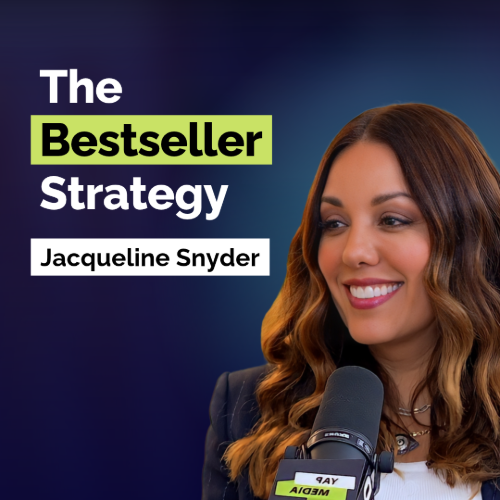
Jacqueline Snyder: Stop Chasing Sales! How to Build a More Profitable Product Business | Entrepreneurship | E424
Starting a business has never been easier, so why do so many entrepreneurs struggle to turn a profit? Jacqueline Snyder, founder of the multimillion-dollar business The Product Boss, believes that profitable growth isn’t just about selling more products or working longer hours, but making smarter business decisions. After years of working 70-hour weeks, she restructured her business and achieved 30% more profit with 30% less personal involvement in just 60 days. In this episode, Jacqueline shares how entrepreneurs can identify profitable bestsellers, fix hidden profit leaks, and make more sales without working themselves into the ground.
In this episode, Hala and Jacqueline will discuss:
(00:00) Introduction
(01:36) Why Modern Businesses Struggle With Profit
(04:33) Jacqueline’s Early Entrepreneurship Journey
(09:24) How to Identify and Grow Bestsellers
(15:31) How to Price Products for Higher Profit Margins
(24:14) Hidden Profit Leaks That Drain Revenue
(26:13) How to Grow Sales Without Relying on Paid Ads
(29:09) Social Media Strategies for Product Businesses
(39:00) Building Trust and Community Beyond Online Courses
(47:50) Fix My Product Business With Jacqueline
(1:07:52) The Three Stages of Entrepreneurial Leadership
(1:11:23) Hitting 30% More Profit With Less Work
Jacqueline Snyder is an entrepreneur, product business expert, and the founder and CEO of The Product Boss, where she helps creative entrepreneurs build and scale profitable businesses. With decades of experience in fashion, product design, and business strategy, she has advised more than 100,000 businesses on profitability, distribution, and operations. She previously founded Designer Consulting Co-Op and created Cuffs Couture, an accessories brand worn by celebrities including Kim Kardashian and Carrie Underwood.
Sponsored By:
Indeed – Get a $75 sponsored job credit to boost your job’s visibility at Indeed.com/profiting
Shopify – Start your $1/month trial at Shopify.com/profiting.
Northwest Registered Agent – Get a complete business identity with Northwest. Visit northwestregisteredagent.com/YAPFree and start using free resources to build something amazing.
HeyGen – Create AI avatar videos without constantly being behind the camera. Get your first three videos free at HeyGen.com/profiting.
Life at the Speed of Play – Learn how to test ideas quickly and identify the ones worth pursuing with Mark Pincus’s book. Get two books for the price of one at getmarksbook.com/yap.
Whatnot – Grow your business through live shopping, community, and real-time connections with buyers. Search Whatnot, W H A T N O T, in the App Store and start selling today.
MOD – Connect with licensed medical providers for modafinil to support sustained energy, focus, and alertness. Visit MOD.com for a free consultation and get 10% off your first order plus free shipping with code PROFITING. See the website for important safety information.
AG1 Next Gen – Support your nutritional foundation with vitamins, minerals, prebiotics, probiotics, and superfoods. Get a free Immune Support Bundle with your first subscription order at DrinkAG1.com/PROFITING.
Resources Mentioned:
Jacqueline’s Website: theproductboss.com
Jacqueline’s Instagram: instagram.com/theproductboss
Jacqueline’s YouTube: youtube.com/channel
Jacqueline’s Workshops: theproductbossworkshops.com
Jacqueline’s Podcast, The Product Boss Podcast: bit.ly/TPB-apple
Active Deals – youngandprofiting.com/deals
Key YAP Links
Reviews – ratethispodcast.com/yap
YouTube – youtube.com/c/YoungandProfiting
Newsletter – youngandprofiting.co/newsletter
LinkedIn – linkedin.com/in/htaha/
Instagram – instagram.com/yapwithhala/
Social + Podcast Services: yapmedia.com
Transcripts – youngandprofiting.com/episodes-new
LinkedIn Creator Club – Skool.com/linkedin-creator-club
Entrepreneurship, Entrepreneurship Podcast, Business, Business Podcast, Self Improvement, Self-Improvement, Personal Development, Starting a Business, Strategy, Investing, Sales, Selling, Psychology, Productivity, Entrepreneurs, AI, Artificial Intelligence, Technology, Marketing, Negotiation, Money, Finance, Side Hustle, Startup, Mental Health, Career, Leadership, Mindset, Health, Growth Mindset, Passive Income, Online Business, Solopreneur, Founder, Networking
Jaqueline Snyder: [00:00:00] If you build a brand and people are attached to the brand, that's what they're gonna pay for. And so I really talk to my clients about not just being a commodity, but being a brand that has some sort of connection to the customer.
Hala Taha: My guest today, Jaclyn Snyder, has been behind the scenes of more than 100,000 product businesses.
Now she's the founder and CEO of The Product Boss, a multi-million dollar company helping creative entrepreneurs build profitable product businesses.
Jaqueline Snyder: My life coach says, "Math, not drama." So let's take the drama out of it and the emotion out of it, and look at your numbers and ask yourself your costs versus what you're selling for, where are the money leaks, and that would be the first thing.
Don't avoid it.
Hala Taha: If somebody has, like, a lot of different products that they sell, what is, like, the tell's tale sign that they have a bestseller? Because you say every business should really have a bestseller.
Jaqueline Snyder: People think that they need more to sell more, but if people can't refer you to something or refer somebody to you for something, it starts to-
Hala Taha: You had mentioned your bestseller, you always recommend, like, increase the price by, like, [00:01:00] 15%.
Why do you think that that's a good thing to do?
Jaqueline Snyder: Again, you look at what the market will bear. If they love it and they want it, they're going to buy
Hala Taha: it. And how do you raise your prices without pissing off your customers? You don't
Jaqueline Snyder: tell them.
Hala Taha: You just do it.
Jaqueline Snyder: You have to do it, 'cause they're not paying attention.
Now listen.
Hala Taha: Jaclyn, welcome to Young and Profiting podcast.
Jaqueline Snyder: Thank you for having me. I'm so excited to be here.
Hala Taha: Yeah. Thank you so much for flying out here. We were talking offline, and I was saying, like, I've seen your podcast all over. Like, we're in the same space, and I feel like your information and your expertise is gonna be so valuable for our audience.
So thank you for flying out here. Of
Jaqueline Snyder: course.
Hala Taha: So my first question to you is that it seems easier than ever to launch a business with AI, with all the stuff that we have on the internet, with Shopify. It's just so easy to actually get a business off the ground, but it's actually harder to be a profitable business in 2026 than it was five or 10 years ago.
Talk to us about why.
Jaqueline Snyder: Yeah, so I think especially in like the product space, I, I keep seeing all [00:02:00] the AI things online where it's like, "You could do this and start, you know, your Shopify store," and all these quick ways that people wanna say it. But the thing about product is that it takes money to start it.
Mm. It takes money to build it. You know, like starting a podcast, starting an online education company or something like that, it, it doesn't take as much resources. I think profitability has really dropped 'cause, one, minimum wage has gone up. Uh, import fees, there's been all of the duty taxes and things like that.
It's much more competitive. But I just think things are costing more, and there's this mindset that comes out where people want things cheaper, but the cost of goods is everything. And I live in LA.
Hala Taha: Hmm.
Jaqueline Snyder: And so I always joke about how my organic free-range eggs are $14. And then people online are like, "Then get chickens."
And I was like, "Great. I live in LA. I can't get chickens." But everything costs more now. And, um, what happens, I think sometimes, is that the customer doesn't necessarily come up with the cost of goods coming up. And so there's, there's more to it than just, you know, saying like, "I got to be profitable."
Hala Taha: I totally agree.
And the [00:03:00] other thing is that even though you can use AI, for example, to launch your business, it's actually very expensive to use AI, right? It costs money. Everything costs money- Yeah ... even though it seems like so easy to do. So you've got all these different systems, right? You are the owner and the inventor of Product Boss, and you basically teach people how to have successful businesses.
And you've got five different systems that you talk about. Can you walk us through at a high level these systems, and which ones tend to be the weakest usually for entrepreneurs?
Jaqueline Snyder: So entrepreneurs are squirrely, and they love all ... They have so many ideas, and they love every idea that they have. And so I would say that one of the very first things that I do with clients is really talk about focusing and leaning into their bestseller.
And so bestsellers are the number one system that we've basically, I think one of the biggest differentiators for us at The Product Boss, people think that they need more to sell more. And a lot of times, the first analysis I have with people when I talk about their product, where they're at, is like, "What's your bestseller?"
'Cause you have to double down on what the bestseller is. Um, what people want is easier to sell than the [00:04:00] thing that people don't want. Mm. So I'd say that was probably one of the, the biggest ones. The other thing that people miss is, like we talked about, profitability. There is cost of goods to product. I think that there's this misnomer, everyone's like, "Well, I don't want to be in debt."
I'm like, there's not debt. It's you're leveraging cash, especially with product. Because sometimes, like I come out of the fashion industry, it might take us an entire year to design, develop, produce, get it shipped in, then get paid by the stores. And when I worked at big stores, um, or for big stores, they pay 90 days later.
So cashflow is a huge issue, and so profitability is the place that keeps the company going.
Hala Taha: Yeah. And we're gonna get into all the different profit leaks you talk about. Mm-hmm. And we'll really dig into the bestseller stuff. But first I want to hear about your story, because it actually revolves around kind of having a bestseller.
You invented something called a couture cuff.
Jaqueline Snyder: Mm-hmm.
Hala Taha: Tell us about that, and how you first launched and got your first customers.
Jaqueline Snyder: Yeah. So it's Cuffs Couture, and it was from my partying days back in Hollywood. Like, I was in my 20s, and, um, didn't want to carry a [00:05:00] purse. I had a best friend who, like, had the Mary Poppins purse that had- Mm-hmm
all the stuff in it. And for me, I was like, I literally just need my lip gloss, my credit card, my keys, and I'm good. And so, um, I invented this wearable wrist wallet, but it was more like an accessory where it looked like a bracelet or something cool that a cool girl would want to wear when she went out partying.
And What I did is what I teach so many clients, is I launched a website, I invested in a website, an e-commerce platform. This is pre-social media really being what it is now. We're so lucky now- Mm-hmm ... with social. Um, launched a website to crickets. Like, nobody bought. Nobody knew I existed. I was use- I always joke, I'm like, "Nobody's typing in wearable wrist wallets to wear out with your friends."
So I had to really pivot and I wasn't running ads. I didn't have the cash for that at that point. I pivoted and I got wholesale, so I got onto other people's shelves in front of other people's audiences, and then also in-person markets, um, where... You know, I'm in LA, so I could do s- where the cool girls go and shop, get right in front of them and get feedback and get them to sell.
And so I really did that, and then we were on shelves in LA, [00:06:00] and Carrie Underwood discovered my products. Oh, wow. Kim Kardashian wore my stuff. So I have, like, huge names that were discovering it because it was on shelves in front of other people's audiences, versus me having to pay to get their attention.
Hala Taha: So she just said something called other people's audiences. Mm-hmm. We've all heard of OPM- Mm-hmm ... other people's money. Talk to us about what OPA is.
Jaqueline Snyder: Yeah. I call it my OPA method. I'm like, "OPA." So one of the hardest things to do, especially for e-com brands, is to run ads to your website to strangers and have them convert on your website.
And I'll say this is particularly for a lot of people who are bootstrap that are figuring it out on their own, and I did it. It went to crickets. Again, no one's googling, and there's no way to do that. Yeah. I think we're in an AI moment right now where there is... We're teaching our clients how to be searchable and found on AI.
But let's go back to Google. And so really the idea here is how do people discover you? And I'm like, the places I've always taught is multiple sales channels, multiple distribution points. In stores, you discover stuff [00:07:00] in stores that, you know, you don't have to know the brand. A lot of times you're not like, "Let me look them up on social and see if they're on social too."
If you like it and you're there, you buy it. In person markets, Amazon, last I checked it was like one in four households, um, had Amazon Prime.
Hala Taha: Mm.
Jaqueline Snyder: So they trust the platform, their, their credit card's already in it, and so they discover your product there, they do that. Or marketplaces like Etsy. So I usually teach my clients how do you go where your customer is- Mm-hmm
where you don't have to pay for the traffic immediately. The traffic is there, you get to present in front of it, and then we get to work on driving traffic to your website.
Hala Taha: Yeah, and for so long the focus was online, but now in-person events are becoming popular again. Mm. Especially with younger audiences, right?
Jaqueline Snyder: Oh, it's insane. So what's kind of crazy is in 2026 it's still five out of six dollars are spent in person.
Hala Taha: Oh.
Jaqueline Snyder: Still.
Hala Taha: Whoa.
Jaqueline Snyder: Yeah. I don't know how much of that is grocery, but the, the consensus is five out of six dollars are still in person. And Gen Z is bringing back the mall, which makes my like '80s and '90s self so excited.
Uh, my [00:08:00] kids like to go to the mall again. And so if you actually look at malls, you can see that a lot of the stores happening in the malls are for younger kids. Like, they're kind of like those teenage stores. Um, and then, you know, the Create Cultivate had like this incredible women's festival, and there
I had multiple clients that had booths there. I have like goosebumps telling you that because I'm just so proud of my clients. And so people are wanting, in the age of AI- Well, at one point we were analog and we're like, "Let's go digital." Now in the age of AI and everything being digital, and I think coming, you know, the last six years of being in our houses or working from home, people really wanna experience people again.
I just believe that people are always gonna be where people are. And think, I just want everyone to think about, like, what they've discovered in real life. I actually wanna say, um, the HomeGoods stores and, like, TJ Maxx stores. Mm-hmm. So HomeGoods, if you think about HomeGoods, you go in there and there's only ever, like, two to four things of, of, like, a vase.
Not- Mm ... you know, there's like you're in discovery. Yeah. People love to discover. They feel like they're at a market and they're discovering something new, and they know, "If I don't buy that one vase, I won't be able [00:09:00] to get it later."
Hala Taha: Mm-hmm, like there's not so many of
Jaqueline Snyder: those- Yeah ...
Hala Taha: vases at
Jaqueline Snyder: HomeGoods. And so they have- Yeah
to buy it in the moment.
Hala Taha: Yeah.
Jaqueline Snyder: So, you know, they feel, like, excited, "What am I gonna discover?" They go, they explore. Sort of like a marketplace. HomeGoods is just, I think they just opened up 800 new doors.
Hala Taha: Wow.
Jaqueline Snyder: Which shows the idea of in-person and discovery and what people are craving.
Hala Taha: I love that. That's so, like, insightful.
Like, I didn't even realize that that was going on. It's cool, right? So let's talk about your bestseller strategy. If somebody has, like, a lot of different products that they sell, what, what is, like, the tell's tale sign that they have a bestseller, or, like, what should they be thinking about? Because you say every business should really have a bestseller.
Jaqueline Snyder: Yeah. I call it your hero product or your core collection. So if we think back to shoe companies, for example, like TOMS Shoes when TOMS Shoes came out, or Havaianas, right? It was one shoe and multiple variations. They didn't think that they were gonna have high heels and sneakers, and it was, like, one shoe, variations.
Um, or there's a core collection, so if you think about, like, a cosmetic brand or skincare, they're creating [00:10:00] a regimen, so it's, like, a few different things that they're gonna put on. I come out of fashion, so we had collections. When I used to design swimwear, I knew we were an Italian lingerie company, and people loved the skimpy stuff.
So if I was designing a collection for swimwear, I had lots of tie-side bikinis, tie-tie tops, like tiny little bathing suits. Mm-hmm. And then maybe I'd have one Um, one piece. Because you've gotta look at what the customer wants. So when we think about best sellers, a lot of times I tell people the Pareto principle is 80/20 rule.
And when they really look at their numbers, they realize that 80% of their revenue is dr- driven by 20% of their products. What happens, I think, is people think that they need more to sell more. If I had more things to sell people, more people would buy from me. But if people can't refer you to something, or refer somebody to you for something, it starts to, it starts to get messy.
So candle companies can have lots of variations of scents. Jewelry, you might be like, "Okay, I do really well with my necklaces and my thin chain necklaces." [00:11:00] So maybe you're not gonna make chunky necklaces, and you're not gonna put all your money into bracelets or earrings if they're not there. So I think it's really looking at what the customer wants and what you're best at, and to put more of your focus there, 'cause the revenue's gonna be driven from it.
Hala Taha: Yeah. And you always say to not reinvent the wheel. Like, just iterate on your current product for, like, a slightly different audience or tell us more about that.
Jaqueline Snyder: Yeah. So I say you can't reinvent the wheel, but you can redesign it.
Hala Taha: Mm-hmm.
Jaqueline Snyder: I always go back to Juicy, so I'm just gonna, like, fully date myself-
on this podcast. And so Juicy Couture, if you think about them, I actually bought, way back in n- like '97, denim from Juicy, and this is prior to them ever coming out with the tracksuits. And once they hit on the tracksuit, they made every single variation of it, like every color. They made shorts. They had ones with puff sleeves.
Mm-hmm. They had all these different variations. And I bring that up a lot, because I'm like, you think those women wanted to keep making every... Like, they were probably, "Please don't show me another piece of velour fabric to look at a color." But the money, the money was there.
Hala Taha: Yeah.
Jaqueline Snyder: And so what I do with my clients [00:12:00] is really just thinking through, like, well, where is the money?
Where- And you wanna run it long enough that it still generates, but not too long that it tanks the company, and Lululemon's doing that right now. Lululemon, like, went off the cliff because they didn't, they didn't change fast enough. So you're saying Lululemon took it too far. Lululemon did not update their styles for too long.
So if you think about Alo and Lululemon, like Alo stayed really trendy and sexy. Lululemon was like, "Nope, we're gonna stay with the same styles, the same basics." But the customer started to shift. Mm. And so they've just, I think they've just gone down about 20%, um, in their, you know, revenue because they just did not update the best seller or update the best seller to the times.
So if it was still leggings- Let's keep leggings going. But they missed actually, women aren't wearing leggings as much. They're wearing more of like the track suits and sweatpants.
Hala Taha: Mm.
Jaqueline Snyder: Yeah. And so they didn't shift fast enough into that.
Hala Taha: So aside from sales, like obviously with your bestseller you can see like this one generates the most revenue.
Mm-hmm. But what other KPI should we be looking at for our bestsellers?
Jaqueline Snyder: [00:13:00] Yeah, well, I, I think one of the things to talk about is the more you make of something, the cheaper it is per unit.
Hala Taha: Mm.
Jaqueline Snyder: So when, when you're making something and you're able to get multiples of the jars, the raw goods, and you're getting...
The more you get of that, the lower you can bring the cost down to make the product, and labor changes and everything. So really with your bestseller, I think it's also profitable. I talk about a client oftentimes that when I did look at her bestseller, it ended up being a product that- Front end was bestseller.
Back end was so problematic. It had breakage, customers were returning it a ton. Um, it was taking up so many resources from a financial standpoint and team standpoint. So we actually had to do... I- you know, these authors say, "Kill your darlings." And we had to kill the darling and say, "Okay, well what's your second-best seller?"
Which was another product that was actually a much better product. She shifted to that, created all these variations of it. She did so well she stopped selling wholesale, 'cause she was selling out every week and was able to sell direct to consumer. So I think we have to look at the profitability [00:14:00] behind the product, the complexity of it.
Um, and then where there is always the paying, it's, here's the deal. Entrepreneurs get bored, and they move on before the customer's ready to move on. Mm.
Hala Taha: So true.
Jaqueline Snyder: So you gotta keep... It's like, like I said, about the Juicy Couture track suits, it's like, it might make you crazy, but I'm like, "Do you, would you rather make money or be creative?"
I'm like, "Let's make money."
Hala Taha: But to your point, like, you can't do the same thing forever. At, at some point it gets stale. So like, what are the signs to know, all right, it's time to pivot, or, or how do you pay attention to better?
Jaqueline Snyder: One of the things a- as a fashion designer, my whole entire job was to pay attention to culture and to travel and see what's going on.
It's kind of a superpower that I have, that I can be out and just see, oh, I see this thing coming. Um, and being on the back end of, you know, I've been on the back end of, like, 100,000 plus, uh, businesses. So I think what you have to look at is are the numbers dropping, and why? Like, what's happening and why?
Sometimes there's something broken in the business, but if the trends are moving on, then you might wanna shift it. So I'll go [00:15:00] back to candles. Let's say candles, people were doing it and they were doing it with synthetic scents and synthetic wax, and then there was a major shift towards health and a conversation about what you're burning in your house.
Hala Taha: Mm-hmm.
Jaqueline Snyder: If your clients care about it, you either need to adjust to what your clients care about, or you keep being, you know, there's other brands that still exist because people don't care, they just want the cheaper product. So then you have to just pay attention to culturally and then match it back to your customer and say, "Is it time?
Is my customer asking for something else, or is something broken on the back end?"
Hala Taha: Uh, let's talk about pricing, 'cause you just talked about the cheapest price.
Jaqueline Snyder: Mm-hmm.
Hala Taha: With platforms out there like Temu- Mm-hmm ... and things like that, what's the problem with wanting to be the cheapest out there?
Jaqueline Snyder: Yeah. It's really hard to race to the bottom, and whenever...
I always tell my clients, I'm like, "You're not competing with Target. Like, Target is literally not your competition, or Walmart. We've gotta compete with small brands and sell to people who have money." Um, as a small business, the privilege to be able to sell to people with money is great, and I think- A lot of my clients [00:16:00] might start locally, and their environment does not match necessarily the product.
Mm. So it's kind of thinking bigger and thinking on a national scale or an international scale. Um, the problem with racing to the bottom is there's no margins. If you're coming out with a product that is specifically margin-oriented, cheap, you wanna sell y- lots and lots of units- Mm-hmm ... and you're able to scale, great.
Most people aren't necessarily there yet, and I ... And so Temu has knocked off several of my clients. Really? So I'm very anti, um, Temu. They'll actually, like, use their physical pictures and put it on there. I even had a client knock herself off so she can compete with Temu.
Hala Taha: Oh my God.
Jaqueline Snyder: Yeah. And there's some changes right now happening, um, with, uh, imports and, and that's gonna help maybe even the playing field with them.
But the thing is is if you build a brand, going back to Alo and lululemon- Yeah ... if you ... We can go on Temu and get knock-offs of all of that right now. Mm-hmm. But if you build a brand and people are attached to the brand, that's what they're gonna pay for. And so I really talk to my clients about not just being a commodity, but being a brand that [00:17:00] has some sort of connection to the customer, and yeah, we'll lose a percentage of clients to cheaper stuff, but if you want your business to thrive, we've gotta sell to the right customer and match 'em.
Actually, I ac- tell a lot of people to raise their prices because a, a lot of times when you raise your price you actually start to attract a better customer.
Hala Taha: Mm-hmm.
Jaqueline Snyder: They might not even be buying 'cause they might think it's cheap, what's wrong with it. I totally agree. Um, can you give us an example of a type of product that makes sense to try to be the cheapest versus a product that doesn't make sense.
Yeah. So I work with a coloring book company. She's actually based out here in Austin. She does coloring books for adults. And it makes sense to be cheaper. What's funny is she started at $5, she's gone up to $8. She's selling at Whole Foods, Target, like, all these huge places. But as a coloring book, we've gotta think, well, what's the value behind it and will customers reach that?
Plus she can sell tons of those units. So I would say products like that on the cheaper side. Um- When I'll go to, like, pricing higher, I joke about Oil of [00:18:00] Olay, like the product. So if you go to a CVS or you go to a grocery store and you're trying to buy skincare, but then La Mer is $200 or $300 for two ounces, I ask clients, like, if you looked at them, which face cream do you think would be the thing that would do good to your face?
Yeah, be better. And they always pick the more expensive one.
Hala Taha: Yeah.
Jaqueline Snyder: And so we've got to think again to the, the customer, what they want, what the end result is. Because even if you're... You know, I've got my pricing margins and markups, but sometimes we could mark up more and more and more because the customer will pay it.
It's better for you to have a bigger margin, um, and, and it actually equates value for them.
Hala Taha: Now how about something like a candle? Like you can have a candle that's 30 bucks, and you can have a candle that's 300 bucks. If it's the same type of candle, what's the difference there in terms of being able to charge higher?
Jaqueline Snyder: Yeah. It's the brand. And I think that's where people get lost, and I- I've seen this happen for people on Amazon and Etsy, where they're making a product, and when customers come find it, they're looking product to product. Where's the [00:19:00] cheapest mama necklace I can get on Etsy, or the best reviews, but they may be looking price to price, or on Amazon, towel to towel.
With thinking about the candle business, I mean, I actually did just burn a $300 candle- ... but I didn't realize. So my sister-in-law gifted me this candle. I hope it was
Hala Taha: good. It
Jaqueline Snyder: was so good. And I found out... So she gifted it to me. She's, she is, uh, very wealthy. Like she wears Chanel. Like that's her clothing- Mm
her everything, not just a bag, but like what she wears. So her price point at that, a $300 candle, was a giftable product the same way that a t- $30 candle would be giftable by someone else to someone. So I think we've, we're attracting the right customers. This is what I was saying about the markup. They could literally be the same price for the jar and the wax and the wick and the fragrance.
All of that can be the same, but it's the brand that you've established. I, I joke about Chanel bags actually. Like you can knock off a Chanel bag, but they're buying the brand name to it- Mm-hmm ... and what's associated with it. And so I think that's, that's the difference between it is the brand is the thing that's going to [00:20:00] elevate it-
Hala Taha: Yeah
Jaqueline Snyder: or disqualify it for some people.
Hala Taha: And I also feel like having such a high price point- Makes it exclusive by default. So these people are like, "Well, only, only like, you know, the richest people can buy this $300 candle, therefore it is more valuable- Yeah ... because so few people can actually buy this and gift this."
Jaqueline Snyder: Yeah. I mean, that's a play even with, like, Hermès and Kelly bags, right? Mm-hmm. Like, you have to spend a certain amount at Hermès to even be able to have them position and sell you one of these bags. And so that exclusivity attracts a very specific customer. Nespresso did this back in the day. We lived in New York City, and, um, there was a Nespresso cafe, and it was before you c- everyone had them.
And so we felt so bougie. They gave us this little leather, um, key fob.
Hala Taha: Mm-hmm.
Jaqueline Snyder: We'd go in. We'd scan it. They'd be like, "Oh, n- nice to meet you, Mrs. Snyder. And, like- Mm ... this is, these are the coffees that you buy," and they had it all in the register, and they'd pour me a Nespresso, and it was so up-leveled.
Obviously, the brand has grown, and it's, and it's been [00:21:00] more to the masses, but they were on Fifth Avenue With the people that lived in New York City, and they were creating a vibe so that then eventually it could, let's say, I wouldn't say dil- dilute, but then be more mass-market.
Hala Taha: Yeah. It, like, started off really, really exclusive.
And ex- I remember, like, Nespresso used to be, like, very expensive. Yeah. Okay. You actually have a really cool formula for pricing for, like, most products. You say basically you double for, for wholesale, and then you double that for retail.
Jaqueline Snyder: Mm-hmm.
Hala Taha: Help us understand that framework.
Jaqueline Snyder: Yeah, so that's a super simple, simple, like, just, you know, if we were to work together, we'd really get into the nitty-gritty.
Yeah. But it's cost of goods times two at least. Um, and then ti- that's your wholesale price. And then your wholesale price times two at least for your retail price. Retailers typically, at least in the fashion world, will actually mark up from wholesale to retail about 2.2% to 2.3%. But that's, like, the most basic because so many times I see people from cost of goods, they're not including the right labor.
They're not including all the pieces that need to go into costing of the product. And then some people are like, "Well, I'll [00:22:00] never sell wholesale," so they, they wanna skip over that middle part. And it's just not gonna work because in this moment, if you make that decision, fine, but I'd rather, I'd rather you guys make as much profit as possible- Yeah
and as much margin because that allows for the business to grow. That allows you to pay yourself, build a team. And so yeah, it's a two X times two X, and then depending on the business, if it's again, like, skincare, or if it's jewelry, or if it's fashion, we could go up to, like, you know, cost of goods times four times four.
It just really depends on the category you're in.
Hala Taha: Yeah. This might be a really dumb question, but for people who n- are not in product, like, what is exactly wholesale? Is that just, like, direct to consumer, or is that, like, what, what is whole- Great question. Yeah.
Jaqueline Snyder: Yeah. So wholesale is what we sell it to the stores for before they sell it to the customer.
Hala Taha: Got it.
Jaqueline Snyder: Yeah.
Hala Taha: Okay.
Jaqueline Snyder: So if I was making a product, like my cuffs, they were $5 to make. I sold them $11 wholesale. And so let's say Boutique A bought it for 11 bucks, and then they sold it to the customer for $25. That means, 'cause we're in partnership with our retailers, so it allows profit and margin for us [00:23:00] from cost of goods to wholesale, and then wholesale to retail price is what the store will make.
Obviously, if you sell direct to consumer- There's way better margin. Um, but then, you know, you're dealing with your own marketing and, and all the other bits that come with it. And
Hala Taha: you don't wanna be significantly cheaper, I guess, than what they sell in the stores, so then you'll end up making a lot more money online then because you'll be at that higher retail price without the middleman.
Jaqueline Snyder: Yeah. I always tell people, "Don't ever undercut your retailers. They're your partners." And so when I sold to Macy's or bigger brands like that, there's MSRP, the manufactured suggested retail price. You'll see that on a barcode.
Hala Taha: Mm.
Jaqueline Snyder: That's because when you're selling to bigger stores, you can't, um, undercut like a Macy's or a Whole Foods, right?
So when we start to expand into these bigger retailers, there's more rules at play. But listen, you guys, like, if they're in a s- shop, we want them to buy from the shop. They're your partners. We don't want them to jump on your website and like look at your website, and it's undercutting them or go to Amazon.
In fact, a lot of my clients price higher on Amazon because the shipping and the 2-Day is [00:24:00] included. So yeah, so it's really the amount that you sell it for, but then if you're selling direct to consumer, the margin's there for you. And so that's why this mix of sales channels and distribution channels, that means we've got little pieces of the pie everywhere, and so if one faucet turns off, you've got another one you can turn on.
Hala Taha: Yeah. And for my listeners out there who have agencies, I have a podcast network and an agency, and I also do a similar formula for whatever service that I offer, whether it's running people's LinkedIn or Instagram. We usually just double how much it costs to actually do that service-
Jaqueline Snyder: Mm-hmm ...
Hala Taha: in terms of pricing it because that way, like, we can incorporate our tools, like executive leadership, whatever, and then we, we always end up at like a 30% profit margin because there are other things that cost money that you, like, don't really realize when you're, like, pricing it out.
So talk to us about some of these profit leaks in product businesses.
Jaqueline Snyder: Yeah. So, you know, one of the things that people don't think about is just marketing expenses. Mm. So, um, if you're selling on a channel, like if you're selling on [00:25:00] Amazon, there are massive amounts of fees for the seller that come out. If you're selling on Etsy, there's a percentage they take out.
People sometimes are like, "Well, I don't wanna do that. I don't wanna get on it because, um, you know, it, it's gonna cost me money." But when I was running my company, I didn't have access to all these tools. I had to do it all myself, so like it's the cost of doing business.
Hala Taha: Yeah.
Jaqueline Snyder: And so a big profit leak tends to be that.
I would say other ones is they're not doing the right margin or markup. They don't renegotiate for their, their raw goods. So there's so many times that we can go back in and save money versus make more money, so how are you going back in and asking for the votives, like the candle vases to be less, or you're buying more in bulk for wax so you can get that lesser.
Um, there's a few levers that I have them pull when it comes to that, but really it's this idea of like how do you save money without- affecting the quality of it. And, um, and then also that's why pricing is so important, is that you have the space for these margins for any of these deductions. You know, listen, I, I sold to, like, revolve.com at one point, [00:26:00] and we had to give an 18%-off discount for marketing and for selling to them.
So, like, they will take discounts as well. So we just- if you have the right margin, you've got the room to move things around.
Hala Taha: And one of the ways that you can, uh, save on marketing is actually back to OPA- Mm-hmm ... Other People's Audiences. Mm-hmm. Like podcasts, like you're on. I'm sure I'm gonna be generating sales for you.
What are some other audiences where you can just, like, collab and not necessarily have to pay for traffic, like paid ads and stuff like that?
Jaqueline Snyder: Yeah. So I call it POP marketing, which is paid, organic, and partnership. Paid is what we're talking about, and, you know, there's... The thing with product is if you pay for ads, it's like cost of acquisition plus your production, so it's very fine margins there.
Um, so organic is social. Organic is getting on the podcast. Organic is whenever you can get in front of them, or traditional word of mouth. Like, we discover- Yeah ... like, if I was like, "Oh my God, your lashes are so cute. What's your mascara?" Mm-hmm. You'd be like, "This is what it is," and I'd go buy it. So that's the thing.
I think it's [00:27:00] the organic part of it, and we're so lucky in this day and age to have access to humans around the world. Yeah. I would've had to... You know, I had a buying group in Japan that I had to work with to get to Japan. Organic's like just whenever you can get in front of people. I'll go back to partnership.
Yeah. So partnership is with creators. Partnership is collaboration. So, you know, if you're a baby brand and you sell pacifiers, and this person sells baby pajamas, can you collab together and get in front of each other's audiences? It's, it's what we do here on podcasts, right? Yeah. Um, and so partnership is anything with creators, anything with collaborations and brands, pop-ups, anytime that you can just be in partnership with people.
And so it- marketing really crosses over with sales. Um, you know- But I really dig into people doing organic and partnership before they ever pay for ads.
Hala Taha: Yeah. At what point do you feel like somebody is ready for paid ads, or is it a strategy that you never really recommend?
Jaqueline Snyder: No, I do. I do recom- recommend ads.
I think the difference is, it just depends on their sophistication in their business, and do they have the money to run it, [00:28:00] 'cause you're gonna pay an agency. Don't recommend you guys run your own ads if you don't know what you're doing.
Hala Taha: Yeah, you'll just waste- ... a lot of money, trust me.
Jaqueline Snyder: It's so much money, and it's needing a lot of content from us.
So, like, you really need to do that right. The problem with paid ads, if your website doesn't convert, you're driving traffic to something that's broken, and you've three seconds. I call it the grandma test. Yep. If my grandma were to land on your website, would she know what you make and sell, and would she know what- where to go, what the user experience is?
So if we're gonna run traffic there and it's gonna break, then what's the point?
Hala Taha: Yeah.
Jaqueline Snyder: Um, so there's two issues usually. It's, it's traffic and then conversion. And then when we're converting, are you making enough money, again, that it pays back for the ad, that it pays for the product, that it pays for shipping?
And then what we do, we have a formula where you've acquired the customer, then it's the lifetime value. Like, how quickly can we get them to come back in and buy again once you've paid to acquire, acquire them? So I think some clients 100%, we've done it in their first year. Because they're like, "Yes, I want this.
Yes, I'll pay to get a site that converts really well. I'll pay for my user experience and for ads." And then other people are like, "Well, you know." I just, [00:29:00] I'll never tell you to waste your money, ever.
Hala Taha: So let's say you're a founder who doesn't have a lot of resources, but you've got access to Instagram, and TikTok, and LinkedIn.
You say there's really a difference between posting and promoting, and a lot of people kind of mess that up. They think, "Well, I'm posting all the time, but I'm not generating sales." So what are, like, the red flags of a creator that might be posting a lot but not generating sales?
Jaqueline Snyder: Yeah, so you have to really think about why someone's following you.
I think social has been taking a bit of a turn. I mean, if you guys follow brands, you may not be buying off that brand page, right? Like, I follow Nike. I don't, Nike doesn't pop up in my algorithm and that's when I purchase. Mm-hmm. But maybe I see someone I love, like a creator wearing it. I'm like, "Oh, I like those," and I see them in a store and I'll buy them.
Um, promoting really what people miss is the idea of promotions. So what are we focusing on every single week of your business? If you are a bigger brand, you might be sending five emails a week. I want everyone to send at least one email a week. And so if it's like, "Okay, I'm dropping my [00:30:00] fall collection.
Here's the fall collection." And then on social we wanna really highlight the fall collection, why it makes sense to the client in the season. They can see it being worn or used in the environment, so they're, they're starting to imagine themselves using it. Then the next week might still be the fall collection, but the bestseller in the fall collection, and now we're, like, highlighting the bestseller.
And I think that, you know, I see so many people post like, "I'm at this market this week." Okay, that's turning it into like an informational page.
Hala Taha: Yeah.
Jaqueline Snyder: Versus how do we engage with it? I used to... There was this brand a long time ago that was a pajama brand, and as they were coming up, they had all their beautiful like model photos.
They're gorgeous. But the things that went the most viral were pictures of baby animals sleeping.
Hala Taha: Hmm.
Jaqueline Snyder: So think about it. It's a pajama company, it's associated with sleep, and they were going viral with the baby animals sleeping, like a little duck falling asleep- Mm ... or a bunny. And so while it didn't sell the product, if social media is social to be engaged with and to share and to comment and to like save, then we've got to create moments like that where they associate it with the brand and they [00:31:00] follow and they engage.
So they'll see the models, but they're also enjoying the content you're putting out there.
Hala Taha: Yeah, and then they're basically raising their hand and saying, "Hey, you can DM me," and, you know, it will be receptive 'cause it's like, "Hey, I noticed you engaged on this content. Here's my link to XYZ product or, or whatever."
So it shows some sort of connection to it.
Jaqueline Snyder: And I think just to add in, one thing that people really love is behind the scenes. So any time you can show how it's made, like manufacturing of it, if you're hand doing it, like anything from behind the scenes, they love it. People love to close a loop. They love to watch something happen.
So in a time if you're a small business and it's you as the face, take them along on the journey, 'cause that's why they're following. They're not following to be sold to again.
Hala Taha: Now, what if you think you have a boring product? How can you take them behind the scenes?
Jaqueline Snyder: I mean, I think we think it's boring 'cause we're so in it.
Hala Taha: Yeah. Because people would s- even if it's like making toilet paper, if you go to the factory of how you make the toilet paper- I'd love to see that,
Jaqueline Snyder: yeah ... it's interesting. Yeah. Show me how the paper is compressed. I think, you know, whether you're packing [00:32:00] boxes and showing yourself busy. I've seen reels go viral where somebody's just printing out all their labels, and people watch it.
Um, because like you asked me what wholesale was, people who aren't in product, they don't even realize, oh, those labels have to be printed- Mm-hmm ... and there's a machine for that.
Hala Taha: Mm-hmm.
Jaqueline Snyder: So I just think that there's so many different ideas. I've had people do packing boxes like, "Oh, this client ordered this and this," and they put it in.
TikTok did so well, I got so sucked into this a few years back, where it was interactive, 'cause live selling is doing really well too right now. And, um, I was watching these women with like crystal shops that had these huge vats of crystals, and then you would actually like comment. It was very live, and you're like, you comment, "I want a five-pound bag."
And then they'd be like, "Oh, hey, Jacqueline." And they'd be scooping up the crystals and be like, "You got this one and this one." Wow. And it was interactive. And so you just really have to think like we've got moments, how do we engage with them and keep them on the channel and keep it fun?
Hala Taha: Yeah. What do you think about platforms like Whatnot?
Jaqueline Snyder: Yeah. So it is- Not aligned probably most likely right now in its current state for people with brands. Mm-hmm. It's [00:33:00] a lot of people doing off-price things or discovering, you know, here's a Louis Vuitton wallet and, or cheap, cheap, cheap stuff. Okay. The struggle that my clients have had is that they want it to be so cheap, like it starts at a dollar.
So Whatnot like has this way, if you haven't been on it yet, it's live selling, and then it has this way of, "Oh, here's this vase again," and it's like starting at a dollar, and then it's like you keep putting ... It's like a auction.
Hala Taha: Got it. So it's good for like if you're like trying to get rid of like your designer bags or something
Jaqueline Snyder: like
Hala Taha: that.
Yeah. Okay.
Jaqueline Snyder: It's just not yet built for a brand. I'm sure some companies, people might message me and be like, "No, I'm doing it." Great.
Hala Taha: Mm-hmm, yeah.
Jaqueline Snyder: Ki- this started actually, is I used to work with one of the top 10, like, top 10 sellers of, um, LuLaRoe. Did you ever know that brand?
Hala Taha: Um-
Jaqueline Snyder: So it's like-
Hala Taha: It kind of sounds familiar
Jaqueline Snyder: it was like an MLM direct sales. Okay. Th- there was a whole documentary on it. And I used to work with these people that were making a million dollars a month from their, their barn, selling on-camera in this kind of auction style. And so these direct sellers, um, were doing this behind the scenes. They were [00:34:00] making a million dollars in apparel sales from a barn, and it also had, like, a downline and all this.
And so live selling works, especially if they're in... It goes back to the home goods situation, where it's in discovery. So LuLaRoe worked really well because it was like, "I have one lipstick legging in this size," and people are like, "I want it." Yeah. "And I've got this one T-shirt." And I think that works better than-
Hala Taha: Hmm.
That makes a lot of
Jaqueline Snyder: sense ... "I have a whole inventory of this one bag."
Hala Taha: Mm-hmm. So is TikTok Shop better than for li- Like, what is good for live selling for brands, or is there not yet a platform you think is good for that?
Jaqueline Snyder: If you- I, this is what I tell people about social media. If you're gonna do social media, get good at it.
Stop half, like, doing it and being like, "Why doesn't it work for me?" It's like if you wanna do TikTok, I work with one of the top, top, top TikTok shops. Um, TikTok flies her around, and, like, to s- present on different things, and she's really good at it. So yes, TikTok Shop works, and it's up to certain price points.
There are... It is a cheaper price point to sell on there. Um, so yeah, it's a great platform. I think Instagram never really fully caught up with it. Yeah. But TikTok's [00:35:00] there, and if you're going to learn it and do it, great. Let's go. Yeah. I mean, I interviewed
Hala Taha: Gary Vee, like, a month ago, and he's, like, all- He's like, "Get into live selling."
If there's one piece of advice for young entrepreneurs, it was live selling for him. Yeah, he's- He really believes in it.
Jaqueline Snyder: I think he's always been super behind that. Yeah. And I, I agree to a point, and then we just have the, you need the customer to catch up with it.
Hala Taha: Yeah.
Jaqueline Snyder: So it's like where are you capturing their- I'm not gonna argue with Gary Vee.
He's Gary Vee, right? Yeah,
Hala Taha: of course.
Jaqueline Snyder: But yeah. But, like, it, like, is your customer watching it? And QVC and HSN just, like, filed for bankruptcy, actually, and I was just talking to one of their top, top, top sellers. And, um, I think she might have actually been on this podcast. But I was talking to her about it, and she's a- Forbes
Hala Taha: Riley
Jaqueline Snyder: Yes.
I was just talking to her- Yeah ... like two nights ago. And, um, we were talking about it, and it's like she's so good at selling, she can sell anything. Yeah. And I, I had, like, this secret dream that one day I would be a QVC seller. Mm-hmm. 'Cause I love selling and I love interacting. Well now
Hala Taha: you can just do it on-
Jaqueline Snyder: I
Hala Taha: know
TikTok
Jaqueline Snyder: Shop. I can do it myself. Yeah. Exactly. So, so I think yes, and, you know, I think where QVC and HSN kind of- You know, the, they didn't move where the customer was. [00:36:00] If they moved to TikTok Shops, if they moved to, like, where the customer was, 'cause who watches TV at midnight anymore, right? And so it's just really knowing where your customer is and matching them.
I can't wait until
Hala Taha: one day I have the time to open up some sort of live selling. I feel like I'll be so good at it. Uh, Whatnot is actually one of my new sponsors, so I'm like- Amazing ... I think I'm gonna do, like, a, 'cause I've got lots of, like, designer bags. Mm-hmm. And you just gave me a great idea, that I can basically just, like, sell a lot of my designer stuff in my closet.
Yeah. Uh, and to your point, it's like that home goods model, where it's like, this is, like, size 5.5 shoes, ladies. Like, anybody who's that size, like, you know, come watch my live show.
Jaqueline Snyder: 100%. I think, um- When you have an audience especially, I mean, there are people growing on there without it, and, and you're an early adopter, you can get in really fast.
But when you have an audience, for sure. I think, um, Joy Cho, she's amazing. She's always had this, like, design brand. She would have closet sales, and people in LA would, like, come, and she'd have all of her stuff out, and people would come buy from her, and I thought that was so cool. So she probably is someone who's, like, could [00:37:00] also do it-
Hala Taha: Mm
Jaqueline Snyder: and create it. I mean, Whatnot's amazing. It just hasn't yet worked yet for my clients, I think.
Hala Taha: Yeah. I think it's really cool. Yeah. And it's such a new, it's such a new thing- Yeah ... so I feel like it'll just, like,
Jaqueline Snyder: keep evolving. I wish it would take off for us though-
Hala Taha: Yeah ...
Jaqueline Snyder: because it would be amazing.
Hala Taha: Yeah, great
Jaqueline Snyder: platform.
Mm-hmm.
Hala Taha: Okay. So how about, like, what kind of content we should create? Sometimes it's not really about being, like, overly edited or overly fancy. Like, what has actually worked for you?
Jaqueline Snyder: You know, it's actually funny because I actually will put a stake in the sand and say you don't need social media. So I actually do push back sometimes on social because there's so many brands.
I had a client with a $25 million company that d- she's joined my program for social. I was like, "Girl, you got a $25 million company. You don't need this, right?"
Hala Taha: Mm.
Jaqueline Snyder: Um, but if you're going to participate in social, you've got to know the platform you're on, who's watching, what the customers are wanting.
TikTok and Instagram, like, I work with one of the top TikTok shops, her Instagram is smaller than her TikTok because it kind of converts in a different way. Um, they love to see loops closed, so if you're using the product, if you're dressing [00:38:00] somebody with the product, um, how can they experience it, or how do you associate another feeling to it?
So Nike with Air, like, if you've ever watched the movie Air, it was really about how, uh, Nike got into the basketball game, Michael Jordan when he was young, and sponsored him. And so it was like, how did Nike get into the athletic shoe? They found, really, an influencer back then and then started having the top, top, top basketball player wearing the product, which validated it.
People wanted it. They thought if they wore it, they could be like him. And then it eventually trickled out into streetwear and what it means, 'cause Nike really wants to be presented as it's high performing for an athlete, but anyone could wear it. So I think this is something that we would work on, you know, within your brand and figuring out what it is.
If, if it's cosmetics, is it before and after? Is it people using, um, lash stuff? You know, Kylie Jenner, when she launched hers, it was she had her lips, and she did her lips all the time, and people were obsessed with her lips and how she did them, so it made so much sense to come out with a product and then continue to show how to use it.
So I think it depends on [00:39:00] the product.
Hala Taha: And I know you also do courses. So is there a difference in terms of how you promote courses on social media?
Jaqueline Snyder: Yeah, so courses for me have sort of started to shift away from where we used to be with it, 'cause now I think people just need more support. Like, they... 'Cause I come out of one-on-one consulting.
Yeah. That's what I did for 15 years, and they just are like, "But what about me? What do I need to do?" What I think, though, from... Like, if you're an online educator or a service business- One, it's why are they gonna tr- we're in a trust recession. I'm sure everyone's talking about this trust recession, and I think it'd be with product and with people.
And so it's like, why are they gonna trust you? Like, what about you is attractive to them? Um, what's gonna make them stick around? So there's this idea of the kind of content that they're gonna be like, "Yeah, you get me." And I do really well with quotes. Yeah. Like quotes on product, actually. Okay. Like I'll mock up like a hat that says, you know, things about entrepreneurship, and people love those quote ones because they're like, "Oh, you see me."
And it stops the scroll. Then I think once we get them [00:40:00] into our world, then it's like showing them we know what we're talking about. One thing I actually stole from Hormozi was speaking from stage and then recording myself coaching. Because I've been a coach. I've been... I'm not even a coach. I'm an advisor and a strategist.
Coaching is like a newer thing in the term. I've been a business strategist for 20 years. And so showing me in action, you can't fake that. It can't be an AI carousel of whatever. It's like, this is me in action. So I think the more you can show the differentiator, personality, values, value alignment. Um, like I'm a mom with two kids, so this is what it's like.
Yeah. Plus, this is how I run a multimillion-dollar business.
Hala Taha: Yeah, so you're actually taking clips of you coaching your clients- Mm-hmm ... and you're posting that online.
Jaqueline Snyder: And from stage. So not even Zoom anymore. Like-
Hala Taha: Got it. So like- ...
Jaqueline Snyder: nobody wants to watch a screen with
Hala Taha: a face ... nobody wants to watch a talking head.
No. So you're saying coach, like Q&A on stage.
Jaqueline Snyder: Mm-hmm.
Hala Taha: That's brilliant.
Jaqueline Snyder: Yeah. I love that. I started doing more in-person events- Mm-hmm ... because I do think just, like we talked about with product in the beginning, it's just getting people together, that's [00:41:00] what's sticky. Like- The emotional connections, the real people, the, the, the fact that, like, people become friends and family through all this.
And so yeah, I just did an event a few weeks ago where I was on stage coaching with my mic, and clients were able to ask hot seats, and then it's just the back and forth between it, and it's crushing.
Hala Taha: Yeah. How has the actual offer of your courses changed?
Jaqueline Snyder: Yeah. That's been the last year and change of my business.
Last year, things got really dicey, um, in the first half of the year. It was like, why is nothing working? Part of it, in the beginning of 2025, this is when the whole tariffs conversation came up with products, so product people were already really scared. And then I think coming out of the pandemic, nobody wanted to sit...
Like, it's, like, the last thing we want to do is sit on a screen and watch something and consume it by ourselves in our houses. Um, people want that experience of live. So what I ended up doing was th- thinking about what have I been best, best in the world at? And back in 2007, I started, which was my original company, Designer Consulting Co-op.
That's where I [00:42:00] literally was, like, the designer. I say I was like an architect and a contractor. People come to me with ideas. I'd ideate. I'd make the product. We'd go through the whole process and help them grow the company. This is pre-Product Boss. And so it's like what did they need? They needed human brains.
They needed experts talking about all the different things that they needed. So what I did is I took all my courses and put it into a program called The Collective, which, 'cause I really believe especially as women, as a collective we rise, not by stepping on each other-
Hala Taha: Mm-hmm ...
Jaqueline Snyder: not by being in competition, but literally, like, together we all get to rise together.
And so and that now has live feedback. Like, you can get asynchronous coaching. There's my education, so you can watch specific learning moments. There's AI. There's live sessions every single week. We've got co-working sessions and live events. Mm-hmm. And so that's really the community that I want to create.
And I ca- It's almost like the third school. So it's not design school. It's not business school. It's for the creative entrepreneur that's like, "Okay, how do I build this thing? And I, when I have a question, I actually can ask [00:43:00] somebody."
Hala Taha: Yeah. And how do you de- deal with like not, like for example, now everybody wants like one-on-one, right?
But you're running so many things. Like, it can't possibly be you on every single meeting, every single Zoom call. What do you do to kind of scale yourself when people probably wanna talk to you?
Jaqueline Snyder: Oh, 100%. Um, and they can, but just, you know, it's I can take less of those people, and it's a much higher investment.
So that's what I did in the collective. I built a board of advisors, and I'm continuously, like, building to it. So I have advisors that are experts at, you know, social media or Pinterest or SEO, um, paid ads, leadership and personal development. You know, so AI team. So I've actually built in a board of advisors where I believe that clients can come, and then they can get the advice that they need.
So I'm like, we- we're paying for the experts that you need in your company. Um, and so in this program, we do have this... 'Cause I need to figure out how do you scale one-on-one. Yeah. Right? And so we created this way with our advisors. There's a team of them that my [00:44:00] clients can submit a question for feedback every single week.
They don't need all the questions. If they're working on their website, then we've gotta, like, get feedback on the homepage and then adjust that. Mm-hmm. So that's how they are getting this, like, asynchronous, and then I have advisors that pick up the question and might send a video back, a voice note, um, an email, something that helps move them through the process.
So I think that's the way I've been able to scale it. I do have a mastermind that has... My advisors are also in that. Hmm. So they do get access to me, but I've, I'm starting to outsource. I know a lot about a lot of things. I've been doing this for a really long time, but I don't have to know everything anymore.
Like, I get to really step, be in leadership, and now just hire really amazing, incredible advisors that can do better than I can 'cause they're experts at what they do.
Hala Taha: And so do you hire them full time?
Jaqueline Snyder: No. No, a lot of them are running their own companies. I have some that are clients of mine that wanna come back in and advise.
There's people with agencies. So right now it's really, at this level, it's not yet.
Hala Taha: Is it like a rev share? Like, how are you compensating them?
Jaqueline Snyder: Um, they get paid per [00:45:00] thing that they do, so depending on if it's, like, feedback or there's a flat fee per, per month. Like, it depends on what they're doing. If they're answering questions in the community is different than if they're taking on personal things.
Some of them d- actually, I have two higher levels where those clients get one-on-one calls once a month.
Hala Taha: Hmm.
Jaqueline Snyder: And so they're, it's more of an investment for the client, but then I'm paying the expert for their hour.
Hala Taha: Yeah. I've personally seen, like, how all this course stuff has changed, and I feel like AI has completely just transformed the way that you have to sell courses.
'Cause to your point, people want live- Mm-hmm ... people want accountability. They want something that AI can't do for them, right? So I actually had, like, a LinkedIn course, and now we just, just launched on School. Have you heard of School, Alex, from Mossy's platform?
Jaqueline Snyder: Yeah, I am, I have- Yeah,
Hala Taha: but you've
Jaqueline Snyder: got something on School too?
I have submitted for the... Not yet, 'cause I was like, I think I might be doing too many things. I had submitted to be a part of his, like, creator program. Yeah,
Hala Taha: that's what I'm in, right? Yeah. So we're in there. We can talk about that offline. Yeah. Yeah.
Jaqueline Snyder: I'm
Hala Taha: happy to get you in it. Great. Um, so that's what I'm in.
I'm doing, like, my big launch actually, like, I think, like, two [00:46:00] days I'm doing a webinar, and I'm pushing people to School, and we're gonna have, like, accountability sessions where it's like I give them prompts for the week, and we work together in a session, and I'm gonna have other LinkedIn influencers help me because I can't certainly do, like, to have that much, uh, meetings and stuff is just not possible with my schedule.
So it's like I need to have other people, people on my team, 'cause I have an agency. So I, I was asking you all those questions 'cause it's like I'm actively trying to work through, like, how do I, like, you know, provide value but not necessarily have to be the one that shows up every single day.
Jaqueline Snyder: And I think, I think that's also the big shift.
It's like, it, and I'm not planning on selling my company- Yeah ... but I think the idea of when you're the face of your brand, is it, you know, a lifestyle brand? Is it something to sell? And what I really believe in, and my core tenet goes back to my mom, and she was a creative, but she really fully believed she didn't know enough about business, and she was a mom, and she was an artist and designer.
And eve- she even at one point went back to art school, but then just didn't believe in herself enough. And [00:47:00] I went to design school. I have a bachelor's in fine arts. It was one of the top three schools in the country for fashion. They gave us a quarter of entrepreneurship, 'cause they were training us to go work for other people.
So I think what we miss a lot of times is, like, how do we help creatives build thriving companies, especially when we're creating physical products? And there are tons of people out there that teach, like, kind of, you know, if you wanna source this product and get the million-dollar, you know, whatever launch.
And for me, I really align it with people's lifestyles and what do they want? And especially when it comes to women and they're holding so many different things.
Hala Taha: Yeah.
Jaqueline Snyder: And so I think that thinking about scaling this company, it's great that we have access to all these advisors. What I wanna say is if people, if more information was the thing, we'd all be gajil- Yeah
gajillionaires, right? Podcasts, YouTube, AI, like the bla- We've got plenty
Hala Taha: of info,
Jaqueline Snyder: yeah. Yeah, we all have so much information, so it's like what applies to you, when do you implement it, and in what order?
Hala Taha: So I wanna play a game with you- Fun ... before we go, um, called Fix My Product Business. So I'm gonna give you a scenario, and then [00:48:00] you'll tell me how would you fix this business, what would you do, what would be, like, your next steps.
Sound good?
Jaqueline Snyder: I love this. Let's
Hala Taha: go. Okay. So scenario one, the candle business making sales but no money. A woman owns a candle business doing $500,000 a year. Her best-selling candles sell for $40, but after materials, packaging, shipping, advertising, she only keeps $3 per order. She's thinking about launching five new scents to drive more sales.
How would you fix this business, Jacqueline?
Jaqueline Snyder: $3 is insane.
Hala Taha: You're like, "Shut it down." "Shut it down."
Jaqueline Snyder: Like- We gotta raise your prices or find better materials. So-
Hala Taha: Take it behind the barn.
Jaqueline Snyder: If she's only making $3, like, so the, the fix it for me would be like, let's fix why you're only taking home that margin. And so it might be that costs are too high.
It might be that the labor is ... You know. So we'd, we would look at the tinkering behind the scenes, because to me, that's a back-end problem. Um, I'd look at the cost of goods. I'd look at the labor. I'd try and really understand the numbers to know why are you [00:49:00] only taking home three. Because at a $50 product, you know, it's wholesales at 25, let's say, then again, 11 bucks should be What she's selling it for, so there's gotta be more margin there.
So there's something broken in the margin that we can dig into first.
Hala Taha: In terms of somebody looking at a product, like, what, as like a, a leader of your company, like, what numbers should you absolutely know, like, on the top of your head?
Jaqueline Snyder: Yeah. So one, cost of goods, like, what it costs you to make each individual unit.
Um, average order value. That's a huge thing I ask my clients, like, "What's your average order value?" And that's like the easiest tweak sometimes we can make and make so much more money in the company- Yep ... by just raising that up a bit. Yeah, so average order value. I would say lifetime value or how often the customer comes back, so the repeatability of the customer, and cost of goods, your wholesale price and your retail price.
Hala Taha: Something that I didn't get to ask you before that you just reminded me of is you had mentioned, like, your bestseller you always recommend, I think you, like, increase the price by like 15% or something like that. Why, why do you think that that's a good thing to [00:50:00] do off the bat?
Jaqueline Snyder: So I had a client do breadboards.
Like, she had these, like, custom engraved breadboards, and she could not stop selling them. Um, and she's like, "They just keep buying them." And so I'm like, "Then raise your price and see if it'll slow down the amount of inventory that goes out." And so she raised her price, and it kept selling, and so she raised her price again.
And a lot of people will use that methodology to, like, raise the price because they want to slow down sales. And listen, if you're selling and you're making more per unit, amazing. So it's not always 15% more per product, but again, you look at what the market will bear, and if they love it and they want it, they're going to buy it.
We just have to make sure... There's a psychological thing to pricing as well.
Hala Taha: And how do you raise your prices without pissing off your customers? You
Jaqueline Snyder: don't tell them.
Hala Taha: You just do it.
Jaqueline Snyder: You have to do it. Ugh.
Hala Taha: So you don't, like, tweak something or, like, make it seem like something changed, changes the branding?
You don't, you just change it.
Jaqueline Snyder: You know, I'm wearing bangles from a client of mine that they're, they're gold bangles. And when gold went up, 'cause gold keeps going up, and silver. So gold and silver keep going up in price, and if you tell them, "We're raising the price 'cause gold has gone up," [00:51:00] when the price comes down, they're gonna be like, "Price is down, or you're dropping your prices again."
Hmm. And they don't understand the cost of doing business. If you're selling wholesale to retailers, you may give them a warning. "This is, our prices are going up in 2027," or, you know, whatever the next year is. "We're raising our prices around this season. This is our last time to get it. Get your orders in, 'cause we're, again, we're in partnership."
If you tell your customers, I mean, people will tear you down for anything. They don't, most of the time they don't notice, and this is the biggest fear jump that I see my clients do. I just got a message from a client. She was at a market a couple weeks ago, and she's like, "Jacqueline, I raised my prices. I was freaking out, and nobody blinked an eye."
And I was like, "Yeah." 'Cause they're not paying attention. Now listen, if you go from, like, a $25 product and you raise it to $65- Mm-hmm ... we're moving customers. The, the market is different. Yeah. So we've got to shift it. But if we're going up a few dollars, just raise the prices and deal with each, each individual.
Hala Taha: And I feel like if it's a habit product or, or something that's part of, like, your ritual or routine, that might be harder to change the price [00:52:00] versus something that you buy once or, like, once a year or something, 'cause people won't remember exactly what they paid. Is that right?
Jaqueline Snyder: Yeah, and though, like, think about it.
Like, maybe, like, our face creams or I think about Sephora shelves. Like, I don't know that I would know if I went in and said, "Oh, I spent $34 or $36." Yeah,
Hala Taha: we would
Jaqueline Snyder: not. I don't know that I would actually pay attention. No. Now, if it went from a $30 price point to 48, closer to 50- Mm ... now we've left categories.
So I think it's a yes, and you're gonna have the people who are very aware, but way less than you think.
Hala Taha: Yeah. So it's like you don't... Back to this example, she doesn't need to launch five new scents. She needs to get more profitable and figure out where are the profit leaks. Yeah. Why is it, why does she get nothing at the end of it?
And she can also try to raise her prices.
Jaqueline Snyder: Yeah, if it needs a raise, 100%. And you know, I worked with a client that was a million-dollar jewelry business with a 10% profit margin, wasn't paying herself. I'm like, "W- why? Why do you have a million-dollar headache?" So I was like, "I'd rather you have a half-million-dollar company with a stronger profit margin to pay yourself and all the things."
And so, [00:53:00] um, again, with product, if you expand, why I would say don't do the five scents is because you're just gonna leak money across the board and keep taking... Unless you're selling at volume.
Hala Taha: Mm-hmm.
Jaqueline Snyder: Fine, $3 at volume is great, but half-a-million-dollar company is still a very small company when you could get to a million dollars just by if she got slightly more profitable, we'd be making the money easy.
Hala Taha: Yeah. Scenario two, the dream retail deal. A skincare founder makes $300,000 a year selling online. A major retailer offers her a $100,000 wholesale order. She'd need to use all of her savings to manufacture the products, and she wouldn't get paid after delivery. Should she take that deal or walk
Jaqueline Snyder: away? Hmm.
I've been on multiple sides of this kind of deal, so it goes into a deeper conversation. I had a client turn down Bloomingdale's once because she's like, "I'd have to mortgage my house." Um, this is why I think leveraging money is so important for product people. Nobody's sitting on tons and tons of cash, so [00:54:00] always having lines of credit.
Um, you know, there's SBA loans, there's credit cards for short-term paying out. Well, when we look at the margins, if she's getting $100,000 order though, what is the margin? What will it do? Will it break the business? I have a client right now that's dealing with a really, really, really big brand, and, um, they're not paying her for 90 days every time she ships.
So she had to actually let go of team because she can't actually afford to run her business because she's making all this product and not getting paid for a long time. So we really got to consider if it's going... If you have the savings, but you're also generating money, then we can have a conversation.
But if it's everything you have- It's, it's not worth it. We just turned down, one of my clients just turned down the Today Show, um, because they wanted her to make 10,000 units of something, and it would've broken the internal part of the business, and they wanted a discount. So if instead of like, "Great, how can we make that same amount of money, not break the business, sell more profitably?"
So I would say if it's gonna break the business, we turn 'em down. If you're like, "I've got the 100,000 saved and I'm generating, so profit's still coming in," I'd [00:55:00] say let's go.
Hala Taha: There's companies out there that will basically like pay for your, in advertising it's called like your IOs. Like for example, if I get, I get sponsorships for people.
So if I'm like I have a million dollars in IOs, but they're paying me in 90 days, there's companies that will pay us. Yes. Is that a thing in the product world?
Jaqueline Snyder: In fashion there's factors. Okay. And so, um, you have to have a certain amount of sales generated, but when I used to do this in fashion, they would front us the money.
So they'd get the purchase orders from the retailers, they'd front us the money to go into production. 'Cause a lot of times you have to go into production before you're gonna get paid. So they'd front us the money, they'd take 5%. Um, and then they'd make sure that the retailer qualified, kind of like a business check.
Yeah. And then so they'd front the money, they'd take 5%, you'd ship on time, it'd all be great. So for sure in fashion there's that, and I think that's why it's really important to work with your bakes- banks, have like the right financing. Um, and depending on the category, you know, or you're working on a deal with your...
If, if you have someone manufacturing for you, you also can extend terms with them. So I can have them manufacture. I have a 90-day term with them. I have 90 [00:56:00] days with like who I'm shipping to, and then the money all kind of comes at the same time.
Hala Taha: Oh, that's really smart. I didn't think about
Jaqueline Snyder: that. Yeah. I just actually talked to someone who was working for like a billion-dollar brand.
She was on my podcast, and she was saying even internally on a billion-dollar brand they would try and get the payments they had to make, like because this cash flow thing is always an issue, they would try and push out the payments as far as they could. Can we get that for like after this month, after whatever?
Mm-hmm. Because they needed the cash in the bank before they had to pay out. So we're always just kind of in this game of moving money around.
Hala Taha: Yeah. How about taking investor money- Mm-hmm ... to front some sort of deal like this?
Jaqueline Snyder: Yeah. I'm actually an investor in a fully female-funded, um, brand, and I think, I think there's a difference between if you wanna do invest- if you want investor money and how you're gonna set up your business for it.
Um, or there's things like Kickstarter. Like I've had, like I have a client that was on Shark Tank that really went from Etsy to where we got them to a million dollars in their first year by doing a Kickstarter campaign. So there, it, I think it depends on if you, [00:57:00] what kind of business you wanna have. Do you wanna, do you self-funding?
Do you wanna ask friends and family for a raise? Or do you really wanna grow this into something where you're taking on capital?
Hala Taha: Okay, next scenario. The skincare brand nobody buys twice, which I'm glad we're doing this- Yeah ... 'cause we didn't get to this. A skincare business generates half a million dollars a year.
Customers love the product, but only 15% come back for a second purchase. The founder wants to double her advertising budget to acquire more customers. Jacqueline, how would you get these customers instead?
Jaqueline Snyder: Like immediately no, we're not doubling.
Hala Taha: No. '
Jaqueline Snyder: Cause there's something broken. Um, so w- you know, the thing about skincare is it's a consumable.
And so the question would be if I looked at it would be are they using it? Um, are they moving through the product? Is it too big of a product, right? Like sometimes people are just trying to sell like bulk stuff, and it takes a whole year to go through something- Mm ... versus something that's smaller and they use it.
So I'd first probably identify why are they not coming back. Is it not having the effects that they want? Is it having some sort of [00:58:00] adverse reaction? We'd probably know that data from, from returns and customer service emails. So more ads to singular product, especially consumable. I work with clients that have stuff that maybe people would only buy a couple of.
But a consumable, there's something wrong in the result of it, and so we'd really wanna fix what that is or understand it. Um, another thing is people don't always know how to use the product. And so maybe it's this idea of like, again, a skincare regimen or how you use it. Or I, I, there's this one brand I follow, and they're like results after second month, and then they say the skincare is monthly amounts.
So, so basically it's like this is a 30-day supply. And so they sell you three at a time 'cause they're like, "Results are after the second month, and the best deal is getting all three." Mm-hmm. So now they've sold three to them.
Hala Taha: That's really smart.
Jaqueline Snyder: But they may not get that customer back for, you know-
Hala Taha: Three months
Jaqueline Snyder: three months, three to five months, depending.
Hala Taha: Yeah. But at least they sold three, 'cause-
Jaqueline Snyder: Yeah ...
Hala Taha: not guaranteed to, to
Jaqueline Snyder: sell three Which is raising their
Hala Taha: average
Jaqueline Snyder: order value.
Hala Taha: You actually talk about four repeat purchase triggers. [00:59:00] Replenishment, ritual, gifting, and upgrade.
Jaqueline Snyder: Mm-hmm.
Hala Taha: Do you wanna tell us about any of those?
Jaqueline Snyder: Yeah, so replenishing for sure. I think what we're saying here too, and that's something I would fix on that skincare brand, would be like are we reminding them to come back and buy? They're just as busy. They might be sitting with that jar empty on their counter being like, "I have to order it," but they haven't had the ability to do it.
Hala Taha: Yep. So you- 1-800-CONTACTS does that so well. So well. I, I, I order contacts, and they're always like, "Are you run..." I'm like, "Yeah, I, I am running out of contacts." Like- They'll
Jaqueline Snyder: text message and say like- Yeah ... "Your, your, uh, prescription's about to expire." Yep. "You should get it in." Mm-hmm. Same. I'm, I buy from them too.
So exactly that. It's like that reminder where you know you need it, but you just need someone to encourage you to it. So I would say that's the re- re- the replenishment. The other things is just this idea of, of giftable. You know, if they bought for themselves, how do they then Think about it for somebody else.
So you just always have to have your marketing mind on and thinking about, like, "How do I just remind them that this stuff exists, and then how do I make it make sense to them in this moment to buy from me again?"
Hala Taha: Mm-hmm. And in terms of gifting, since [01:00:00] it's Q4- Sure
Jaqueline Snyder: is ...
Hala Taha: and a lot of people are scrambling right now or trying to think of, like, what can they do to drive sales for Q4, what would you say?
Jaqueline Snyder: I- I've just done, like, this is, like, this is our season. This is, like, Super Bowl season. People have their wallets out. They're gonna buy. It's such a good season because if we think about fall, it's a transition of flavors. It's a transition of how we decorate our homes. It's a d- it's a transition of what we wear.
The weather changes. We've got holidays to plan for, gifts to have. Um, so many things are happening more than just gifting. I recommend that people participate in Black Friday or some version of that. I hear a lot of times people saying, "Well, if I do that, I'll train my customers to expect discounts."
Hala Taha: Yeah.
Jaqueline Snyder: They're not gonna buy from you that weekend if you're full price. So if you wanna participate in it, let's go. If you don't, then you get to opt out. And I have clients that have chosen their sale dates at other times. We just got done with the beginning of October, Target and Amazon did their holiday, like, Prime earlier.
Even earlier, like in the beginning of October, because we're also all competing for dollars. So if you could [01:01:00] create opportunities to buy- Mm ... a discount, um, or promotions, so it's like, um, gifts under 50, gifts under 100, gifts for her, gifts for him, gifts for your dog. Um, because it doesn't always have to be the discount, but it has to be something good and special in this moment for it to make sense for them to buy.
Hala Taha: Uh, what's your, like, thoughts around discounts? Like, do you... I know you just sort of mentioned that- Yeah ... that sometimes you train the customer. I'll give an example. Uh, Alice + Olivia, very expensive clothing brand. Mm-hmm. I love them, and when I first started shopping there, I bought everything full price.
And then, you know, I realized that they every season they have, like, a massive sale, and I'm like, "Oh, God," like, I just, like, wasted all... All the stuff that I bought is half price now, and it really pissed me off. Mm-hmm. And I was like, "Well, I'm not, never doing that again."
Jaqueline Snyder: Mm-hmm.
Hala Taha: So talk to us about, like, when is it the right time or the wrong time, or the right product or the wrong product to discount?
Jaqueline Snyder: The suit I'm wearing actually was full price, but then, like, went on sale like a week later, and this company was like, [01:02:00] "We don't, we don't price match our own sales." I was like, "Well, that sucks." So agreed with you on that one. Um, there's a couple things. With product and e-com, there's usually that, have you ever opted in, there's like the opt-in, give us your email address and you'll get 15%- Yeah
off your first order. So that's this idea of, like, giving them a little, like, you dangle a carrot for them to buy, and 10 to 15 percent's not significant. There's play on, like, whether these are working or not. Um, it's kind of like when you go to Costco and they have the samples around. It's like, I'm gonna try the thing before I have it.
Hala Taha: Yeah.
Jaqueline Snyder: Bigger brands like Alice + Olivia and things like that, they do have to go on sale because they have to liquidate inventory. We want to turn your inventory back into cash. Black Friday is named Black Friday because it was getting companies back in the black. They were in the red, and it was turning towards the end of the year, and they needed to turn their money back.
Fun
Hala Taha: fact.
Jaqueline Snyder: Yeah. I never knew that. Yeah. Yeah,
Hala Taha: no.
Jaqueline Snyder: Yeah, so it's like they had to get back in the black, and that's why they would turn product back into cash. Would just... 'Cause otherwise your inventory is money on the shelves, and what's, it's no use to us.
Hala Taha: Mm-hmm.
Jaqueline Snyder: So that's the origination of Black Friday, turning it back into cash.
So it's the same thing with product. [01:03:00] We have seasons that we run it, and then if it's a seasonal product, and I teach this to my clients, where- Halloween, we're gonna put stuff on Halloween sale after Halloween or even leading up close to it when you're trying to move that or early Halloween sale. So I saw Halloween in the stores in like July.
Hala Taha: Mm-hmm.
Jaqueline Snyder: And it... Right? And so- It's ridiculous ... they put it on sale, you're like, "Oh, I'll buy now," 'cause they, they made a certain amount of inventory and they wanna move through the inventory and turn it back into cash. Um, so there's always gonna be seasonal, especially with fashion in particular to move it out, unless you're a luxury good.
We're never gonna get sales at Louis Vuitton, right? Like that's not gonna happen. So certain designer brands will not do that, but then things that have to move inventory. I think that don't be afraid of sales, but don't use it to generate sales. Mm. And if we think about the clothes that you bought, it's, it was seasonal so you're okay.
And especially 'cause we both live in warm weather environments, like we can probably wear summer stuff longer- Yeah ... in the year. You also can train your clients or your customers into scarcity. So it's sold out, get it before it's [01:04:00] gone. Yeah. Like, you make a certain amount of quantity, so then if they do wait, they just may never get their size once it does go on sale.
Hala Taha: Yeah. That makes a lot of sense.
Jaqueline Snyder: So I think it's like a, it's, the whole point of sales and promotions is not to s- drive sales, unless you're kicking off an early season, it's to move product to turn it back into cash.
Hala Taha: Same thing also, just to like bring it up, same thing can happen with shipping, like if you offer free shipping.
Yeah. It's pretty similar to discounts. It could train people that, that they always want free shipping. Is that right?
Jaqueline Snyder: Yeah. I, really truthfully, we don't wanna pay for shipping.
Hala Taha: Yeah.
Jaqueline Snyder: Ultimately, humans don't, humans, people, customers- Yeah ... like no human. Um- Amazon trained us. That's- Yeah. And, you know, I've even added stuff to cart.
So what I tr- what I train people in is like how you raise your average order value is put a free shipping threshold that's slightly higher. So if your average order value is $50, can we make your free shipping $75? So they add one thing to cart extra. So
Hala Taha: smart.
Jaqueline Snyder: They'd rather get the thing that they didn't know that they wanted or needed than pay for shipping, and then that automatically just raises everything.
Hala Taha: All right. This is the perfect scenario to go to our last [01:05:00] segment of the show. So business coach makes a million dollars annually selling online courses, but most of her revenue comes from two exhausting live launches. She works 70 hours a week. She personally runs every webinar and feels like she just can't even take a vacation.
How would you redesign her business so she could generate more profit while working less?
Jaqueline Snyder: Sounds like me in 2024. Yep.
Hala Taha: That's what we're gonna get
Jaqueline Snyder: into. So we used to launch with challenges, which were five-day challenges. We'd have like 15,000 people in it, a lot of community in a short amount of time to hold, and then to do these challenges, like the whole lead up and all that.
So funny enough, I actually do run webinars, and I run weekly webinars, but I, like, I love selling. Like, I go back to QVC. I love teaching. I love talking to people. I love selling. Um, because selling is just matching.
Hala Taha: So it gives you energy. Yeah.
Jaqueline Snyder: Like, you like it. I'm an extrovert. Yeah. I'm like, take me to New York City.
Me too. I love launches. I'm so filled up. Yeah. Yeah. I'm like, let's go do podcasts after, you know? Um, [01:06:00] so I think it's looking at what the systems are and, like, the two launches in this world, it feels very hard now to be super reliant on two launches. There are some stories of people right now doing it.
They're newer to the industry. They're doing these launches. It's new, new to the product. I think that it's consistency. We did just switch to an evergreen. We took the thing that worked. I did- I've done webinars every week, and we did the thing that worked, and we ran- started to run it evergreen daily because people are gonna opt in more often.
There's a- Tell
Hala Taha: me what that means, like- Okay ... for the people who are, like, don't know the... So basically, like, when you say you run it evergreen, is it a prerecorded-
Jaqueline Snyder: Yeah. So- Okay ... I basically do it twice a week live, and then we took my best recording from a few weeks ago and took that on a replay, so it still looks live.
And I actually have my team in there live. Because people, again, are not just watching and being like, "Oh, I'm just watching this recorded thing," and then they're leaving. So we're still making the experience live. Because there's people in the chat. There's people in the chat, and my team... I was in the chat this whole weekend.
I was like, "I'm gonna be in here and, like, chat with people and see how it goes." 'Cause we take people to sales calls now. [01:07:00] We're no longer, um, click a link and buy a product 'cause the collective is a higher ticket program, and it requires a higher ticket or a higher touch, right, for that ticket. Here's actually what I would say.
Take the thing that works and repeat it, which is the best seller. What works? How do you repeat it, and how do you make it easier to do? Um, I'm going back to live. I'm going back to my live webinars. I feel like there's just a few things that we still wanna work on, and then I'll, I'll get it to evergreen.
But if I get it to evergreen, then there's still more that I'm going to do live That's really specific to what's needed. So maybe it's content, maybe it's doing more podcasts and speaking on stages. So I think what I would say is you wanna find out what works and then repeat it versus the two launches.
Um, I also don't know why if you're doing two launches why you're working 70 hours a week. So it's really identifying, like, what it is that you're working on, and then do you have the right team to support you in it, or are you just doing too much?
Hala Taha: So speaking of that, you have, like, three phases of leadership essentially, and a lot of the people tuning in are CEOs, we are entrepreneurs, we're building [01:08:00] companies.
Uh, take us through, like, the doer.
Jaqueline Snyder: I think a lot of us are doer, and, like, you could be a multimillion-dollar business and still be the doer of a lot of things. Um, and so the doer is a person kind of either has, like, such a tight grip and, like, no one else can do it the way I do it and it's gotta be my way or no way.
Um, or they're just someone who in their mind thinks, "If I just do it all, I'll save money and be more profitable." But at some point you become your own bottleneck, and you can't expand past that. This happens for product people, especially my makers, where I'm like, "We wanna get to a million-dollar business."
They're like, "I could not possibly make a million candles," let's say.
Hala Taha: Hmm.
Jaqueline Snyder: Like, well, you wouldn't be the one making the candles at that size business. But they can't get over it yet. Um, so the doer is the person who's still in it all or answering emails on weekends when you have a team member that can do it or micromanaging, or you're just still a solopreneur.
Hala Taha: Mm-hmm.
Jaqueline Snyder: And there might be things you could start to release. And I say you can either ... You could... Some of these things you just stop doing. Just stop. I actually stopped Instagram for a hot sec. When we were recalibrating, when I was a burnt [01:09:00] out 70-hour-a-week person, I was like, "Social in this moment is not driving my business forward.
I can not feel so... Like, I don't have to do it as much 'cause what is actually driving my business?" Yeah. And I refocused. Then we get to owner, which is really ownership. Who's in ownership of outcomes in the company? This is where we start to professionalize and hire people that are experts at something, um, experts at ads, experts at marketing your emails, your podcast production, whatever it is, um, because there's KPIs, which are key performance indicators that are attached to that, and that they're holding it like I did with my board of advisors.
They're better at it than I am. Yeah. Like, they're the Amazon expert. Go to the Amazon expert. So who's in ownership? And then for me too, or you as the owner, what are you in ownership of? So for me at The Product Boss, I'm in ownership of right now still curriculum, um, and what they're taught, and front-facing.
So speaking opportunities, podcasting, everything that's like getting the brand out there, that's what I'm in ownership of. Those are my KPIs. [01:10:00] And then boss, I say boss 'cause we're The Product Boss, but ultimately it's CEO. Um, and boss is where the c- you allow the company to run without you. Mm-hmm. And I do this thing where I'm like, "If I said you could go on vacation, no laptop, no phone for two weeks, would your company thrive?
You know, survive or collapse?" And it's like mine thrives. Yeah, me too. My team is like, "Bye."
Hala Taha: Mm-hmm. "
Jaqueline Snyder: Go, go. Go back to Costa Rica." You know? "We've got it." And, um, and so it's this idea of like having systems built into the company, having repeatable things, having team members that are in ownership, and knowing what I'm good at and what I don't need to be doing.
Hala Taha: Yeah. I love that, and I feel the same with my business. Like I feel like I've really done a good job of hiring incredible people where like I can just work on the business and not necessarily in the business. But to your point, there's certain things that I'm still in that owner box that I am still like it's maybe newer parts of the business- Mm-hmm
or something new that I launched that I'm like more involved in, right? Yeah. So but then you- the goal is to get really [01:11:00] good people to then run it without you once you've got it off the ground.
Jaqueline Snyder: Yeah, and I think we get to be dangerous at everything. Like as entrepreneurs, we've gotta know a little bit about a lot of things.
And so, yeah, if I try something new, I try it, and then I can teach the system, make it repeatable- Mm-hmm ... and then hire someone or hire someone that's better than me. I just hired an operator who worked for 10 years at this massive company, and I'm like, "Take it." Yeah.
Hala Taha: So
Jaqueline Snyder: you
Hala Taha: know- Like, "Take me
Jaqueline Snyder: to the
Hala Taha: next level."
You know, you know more than me. Yeah. Yeah. So you actually had this goal, I guess it was in 2024, where you were like, "I want 30% more profit with 30% less personal involvement." What was the biggest change that you made? Like what did you actually do?
Jaqueline Snyder: Yeah. So that was actually the year, um... It was actually last year.
It was '25, and it was when my mom passed away, 'cause my mom battled cancer for five years. Sorry. Thanks. And, um, and so it was crazy is I had said that as my goal. I wanted 30% less doing of things and 30% more profit, and then I literally was halted. Like I remember sitting in the hospital being like, "Everything has to change."
And what a blessing it was too, and this idea that I, I, I ca- not that I called [01:12:00] that in, but like I called in this idea of I actually physically can't work in this moment at my capacity, so what's gonna happen? And that's what I teach in my, in my program. We do these 10-week game changer sprints. Not even quarterly.
I call it game changer. So in 10 weeks we could be really focused on something. Like me, it was 30% more profit, 30% less work. Then my brain and my plan had to be how do I get there? That was my overarching. So that in 10 weeks I could look back and say, "I did it. I did it in 60 days." Mm. Even in grief, where, um, you know, by the end of the...
It was June, then July. I was like, "Oh my God, we hit it. We hit the 30% profit," and I physically- My team sometimes is like, "Do we have to lock you out of stuff?" 'Cause, like, I'll try and, like, get back in, but I physically at that moment couldn't do it, but I was so focused. I was like this is what works. Going back to the bestseller.
This is what works. This is a repeatable process. This is a system. Let's just keep it going, and we did it.
Hala Taha: It reminds me of we were talking about Boss Babe before. Natalie Ellis, uh, I think when she was, like, pregnant, [01:13:00] she basically had to do the same thing. Yeah. Like, she was like, "Well, I'm gonna be pregnant and having a kid, so I gotta get out of the business," and-
And
Jaqueline Snyder: she's so prepared.
Yeah. So she's, like, prepping all the way before it.
Hala Taha: Mm-hmm.
Jaqueline Snyder: But I think that's ... And that's what Natalie's so good at too, is, like, rhythms and systems built in the business, and how do you get your business to function in a rhythm. And so she was the master of that, and then was able to take that time off.
Hala Taha: Yeah. Well, Jacqueline, what an incredible interview. Like, we went through so much. I feel like all of my young Profiterers learned so much from you. So I end my show with two questions I ask all of my guests. For all the listeners tuning in, what is one actionable thing they can do today to be more profitable tomorrow?
Jaqueline Snyder: Hmm. Look at your numbers. Um, my life coach says, "Math, not drama." Hmm. So let's take the drama out of it and the emotion out of it, and look at your numbers and ask yourself, I would say, like, your costs versus what you're selling for. Profitable. Where are the money leaks? And that would be the first thing.
Don't avoid it.
Hala Taha: Yeah. You, you definitely inspired me, where I was like, "I need to call my business partner and be like, 'Ev- we need to know every profit margin of every single thing that we sell.'"
Jaqueline Snyder: Yeah.
Hala Taha: And we've, we've [01:14:00] done that before, but it's like sometimes you need to do it. Like, you haven't done it in a year or two, right?
And new things have happened, so it's like, let's reevaluate what is our most profitable product.
Jaqueline Snyder: Yeah, let's go to the data.
Hala Taha: Yeah.
Jaqueline Snyder: And then data will tell us what to do next.
Hala Taha: Yeah. And what is your secret to profiting in life?
Jaqueline Snyder: I know that money is a replenishable resource. It will always come in, it will always go out.
It's like the ocean, right? High tide, low tide. Time is not replenishable. So what I had learned years ago from one of my first coaches was pay for all the help that you can afford, and that's what I do now. And so I'm able to profit at life because I'm able to actually, like, have the time-
Hala Taha: Hmm ...
Jaqueline Snyder: and pay, pay for that so that I can be with the people I love, 'cause life is short and that's what we're here for.
Hala Taha: I love that. Where can everybody learn more about you and everything that you do?
Jaqueline Snyder: Thanks. So anywhere you listen to podcasts, it's The Product Boss, so just click on over and subscribe, or on YouTube, it's The Product Boss Podcast, on Instagram, theproductboss. And then if you ever wanna attend one of those workshops that I do, and [01:15:00] it'll most likely be live at this point, or maybe it'll be evergreen and you can ask in the chat, um, it's theproductbossworkshops.com.
Hala Taha: Amazing. Well, thank you so much for joining us on Young and Profiting podcast.
Jaqueline Snyder: Thank you.
Hala Taha: Young and Profiters, I love a good HomeGoods run. There's nothing like spotting the perfect vase and knowing that if I don't grab it right now, it might be gone forever. But after talking to Jaclyn, I realized that feeling isn't an accident.
In the age of AI, most shopping still happens in person because people love to discover, and that brings me to the main concept from today's conversation, Jaclyn's five systems for building profitable product businesses. I wanna quickly break them down for you guys because whether you sell candles or coaching, there's something here for everyone.
First, we have the bestseller. Most of your revenue comes from just one or two products, so stop chasing every new idea and double down on what your customers already love and buy. Don't just get so comfortable that you stop evolving, though, like Lululemon did when Alo kept up with the trends, but they didn't.
Then we've [01:16:00] got pricing. A good starting point is to at least double your cost of goods to get to your wholesale price, and then you can double that for retail. And make sure you're counting your labor. Charging more often doesn't scare off the right customer, so don't be afraid to do that because it can often attract better ones.
Next is OPA, or other people's audiences. The worst thing a brand can do is pay for ads to a broken funnel, so go where the traffic already lives, like marketplaces, retailers, pop-ups, and partnerships. You've gotta move to where your customers actually are hanging out. Then there's marketing. We're in a trust recession, so show people who you are and how your product is made.
Go behind the scenes. You can't fake that. And finally, there's the owner, and this is the one I think is especially important for all my listeners. So many founders are running million-dollar businesses and still acting like the doer, holding on to every single task because nobody else can do it right.
At some point, you become the bottleneck. Find what works and repeat it. Build systems, and give your team real [01:17:00] ownership of the outcomes. So yeah, fam, here's my challenge to you today. With Q4 here, look at your own business. Do you know your cost of goods and how often your customers come back? Are you reminding your customers to replenish?
Is your free shipping set just above your average order value? And what is one task you're holding onto that somebody else could own? Because the key to living a profitable life isn't doing more. It's building a business that pays you and gives you the freedom that you deserve. As Jaclyn put it, aim for 30% more profit with 30% less involvement, and pay for all the help you can afford so you can profit at life.
And, Yap fam, if you wanna take this even further, check out the Product Boss podcast. Jaclyn goes even deeper on pricing, marketing, and scaling a product business with less burnout. Thank you so much to Jaclyn Snyder for joining us today and sharing her wisdom. If you listened, learned, and profited from this conversation, please share this episode and drop a comment and drop us a review.
And if you prefer to watch [01:18:00] your podcast on video, you can find us on YouTube, Spotify Video, and Apple Video. You can also connect with me on Instagram, TikTok, and X @yapwithhala or find me on LinkedIn under Hala Taha. A huge thank you as always to my fabulous Yap team. You guys are absolutely rock stars, the hardest working team in the business, and I appreciate every single one of you.
This is your host, Hala Taha, AKA The Podcast Princess, signing off.
Episode Transcription
Enter your name and email address below and I'll send you periodic updates about the podcast.

