Jessie Inchauspé: The #1 Diet Change That Will Transform Your Energy & Health | Health and Wellness | E401
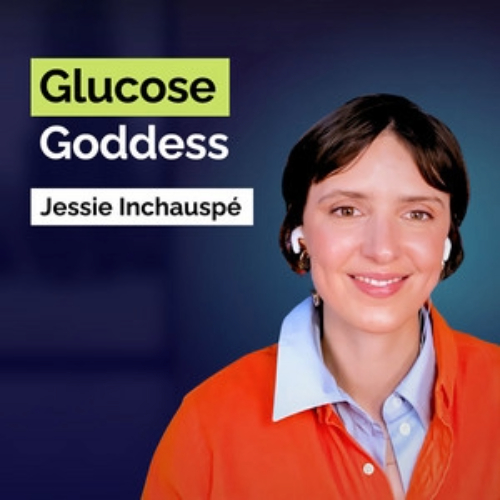
Jessie Inchauspé was struggling with her mental health when a glucose monitor revealed something she never expected: her worst days often aligned with bigger glucose spikes. That discovery changed how she ate, pushed her deep into the research, and eventually became the foundation of her work as the Glucose Goddess. In this episode, Jessie breaks down simple daily habits entrepreneurs can use to stabilize their blood sugar, reduce brain fog, improve energy, and support long-term health. She also explains pregnancy nutrition insights for those expecting or planning to have children.
In this episode, Hala and Jessie will discuss:
(00:00) Introduction
(03:24) What Glucose Actually Does to Your Body
(06:45) Simple Hacks to Reduce Sugar Spikes
(12:50) The Link Between Sugar and Aging
(15:14) Hidden Signs of Glucose Spikes
(24:15) The Best Order to Eat
(26:22) Breaking the Glucose Roller Coaster
(28:48) Building a Business From a Niche Idea
(40:14) How Pregnancy Diet Shapes a Baby’s Health
(54:25) Miscarriage Grief and Emotional Support
Jessie Inchauspé is a French biochemist, bestselling author, and founder of Glucose Goddess, a global wellness brand. Best known for her simple hacks to help reduce blood sugar spikes naturally, she translates cutting-edge science into easy, practical tips for improving physical and mental health. Her most recent book, 9 Months That Count Forever, offers science-backed guidance for pregnancy nutrition.
Sponsored By:
Indeed – Get a $75 sponsored job credit to boost your job’s visibility at Indeed.com/profiting
Shopify – Start your $1/month trial at Shopify.com/profiting.
Quo – Run your business communications the smart way. Try Quo for free, plus get 20% off your first 6 months when you go to quo.com/profiting
Remitly – Transfer money internationally across 100+ currencies with no hidden fees. Download the Remitly app or visit remitly.com to get started. Use code BUSINESS to get a $100 bonus after you send $300 or more. New customers only.
Prolon – Reset your body with Prolon’s five-day plant-based program. Go to ProlonLife.com/PROFITING for 15% off sitewide plus a $40 bonus gift when you subscribe to their 5-Day Program.
Northwest Registered Agent – Get a complete business identity with Northwest. Visit northwestregisteredagent.com/YAPFree and start using free resources to build something amazing.
Resources Mentioned:
Jessie’s Website: glucosegoddess.com
Jessie’s Instagram: instagram.com/glucosegoddess
Jessie’s Books, 9 Months That Count Forever: bit.ly/JI-9MTCF
Glucose Revolution: bit.ly/JI-GlucoseRevolution
The Glucose Goddess Method: bit.ly/JI-GlucoseGodess
Active Deals – youngandprofiting.com/deals
Key YAP Links
Reviews – ratethispodcast.com/yap
YouTube – youtube.com/c/YoungandProfiting
Newsletter – youngandprofiting.co/newsletter
LinkedIn – linkedin.com/in/htaha/
Instagram – instagram.com/yapwithhala/
Social + Podcast Services: yapmedia.com
Transcripts – youngandprofiting.com/episodes-new
Entrepreneurship, Entrepreneurship Podcast, Business, Business Podcast, Self Improvement, Self-Improvement, Personal Development, Starting a Business, Strategy, Investing, Sales, Selling, Psychology, Productivity, Entrepreneurs, AI, Artificial Intelligence, Technology, Marketing, Negotiation, Money, Finance, Side Hustle, Startup, Mental Health, Career, Leadership, Mindset, Health, Growth Mindset, Biohacking, Motivation, Manifestation, Brain Health, Life Balance, Self-Healing, Positivity, Happiness, Sleep
Learn more about your ad choices. Visit megaphone.fm/adchoices
Jessie Inchauspe: [00:00:00] Glucose impacts you even if you don't have diabetes. You cannot have a healthy body and mind if you're constantly spiking your glucose levels without knowing it.
VO: Jessie Inchauspé, also known as the Glucose Goddess, is a French influencer and a New York Times bestselling author. She's known for simplifying the science of blood sugar and helping millions build healthier habits.
Jessie Inchauspe: Human beings, from the moment we are born, we slowly cook like the chicken in the oven. It's called glycation, and the more glucose you have, the faster glycation happens.
Hala Taha: What are the common things that people think is normal that's actually not normal?
Jessie Inchauspe: It's 10:00 AM and you already feel tired. That's not because of your sleep, that's because of your breakfast.
VO: Being on a
glucose
Jessie Inchauspe: rollercoaster affects your brain, it affects your mood. You can be more agitated, more easily irritated. It can increase brain fog. Of course, it can increase chronic fatigue. So if your only focus is you want a bit more performance, then [00:01:00] learning how to manage your glucose levels is fundamental.
Hala Taha: How should we think about it? Like, what food should we completely avoid, and what are some good substitutes?
Jessie Inchauspe: So the simplest one to do is-
Hala Taha: YAP fam, my guest today is Jessie Inchauspé, better known as the Glucose Goddess. She's a biochemist, bestselling author, and one of the leading voices making blood sugar science simple and practical.
Jessie is here to break down how glucose and the way we eat shape our energy, cravings, focus, mood, aging, and long-term health. We'll also touch on her new book, Nine Months That Count Forever, and how she built a huge brand around a highly specific niche. Now, I know today's episode might feel a little different from what we usually cover, but trust me, the lessons are incredibly relevant.
So grab a snack, make it a savory one if you can, and stay tuned. And one tiny favor before we get into it. Don't let the algorithm decide when you get your next dose of Young and Profiting Podcast. Follow YAP now so we stay connected each and every single week. [00:02:00] Jessie, welcome to Young and Profiting Podcast.
Jessie Inchauspe: Thank you for having me, Hala.
Hala Taha: Typically, we're talking about business and marketing and sales, but especially, like, these days, I've been really getting into these health conversations, and you've been so popular online. I see your reels all the time on Instagram. You've got, like, 6 million followers, and you are known as the Glucose Goddess.
Yeah. So the thing that got you super famous on the internet is all your science around glucose and, you know, how to minimize glucose spikes and how to eat food in the right order and- Mm-hmm ... all the things that you talk about online. So for people who are not familiar, who only hear glucose in the context of, let's say, diabetes- Yeah
what is glucose? Uh, why do we need it? W- um, you know, what are main things we need to know about it?
Jessie Inchauspe: So glucose is your body's favorite source of energy. So right now, your brain, your heart, your feet, your liver, they're all burning glucose for energy. And so it's the fuel of life. [00:03:00] And as humans, the way we give glucose to our body is simply by eating foods that contain glucose, and the big family of these foods is called carbohydrates.
So that means things like bread, pasta, rice, potatoes, but also chocolate cake, banana, apple pies. Those are carbs, and these contain glucose.
Hala Taha: Mm.
Jessie Inchauspe: The thing is, a little bit of glucose is fantastic, but too much glucose- Can cause some issues. It's a little bit like, do you have any plants at home that you take care of?
Hala Taha: Yeah.
Jessie Inchauspe: Okay. So you probably know, and I'm a terrible, uh, plant owner, but you gotta give them s- a little bit of water, but if you give them too much water, then it's, it's an issue, and they drown, and yada, yada. And I lost many plants to this. Well- ... the human body is the same. A little bit of glucose, amazing.
Your cells are running, you have energy, you feel good. Too much glucose, your cells start to stress out, and bad things start happening. So some of the most common symptoms [00:04:00] of having a lot of glucose, the most famous one is diabetes. But diabetes is not the only world in which glucose matters. So from about 15 years ago, scientists have discovered that glucose impacts you even if you don't have diabetes.
If you have glucose spikes, which means eating a meal that's very high in carbs, these spikes that happen after you eat can lead to inflammation, to stress inside your cells, can lead to, um, a higher risk of cardiovascular disease, can lead to more cravings, can increase your risk for brain fog, for depression, and long-term for things like Alzheimer's disease, can impact your hormones as a female, could increase testosterone in a female body, which can then lead to polycystic ovary syndrome.
Basically, having a lot of glucose spikes on a daily basis, even if you don't have diabetes, can lead to symptoms. So we should all care about our glucose [00:05:00] levels, even if our only objective is to have more energy, to sleep better, and to have fewer cravings. You cannot have a healthy body and mind if you're constantly spiking your glucose levels without knowing it.
And that basically formed the basis of my work. And I discovered this whole thing because I personally suffered from a lot of mental health issues in my 20s, and I saw this correlation between mental health symptoms and glucose spikes by wearing a glucose monitor completely randomly when I was working in Silicon Valley.
And so all that to say that I've, uh, now dedicated my career to helping people manage their glucose levels.
Hala Taha: So when, when I think about sugar, like, I feel like everybody knows, like, certain sugars are bad. Like, everybody knows, like, if you eat a cookie, it's bad. If you're eating ice cream, it's bad. You know, even bread is bad.
But then there's other things that have sugar, like, for example, like now in my coffee, I use monk sugar. And in my head- Uh-huh ... I'm like, "This is good for me. This is fine." Or [00:06:00] honey. Yeah. Right?
Jessie Inchauspe: Yeah.
Hala Taha: So is there a case of, like, certain sugars are better than other sugars, or is that just nonsense that we're telling ourselves?
Jessie Inchauspe: So there's two categories. There's- Okay ... so when you say monk sugar, you're talking about monk fruit?
Hala Taha: Yes. Yeah.
Jessie Inchauspe: Okay, good, yeah. So that, even though it kinda sounds like a sugar, that's actually a sweetener. That doesn't contain any sugar. So I, I categorize these things into two worlds. So you have the sugars, which actually contain glucose molecules, and that's white sugar, brown sugar, honey, agave, maple syrup, um, all of those things.
And then you have the sweeteners that are usually very, very low in calories and don't contain actual sugar, so stevia, aspartame, monk fruit, uh, all of those guys.
Hala Taha: Okay.
Jessie Inchauspe: Now, if we look at the sugar world, it's all pretty much the same. It's the same molecules. In honey, it's the same molecules as in table sugar.
Yes, honey has some antioxidants, but it's still very, very high in sugar. So when it comes to those sugars, like if you prefer maple syrup or if you prefer honey [00:07:00] or coconut sugar, have whichever one you want because they're pretty much the same. Now, if we're talking about sweeteners, some are really not great for our health.
That's gonna be things like maltitol, aspartame. And then what you mentioned, monk fruit, is actually seems pretty neutral and seems to be a good option if you want the sweetness without the glucose spike. So it's a bit more nuanced, but, um, what I really care about is the fact that things like honey and agave are marketed to be super, super healthy when actually they're just the same molecules as regular table sugar, but nobody tells you.
Hala Taha: So what's the easiest... Like, like, how should we think about it? Like, what food should we completely avoid- Mm-hmm ... and what are some good substitutes?
Jessie Inchauspe: I'm not gonna make you happy because I'm gonna say no foods are off the table, but-
Hala Taha: Okay ...
Jessie Inchauspe: there's, there's really simple hacks you can put in place that when you do eat something that's high in sugar, it doesn't spike your glucose as much.
Okay. So the simplest one to do is to avoid sugar on an [00:08:00] empty stomach So avoid an orange juice, a chocolate bar first thing in the morning. Avoid honey first thing in the morning. If you want sweet stuff, have it as dessert after a meal, so after your lunch or after your dinner. Why? Because when your stomach is empty, those molecules of sugar are gonna arrive much more quickly into your bloodstream.
Therefore, you're gonna experience a bigger glucose spike, which leads to a faster inflammation, faster aging, and then after a big spike comes a big drop. And so two hours later, you want more sugar because of that drop. Now, same sugar, same honey as same table sugar, if you have it after a meal, because there's other foods in your stomach, the sugar is slowed down, therefore it arrives more slowly into your bloodstream.
Therefore, you don't get such a big spike nor a big drop. So you get fewer symptoms, and you're less likely to trigger this sort of craving rollercoaster and this addiction to sugar that lasts all day, and then it's 10:00 PM and [00:09:00] you've had 25 cookies and you're wondering how you got there. Well, maybe it's because your breakfast was sugar on an empty stomach and your body's been on a rollercoaster ever since.
So that's top tip when you eat sugar.
Hala Taha: And one of the things that I know that you advise is to have a savory breakfast instead- Mm-hmm ... of a sugary breakfast. So, well, tell us the difference of, like, somebody's day who had a sugary breakfast versus a savory breakfast.
Jessie Inchauspe: Well, what do you have for breakfast?
Hala Taha: I barely eat breakfast.
I usually- Okay ... don't eat till, like, 12:00, but if I do, I usually have yogurt, granola, and fruit is usually- Okay ... what I have, and I have it at, like, 11:00 or 12:00, um, or I'll make scrambled eggs and fruit.
Jessie Inchauspe: You don't have to have breakfast early in the morning. For me, breakfast is just the first meal of the day that should be savory.
Hala Taha: Okay.
Jessie Inchauspe: So why do we wanna avoid a sweet first meal of the day, no matter what time that is? Because your stomach is empty. It's so simple. And so if you eat something like a piece of toast with jam and then a tea with honey or an orange juice or a fruit smoothie, all of [00:10:00] these are very high in sugar and glucose.
That glucose is gonna arrive really quickly. Big spike, fatigue, inflammation, aging, and then big drop two hours later and it's 10:00 AM and you already feel tired. That's not because of your sleep. That's because of your breakfast. And there's this misconception that if we eat something sweet in the morning, it's gonna give us energy.
That an orange juice is gonna give us energy. What it actually does is that the sweet taste triggers dopamine in the brain. Dopamine is a molecule of enjoyment. It makes us feel good, but on the inside in our cells, our cells are struggling with this big glucose spike and cannot make energy efficiently.
So if you want stable glucose levels throughout the day, the tip is very simple: have a savory breakfast built around protein. Protein does not contain any glucose. It does not spike our glucose levels. It keeps us very, very steady, and it keeps us feeling very full. So a perfect example is some eggs or you mentioned some Greek yogurt.
[00:11:00] Can be leftovers. It can be, um, fish, meats. It can be tofu, protein powder. This should be the main character of your breakfast, the centerpiece of your breakfast, and then you can add stuff. You can add some fruit, whole fruits. You can add a bit of starch. As long as the core of your breakfast is built around protein, it's gonna keep your glucose level steady, and this transforms your day completely.
And I recommend to always try to start with switching to a savory breakfast even though it can be quite hard for people. It is honestly one of the most powerful things to do for your entire day. It's remarkable the impact that it has.
Hala Taha: Yeah, fam. As my business keeps growing, I feel like I'm always hiring.
I recently added two new video editors and a producer to my team, and I can tell you from experience the right hire can give you leverage. The wrong hire gives you a second job, and that's the last thing you need. So when I need the right person and not just another resume in the pile, I go to Indeed Sponsored Jobs.[00:12:00]
Indeed Sponsored Jobs boost your job post in search results so you can reach candidates who meet your specific criteria, like skills, certifications, location, and more. Because the goal is not more resumes, the goal is better matches. Spend less time searching and more time actually interviewing candidates who check all of your boxes.
Less stress, less time, more results. When you need the right person to cut through the chaos, this is a job for Indeed Sponsored Jobs. And listeners of this show will get a $75 sponsored job credit to help get your job the premium status it deserves at indeed.com/podcast. Just go to indeed.com/podcast right now and support our show by saying you heard about Indeed on this podcast.
Indeed.com/podcast. Terms and conditions apply. Need to hire? This is a job for Indeed Sponsored Jobs. Now, I, I might be vain or something, but the thing that really moves the needle for me when- Yeah ... when it comes to health is when somebody says, like, "This is gonna age you faster." Like, "Don't do this." That's always when I pay attention the most.
Good. So you've mentioned aging [00:13:00] quite a few times. So what does sugar and glucose do in terms of aging?
Jessie Inchauspe: Well- Do you know when you, um, cook something in the oven, it goes from, like, raw to, to brown? So you put a chicken in the oven, it goes from pink to brown. So that process is called glycation, and it's basically the process of aging.
And human beings, from the moment we are born, we slowly glycate. We slowly cook like the chicken in the oven. No joke, girl. No joke. It's called glycation, and it happens everywhere in our body, on our skin, inside of our organs, and when our skin glycates, it hurts our collagen. We get wrinkles. When our organs glycate, it works as well, and then as we age, we glycate more and more, and then when we're fully glycated, we die.
That's basically what happens in a nutshell. And you might notice that glycation and glucose sound pretty similar, like they come from the same root, and it's because they do. And it's because it is glucose [00:14:00] that does the glycating.
Hala Taha: Hmm.
Jessie Inchauspe: And the more glucose you have in your body, the faster glycation happens.
And so if you're talking about aging of the skin, right, which is one of the core things we think about when we think about aging, so the collagen in your skin gets glycated, and the more glucose you have in your body, the faster that collagen is glycating. And when collagen is glycated, it becomes brittle, and it breaks, and so that can lead to sagging skin and wrinkles over time.
And so I'm not saying, like, one piece of cake is gonna make you look super old, but over days, weeks, months, and years, if you had twice as many glucose spikes as your neighbor, you might look older than him- Yeah ... even though the rest of your lives are the same. So that's one of the ways in which, um, food and glucose are related to skin health.
Another one is inflammation. So every glucose spike increases inflammation in, in the body, and inflammation can also exacerbate things like acne, rosacea, [00:15:00] psoriasis, and just generally make your skin feel, look more dull.
Hala Taha: Mm-hmm.
Jessie Inchauspe: So yeah, it's important to think about food when if you want your skin to look young and healthy for a very long time, and glucose is a great place to start.
Hala Taha: Now, what about somebody who's just like, "I'm fine. I don't feel like I have glucose spikes"? Like, what are the common things that people think is normal that's actually not normal?
Jessie Inchauspe: Hmm. Well, first of all, if you feel amazing, and you don't think anything in your life could be improved, that's awesome, and don't listen to me.
But if you think any little piece of your physical or mental health could go a little bit better, then glucose might be the good place to start. So some common things are that people think are normal but are actually might be glucose spikes in disguise, hitting the 3:00 PM wall, so at 2:00 PM, feeling super tired, like you need a coffee or a soda or a nap, and I used to think that was just normal.
Um, poor sleep, so if you have a lot of glucose spikes and [00:16:00] dips and you go to bed on a big glucose spike, you'll have less deep sleep. And so you wake up, and you don't feel rested even though you slept, you know, seven or eight hours. That's a very common, common symptom. And another very common one is sugar addiction.
So by sugar addiction, I mean that throughout the day, multiple times, you're thinking, "Mm, I wanna eat something sweet. I don't care what it is, I just want something sweet. Maybe it's a granola bar, maybe it's a piece of chocolate. I just need something sweet." Now, this could be driven by a glucose crash because the meal you had a few hours earlier led to a spike and then a crash.
So poor sleep, poor energy, um, and feeling controlled by sugar, those are pretty common symptoms of glucose spikes.
Hala Taha: Let, let's talk about that addiction. Um, I actually- Mm ... just went to New York to visit my mom for Mother's Day, and I had a total- Yeah ... cheat weekend. We were, like, you know, eating cookies and cupcakes.
And yesterday I was hanging out with my boyfriend, and it was, like, 10:00 PM, and I was like, "Do you wanna..." And I'm usually eating very [00:17:00] healthy. I'm like, "Do you wanna order ice cream?" And he's like- Mm ... "Why, why do you want ice cream?" Like, "This is random." And I'm like, "I don't know. I just, I just, like, feel like it.
Maybe it's 'cause I ate so many sweets this weekend." Mm-hmm. Is there any truth to that? Do you, do, does your body just keep wanting it once you've kind of indulged?
Jessie Inchauspe: Yeah, because it's a very powerful stimulant on the brain. Mm. And so more sugar you eat, more sugar you think about and you want. And then if you combine that to the fact that you're experiencing a spike and a dip, you can also have this biological urge of, like, "I need sugar right now."
So both of these things can be going on. And, uh, have you ever made the experience of, like, stopping sugar completely for a week and then you don't even think about it
Hala Taha: anymore? Yeah, yeah. Like, it's like if you don't have sweets for a while, then, like, you just don't want them. And then suddenly you- Totally
bring it back, and every day you're like, "I want a sweet. I want a
Jessie Inchauspe: sweet."
Hala Taha: Absolutely. How do we stop, how do we stop that cycle?
Jessie Inchauspe: So the key is not to try to use your willpower. Like, that's not gonna work. Uh, I think there's two things you can do. So first [00:18:00] thing is when you want something sweet, try to have some whole fruit, and then wait 20 minutes, and if you still want the ice cream, then have the ice cream.
But the best first thing, the, the first, uh, sort of gate to try is whole fruit because whole fruit is sweet but also contains fiber and water, so it doesn't create a glucose spike. And then if you really want to have, um, the ice cream, which by the way I totally relate to, use the glucose hacks so that it doesn't create an extra craving cycle.
So as I mentioned, not, never on an empty stomach. You can have, uh, some vinegar before you have the sugar. So one tablespoon of vinegar in a big glass of water like this can reduce the- Like apple cider
Hala Taha: vinegar? Or
Jessie Inchauspe: like- Yeah. Apple cider vinegar, white wine vinegar. Um, you just wanna avoid the sort of very syrupy balsamic vinegar.
But this can reduce the glucose spike of that sugar by up to 30% because it slows down the breakdown of sugar in your stomach. So you're still having the, the enjoyment from the sugar with less of an impact on [00:19:00] your glucose levels, so with less of a creation of that cycle. And another thing that's very powerful that you can do is that after you eat sugar, use your muscles.
So if you're in front of the TV, pick up a water bottle and do some bicep curls. Do some calf raises, like, on, at the couch, you know? Clean your apartment, do some laundry. Activating your muscles after you eat sugar is so powerful because they want glucose for energy as they contract, and the first place they look is in your bloodstream.
They look for glucose you just ate. So for example, if I ate the same chocolate cake on two different days, but one day after that chocolate cake I went for a 10-minute walk, it would create a much smaller spike than if I just sat down after eating it. So if you use all of these little combos, over time the spikes come down, so you're not creating that biological crash, and probably you're not gonna keep eating as much sugar as you did in New York, right?
Mm-hmm. Maybe you were eating sugar, like, every few hours, and now you're doing it in the evening for ice cream. And so [00:20:00] over time this is gonna attenuate, and you're not gonna feel that craving anymore.
Hala Taha: Yeah. So you were just kind of explaining how fruit compared to ice cream is, like, a better kind of glucose or easier to manage.
Jessie Inchauspe: Yeah.
Hala Taha: Help us understand. Like, I know I asked you this question right off the bat, but, like, I, like, I f- I don't... I feel like I don't quite understand still. Sorry. Like, what is a good... Like, what is a good sugar versus a bad sugar? And, like, for you, for example, like, how often are you eating fruit? Like, how often- Mm
are you... Are you, like, trying to stay away from fruit, or are you-
Jessie Inchauspe: No, I don't, I don't try to stay away from fruit. So- Fruit and a chocolate bar, they actually contain the same sugar molecules. It's the same thing for your body. But there's one massive difference, which is that in the fruit there's fiber and there's water.
So even though there is some sugar in there, it comes in this very healthy package- Hmm ... that is gonna break down slowly, that is gonna arrive into your bloodstream slowly. And also there's much less [00:21:00] sugar in an apple than in a chocolate bar, right? So you have less sugar and a better envelope, a better matrix.
And so I have whole fruit every single day, honestly. Um, whole fruit is still there for enjoyment, for pleasure. Like, we don't need to eat fruit. There's no- nothing in fruit that we can't find in vegetables, for example. Hmm. But fruit is so lovely to eat, and it, it's, it's delicious, it's sweet, it's enjoyable.
So I still see fruit as dessert, right? I'm doing it because I want to, because I like it. Um, but it's a totally fine and healthy thing to eat. However, there's something really fascinating to, to know about is that the fruits that we have today in supermarkets has been, um, modified and bred by humans over centuries to be even more sweet and juicy as the way nature intended.
So if you look at what a banana looked like, you know, thousands and thousands of years ago, it was full of seeds, not very sweet, [00:22:00] and quite hard to eat. And today a banana is, like, super easy to peel, and it's very sweet. So humans have designed modern fruit to be higher in sugar. Yet the same things still hold.
Because of the fiber and the water, they're still fine for your health and your glucose levels. The problem comes if we denature whole fruit. So if we make an apple juice or an orange juice, what are we doing? We are stripping away the fiber and throwing it in the bin, and we're just keeping the sugar and the water.
And in that case, that becomes something that is really not very good for you. Because we're concentrating the sugar of, like, five oranges in one glass, and we're removing the fiber. So that protective healthy matrix I told you about, it's gone. It's vanished, and you're just left with the same sugar molecules as in a can of Coca-Cola in the same amounts.
And so sure, there's a bit of vitamins in there, but, like, not enough to outweigh the huge amount of sugar [00:23:00] that it's, that is in that juice. So it's not so much about, like, is there a good sugar, a bad sugar? It's more there is good envelopes and bad envelopes, for sure. And the only thing that is very sweet and that you can eat unlimited is whole fruit.
The rest should always be seen as dessert and something you do for your enjoyment and pleasure and something you build glucose hacks around.
Hala Taha: I feel like that's, that's a really good reframe, like, understanding that, um, whole fruits are good because of the envelope that you were talking about.
Jessie Inchauspe: Yes.
Hala Taha: And then also, like, that you treat it like a dessert.
Like, you know you don't have to eat it, but if you're going to have something sweet, you're gonna opt for fruit. So I think, like, reframing and, like, make sure you're not denaturing it like you mentioned. So I think those are great. And so
Jessie Inchauspe: when you, when you were mentioning you have fr- you said fruit and granola and yogurt for breakfast or your- Yeah
first meal of the day, right? Yeah. Okay. So in that meal, the fruit and the granola tend to be sweet, but because you have the yogurt, you're also reducing the glucose spike. And you don't need that fruit in the morning or at your first meal of the day, but it's enjoyable, [00:24:00] and we should also think about things we do for enjoyment.
Life is not all about just reducing sugar and, and being sad. Like, we, we need to eat sweet stuff 'cause it's tasty.
Hala Taha: Now, let me ask you l- a question about that breakfast. Would it make- Mm-hmm ... more sense if I was like, "Let me just have this Greek yogurt plain and maybe scr-," or like the granola that I have actually doesn't have any sweet in it.
It's like- Okay ... mostly nuts and stuff like that. Nice. So, like, let's say I have the granola, like the nutty granola and the Greek yogurt, and then I have the fruit after. Is that better- Hmm ... or, like, that doesn't matter, like, to have that level of, like, granularity of how you eat?
Jessie Inchauspe: So in order to answer that question, we gotta talk about the order in which we eat our food.
Yeah, yeah. And there is fascinating study that came out that has been since rep- replicated many times that shows that during a meal, the order in which you eat the food matters in terms of the glucose spike that the meal creates. And the scientists found that the, quote, "Ideal order for your glucose levels is the following:" [00:25:00] vegetables first- Then proteins and fats, and then starches and sugars.
Why? Because vegetables contain fiber, and as I mentioned, fiber is our friend. Fiber will create this sort of mesh and slow down how quickly glucose arrives into our bloodstream. And why do we wanna eat the carbs and sugars last? Because same concept, when there's food already in our belly when we eat carbs, they arrive more slowly into our blood.
So technically, if you wanted to be, like, super, super, super highly optimized, yes, eating the berries after you had the yogurt and the nuts would be better than mixing them. But honestly, girl, like, the difference is gonna be pretty small 'cause that meal is not very high in glucose anyway, and I don't think you need to do that, like, unless you really want to.
But, uh, eating stuff mixed is totally fine. How- you have a lot of protein in there, healthy fats, a little bit of whole fruit. It's fine. If you told [00:26:00] me, "My meal, my breakfast is, um, five cookies and a yogurt," I'd be like, "Okay, yeah, definitely don't have the cookies first. Like, have the yogurt first and then the cookies."
It's always relative. But in your case, I, I don't think you have to worry about it.
Hala Taha: Yeah, fam, in business, communication is part of the client experience. Think about it. When you need to buy something or book a service urgently and the first business doesn't answer, do you sit around and wait? Of course not.
You call the next business on your list, and that's exactly what potential customers are doing when you miss their calls. And don't you dare think that your voicemail is a sales strategy. That's why today's episode is brought to you by Quo, spelled Q-U-O, the business communication system built so you never miss a call.
With Quo, your team can manage calls and texts from one shared business number, so every customer conversation lives in one place. The full thread, voicemail, transcripts, and contact details are all right there, which means no more, "Wait, who talked to this client last?" And Quo's AI makes [00:27:00] it even easier by logging calls, creating summaries, and flagging next steps automatically so your team can move fast without losing context.
Because to your clients, fast, organized communication doesn't just feel convenient, it feels professional. Money is on the line. Always say hello with Quo. Try Quo for free, plus get 20% off your first six months when you go to quo.com/profiting. That's Q-U-O.com/profiting. Can you talk to us about what a glucose rollercoaster is?
Jessie Inchauspe: A glucose rollercoaster is experiencing glucose spikes and crashes, spikes and crashes the whole day. So you have a sweet breakfast, you spike, then naturally your body's gonna bring down your glucose levels, and then if you have a big spike, you're gonna have a big crash. And that's the first, uh, section of the rollercoaster, of the first wave of the rollercoaster.
And then when you crash, this actually activates a part of your brain that tells you to look for more sugar, and so you're gonna reach for super sweet granola [00:28:00] bar, and then you're gonna spike again. So the rollercoaster's going back up, and then over the next two hours, your body's gonna bring down that spike by storing away glucose into your cells.
But a big spike means more cravings and more activation. And so if all day you do spike, crash, spike, crash cycle, you are stuck in this fatigue, exhaustion, sugar addiction. The cool thing is every morning at breakfast, you have the opportunity every single day to reset that glucose rollercoaster. Your breakfast is extremely important as to whether you're gonna be on a glucose rollercoaster that day or not.
So if you suspect that you might be on one because you crave sugar throughout the day and you feel super tired, tomorrow morning have a savory breakfast built around protein, nothing sweet except some whole fruit if you want, and see how different you feel. Odds are you will be spending your very first day [00:29:00] not on a glucose rollercoaster, and I can tell you that feels amazing, and you get your life and your time and your brain back.
If your audience cares about brain health, performance, energy, this also matters a lot. So being on a glucose rollercoaster affects your brain, it affects your mood. It can affect how you behave with those around you. You can be more agitated, more easily irritated. It can increase brain fog. Of course, it can increase chronic fatigue for the reasons I just mentioned.
So if your only focus is you want a bit more performance and a bit more even keel, then learning how to manage your glucose levels is fundamental. And in my book, Glucose Revolution, I have many more hacks and more science, and it's honestly a really, really good place to start.
Hala Taha: All right, so let, let's transition into talking about your business.
So one of the most fascinating things I found about you is that you've got a big following, right? We're talking about six million followers just on [00:30:00] Instagram. You're on all these other platforms, and your main thing that you talked about for a long time was glucose. And in my, like, marketing brain, that's really niche.
You're not just talking about health or women's health, you're talking about glucose. Now, everybody, you know, s- needs to worry about what they eat, and everybody needs to eat, so I guess it is broad, but it is still really niche. So talk to us about how you landed on that, and if, like, you... Like, how you were like, "Okay, I'm gonna stick with glucose and be the glucose goddess."
Jessie Inchauspe: Okay, so first of all, glucose is niche, but it's actually a very simple window through which to view nutrition as a whole. So it sounds super niche, but it's... Your glucose levels are a representation of how much fat you're eating, how much protein you're eating, of your, uh, exercise levels, of how much sugar you're eating, how many carbs you're eating.
So they reflect an entire diet. So that's why it's cool and it's helpful. It- it's, it's a niche molecule, but it actually [00:31:00] represents a lot about somebody's lifestyle. So how did I get into this, this? How did I decide to do this? Personal journey, mental health issues, wasn't sure how to do better. I was working at 23andMe in Silicon Valley for five years, um, as a product manager, super fascinated by, by that whole, uh, journey, yeah.
And I had the opportunity to put on a glucose monitor. Somebody in the company sent an email being like, "Hey, we have these glucose monitors. Does anybody wanna try?" And I just raised my hand out of curiosity, and it changed my life because I saw that the days where I had bigger glucose spikes, my mental health was worse, and I was struggling with depersonalization, depression, anxiety, uh, since I was 19, after breaking my back, back and having a intense surgery.
So I personally got fascinated by it. I read all the studies, I changed the way I was eating, and I was like, "This is super freaking cool." And then because I think I'm just wired this way, I wanted to extend this to those around me. And so I thought, if I just print out these scientific studies and give them to my mom and [00:32:00] my friends, nobody's gonna care.
I need to find a visual way to explain why it's so important to manage our glucose levels regardless of our medical situation. And I thought about making these graphs. So I literally coded on my computer this little digitizer that took screenshots of the glucose monitor, turned it into this pretty graph that I made.
I designed everything. And these graphs, when I showed my friends and my colleagues, man, they got it. And these graphs were simply showing the glucose spike of, for example, an orange versus an orange juice. And you can see in just a second, oh, the orange juice is a bigger spike, so that's worse. And then I decided to put it a little bit on Instagram just because I wanted to help people, you know?
Um, and I thought, "I'm gonna give myself six months and try to make the best post I possibly can." And because I had a product manager mindset, I saw these graphs as a feature that I was continuously testing every single day. So I had a ton of iterations of these graphs, and I was [00:33:00] seeing what was catching on or not.
And after six months, I had like 1,000 followers and I thought, "This is it, girl. I gotta go." And so I quit 23andMe and I decided to do the glucose thing full-time. But I had no business plan. I had no, I had no idea what I was doing. And because I was in Silicon Valley, everybody said, "Jessie, make a deck and go raise a million dollars."
And I was like, "But I don't wanna build an app." "Like I wanna make content and educate." Um, and so I was about to stop doing this six months later because I had no more savings when I had the opportunity to write a book. So my book agent saw my work, reached out and said, "I think you should write a book."
And I had never thought about writing a book, but I did. And that's when things started to sort of snowball after that book came out, um- I got, you know, media and press, and people were sharing more and more of the glucose graphs on Instagram. And then years later, I decided to build a business out of it, to have a recipe club, to have a formulation of the supplement I developed, to [00:34:00] do more books, to do more products.
But it all came very organically. I never raised any money. It was all bootstrap. It was all, you know, one, one foot after the other. So, um- I love
Hala Taha: that ...
Jessie Inchauspe: there was no deck. There were no in- Silicon Valley investors. I did take meetings, and I was like, "This is not for me." So yeah.
Hala Taha: I love that you bootstrapped.
Does that answer your
Jessie Inchauspe: question?
Hala Taha: It totally does. And, uh, I always talk ... I love creator... You know, I'm a creator entrepreneur. Creator entrepreneurship is awesome. I, I believe that is the future. I believe that is the way that you can really build big businesses now without taking funding because your personal brand is your audience.
Now, uh, one of the things that, like, really, like, you know, is eye-opening for me is that you started with these graphs. Like, a lot of people- ... like, start with their face. You started with these graphs that you perfected that people really loved, and people kind of got trained on. Uh, did you have any, like, insecurities about going on camera?
Or like, how was it for you to actually... 'Cause now you're on camera all the time. How was it for you to, to get in front of the [00:35:00] camera?
Jessie Inchauspe: No, I have never been insecure in front of a camera, and I, I credit my mother for taking so many photos of my sister and I when we were growing up- ... that as soon as a camera comes out, I'm like, "Yes, hi."
So that was, that was a big advantage. And so I was posting the graphs, but I was also posting selfies. I was trying different things, and I very quickly started making also some videos to complement the graphs. So I didn't have that hurdle of feeling like, oh, I feel uncomfortable, you know, taking photos and videos.
Uh, I think that really helped 'cause I know this can, this can be a real barrier to, to many people. 'Cause it is weird to put yourself out there. Um, but I just did not care. I was like, "I'm gonna use my face to talk about glucose and to help people." One thing I didn't do, though, is I never shared my personal life, where I lived, who my friends were, what I was doing.
I was not gonna be an influencer. I was gonna be a science teacher on the internet, and that's all I talk about. It's just the narrow science thing. There's nothing else.
Hala Taha: So till this, till this day you don't, you don't [00:36:00] incorporate pers- oh, that's really interesting- Not a lot ... 'cause a lot of people say you have to incor- your pers- in personal life.
Why do you think that works for you? Why other people kind of say you've gotta be personal so people really connect with you and...
Jessie Inchauspe: Why does that work for me? Because my whole purpose, my whole brand is educating about science. I'm a, I'm a science teacher, and that has always been the case, and so I think the people who follow me, that's what they follow me for.
And if I started posting about... You know, maybe some people would be a bit curious, but I don't think it would work on my platform if I started posting about my vacations. I think people would be like, "Who cares? Give us some studies."
Hala Taha: Yeah. Yeah. That, that was- That's the brand that you've created. Yeah, you're an educator.
Jessie Inchauspe: Totally. I'm an educator. Yeah. I'm not a... I- in my books I get pretty personal. I talk a lot about, um, my personal life and stories because I think it adds a lot, uh, to what I'm trying to communicate, but it was also a, a choice to protect myself, to be honest. And today, considering the amount of, um, articles and media stuff that are written [00:37:00] about me, thank God people don't know who my husband and, is or who I, where I live because it would be a nightmare.
Yeah. So I'm very happy with that decision. Very, very happy with it. But I think it forces
Hala Taha: me- Well, I feel like you do tell your story, to your point, in your books and, like, your long form podcast. Like, you do tell your story, but it's just not, like, your core on social media, the things that go viral.
Jessie Inchauspe: I share the things that are relevant to the message I'm trying to give and to the service I'm trying to provide.
Um, but I, I don't think it's relevant for me to talk about, you know, um- I don't know what people talk about on the internet. Yeah, their food- Like where I'm going on vacation ... like whatever.
Hala Taha: Yeah, exactly,
Jessie Inchauspe: their kids. Yeah, I do post my, I do post my food, though. Um, but to me it's very clear in my head, like what makes sense and what doesn't make sense, and it's always, it's always been a decision.
Hala Taha: Well, that's super, super fascinating. So let's talk about how you make money as a creator. You mentioned some of the ways that you, you make money as a creator. What is, like, your biggest revenue generators? Do you actually make money from your book, or is it more of, like, the speaking off your book, and, [00:38:00] and how do you make money right now as a creator?
Jessie Inchauspe: I've been very lucky that my books have done very well. So my books have sold 3 million copies in 42 languages. So that's been a big, big real business for me. And- Amazing ... um, I th- yeah. Thank you. And I think it's because, you know, I pour a huge amount of work into the books. Like, the books are not something I do on the side.
It is... Most of the grueling work I do every year is research for books. So the books have done well. I do a little bit of speaking in conferences, but honestly, not more than two or three per year, 'cause that's not my core business. Um, and then I built products for my community. So I only sell online. I have a recipe club, which is a, a subscription that people can subscribe to, and I send them glucose-friendly recipes every month.
I have a supplement I formulated a couple years ago with the best molecules on the market to reduce glucose spikes with natural ingredients if you want to. So that's been a v- a very, very loved product. And I'm launching actually a f- couple more things, um, this year, which I'm very [00:39:00] excited about. But when I make a product, it's really because I wanna solve a problem, and I'm frustrated with the fact that it doesn't exist.
Like, I don't have ambitions to, you know, have a hundred SKU business or to make more supplements just to make supplements. It's more 'cause I see a problem, and I'm trying to fix it. So the problem that I'm gonna fix soon is the fact that I wanna have protein every morning, but very often I only have time to have coffee.
Yet it's impossible to find a protein powder that's actually delicious to put into your coffee. They're all full of flavorings and textures and all that crap. So I decided to create my own that actually reached the brief of ultra pure, ultra good for you, no additives, nothing weird. So that's launching in a couple weeks.
Um, it's called Protein Prodigy.
Hala Taha: Oh, I love that. I will definitely be a customer. I will defin- I love putting, like, vitamins and stuff in my coffee.
Jessie Inchauspe: You froth it in your coffee, and it tastes like you added just, like, a splash of milk, but you added 20 grams of fucking protein, which is as much as in [00:40:00] three eggs, in your morning coffee.
Wow. So this is the kind of stuff I love.
Hala Taha: Ooh, I will definitely- Yeah ... be a customer of that. Yay. I love that. You just said that, like, you like to solve problems that you see. Like, this is, this is something that I wish that existed. Are you actually also listening to your audience in terms of, like, what they want from you?
Jessie Inchauspe: Yeah, all the time, 100%. Um, so how do we do that? Well, I have a dedicated team member who reads all the DMs every single day that are received, so that's, like, thousands of DMs per day, and tells me what's going on. Um, she reads comments. We get emails from our community all the time. I meet, meet people in the street.
They tell me things. I do a lot of Q&As on Instagram. I see a lot of questions. So I'm very connected to what people need, uh, and what people want. I can't solve everything, but when I see a problem that, um- I find exciting, then I'll go after it. So the morning protein thing was a big recurring theme. Yes, I know I should have a savory breakfast, [00:41:00] but I don't have time to cook.
I just grab my coffee and I go to work. And for years I was like, "How do I... Mm, gotta put- Yeah ... two and two and figure it out." Yeah. So that, that's how we do it. Yeah. Yeah.
Hala Taha: I love that. And your latest book is about pregnancy, and when I was first, like, thinking about what do I wanna talk about with Jessie on this interview, I was thinking, "Okay, no one is gonna care about pregnancy with my audience."
But then when I was actually looking into your stuff, it was just so interesting, and I do feel like a lot of my listeners are thinking about having kids or already had some kids, or probably want kids in the future, so I just think it's great information. One of the most powerful things that I heard you say is you, you've debunked this myth of, uh, a bun in the oven.
Everybody always says, "Oh, when I'm having a baby, I got a bun in the oven." Uh, but you say that's totally the wrong way to think about it. So, so why do we have to think about it differently?
Jessie Inchauspe: Because women are not ovens. So we're not this passive vessel of heat and oxygen just waiting for a baby to grow.
The science is actually pretty [00:42:00] clear. So the moment you have sex and make a baby, yes, your baby's DNA
Hala Taha: is set and is never gonna change,
Jessie Inchauspe: but actually, what you do during these nine months of pregnancy, how you eat, your lifestyle, your environment, it's co-creating your baby's epigenetics. So you're not just an oven.
You're like an active participant in your baby's creation.
Hala Taha: Yeah. So
Jessie Inchauspe: all this came about just because I, uh, was pregnant last year and I had m- my little boy, and as that was going on, I just dug into the research, 'cause I'm a biochemist and that's what I do. And I discovered such incredibly fascinating pieces of information That are very different to the bun in the oven myth that I had to, I just had to deep dive a- and write a whole book about it, about how to eat during pregnancy to set up your baby's health for life.
Hala Taha: Yeah. And when you say epigenetics, just because this is not like a medical audience, right, what does that mean?
Jessie Inchauspe: So epigenetics are kind of like these tiny little light switches that sit on your DNA. [00:43:00] So for example, you and I have the same gene f- or genes for diabetes, for example. But maybe on my DNA, there's these little switches that have that gene more activated, and on your DNA, your little switches have that gene, gene a bit more silenced.
And so DNA is not the whole story. Identical twins have the same DNA, but if they have a different epigenetic makeup, their health is gonna be different. So we, we used to think that it was all about DNA. Now we know that, like, our environment, our nutrition actively calibrates what's really going on in our body and our health.
And so when I say epigenetics, it's just that. It's this programming of the switches on your baby's DNA, and these happen during pregnancy, and one of the factors is what you eat. So depending on what you eat, these little switches will program your baby's DNA differently. So there's a lot of stuff going on.
You're not just this passive oven.
Hala Taha: So help us understand, like, te- tell us about, like, the difference in the output of your baby. Let's, let's go- Yeah ... let's go business terms. Output of your baby for [00:44:00] nine months if you are eating eggs and, uh, you know, tell us what somebody, what, what good looks like in terms of what you should eat in your pregnancy versus somebody who follows the advice of, like, nature will handle it, just eat whatever you want, eat for two, and, and everything will be fine.
Jessie Inchauspe: Well, so one thing to know is that even if you don't follow any of these recommendations, your baby will probably be fine. Like, that is one of the beautiful things about humans, is that we're very resilient. But let me take a very simple example: sugar.
Hala Taha: Mm-hmm.
Jessie Inchauspe: So when you're pregnant, your baby doesn't actually need you to eat sugar, right?
Yet we have these cravings for, like, ice cream and chocolate, et cetera, so many moms end up eating way more sugar when they're pregnant than when they're not pregnant. The thing is, we know from this incredible study from the UK, um, that looked at people who were in the wombs of their mothers between 1940 and 1953 and who were in the womb of mothers just before and just after.
And the reason this is key is because from 1940 to 1953 in the UK, there [00:45:00] was a rationing because of the war, and pregnant moms only had access to a certain amount of sugar, and that was the same for the rest of the population. Anyway, scientists 60 years later, they looked at these babies who were developing while moms had less access to sugar, and they saw that in the, in these babies' entire lifetime, they all had a 15% lower risk of having developed diabetes.
The only difference was that their moms were eating about 40 grams of sugar versus the average before and after, which was 80 grams. So the amount of sugar you eat when you're pregnant seems to calibrate your baby's vulnerability to things like type 2 diabetes and obesity. And so why is that? First of all, we have to understand that when we're pregnant, our bloodstream and our baby's bloodstream is pretty much connected.
Not technically connected and touching, but pretty much. There's no filter, so everything you eat goes into your blood and goes into your baby's blood. So if you eat a lot of sugar, your baby in your womb is also gonna be receiving a [00:46:00] lot of sugar, and this has an impact on the formation of his organs. His body's gonna be like, "Oh my God, there's a lot of sugar around.
We're gonna be born into a world with a lot of sugar." So this might increase his insulin. This might increase his fat mass even in the womb. You're sending signals, and this can calibrate future health. A more positive and exciting example might be, uh, choline, which is found in eggs, or omega-3s, which are found in fish.
And today, the sad thing is that most moms are not meeting the general world recommendations of how much choline and omega-3s to eat during pregnancy. And we know from some clinical trials that, for example, if you eat a lot of omega-3s during pregnancy, a lot of eggs, or if you supplement with them, scientists can measure a four-point increase in your baby's IQ w- years after birth.
For the case of choline, scientists can measure faster reaction time in children who are developing in the wombs of mom that had more choline. So you can do these really positive things [00:47:00] for your baby's brain development with simple advice. And so in my book, I recap the four pillars. The first one is to try to reduce how much added sugar you're eating.
So try to, um, use the WHO recommendation of 25 grams of sugar per day or less. Second, have a bunch of choline. So I was eating three or four eggs a day during pregnancy to give my baby enough. You can eat other foods too that contain choline. Omega-3s, three servings of fatty fish per week and your baby's getting all of the omega-3s that he needs.
And then finally, protein. I know it's the big buzz thing right now, but actually when you're pregnant, you need more protein. And if your baby is protein restricted, this can also create some vulnerabilities later in life. So not too much sugar, choline, protein, omega-3s. If you do those four things, which most pregnant moms today are not told about and therefore don't do, you're gonna give your baby an upper hand in terms of his long-term health.
Hala Taha: Hmm. Protein is a really interesting one. People are really obsessed with protein. Nobody really talks about it in [00:48:00] the context of pregnancy.
Jessie Inchauspe: Yeah.
Hala Taha: But I heard some fascinating things from you in terms of like if, you know, you don't have enough protein, your, your baby's actually born with, with like less capability to keep muscle later on, even as an adult.
So talk to us about how what you eat, the, w- how like, um, you know, the baby is expecting that the environment that it, they're being born into directly correlates with what the mother's eating.
Jessie Inchauspe: Yes. So this is based on studies that we have on animals. So we don't have a, a specific trial where we can take, you know, 5,000 pregnant moms, give half of them enough protein and half of them very little protein and then measure the outcomes, right?
That would be unethical. So we use a lot of studies from animals to see this. And in animal studies, when you restrict how much protein a mother has during gestation, it is always extremely clear the baby is born smaller with less muscle mass and the baby stays smaller also later in life. So to give you an example, uh, back to this epigenetic thing.
So scientists have found that in [00:49:00] animals, when a baby is developing in the womb of a mom with very low protein intake, he has little epigenetic switches on his DNA that say, "Keep your muscle mass small." And the fascinating thing is that this epigenetic switch is not just happening during pregnancy. You can measure that when that baby grows up and is an adult.
That setting stays with him for life. And if you think about it biologically, okay, imagine your baby's in your room and he can't see the outside world. He can't touch it, he can't hear, he can't see anything. He's relying on signals that you bring as the mother to sort of infer what world he's gonna be born into.
And so if you're giving him very little protein, he receives that signal and he thinks, or his body thinks, "I'm gonna be born into a world with low protein available." And so what's a very smart setting in that case? The setting should be keep your muscles small. Don't try to build a lot of muscle mass.
Prioritize your essential [00:50:00] organs, okay? Mm. Because when protein is scarce, we don't want to have a bunch of muscle mass to deal with. Just focus on the brain and the heart and muscles stay small. And so these little settings can stay with somebody for life. Now- I don't know about you, but if I think about my friends, you know, I have two very close male friends, and they kind of have the same gym routine.
They eat the same. One is able to build muscle very easily, and the other one is not, even though they kinda do the same thing.
Hala Taha: Mm-hmm.
Jessie Inchauspe: So I'm not saying that it's because necessarily one of them had a low-protein diet during pregnancy, but this could be one of the factors.
Hala Taha: It's so crazy to think about the fact that whatever you eat during pregnancy, your kid actually, like, f- forever is, like, predisposed to either diabetes or predisposed to not being able to put on muscle mass.
So does this mean that we're just, like, doomed, and we should all be like, "Mom, would you, would you eat while I was pregnant? Give me the download so I know what's gonna happen."
Jessie Inchauspe: No, because this is just one of many factors, but the reason I wrote this book is because I feel like it's a factor that's just not [00:51:00] spoken about enough.
But of course, for example, when my mom was pregnant with me, all she ate was sugar pretty much, and so when I was 25 years old, I was on the cusp of prediabetes even though I had a quite healthy French diet. And so looking back now that I know what I know, I'm wondering, "Oh, maybe it has something to do with the diet I was exposed to in the womb."
I had a vulnerability. This is all vulnerabilities that we're talking about. It's not a, it's not a sentence. It's not because your mom ate a lot of sugar that you're for sure gonna get diabetes. You can always, you know, change things in your life. You can always counteract this with lifestyle, but it's about vulnerabilities and resilience.
And I think if we know this, why not use these nine months to try to give our baby the least possible amount of vulnerability to disease and the most resilience? And the main, the main problem honestly is that today this stuff is not discussed even though the OMS, the European Union, they all... The US NIH, they all have these recommendations for choline, for omega-3s, [00:52:00] for sugar, but they're just not communicated and not followed.
So it's... There's a real failure of communication here. That's all it is.
Hala Taha: Now, I, I met a lady who was, like, a complete stranger. We were just having, like, a random conversation with her. I forgot even who she was. It was somebody, somebody in, like, service or something, and she was talking to me about how she had kids and, uh, she thought I was a lot younger than I really am.
And she's like, "Oh, when you, when you..." I, I don't have kids yet, but she was like, "When you're older, and you start having kids," she's like, "My kid gave me 40 pounds," is what she told me. Mm-hmm. "My kid gave me 40 pounds." And in my head I was like I think it's a choice whether or not you gain, you know, 40, 50 pounds in your pregnancy, and I think there's a lot of misguidance in terms of, like, eat whatever you want when you're pregnant.
And a lot of people kind of, uh, you know, it's hard to get pregnant I'm sure, but I also think you have some control, and I think there's some misguidance around h- like, how much you should or shouldn't eat. So what's your, what's your thoughts around that?
Jessie Inchauspe: I think it's a pretty complex subject. I, I agree with you in the sense that there's a lot [00:53:00] of m- misguided advice like, "Oh, you're pregnant, you're gonna be fat.
Again, f- get fat anyway, so eat as much as you want," or you need to eat for two, or people sort of encouraging you to eat a lot. The truth is you don't actually need to eat that much more when you're pregnant, and this comes as a bit of a shock. But if you look at the science, it's like 300 calories per day at the very end of pregnancy and way less before.
But first of all, pregnancy can come with nausea, with food aversions, with cravings for sugar. Hormones go haywire, so it's, it is hard to have the same diet as you used to. And then you throw in that big soup, like all the advice around you, and for some women that ends up with, you know, gaining 40, 50 pounds.
But you don't, you don't have to. You don't have to. Yeah. So I think if you're able to sort of follow these principles and understand a little bit the science behind it all, it's easier To not put on a lot of excess weight. But for some women, that's just how their body works. They can eat super healthy, but just the hormones and the pregnancy [00:54:00] itself just makes them gain a lot of weight.
But I agree with you. There needs to be more education that you don't actually need to eat for two. You need to eat for, like, 1.2, so it's not that much more.
Hala Taha: You weren't saying, like, take a, a certain vitamin, prenatal vitamins. I'm sure you, you think that's okay. Yeah. But you were saying to actually, like, eat fish to get, to get the omega-3.
Like, what are your thoughts around vitamins versus just eating the proper food?
Jessie Inchauspe: So it's actually pretty freaking hard to hit, you know, every single one of your goals every day, especially for omega-3s and choline and protein. So I actually was taking a prenatal, a pretty complete one, but with methylated, uh, forms of, uh, of molecules, which is a better way to absorb them.
I was also taking an omega-3 supplement in addition to eating fish. Um, but food should always be there first. You know, supplements are an insurance policy and but you can't just take supplements and then just eat pizza and think you're, you're gonna give your baby everything he needs. [00:55:00] That's not how it works.
But I think as a complement, they're great. There's no reason to oppose them, you know? I think both can totally work, and in the book, I, I give some guidance around what to look for in the prenatals, uh, what kind of, what molecules you need in there, what form, et cetera, what quantities. Because there's so many prenatal supplements on the market, and many of them don't contain the most important stuff.
Hala Taha: Mm-hmm. Something else I wanna talk about is something that's often not discussed ever, which is miscarriages, right? Hmm. Miscarriages are something that happen to a lot of people. Often, people don't even, you know, tell their closest friends that they've, that they've had a miscarriage, and I know that actually happened to you, so c- would you feel comfortable to tell us the story about- Yeah
your miscarriage and maybe what you've learned from that experience that you wanna teach other people?
Jessie Inchauspe: 100%. I'm very happy to talk about it. Thank you for asking. Because when I went through it, I felt so alone, and I felt like I had nobody around me who had stories to share. So I'm very happy to share, even if it [00:56:00] can help one person feel less alone.
So I got pregnant the first time, and everything was fine. But at the three-month scan, so I've had, I had scans before. We saw the heartbeat. Everything was fine. At the three-month scan, the doctor told me, "Oh, the embryo has stopped developing. There's no more heartbeat. The pregnancy is over." But the crazy part is I didn't not have any symptoms.
I hadn't bled. I hadn't had any cramps. Like, I had zero symptoms. So this was something I learned as a shock at the doctor's office, and this is called a silent miscarriage, meaning the pregnancy stops, but your body doesn't expel the tissue. So I had to have a, a D&C, and it was extremely traumatic. I felt so alone.
I felt so depressed, so angry. I had to rewire my entire brain in terms of my expectations for the following year. I felt like it was just so unfair. Why is this happening to me? And the, the intensity of the emotion [00:57:00] was not something I was expecting, uh, or prepared for. And I remember telling my husband that if emotions could kill, I feel like I would be dead.
That is the level Of emotional turmoil that I was experiencing.
Hala Taha: Yeah.
Jessie Inchauspe: And I learned, you know, I was thinking, "Oh, is this something I did? Is it because I did this? I did that." And I learned that ac- actually miscarriages are very, like, common, one in five pregnancies today, and that it's usually not at all m- the mom's fault.
It's just a chromosomal abnormality. Um, but it sh- you asked me what did I learn from this experience. I learned that it's something we need to talk about more because the people around me didn't really know how to, um, how to hold that grief. It's not a grief that people are very comfortable around. Yeah.
Um, and I think because of that taboo, it's just being perpetuated, but then when I started talking about it, I learned that my mom had had miscarriages, my step-mom, my grandmothers, my friends, [00:58:00] but nobody had ever told me this before. And so I think the main problem is that we need to talk about it more so that we know it's common, and so we feel supported and not alone when it does happen.
And a little word of encouragement, after that miscarriage, I got pregnant again a few months afterwards, and then my baby boy was born and is perfectly healthy. But it was a real trial of the heart to then go through pregnancy again with that level of anxiety 'cause I, I was convinced I was gonna miscarry again, but I didn't, and now all is well.
But man, that was just hard freaking core. Wow.
Hala Taha: Yeah, and I'm sure that made you wanna research, like, what can I do differently this time? Is that when you started thinking about this book and, and kind of researching for this book, while you were actually pregnant again?
Jessie Inchauspe: So I started researching during the first pregnancy.
Um, and what I learned is that there wasn't really anything different that I could do because most miscarriages are not about [00:59:00] something that you do or something you eat. They're really out of your control. It's like the, the egg or the sperm had a slight chromosomal abnormality, and so it stopped developing because it didn't have the, the right DNA, and this has nothing to do with, with what you do during the pregnancy.
That's one of the cases where you actually often don't have an agency. This happens earlier on in the, in the DNA process when the egg is being formed, when the sperm is being formed. Yeah.
Hala Taha: That makes a lot of sense, and I'm sure that takes a lot of weight off of people's shoulders, like, especially- Yeah
women who are the ones that are pregnant. Like, it's, it's not your fault. It's, um-
Jessie Inchauspe: No,
Hala Taha: it's not your fault ... it's, like, nature, but that could be insensitive to say to somebody who just had a miscarriage. So what- Totally ... should somebody say?
Jessie Inchauspe: That's a great question, and people were like, "Girl, it's just nature doing its thing.
Don't worry. You'll get pregnant again." That's, that's pretty much the worst thing you can say. Um, the thing I liked people to tell me was, "I'm so sorry. This must be so incredibly hard. Um, [01:00:00] can I do anything? Can I bring you food? Can I take you out-
Hala Taha: Mm ...
Jessie Inchauspe: for lunch? Do you wanna go get a massage? Do you wanna go for a walk?"
Just like how you would support somebody going through grief. Uh, d- you know, there's so many different shades of grief, so not trying to fix it, not trying to minimize it. Because even though the baby, you know, was not visible and the pregnancy was not yet visible, for me, it was very real, and so I was truly grieving something very real.
Um, and so that's, that's my advice. Just, just treat it like you would treat normal grief and, and be there and don't minimize it.
Hala Taha: I love that. So the pregnancy book- Yeah ... did that feel like it was a disconnect from your glucose brand? Or like did, would- Mm. Do you ever feel like that puts you in a box at all?
Mm. And like that you wanna like grow out of that, that Glucose Goddess and be more like general? Or how do you, how do you think about that?
Jessie Inchauspe: I think my real talent is to make complicated science easy to understand, and I don't think it stops at glucose. My- honestly, one of [01:01:00] my biggest passions in life is mental health, because I went through so much of it myself, and I have this dream one day that I'm gonna do a book about mental health and kind of find some, you know, science-backed hacks to help people.
And this doesn't feel weird to me. It doesn't feel like a departure, because in my core, what I love to do is explain science. And so it might be glucose. It might be, uh, skin health. It might be mental health. It might be, um, heart health. It might be exercise. It can be anything. And you know, over the past two years, I've actually been doing content that's not just about glucose.
Yeah. So I'll do stuff on, like, fasting, or I'll do stuff on exercise performance, and I just love all of it, and my audience appreciates it, too. And honestly, like, I've talked about glucose so much. There aren't that many new studies coming out to feed new content, enough new content. So I- I've had to branch out, and I've loved doing it, and my audience also loves it, so it's good.
Hala Taha: Yeah, and I feel like that's a normal trajectory of creator entrepreneurs, right? Yeah. You start out with a niche. [01:02:00] You get really popular for it. You're, like, the, you know, queen of glucose. You are the top thought leader of that, and now you have this captive audience that you can kind of continue to, to teach on things that are not just glucose.
So I- I think that's- that's awesome.
Jessie Inchauspe: And another thing is that, you know, the only reason I wrote this pregnancy book is because I was going through pregnancy, and so as I go through my life, new topics are going to interest me as I age and get wiser. And so I think, you know, my audience is going to go on that journey with me.
So when I go through menopause, I'm sure I'm gonna do a lot of menopause content. When my kid is five years old and only wants to eat pasta, I'm gonna have to figure out how to fix that, and I'm gonna talk about that. So it's also a journey, and I, I don't see this brand and this project as something that I'm going to, you know, exit in two years.
Like, for me, this is, this is a lifelong marriage and opportunity and joy. So it's not gonna stop anytime soon.
Hala Taha: Okay, so for the wannabe entrepreneurs that are listening that [01:03:00] a- that are working in a corporate job, like you said, you worked at 23andMe. I started YAP while I was working at Disney, right? Um, what is your advice to them in terms of, like, they've got something that they're passionate about that seems pretty random, right?
But they wanna start posting about it. What's your advice to them?
Jessie Inchauspe: I did two things that helped me actually do it. So I'm gonna share that, and if it resonates, it does. If it doesn't, it doesn't. First of all, I started a little diary. So every week or every month, I would write, you know, April 2019, I'm thinking about this glucose thing.
Like, um, could, could this be an idea? You know, May 2019, oh, I got a glucose monitor. This is what happened. And, and to just write a little bit of a diary just once a month, a few sentences, because I found that one of the hardest things for me at the beginning was that I felt so discouraged constantly. I was like, "I only have 1,000 followers.
I only got 20 likes. Like, I'm going nowhere. This is, this is useless." But actually, that's your brain playing tricks on you. And so I would go back to the [01:04:00] diary from six months ago and realize, oh, six months ago, I didn't even have an Instagram account. Like, realize how far you've come, girl, and that's v- that was very motivating to me.
And then second thing, I made a contract myse- with myself. I was at 23andMe. I said, "I'm gonna work on this glucose project for one hour a day for six months after work. That's my contract, and I will only assess the success or whether I want to continue or not at the end of these six months." Because every day during those six months, I had 100 reasons to stop doing the glucose project.
It doesn't make money. I have a full-time job. Where it is going? It's not a business, whatever. And that contract saved me because I just put my head down. I was like, one hour a day for six months, one hour a day for six months, and thank h- thank God I had that because at the end of the six months, I actually had something, and then I made the decision to go for it.
So you have to hack yourself into not giving up every single day, and those are the two main hacks that saved me.
Hala Taha: So good. That's [01:05:00] such, such great advice. Last question on entrepreneurship. So 1,000 followers to now 6 million followers. You mentioned a big milestone, first milestone was the book, but, like, help us understand, like what were some of the big things, like big swings that you're like, "Oh my gosh, I have a million followers all of a sudden"?
Mm. And like how did it really take off? What were some of the big things?
Jessie Inchauspe: So for the first two years, it was extremely slow, but I was posting every day, and I understood something key That if I wanted to grow my Instagram account, the only way to get people to find my account and follow me was if their friends or their family members shared with them one piece of my content.
Like, this is how people consume content. You get memes and reels in your DMs from your friends and your mom and stuff, and that's how you follow new accounts. So I thought to myself, "My KPI is, is this shareable? Is Nancy on the toilet peeing, looking at Instagram, gonna see my graph and decide to share it with her friend?"[01:06:00]
Hala Taha: Hmm.
Jessie Inchauspe: That's the only thing that matters. And so as I was thinking about these glucose graphs, these posts, that was my North Star. Is this shareable? Does somebody understand it in less than three seconds, and does it make them feel good, useful, smart to share that with their friends? And so I just optimized around that, and I, I stripped down all the complexities of the graph.
There are almost no words on there. It's very simple, surprising tests of foods that people have heard about that bust common myths, you know? And that's how I grew. But it was a very, very long process, for sure. I was even reaching out at some point. I was, like, sending LinkedIn messages and DMs to everybody I knew who had more than 5,000 followers saying like, "Hey, can I test something on my glucose monitor for you?"
And they were like, "Yeah, sure, test this." And so I did, and then I sent them the test, and I was like, "I hope they're gonna share this in their stories with their followers." And sometimes it worked. It was just... It's grueling. Yeah. But I knew, I knew that [01:07:00] the North Star was, was shareability, and then the engine kind of built itself, and then I kinda got it.
And then once it becomes viral and people share it, then the growth is something you don't even control anymore. At least that was my experience.
Hala Taha: Hmm. I love that. Thank you so much for sharing your story. Of course. I'm not sure how often people actually ask you about that side of it. Yeah. So I'm glad that you got to share it.
Jessie Inchauspe: Thank you.
Hala Taha: Cool. So I end my show with two questions I ask all of my guests. The first one is, what is one actionable thing our young and profiters can do today to become more profitable tomorrow?
Jessie Inchauspe: I'm gonna have to answer about health, because health is wealth, baby. Like, there is... You can have all the money in the world.
If you don't have your health, it's complicated. So how to make sure you have more profitability in your health? Start today. Have a savory breakfast built around protein. No sugar in the morning. Thank me later.
Hala Taha: Very solid advice. And what is your secret to profiting in life? This can go beyond financial.
Yeah.
Jessie Inchauspe: Turning my phone off. [01:08:00] Because I feel like to in- to really enjoy my li- the, the more time I spend on my phone and my computer and social media, even though it's my work, um, the less I feel like I enjoy my life. So it's kind of a double-edged sword. I, um, I try to turn off my phone as much as possible, at least on the weekends or on vacation.
Um, and that's when I really f- would feel happy. Like, truly deep happiness to me really comes when I'm, when I unplug, and it's kind of a boring answer, but it's, it feels so true, and I feel it in my core and my body. What about you? I'm curious.
Hala Taha: My secret to pro- I would say relationships. Like, just- Mm ... um, something that, uh, I forgot.
I think... I can't remember. I talk to so many people, so I can't remember who told me this, but they said, like, "If you had to choose how to spend your time and money, you should always invest in relationships." Mm. Like, you'll never regret that you spent your time and money on your relationships. So, like, that's really to me, like, anytime I have to make any sort of decision, I'm like, "Does this optimize relationships or not?"
And if it doesn't- I love it ... then yeah, then I go in the other direction.
Jessie Inchauspe: So, so important.
Hala Taha: Well, [01:09:00] Jessie, where can everybody learn more about you and everything that you do?
Jessie Inchauspe: A good place is Instagram, Glucose Goddess. So my books that I recommend are Glucose Revolution to learn everything about glucose, and for pregnancy it's called Nine Months That Count Forever.
And if you're excited about the protein, which you should be, it's called Protein Prodigy, and you can preorder it now already.
Hala Taha: Awesome. I can't wait to learn more about that. I'll stick all those links in the show notes. Jessie, thank you so much for joining us on Young and Profiting podcast.
Jessie Inchauspe: Thank you so much for having me.
It was a pleasure.
Hala Taha: All right, gang. I personally learned a lot from this conversation with Jessie. The biggest lesson for me is that what we eat is not just about calories or weight. It's about the signals we are sending to our bodies every single day. Jessie helped us understand how glucose can affect our bodies even if we don't have diabetes.
And what I love about Jessie's approach is that it's not about being perfect and cutting out everything you enjoy eating and every sweet. It's about being more strategic, having these sweet foods after a meal instead of on an empty stomach, [01:10:00] choosing whole fruits over fruit juices, building your first meal around protein, and when you can, moving your body after eating.
One of the most practical takeaways was the savory breakfast. Jessie explained that your first meal of the day can either put you on the glucose rollercoaster or help you get off of it. So if you're constantly hitting that afternoon wall, craving sugar, or feeling foggy, your breakfast might be the first place to look.
If this conversation resonated with you and you wanna go deeper on the science of glucose and how to avoid glucose spikes, definitely check out Jessie's book, The Glucose Goddess Method. And if you're pregnant or soon to be pregnant, she's got this book, Nine Months That Count Forever, and it goes super deep on the science of pregnancy nutrition and how the choices we make during those nine months can shape lifelong health.
If you're pregnant, I highly recommend you check out that book. Thanks for listening to this episode of Young and Profiting Podcast. If this conversation helped you, share it with somebody who needs more energy or more focus or a simpler way to think about their health, [01:11:00] and make sure you follow the show so you never miss an episode.
You can also find me on Instagram at yapwithhala or connect with me on LinkedIn by searching Hala Taha. This is your host, Hala Taha, AKA The Podcast Princess, signing off
Episode Transcription
Enter your name and email address below and I'll send you periodic updates about the podcast.

