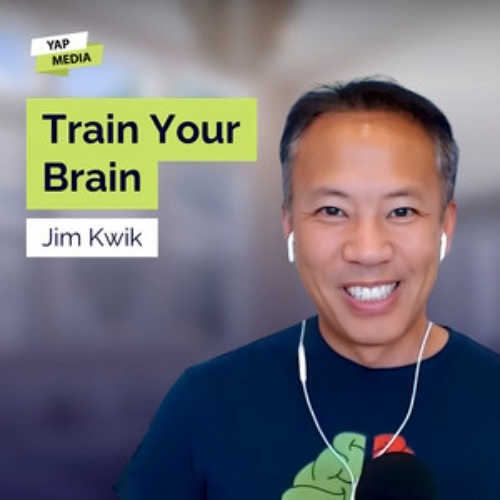
Jim Kwik: Fix Your Brain Health to Unlock Limitless Memory | Mental Health | YAPClassic
Jim Kwik’s brain health suffered a major setback after a traumatic injury in kindergarten. Labeled “the boy with the broken brain,” he believed his intelligence was permanently limited due to learning difficulties, poor focus, and memory issues. This mindset shifted when he discovered a new way to learn and train his brain. In this episode, Jim reveals how he improved his memory, transformed his brain health, and reframed limiting beliefs to unlock limitless potential.
In this episode, Hala and Jim will discuss:
(00:00) Introduction
(01:20) Overcoming the “Broken Brain” Label
(07:11) The Shift That Changed How He Learned
(16:12) Immigrant Mindset and Inner Strength
(21:20) The Science Behind Motivation and Learning
(29:36) Myths About Brain Health and Intelligence
(34:33) Training Your Memory for Real-World Success
(40:46) The B-SUAVE Method for Remembering Names
(46:05) How Technology Weakens Brain Performance
(52:03) Loving and Training Your Brain
Jim Kwik is a world-renowned brain coach, memory expert, and author of the New York Times bestselling book Limitless. With over three decades of experience, he teaches high performers how to improve learning, focus, and brain optimization. Jim is also the host of the top-ranked Kwik Brain podcast, where he explores brain health, cognitive wellness, and mental performance.
Sponsored By:
Indeed – Get a $75 sponsored job credit to boost your job’s visibility at Indeed.com/profiting
Shopify – Start your $1/month trial at Shopify.com/profiting.
Spectrum Business – Keep your business connected seamlessly with fast, reliable Internet, Advanced WiFi, Phone, TV, and Mobile services. Visit https://spectrum.com/Business to learn more.
Northwest Registered Agent – Build your brand and get your complete business identity in just 10 clicks and 10 minutes at northwestregisteredagent.com/paidyap
Framer – Publish beautiful and production-ready websites. Go to Framer.com/profiting and get 30% off their Framer Pro annual plan.
Quo – Run your business communications the smart way. Try Quo for free, plus get 20% off your first 6 months when you go to quo.com/profiting
Working Genius – Take the Working Genius assessment and discover your natural gifts and thrive at work. Go to workinggenius.com and get 20% off with code PROFITING
Experian – Manage and cancel your unwanted subscriptions and reduce your bills. Get started now with the Experian App and let your Big Financial Friend do the work for you. See experian.com for details.
Huel - Get all the daily nutrients you need with Huel. Grab Huel today and get 15% OFF with my code PROFITING at huel.com/PROFITING.
Resources Mentioned:
Jim’s Book, Limitless: bit.ly/-Limitles
Jim’s Podcast, Kwik Brain: bit.ly/KB-apple
Jim’s YouTube: youtube.com/c/JimKwik
Jim’s Instagram: instagram.com/jimkwik/?hl=en
YAP E385 with Jim Kwik: youngandprofiting.co/E385
The 7 Habits of Highly Effective People by Stephen R. Covey: bit.ly/-7Habits
The Power of Positive Thinking by Norman Vincent Peale: bit.ly/TPoPT
Think and Grow Rich by Napoleon Hill: bit.ly/-TaGR
Active Deals – youngandprofiting.com/deals
Key YAP Links
Reviews – ratethispodcast.com/yap
YouTube – youtube.com/c/YoungandProfiting
Newsletter – youngandprofiting.co/newsletter
LinkedIn – linkedin.com/in/htaha/
Instagram – instagram.com/yapwithhala/
Social + Podcast Services: yapmedia.com
Transcripts – youngandprofiting.com/episodes-new
Entrepreneurship, Entrepreneurship Podcast, Business, Business Podcast, Self Improvement, Self-Improvement, Personal Development, Starting a Business, Strategy, Investing, Sales, Selling, Psychology, Productivity, Entrepreneurs, AI, Artificial Intelligence, Technology, Marketing, Negotiation, Money, Finance, Side Hustle, Startup, Mental Health, Career, Leadership, Mindset, Health, Growth Mindset, Biohacking, Manifestation, Life Balance, Self-Healing, Positivity, Happiness, Sleep, Diet
Hala Taha: [00:00:00] [00:01:00] Young and profits today, we're welcoming back the world's number one brain coach Jim Quick.
Jim first joined us on episode one 90 where he broke down powerful memory hacks, accelerated learning techniques, and his journey from being labeled The Boy with a Broken Brain to becoming a global expert on mental performance. This time, Jim returns with fresh insights for the AI era, showing you exactly how to upgrade your brain so you don't just [00:02:00] keep up.
Stand out. We're diving into cognitive fitness focus, sleep optimization, and self-awareness, so you can turn AI into your competitive advantage. Plus, Jim shares his brain type framework to help you learn faster, think sharper, and perform at your highest level. But before we get started, if this is your first time tuning in, make sure you follow us for more amazing value packed content.
Jim, welcome to Young and Profiting podcast.
We're good to be back. Thank you everyone who's tuning in for this, uh, brainy conversation.
Yeah. I am so excited to talk to you. You came on a little bit over a year ago, and since then so much has changed. AI has taken over the world. I think in our last conversation, we didn't even bring up ai.
We're gonna play our previous conversation on Friday. We talked about memory techniques. We talked about your early childhood and your career journey. So if you guys wanna listen to that, check that out on Friday. But today we're just jumping straight into how we need to evolve our brain. Now that AI has [00:03:00] taken over.
So you talk about new mind for a New World, what do you mean by that?
Jim Kwik: As everyone who's listening could relate to, we're, we're living in the fastest changing era in human. Technology is evolving faster than our biology. So when I say New mind for New World, it's really about developing a competitive advantage that AI potentially is not gonna as easily duplicate.
A trained, an energize adaptive, a creative human brain. So what does it mean practically? I dunno if you saw this a couple months ago. There was the CEO of DeepMind over at Google, their top AI scientists and his exact quote was, learning how to learn will be this generation's most needed skill. I think that's very telling.
So it means upgrading how we learn, uh, expanding how we think. You and I have talked about protecting our focus, strengthening our memory, developing [00:04:00] wisdom, not just knowledge. So, you know, I have a general belief that AI. For me, AI is not so much about artificial intelligence, it's really about augmented intelligence.
You know, it's a partner, it's a collaborator, it's a tool. Just like any tool, it's a form of technology, but if you don't upgrade the firmware of your mind, right, even the smartest tools would help you to overcome the limitations that you have. And so I'm, I'm very optimistic. about technology.
I've always been pro technology, and so I'm excited for this conversation.
Hala Taha: You just mentioned, we have to learn in a different way. Now that AI is around, we can't just totally depend on AI for everything. We've gotta use our human intelligence as well. So talk to us about how we should actually leverage AI when it comes to learning, or the different ways that we should be learning now that AI is here.
Jim Kwik: In broad strokes, then we can get into the real specifics. And, uh, our previous conversation, we go into a lot of accelerated learning techniques. I think [00:05:00] AI has shifted us from thinking to outsourcing our thinking. I talked about this in Limitless even when it came out five years ago. I talk about digital distraction.
I talk about digital dementia. Our memories aren't as strong 'cause we're relying on technology to remember things for us. I talked about digital deluge, which is the overload and overwhelm, which AI. Now, some people are suggesting that in the amount of information is doubling every 12 hours because just think about all the information, all the content, I feel like, and so that amount of information doubling Disney speed is how we learn and retain it and understand it.
You know, it hasn't grown a lot. So that growing gap creates a lot of. Challenges in terms of overload, information, anxiety. A term I coined was digital deduction where we are outsourcing our thinking. And mirror mind is like a muscle, it's user or lose it. We've gone from remembering to searching for things.
We've gone from analyzing to, uh, everything is auto completing for ourselves and AI is accelerating the answers, which is very convenient, but I think it atrophies [00:06:00] things. The mental muscles required for. Focus for problem solving, for innovation. For original thought, it's like a, a technology is. If your office or your home is in the fourth floor, an elevator or a lift is a form of technology.
Very convenient. But then there's a cost because then we're not taking the stairs where we could get some physical fitness. And so I feel like again, your mind or your brain is like, use it or lose it. If I put my arm in a sling for a year, it wouldn't stay the same. You go stronger. It would atrophy. And that's my concern.
'cause we're seeing right now, there was a study at MIT where students would take. Some kind of exam and they had chat, GPT, others had Google search, others had to do original content. And we see declines in working memory. We see weakened critical thinking skills. We're seeing shorter and shorter attention spans.
So it's the over reliance on these external brains. I'm concerned about where AI is incredibly efficient, [00:07:00] but where I feel like we have to make choices and who am I to say where that needle should go? I don't wanna replace effort. Just like working out and exercise and physical fitness. So I think tools should amplify our potential, amplify our, um, impact and our intelligence, but not sedate it, not anesthetize it.
Hala Taha: And I feel like there's certain things that humans are better at than AI and certain things that AI is better at than humans. So I thought we could warm ourselves up playing a little bit of an interactive game where you say, is it human ai or tie in terms of the ability, who does it better? Human AI or tie.
Okay, so the first one is creativity.
Jim Kwik: I'm an error on human. I am human, so it could be an error. I think AI mixes, but in terms of creativity, humans creating something new and originating a new thought, I like that because I think creativity, again, AI is mixing [00:08:00] things, but it's not necessarily originating new things, and that's how I view creativity.
Hala Taha: Okay. Critical thinking.
Jim Kwik: Oh, these are all gonna be really close.
Hala Taha: Well, they can be a tie too.
Jim Kwik: I'm very pro human, so I'm gonna, I think a lot easier to do that way.
Hala Taha: That's okay,
Jim Kwik: because still they're chess players that are beating ai. Um, I would go human AI analyzes. Okay, so it depends how you were defining things.
AI analyzes better than humans, but I think humans discern, meaning I would skew it more human
Hala Taha: memory recall.
Jim Kwik: Ooh, AI stores more information, no competition, theirs. So I would have to give it to ai. Humans remember things, uh, that matter, especially emotionally, but there's definitely gonna be some kind of ceiling.
Hala Taha: That's kind of the purpose of ai, right? You feed it stuff and it kind of remembers it and gives it to you back. Pattern recognition.
Jim Kwik: I would have to give it to ai. Humans are great pattern recognizers, but AI can analyze [00:09:00] things in much more data than humans can.
Hala Taha: How about cross domain pattern recognition
Jim Kwik: that I would give to humans? I think this is where a lot of breakthroughs come from. Cross domain, looking at things from, uh, different verticals. Yeah, I would keep that more of a human quality.
Hala Taha: How about imagination?
Jim Kwik: Imagination and intuition I would give human.
Hala Taha: Jim Kwik: AI can remix things that already exists, but humans could create new, even for intuition.
I think humans always, you know, it's wisdom is encoded into our being more instinctual.
Hala Taha: I feel like this was a really great overview and it shows that humans actually have a lot going for us. Right. That AI's not gonna replace us right away, I don't think.
Jim Kwik: I mean, you hear this all the time, that AI won't replace you.
It'll replace, you know, the person who doesn't use AI compared to somebody who does use it. It would certainly have an advantage, but I think it's also, I think it'll replace a person who won't adapt. And I think that's the [00:10:00] purpose of us being here as human beings is to evolve. You know? And so I think AI won't replace the mind.
It's here to reveal what our mind is truly capable, whether AI will take your job. I think the real question is, will I make the commitment to upgrade In my mind, we are always upgrading to the next, uh, GPT or next app or next phone. Are people gonna upgrade their minds fast enough to take advantage of all the opportunities that AI is gonna be creating for you?
So AI is a tool, but I always think about how AI can enhance ai, you know, human intelligence, because that's the ultimate source, right? It was human intelligence that created ai, and I feel like AI is like a hammer, but. Humans are the hand that's wielding it. So it's our ability to adapt, to unlearn, to relearn, to create new thoughts, to upgrade our performance.
It's gonna determine more the quality of our life, the quality of our business, quality of impact than any technology will.
Hala Taha: Where do you personally draw the line when it comes to ai in your day-to-day [00:11:00] work? How do you use it and where do you say, I'm absolutely not using AI for any of these sort of tasks.
Jim Kwik: Our team is very pro technology because I feel like we're at a disadvantage if we don't, so at all areas of our business, from customer service to marketing to content, we use AI as a support. We're always looking to be able to simplify, to amplify, to automate things. Um, because ultimately our time is limited, right?
Our energy is somehow limited. Our focus is limited, but what's limitless is leverage. I mean, it's hard to find one area of our life where I don't use technology, but I also, there's a quote in Limitless that says, life is letter C between B and D, or B is birth, and D is death and life C is choice. These difficult times, they could distract you, which many people are distracted, these difficult times can diminish you.
People feel like I'm more limited sometimes, or these difficult times they could develop us. You know, we ultimately decide, I'm trying to make a conscious effort, whether it's AR or any form of technology, to [00:12:00] spend less time on screens when I don't have to. So if there's an analog opportunity just for my, and again.
Dating myself and I'm in my fifties, but I also, you know, embrace technology. But I always like reading books, like real paper books, you know, because I don't even an excuse to be on a screen, but I'm practical when I'm traveling. I can't carry seven books because I read a book a day, and that's not very practical.
So I'll, you know, I'll read something on a screen. I put Borders and Boundaries though. I do a digital detox once a week. Whether it's like a full Sunday or, or a certain amount of time, I definitely have borders and boundaries around the morning use of technology and the evening use of technology because I find I'm extremely sensitive and I don't wanna start my day in that distracted kind of mode or reactive kind of mode.
And you know, I wanna make sure I go to sleep and I'm not on my devices doom scrolling and context switching. And I don't wanna get that parasympathetic rest and digest. But I like to indulge in things that are, are more human. Intuition that I mentioned. [00:13:00] Imagination, creativity, something that AI can't make, like judgment calls things.
When we're talking about ethics, when we're talking about nuance, when we're talking about human values, I like to be mostly creative myself and then use AI as like a content partner. So I like to come up with new ideas because I always ask myself questions like, I'll also do it a different way. Or if I was in this profession, how would I look at this?
You know, I think creativity is connecting dots from other fields. My meditation, that's self-awareness, exercise, mindfulness exercises in the work, the intrapersonal development. I also wanna just, but not lose my compassion and my empathy. Feeling on other people's life, and sometimes when we're so data driven, we forget they're human beings.
Even something simple like we have students in every country in the world, you know, we have over a hundred million downloads on our podcast, you know, a couple million on YouTube, but it's so easy to look at stats and forget. There are stories behind them. So in our Slack [00:14:00] even, we take all those joy stories, these testimonials, we take screenshots, put it up in our Slack channel called Joy Stories.
And every time somebody logs in from work, first thing they start today, wherever they are in the world, they have to read those first just to remind people, you know, why we do what we do. So I feel like those are human elements.
Hala Taha: I know that you were just saying. You read paper books and you do things to strengthen your brain like it's a muscle.
You talk about mental fitness a lot, and you were also mentioning early on in this conversation how AI is weakening everybody's brains to a degree, because we're becoming more dependent on it. So what are some actionable things that we can start doing immediately to just make sure that we're still using our brain, even though we have all of this technology at our fingertips?
Jim Kwik: First of all, we teach people the software, how to learn faster, how to learn a language, how to read faster, how to remember facts, figures, give speeches without notes, not have to use a [00:15:00] teleprompter when they make videos or whatever it is like that. That's more of the program software. Put or remind people how important it is to, to also take care of the hardware, which is that three pound matter between our ears also.
I could teach somebody great techniques on how to learn faster or how to focus better, but if they have brain fog or they're struggling with mold or they're not sleeping or whatever, they're just not gonna get the kind of results that they're hoping for. So, um, just four things just to think about that are easy enhancements as to take your meds.
MEDS, just really quick, the is meditation. I don't know if you have a mindfulness practice yourself.
Hala Taha: Not really to be honest. Like I've interviewed Deepak Show Front and all these people and I still haven't done too much of a mind. I do a lot of like visualization and mental imagery is what I like to do, and I definitely think a lot and take walks, but I don't sit there and I don't think formally meditate.
Jim Kwik: I think [00:16:00] nature is a wonderful way. Nature for me is a cure all. And we hear a lot about a DDI think a lot of people suffer from nature deficit disorder, and that could be a way of reconnecting with yourself. You disconnect to reconnect. So yes, chronic stress is a big challenge for a lot of people and it could shrink the human brain.
So that time off, even if it's five or 10 minutes, took reset and rejuvenate. I feel like it's a necessity. I feel like I'm at a disadvantage if I don't do it. 10 minutes a day, twice a day, especially when my mental energy is dipping like wrapped or lunch or something like that. D is exercise. I just wanna remind everybody that as your body moves, your brain grooves, when you exercise, you create BDNF.
Brain derived neurotropic factors, which is the key to neuroplasticity is fertilizer for your brain, the D'S diet. What you eat matters, especially for your gray matter. So we talked a lot about last time some of the best brain foods in the new book. We talked on your tropics, like certain substances that are highly studied that has been shown to enhance cognitive performance.
Your [00:17:00] focus, your memory, your mood, your mental energy. We put a listing actually on the website, stuff like that, brain nutrition.com. You have to buy the book. We put all the studies and different things that's been tested well and then the S is sleep as, as great as AI is. But you know, as helpful as for our business, for entrepreneurs to level up learning and life.
If you're not sleeping, how's your brain gonna even interact with ai When you're suffering and you're making mistakes or you don't have the mental energy or your focus is slipping and can't understand what you're learning through ai. So I would start with those four basic things. And most of it outside of diet, which food we're paying for anyway is free meditation, exercise, sleep.
So it doesn't take a lot of time, but there are big needle movers for sure.
Hala Taha: Sleep is just so important. And I was reading something from you recently where you were talking about sleep is very important for learning and we actually learn in our sleep. Can you break that down for us?
Jim Kwik: [00:18:00] So when we sleep specifically for our brain, I wanna highlight two things.
When you sleep, you clean out the beta IC plaque that could lead to brain aging challenges and Alzheimer's. And dementia doesn't just show up at a later age. There's like a 30 year runway. So I would say that taking care of your sleep, that's when the sewage system kicks in in your brain. But also that's where you consolidate short to long-term memory.
So if you have memory issues, check your sleep. Most of us could get a sleep study done. You may have to go to a sterile sleep clinic and stay the night there with all these cameras and you can actually get one at home sent to you. And it's very easy. A lot of people suffer from undiagnosed sleep apnea, which is a breathing disorder, and they're like, can have oxygen.
They're waking up, not be able to breathe. So I think that that's important. And in terms of optimizing sleep, I mean you want to. Keeping your brain young. And the good thing about what I teach is it's very measurable. I've been doing this for 34 years and I'm reading faster. I'm remembering more.[00:19:00]
And just wanna let people know, you know, while they can grow older, they can grow better. But you need to challenge your brain. You need to oxygenate it, you need to nourish it, and you need to rest it. And also connect it with a sense of, of purpose. You know? And I know I'm probably preaching to the choir.
Most people know that with reasons come results and you know, be able to follow certain things that sustain you over time. Because I think a lot of people are burnt out, not 'cause they're doing too much. Sometimes we're burnt out 'cause we're doing too little of the things that light us up, the things that make us come alive.
And so those are the reasons. So I talk about the reasons to sleep because otherwise we won't. Do with the things, right? Consolidating memory, you know, clean out the toxins when you sleep. Also, it regulates your hormones. It repairs your brain cells. So with bad sleep, you have bad memory. With bad memory, you have no learning, bad learning.
You have no leadership for your business. How's your sleep in general?
Hala Taha: To be honest, my sleep is usually pretty good. I really care [00:20:00] about my sleep. For example, before interviews, I'm so serious about I have to get good sleep. 'cause I know the number one way that like I'll do terrible on an interview is this.
For some reason I get bad sleep. I could not study enough or be stressed or whatever and be fine. It's like when I don't have sleep, I just can't think. So to me, it's the most important factor.
Jim Kwik: Yeah, so even when people think about their schooling, if they pulled allnighters, it's not good for your learning Also as well, even taking naps after you learn something, it's been shown to, to enhance your recall of that information.
So you can use naps or sleep or meditation very strategically also as well. My favorite thing with sleep. Because I, you know, I work with a lot of athletes and, and certainly a lot of CEOs and, you know, even world leaders talk about the importance of sleep. And I never make an important decision on a bad night's sleep because you're just gonna make more mistakes right when you're sleep deprived.
So, um, I would say direct sunlight first thing in the morning. 10 minutes is a non-negotiable [00:21:00] for me. Your eyes are only part of your brain that's outside your skull, so it resets your circadian rhythm. So when you get early sunlight, you're gonna sleep better at night overall, not through windows. 'cause it could filter out a certain spectrum of light, but just going outside, even if it's hazy or foggy, you'll still get the benefit.
Number two, watch your caffeine intake if you're sensitive. I'm very sensitive to caffeine, so I can't do caffeine past noon 'cause it could stay in your body upwards of 10 hours. Number three, I would say you have an alarm clock to wake up. I would challenge everybody. And just one little thing to have an alarm clock, to go to bed.
Your brain loves a schedule even on weekends, and no one's perfect about this. I certainly am not. You know, I went to the Wicked Premier last night in New York City and I didn't get back, you know, until 2:00 AM So there, there are off days, but in general, to the degree you go to bed at the same time, wake up at the same time, you'll have better overall sleep long term.
And then finally, two big ones. You know, it'd be time to sleep. 'cause the environment would tell you thousands of years [00:22:00] ago, it would get darker and it would get cooler. And so sleeping in a cooler environment will help you sleep better. Now, where it's so cold, you're shivering 'cause that'll wake you up.
But even if you take a nice warm bath or warm shower or a sauna, you get out your core body temperature drops and that's a signal for your nervous system for you to create. Melatonin, which is the hormone that tells you it's time to relax and then dark, as dark as you can make it. And one of the culprits there again, is our screens.
Right? When you're on your phones, the blue light could fool your mind in think it's still daylight and you won't create that melatonin. So sleep is a non-negotiable or anyone who wants to perform.
Hala Taha: Now let's talk about how our brain is actually performing in modern day life. So you were just talking about blue light that impacts our sleep, and I think I heard from you in the past that our brain is really operating at 40% capacity, usually. Talk to us about why that is.
Jim Kwik: There's a myth out there that says we only use 10% of our [00:23:00] brain. We actually use all of our brain. Just like if you're going for a hike, pretty much your whole, all your muscles are engaged. It is just some people are more physically fit and they have some techniques and what would crush somebody else won't challenge another person because they have physical fitness and health.
Same thing with having greater brain fitness and brain health. It's just not a challenge as much. They could go longer. They could. Retain more, they can perform better. So I, I would say if we don't utilize as much of its potential on, on a regular basis, it's because we weren't shown how even, like, I think number one reason we have brains besides controlling our movement is to be able to think, to be able to learn, to be able to adapt.
But when did we learn how to do any of those things? Right? School taught us. What to learn, math, history, science. But there are no classes or courses on how to learn how to think. They teach you what to think or what to learn, but not how. And so I would say a focus on, you know, just like the CEO of DeepMind, Google's DeepMind AI program saying, learning how to [00:24:00] learn.
I would say your ability to learn to unlearn, to relearn is the ultimate advantage. 'cause then if you learn rapidly, everything else is easy. You could apply it towards money, music, martial arts, marketing, Mandarin, whatever. Everything gets easy. And so. I wrote Limit List. We do our podcast to give people an owner's manual for your brain.
But I think it starts with awareness. Like any change is know thyself. And a lot of people, uh, you know, it's hard sometimes to go inner and kind of think and look in the mirror and, and see the things that we need to get better at to make a better life. I would also say part of it, besides awareness as a commitment, I mean, if we're gonna get really raw, change is scary because it's the unknown.
Your nervous system's not designed for growth. It's designed for safety. Right? And when it was to preserve your survival, it's scary going up to that person to start a business or get an investor or working out or studying something brand new, that's just scary 'cause it's unknown and our amygdala fires off like [00:25:00] it's a threat 'cause the unknown is threatening.
Right? And we act like it's a saber tire even though it's not. And we're in our survival brain, which is like fight or flight, but it, it holds us hostage from the executive functioning, our ability to make decisions. Our ability to adapt, our ability to innovate, solve problems, all those things that make us better entrepreneurs.
Safety is important, but I would say life is hard, and growth is hard. Change is scary. Growth is hard. Nothing is as scary and hard as being stuck somewhere you don't belong. And I feel like if you're gonna go, especially on the entrepreneurial path, either aspiring or maybe you're more established, it's been the biggest growth experience of my life while I read every day.
And I always level up and I mentors and coaches running a business. Wow. This is like your. Intimate relationship is like a mirror pushes you in ways that you need to develop. Right? And it's not necessarily getting that goal, it's who you have to become that worthy to be able to create that goal. [00:26:00] But yeah, I would say being stuck somewhere you don't belong is hard, right?
But. Life is hard for one of two reasons though. Either you leave your comfort zone, you start that business, you market, you get your brand out there, whatever. Or life is difficult 'cause you stay in your comfort zone.
Hala Taha: Hmm. Right?
Jim Kwik: Mm-hmm. And while the comfort zone's a nice place to visit, nothing grows there.
And so we adapt through change. And so I think one of the most important skills to develop for all of us is a level of cognitive flexibility and cognitive anti fragility. And I don't talk a lot about. These concepts, but I think there are two things that turn to hear more and more about cognitive anti fragility is we, we all hear about resilience, right?
You wanna be more resilient. Resilience is in the form of challenge or struggle. You bounce back, you're resilient, right? You, you take a hit, you bounce back to baseline. Cognitive anti fragility is not just bouncing back, it's bouncing forward. It's a law in nature and biology, for [00:27:00] example. Hormesis or hormetic response, like a lot of biohackers talk about this, like temperature cold therapy or uh, heat adaption.
That's a hormetic response. We're getting stronger because we're challenging ourselves. A child's immune system. We know that children at an early age are exposed to more bacteria, different forms. Their immune system is stronger, so that's anti fragility, right? They're not just resilient, that they're actually stronger because that challenge led to change, but.
Are we doing hard things and we don't necessarily have to seek hard things 'cause a lot of life can be hard also as well. But you wanna be, you don't want things to break you where you're so rigid. And that's where cognitive flexibility comes in. 'cause if you're rigid, you break, but if you're like morally a bamboo, you, you bend, right?
And, and then you grow. So cognitive. Flexibility, which I think is extremely important nowadays is like mental parkour. You ever see those people on, like YouTube or [00:28:00] whatever, social media, TikTok, they could just like jump from here to there and do all this amazing things with their body. I feel like mental cognitive rigidity, you'll pay a price in business.
I mean, the classic examples are things like Kodak. They had the most amazing engineers. They created the basis of the digital photography, but they're gone. And you know, Instagram, everything else is there. The technology lives on 'cause they were cognitively rigid. They weren't cognitively flexible. You could do the same thing for Blockbuster, you know, or Netflix, you know, in terms of how things evolve.
So I feel like as human beings, if we're too cognitively rigid, we're not open. Our minds are like a parachute only works when they're open then we're in trouble. And so cognitive flexibility. How can you be more cognitive, flexible? How can you see things from other people's opinion? How can you change your beliefs based on new data?
Because it's hard because sometimes our egos are, are attached to it. Our identity is attached to a certain way. Or we have sunk fallacy where we've invested so much in this certain thing, [00:29:00] a way of learning or a way of studying, and then something else comes new that might be. Brighter and better, but we're stuck because we've invested something and what are we saying about ourselves, you know, if we just spent years learning something or being a certain way and take this in.
Anything from micro to macro politics or whatever. So I think cognitive flexibility and how do you build again? Cognitive anti fragility. You challenge yourself on a regular basis. You expose yourself to new ideas. You get out of the echo chamber that we often are driven by algorithms. You had a great interview I listened to with Mo and with the algorithms.
There's an algorithm to social media, whatever you engage with the most. Algorithm learns that gives you more of that information, but you're never getting the the other side of it, and you just feel like that's your newsfeed and that's your life. But your mind also has a similar algorithm. Whatever you engage with on a regular basis, your reticular activating system is being trained to look for that stuff.
And [00:30:00] so if you just look at. Everything that's dark and doom, scrolling, whatever. You start seeing that everywhere throughout your day and you feel like that's what life is or that's what possibility is, or that's what the economy is, or that's what the opportunity is. So I think we have to stand guard to our mind, you know, just as we are with our body being on the.
Water that we drink or the food that we eat, we have to stand guard to what's going, because food is just information. But learning is also information also as well. So we have to be very discerning. And also even like if you're debating somebody, maybe it's a family member or friends, you know, during holidays or whatever, it takes a lot of courage to just to.
To have empathy, not saying that person is right, but like an exercise would be like, if I had five minutes, how can I argue for that person in their favor, right? And be able to take on and try on new point of view. And I, I just feel like that it's a certain level of mental maturity and, and strength to be able to entertain different ideas.
Make decisions based on your current understanding of things. So [00:31:00] cognitive flexibility can be enhanced by going outside your domain, and that's where a lot of innovation comes from, from an entrepreneur. There's a book called The Structure of Scientific Revolution, and I think it's kind of boring, but.
What I got out of it is most innovation comes from people outside your industry because it takes somebody else from the outside to look in with a different point of view that doesn't have the same learned helplessness, or this is the way you do something like Elon Musk looking at the car industry saying, Hey, if we're gonna make automobiles today with today's technology from zero thinking, how would we do.
That's amazing. So listen to podcasts that you wouldn't normally listen to or follow other people that you wouldn't normally listen, just to kind of keep cognitively flexible. And then in terms of resilience, how do you do difficult things? Right? And now I would start small. I've talked for 30 years about, Hey, when you wake up, try it.
Brushing your teeth with the opposite hand. 'cause it could stimulate different part of your brain. But then what it's doing is it's getting you to do something difficult. It forces you to focus so you exercise your focus muscles because you can't do it without focus. [00:32:00] But also it becomes a great like an entry habit because you're like, wow, I could try now.
It's a habit after. A week or two of doing it, what other habits can I stack onto it? And so seeking difficulty in ways that's also not gonna create any kind of permanent damage or hurting anybody. I think there's benefit because if you just do the easy things in life, put things off, procrastinate. And life gets hard.
We tend to do the hard things and have that typical conversation and things tend to be easier. So I feel like, uh, those are two things that are never ever talked about. Cognitive anti fragility and cognitive flexibility. Meta learning, the idea of learning how to learn meta thinking, which is the science of thinking about your own thinking.
'cause most people just think these are just how things are. And a belief is nothing but a thought that you've had thousands times that you're. I think 40% of what we do, how we think is habitual. Right? It's on autopilot [00:33:00] and I feel like those are the programs we wanna upgrade. 'cause it's shaping everything.
Hala Taha: Such good advice for entrepreneurs. So thank you for sharing that. And entrepreneurs also, aside from just challenging themselves, they need to focus, right? Especially, there's things that we need to do as entrepreneurs that we don't necessarily want to do, we don't enjoy doing, but we have to do them and we have to get it done.
So can you help us understand some of the things that prevent us from focusing these days and how we can avoid things like multitasking and context switching.
Jim Kwik: So multitasking we know is a myth. You're really test switching and the thing you think you're gaining, you're actually losing, which is time when you go from one thing to another.
I'm talking about cognitive things. We call, walk, and listen to a podcast, right? Because the walking is physical. But when we're trying to do two mental things at once, uh, it doesn't happen very well because when we switch back and forth, it could take five or 10 minutes to regain our focus. So you actually lose time.
The second thing it does, uh, is you make more [00:34:00] mistakes. We work with a lot of doctors worldwide. We know surgeons that try to multitask during operations will make more errors. Surgical errors, I mean, think about driving and which is mental and texting, which is mental. There are gonna be more accidents.
Right, so switch from multitasking to monotasking. The third thing people don't think about is it wastes a lot of energy. So when you're focused on a task like your writing or checkup slack and you switch to something else, then you have to shut this down, turn this on, use a lot of. Mental energy use a lot of blood glucose, so people struggle with mental fog or mental fatigue.
That might be why you're trying to have too many tabs open. And even if they're minimized, they're still using energy to be able to keep it up. So Singletasking, I'm a big fan of. Screen free mornings, and I have a video with me and Simon Sinek. Uh, I just saw it on my Facebook. Memories came out nine years old.
It has like 40 million views, and it's just me saying, don't touch your screen, your phone, the first 30 minutes a day and the last 30 minutes a day. But just we [00:35:00] talked about that and I think a dopamine fast. There's all kinds of studies saying that your brain can reset after a few days off of. Some technology.
I'm a big believer that focus is not something you have. It's something you do. We hypnotize ourself by saying, I don't have focus. I don't have motivation, I don't have energy. I don't have a great memory. These are not things you have. They're things you do, and I think entrepreneurs need to embrace and get in the habit of taking the nouns in your life.
I don't have an energy, I don't have focus and turn 'em into verbs. You do focus. You generate energy, and then once you turn into verb, then there's a process and it gives you your agency back and entrepreneurship's all about personal responsibility, right? You're not putting it off to somebody else.
You're not blaming, you're not complaining. It just wastes a lot of time and nobody really cares. And I would say. Personal responsibility is so very important. And focus is also muscle, but it's used to lose it. Just like our memory. If you're not working your memory, you're not gonna remember things. But the more you train it, you are like, I don't even have to think about remembering people's names just [00:36:00] 'cause I've done it for so long.
'cause that muscle is built just like driving a car, you know, mental muscles. But I think deep work blocks is very important. Spending a timer and saying, for next 25 minutes for a Pomodoro technique, I'm just gonna focus on this one thing. Or you could expand it. You could do a whole cycle for 90 minutes.
Cal Newport talks a lot about deep work, but that's a way of developing your focus muscles. But the first thing you do is pick up your phone, like share a comment, CAD video, whatever, is just driving this dopamine distraction. Then you wonder why you can't focus in a meeting, right? Or or in a sales call or with a client.
And I would go back to focus exercise. Um, is meditation because I don't meditate at all to become enlightened. I meditate because invariably my. Thoughts will go somewhere else. And when I pull it back to my breath or a mantra or a candle, whatever your technique is, then I'm training my focus muscles, right?
I built a [00:37:00] pathway back to being present. And so when I'm distracted later on with our kids, with a client, whatever, I could pull my focus back faster than normally. And then the last thing I would say about distraction and focus is we have to master your environment the the most underrated. Hack there is, is managing your environment period.
Just like when it's sleep. If you built out a sleep sanctuary where it's very conducive with that, when you go in that environment, you get into that relaxed state. But if you're working in your bed and what, what are you doom scrolling? What are you telling your brain and your nervous system to anchor to that activity, but also your work environment?
That is a big deal. And I would also say that environmental design for focus is things like, on our podcast we had a conversation about clean environment, like clean air. You could go three weeks without food. You could go three days without water, but you go three minutes without air. [00:38:00] And most people drink when it comes to water.
Two liters of water a day. But we will breathe 17,000 liters of air. And you have no idea what mold with neurotoxins coming from perfumes or candles or the offgassing on furniture, besides what's out in the city environment, the effect it has on our nervous system. So I would say environmental design for focus.
So, you know, are you controlling your environment as best you can to completely focus? 'cause your external world's a reflection of your internal world. And if you have a lot of mess around, it takes unconscious energy to be able to keep track of all these different things. And that's wasted focus, right?
It's, it's diffused, not directed. So attention is a skill. It's not just a skill, it's a training protocol. So like for your environment, are you reducing visual clutter? So it's not stressing out that are you removing digital noise? You set focus windows of a certain amount of time [00:39:00] that you're gonna work, had you hide your phone in another room?
I think one of the most important functions on your phone is, is airplane mode. And are you working with intention, right? Not inertia. Your environment is either a cage for your potential or it's a catalyst, right? Where you go into that mode and. I focus, I just, it's like explaining to somebody what a flower smells like, who's never smelled a flower or what a rainbow looks like for someone who's never seen a, a rainbow.
I feel the same way about learning, about memory, about creativity, flow states focus, it's hard to explain, but when you experience it, it's like you just can't go back. It's just like certain foods, right? I, and I loved, you know, certain dessert, whatever, but nothing tastes as good as just feeling alive and vibrant and how that feels.
Hala Taha: Such good guidance. I personally love using the Pomodoro technique. I do either 25 minutes, 45 minutes, or 90 minutes, and my favorite thing to do is I have an iPhone. I'll be like. Put 25 minutes on the [00:40:00] clock and then Siri will be like 25 minutes counting down and that clicks on my brain like you can't do anything else but this task for 25 minutes, and in those 25 minutes, or 45 minutes or 90 minutes, whatever it is, I can't go get a snack.
I can't go walk around. I can't go pee. I have to just sit there. Do my work. And then once that's over, I reward myself with a snack, with a drink, whatever I was wanting in those minutes. 'cause what I find is if I go get up and have a snack or whatever, I pick up my phone or, and then it's, you know, you lost that time.
So for me, that Pomodoro technique really helps me just get the most important things I need to get done in the day.
Jim Kwik: People are watching this on video. I have a Pomodoro, it just means tomato. I just, I just have a simple analog. I don't even use my phone. I have this tomato timer used for cooking and I just put it on my 30 minutes and I go in state because you've done the reps and it's just like you do it and it's just like you don't have to use willpower or it's important.
Whatever we do repeatedly, we just get better at, [00:41:00] even with our thoughts, you know? That's why it's so important to control our thoughts and our feelings and our behaviors.
Hala Taha: One thing that I wanna go over with you before we go, I wanna understand our different brain types because I know in the new edition of Limitless, which we didn't go over in the first episode, you talk about four different brain types and not all of us really think or act the same way.
And then I was wondering if you could try to guess my brain type.
Jim Kwik: Yeah. Ab, absolutely. So, um. I realized that when people go through our trainings, whether it's petering, memory, focus, whatever, the techniques and tools help, but some people resonate with certain strategies and techniques better than others, like there's a greater reward or impact.
I realized that after 34 years of. As a brain coach that it's not how smart you are, it's how are you smart? It's not how smart your partner is, it's how are they smart? And we all have genius and certain strengths in different areas and I put it into four different [00:42:00] categories. And so people go to my brain animal.com and it's just four minutes, multiple choice and just pick the first thing that kind of resonates with you.
All right. So once you understand your dominant brain type, it changes everything in terms of how you learn, perform. It could also affect how you relate to your family, your loved ones, uh, how you hire, how you manage, how you sell, even based on brain types. So just the really quick of it, just think about the word code, and I'm sure a lot of people are taking notes.
CODE. So these are the four animals. The C stands for cheetahs. And cheetahs, their dominant trait is action. So if you know somebody who's just quick to act, that's their dominant trait. They're probably cheetah, they're fast, they're instinctual, they are quick thinkers. They prefer to move swiftly from one task, then go to another.
They thrive on speed, energy, and just even how it equates to learning. Cheetahs learn best by doing. They favor hands-on experience, quick decision [00:43:00] making, the dislike. Overthinking or overanalyzing paralysis analysis, right? Because they don't wanna stop. And then you can think about the environment. They thrive in fast pace environments where it's, you know, they have to problem solve and execute.
The challenges you know, they could struggle with is long-term projects that require patients study deep analysis and everything. The O and code are your owls and their dominant trade is logic. They're analytical, they're detail oriented. Owls are your thinkers. They love solving problems, complex problems.
They like diving deep into the data and they learn differently. Also, they learned well in structure environments where they could gather information, they could analyze, they could plan. They value precision so much, but then they could also suffer their challenges, analysis, paralysis, and so many different things.
The D are your dolphins. And your dolphins dominant trait is creativity. Imagination. They're very innovative. They tend to [00:44:00] visualize, like they have a vision for things that, that have passion behind the vision. Or maybe some people can't yet see it. It's like kinda like a Walt Disney or a Steve Jobs you could think about.
And their learning style tends to be more open and flexible. Or they could explore and create, they could brainstorm, right? Which kind kind of makes sense or create a problem solving. And then finally, the E actually I have here, this is your, your AI generated. If you're watching the video, this is your cheetah, your owl, the D is your dolphin, and the E are your elephants.
And the E are their dominant trait is. They are very inclusive, they're emotionally intelligent, they're strong eq, they're very community focused. They thrive on collaboration, teamwork. Their learning style is more, um, a group setting, right? Discussions, collaborations, they love work environments that really foster connection, emotional engagement.
So even when you just think about these animals, [00:45:00] like I had our team take this assessment. And, uh, a hundred percent of our, uh, customer service team. Which animal do you think they are?
Hala Taha: The elephant,
Jim Kwik: they're elephants, a hundred percent. And, and we didn't hire them based on that assessment, but we go to our strengths, right?
These are our community builders. They want our community and customer service. They want people to feel seen, feel heard. And my business partner of 18 years, she's our CEO. She's our dolphin. Like she has this vision for our mission, right? 1 billion brains. She has a lot of passion behind it. She's a great pattern.
Recognizer. Our CFO is an owl and we didn't hire again, but the CFO needs to see the numbers all the time, like data every day, and it also plays out in entertainment. You'll always see these archetypes take one of the most popular sitcoms, friends you would have Joey as a cheetah. Doesn't think, just acts right.
You have someone like Ross who's the scientist, professor who's your [00:46:00] owl? You have Phoebe, who's music and artist. Then you see your dolphin and then you have, you know, individuals like Monica who wants to bring everyone together. She always wants to host all the parties, you know, the community and so on.
So you see on Star Wars, Harry Potter, I can just go on and on. We can do this in business. We can analyze various icons like Richard Branson and Warren Buffet being the owl, and then so on. And so you'll see these all the time. And then, but once you understand your brain type, it shows you like your kids, what their brain types are or what your team is.
And then you could hire, you can manage different, and you could sell, like if you're selling to an owl, you're gonna use a lot of logic and evidence. And, and data. But if you're selling to, uh, a dolphin, you wanna talk about how your product or service fits into their vision, right? If you're talking to an elephant, you have to give 'em data all day long, or even talk about vision.
What they care about is the actual connection with you, right? The trust, the bond, the relationship takes priority. So, you know, everyone's different. But yeah, I, I feel like it's a game changer for [00:47:00] individuals. And that being said, everybody is not just one thing
Hala Taha: I was gonna say. After those descriptions, like I'm a cheetah dolphin.
That's what I feel like I am. Yeah.
Jim Kwik: Yeah. Well, that would make sense for what you've created. Because you have this vision that you built and you also have the action to create it too. Because some people could stay in ideation and just be creative all day and not do anything right, or other people could be just a cheetah and just act and not think about this spirit thing.
So you have a primary, you have a secondary and others. But it changes how you interact with yourself and it changes how you interact with other people. And if you wanna get more out of yourself and more out of the people around you, it all starts with knowing yourself. Even my favorite, one of my favorite movies, the Matrix, where Neo is going to visit the Oracle, right?
The all knowing wise Oracle in her kitchen. She's baking cookies. Most people don't see this, but when he walks in in the kitchen, you know, the sign above the door says, know thyself. And I think entrepreneurs. They need the curiosity to know yourself. That's why [00:48:00] people journal or meditate or go to therapy or whatever the process is to get their values and what they believe, what they stand for.
But then also the other part is once you have the curiosity to know yourself, you need the courage to be yourself as also a lot of people, entrepreneurs included, we're so concerned about. Looking bad or making mistakes or what other people, you know, expect of us parents, whatever, right. But having the courage to be that person that you know you are, takes a certain level of courage also as well.
Hala Taha: Yeah. And figure out what business partners you need. Like if you need an analytical mind in your business, you hire for that, or a visionary or whatever it is that you feel like you lack.
Jim Kwik: And not any one is better than the other, right? It just makes it more complete. Once you understand your brain type, it explains like a lot of your behavior and your results, and where can you surround yourself with other people who are in their elements also as well.
So basically, yeah. Cheetahs. Action first. Owls information first. Dolphins. Imagination first. Elephants [00:49:00] feelings first. And uh. Wonder when you're studying, you wanna learn something. That's a great starting point. 'cause if you study against your type, you struggle. You know, when you study with your type, you're really sore.
Hala Taha: So I'll find that quiz. I'll put it in the show notes so that everybody can take it, find out what their type is. All right. So as we close out this interview, Jim, I wanna be respectful of your time. I always ask my guests two questions to close out the show. So we'll start with the first one. What is one actionable thing our young and profits can do today to become more profitable tomorrow?
Jim Kwik: I would say, um, to be more profitable, you have to start before you're ready. Thinking is good, but overthinking. And wanting things to be perfect could just stall progress before it even happens. And the key for momentum is that start, and I would say the most important thing to start is to do the hard thing.
'cause the treasure you seek in life is hidden in the work. You're avoiding the ones that you're putting [00:50:00] off, that you're afraid to face. And if that's so intimidating for you, I would ask yourself, what is the tiniest action I could take right now that will gimme progress towards this goal where I can't fail?
But I'm, I'm a big believer in doing those hard things because you know what it does? It's like you tell your partner like, oh, I'm gonna bring out the trash, or cut the lawn, or whatever, and you don't do it. They have to remind you the next day you don't do it, then you're, you're breaking trust with that person.
They're not gonna believe anything you say. Well, when we break the trust that we have for ourselves, that's even more powerful than we don't believe anything we say, the goals we say we're gonna do, or the book we're gonna write, or the podcast that we're gonna start, or anything else like that. So I think one of the hardest things to do if the treasure.
That we see is hidden. The work we're voiding is if you feel the call for an entrepreneur or whatever your goal is, is to create evidence that you are the person that you, you say you are, right? The life you live are lessons you teach and don't work for likes, work for leverage. That will get us further than anything.
And [00:51:00] doing that work in the silence in entrepreneurship, and I've always been entrepreneur. I've never gotten a paycheck in my life, you know, since I was 11 years old. So maybe I have a different skewed view. But I just always value my freedom. I'm gonna do what I want, when I want for as long as I want.
And it's never been an easy path. Right? But I would say, you know, in terms of the growth that I've had is doing. The most difficult things that I never thought I could do, and then I have evidence that I am the person that I say that I am. Right? Because this formula, as you be, do, have share, right? Most people wanna jump to HA Park, which is why lotteries and everything else is so important.
You know, like so popular is they wanna jump to ha, but then they lose it. Within many years, 'cause they were never being a millionaire, so they weren't doing the things that millionaires do to have this kind of success they want. And so I would say do the hard thing that you're avoiding because that's where the treasure is.
And if it's too intimidating, then break it down in the small simple steps. And you keep your word to yourself like, [00:52:00] I have certain things I have to do every day. And I got in from this wicked. Premier that came in really late, but I didn't read that day. You know, it was like 2:00 AM but I still read. I probably didn't get that much out of it because I was exhausted, but I still did it because I showed up for myself and I kept my word.
And that's not to say you miss one workout or whatever. Your life is ruined anymore than any a Don ruined. But it's the consistency. Like I won't miss two days in a row. That's my standard. So if I commit to doing something. Maybe life happens, emergency, whatever. I miss it, but I won't miss two in a row because that's the standard that we hold.
And I feel like all entrepreneurs, you need to be a thermostat. You can't afford to be a thermometer or a thermometer just reacts to the environment. In human beings, we react to the weather, the economy, to politics, how people treat us. Fine. But that happiest and certainly the most successful people, they don't react right.
You know, they're a thermostat. They set a standard and the environment reacts to you. It gauges, it still knows that thermostat knows what the temperature [00:53:00] is, right? So we should know what's going on in our market and you know, our client, whatever. But then it sets a new temperature and then the environment reacts to us, you know?
And I feel like we impose our will that all entrepreneurship has been taking the invisible in your mind and making invisible out here and in the beginning. This is not for everybody, but for most people. 'cause we work with a lot of entrepreneurs. In the beginning you're underpaid, but you have to feed your business until it feeds you, right?
You have to feed your brand until it feeds you back. And in the beginning I just feel like we're underpaid. But then if you're consistent and you know, and you show up for yourself and show up for others, and you're smart, you're learning, you're adapting, then eventually you're just overpaid. 'cause you have scale and you have leverage.
And then that's the ultimate goal is to amplify not only your, your income, but your impact.
Hala Taha: I love that answer. That might've been my favorite answer all year for that question, to be honest. It was a really good answer. So let's talk about what your secret is to profiting in life. And this can be all [00:54:00] aspects of life.
Jim Kwik: I mean, everybody will share this differently. My values are very clear. Everyone's values are different. Me, it's love, growth, contribution, adventure. And now that I know, 'cause it's not just speed, you know my last name is quick and we teach people how to learn quick and think quicker and read quicker and remember things refraction at the time.
But it's also direction, A lot of people are going nowhere fast because they don't have that direction. So I feel like beginning with the end in mind. I do this thought experiment. I always think about my future self and I'm just thinking like, what would my future self want me to do right now in this moment?
So it really presence what's most important, where I put my time and my attention and the choices that I make on a daily 'cause I wanna make that person proud. Whereas a lot of people, and I'm guilty of this and have been guilty in the past of this, they burden their future self. I'll do this tomorrow, or I'll deal with this tomorrow.
And then they're just like, oh, I'll do my attack. And then their future self. Hates you because you put them in a certain situation. But I think for everybody [00:55:00] double down in learning how to learn, all the experts talk about it, technology's gonna adapt. You have to adapt in order to be able to catch up, keep up, and get ahead.
Right? And there are resources, and the ones we do obviously are courses, podcast, books, whatever. Meta learning number one. But number two. I'm also at the stage, I have a toddler and an infant in my fifties. So like, if anything, it's doubled down my conviction and my commitment to doing what I do. I wanna build better, brighter brains.
'cause I had my traumatic brain injury. I lost my grandma to Alzheimer's. You know, we immigrated here, my dad was 13, we lived in the back of laundromat and my mom worked at, didn't speak the lang, you know, this whole thing. Right? This whole story. But I think we could rewrite our stories and, and part of it's getting mentors, you know, like, and if people see me with Elon or Bill Gates, or.
Oprah. People always wanna know how he bonded. We bonded over books. You know, in the beginning I didn't, we didn't have the education and a dollar, you know, to my name, didn't have the connections or whatever. I went to a library and read books and it sounds so archaic. Who goes to the library now? But they were like my [00:56:00] friends in my mind, and I feel like.
You just kind of invest into those things and it just shapes your perspective on the world. And so learn how to learn, know your values in terms of what's most important to you so you could focus on those things. Begin with the end in mind and think about your future self as a thought exercise. I, I do this whole thing I call future episodic.
Remembering you have a goal, you imagine, but it's so real. Imagine like your most amazing like dream life or situation. Imagine you can remember it like, I mean, you could think about it and it's as crystal clear as a memory you had yesterday. You know, and that's the power of what our minds could do. You know, I feel like we discovered more about the human mind than, you know, the past 10 years in the previous thousand years combined.
And we found is we grossly underestimated our own capabilities, our own potential, that we could redraw the borders and boundaries of what's possible, that we're on this journey to reveal and realize this amazing potential and purpose. But sometimes we downgrade our. Dreams to fit our current situation, our current, [00:57:00] you know, mindset, when we could expand our mind to fit all that's really possible.
So when I talk about that future self, I think everyone, and if you've listened to this this far, that there's a version of yourself and your business and your brand and your bank account, that's patiently waiting for you. And the goal is we show up every single day until we're introduced. Came from parents of immigrant with know a lot of means.
I had a traumatic brain injury. I was labeled Learning Disabled called the Boy with a Broken Brain. I was always made fun of for being, you know, slow since my last name was quick. You know, I'd be teased and all this stuff. I could never write a book all through school. I never read one book. And you know, my teachers would've been surprised if I read a book, much less wrote books.
And my two biggest challenge was the. Learning and because learning the other, my biggest fear in life was public speaking because I never knew the answers forever. I would always shrink down in class. I never wanna be called on. I didn't wanna take up space so I wouldn't be bullied, and [00:58:00] I didn't want the spotlight, but.
Public speaking and learning and, and life has a sense of humor. 'cause what do I do for a living? I travel the world. I get three continents in one week in front of 300,000 people a year live. All I do is public speak on this thing called learning. But it's a reminder that through struggles we get strength through challenge.
There's change. I don't know one strong person that had an easy life, I just don't, somebody who was just gifted and given everything, you know, I just don't know. And also our self-esteem I found personally. I can't speak for others, comes from doing difficult things, Because as we get a sense of more pride, not in a bad way, but you got, you did difficult things and uh, and then you stuck with it and you kept your word as much as possible.
And that drives me going from, you know, all great stories. I had the opportunity to meet George Lucas last night. Star Wars was a big influence on, on me and the Hero's Journey. And Limitless is based on the hero Zoso Campbell's work, the Hero's journey. The thing that lights me up is seeing people.
Overcome [00:59:00] limitation, and that's all great stories, right? You take any epic story, it's about going from limitation to liberation and it's freeing, but it's an, I feel like it's an inner game. I feel like entrepreneurs especially embrace it because they're out there creating jobs and creating values and solving people's problems and owning it.
So it, it's just, yeah, owning it is a big. Deal to me. 'cause I feel like it's easy to complain and whatever, but, and it's not positive, it's the truth. We can't be upset by the results we didn't get from the work. We didn't do. Knowledge by itself is not power. It has that best, its potential power. You, if you even li listening to this right now and not doing anything, your life is no better than somebody who didn't listen to this, right?
You going out and spending a few hours reading a book and not implementing one thing, your life is no different than somebody who's illiterate who can read the book in the first place. So what I would say is, is to do the hard thing. The hard thing in life is. [01:00:00] Practicing what you post. People could talk about it, but it's better.
Well done than well said, you know? So I would say, don't say it, show it. Don't post it. Prove it. And the life you live are the lessons you teach and you'll inspire other people to do the same.
Hala Taha: So good. Jim, thank you so much for all your wisdom today. I feel like we just scratched the surface in terms of learning.
I feel like next episode we have together, we just can go through all different types of learning scenarios and meta learning and all that kind of stuff. Thank you so much for your time today. You did such a great job and just appreciate you. Thank you,
Jim Kwik: and I challenge everyone to do one thing.
Hala Taha: Of course,
Jim Kwik: may take a screenshot of this wherever you're consuming it.
tag us both on whatever platform they do it, you know, and follow us both and them, and I would say is if you do happen to share it, tag us. So I could see it and I'll repost it and I'll, I'll gift out a couple of signed copies randomly of limitless. But share one thing you're gonna do because you learn to earn to return.
That's the sequence there. [01:01:00] And I would say by you sharing it with your fans, your followers, your friends, your family will see it. We never know the ripple effect of that thing.
Hala Taha: And I know you always have so many things going on. Where do you wanna send people to
Jim Kwik: Quick Brain? Everything [email protected].
So I would say that Limitless, if you support that, we donate all the proceeds to charity. We built schools in Ghana, Guatemala, Kenya, Alzheimer's research that we funded for women. Women are twice as like experienced Alzheimer's than men. Uh, memory of my grandmother. So I would say any of those places.
YouTube, we have a couple million people subscribing there. We're not hard to find.
Hala Taha: Yeah, you're not hard to find. We'll stick all those links in the show notes too, to make it just super easy for everyone. I just wanted to know if there was something specific you wanted to share. But Jim, thank you so much for your time today.
Jim Kwik: Thank you for the, for the great work that you do and, uh, really enjoy the show.
Hala Taha: Well, there you have it. Yap fam. Another epic episode in the books. Jim Quick Always Brings the Heat, and today's conversation was a true [01:02:00] masterclass on what it takes to keep your mind sharp, adaptable, and resilient in an AI driven world. He reminded us that while technology is accelerating at lightning speed.
Our real competitive edge comes from upgrading our own mental performance, our human intelligence. One of my biggest takeaways from Jim is the importance of cognitive flexibility. He explained that in a world of constant change, rigid thinking is a liability. When we expose ourselves to new ideas, step outside our echo chambers and challenged long held beliefs, we strengthen the mental adaptability entrepreneurs need.
Jim made it clear that it's not enough to bounce back from challenges. We actually need to bounce forward. Jim also gave us a powerful reality on focus. Multitasking is nothing more than a rapid task switching that drains energy and destroys your productivity. Instead, Jim encourages monotasking deep work blocks and designing environments that reduce your digital noise.
Whether it's a screen-free morning, hiding your phone, or using the Pomodoro timers, [01:03:00] protecting your attention is one of the most effective ways to amplify your output. And of course, Jim's meds. Meditation, exercise, diet and sleep framework is a lifelong toolkit for peak brain performance. Meditation strengthens your ability to redirect your attention.
Exercise boosts BDNF and primes your brain for learning. Diet fuels your cognitive energy. Sleep consolidates memory, sharpens decision making, and directly impacts your long-term brain house. These aren't just trends. They're fundamentals that keep your mind operating at its highest potential. Jim tied all this together with his reminder that human intelligence is still your ultimate advantage.
Creativity, intuition, cross domain thinking. These are all things AI cannot replicate. When we know our dominant brain type and lean into our natural strengths, we work smarter, learn faster, and collaborate more effectively. All right, gang. Thank you so much for tuning into this episode of Young and Profiting Podcast. If you listen, learned and profited from this conversation with Jim Quick, then please spread the [01:04:00] word and help others listen, learn and profit as well.
If you wanna thank us, the number one way to do that is dropping us a five star written review on Apple, Spotify, castbox, wherever you listen to your podcasts. If you guys prefer to watch your podcast, you can find us on YouTube or Spotify video by searching up young and profiting. You guys can also find me on Instagram at YAP with Hala or LinkedIn by searching my name.
It's Hala Taha. And finally, I wanna give a huge shout out to my young and profiting team. We are nearing the end of the year and we're entering our sales season. I have a podcast network where I represent over 40 other business shows, and our sales team has absolutely crushed it. This year we had our best year ever.
So shout out to my senior sales leads Eeb and cri, and congratulations to Amen for joining our sales team. You guys are all doing such a wonderful job. Thank you for all that you do at Yap. Until next time, this is your host, Hala Taha, AKA, the podcast princess signing off. [01:05:00]
Episode Transcription
Enter your name and email address below and I'll send you periodic updates about the podcast.

