Julia Hartz: How to Build, Scale, and Exit a Billion-Dollar Startup From Scratch | Entrepreneurship | E398
A small town ballerina with no business background, Julia Hartz had no guarantee that Eventbrite would work. What began as a bootstrapped startup she co-founded became a 20-year journey full of challenges, including a crisis like no other: COVID, wiping out the events industry almost overnight. But each challenge sharpened her leadership skills, and Julia ultimately turned Eventbrite into the powerhouse it is today before exiting on her own terms. In this episode, Julia shares how these moments shaped her leadership and taught her how to build, scale, and evolve a meaningful business, even when it costs you everything.
In this episode, Hala and Julia will discuss:
(00:00) Introduction
(02:08) Julia’s Empathy-Driven Founder Mindset
(04:46) Launching a Startup Without a Business Background
(14:14) Co-Founding Eventbrite: Spotting the Gap in 2006
(25:23) Leading Through Crisis and Change
(35:18) The Return of Live Events
(44:04) Building a Company Culture That Evolves
(48:24) CEO Mindset and Underrated Leadership Skills
(1:04:48) Balancing Family and Entrepreneurship
(1:11:02) Leadership Advice in the AI Era
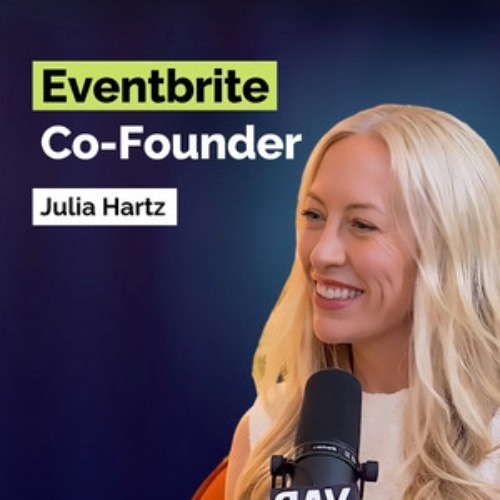
Julia Hartz is the co-founder and former CEO of Eventbrite, one of the world’s leading platforms for live events. She co-founded Eventbrite in 2006 with her husband Kevin Hartz and Renaud Visage, later becoming the sole CEO in 2016 and leading the company through its 2018 IPO. Eventbrite entered a new chapter in December 2025 when Bending Spoons announced a $500 million all-cash acquisition, which closed in March 2026, taking Eventbrite private.
Sponsored By:
Huel – Get over $50 in savings with the Discovery Bundle from Huel. Use my exclusive code YAP15 for 15% off at huel.com/yap15.
Indeed – Get a $75 sponsored job credit to boost your job’s visibility at Indeed.com/profiting
Shopify – Start your $1/month trial at Shopify.com/profiting.
Quo – Run your business communications the smart way. Try Quo for free, plus get 20% off your first 6 months when you go to quo.com/profiting
Fabric – Protect your family with term life insurance from Fabric by Gerber Life. Apply today in just minutes at meetfabric.com/profiting
ZocDoc – Stop putting off those doctors’ appointments. Find and instantly book a doctor you love today at Zocdoc.com/PROFITING
Blinkist – Turn the world’s best nonfiction books into quick 15-minute reads or listens. Grab your free trial plus an exclusive 30% discount at blinkist.com/profiting
Remitly – Transfer money internationally with Remitly, with no hidden fees. Use code BUSINESS to get a $100 bonus after you send $300 or more. New customers only.
Prolon – Reset and rejuvenate your body with Prolon’s five-day plant-based fasting mimicking program. Go to ProlonLife.com/PROFITING for 15% off sitewide plus a $40 bonus gift when you subscribe to their 5-Day Program.
Resources Mentioned:
Julia’s Instagram: instagram.com/juliahartz
Julia’s LinkedIn: linkedin.com/in/juliahartz
The Art of Gathering by Priya Parker: bit.ly/PP-TAOG
Active Deals – youngandprofiting.com/deals
Key YAP Links
Reviews – ratethispodcast.com/yap
YouTube – youtube.com/c/YoungandProfiting
Newsletter – youngandprofiting.co/newsletter
LinkedIn – linkedin.com/in/htaha/
Instagram – instagram.com/yapwithhala/
Social + Podcast Services: yapmedia.com
Transcripts – youngandprofiting.com/episodes-new
Entrepreneurship, Entrepreneurship Podcast, Business, Business Podcast, Self Improvement, Self-Improvement, Personal Development, Starting a Business, Strategy, Investing, Sales, Selling, Psychology, Productivity, Entrepreneurs, AI, Artificial Intelligence, Technology, Marketing, Negotiation, Money, Finance, Side Hustle, Startup, Mental Health, Career, Leadership, Mindset, Health, Growth Mindset, Passive Income, Online Business, Solopreneur, Networking
Julia Hartz: [00:00:00] We were processing more refunds than revenue. Our Tableau dashboards broke because our revenue was negative. 14 years in the making was actually completely gone in 14 days. Wild.
VO: Julia Hartz is co-founder and former CEO of Eventbrite. She helped turn a bootstrapped idea into a household brand through grit, vision, and relentless execution.
Julia Hartz: I wasn't thinking that in my life I would be part of starting a company. Certain people come together, call it fate, the universe. Those people may have complimentary skill sets such that they're able to create something magical. Changing the company was a non-negotiable. We couldn't actually keep going.
Julia Hartz: I started with a core question, which was, given what we know about this business, what would we do if we could do it all over again?
Hala Taha: You said entrepreneurship is, like, it's kind of in your head. What did you mean by that? A lot of people
Julia Hartz: feel ownership for a company, no matter what their [00:01:00] title is. I realize that now more than ever.
Julia Hartz: While it's incredibly valuable to have a founder running the company, you have to be leveling up every single day.
Hala Taha: What is, like, your top three pieces of advice for entrepreneurs tuning in right now who want to build a company as big as Eventbrite is? I can't
Julia Hartz: stress enough the importance
Hala Taha: of- Yeah, fam, what does it take to build a company for 20 years, take it public, watch it nearly disappear overnight, and still come out calling it the honor of your life?
Hala Taha: Few people can answer that question better than Julia Hartz, the co-founder and former CEO of Eventbrite, the world's largest and most trusted events marketplace. In this episode, we unpack how Julia built Eventbrite from scratch, led it through a crisis, and came out with a deeper understanding of what it really takes to build a company that can evolve beyond you.
Hala Taha: You'll hear the hard-earned lessons on leadership, culture, resilience, reinvention, and how to make tough decisions [00:02:00] when everything is changing fast. If this is your first time here, welcome, and make sure you follow the show and come back every week for more conversations like this. Julia, welcome to Young and Profiting podcast.
Julia Hartz: Thank you. I'm excited to be here.
Hala Taha: I'm so excited for you to be here. I have been a longtime user of Eventbrite, and what you've built is just so incredible. So I'm just so excited to pick your brain and learn from you. And my first question is really about your character and, like, how you see yourself. So you went from working at The Ugly Mug when you were 14 years old to then creating Eventbrite, which you exited, you built into a huge company, sold billions of tickets.
Hala Taha: What's the through line from the girl who worked at The Ugly Mug at 14 to the woman who is sitting here today? I
Julia Hartz: think the through line is hard work and an attention to what others need. And I'll tell you a quick story that was pretty [00:03:00] impactful at The Ugly Mug. So The Ugly Mug was this, um, craft coffee shop that opened in my hometown of Santa Cruz, California.
Julia Hartz: It was the, sort of the first of its kind. This guy came to town with this really fancy Italian manual espresso machine and a collection of ugly mugs. And I was the- Opening shift on the weekend, so 5:00 AM on a Saturday was my gig, and there was a woman who would stand outside and wait for us to open, and she'd come in, she'd be the first to order her coffee, and no matter what I did to try to get her order right, she had a complaint.
Julia Hartz: Mm. And she was vicious. And I remember being so frustrated and downtrodden and coming home and talking to my mom and saying, "I just can't make her happy." And my mom said, "You know, maybe you should try to s- strike up a conversation. Maybe she's lonely and she's looking for someone to talk to." Mm. So I stole my parents' Sunday paper the next day [00:04:00] and took it in and put it on the counter and waited for her, and then I picked some random story out of the Santa Cruz Sentinel, um, and started to get her to talk.
Julia Hartz: And from that point forward, she was a totally different customer. And I feel like that through line for me has always been about learning, through, you know, my mom, uh, how to use our empathetic skills to understand what people want, and then, and then kind of b- uh, like a thread, you know, weaving that through everything that I do, and then just really working hard.
Julia Hartz: And I think part of what makes me, me is that I have been working since I was a teenager- Yeah ... with almost no gaps.
Hala Taha: I love that, and I can't wait to talk to you about building company culture 'cause I know that's so important to you, and I know a lot of what you just talked about is probably ingrained in your strategy for building company culture.
Hala Taha: But before we get there, uh, you've got four kids. You've called Eventbrite your fifth child.
Julia Hartz: My firstborn, yeah.
Hala Taha: And I know that you just recently, you know, exited, stepped down as CEO, which must have been a [00:05:00] huge deal. So what does Eventbrite mean to you?
Julia Hartz: Well, you know, Eventbrite is 20, and that's a huge age.
Julia Hartz: Uh, it's an age that many people are, um, flying the ne- flying out of the coop, and so I sort of feel like, you know, if I were to personify Eventbrite, I would say that I was one of three people that helped bring it to life.
Hala Taha: Mm.
Julia Hartz: Um, you know, when Kevin and Renaud and I got together to start Eventbrite, we really were coming at it from such different perspectives and different points in our lives.
Julia Hartz: I had just come from Hollywood, where I'd been working in television development at FX and MTV, and I came to it with this notion of, you know, people getting together in real life around things that they're really, really passionate about have- It, it, it gives you an opportunity to create indelible memories, and I had been on a, a documentary show that we were piloting where we went around to different fandoms in the country, and I'll never forget [00:06:00] going to these meetups that I...
Julia Hartz: where I had no authority nor any clue what they were talking about or were passionate about, but these were total strangers- Mm ... that were creating these unbelievable connections in real life. So I thought there was something behind that. Kevin came to it from a serial entrepreneur's perspective, where, you know, he had built a business in, in payments and micro-transactions to help immigrants send money back to their h- to their families better, faster, cheaper than, um, than the incumbents.
Julia Hartz: And so he was really excited about democratizing industry. And then our third co-founder, Renaud, um, our CTO, really came to it from a place of turning passion into profit. He, during, you know, his off hours is a prolific photographer, and he wanted to build a platform where people could share their skills and their passions, but also make money doing that.
Julia Hartz: And so I think that, that for us, you know, it was, it was definitely a classic startup story, where we were in a windowless phone closet in a [00:07:00] warehouse with no money- Mm ... and just bootstrapping this idea. And I think we were really incredibly sure that we wanted to build something that brought people together in real life.
Hala Taha: Mm.
Julia Hartz: Before, you know, we ever had to worry about not being together in real life. So we were prescient in that way.
Hala Taha: That's so cool. There's, there's so much to unpack there. I can't wait to hear about your boot... like, you know, your first two years and, like, the struggles and challenges and how it grew from there.
Hala Taha: When it comes to your company and you as an entrepreneur, you actually say that you're, you're not a lemonade stand kid. You didn't, you didn't start creating businesses. Your husband, who is your co-founder, Kevin, he was, you know, the serial entrepreneur. You were working in corporate, in TV. And so how did you learn entrepreneurship, and, and what do you have to say to the folks out there, 'cause this is an entrepreneurship show- Yeah
Hala Taha: about being able to learn the skill of being an entrepreneur?
Julia Hartz: I think that the m- first thing is that you don't have to be born an entrepreneur. [00:08:00] You don't have to fit the mold. I certainly didn't. I grew up in a small town. I was a ballerina. I worked hard. But also, being a performer, you learn how to take feedback and make adjustments.
Julia Hartz: But I, I, I, I wasn't f- thinking that in my life I would be part of starting a company.
Hala Taha: Mm.
Julia Hartz: And I just didn't know what I didn't know. I think we know so much more about entrepreneurship now, 20 years later. Uh, but I think that, you know, you don't have to have started a company in college to be a successful entrepreneur by any means.
Julia Hartz: I think what happens is that certain people come together, call it fate, uh, you know, the universe, and- Those people may have complimentary skill sets such that they're able to create something magical. And for me, I'm really great at systems thinking, and I'm really great at, uh, at understanding [00:09:00] what people want.
Julia Hartz: And when I met Kevin and saw, you know, lived vicariously through him, we, we met at a wedding and, and we're, we're dating. So, uh, you know, I feel like it opened my eyes to the world of tech and the world of entrepreneurship, and the- and that what drew me in was the velocity. And I'll never forget that first day, you know, opening my laptop and thinking like, "What now?"
Julia Hartz: And I'll never forget that moment, and then understanding the immediate allure of building something from scratch. And for me, it connected the, the dots for me as to why I didn't love school, because I love to learn by doing.
Hala Taha: Yeah.
Julia Hartz: And so getting my hands dirty and diving into something I didn't understand and figuring it all out on the fly for the last 20 years, it's not like I woke up a month ago and went, "Well, I've got it all figured out."
Julia Hartz: I think [00:10:00] that's the best part of being an entrepreneur- Yeah ... is, is not ever knowing and constantly learning- Yeah ... and iterating, and I mean, that's just, that's the best.
Hala Taha: Yeah. It's so exciting. It's, it's so, um, stimulating every day, where you just- Yeah ... are, like, learning something new, solving problems. So you started your career off in TV.
Julia Hartz: Right.
Hala Taha: And, um, I'm always thinking about how skills, uh, that you gain in life, you always end up using the skills that you've acquired. And especially in today's world of AI and creator entrepreneurship being so popular- Yeah ... your unique skill set is just, like, so important. Like, it makes it uniquely you.
Hala Taha: It's how you differentiate a- against AI- Mm ... which can replicate a lot of tasks, but it can't replicate your lived experience, right? Right. So you being in TV and being a part of, like, hit shows like Jackass, how did that shape [00:11:00] your skills as an entrepreneur, the oppor- the opportunities you were able to see before everybody else was able to see it?
Hala Taha: What were the ways that it kind of inspired you to start Eventbrite?
Julia Hartz: Well, I had, I think, a very lucky and fortunate career in television in the span of only, say, five years. So it was a very short span of time between the time that I graduated to the time that I started Eventbrite at 25. But I- Was also interning throughout my entire college, uh, time.
Julia Hartz: And so, you know, roughly nine years in Hollywood, being able to see some of the absolute best content being made. My first internship was on the set of Friends. Uh, then, you know, I did a few other internships to try to figure out what I wanted to do and just to learn, and what I didn't wanna do. Um, and then I, and then I found MTV, and I found this, this department.
Julia Hartz: It was one of four series development departments at MTV. [00:12:00] There were two on the West Coast and two on the East Coast. And I was an intern there when the Jackass team sent in their pilot.
Hala Taha: Mm.
Julia Hartz: I think that what I learned in that experience was how you can have a, an idea that is so groundbreaking and potent and clear.
Julia Hartz: I mean, these guys were sure of what they wanted to do. The best part of working on that show were the weekly legal OSHA standards and practices- ... conference call that we would have, where w- I was on the creative side, but the guys would be, you know, in their space on a conference call, and they would have to describe in great detail what they wanted to do.
Julia Hartz: And they would fa- this totally dates me, but they would fax over, you know, maybe four pages, single line-spaced, of all of these ideas they had. And then the experts would have to go around and [00:13:00] debate how they would actually be able to do these things. And, you know, it wasn't lost on us that we were sort of killing the magic-
Julia Hartz: as it were, you know, as we, as we were trying to recreate their ideas in a way that actually worked on, on cable. Um, but, but that definitiveness of what they wanted to do was what I learned. Like, never get in the way of a creative idea, and always find ways to enable that. And then at FX, I again happened to just be in the right place at the right time when John Landgraf was just taking over, and I think that era of television is unparalleled.
Julia Hartz: And I, you know, it's a long time ago, but I remember these meetings where I'd be almost a fly on the walls, the, as the most junior person in the room, listening to the creative depth of this team, and what they eventually brought to air was such high quality. And you know, that doesn't just happen.
Hala Taha: Yeah.
Julia Hartz: And I think we're creating content at an [00:14:00] unprecedented rate and volume today, but when you really think about the things that are category-defining, those tend to be things that have been getting worked out and worked on for many, many years.
Hala Taha: Yeah, totally. I, I totally agree with that. So I know that you started Eventbrite in 2006 or so.
Hala Taha: Mm-hmm,
Julia Hartz: yeah.
Hala Taha: What was the world like back then, and what gap did you see that you wanted to fill?
Julia Hartz: Okay, so I always feel really old when I describe this because it's hard to believe, but there was really no self-service option to sell tickets to events. You had RSVP tools like Evite, and you had large, you know, dinosaur incumbent solutions that were super expensive and practically on-prem.
Julia Hartz: Uh, so we were the first open platform for anyone. And some of the principles that we started with I think really [00:15:00] defined what Eventbrite has become, which is we wanted Eventbrite to be as easy to use as Gmail. So we would test our every feature on Kevin's father, and he was, like, our biggest u- ... uh, alpha tester.
Julia Hartz: Uh, we would... We wanted Eventbrite to be completely self-service, and that's hard to do with a payments transaction platform. I mean, we move billions of dollars in micro-transactions. The average ticket price is less than $50 on Eventbrite, and we're doing multiple billions of dollars a year. But we didn't want to make it so hard to sign up that, you know, you'd have this barrier.
Julia Hartz: We wanted to lower all the barriers. And so we created a platform that on the back end could do a lot of the heavy lifting and fraud detection, but also on the front end it could be super simple. You just needed to set up your account and start selling tickets. Then we also wanted to be [00:16:00] horizontal. We did not wanna specialize in any single vertical of event, and we d- or type of event, and we also didn't want to just be in the US or in, you know, a few different, uh, different countries.
Julia Hartz: We, we, uh, launched on the PayPal API, so that allowed us to be in, like, 180 countries from the beginning. And the final thing that, that, you know, th- that we did I would say that was against the grain of, of common wisdom was we just undercut anyone else that was doing ticketing- Mm ... price-wise, and we made free tickets free.
Julia Hartz: So we only charged creators on the paid tickets that they were selling.
Hala Taha: Mm.
Julia Hartz: And those decisions in the early days were sort of, like, somewhat inconsequential because we were such a small company- Yeah ... and we had bootstrapped the company, so we sort of were just like, "Ah, what happens if you put a zero in the ticket price box?
Julia Hartz: There's no fee. Okay, let's just do that. It'll, like, really annoy our competitors."
Hala Taha: Yeah.
Julia Hartz: That [00:17:00] ended up being such a huge part of the growth model of Eventbrite. So I think the, I think the moral of the story is, like, wherever you're starting, uh, now, now in five years it'll feel like 20 years ago, but you'll look back and go, "Oh, my gosh, that was so provincial."
Julia Hartz: But also the decisions you're making now If they're, if they're strong and principled, they will be the backbone of your company
Hala Taha: Mm-hmm ...
Julia Hartz: and of your culture, really. And so we were kind of the only game in town. Yeah. And we started to, um, really see growth and traction in bloggers, tech bloggers in spec- in particular, who were using Eventbrite for paid meetups.
Julia Hartz: Mm-hmm. And then I'll never forget the day we'd built this, this really kind of, you know, primitive map to show where the tickets were being sold on Eventbrite. It was a digital map, but it would, it would... It was on a screen in our tiny little office, and it would show the logo of the event and, and where [00:18:00] the ticket purchase was being made from.
Julia Hartz: And I'll never forget when New York started to light up. Hmm. And that was the first time that we were sort of getting out of the Bay Area and our little bubble, and it was for speed dating events.
Hala Taha: Oh.
Julia Hartz: And I remember thinking like, "Oh, wow, that's a totally different-" Genre of- Yeah ... tech meetups. There's probably a joke in there somewhere.
Julia Hartz: But, uh, but like wow, and, you know, we were sort of off to the races at that point. So, um, we, we bootstrapped until, um... And, and we had, we had friends and family support, but we bootstrapped until we really had product market fit And then, and then we raised at that point.
Hala Taha: What's up, Yap Fam? Spring is here, and let's be real, most people fell off their healthy eating habits.
Hala Taha: Not me, and it's all because of Huel. That's H-U-E-L. My entrepreneur friends put me onto Huel. Fast, inexpensive, healthy, one complete meal a day handled. Their Black Edition Ready to Drink, 27 vitamins and minerals, 35 grams of protein, five bucks, and it actually tastes great. No mental energy [00:19:00] wasted on figuring out what to eat.
Hala Taha: Huel is our secret weapon. I was always skeptical about ready-to-drink meals, but after trying Huel, I'm hooked. Chocolate is my go-to. And Huel is more than just ready-to-drinks. I had my entrepreneurship peer group over, and everybody was like kids in a candy store trying out everything. Daily Greens, a light sparkling green drink with 42 vitamins and superfoods.
Hala Taha: Energy+, their caffeinated drink, and The Complete Nutrition Bar. All five products come in the Huel discovery bundle, heavily discounted, plus a free T-shirt and shaker. It's the best way to try everything and see what works for you. Join me today with this limited time offer and get $50 in savings with the discovery bundle from Huel today with my exclusive offer of 15% off online with my code YAP15 at huel.com/yap15.
Hala Taha: That's H-U-E-L.com/YAP15, huel.com/yap15. New customers only. Thank you to Huel for partnering and supporting our show. Hey, Young and Profitable-ers, as YAP Media has [00:20:00] grown, we've gotten more and more applicants for every role, which sounds great, but the reality is that most of them are not aligned with what we actually need.
Hala Taha: That's why we love using Indeed Sponsored Jobs. Sponsoring your jobs boosts it in search results, so the right candidates actually see it. So instead of just getting more applicants, you get people who match the skills and experience you're looking for. And get this: sponsored jobs are 95% more likely to report a hire than non-sponsored jobs, according to Indeed data.
Hala Taha: If you're hiring right now, don't leave it up to chance. Spend less time searching and more time actually interviewing candidates who check all your boxes. Less stress, less time, more results. When you need the right person to cut through the chaos, this is a job for Indeed Sponsored Jobs. And listeners of this show will get a $75 sponsored job credit to help your job get the premium status it deserves at indeed.com/podcast.
Hala Taha: Just go to indeed.com/podcast right now and support our show by saying you heard about Indeed on this podcast. Indeed.com/podcast. Terms and conditions apply. Need to hire? This is a job for Indeed Sponsored Jobs. [00:21:00] There's so many lessons for entrepreneurs in what you just said. So you tried to make it super user-friendly, as easy as Gmail.
Hala Taha: You had your husband's father-
Julia Hartz: Yeah ...
Hala Taha: testing it to make sure that even, like, an older person who wasn't tech-savvy would be able to buy tickets on your platform. You had this guiding principle to democratize- Mm-hmm ... events.
Julia Hartz: Mm-hmm.
Hala Taha: And so that's why you decided on the zero fee also, right? Right. So it was that, like, core value that actually helped really spread Eventbrite by word of mouth.
Hala Taha: Like, I remember hearing about it probably, like, 2010. I was having events on Eventbrite. I had a little blog. Wow, that's so cool. And, and I was using it, and, like, everybody knew about it, and it was, like, this cool platform, like you said, that it was just, like, free. So there was no barriers. It was easy to just get hooked on it.
Hala Taha: And then you became, like, the household name of community event ticketing, and it was because you, uh, put it community first, not, not [00:22:00] monetization first. Right. So talk to us about the importance of, um, finding product market fit.
Julia Hartz: Yeah. Uh,
Hala Taha: and how... And when you decided, like, "Okay, we, this is really sticking and, and working."
Hala Taha: And then also, like, some of the thought behind, like, how to keep lowering those barriers to entry so that more people use it
Julia Hartz: and spread it. You know, I think, I think there's, there's- Um, a lot of virtue in, in, if you can, you know, being capital efficient. I think we're entering a, a period of time where that actually will be, um, put to the test in a major way.
Julia Hartz: Uh, because while we're gaining massive efficiency and scale in creating new ideas, the cost to do it is so high- Mm-hmm ... right, with GPU. And that will come down over time, but the compute is really a barrier. We didn't have a lot of barrier. The only barrier we had was could we put food on our table? And thankfully, we figured out how to, you know, make do.
Julia Hartz: Um, but it allowed us to not [00:23:00] be, um, kind of distracted by maybe other people's agendas. And, you know, and then when we did raise our first round of institutional funding, it was from Sequoia Capital. Roelof Botha was our earliest investor and board member for 14 years. Um, and, you know, we were really sure of the people we chose to be on this journey with us, on the board, investing in the company, that they were value add and not value d- you know, extracting in terms of their agendas or their ideas.
Julia Hartz: And that's totally possible. I mean, I think that, you know, oftentimes you hear the kinda age-old story of a board not being, uh, fully aligned behind the entrepreneur, and they all have their own agendas, and especially if things go well. It's like, you know, everybody's got an agenda. And I just think, I don't think that has to be the case.
Julia Hartz: I think if you really are thoughtful about the people that you, that you bring into the fold and put, uh, ask to put on [00:24:00] your team's jersey, like, you can, you can really, really get far and stay true to your principles. But I think that, that, you know, the way that we built Eventbrite was this kinda perfect blend of, of who we were as founders.
Julia Hartz: And, um, I'm really proud of that because I think, you know, right around 2010, we were ready to go from a team, like a two-pizza team, to a, you know, full-fledged company. And I remember the 2006 vintage companies had all gone through... Either they hadn't made it or they'd all gone through hyper-growth challenges.
Julia Hartz: And I remember thinking, "Wow, this seems inevitable that we're gonna lose our culture. Something's gonna go wrong. We're gonna scale too quickly, and the wheels are gonna k- kinda come off the bus." And I remember thinking, "Well, I feel for this company as I feel for my own human child." We had a two-year-old at that point.
Julia Hartz: And I thought, "There's this, like, unconditional [00:25:00] love that I have, so I think what I'm gonna do is die trying to make a great company alongside a successful business. And I think that commitment was really supported by Kevin and Renaud, and I think it r- it made a huge difference, and helped Eventbrite become what it is today.
Julia Hartz: And, and, you know, obviously it tickles me, Ping, to hear you say it's a household name.
Hala Taha: Yeah.
Julia Hartz: Um, but- It is ... I think it's like that didn't come easily, and it didn't come from a way of we were sitting in a room going, "How do we scale?" Yeah. It was, like, very human.
Hala Taha: Yeah, so let- let's dig deep on the company culture part, because you've w- won, like, so many awards of having such a great company to work at.
Hala Taha: Um, talk to us about leading up to COVID- Yeah ... what your company culture was like, what were some of the values that you were instilling. I know that you weren't the CEO, I- I believe, at that point, or right before COVID you became CEO.
Julia Hartz: Yeah.
Hala Taha: Um, so and you were really leading the culture and the people. So talk to us about what was your [00:26:00] strategy with that.
Julia Hartz: Yeah, well, a few things. I mean, you know, we... So Kevin was CEO for the first 10 years, and then I was CEO for the second 10 years. Nice. I'm really proud of the fact that we're still married. 'Cause that's not an easy feat. Um, and we've, we loved working together the first 10 years. It was phenomenal because we, again, are really complementary in our skillsets, so we just divided and conquered.
Julia Hartz: He was,
Hala Taha: like, product and you were more people?
Julia Hartz: Yeah, I was marketing and customer service. He was product. Um, and then as we scaled, I became more, I guess, culture and, I don't know. It w- my title was incredibly nebulous. It was president- ... which I was sort of confused by. But, I would've been intern if I could- Mm
Julia Hartz: if I could've done that. First, when I took over, it was, like, about 1,000 times harder than I expected. You know, he had made it look so easy, and I, I to this day am not over the fact that, you know, he just didn't, didn't really tip his hand onto how, [00:27:00] how challenging it is to be a CEO and how mental it is.
Julia Hartz: Like, the most, the biggest challenge is yourself and your own head. He did it with such ease. Uh, and then the second thing was, you know, thought of our culture as sort of like building Legos. You know, it's, it's, i- i- you're, like, laying... If you lay the right foundation, you can build a lot of different things on top of it.
Julia Hartz: But sometimes you, like, build a tower that's way too high, and it, like, falls over. And it's really about sort of the, the other supporting Lego structures that you can actually have a culture that's sustainable, uh, but also can go through hard times. And so right when I took over as CEO, when I stepped in in 2016, it was like the good times were rolling.
Julia Hartz: We were, you know, a private company eyeing an IPO, about to, um- Acquire our largest competitor in music. Somebody had written a, an article about our [00:28:00] company that said we were like the Disneyland of startups when you walked into our office. Like, everything... I just, I, I definitely understand the art of energy- Mm-hmm
Julia Hartz: and gathering and- Mm-hmm ... you know, and man, like, the minute I maybe perhaps felt like... I don't think I ever felt like it, we had it made. I think I'm always healthily paranoid. But I mean, that was, like, a very fleeting moment, because we acquired this big competitor that was like oil and water culture-wise.
Julia Hartz: I was completely naive in thinking that, you know, oh, we can just come together. It'll be kumbaya. Um, not. That was not the case. It was incredibly difficult. And then we prepared to go public. We went public, and then we were like a new public company stumbling in the public markets, you know-[00:29:00]
Julia Hartz: And we needed to simplify, and we needed to focus, and so 2020 was our focus year. It was just like, we know what we need to do. We know how to get there. Let's stop doing all this other really cool, bright, shiny object stuff, because we've really gotta get back to basics. And then March 4th of 2020 happened, and- No more events
Julia Hartz: it was just... Yeah. So it felt like, you know, I think what people, like, maybe don't know is, like, we weren't in great shape going into COVID. We were, like, going... We had gone through a really tough year.
Hala Taha: Yeah.
Julia Hartz: And w- but we were, we were stronger and leaner and fitter, if, so to, so to speak, going into 2020, which actually helped us tremendously when we had to completely reset and reimagine the company.
Hala Taha: What was going through your mind, and what were some of the things that were [00:30:00] happening once events stopped? And what did that mean for how you had to, like, think about your company, restructure your company, rethink company culture? And also, I know that you got a lot of scrutiny-
Julia Hartz: Yeah ...
Hala Taha: online for, for- Yeah
Hala Taha: the layoffs and things, so, so talk to us about that. Yeah, I mean, you know,
Julia Hartz: certainly I, I, I have a lot of empathy for people who live in the future, whose job it is to be futurists, especially when people are unwilling to believe them. Because, uh, that's only happened to me once. And, you know, we had the benefit of, um, having...
Julia Hartz: We- Having been close to the head of the infectious disease department at UCSF, Joe Derisi, who's a phenomenal scientist and public health expert, um, having people around us [00:31:00] who maybe are on the slightly more paranoid side weren't sure exactly what was gonna happen, but knew how we needed to handle it- Mm-hmm
Julia Hartz: if it were the worst that we could possibly imagine, and it was the worst that we could possibly imagine. And I have to say Kevin was there for me the whole time. He dropped everything he was working on, and he has a sense of urgency and decisiveness that is second to none. So what I was thinking was, "This is going to be really bad, and we need to move very quickly- Mm
Julia Hartz: for a number of different reasons, but not least of which to be able to help our creators rebuild their businesses."
Hala Taha: Yeah.
Julia Hartz: Now, there was a moment of time, about two months, where our customers did not understand what we saw, and that was really hard. Mm. Because we had to make changes pretty [00:32:00] immediately to help them save their businesses, and they didn't even...
Julia Hartz: It's not that they didn't have the intelligence, but they just didn't have the information that we had. Mm. There was, like, asymmetrical information and willingness to believe.
Hala Taha: Like, they didn't, they thought events were gonna continue or this was temporary- Yeah ... or something like that.
Julia Hartz: Everybody thought that.
Julia Hartz: Yeah. Right? And, and it's not that we had, like, you know, security level information. We just were listening to the worst case scenario and had wise people around us telling us there's no, like, downside to believing the worst case scenario, especially when you're facing something that could be so, so crushing.
Julia Hartz: I mean, the whole basis of our business went away. Like, 14 years in the making was actually completely gone in 14 days.
Hala Taha: Wild.
Julia Hartz: We were processing more refunds than revenue. Our Tableau dashboards broke because our revenue was negative, and they didn't, we hadn't accounted for that in, in the [00:33:00] configuration.
Julia Hartz: And again, we had to be the bearer of bad news in such a critical time when everyone was so scared and confused anyways. Like, never underestimate the human's ability to be optimistic, you know, and cling to hope. Especially entrepreneurs.
Hala Taha: And in that
Julia Hartz: point... Yeah, we had to kinda be like, "No, it's n- this is gonna be bad.
Julia Hartz: You need to not pay your vendors or your venue right now. You need to think about how you're gonna refund your fans." You know, changing the company was a non-negotiable. We couldn't, we couldn't actually keep going-
Hala Taha: Yeah ...
Julia Hartz: the way that we were. And I wanted our... Actions as it came to company to be really intentional and thoughtful.
Julia Hartz: And I wanted us... I knew that we would have to change the size of the company during a really scary time. And so I started with a core question, which was, "Given what we know about this business, what would [00:34:00] we do if we could do it all over again?" And I asked my team that. And the executive team at the time was a mix of tenured people who'd been there from the beginning, who had just arrived, who had perspective from different companies.
Julia Hartz: And we wrote down a one-pager that basically described what we would do if we could do it all over again, and the punchline was, "We get to do it all over again if we make the right decisions here, so let's go do this." And we built the company to that model. And, um, you know, a lot of it was getting back to the basics.
Julia Hartz: A lot of it was getting back to the core principles of the company. Uh, this is a tale as old as time. You scale. You, you let ambition take you into new areas. You get more complicated. You start, you know, uh, bolting things on. We had a lot of cleanup to do, and so that's what we really focused on. But first, we had to throw away our product roadmap and just help our customers and help our creators figure out a pathway forward, which included online [00:35:00] events, which included, you know, offering credits to their customers alongside refunds, which included how do you create community branding and togetherness in a time when everybody has to be apart.
Julia Hartz: Um, and that really took us through, you know, much of 2020.
Hala Taha: Yeah. And, uh, you know, COVID lasted a pretty long time. I remember... Really, I started my business in 2020. It's really funny to think how- Yeah ... 2020 was so detrimental to some businesses- Yeah ... but then gave so much opportunity to other businesses.
Hala Taha: Like, for me-
Julia Hartz: Right ...
Hala Taha: I had my podcast for a couple years, and then I started my... I quit my job and started my social media podcast agency at a time where everybody wanted social and podcasts. Yeah. So it was, like, million dollars, like, right away in reve- in revenue, like, before we- Right ... even hit a year with my agency.
Hala Taha: Like, it just took off. And I was doing a ton of online events at that time. Like, Clubhouse was really popular, um, and just, like, all these sort of, like, webinar-type events. Yeah. And I'm sure [00:36:00] Eventbrite was supporting creators doing that. But now fast-forward 2026, everyone is, like, clamoring for these, like, in-person events, and it's becoming more of a trend than ever.
Hala Taha: Even though there's so much opportunity online for creator entrepreneurs and making money online, there's also a lot of opportunity right now for live events, and I'd love to learn from you what are some of the trends that you're seeing in the live event space, and why is it something that people who have a lot of followers, creator entrepreneurs, uh, something that they should really think about?
Julia Hartz: Well, I mean, I, I would start from, like, kind of a heady place, which is, you know, in Maslow's hierarchy of needs, you have the physiological needs, so food, water, um, air. You have a need for security and shelter, and right above that, you have a need for connectedness.
Hala Taha: Mm-hmm.
Julia Hartz: And the reason why I bring that up is not because it looks good on a, on a s- you know, strategy deck.
Julia Hartz: It's really because in the span of [00:37:00] 20 years, we have seen several technological advances and revolutions and pivot points that, you know, for all intents and purposes, could have driven us farther away from being together in real life. And through all of those, whether it's social media, mobile phones and how much content, you know, we're, we're watching and, and, and scrolling through, virtual reality, global pandemic, now AI.
Julia Hartz: It's all of these things have been enablers of bringing us together and also have driven up the premium value of live experiences. Yep. People want to or are, are... can now find their people and find their niche online. It's incredibly accessible to find your people now, but it drives this desire to want to then meet them [00:38:00] in the flesh.
Julia Hartz: And it... I think there's a combination of a few things going on. One is the old adage of you don't know what you got till it's gone.
Hala Taha: Yeah.
Julia Hartz: And I would say for rich countries, the taking away of liberties and being able to be together momentarily, or that stress that got put into the system of being together, made people realize how important it is to be in, in real life.
Julia Hartz: Um, and I also think, you know, I think about the story that happened on Eventbrite, which was, uh, an incredible creator, Radha Agrawal, started a company called Daybreaker. Prior to COVID, they were doing, uh, early morning raves where- Yep, I heard of this. Yeah ... you know, it'd be total, like, epic events where it's, like, 5:00 AM, and it's sunset on the- And just, like-
Julia Hartz: or sunrise ... coffee
Hala Taha: and stuff
Julia Hartz: Yeah, like coffee, kombucha, but just, like, total parties. And they were doing, like, 1,000 people [00:39:00] in multiple cities. COVID hits, and they set up a studio, kind of like this You know, in New York, which is like a total nightmare. Um, and they start live streaming these Sunday morning dance parties, and within a few months, this had grown to a global party of over 100,000 people a week.
Hala Taha: Wow.
Julia Hartz: Of all ages. You know, people who just wanted to feel that connection and that magic and were, like, stuck at home with their kids. And it became this ritual, and they became a totally different company out of COVID. So to your point, they built a multimedia platform, and their business became massive.
Julia Hartz: And I think that that, that idea of, you know, accessibility and bringing these otherwise pretty exclusive events... You had to live in, like, a cool city and kinda be in the know, to the masses opened an opportunity and opened people's eyes to what could, what could happen [00:40:00] in the future.
Hala Taha: Yeah.
Julia Hartz: And now I think, you know, we have this almost, like, renaissance coming out of this pandemic.
Julia Hartz: We've seen this before, so big, big massive pandemic and then this renaissance period of creativity and connection that I think is going to breed a whole new generation of live experiences that kinda cross the tran- transom of, you know, "I'm a passive participant" to "I'm in the middle of this storyline."
Hala Taha: Yeah.
Julia Hartz: And that's, I think, what people are looking for, and we see it time and time again continue to reinvent itself and grow in strength.
Hala Taha: Yeah. So for somebody who's really interested, um, like you mentioned, there's this huge opportunity in creating experiences, and actually not just, like, talking to people at an event, actually bringing them- Oh, yeah
Hala Taha: in so they are, like, actually participating. What are some of the coolest events that you've seen or opportunities for entrepreneurs when it comes to throwing these, these new types of experiences? Well,
Julia Hartz: I think the authority on this, in my opinion, [00:41:00] is a woman named Priya Parker. Mm-hmm. She wrote The Art of Gathering, and she is, um, you know, I think one of the foremost experts on, on sort of social dynamics and how to create a memorable connection.
Julia Hartz: And she's done this through, you know, conflict resolution, but she actually, like, applies it to sort of any, any genre. Um, and so I highly recommend checking out her work.
Hala Taha: I gotta interview her. She sounds interesting.
Julia Hartz: She's incredible. And she talks about generous authority of hosting- Mm ... and just the job of a host and how important that is.
Julia Hartz: And I think so often we get to about 10 or 20% of what that, that role actually is. And I think the coolest events that I have found, uh, on the platform and otherwise have been experiences where the host, the creator, is thinking from beginning to end about the experience of the guest or the fan or the participant, and drawing them in in a [00:42:00] way that is going to take them through the arc of a story, or them through the arc of learning, or them through the, the, you know, magic of connection.
Julia Hartz: And they have that idea in their head through the eyes of their customer from beginning especially to end, and I love, I love Priya so much because she har- she, like, kinda harps on this thing that I'm not great at, which is a great ending.
Hala Taha: Mm.
Julia Hartz: Like, I know how to begin a talk, a speech, an event, a party, a dinner.
Julia Hartz: I know exactly how I wanna give that opening toast or connection, and I'm terrible at how do you tie it in a bow. Like, how do you create that magical end- Mm ... that everybody... 'Cause that's the last thing that people remember. That's what they remember,
Hala Taha: yeah.
Julia Hartz: You know? That's what they'll remember. So, I mean, uh, y- there have been these inc- I mean, the best part about Eventbrite is that because we didn't predetermine what kind of event should use Eventbrite- Mm-hmm
Julia Hartz: every single day we were seeing incredible concepts and formats [00:43:00] that we'd never even thought of. And in that way, we were able, we are able to be sort of micro tr- trend forecasters of what's, of what's coming up. And I think, you know, recently- I think BookTok has, like, given way to just these incredibly immersive events around genres like romantasy.
Julia Hartz: Mm-hmm. You know? And, like, how you create these, like, fully immersive experiences around one book series that just sort of grows and lives on and on and on, and it's not your typical BookTok. Yeah. You know, it's not going to... I love a good BookTok, so, you know, and a local bookshop. But it's, like, more so actually bringing people into the full 360 view of an author's mind around a story that they created, and how the fans of that can become a part- Mm
Julia Hartz: in the story. Yeah. And it's just, like, that, I mean, not to be cheesy, but that is a tale as old as time. That is something that people really [00:44:00] want.
Hala Taha: Mm. Something that you just touched on was that Eventbrite's product was able to sort of evolve-
Julia Hartz: Oh, yeah ...
Hala Taha: with the, with, you know, COVID and going back to events, and just, like, now it's like, you know, so many things have changed over the last 20 years.
Hala Taha: Like, it's, it's night and day. But you also have said that company culture has to be able to evolve. Yes. And you can't, like, have the same company culture as day one as year 20. So I'd love to learn from you, you know, how you think about company culture, what kind of values you had in the beginning, and, like, how it had to change over time.
Julia Hartz: When I think about the Eventbrite product and why it worked and why it became ubiquitous with live experiences, I think a lot of it was that we built it to melt into the background. We wanted our creators and their events and the people who gathered around that passion to be front and center. So all of our marketing, all of our storytelling was really around that.
Julia Hartz: We started to become and evolve naturally from just a platform and, like, a utility [00:45:00] into a marketplace when we realized that we could start to help creators find bigger audiences, and when we realized that people were coming to Eventbrite to find things to do because they realized that we had really niche content that they couldn't find on other platforms.
Julia Hartz: So that evolution of a marketplace was really going on in parallel to the evolution of the Eventbrite culture. And I'll never forget when I, when I took on the sort of self-anointed role of, of, of, like, coming to the table of every major business decision, putting Britelings, which is our cute little name, uh, first, like, their needs first.
Julia Hartz: Then I realized, like, great cultures are often just a manifestation of the people at the company at any given time.
Hala Taha: Mm.
Julia Hartz: And because of that, cultures change. You know, they change through time because people come and [00:46:00] go. I mean, being a founder and being a CEO, you have to be okay with people leaving you all the time.
Julia Hartz: Sometimes they come back, and that was my favorite, was a Briteling boomerang. But I, I thought, like, you know- It's not about preserving a culture. We're not like a bug stuck in amber, you know? It's about creating something that's more like an amoeba that, like, can, can travel through time and space, but sustain itself and grow stronger over time.
Julia Hartz: And one of the things that I thought was interesting is just that we, we measure certain parts of a culture to get some sort of finite metric about how we're doing, you know? Most companies have something like, uh, Culture Amp that sends out surveys to their, to their employees, and you get these scores, and you scrutinize the scores, and, you know, you could cut the data a million different ways.
Julia Hartz: Frankly, I always thought that was, like, a waste of time- Mm ... [00:47:00] because, A, I don't think we were asking the right questions and, B, I think those, you know, it's, it's sort of like a snapshot. I was never afraid of getting bad scores on that because if something was hard was going on at the company, I would've expected the scores to be lower, you know?
Julia Hartz: Yeah. And I was also really, like, mindful of the fact that you can't ever have the happiest culture. That's not possible. What I was striving to do was create the most sustainable culture in that our principals would sustain themselves, we could trust each other, and that, you know, through hard times and good times, there would be connection.
Julia Hartz: And I think the, the, the most common thing that was said about Eventbrite in the employee experience was that people care for one another. Mm. And that, that really matters, I think, a lot.
Hala Taha: Yeah.
Julia Hartz: And I have been forever in pursuit of creating a successful business where people really cared for one [00:48:00] another and where you had, where you just, you had, like, three things: best place to work, best manager, and best friend.
Julia Hartz: Those were really important to me.
Hala Taha: Yeah. That's so cute. Yeah, fam, I'm on a real health kick this year, and I love doing health resets. I've tried juice cleanses, cutting sugar, even intermittent fasting. Most of them didn't stick because they were just too hard to follow. It was just too hard to do. What actually stuck with me is ProLon.
Hala Taha: It's a five-day nutrition program with plant-based soups, snacks, and beverages that keep your body in a fasting state while still nourishing you, and that's what helps support cellular rejuvenation and renewal. But the biggest thing for me is how simple it is. Everything is prepackaged and labeled by day so you always know exactly what to eat.
Hala Taha: No prep, no planning, no guesswork. ProLon has been shown to support things like metabolic health, energy, fat loss with muscle protection, and even your relationship with food. So my big reason of not wanting to do fast before is [00:49:00] I love to work out, and I don't wanna lose my muscle. But ProLon actually prevents you from losing muscle mass, which is why it's awesome.
Hala Taha: Ready for your own reset? For a limited time, ProLon is offering Young and Profiting listeners 15% off sitewide, plus a $40 bonus gift when you subscribe to their five-day program. Just visit prolonlife.com/profiting to claim your 15% off discount and your bonus gift. How much would you pay to lose five pounds?
Hala Taha: Hey, App fam. I didn't really understand the importance of life insurance until I saw what it did for my family when my dad passed. My dad had life insurance, and when he died, my mom was taken care of financially. And in that already difficult moment, that stability made a huge difference for us, and it's something I've never forgotten.
Hala Taha: That experience changed how I think about it. Life insurance isn't really about you. It's about the people that you leave behind. That's why I wanna share Fabric by Gerber Life. Fabric by Gerber Life is term life insurance you can get today made for busy entrepreneurs and parents like you [00:50:00] all online, on your schedule, right from your couch.
Hala Taha: You could be covered in under 10 minutes, often with no health exam required. And it's designed so you can choose coverage that actually fits your family and budget because being responsible isn't just about what you build in your lifetime. It's about what you leave protected. Join the thousands of parents who trust Fabric to help protect their family.
Hala Taha: Apply today in just minutes at meetfabric.com/profiting. That's meet, M-E-E-T, Fabric, F-A-B-R-I-C, .com/profiting, meetfabric.com/profiting. Policies issued by Western Southern Life Assurance Company, not available in certain states. Prices subject to underwriting and health questions. So I want to focus more about your, like, entrepreneurship journey personally.
Julia Hartz: Yeah.
Hala Taha: Um, something that you said early, very early on in the conversation is that, like, entrepreneurship is, like, it's kinda in your head. What did you mean by that? Well, I think being a
Julia Hartz: CEO is a mind game first and foremost [00:51:00] because a lot of people feel ownership for a company, no matter what their title is, and I realize that now m- now more than ever.
Julia Hartz: Having the CEO title is this construct, and I... Actually, it's an interesting construct because I'm starting to wonder if it will be the, be, like, the title that we use- Mm ... in the future. But being the, like, single-point leader of any organization just creates this sort of, like- Headiness. And I do think, I definitely think there are people who are trying to, like, fly on the org and, you know- Mm-hmm
Julia Hartz: get away from being... But, like, ultimately, there's always gonna be that leader. And I never took for granted the idea that because I was on the founding team, I would be a good CEO. I think that's actually a huge misnomer, and I think it's, it's why some [00:52:00] companies fail. Mm. Because the people who were there at the beginning, who were, you know, brave enough to start the company aren't, are definitely not often the right people to run the company.
Hala Taha: Yeah.
Julia Hartz: And while it's incredibly valuable to have a founder running the company, you have to be leveling up every single day. I mean, literally every, sometimes multiple times a day to be the person that's most deserving of that title.
Hala Taha: What kind of skills were you like, "Okay," like, "Kevin was doing this, this, and that.
Hala Taha: I've gotta figure..." Like, was it, like, the financials? Or like, what kind of skills were you thinking, like, "I've gotta nail this down in order to be the best CEO that's gonna take this company- Oh, my gosh ... public?" I wasted so much time
Julia Hartz: asking myself, "What would Kevin do?" I mean, he was right there, but I worried that I was not doing it anywhere as good as he was, and I really wish I could have all that time back, um, because I just did it different.
Julia Hartz: Mm-hmm. You know? And that's not better or worse. I think [00:53:00] in some instances it was worse, and in some instances it was better. Certainly, you know, table stakes are strategy, financials, ability to communicate a compelling vision. I mean, that was, that was, like, you know, w- I think what everybody needs to have.
Julia Hartz: I think some of the things that I learned later after COVID made me... Leading through COVID made me stop asking myself what somebody else would do, and start really getting behind what I knew we needed to do. I had a lot more conviction after that crisis. And COVID wasn't the first crisis. I mean, we had a, a just, kind of this, like, rolling wave of crises after COVID.
Julia Hartz: Um, I think some of the skills that are underrated and under-practiced is l- listening and seeking to understand. Often, as a leader, you want to... You, [00:54:00] you are kind of asked implicitly and explicitly to know everything-
Hala Taha: Yeah ...
Julia Hartz: and to always have the right answer, and that is completely a garbage idea. Like, if one person had all the right answers, uh, this would be r- a really boring life.
Julia Hartz: Mm-hmm. You know, the whole point of working on something together is to get the best ideas, to distill an amalgamation of the best ideas, to get diverse thinkers and people around a table problem-solving, um, toward a better outcome. And so I felt at first that I had to Have all the right answers. And when I became more confident, I was able to ask, to A, say I don't have all the answers, and I wanna learn- Mm-hmm
Julia Hartz: from different perspectives. And it wasn't that I wanted to be told what to do, but I actually wanted to take everybody's perspective, synthesize it, and make the call.
Hala Taha: Yeah.
Julia Hartz: [00:55:00] Right? And that's incredibly rewarding. But I think often what happens is we either just make believe that we have the right answer, and we make a call, or we have recency bias, and we do what the last best idea was given to us, right?
Julia Hartz: We listen to the last person and go, "Okay, I'm gonna do that."
Hala Taha: Yeah.
Julia Hartz: Or, you know, we just seek to listen for bias of confirmation that we're right. And so I think be- getting to a place where you can say every day, "The right answer might not live in my head, it might live somewhere else. I'm gonna go find it by, by being, by practicing appreciative inquiry," I think that's, like, the next level, and that is an evolved part of a, being an evolved leader.
Julia Hartz: Mm-hmm. And then another part of it is, you know, being able to be corrected, and change your mind, and be okay with that, and, and let, like, let people in on that without it becoming this sort of, you [00:56:00] know, destabilizing moment.
Hala Taha: Yeah.
Julia Hartz: And I think the things that I wish I would've done better, I wish I would've taken more risks.
Julia Hartz: I definitely think coming through COVID was such a harrowing journey, and, and, you know, definitely took us holding hands and making a couple really hard moves and leaps, that after that I became a little bit more protective of the company, and I feel like I could've taken more risks. And another thing I could have done is m- is been a bit tougher.
Julia Hartz: And I don't know if other people would agree with me on that, but I feel like I have always been really in tune with what people are going through- Mm ... and what they're feeling, and that empathy can be ruinous sometimes, because I can get really kind of, I can revert to the mean of what I think a group of people are capable of, and that's often undershooting the goal.
Hala Taha: So, like, you were [00:57:00] putting the people first, not the company first. Yeah. Yeah. I do that sometimes too, 'cause it's like you just care so much about the people, but ultimately, the company should be the first priority. Um, but there's probably some benefit in doing that as well, because there's loyalty involved, and-
Julia Hartz: Well, I think I, I learned this incredible lesson in the last hour of leading Eventbrite, so to speak-
Julia Hartz: which was the last two years or so, I had been really sure of where I n- where we needed to be, and I had been almost like this white-knuckle grip on the reins.
Hala Taha: Mm.
Julia Hartz: And when we announced that we were selling the company, I really had this moment, I, I didn't know what I was doing 'cause I had never done that before, so I was totally in new territory.
Julia Hartz: And I got this sense that everybody was just, like, immediately disconnected and detached. I remember, like, going onto a Zoom, and it was, like, dead [00:58:00] face everywhere. And I'm like, "Uh-oh." You know, w- how are we gonna operate over the next few months as we move to- Yeah ... you know, we need to go as a public company, you have to go through reg- regulatory and compliance and approval.
Julia Hartz: Um, and so I felt like, oh, gosh, I got really, really, really low, uh, for, like, a night.
Hala Taha: So, like, your team was upset because they're like, "What does this mean for my
Julia Hartz: job?" No, they weren't, they weren't upset. I mean, my, my team is, are consummate professionals, and they had, you know, known that we were going to be going private.
Julia Hartz: And, uh, and they were really amazing. Um, but I could just tell they were sort of, they needed a beat a little bit longer than I needed. Yeah. And I was ready to get back to work and kind of, like, plow through this period of uncertainty. And I remember just feeling really down and dejected, like, "Oh, no, this is gonna be a terrible few months."
Julia Hartz: Um, like, "What have I done?" And so I came back to them the next day, and I was like, "You know, I, I [00:59:00] think this is how we should operate over the next few months. Do the right thing for the customer always. Do the right thing for each other always. Take care of one another, and have fun. And kind of like YOLO, like, we're not gonna be together for that much longer."
Julia Hartz: Because we knew the structure of the deal and what would happen post-close. Oh, my God. Like, ev- from that point forward, I released the white-knuckle grip. And as it were, I think somebody said, "You know, it's like having a good hair day before you go to get a haircut." Every day something was going better than it was before, up and to the right.
Julia Hartz: And it wasn't, it wasn't... At first I thought, like, "Oh, it's just people feeling kinda bittersweet about this and adjusting to it." No, it, it definitively giving people those, like, pretty loose, you know-
Hala Taha: Yeah, the handcuffs were
Julia Hartz: off ... guardrails- Yeah ... and being like, "Just go do your best," it was, like, actually better for the company.
Julia Hartz: Mm. And that was my, my last [01:00:00] lesson. That's a pretty big one.
Hala Taha: So 20 years of lessons.
Julia Hartz: Yeah.
Hala Taha: You ended up exiting the company. Um, I'd love to understand what it feels like. 'Cause for me, like, I've, I've been running my company for, like, six, seven years, and it's so ingrained in, like, who I am. It's so attached to my identity.
Hala Taha: You founded your company as well. W- what does it feel like to exit a company? Like, did you have any grief, um, or is it more, like, or do you feel, like, relief? Like, what do you feel? It's hard to tell.
Julia Hartz: I mean, I, I, I can only equate it to being postpartum- Mm ... in terms of, uh, any other, like, life experience that feels familiar, where there's, like, a world of possibility in this new shiny thing of the future that you, you know, that you're excited about, but you also don't know what, which end is up.
Julia Hartz: Mm-hmm. And you're, [01:01:00] like, totally confused about how time moves. I feel like, you know, for 20 years I've had this singular focus. I really am not the type of person to have many different types of pursuits. I was like a, the monorail-
Hala Taha: Mm-hmm ...
Julia Hartz: you know, in our family. It was like Eventbrite and my family and my friends.
Hala Taha: Yeah.
Julia Hartz: So yeah, I, I definitely think that there's grief. I, uh, I pre-grieved, um, which was, like, probably my way of, of, you know, handling this, and I'm sure, I'm sure I need to go through this kinda hard moment of not immediately jumping into the next thing, and that was, you know, that was something that I knew in my gut and had been told about, I don't know, a million times from people once the news was public.
Julia Hartz: Like, "Don't jump into something right away." And just taking the time to reflect and then, you know, I think ... I, I really just want to help people, [01:02:00] and I know that I want to personally go back and learn from square one. Mm-hmm. Like, that's so important to me. And so, you know, I don't know exactly what that is, but I'm being, being very, very intentional about how I build the next 20 years- Yeah
Julia Hartz: which is kinda cool. Sort of like these, you know, these eras.
Hala Taha: Yeah, it's like a new chapter that you get to figure it out, and with so much more freedom.
Julia Hartz: I never felt like I didn't have freedom, is the thing. Like, I always felt like how lucky am I to work on the thing that I feel most passionate about, that I was able to help build?
Julia Hartz: That I was- Yeah ... I was there when it was born, and I was there when it flew the coop. And how lucky am I? I never ever felt burdened or obstructed or held back from being the [01:03:00] leader of Eventbrite. I felt like what an honor and a privilege. So, you know, like, that, that to me, yes, I went through w- who am I gonna be without it?
Julia Hartz: This is my whole identity. Am I going, am I going to be irrelevant? Am I going to, you know, fall into a deep, dark depression? I would say it's been about a month, and I feel like- There's a lot of opportunity. A lot has come my way, which I feel really, really grateful for, but I know that I need to take my time and go slow.
Julia Hartz: And g- and, and I have this like, I don't know, I have this passion around this idea of like in television you reset to one, right? Mm-hmm. When you're shooting a scene, you go back to the beginning, you do it again. I have this like obsession with that concept. Mm. I don't know what format it'll take, but I do know that as I, as I start to spend time with other people, um, you know, incredible content creators like yourself, and, you know, I'm, I'm, uh, lucky enough to be advising Sammy Cohen- Mm
Julia Hartz: and, and, and people like her, where I just feel like I now [01:04:00] have the time to learn more and to support. But I also just have this, this insatiable appetite of learning, and rather than go off and be the sort of wise sage that, you know, knows everything, I want to do the opposite.
Hala Taha: You wanna go back to starting something from scratch?
Hala Taha: I
Julia Hartz: wanna reset to one. I don't know what that means, but we'll see.
Hala Taha: That's so exciting.
Julia Hartz: Yeah.
Hala Taha: Uh, another question that I have for you that I'm very curious about because, uh, something that I want to... I don't have kids yet, and so, like, I really wanna have kids soon, and I, I've been going through this, like, internal struggle of like could I really be a CEO?
Hala Taha: Like, I'm, I'm running a pod- I feel like I have three jobs. I have two companies, a podcast. Could I really tack on a kid onto this? And my partner is also an entrepreneur, and, like, he's not slowing down. He's actually a little younger than me.
Julia Hartz: Yeah.
Hala Taha: So how did you balance it all? Yeah. You're one of the only really successful female entrepreneurs.
Hala Taha: Like, there's not that [01:05:00] many. Like, there are, but-
Julia Hartz: There's more now, thankfully.
Hala Taha: There are more now, but I would say like nine out of 10 successful entrepreneurs on the show, or even, you know, more than that, are men.
Julia Hartz: Yeah. I mean, when, when we took Eventbrite public in 2018, I was the 21st woman to found and lead the company into an IPO as CEO- Wow
Julia Hartz: ever. That was, like, really sad to me. Yeah. That was, like, really bittersweet to hear. I was, like, less stoked about that and more- You were
Hala Taha: like, "
Julia Hartz: What is wrong with the world?" ... pretty bummed out. And I was the second-youngest ever. Um, and I was not that young. So, uh, you know, I, I do reflect a lot about on how, how I have made it happen, and I think it's a confluence of factors that's incredibly personal.
Julia Hartz: But the thing that I see happening more often now than I experienced, because I was pretty young when I [01:06:00] had my first... I was 28, so pretty young by that- Mm-hmm ... by, like, modern times, is that I didn't, I didn't really overthink it. And I think now, like, with science being where it is, thankfully we have options to, to, like, put off-
Hala Taha: Yeah
Julia Hartz: having kids. For longer and later, and I think that's great. But it also kind of makes you overthink it. Mm-hmm.
Hala Taha: And
Julia Hartz: what I like to tell people, and I've, I've had this conversation with so many, so many women and men at Eventbrite, one of my favorite parts of building a company is being able to be in people's lives.
Julia Hartz: We have, you know, I think over two dozen babies that were born to people- Hmm ... who met at Eventbrite. So that, I take that metric- Oh, wow ... very seriously. But I always would say, "You got yourself here somehow. There were things that you were born with, there were things that you learned, there were challenges that you overcame, there were things, opportunities that you took.
Julia Hartz: You are going to get to that next [01:07:00] level," which, you know, in your, in your case is building a business and building a family-
Hala Taha: Mm-hmm ...
Julia Hartz: with the exact same tactics. And like, it doesn't, it doesn't... It's, it's certainly life-defining, for sure. But it also, I use... For me personally, I thought of it as, "Hey, kid, you're getting on my train, and, like, you get on the train and we're going.
Julia Hartz: I'm not stopping the train- Hmm ... to then divert a different way." And I, I was so passionate about that, and am so passionate about that with women in the workplace of, let's go through all the ways in which you personally have gotten here, because those are the things that you know, you know, and maybe you take it for granted.
Julia Hartz: And let's apply it to the future. And, like, that's how you're gon- going to do it.
Hala Taha: Yeah.
Julia Hartz: And we became very specific and precise about our support of, of people building their families while working at Eventbrite-
Hala Taha: Mm-hmm ...
Julia Hartz: to ensure [01:08:00] that women had the highest degree of success possible in coming back and building their careers.
Julia Hartz: And that, to me, was really important work that we did. You know, we didn't... Yes, we won awards and whatnot, but, I mean, we really didn't do it for that. We, we did it because it was the right thing to do. And because Kevin and I had gone through the process- Yeah ... of having a child and having a family and building a company, we had that empathy.
Julia Hartz: And so I think that's going to be a really important part of the next era for you, is really having confidence in your ability to figure it out. Yeah. Because it's different for everybody, and it's not easy, but it's certainly not impossible.
Hala Taha: Yeah.
Julia Hartz: And I think that the final thing I'll say, because I have older kids now, I have, I have older kids and younger kids.
Julia Hartz: I have two cohorts of ages. And I can say without a doubt, it, it definitely takes a different level of engagement and parenting in different [01:09:00] chapters of the child's life. Mm-hmm. And so you can, it's not just one mode.
Hala Taha: Yeah.
Julia Hartz: You know? And, um, and I think that's, like, maybe something that people don't talk about, that, you know, there are times when you can really lean in and- To one side or the other, um, for...
Julia Hartz: And I would say I used to always get told this, and I never believed it until I experienced it, bigger kids, bigger problems.
Hala Taha: Mm-hmm.
Julia Hartz: And so, you know, it's like as they get older, it does... It definitely takes a lot more cognitively- Mm ... to guide a young adult through the world than-
Hala Taha: Yeah ...
Julia Hartz: you know, a small child.
Hala Taha: Incredible advice. Thank you so much. That's incredible advice. If you had to start all over, would you still go into business with your partner?
Julia Hartz: Oh, a thousand times. I mean, we... Really the last 10 years have been the most challenging for us because we haven't been working side by side. So while we both have, you know, this, this shared passion and unconditional love for [01:10:00] Eventbrite, we weren't sitting...
Julia Hartz: We sat side by side for the first 10 years. Yeah. And the second 10 years- There's so much to talk about
Hala Taha: and-
Julia Hartz: Yeah ... like- I mean, it just, it's, it's amazing. So I would say do it if you can. I mean, it's, it's such a rewarding experience to be able to build something together and to have that shared experience and context and passion.
Julia Hartz: And, you know, I, I, I would say, like, if I had to place a bet, we likely are gonna do something together again, um, because we really enjoyed that-
Hala Taha: Bonding, right? Yeah,
Julia Hartz: and way of being side by side in something that's not just the kids or not just, you know, our personal lives, but something that you're building that's, that's incredibly valuable.
Hala Taha: You, uh, exited Eventbrite, and AI is taking over. It's gonna be bigger than electricity, than the internet. It's like the biggest technology shift that we've ever seen. What's your advice to the new leaders of Eventbrite as they, you know, approach this AI [01:11:00] era?
Julia Hartz: Well, part of why we chose Bending Spoons who acquired Eventbrite is because they have a track record of applying, you know, cutting edge technology to consumer businesses to drive a better result for the customer.
Hala Taha: Mm.
Julia Hartz: Um, I think that they are misunderstood in the US. Uh, I think they're going to be an enormously successful company, and I feel really strongly about the stewardship of their, uh, of, of them to Eventbrite because of how they think, how they've run the company, and, and ultimately the kind of people they are.
Julia Hartz: Because at the end of the day, you know, when it comes down to it, are they making the right decisions for people? They, they, they're constantly thinking about how to better the experience of the customer and how to put the customer in a better spot all the time. Mm-hmm. So that was really, like, important to me as I was thinking through [01:12:00] this, um, the set of options that we have.
Julia Hartz: Uh, also a company like Eventbrite is basically in, uh, a very, very crowded space of companies that either have to completely disrupt themselves or they will be gone.
Hala Taha: Mm.
Julia Hartz: I wanted Eventbrite to be around longer than us. And I think that in order to drive longevity, you have to be really sure about, about, again, this blank slate exercise because this is a re-imagination moment- Mm-hmm
Julia Hartz: for most companies. Mo- almost all Web 2.0 companies are absolutely facing this existential opportunity. Yeah. And so I think one of the things just that I think is really important that may seem kind of silly is just I think the people who are leading companies need to be playing with AI every single day.
Julia Hartz: Mm-hmm. It... as almost, like, as hobbyists, and I just think that that is something that gets missed because people are either too busy doing their [01:13:00] day job, or they're reading about it as passive participants, but they're not, like, setting up their OpenClaw. They're not, you know, using it in all these different ways, even if it's just in their personal life.
Julia Hartz: I think just getting to be more fluent faster is really important. And the final thing I'll say is that I do think that there's a rate of change that, uh, that, that outpaces humans' ability, and I think we have to be prepared to go back to the basics, you know, of human emotion, of human desire, of that Maslow's hierarchy of needs, to come together and work together through this massive dislocation, change, and big uncertainty.
Hala Taha: Mm-hmm. You were just saying that you want Eventbrite to live on beyond you and your husband. Why? Why is that, why is that so important to you?
Julia Hartz: Because I think the legacy of what Eventbrite brings to the world is really important. Eventbrite's the largest platform of live experiences in the world. We are the [01:14:00] second-largest trafficked events site in the world.
Julia Hartz: We are a place where niche is mass, where people can find their identity, they can find their people, they can connect, and they can create indelible memories. So I know that may sound heady, but if not Eventbrite, then who?
Hala Taha: Mm-hmm.
Julia Hartz: And Eventbrite, I know, is a place where everyone is included, and there's a way for, you know, the new stewards of Eventbrite to create something that is a magnitude of, you know, order of magnitude larger than what we created.
Julia Hartz: I'm so excited to see that because the world needs in-person live experiences
Hala Taha: now more than ever. Yeah. Okay, last question, um, before I go on to, like, the couple questions I end my show with. What is, like, your top one to three pieces of advice for entrepreneurs tuning in right now who want to build a company as big [01:15:00] as Eventbrite is?
Julia Hartz: I can't stress enough the importance of capital efficiency. I think that, like, the... It, it, it gives you freedom. It gives you- Options, it gives you power. You know, it is, it's really important. And I actually was just listening to one of my business heroes, Ana Botin, who's the head of, uh, Santander, the largest bank in Europe, and I mean, she wakes up every day thinking about that.
Julia Hartz: Mm-hmm. And, uh, they're an incredibly valuable company with over 180 million customers, and, you know, she's obsessed with how to, how to drive efficiency and, and, and make more money. Mm-hmm. And I think, you know, it's sometimes alluring to raise the big round, and alluring to get the nice office, and alluring to say that you've raised, you know?
Julia Hartz: But it's, that is all [01:16:00] smoke and mirrors if you don't have a very, very strong way- Mm-hmm ... to return on your invested capital.
Hala Taha: Um, one of the last questions that I ask all my guests is, uh, something actionable that we can do today. So what is one actionable thing that our Young and Profiters can do today to become more profitable tomorrow?
Hala Taha: I would say
Julia Hartz: to take the exercise of a blank slate. If you're working on something or you're about to launch something, take a blank sheet of paper, physical paper out, and draw the diagram of what would be a better version of that.
Hala Taha: Mm.
Julia Hartz: And constantly be thinking about how you can iterate, even your best idea.
Julia Hartz: Because right now, e- every six hours, things are changing. So I mean, you know, it's, it's quite literally your, your idea yesterday can be made better today. And I think just being willing to constantly iterate even your best ideas, and ask yourself, "What would I do if I could do it all over again?" [01:17:00] will yield a better, probably bigger risk-taking approach.
Julia Hartz: Um, and I wish I would've done that even more often.
Hala Taha: Mm-hmm. Julia, this was such an awesome interview. I feel like I learned so much, and I, I feel so inspired.
Julia Hartz: Thank
Hala Taha: you. Um, my last question to you is what is your secret to profiting in life? Wow, I think it
Julia Hartz: is being... Uh, this, uh, sounds so cliche, but I, I really think it's about, like, genuine gratitude, not forced gratitude, but genuine gratitude- Mm-hmm
Julia Hartz: and grounding in the thing that you know you are incredibly grateful for. And I think that's just different for everybody, and I think oftentimes people get confused or overly convoluted about what they should be grateful for. I think just having that simple knowledge, that knowingness of what you're grateful for, and reminding yourself of that constantly is a [01:18:00] really great way- Mm
Julia Hartz: to see opportunity, to seek connection, to build resilience, and to find joy.
Hala Taha: Mm. And where can our listeners learn more about you and everything that you do?
Julia Hartz: Well, I'm on Instagram, Julia Hartz, @juliahartz, and then I'm also on LinkedIn.
Hala Taha: I see. Yeah. You've got a, a pretty big following on LinkedIn.
Julia Hartz: Thank you. I really appreciate it.
Hala Taha: Well, thank you so much, Julia. It's been a pleasure.
Julia Hartz: Thank you.
Hala Taha: Well, there you have it, Yap fam. Julia Hartz is the real deal. What stayed with me from this conversation is how much of Julia's success came down to the decisions that looked small in the moment. Bootstrapping longer than it felt comfortable, choosing investors based on values, not valuation, building a product designed to disappear into the background so creators could shine.
Hala Taha: None of these feel like headline moves, but every single one of these moves became load-bearing for everything that came after. Julia's blank sheet exercise is something I want you to try this week. Write at the top of a page, "What [01:19:00] would I do if I could start over?" Then answer it honestly about your business, career, or next move.
Hala Taha: Then act on one change immediately. And on capital efficiency, Julia was direct. Freedom, options, and power all flow from how disciplined you are with your resources. So take an honest look this week at your time and where your money is going in your business. Cut what's not earning its place, and double down on what's actually moving things forward.
Hala Taha: Yap fam, I hope this episode pushes you to build with more heart, lead with more conviction, and stop waiting for perfect conditions. The entrepreneurs who win are the ones that keep learning, keep adapting, and keep going. If you listened, learned, and profited from this episode, share it with somebody in your world who needs to hear it.
Hala Taha: Leave us a five-star review on Apple Podcasts, watch the full conversation on YouTube or Spotify Video, and connect with me on Instagram, @yapwithhala, and LinkedIn by searching Hala Taha. Until next time, this is your host, Hala Taha, AKA The Podcast Princess, signing off
Episode Transcription
Enter your name and email address below and I'll send you periodic updates about the podcast.

