Ryan Hawk: Daily Leadership Habits That Shape Who You Become | Leadership | E408
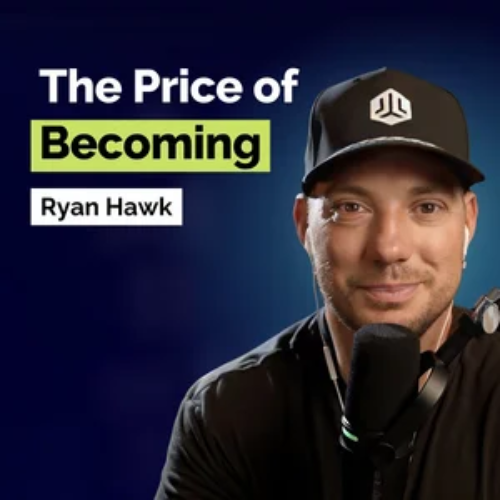
Ryan Hawk learned one of his most important leadership lessons the day his college football coach told him another player gave the team a better chance to win. The moment stung, but it reshaped his mindset about success and taught him that hard work only matters when it creates real value. That truth shaped his career and became the foundation of his latest book, The Price of Becoming. In this episode, Ryan shares leadership skills that help entrepreneurs improve every day, build trust, lead through discomfort, and become leaders others want to follow.
In this episode, Hala and Ryan will discuss:
(00:00) Introduction
(01:35) The Price of Becoming Better
(06:20) The Power of Consistency and Value
(13:27) The Best Networking Strategy
(18:22) Why Great Leaders Never Peak
(29:56) The Learn, Work, Lead Framework
(35:49) Using Writing to Think More Clearly
(43:10) Turning Perceived Weaknesses Into Leverage
(50:00) How Curiosity Creates Opportunities
(55:39) Ryan’s Principles for Great Leadership
(01:09:55) The Leadership Mindset for Tough Times
Ryan Hawk is a keynote speaker, author, leadership advisor, and host of The Learning Leader Show. Over the past decade, he has conducted more than 700 interviews with leaders, entrepreneurs, authors, athletes, and high performers, distilling their experiences into practical business and leadership lessons. His latest book, The Price of Becoming, is a practical guide to continuous learning, daily improvement, and sustained excellence.
Sponsored By:
Indeed – Get a $75 sponsored job credit to boost your job’s visibility at Indeed.com/profiting
Shopify – Start your $1/month trial at Shopify.com/profiting.
Northwest Registered Agent – Get a complete business identity with Northwest. Visit northwestregisteredagent.com/YAPFree and start using free resources to build something amazing.
Mindstone – Master practical AI skills without the complexity with Mindstone’s AI Competency Programme. Head to experience.mindstone.com/yap and get 10% off.
AT&T – Stay connected with reliable, secure internet built for entrepreneurs. Switch to AT&T Business at business.att.com.
Quince – Make your summer wardrobe feel easier. Go to Quince.com/profiting for free shipping on your order and 365-day returns. Now available in Canada, too.
Resources Mentioned:
Ryan’s Book, The Price of Becoming: bit.ly/Price-Becoming
Ryan’s Book, Welcome to Management: bit.ly/RH-Management
Ryan’s Podcast, The Learning Leader Show: bit.ly/LearningLeader-apple
Ryan’s Website: learningleader.com/
Ryan’s LinkedIn: linkedin.com/in/ryanhawk12
Ryan’s Instagram: instagram.com/ryanhawk12
Active Deals – youngandprofiting.com/deals
Key YAP Links
Reviews – ratethispodcast.com/yap
YouTube – youtube.com/c/YoungandProfiting
Newsletter – youngandprofiting.co/newsletter
LinkedIn – linkedin.com/in/htaha/
Instagram – instagram.com/yapwithhala/
Social + Podcast Services: yapmedia.com
Transcripts – youngandprofiting.com/episodes-new
Entrepreneurship, Entrepreneurship Podcast, Business, Business Podcast, Self Improvement, Self-Improvement, Personal Development, Starting a Business, Strategy, Investing, Sales, Selling, Psychology, Productivity, Entrepreneurs, AI, Artificial Intelligence, Technology, Marketing, Negotiation, Money, Finance, Side Hustle, Startup, Mental Health, Career, Leadership, Mindset, Health, Growth Mindset, Goal Setting, Time Management, Problem Solving, Decision Making, Strategic Planning, Team Building
Ryan Hawk: [00:00:00] You're not entitled to anything. Nobody, literally nobody cares how hard you work. They care about the value you can provide to them. That's just the way the world works. You can say, "Well, no, that's not right." No, that is right. That is how the world works.
Hala Taha: Today, Ryan Hawk is here to tell us the truth about becoming great.
Ryan is the host of The Learning Leader Show, and a best-selling author who has spent years studying how elite performers think, work, and lead.
Ryan Hawk: I think people are willing to start, they're not willing to keep going. The difference between the ones who sustain excellence and the ones who do not is the willingness and the ability to get up and keep doing it day after day after day after day.
Hala Taha: So much of success early on is about imitating other people who are already doing what you wanna do. Talk to us about the importance of not being afraid of copying, especially initially.
Ryan Hawk: Imitate, then innovate. One of the greatest bands of all time [00:01:00] started by copying others verbatim. The Beatles, they were afraid to play their own music initially, and eventually they got really good at playing together, at getting their reps together, playing other people's music that they would start to sprinkle in their own.
The key, though, is you gotta get started. Even if when you get started you're gonna copy somebody else, that's okay.
Hala Taha: As an individual contributor or somebody who has a boss, how do you have to act differently as a leader?
Ryan Hawk: When you're just the player, the individual, you have a specific task, and your job is
Hala Taha: Ryan, welcome to Young and Profiting podcast.
Ryan Hawk: Thank you. I appreciate you having me.
Hala Taha: I am excited for this conversation. We're both podcasters. We've both interviewed hundreds of people on our shows, and we know that there is a price tag to success. Everybody wants the highlight reel. Everybody wants to talk about the outcome. Nobody wants to talk about the price it takes to become successful, and that's actually the [00:02:00] title of your book, The Price of Becoming.
So let's start there. Why did you call your book that, and what are some of the big things that you've learned about the price of becoming?
Ryan Hawk: Titling things are really, really hard, and so, uh, our mutual friend and book agent, Dave Mulderweer, who was helping me with my proposal, especially when I got stuck, um, we were just throwing out ideas of things that have really moved me.
I'd written actually a big chunk of the book before even titling it. Um, and then one of the things that popped out to me ca- was a, was a quote from a previous podcast guest named JJ Redick, who was a basketball player and now is the coach of the Los Angeles Lakers, and he had said to me, "You've never arrived.
You're always becoming." So that becoming was a big deal, and in fact, it's embossed in the background of my book. It's, it's raised up as you feel it. It feels beautiful. I just literally got the first cov- uh, uh, copies of the book yesterday, so it's, it's fresh in my mind.
Hala Taha: Oh, so exciting.
Ryan Hawk: Um, yeah, it's very, very cool.
Um, so combine that, I'm a big fan of [00:03:00] Charlie, uh, Munger and Warren Buffett, and the fact that, um, they've built these extraordinary careers investing in business and finance, but it, it's actually, uh, they're such big believers in the power of compounding. So you look at that, you look at my life, look at the 700 plus interviews, the idea generation that Dave and I went through, and we put it all together, and that's how we got The Price of Becoming.
And the, the subtitle's important, too, Understanding the Compounding, uh, Practices of High Performance. So it's really a book about leading yourself. Um, my podcast is focused on leadership. It's called The Learning Leader Show, and so everything that we do is, is focused on how to become a better leader.
But this book specifically is mostly about how, how to lead yourself because the fun part about that is it just never ends, and, uh, that's the hard part, but also the fun part.
Hala Taha: Yeah. I can't wait to unpack all the principles in your book. So if we're talking about the price that [00:04:00] ambitious people pay for success, a lot of ambitious people think like, "You know, I, I'll pay the price tag.
I'm gonna work hard." And what are some of the common things that people avoid that is a price that you have to pay for success?
Ryan Hawk: I think a lot of people get excited to start things.
Hala Taha: Hmm.
Ryan Hawk: They think of ideas. They want to start a business. They wanna partner with somebody, whatever it may be. And it, and it's, they, they get all this energy and excitement because it's new.
Let's go. Let's do it. The differences between the ones who sustain excellence and the ones who do not is the willingness and the ability to get up, you know this as well as anybody, to get up and to continue doing it day after day after day. I tell the story in the book of Paul Rabil, the greatest lacrosse player ever probably, and the fact that he went to this lacrosse camp in middle school, and this legendary coach, Tony Seaman, said, "Who wants to get a college scholarship?
Who here wants it?" And every kid [00:05:00] raises their hand. And he said, "Okay, I can guarantee you're gonna get one." And they're like, "What? What do you mean? You can't guarantee." He goes, "Yes, I can. Here's what you have to do. From this day forward, you have to wake up and take 100 shots a day. 100 shots a day. Here's the catch.
You can never miss a day, ever It's raining, take your 100 shots. It's Christmas, take your 100 shots. You're sick, take your 100 shots. And that was kinda Paul's m- move to life of I'm gonna take my 100 shots, and he goes on to get a scholarship and be one of the greatest players of all time. I think we all have that version of what are your 100 shots?
What are you willing to get up and do each day no matter what?
Hala Taha: Mm-hmm.
Ryan Hawk: And the problem is, I think people are willing to start, they're not willing to keep going, and that's like the end of a keynote speech people ask a similar question, and it's the least, um, interesting answer for them of all time.
Because they don't wanna hear that. [00:06:00] They don't wanna hear, "Well, you gotta keep it, get up and keep doing it day after day after day after day and stack days over the course of many years to give yourself a shot." People, that's not the magic answer. That's not the quick answer. That's the longer-term game.
Mm-hmm. But I found the ones who sustain excellence, they're the ones who are willing to do that.
Hala Taha: Yeah. It's unsexy, right? Nobody wants to hear consistency. Consistency is the key.
Ryan Hawk: As you know, too, the consistency with podcasting is h- it's, I think it's one of the number one ways to build trust.
Hala Taha: Oh, yeah.
Ryan Hawk: If, if, if you say, "Okay, I'm gonna ship my work every week," or h- whatever your cadence you choose.
But I'm gonna do it, like for in my case, it's Sunday night. Mm-hmm. 7:00 Eastern no matter what. Never missed, 11 years. At least that, that much. Sometimes more. So you, when you do that, what you're, what you're telling and showing people is that you show up, and you do it no matter what for a decade plus. And if you do that, [00:07:00] people then trust you to follow through on doing what you say you'll do, and I can trust myself 'cause I follow through.
So I think that's a key thing when you talk about relationships and trust. It's consistently doing the thing that you said you'd do for a decade plus.
Hala Taha: Consistency is super important, but oftentimes we've got a plan that maybe we want to be consistent on, but the plan doesn't even come to fruition, right?
We can never really tell what's actually gonna happen. You've got a great story from college where you were gonna be a quarterback, and somebody basically took your spot. And it totally changed your plan. But that doesn't mean that we shouldn't have a plan at all. It's still important to be planning. So talk to us about that.
Ryan Hawk: Yeah. I, I had a great coach. Uh, the late great Terry Heppner. Super grateful and fortunate to play for him. Every single day Coach Heppner would say to us, "You gotta have a plan- Work the plan and plan for the unexpected. And, you know, when, when you're 18, 19, um, I kinda was listening [00:08:00] and I kinda was paying attention and kinda doing that.
But, but you really get, like, that fortune cookie wisdom. Like, you start thinking about that as you, at least in my case, as I matured and got a little bit older, the importance of having a plan, working the plan, and then knowing that you're gonna get punched in the face, and how are you gonna respond? And so in that, in that case, what you're referring to in college, I come as a highly recruited quarterback to Miami University here in the Mid-American Conference in Southwestern Ohio.
The highest-rated recruit, though, in the history of the school still to this day also happened to be my exact same age and to play my exact same position. And so we battle it out for two years, and during my sophomore year, after we had a game at the University of Iowa, uh, we both had gotten kind of beat up.
We both had played in the game, and Coach Heppner looked me dead in the eye and said, "He gives us a better chance to win than you do." And I think that was a, a, a turning point and some-- and it's a conversation I think about every day of, of [00:09:00] my life still to this day, even though it's been a while. Because what it showed me was in order to have an opportunity to play or in, or in order to have the opportunity to run my business or to have any of our clients, I have to add value to those people's lives.
Hmm. And I didn't add enough value to my team-teammates' lives. At least in that case, somebody else added more. And I think that's super helpful to learn in your formative years that that's what it takes. And yes, it was harsh. Yes, I hated it. Uh, I was super upset, um, but that's what was needed for me in that moment.
And now it's one of the luckiest things that has ever happened to me, even though at the time I, I was not very happy about it. But yeah, have a plan, work the plan, plan for the unexpected, and know that your job as a leader, your job as a person is to find a way to add value to other people's lives. And if you do that, I like your chances of good things happening.
And if you don't- I don't. And, uh, that's what I try to do.
Hala Taha: Yeah, fam, if I had a dollar [00:10:00] for every time a business leader came on the show and told me, "Hala, hiring the right people is everything," I'd probably be retired by now. And guys, they're right. Hiring gives you leverage. But the wrong hire can weigh down your entire team, and I've seen this in my own business, YAP Media.
So when I need to hire, and right now at YAP Media we've got five open US roles, I use Indeed Sponsored Jobs. Sponsored Jobs posted directly on Indeed are 95% more likely to report a hire than non-sponsored jobs. 95%, YAP fam. That's the difference between hoping the right person sees your post and actually reaching the quality candidates that you need for your business.
With Sponsored Jobs, your post is boosted in the search results so you can reach people who match what you're looking for, whether that's skills, experience, certifications, or location. Spend less time searching and more time actually interviewing candidates who check all your boxes. Less stress, less time, more results.
When you need the right person to cut through the chaos, this is a job for [00:11:00] Indeed Sponsored Jobs. And listeners of this show will get a $75 Sponsored Job credit to help give your jobs the premium status it deserves at indeed.com/podcast. Just go to indeed.com/podcast right now and support our show, Young and Profiting, by saying you heard about Indeed on this podcast.
Indeed.com/podcast. Terms and conditions apply. Need a hiring hero? This is a job for Indeed Sponsored Jobs. I think this is a really big lesson here, is that effort is not the equivalent of value And I think- Correct ... a lot of young professionals need to understand that they're, they're thinking about, "Why am I getting passed up for this promotion?
Why am I not getting picked?" And it's because they're not adding enough value, even if they're working really hard. Can you dig deeper on that for us?
Ryan Hawk: Yeah, I mean, you think, uh, in this case, I'm in the weight room all the time, I'm watching extra film, I'm staying after practice throwing with all the receivers, doing these things that the other guy isn't necessarily doing.
The difference was, though, when we played in the games, [00:12:00] the other guy played better than I did. He added more value to the team. So while I don't think that means you shouldn't work hard, you absolutely should, but you're not entitled to anything. Nobody, literally nobody cares how hard you work. They care about the value you can provide to them.
Hmm. Yep. That's just, that's just the way the world works. You can say, "Well, no, that's not right." No, that is right. That is how the world works. You think you're entitled to something, you're literally entitled to absolutely nothing, ever. The way the world works is what value do you bring to the situation?
What value do you bring to other people? And if you add value to their lives, you make their lives better, good things are gonna happen to you. If you don't, they won't. Say, uh, this, this goes for any relationship. I think about this with my marriage. I'm thinking, "All right, I've been with my wife Miranda for a while now, but my job is to make her life better, is to add value to her life every single day."
Right? That's what I'm... I think if you go into relationships, you go into your work, you go into your [00:13:00] podcast, you go into writing your book with that mentality of what am I doing to add value to your life- Better things will happen than if you think, "Well, hey, I've worked really, really hard. I'm entitled to some sort of result."
That's not how it works. It's not how the world works. It's all about what, what are you able to do to add value for others?
Hala Taha: Yeah, and something that I loved reading in your book, uh, that really stuck with me, is that you were saying that value is actually the best networking tool. Like, you could go to- Oh, yeah
all the events, and you could do all the performative things for networking, but it's really all about value.
Ryan Hawk: So what's the best way to network? You know the... Again, like, you're, you're, we're, we do the same thing, but you're, you're, you've been doing this now for a while.
Hala Taha: Yeah.
Ryan Hawk: How have you gotten, like, to meet all these amazing people?
You've done something that has made them want to come to you.
Hala Taha: Mm.
Ryan Hawk: That's exactly what you've done. This is your career, right? We're talking about is you- you've, you've done amazing things that have added value to other people's lives, and then they've called you, or they've shown up to see you, or they've emailed you.
Hala Taha: Mm-hmm.
Ryan Hawk: So one of the [00:14:00] stories I tell in the book is, is Gracie Abrams, who now is, like, a much bigger star than when I was writing that section a few years ago, and I saw her as the opening act for Taylor Swift when I took my daughters to that show, is Gracie sitting there writing songs by herself in her bedroom trying to create amazing music, and what happens?
She puts it out into the world for all to judge her, and it just so happens that Taylor Swift was listening.
Hala Taha: Mm.
Ryan Hawk: And so how did she get on the Eras Tour as one of the opening acts? She put out excellent work, and it caught the eye of the person who was making that decision, and that person called her and asked her to come open for her.
And now, you know, she's exploding, selling out arenas herself without anyone else. So to, to me, what's the best way to network? Don't go to networking. I mean, you can go to networking events. That's fine, right? The best way to network with amazing people is to put out amazing work- Yeah ... and have them come to you.
Yeah. Again, [00:15:00] way easier said than done. But focus on excellent work. As Cal Newport or Steve Martin might say, be so good they can't ignore you, and consistently ship that day after day after day, and then opportunities start coming your way. But usually that takes a ton of reps, a ton of work, and there is no guarantee.
Again, you could work really hard and it still might not be good enough. But I think it's worth it, and I, and I've per- personally felt the power of that. I know you have as well, and that's a, I think, a fun way to go about this networking thing, is to try to ship great work.
Hala Taha: Yeah, and I feel like mastery is just so important in whatever you're doing, whether you're a master in your niche for your service or even, like, a mastery in terms of, like, your product and, like, the product that you're putting out into the world.
Because it's so much easier to sell when your product is just so good, and the amount of referrals and word of mouth that can spread your product and service because [00:16:00] it's just so good, it just makes everything easier. And I think a lot of people focus on the marketing of it all or the, the words surrounding it all instead of actually just having a really quality product or service that speaks for itself.
Ryan Hawk: One of my favorite writer- writers is Tim Urban. He, he writes at waitbutwhy.com. Doesn't really do any marketing, not really great on social media But the work itself is so compelling and so good. Talk about mastery. Now, he's gotten tons and tons of reps, and he's created this, this, this really cool life for himself because he's shipped so much good work consistently over a really long period of time now that others c- go to him, and there's countless examples of, of that.
But it's creating some sort of mastery through repetition almost always. You're not normally born that brilliant. It takes a lot, a lot, uh, of work. Like Maggie Rogers, another one, I know we're getting into music now, but [00:17:00] she's, she's, uh, discovered by Pharrell at NYU when Pharrell was a visiting professor.
Well, you actually look at Maggie Rogers' life leading up to that day, that viral video that you can see of her song- Yeah ... Alaska, which you've probably seen on Twitter or other social media places. What was Maggie doing leading up to that day? Writing like crazy, performing music for a super long period of time, and then an opportunity came to her by having this great musician come visit her class, and they filmed it, and now it, it goes viral, and it helps her.
So she, New York Times writes a story about that as if she's this overnight sensation. She's just like, you talk to her though, and she goes, "What do you mean overnight sensation?" I know they needed that for this like brilliant story to run in the Times. That's not even close to the reality of how it happened.
It was years and years and years worth of work, and then she capitalized and made the mot- most of it when she got her opportunity. That seems to be the case for so many of these stories, that people have been doing the work for [00:18:00] a long time, honing it, practicing mastery, as you said, then the opportunity arises, and they make the most of it.
Hala Taha: Yeah, and part of mastery is not being afraid to keep learning and never peaking, as you say.
Talk to us of the concept of never peaking and why we should internally understand that we should never peak.
Ryan Hawk: Yeah, I learned that from Andrew Brandt. So he's had an, a wild career as a lawyer. He's a sports agent. He's worked as a president of an NFL football team. He teaches law at Villanova now, and writes books, and has a podcast.
Anyway, I go on this, uh, leadership retreat, this men's retreat to... I rented a house in Scottsdale, and we're actually hiking mountains out in Scottsdale, Arizona. It was awesome, 12 of us. And one of the things Andrew said to me, um, he also does all these crazy triathlons, and he, he not only competes, but he wins for his age group.
And I said, "So how do you, how do you train? Like, do you, do you try to, like, build up so that you're peaking at race time?" And he goes, "Oh, no, no, no, no, no. My life [00:19:00] motto is never peak. I never... I always wanna be gradually..." And he's in his 60s now. "I always wanna be gradually getting a little bit better, a little bit better, a little bit better.
I'm not trying to peak at race time. I'm never trying to peak. I always just wanna be getting a little bit better." And so this mentality of no matter what you're doing, we're not striving to peak. We're striving to just get a little bit better. And then again, the power of compounding. He's actually winning triathlons for his age group because he's just always getting a little bit better, a little bit better at whatever it is that he's doing.
And I think, again, whether it's podcasting, interviewing, writing, keynote speaking, trying to just get, like, what am I doing today to get a little bit better at whatever my craft is before I go to bed tonight? And if you stack enough of those days, the power of compounding takes over. So it's just, again, the, the through line of this entire conversation, mastery, consistency, little bit better, and then compounding takes over if you're [00:20:00] willing to do it day after day for many, many days.
Hala Taha: Yeah, gang, I built an app in 15 minutes, and before you ask, I did not suddenly become a software engineer. I've actually never written a line of code. This all happened through Mindstone, an AI transformation company that helps close the gap between having access to AI and actually getting value from it.
I attended their AI Breakthrough Weekend, and I had no idea what to expect. I was completely blown away, and this weekend was life-transforming. I left that weekend thinking about how I need to implement AI across my company, thinking about all the training that I need to implement. I used to use AI for one-off tasks.
Draft this email, summarize this doc, give me a few ideas here and there. And that's not the right way to use AI in 2026. There's so much more that you can do. I now use AI as a second brain. AI is going through all of my emails, it's going through all of my call transcripts, it's going through my Slack [00:21:00] messages, and knows everything about me, every article that I've ever written, every webinar that I've ever wrote.
Mindstone gives you these tools, but first you've got to actually do the training so that you know how to use AI appropriately, and that's their AI competency program. That's where most people start. It's a four-week online program, no code. It's totally hands-on. This is what I put my whole company through, so all 60 of my employees just got this four-week program, and they learned so much about how to prompt AI, how to use AI correctly, make sure that you're giving AI enough context, and then how to actually use their Mindstone platform, which you get access to.
It's called Rebel. I use Rebel every single day, and it's helped me become so much more productive, and it's helped my whole company become more efficient that we've actually froze hiring. So if you guys want to learn how to use AI in your company, if you want to roll out AI and you don't know where to start, this is a great program.
It's really affordable, and it's something that I highly recommend [00:22:00] that everybody do for their teams. You can get 10% off the AI competency program. Head to experience.mindstone.com/yapp to start. That's experience.mindstone.com/yapp to get 10% off the four-week AI competency program. What are some of the signs that somebody is living as if they've already peaked?
Ryan Hawk: Uh, okay. D- Have you ever had a job in corporate America?
Hala Taha: Yes.
Ryan Hawk: Okay. Have you had, like, a great boss, and have you had, like, a bad boss?
Hala Taha: Yeah.
Ryan Hawk: So when you said that, when you... The first thing that came to mind when you asked me that question was my least favorite boss. I won't say his name, but his... I have a thought bubble right here, and this person, in his mind, has got it all figured out.
Hala Taha: Hmm.
Ryan Hawk: He doesn't really need to read any books or listen to podcasts or watch TED Talks or go to leadership conferences. You know, he's got a big title. He makes good [00:23:00] money. He's got it all figured out. In his mind, he's peaked. He's at his peak, and he'll be at the peak for the rest of his career Those are the opposite of what a learning leader is.
Mm. I named my podcast Learning Leader because of how much I love the leaders in my life who are always taking notes, always reading books, going to conferences, meeting with mentors, listening to podcasts. They never have this belief that I've made it or I got this, right? It's, it, they almost always have a bit of imposter syndrome, which is weird, but I think in a way shows some of their humility versus the person who's just got it all figured out.
And when you've worked for somebody like that, you know how bad that feels. You know how it's like, "Gosh, I do not wanna be like that person." So it's really just the anti I've got this, I've got it all figured out, I know what I'm doing type thing. It's, it's a little bit of, uh, I'm in rooms that I'm definitely not the smartest person.
Mm-hmm. I have a little bit of imposter syndrome. I'm not really [00:24:00] sure, some humility about it every day, and I think that can fuel you and drive you to continually try to get better. And, and to me, like, I'm deeply attracted to people like that. I wanna be around those people, have that always becoming mindset.
Hala Taha: Yeah. It's all about getting out of your comfort zone, being in rooms that make you feel uncomfortable, feeling that feeling of imposter syndrome and not being afraid of it. You had really big imposter syndrome. You were around- Yes ... Navy SEALs and all these, like, really fancy people that- Yeah ... I guess it scared you.
Yeah. What happened there, and what kind of imposter syndrome were you
Ryan Hawk: feeling? General Stanley McChrystal, four-star general, had him on my podcast, and afterwards we kinda kept talking, me- we- remained friends. He actually ended up writing the forward to my first book. But after we recorded, he said, "Hey, uh, I teach a year-long class at Yale, and in the spring I take all of my students to Gettysburg for a couple days.
Do you wanna be one of my guests?" And I thought, like, I mean, this is, this is... I've never been there before, uh, and [00:25:00] to be, to, like, tour Gettysburg with a four-star general, I, I couldn't pass it up, so I said yes. And then I get there, and the other guest of General McChrystal... So he has all the students, and by the way, all the students are, like, way smarter than me and, and, and way brighter.
They're doing crazy things. Some of them are a little, actually a little bit older, um, so they're not just college kids. But some, but a lot of them are actually college kids. So I get there, though, and he, and he, he, the night before we're gonna go tour Gettysburg he says, "Hey, let me introduce you guys to all of my guests."
And the first one he st- he has stand up is, is the person running Cleveland Clinic Then the next one he, he, he has is a top-tier leader from the Brit- British Special Forces operator. You know, a guy who looks exactly, with the accent, like a British Special Forces person. And then he has this big time Navy SEAL that he introduces, and then the next person he introduced was me.
And he's like, "Yeah, I met Ryan and I, I was on his podcast, Learning Leader. It was, it was great, it was [00:26:00] fun, and we've kinda hit it off." And, and, and I j- all, I felt, I've never felt so small. I, I thought- ... what am I doing? Like, why? I, I, I kind of wanted to like just go to the bathroom or something to not have, not be introduced next to all of these people.
But That was precisely why I needed to be in that room, because, like, you feel a little out of depth, you feel major imposter syndrome, you feel like, "I don't belong here." The funny thing is, the other people in the room, they didn't treat me like that. They treated me like they treated everybody else, including the CEO of Cleveland Clinic and the, the British Special Forces guys and the Navy SEALs and all of the students.
And so you think, like, man, that was all in my own head. Now, it was good because I felt like I learned a ton, I got to meet some in- amazing people, I got to have these great deep conversations with super thoughtful, accomplished people. But it's way better, I think, to, to regularly go into spaces like that where you feel, "I don't know if I belong here."
Mm-hmm. Like, "What, what is this?" But then you realize, hey, they're actually just people too. They're super accomplished [00:27:00] people, but they're just people too, we're having conversations as humans do. I should do this more often. So I, I think it's, it, it was just a signal to me like, "Dude, you should try to put yourself in more of these rooms more frequently," because it, it's, it's a great way to, to get past this, this, this thing of feeling, "Do I belong here?
Actually, yeah, I think I'm, I'm good." And then have conversations with these brilliant people. That's how you learn, that's how you grow.
Hala Taha: What happens when you surround yourself with people who are doing bigger things than you're doing?
Ryan Hawk: You can't help but think bigger. I, I, again, I, I'm guessing you, you do this regularly.
Yeah. But you can't help but start thinking at the level that they think. I love whether it's a conference, especially when you're backstage if you happen to be speaking at it and there's other speakers who you really look up to, that's really cool, or they do the dinner the night before sometimes, which I, I really love tho- those moments.
Um, I get to go to a, a golf tournament every year with, with my younger brother, and there, there's a, [00:28:00] there's, there's usually a lot of notable people, whether they're movie stars or professional athletes or CEOs. And just sitting in the, the hospitality tent where it's just the, the, the players and, and, and the people associated with them, just like having breakfast or lunch after the round of golf.
And the hear, hear the way they talk, they just, they're not able to think small.
Hala Taha: Hmm.
Ryan Hawk: They're, they're not able to do anything w- And it just becomes like normal to them. And when you're around that, it just starts becoming normal to you, or you start realizing that b- back in a private moment afterwards, "Whoa, I'm not thinking big enough."
Hala Taha: Mm-hmm.
Ryan Hawk: And I love that. I love being around... When I m- I met with a CEO of Insight Global, a $5 billion company recently, Bert Bean, and Bert has become a, a good friend. And I was, I was sitting in his, uh, office recently, and he looked at me and he's just like, "Bro, why didn't you come in here asking me for 10, 10 million bucks to pitch a show for Netflix?
You're thinking way too small." [00:29:00] And I, I was like, "Bert, that, I never, that didn't come to mind." He's like, "Well, dude, that's a problem. And that's what great leaders do. That's what great CEOs do because we have a, we have a partnership stuff that we do together. You should be, that's the type of stuff you should be asking me for.
That's the way that you should be thinking. You shouldn't be thinking like, 'Well, let's just on to the next podcast.'" He's like, "No, dude. Yes, focus on doing the work, but also focus on the big thing. That's what you should be doing. You're good enough to be doing that." And so, um, being around people like that, that just makes you think bigger.
So it's, it's a, it's a, again, another signal. Put yourself in those rooms. Surround yourself with big thinkers. It'll start rubbing off on you, and that's a really good thing.
Hala Taha: So you've got this simple framework in your book. It's learn, work, lead Talk to us about why we've gotta follow that order of operations in order to be a successful leader.
Ryan Hawk: It's like a flywheel. So the first part is fueling your intake. This is, like, [00:30:00] mapping a perfect day for me, and again, string a lot of days together and good things happen. So the first part is, like, fueling your intake engine, which we're both kinda doing right now having this conversation. But that would be listening to podcasts, speaking with a mentor, going to a class, whatever it may be.
Reading a book, uh, putting yourself in rooms with bright people. So fuel your intake engine. Mm-hmm. Then the second part of that is you can't just be a learner, you've gotta be a doer. Run experiments, try things, put what you're learning into play. We learn who we are in practice, not in theory. That comes for, from Herminia Ibarra when she was on my show.
We learn who we are in practice, not in theory, meaning we actually learn through doing the thing. You wanna be a keynote speaker? Well, get on stages and give speeches. That's how you learn to actually to, to be good at it, is by doing it and getting the reps. So learn, then you gotta experiment. You gotta do the thing.
That's the next part of the flywheel, right? Then there's, like, usually, like, a stage of reflection of, okay, I d- I ran the experiment, I did the [00:31:00] thing. What went well? What didn't? What should I keep doing? What should I stop doing, right? That, that part's important, too. And then you move on to the leadership part, which is teaching other people.
Teaching I found to be the best tool for learning that exists. Yeah. And we teach in a number of ways. We teach from just, like, literally getting up in front of a group of people and, and speaking, teaching them. We teach through writing, right? You write a book. You're in the process of writing. You and Dave are talking about this right now, right?
That's the ultimate form of teaching, is getting those messy thoughts out of your head onto the page. You're getting clear on who you are and what you believe because you're doing that, and then the, then the, the flywheel just keeps spinning, right? Learn, work. So fuel the intake engine, run experiments, reflect on that, teach it to others, and then keep it going and keep it going.
And I think if you keep doing that, again, day after day after day, spending parts of each day doing all of those things, you look back after a year, phew. Yeah. I like your chances. I'm probably gonna bet on you- Mm-hmm ... uh, uh, uh, [00:32:00] if you can string those days along. Again, the problem is consistency or lack thereof, and that's why it doesn't necessarily always work for people.
But if you can keep doing it day after day, stack days, I like your chances of good things happening, of you getting luckier. Mm-hmm. Uh, or at least it appears as luck to others, but really it's because of you and your consistency in doing the work.
Hala Taha: A lot of people who are tuning in to this podcast right now, they're young professionals.
They're trying to find their footing in their career, or they're young entrepreneurs who are launching a new business. And so much of success early on is about imitating other people who are already doing what you wanna do, already successful where you wanna be successful. Talk to us about the importance of not being afraid of copying, especially initially in your career.
Ryan Hawk: Imitate then innovate. David Perell said that on my show. One of the things when I was doing research on this, um, I had no idea that The Beatles started out as a cover band. They'd always written their [00:33:00] own
Hala Taha: stuff. I didn't know that either,
Ryan Hawk: yeah. I didn't. I didn't either. They'd always... They had, they had written their own stuff.
They were afraid to play their own music initially. So those long marathon sessions initially, they're covering other people's music. And eventually they got really good at playing together, at getting their reps together, playing other people's music that they would start to sprinkle in their own. So this is one of the greatest bands of all time, started by copying others verbatim Okay, imitate then innovate.
My first job was as a sales rep at LexisNexis sitting in a cubicle, and my boss, Rex Caswell, what he told me was, "Okay, here's what we're gonna do. You're gonna sit with the best reps in the company. I'm gonna have you sit with them. You're actually gonna plug in so you can hear what they're saying and what the prospective customer's saying.
And then after you do that for a while, you're gonna go back to your cubicle, and you're gonna say the things that they said to your prospective customers. You're literally gonna copy them verbatim. [00:34:00] And then as you go, you'll get more comfortable, and you'll start being able to inject your own personality.
So you're gonna imitate, then you're gonna innovate. Eventually, you're gonna find your own voice." So whatever the thing is, like, as a quarterback, I would watch film of my favorite players, and my ball handling, my footwork, the way I would throw, the way I would read a defense, try to look off a safety, whatever it may be, was literally exactly like the quarterbacks that I looked up to.
So this, this applies whether it's music, whether it's sales, whether it's quarterback play, hosting a podcast. Mm-hmm. You could do this literally with everything, is you find people that you really admire the way they do it, and then initially, nobody's really paying attention initially anyway, um, so who cares?
You're gonna imitate them, sometimes copying them verbatim, and then as you get the repetitions, you're gonna find your own voice, and it, it's gonna become more and more you. Again, you know this, 'cause at the beginning of your podcast probably, if you listen back to some of them, I know if you listen to [00:35:00] my early days, it is insanely embarrassing.
Very cringe to listen to my early episodes. I was copying others. I was trying to figure it out. It sounds bad. Occasionally, though, there's, like, a good moment, but for the most part, it's pretty cringe. But as you go, you know, you find your own voice. You figure it out. You get better and better and better and better, and so I think, again, um, the key, though, is you gotta get started.
Even if when you get started you're gonna copy somebody else, that's okay. Eventually, though, then you find your own voice and, and do it that way. But I think this, this imitate then innovate can help people get started, then the key is to keep going and find, finding your own voice.
Hala Taha: Something else that I loved in this, like, learning section of your book was your idea of writing things down in order to really understand how you think.
I'd love for you to explain that to us, and some of the things that we can do to actually start thinking better.
Ryan Hawk: Again, with all the leaders I work with, I, uh, one of the questions I ask, like, "What is your writing practice?"
Hala Taha: Mm.
Ryan Hawk: And I'm [00:36:00] surprised that frequently It doesn't exist. And so why I push hard every leader to create a writing practice is because you don't fully know what you believe or what you think until you get those thoughts out of your head onto the page.
Now, you can choose to, to, to publish them so all others can read or not. I don't care. I think it's great to publish them so others can read, so then you can get feedback too, and then it adds an extra piece of learning there. But at minimum, do it for yourself because you don't fully grasp, you don't fully know what you believe until you write it down.
And, uh, to me, I, I, I learned that just from, from doing it because I thought like, "Well, no, I know what I think. I know what I believe." And then somebody asks me about it, and I go, and I, I'm kinda lost.
Hala Taha: Mm-hmm.
Ryan Hawk: Well, because I, I, I didn't have a writing practice earl- in my early days as a leader. You need to develop a writing practice for getting those thoughts out of your head on the page.
So whether, whether it's like s- have somebody supply you with prompts, um, sometimes people have to do tricks [00:37:00] where they, they send them as text messages, they reply to emails. Whatever it is, like I'll do that with leaders that say, "No, aw, dude, I don't, I don't even know how to do that." Well, I'll just send them an email with questions, and then they I'm like they're backing into how- Mm-hmm
they're doing that, because I'm just asking them some questions. So whether you need someone to supply you with prompts, whatever it may be, create some sort of writing practice. Some easy prompts to start w- for anybody, let's say you've never done this before. That is, okay, write down in a Google Doc, what did I do today to go to bed a little bit wiser than I was when I woke up?
Hala Taha: Mm.
Ryan Hawk: Right? So if you wanna s- ensure that you're learning something every day, you gotta have a forcing function to learn. Well, I'm gonna supply you with a prompt. You're gonna have to answer that every single day. And because you know you're gonna write that, you're probably gonna be more apt to do it. And then in the process of actually writing it out, you're gonna become much more clear on what that thing is.
Mm-hmm. So everybody, I think everybody needs some sort of writing practice. If you [00:38:00] publish, uh, publicly, great. If not, you still should do it if you wanna get really clear on what you believe, what you think. And I think all good leaders, they're very, very clear. So this is one of the, the best ways to do that.
Maybe the best way to do that.
Hala Taha: I totally agree. I feel like it just makes you such a better speaker. One of the things that I do is I, I do webinars, and I teach a lot of different concepts. And I find that I'm at my best, like, right after I finish developing, like, a new webinar, and I wanna just, like, talk about these concepts that I just finished writing down all my thoughts about.
You know it so well. You speak it so well. And so teaching is, like, a really powerful way. And I also, uh, learned from you that you believe that sales becomes easier and better when you actually write down what you think. Why do you believe that? I
Ryan Hawk: mean, you get clear on who you are. I mean, I- we could go on for another hour about the, the, the, the profession of selling, that all
Sales is a part of literally everything we do every single day. We're all, we're all selling something at [00:39:00] all times. Sales is beautiful. Maybe the first 12 years in corporate America, that's what I was doing, so I'm a bit biased. My dad was in sales his entire career. He wrote books on sales. But I think if you, if you're a person who could understand somebody's current state and their desired state, and you're really good at bridging that gap, you're gonna
Like, good things are gonna happen for you in your life. You talk about webinars. That's probably exactly what you would do on a webinar, right? Yeah. You're understanding your, your viewers', your listeners' current state. You're understanding their desired state, and what you're teaching, what you're showing them is helping to bridge that gap.
My solution is helping to bridge the gap from current to desired state. That's what sales is. And so to figure that out, you have to write that down. From a leadership perspective, I'm gl- I'm so glad you brought up, like, you teaching in the webinars.
Hala Taha: Yeah.
Ryan Hawk: I will push every leader I work with, the question I will ask them is, w- when is the next training you are leading?
And they'll be like, "What?" [00:40:00] W- well, you gotta be putting yourself in the mode of being a teacher on a regular basis. Because when you teach, you're gonna wanna get up and add value again to people's lives. Well, to do that, you gotta prepare. To do that, you gotta get really, really clear on what are you trying to teach people.
Well, that process is when you will learn a ton of preparing and then doing the webinar, right? And then afterwards from the webar- your pr- webinar, you're probably gonna get some feedback of, "Whoa, that really hit. Oh, that part, you know, o- whatever." And so now you're thinking, "Okay, now I'm learning a little bit on, on all of my prep, all of my teaching, what resonates."
Whenever I write a book, um, and if somebody takes notes, I'll ask them, "Can you send me your notes?" I don't know what's gonna resonate with people, right? Like, there are certain things that will resonate with some that won't with others. So I like getting notes, like- Mm-hmm ... actual kinda rough sketch notes of my books of what, when they read, because it helps me understand what resonates with people.
So that feedback is another critical p- [00:41:00] part which you only get if you teach, if you, if you put yourself in that position of, uh, uh, of doing it. So yeah, I'm, I push leaders to, to do that on a regular basis. Um, a lot of learning takes place through the prep, the action of doing it, and then afterwards getting the feedback.
Hala Taha: Yeah, and teaching doesn't only have to be to your employees. You can teach the public, and that's like- Anytime ... such a great marketing tactic. Uh, for me, I have a podcast network where I grow and monetize 45 other podcasts. And so
Ryan Hawk: for- 45?
Hala Taha: Yeah. I represent people like Jenna Kutcher and John Lee Dumas and all these, like, uh, Russell Brunson, all these huge business influencers, and I get them sponsorships.
And in order to attract these... I, I just want the biggest podcasters in the world. So I have a newsletter that I send to, like, the top 1,000 podcasters, where I tell them things that they literally can't find on the internet about how to monetize their podcast. And I'll have people like Alex Hormozi opening it 20 times, right?
And it gives me so much visibility and credibility, and it's great for me because I get to write down everything that I [00:42:00] think and, uh, really crystallize, to your point, how I think about advertising and sponsorships. And then when I get on the sales calls, I got all these things to kinda pull from because I already wrote it down and really crystallized my thoughts around it.
So I also feel like it's a great marketing tactic to teach To your target clients, basically Oh,
Ryan Hawk: big time. You're t- you're, you're showing us things that we don't know. Of c- again, this goes back to kinda like the networking thing, too. Y- you're creating a reason for people to want to come to you. If they're opening your email 20 times, that dude probably wants to t- Alex Hormozi wants to talk to you.
Yeah. Like, wait, what is this? What am I learning? Like, I know a lot, and yet I'm learning more. I need to have a conversation with her. So yeah, I think that's another example. And that's, that's all about adding value to other people's lives, right? You're adding value. You're doing amazing work. They're then wanting to come to you.
It's, it's beautiful when it works that way, but your focus is on what? Adding value to other people's lives.
Hala Taha: Not all of us are perfect, right? Everybody has [00:43:00] weaknesses and things that really hinder them in their career. For me, uh, when I worked corporate many years ago, I, I'm really petite. I'm like five foot tall, and for a while, like when I was like an intern and stuff, like that worked fine, but then as I was growing in my career, I was working at Disney, and I felt like I'm hitting a ceiling and I feel like I'm not being respected.
I look a lot younger than I am and all the things. And so then I decided, okay, I'm gonna go online on LinkedIn, and nobody knows how tall I am. Nobody, like nobody... And I like blew up on LinkedIn and then started this whole career of podcasting and my business and became an entrepreneur, and I didn't let being petite hold me back.
I just changed the game. I changed my environment and, uh, just changed the rules. And you tell this great story about Wayne Gretzky, who did the same thing in hockey. Uh, tell us about that.
Ryan Hawk: Gretzky's office, so he would watch players, uh, growing up. His dad tells these great stories, and he would actually have- take notes on, on the way that they would [00:44:00] play.
Wayne was not very big, uh, undersized for a hockey player, and found a way to use that to his advan- advantage. When he was studying other players, he, he saw that other guys who were his size, like the little guys on the ice, um, one of the tricks was that they would use the behind... I don't, I don't know hockey that well.
I never played. I've watched it, but I never played. So, uh, for hockey players, they may say, "Dude, your, your terminology's wrong," but I'm going, this is the best I can do, okay? So anyway. He, he would hang out behind the net, behind the goal, and he w- that became what, what was known as Gretzky's office. And so he found a way to use what appeared to be a disadvantage, being undersized, to his advantage, and then would go on to have, you know, one of, if not the greatest career, uh, in the history of, of hockey, uh, when it comes to goals and assists and total points and winning and all that stuff.
And so really, I think the, the key learning is much like y- y- you did of understanding, like, wait a second, this is a potential issue for me. Where can I go In [00:45:00] order for it to where that doesn't matter. Mm-hmm. Where a potential weakness, um, doesn't really matter. I think all people, if they're, if they can think through what their potential or what perceived weakness is, well, how can I turn that into an advantage for me, like Gretzky's office, like you've did on LinkedIn, that, that, that made it so that you could build the thing that you've built, I think that's really important.
And so I, I, I... Some people, they say, "Oh, I have this issue," or whatever, and then they're kinda resigned to their fate of just like, "Oh, I guess I'm not gonna really leave a positive dent." Mm. My push to them is, "Nah, there's other ways." Yeah. Everybody, like l- literally everybody in the world has something. I, I haven't met very many people that have got it all or are perfect.
It's figuring out what, how to make the most of what you have to then add value to other people's lives, and if you do that, again, I, I like your chances of good things happening versus having the mindset of, "Oh, no. I guess I just can't do it because of," fill in the blank. Those people, uh, they're not high-agency people.
They're not the ones who are leaving a positive [00:46:00] dent.
Hala Taha: Yeah, it's not about fixing your weaknesses. It's about making your weakness irrelevant. Yep. What kind of weaknesses have you made irrelevant?
Ryan Hawk: Sports-wise, I'm not, like, huge a- as a guy, 6'1", 215 pounds, uh, undersized in, in that world of, of my position.
What I had to then make the most of was if I can't see over guys, I need to be more agile. I need to be faster, right? I need to use escapability in order to be a good player, so that in that world. P- podcasting, um, I, I liked the fact, like, when I got started 11 years ago, um- I had zero followers on any social me- I didn't have social media, so I s- you know, we all start with zero.
Hala Taha: Yeah.
Ryan Hawk: Um, and that still isn't a main thing, but, but I did have a ton of repetitions interviewing in corporate America. Now, I was interviewing to hire people, both for my own team and other teams once I developed some of those skills. And so I think w- w- it [00:47:00] was really about understanding where I had leverage, where I had gotten some reps even before launching, and then I had the benefit of getting a little bit lucky that I launched in the earlier days of podcast so that I could hit new and noteworthy, so that more than my mom, and my dad, and my friends listened to it.
Because once you hit that high on the charts, as, again, as you know, it gives you a chance for other people to become aware of your show. And so those first eight weeks were huge for me because I did the work to understand, uh, iTunes at the time, um, which is now Apple Podcasts, and that was really the only place where you needed to be to learn all of that, to do all of that work.
And so, uh, my research, my willingness to cold email, my willingness to get rejected constantly, all of that I think I turned into a skill that helped me get off to a really fast start, and then just keep building the momentum from there.
Hala Taha: I love how you're not afraid to talk about how hard you work and how much you try.
[00:48:00] And I think a lot of people are scared of admitting how hard they're working. They wanna have this thing called, like, you call it, uh, being nonchalant, right? Performative
Ryan Hawk: n- Well, there's a performative nonchalance in the world, right? Yeah. Timothée Chalamet is one of my favorites because of his speech. You might be referencing this speech that he gave after he won, is like, he said, "I wanna be one of the greats, and I'm willing to do the work.
I invested five years of my life into this role playing Bob Dylan." That's I love it. I lo- I, I, I think we should, like, honor and celebrate people who don't have that performative nonchalance of like, "Oh yeah, I can just kinda walk up and be good." It's like, not me. I mean- ... like some people are built born brilliant.
The rest of us need to endure and be consistent and get reps and do it over and over and over and over for a long time just to have a chance, and I'm okay with that. Like, I can't wi- if I'm not gonna be able to win with being brilliant, then I, the only way I can [00:49:00] win is to, to have endurance and consistency.
Well, most people aren't brilliant. Ye- every once in a while you'll find the James Clear or Morgan Housel, who are both consistent and brilliant, and that's why their books sell a billion copies when they come out, and I love them both. They're both amazing humans too. But that's not most of us. Most of us have to just get up and get after it to give ourselves a chance, and to me, that's just much more inspiring.
It shows there is a chance, but you do have to be willing to do that. And then for the tiny, tiny percentage that are brilliant, hey, more power to you. Get after it. Go do your thing. But most of us, that's, that's not us. We have to endure, uh, over time in order to have a shot.
Hala Taha: Yeah. We've gotta learn, and we've also gotta be curious.
Yes. And you talk about this concept of rigorous curiosity that somebody taught you. Why do we have to have rigorous curiosity?
Ryan Hawk: Uh, I go to New York City. Um, I'm with, uh, one of my literary, [00:50:00] literary heroes, uh, Brian Koppelman. He created the movie Rounders, which I loved, and when I was in college I watched it over and over, and the TV show Billions, which more people are probably aware of.
Uh, we were in the writers' room at Billions recording a podcast together, and, um, he said, "Hey, man, uh, the thing that you got is the ability and the willingness to chase your curiosity and obsessions with great rigor," and I love that phrase. I loved when he said it to me. It meant a ton to me, and he, and he acted like it was a skill.
Like, this ability, this skill to chase your curiosity and obsessions with great rigor, and I think that's accurate. Curiosity, again, we could talk for an hour about this, curiosity, in my opinion, it's the ultimate way to show somebody love.
Hala Taha: Mm.
Ryan Hawk: So think, think about when somebody is c- like, you've been showing me love for, like, an hour now, but think about [00:51:00] somebody when they're genuinely curious and interested in you and what you've done, and they ask you questions, and they actually listen, and then they ask you follow-up questions to go a little bit deeper.
So that is how I both give and receive love. I ask questions for a living. I have conversations for a living, right? I try to work with leaders for a living, and a lot of the time, uh, when someone says, like, "You advise CEOs and leaders," they're like, "Well, you're just, like, coaching them and telling them what to do."
That's almost never what happens. When we have our one-on-ones, I'm just peppering them with questions because these are brilliant, bright, smart, thoughtful, intentional people. They have the answers. They just need somebody to help get them out, and so my job is to be curious about them, about their problems, about their business, about their industry, about their people.
And so I'm just continually asking them question after question after question, and asking them follow-up questions based on what they're saying, and eventually they have the answers in there. My job is to help them [00:52:00] get those things out. So being curious is a way to learn. Being interested in people is a way to show them love and respect.
It's also a way to build really deep, rich relationships, and it's the ultimate form of, of love, both giving and receiving it. So, um, I think if you wanna build a rich life, you wanna build a life full of rich relationships, you put two really curious people together and just let them go. Um, it's pretty cool to see.
So I've had to develop this, though. Mm-hmm. It's not something that I think was naturally born in me. I think over time I've become more curious, and then as you... Again, as you know, the more questions you ask, the more you realize you have so much more to learn, and that's the intoxicating feeling that I'm after is, "Oh my gosh, there's so much more to learn.
Let's keep going." And so if you and I were, like, going out to lunch, it'd be a little bit different, but we're recording a podcast where I'm technically the guest, so I understand my job is to kind of play my role here and, and be the answer person. But normally we would be having this [00:53:00] volley back and forth of questioning of each other, um, which to me is, like, so fun.
So, uh, you know, we get to do this as podcast hosts and just ask basically whatever we want. Uh, curiosity is a superpower. Curiosity is how you show people love. I think it's, uh, what makes the world go, and so I try to show up with that as, as much as possible.
Hala Taha: How does curiosity compound and create opportunities?
Ryan Hawk: It's how you build relationships, and every single opportunity in your life comes through a person. Think of everything good that has ever happened to you, everything. It comes through a person or a group of people. And so the world is all about building Genuine, great relationships with people, and then figuring out ways you're gonna do some sort of work together.
I mean, you just said 45 people. So you have shown those 45 people, you've given them value, and that's why you probably were curious about them, you probably asked them [00:54:00] questions, and then you figure out a way to add value to their lives, right?
Hala Taha: Mm-hmm. Are curious about the topic of monetizing podcasts, right?
The, back to mastery.
Ryan Hawk: Absolutely. Absol- exactly. Yeah, right, right. And, and you know more probably than they do, so you're able to add value to their life because you're, you're, you're, you're telling them that. So to me, um, being curious about ideas, being curious about topics, being curious about businesses, being curious about people builds relationships.
Those relationships usually can lead to some sort of opportunity. You're not, it's not a transactional thing, it's a transformational thing. We, we wanna actually have people in our lives that we both change in a better way. We get better, we grow, we improve because of one another. And every opportunity that's come my way, every opportunity in my life has come through a person, some person that I've built some sort of relationship with.
And so yeah, I think curiosity compounds because it is, again, a way to show interest and love in a person and build an actual relationship, and then that relationship [00:55:00] can create some sort of opportunity. And that's, yeah, I mean, that's how, that's how these things seem to go, and, and I, I try to, uh, to make the most of, of all those.
Again, I, the, the more love I show, the more curiosity I show, it seems the luckier I get. I don't know. It's, it's just, it's, it's, it's cool how that works.
Hala Taha: I love that. I wanna transition into a game. Uh, so I made up this game called Ryanisms.
Ryan Hawk: Oh, God.
Hala Taha: And so these are phrases that you use often. Some of them are, you maybe didn't make it up, but it's, it's just concepts that you talk about in your work.
Some of them might be repeats to reinforce what we learned today in, in today's podcast. Uh, but basically I want you to say what does it mean, why does it matter, how can somebody listening actually apply this concept? Okay?
Ryan Hawk: Okay. Ryanism
Hala Taha: number one: the cost of becoming is comfort.
Ryan Hawk: The cost of becoming is comfort.
So- Uh, meaning you have to give that up. As we talked [00:56:00] about with the Gettysburg story and General McChrystal, the comfortable thing to do would be to either not go, not be in that room, to stay in my hotel room, to leave when he's going through all of those introductions when I realize I don't belong here.
So the price, though, of becoming, the price of improving, the price of growth, of getting better, is to, to put myself, to be in that space, have those conversations, and then by the end of the day, I'd built relationships with multiple people that I still talk to to this day that are accomplishing big things in the world.
So that, the price was not being comfortable in that moment and being willing to push through that, and I'm so grateful I did. And if you look at, look at, like, all of the greatest accomplishments in your life. Then look at what happened leading up to those moments. Hmm. M- maybe you won a game. You probably practiced like crazy.
Maybe you killed it on stage [00:57:00] giving a keynote. You probably practiced like crazy. You probably had a coach help you out. You're about to write and then publish a book. Well, that process is a pain. It's really, really hard. It's really, really uncomfortable. You've gotten to be an amazing podcast host. Taking a lot of reps.
Had to be uncomfortable. Probably were interviewing people that intimidated you at times, at least at the beginning. Probably not anymore. All of that stuff, all of those examples are times when you were uncomfortable, times when we were uncomfortable. We pushed through it and got better because of it.
Hala Taha: Okay, Ryanism number two: your circle is not just support, it is infrastructure.
Ryan Hawk: One of my biggest fears in life is to become an unaware leader, and as good things happen for you and to you in your life, sometimes it makes others a little bit intimidated or afraid to tell you the truth. And so from a relationship perspective, I tell this to the coaches on my team that I work with, I tell this to my wife, to my [00:58:00] friends.
I want and crave feedback, especially when I mess something up. We all need truth tellers in our life, and I push really, really hard on people to continue to tell me the truth, especially the tough stuff. And then it's on me to respond in a way that continues to welcome that honest feedback. And I think leaders in general also need those people in their life.
I think from a relationship perspective, we need truth tellers. We need people to hold us accountable. We need people to tell us when we're veering into that world of, "Dude, you don't seem like you have high levels of awareness right now." That's, that's to me what I think is really important.
Hala Taha: Okay, next Ryanism, "Leadership is becoming the person whose presence makes others better."
Ryan Hawk: Well, we're the emotional thermostat. Leaders are ... They get to set the dial. We're the ones who are either adding energy to a space and making it better or sucking [00:59:00] it out of the room and making it worse. Some people make a room better by leaving it We do not wanna be those people, right? I challenge and push leaders to think about what they're going to bring to the space, whether it's virtual or in-person, every single interaction with other people, regardless if they work for you, you work for them, peers, doesn't matter.
So when you're going in to that meeting, or you're going to have that lunch, or you're doing whatever, you pause for even just two seconds and say, "What kind of energy am I gonna bring to this space? How am I gonna lift this room up? How am I gonna make this podcast," now me being a guest when that's not normal for me, "how am I gonna make her show better?"
Hala Taha: Hmm. "
Ryan Hawk: What am I going to do to add value? How am I gonna lift it up with my enthusiasm and excitement for what I'm doing?" And as leaders, that's our job is setting the dial, that we're the emotional thermostat. We get to make that decision, and I push leaders hard to understand [01:00:00] that, to honor that, to love that responsibility, and then to make the most of it.
Use your power for good.
Hala Taha: Mm-hmm.
Ryan Hawk: And that, that's really, really important. Too many people are just existing in the world, and they just kinda wander into the room and say, "Oh, we'll see what happens. Hope for the best."
Hala Taha: Hmm.
Ryan Hawk: No way. Mm-hmm. That's not what leaders get to do. We get to set the dial. We get to influence the space.
Use that power for good, lift the room up, make people better because you're in it. Don't make the room better because you're leaving it.
Hala Taha: So powerful. Okay, next Ryanism, good news often, bad news early, never any surprises. Steph
Ryan Hawk: Wernick Barker told me that one. I love it. This is how to manage up. So if you have people you report to, good news often, right?
Make sure, though, I think the most important one is the fact that there are never any surprises if you're managing up or you're working with somebody else in any relationship. Never any surprises, right? And if there is bad news, [01:01:00] do not wait, right? So that's why it's good news often, bad news early, never any surprises.
Bad news does not get better with age. So if, if you just have that kind of mentality of when you're working with other people that that's how you operate- You're going to be somebody they love working with if you're regularly sending them the good news. The bad news, the second it happens, you're making sure they know so that there's, there's, there's no, like, lag on that.
And then you, you can't have your boss get surprised, right? If you s- you- you should mention that it might be people who are earlier in their career, maybe they had these initial jobs before they branch off to be an entrepreneur. No surprises for your boss. Make sure they're aware. Tell them early. Tell them often.
I think that's really big. Steph said that to me years ago. She's a, a president of a big-time company now, and, uh, it's why the people that, on her board absolutely love her, um, is because she's really, really good at communicating and keeple pe- keeping people informed.
Hala Taha: Okay, our last [01:02:00] Ryanism. The price is high, the value is higher, meaning that the price is worth being paid.
Ryan Hawk: Yeah, I mean, again, think about what you're doing every day. It's not easy. You probably could ch- could have chosen a much easier path than, uh, running multiple companies and trying to, to write a book at the same time, to be so well-researched and well-prepped like you are, which again shows a crazy amount of respect, which I, I deeply am grateful for.
Um, that, like, you're a pro, right? All of that takes work. It takes people. It takes systems. It takes preparation. The price of all of that, both probably monetarily, 'cause you have a team, you have other people, as well as time and effort and resources, all of that is the, is the price, and you have said, "I'm willing to pay that price because the reward is higher."
And I think whatever it is that people are trying to do or that they wanna do, are you willing to pay the price, right? Ronnie [01:03:00] Coleman, eight-time Mr. Olympia. Everybody wanna be a bodybuilder. Nobody wanna lift these heavy-ass weights. That video is the best. Go out and watch it. And that's the thing with a lot of, a lot of work in life, like everybody wants to be the thing, but do you wanna do the necessary work to be that?
Hala Taha: Hmm.
Ryan Hawk: You've obviously said yes, and you do it every day. I'm trying to do the same thing, and I think it's worth it if people are willing to do it. Um, and that's the difference, again, between the ones who are leaving a positive dent in the world and the ones who are not.
Hala Taha: I wanna talk about more leadership principles that you align to.
Your, your podcast is The Learning Leader, and I know that being an individual contributor, which a lot of us start out in our career as doing, is much different than actually being a leader. So help us understand, like, as an individual contributor, somebody who has a boss How do you have to act differently as a leader?
Ryan Hawk: When you're just the, the player, the individual, you have a specific task, [01:04:00] and your job is to do that with excellence, right? That's it. That first promotion, I remember that vividly. I mean, I wrote a book about it because I would, I did it so poorly. In the, in the book it's called Welcome to Management, because I remember I would call my dad and I would complain.
I'm like, "Why are these people doing this?" Or, "Why are they doing that?" Or, "What ha- this lady just started crying in my office because her husband's divorcing her. What's, what is happening? Why are they telling me this?" And he said, "Welcome to management, dude." He goes, "This is why you exist." And so if there weren't all of those messy problems, if there weren't all of those problems to solve, you wouldn't need leaders.
You would just have a bunch of players and go out and do the thing. But because there are issues, because there are problems, because we have to find a way to bring people together, we anoint, we hire, we promote people into leadership roles. Leadership is the art of getting people to want to do what must be done.
Hala Taha: Mm.
Ryan Hawk: Think about the dynamic of that entire sentence. The [01:05:00] art of getting people to want to do what must be done. So as a leader, you need to know what must be done, which is hard. There's strategy, there's ideas. Are we doing the right thing? Then you have this art, this kind of, oh, what do you mean, art, of getting other people to want to do that thing, not just to do it, but to want to do that thing, and then knowing what needs to be done.
And that is really, really tough. It takes repetition. It takes getting help from other leaders who've been there before you. It takes messing it up and being able to respond quickly in a, a level-headed way so that you're not ruining everybody else. You have the role of being a multiplier, right? There's so much more than just focusing on, okay, here's the job for me to do.
I'm gonna do that one job as good as I can, which is what individual contributors do, versus, wow, I'm responsible for all of these people. I need to get to know them and show that I care for them, and I love them. I'll do whatever I can to help them and inspire and motivate them [01:06:00] to want to do what must be done.
And that's the beauty of leadership. It's really, really hard. It's a high, high price, but one done well- The reward is infinite. Mm-hmm. I mean, it really is, and so that's why I love studying it. That's why I'll never, ever have it figured out, but I'll keep trying, and I'll keep sharing the stuff that I'm learning, and hopefully it helps people, uh, as we go.
Hala Taha: Did you interview the guy who wrote Unreasonable Hospitality?
Ryan Hawk: Will Guidara?
Hala Taha: Yeah. I had him on, like, a couple weeks ago, and he said something that really stuck with me, which is, like, you have to be willing as a leader, a lot of my listeners are founders or CEOs, to do the lowest level task. And, like, when you wanna help, go in and do the lowest level task, and that really helps everybody understand that, like, no task is too, you know, l- like, low level for you, and just...
And really gets the team motivated. What are your thoughts on that?
Ryan Hawk: I agree. I love Will. Uh, yeah, I've, I had him on a few times. Um, [01:07:00] and I remember he told me hi- his dad had told him when he was, uh, growing up in the restaurant industry to, to never, ever forget what it's like to do every single job in the restaurant for that exact reason that you're talking about, and actually to take notes on that and to review those notes so that he would go back To, to, to those notes at times when he's the busboy.
Mm-hmm. Right? When he's all of a sudden the host or hostess, you know? Right? Welcoming people into the restaurant. He could even cook a little bit, right? Bartend. Being able and willing to do all of those jobs. Mm-hmm. It's like General McChrystal, he would go on the front lines, right? Uh, which is very dangerous.
As a four-star general, normally they don't do that, but that's how you understand, that's how you earn respect. That's how you, how you show your people that you're with them. Yeah, I mean, my dad told me that too when I got promoted for the first time. He'd say, "Hey, dude, you're gonna get pulled into all these crazy meetings 'cause now you're a manager, right?
All these meetings all throughout the company. Remember, your number one job is to be with your people and [01:08:00] with your customers." Mm-hmm. "Never, ever, ever forget that. Be with your people as much as humanly possible." And it's true for all leaders. Frontline obsession, Kat Cole at AG1, right, Athletic Greens, an amazing CEO.
She is so good at still having a frontline obsession. Mm-hmm. I like that phrase. It reminds me, hey, on the front lines, on the front lines, on the front lines. Like you're saying with Will Guidara, that's so important of, of showing your people and not forgetting what it's like when you're there. 'Cause if you don't know it, you can't, like, speak that lingo anymore, they'll lose respect for you, and they'll probably stop listening.
So that's another reason why it's really, really important to still maintain that frontline obsession.
Hala Taha: And if you get too far removed, like, things just start to break also because you're, you're getting... Especially if you're, like, you know, responsible for the whole company. If you get too far removed from, like, the core services that you're offering, things start to break and not be as good as they used to be when you were more involved.
Ryan Hawk: So true, and you don't even know. You're not even aware [01:09:00] because you're not there and you're not seeing it. And sometimes the message from the front lines to you can kinda be wrapped up in a nice little bow when you need to get there yourself to, to experience it, to hear it, to see it. And the best leaders that I've worked with when I was in corporate America, they were so good at getting to the front lines on a regular basis, and then they would, like, send me back their notes.
I'm like, man, God, they really know what they're talking about. They were there with them, and they have these very specific notes about what happened when they were on the front lines, and I think that's, that's critical from a leadership perspective.
Hala Taha: Now, uh, something that we were talking about earlier was the importance of understanding that as a leader, your presence and leaving, making things better when you're there is, like, very important.
This is easy to do when things are going great and you've got good news to tell. But when things are going bad or there's a fire, it's really hard as a leader, I think, to Do it in a way that has grace, that keeps your team motivated to do what they need to do, and not be [01:10:00] discouraged. So what's your advice around motivating teams when we've got to do something that's hard or, uh, seems impossible or is trying to put out a fire?
Ryan Hawk: Yeah, I mean, I- that makes me think of Carly Fiorina, first, uh, woman CEO of a Fortune 50 company. She was at HP. She eventually would run for president. But I asked her, I said, she, she started as an entry-level, um, receptionist. I said, "How do you go from that job-
Hala Taha: Wow ...
Ryan Hawk: to CEO? That's insane." And she said, "I always ran towards the fire."
That was her phrase exactly, "I ran towards the fire." The metaphorical fires here, right? So when people see problems and issues, they always run away from them, whereas she and the other great leaders decided to run towards them and tackle those. And so, like, using stories like that can be helpful when you and your team are facing a crisis or facing something hard.
This is when we are at our best. I remember with my, um, [01:11:00] coaching clients, uh, in 2020. Uh, we, we got on a group call with all of these CEOs and other leaders I was working with, and I said, "This is why we exist, this moment." It was March, April 2020. The world's upside down. We are not with our people physically anymore.
All this crazy stuff is happening. "Hey, we're gonna remember this moment. Your people are gonna remember this moment, how we show up, how much we care, how much we're there for our people when we can't physically be with our people. This is when it matters most. They will remember this stuff." And so I think it's more important to think about the, the wartime leader versus the one who's the leader when, when they're winning.
They're the ones who make the biggest difference. They're the ones who have the most opportunities. They're the ones who can actually, actually change people's lives. And so I, I love to bring up those stories when I'm with my teams when things are really, really tough as a way of saying, "This is it, man.
This is why we exist. What are you gonna do? What type of character do we [01:12:00] have?" It's easy to be the team captain at halftime when we're up 40 to nothing. It's tough when we're losing, right? What are we gonna, what are we gonna do? How are we gonna respond? Now is when our true character is revealed. And so that's the type of stuff I, I try to do and try to work through with my leaders, um, when, when times are tough.
Like, this is, this is the moment. This is why we exist.
Hala Taha: Mm-hmm. And to your point, it's all about being intentional, right? If you just, like, jump on Slack right when there's a problem happening and just, like- Overreact or do something where you're just not pausing and thinking like, "Okay, how can I say this in a way that's gonna be respectful, that's going to give my team grace?"
Um, so that people aren't, like, afraid to make mistakes, afraid to be around you as a leader. I've made those mistakes early on in my career where you just kinda like jump down people's throats. Oh, yeah. And it's way better to just, like, pause. Yeah. And try to just be, like, as graceful as you can when you're leading your team.
Ryan Hawk: Yeah. I got a lot of practice as a quarterback. You know, you, you, you, you... The quarterback calls the play in the huddle, and [01:13:00] there's 10 other guys around you, like, all staring at you, listening to what you're gonna say. And sometimes, you know, you have a bad play, and maybe you messed up, or maybe one of your teammates messed up, and something bad happened.
And so you're constantly in the fire of responding to adversity, and they're looking to you. Mm-hmm. And your body language, your tone of voice, your eye contact, all of that impacts the other 10 people. And if you're not dialed in, if you're not prepared, if you're not able to respond with confidence, with energy, with belief- Mm
if you don't have that, there's no way the other guys are gonna have that. And so I think it's thinking of, like, you're the quarterback. They're looking to you. Again, use your power for good. Understand all of those little things matter, all of that. I try to think of, like, these tough situations back to those days and draw from that, both when I messed it up, as well as when I did it really, really well, and that to, that, that also can be helpful.
Hala Taha: Ryan, this was such an awesome conversation. I end my show with two questions that I ask all [01:14:00] of my guests. The first one is, what is one actionable thing our young and profiters can do today to become more profitable tomorrow?
Ryan Hawk: Write down a prompt and answer it every single day. And let's start with, let's start with just a month- Mm
or even a week. The question is, what did I do today to go to bed a little bit wiser than I was when I woke up? So write that down, and then answer that every day for, make it very easy, one week, seven days. What did I do today to go to bed a little bit wiser than I was when I woke up?
Hala Taha: Hmm.
Ryan Hawk: And then do that for seven days.
Review your answers. I would hope you'll continue doing it, 'cause I think if you stack days of going to bed wiser than you were when you woke up, good things are gonna happen for you. But that would be, that would be one very actionable prompt you can answer every single day. We all can do this. Uh, and hopefully it works as a forcing function for you to go out and to learn, to improve, to go to bed wiser than you were when you woke up.[01:15:00]
Hala Taha: And what is your secret to profiting in life? This can go beyond financial.
Ryan Hawk: Doing literally exactly what you're doing, adding value to other people's lives. Think of every relationship of what am I doing to add value to that person's life? Try to answer that question. That could be another prompt you could write down.
What value did I add to other people's lives today? Write those things specifically down of what, what you're doing to the actual people and what you did to help make them better, without asking for anything in return. Because trust me, it will all come back. It, it just does. It has a, the world has a weird way of working, but don't, don't do it as a transactional thing.
Mm-hmm. Mm-hmm. Do it as just purely as a way of thinking. It's one-sided. What am I doing to add value to other people's lives? And you do that enough over and over and over again, good things, uh, good things will happen.
Hala Taha: I totally agree. Ryan, this has been such an amazing conversation. Thank you so much for joining us.
Again, his new book is called The [01:16:00] Price of Becoming. He hosts the Learning Leader podcast. Ryan, thank you so much for joining us on Young and Profiting podcast.
Ryan Hawk: Thank you, and your prep, uh, does not go unnoticed. This was so cool. I really, really appreciate you having me. Thank you.
Hala Taha: Thank you, Ryan Yeah, fam, becoming the person you want has a price, and Ryan Hawk reminded us today that the people who become excellent decide that they will never, ever peak, and they continue to pay the price of becoming their entire lives.
Because let's face it, a lot of us love the idea of growth and the person we imagine we could become, but we do not always love the cost that comes with it because it's unsexy. It's not glamorous. It's the boring reps, the hard conversations, the humility to copy and learn before you actually go and create and innovate, the discipline to keep showing up when nobody is clapping, the willingness to stay in rooms where you feel scared, not because you're failing, but because you are growing.
I know this [01:17:00] from my own journey too. When I started this podcast, there were so many seasons and years where nobody was listening. There was no downloads. There were no awards. There was no chart-topping podcast, but I was still putting in the hours. I was learning, testing, improving, taking feedback, showing up before the results matched the effort, and that's what Ryan is talking about today.
Becoming does not happen in the moment everybody sees you winning. It happens in those quiet moments where you choose the hard work anyway. Ryan also gives us the hard truth that every entrepreneur and high performer needs to hear. Effort alone does not entitle you to the reward. Value does. You can work hard, stay busy, and do all the things, but if your work is not creating value for your customers, your team, and your audience, then something has to change.
You need to produce excellent work over and over again to be successful. And I love this idea of never peak because success is not supposed to be the place where you just stop growing. You don't ever reach success. You wanna [01:18:00] keep growing. Success is the proof that your growth is working. The best leaders and performers keep learning.
They keep refining. They keep acting like their best days are still ahead of them, and that's the real compounding effect. Curiosity compounds. Consistency compounds. Excellent work compounds and is your best networking tool. Even your relationships compound because your circle is not just who you hang out with.
It's the infrastructure that shapes your standards, your ambition, and your future So if you're feeling stuck, comfortable, or like you've plateaued, maybe the next step is not another shortcut. Maybe it's paying the next price, doing those reps, creating more value, walking into the room that scares you a little.
Because the price may be high, but the value of becoming is higher. Speaking of doing the reps, you just finished an episode built for people who are serious about growing, and that's exactly who you are. So here's your next rep. Grab a copy of Ryan's book, The Price of Becoming. It's a natural [01:19:00] continuation of everything we unpacked today, and it goes even deeper on the compounding habits of high performers.
If this episode added value to your life, pay it forward and share it with somebody who needs to hear it. And if you've not left us a five-star review on Apple or Spotify, I'd love to hear from you. It takes 30 seconds. It helps us reach more people who are out here trying to build something great like you.
You can also watch this conversation on YouTube or Spotify Video. Just search Young and Profiting on YouTube. You can't miss us. You can also follow me on Instagram @yapwithhala or LinkedIn. Just search my name, it's Hala Taha, and let's keep this conversation going between episodes. Until next time, this is your host, Hala Taha, AKA The Podcast Princess, signing off.
Episode Transcription
Enter your name and email address below and I'll send you periodic updates about the podcast.

