Ryan Roslansky: Former LinkedIn CEO on Building an Irreplaceable Career in the Age of AI | Career | E396
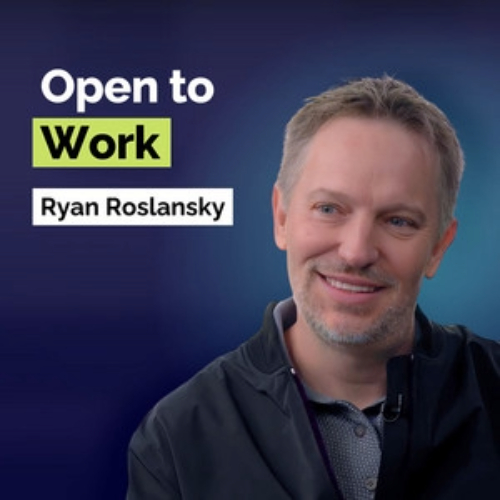
In the age of AI, career success isn’t guaranteed, and professionals risk falling behind if they don’t keep up with the rapidly evolving skill set required for success. As the former CEO and current Executive Vice President of LinkedIn, Ryan Roslansky has a front-row view of how jobs, hiring, and workplace expectations are shifting in real time. This perspective inspired his book, Open to Work, a guide to navigating the changing career landscape. In this episode, Ryan shares how professionals and entrepreneurs can stay ahead in the AI era and build the uniquely human skills that make them irreplaceable.
In this episode, Hala and Ryan will discuss:
(00:00) Introduction
(02:50) How AI Is Changing Careers
(07:36) Rethinking Job Titles and Task Automation
(13:27) Top Five Skills AI Cannot Replace
(18:20) Leading Teams Through AI Transformation
(20:35) Finding What Makes You Unique
(26:37) The Shift to Skills-Based Hiring
(32:16) New Opportunities for LinkedIn Creators
(37:43) Rethinking the “Open to Work” Mindset
Ryan Roslansky is the former CEO of LinkedIn and currently serves as the Executive Vice President at LinkedIn and Microsoft, overseeing both LinkedIn and Microsoft Office. During his tenure as CEO, he nearly tripled LinkedIn’s revenue and grew the platform to record levels of engagement, with over 1.3 billion members. Ryan is also the co-author of Open to Work, a practical guide to future-proofing your career and mastering the most essential human skills in the age of AI.
Sponsored By:
Huel – Get over $50 in savings with the Discovery Bundle from Huel. Use my exclusive code YAP15 for 15% off at huel.com/yap15.
Indeed – Get a $75 sponsored job credit to boost your job’s visibility at Indeed.com/profiting
Shopify – Start your $1/month trial at Shopify.com/profiting.
Quo – Run your business communications the smart way. Try Quo for free, plus get 20% off your first 6 months when you go to quo.com/profiting
Experian – Manage and cancel your unwanted subscriptions and reduce your bills. Get started now with the Experian App and let your Big Financial Friend do the work for you. See experian.com for details.
Intuit – Start paying bills the smart way, not the hard way. Learn more at QuickBooks.com/billpay
AT&T Business – Power your small business with reliable connectivity from AT&T. Switch today at business.att.com.
Fabric – Protect your family with term life insurance from Fabric by Gerber Life. Apply today in just minutes at meetfabric.com/profiting
ZocDoc – Stop putting off those doctors’ appointments. Find and instantly book a doctor you love today at Zocdoc.com/PROFITING
Blinkist – Turn the world’s best nonfiction books into quick 15-minute reads or listens. Grab your free trial plus an exclusive 30% discount at blinkist.com/profiting
Remitly – Transfer money internationally with Remitly, with no hidden fees. Use code BUSINESS to get a $100 bonus after you send $300 or more. New customers only.
Resources Mentioned:
Ryan’s Book, Open to Work: bit.ly/RR-Open2Work
Ryan’s LinkedIn: linkedin.com/in/ryanroslansky
Active Deals – youngandprofiting.com/deals
Key YAP Links
Reviews – ratethispodcast.com/yap
YouTube – youtube.com/c/YoungandProfiting
Newsletter – youngandprofiting.co/newsletter
LinkedIn – linkedin.com/in/htaha/
Instagram – instagram.com/yapwithhala/
Social + Podcast Services: yapmedia.com
Transcripts – youngandprofiting.com/episodes-new
Entrepreneurship, Entrepreneurship Podcast, Business, Business Podcast, Self Improvement, Self-Improvement, Personal Development, Starting a Business, Strategy, Investing, Sales, Selling, Psychology, Productivity, Entrepreneurs, AI, Artificial Intelligence, Technology, Marketing, Negotiation, Money, Finance, Side Hustle, Startup, Mental Health, Career, Leadership, Mindset, Health, Growth Mindset, Startup, Business Ideas, Growth Hacks, Career Development, Money Management, Career Podcast
Ryan: [00:00:00] Every day I feel like I wake up and you look at the headlines and there's something new that's happening and just go over the, like last few months chat. BT was like super hot. It was all that mattered. Now it's like claw. Then it's like Claude Cowork now it's this open claw thing and all you're just like, oh my gosh.
Ryan: Like every day I wake up and it's like there's some new thing in the world that's hot. My goodness. It's like the craziest thing I've seen in my entire career.
VO: Ryan Lansky is the CEO of LinkedIn. Leading one of the world's largest professional platforms. He's navigating how AI is shifting careers and the structure of work itself.
Hala Taha: So tell me, you are sitting on the data of a billion people right now with LinkedIn. If somebody is ignoring ai, what happens to their career in. Three years.
Ryan: The average set of skills to do a job has changed by like 25% over the last few years, and we expect it's gonna change by 70% by 2030. Wow. So if you're not accepting the fact that like this labor market is changing, your role is changing, it's not okay to like stand the sidelines for this one.
Ryan: You have to get into the mix somehow. Do [00:01:00]
Hala Taha: you believe that the whole hierarchy of careers is about to shift? Can you tell us more about that?
Ryan: Everybody's job is a set of tasks. The large percentage of these tasks are the types of things that can be automated away. If your job is just a set of automated tasks, like you have to start thinking about finding a new job
Hala Taha: open to work on.
Hala Taha: LinkedIn sometimes has a negative connotation, like you're desperate for a job. Talk to us about what it means to actually be open to work.
Ryan: If you have that green banner on, you are 27% more likely to get hired. Open to work more than anything is a mindset shift.
Hala Taha: Help us understand how the future is shaping in terms of how people will actually get hired based on their skills, not necessarily their titles and what LinkedIn is doing to help support that.
Ryan: I think you know, first and foremost, you have to.
Hala Taha: Yeah, bam. LinkedIn data shows that by 20, 30, 70% of the skills required to do your job will have changed, and that shift is already happening, which is exactly why today's episode matters, because we're breaking down how AI is [00:02:00] reshaping the way that we work and what you need to do right now to stay ahead.
Hala Taha: And, boy, do we have the perfect guest for the topic. Ryan Lansky is the. CEO of LinkedIn sitting on career data of over a billion professionals worldwide. So when he talks about where work is heading, it's worth listening up. His new book, open To Work, is a Survival Guide for this exact moment, and today he breaks down how to identify what AI will automate, how to build your onlyness, and why human skills are now the hottest commodity on the market.
Hala Taha: If you wanna future proof your career, make sure you follow this podcast if you haven't yet, because the future of work isn't coming. It's already here. Ryan, welcome to Young and Profiting podcast.
Ryan: So excited to be with you. Thank you.
Hala Taha: I am so honored to be speaking with you today, and I can't wait to talk all about careers and how AI is reshaping careers.
Hala Taha: So tell me, you are sitting on the data of a billion people right now with LinkedIn. If somebody is ignoring ai, what happens to their [00:03:00] career in the next three years?
Ryan: Yeah. Well, again, it's such a pleasure to be with you, huge fan of the show. And um, you're right, by virtue of, you know, the activity that's happening all day long on LinkedIn, the companies that are posting jobs, the people who are applying for jobs or updating their profile.
Ryan: There's a tremendous amount of really unique data that we see flowing through the ecosystem.
Hala Taha: Hmm.
Ryan: Uh, what skills are hot right now? You know, what a company's hiring for. Uh, how is the labor market changing? And you know, to your point, there's some real unique like signals right now that we're seeing. And it's not all doom and gloom, quite frankly.
Ryan: I mean, on one hand I will say that. You know, the average job right now, which if you take a job as being a set of skills to do a job, your job is a set of skills by dev, a set of skills, the average set of skills to do a job is changed by like 25% over the last few years. Mm-hmm. And we expect it's gonna change by like 70% by 2030.
Ryan: Wow. So if you're not changing your job, it's changing on you. So there's like this change going on on one hand, and the other hand, we're actually seeing AI create a lot of net new [00:04:00] jobs. I mean, there's a, mm-hmm. You know, across the platform we actually see 1.3 million new, you know, AI jobs being the platform that didn't exist even a year ago.
Ryan: So a lot of data center jobs, um, you know, data, ai, data, annotator jobs for deployed engineers, all these roles that are actually being created because of ai. I think the most important point to where you started is like, Hey, look, if you're not. Uh, accepting the fact that like this labor market is changing, your role is changing, new roles are being created.
Ryan: Like there's a whole new economy being be, being created around ai. Like you're missing out. It's, it's not okay to like stay the sidelines for this one. You have to get into the mix somehow. Mouth.
Hala Taha: Now I know with ai. If you're missing the boat on learning right now, everything is changing so fast that you can end up really far behind.
Hala Taha: Can you help us understand why it's so important to actually start learning now and why, you know, you'll miss the boat if you don't start now.
Ryan: I mean, I have to tell you, even it's like every day I feel like I wake up and you look at the headlines and there's something [00:05:00] new that's happening. And if you just take, I mean, just go over the like last few months and you know, you and I both spent a lot of time thinking through this, but.
Ryan: You know, chat, CBT was like super hot, you know, like six weeks ago. Mm-hmm. It was all that mattered. Then all of a sudden everyone's like, oh wait, now, now it's like clocked. Yeah. Like that's all that matters. And everyone's like, you know, learning it and paying attention. Then it's like Claude Cowork is like, you know, that's the thing.
Ryan: That's all that matters. And then all of a sudden it's like, oh, now it's this open cloth thing. And all you're just like, oh my gosh. Like every day I wake up and it's like there's some new thing in the world that's hot. Yeah. And you know, I mean it's, you know, it's my job. It's part of your job to really be on top of these things in order to survive and thrive and, you know, kinda understand where the world is moving.
Ryan: Um, I can only imagine what it's like for any professional in the world trying to like, keep up with it as well. Um, and it, it's, you know, it's, it's, it's unique. It's a unique time. It's a different time. It's, you know, it's not status quo, but the point is you have to like, try and keep up with it and you have to pay attention and it's difficult and sometimes confusing.
Ryan: But in order to, you know, [00:06:00] anything from run a company to, you know, start your career, these are things you have to know and pay attention to. Um, but yeah, my goodness, it's like the craziest thing I've seen in my entire career.
Hala Taha: I've been really, you know, getting. Super interested in ai and one of the things I'm noticing is like you've gotta spend a lot of time building it totally Right.
Hala Taha: Putting in the memories that I want it to have, getting skills and processes and like dumping my brain so that it becomes my second brain. So I think the other part of it too is like spending the time to actually develop your ai. Because if somebody's been working in AI for two years and it's ingested all their emails mm-hmm.
Hala Taha: And all their Slack messages and fireflies and it's, you've trained them on all your skills. That person's gonna be so much more ahead than the person who just is starting to create their AI and ai, it's work
Ryan: with
Hala Taha: their
Ryan: ai. Such a killer point, by the way. I mean, this idea, and I think so many people out there, um, who are like, yeah, you know, I, I've used AI or I dabble in it and maybe it's not [00:07:00] that great, or maybe it can't do what I'm trying to do.
Ryan: Mm-hmm. It's quite frankly, because you haven't put the time and effort to, you know, really set the context mm-hmm. Or train it or put in the time and effort to make it understand what you're actually trying to accomplish. I think you're spot, one of my like best hacks is actually I'll just, you know, like open up copilot on my phone and just, you know, talk to it and like I'll just talk for like 20 minutes providing a ton of context, like, here's what's going on in my day.
Ryan: Yeah. And like this, this, but it's all it means to an end, like the next question I have to ask. To get, uh, you know, an answer out of it has all that context built into it. So continuously building that up I think is a really important thing.
Hala Taha: Yeah. So talk to us about how AI is so much different from other tech shifts that we've seen from smartphones to electricity.
Hala Taha: You guys, you and Anish are co-author. You're calling it a work shock.
Ryan: Mm-hmm.
Hala Taha: Why is it so shocking?
Ryan: I think in my career I've probably been through like three or four massive, you know, transformations in technology. Um, you know, like you said from, um, you know, mobile [00:08:00] social ai. And this one just feels like it's moving at a much faster pace.
Ryan: Um, there's also such uniqueness in the technology, which is, um, it's, it's very. I kind of, it's, it's almost like purposely built to be a little bit difficult to understand. Like, I don't care who you are, how smart you are, what you've studied, you know. The, these models operate in ways that, you know, none of us, you know, truly understand and they're evolving in ways that aren't like technology of the past.
Ryan: There's just a lot of uncertainty in it, and it's moving faster than anything that we've ever seen. So, you know, you know. People don't like uncertainty in their lives. Companies don't like uncertainty when they're trying to navigate a company. Markets don't like uncertainty when they're trying to predict where the future is going to go.
Ryan: So it is this shock right now amongst this like really uncertain, you know, new technology, which oh my goodness, feels so unique and so powerful. And when you [00:09:00] really get this to do what you wanted to do, it's like, wow, this is a game changer. Um, but a lack of clarity on actually, you know, how it works. And then the fact that, like we said before.
Ryan: Every day you wake up and it's like, oh wow, something new exists out there that I didn't even think could be, uh, you know, existing in this world. So, yeah, it's, uh, it's a crazy time.
Hala Taha: I think we have no choice but to embrace it if we wanna have successful careers, right? We've gotta just learn about it, get experience with it.
Hala Taha: So. From what I read in your book, you believe that the whole hierarchy of careers is about to shift. So, for example, knowledge work, a lot of it, a lot of our tasks can now be automated by ai and pink collar and blue collar work is becoming more valuable. Can you tell us more about that?
Ryan: I mean, I think the general framing is, um, again, everybody's job is, is a set of tasks.
Ryan: Mm-hmm. Um, and. I, I've been doing this thing recently where I, I'll tell someone, Hey, just imagine that you're not allowed to use [00:10:00] your job title anymore. Not that your job's gone, you're not getting fired, but you, you, you can't talk about yourself in this job title. Mm. Um, but you have to go into work. You have to explain to someone what you do all day, and you have to sit down at your desk wherever you work and actually do the job is a means to an end to understand what am I actually doing every day?
Ryan: And you realize a couple of things. Number one. Um, I'm probably doing a lot more than my title actually suggested I'm doing, quite frankly. Um, and number two, it gives you a framework to say, okay, here, here are the things that really matter inside of my day-to-day work. When you're able to understand that, and, you know, maybe for a typical job there's 10 to 20 tasks that matter, you can then start to take control and understand whether or not, you know, the large percentage of these tasks are the types of things that can be automated away.
Ryan: Mm-hmm. And Anish and I in the book talk about it in three buckets, like bucket one. Highly a automatable tasks. Uh, bucket two, the types of tasks that AI can really help you more productive by using them. Bucket three, not super likely to be automated through ai. And when you take a look at your job, if your [00:11:00] job is just a set of automated tasks, like you have to start thinking about finding a new job, quite frankly, um, most jobs are not that.
Ryan: Um, but that's the framework that we start with to understand kind of how this, uh, pulls together. And then looking at a set of jobs is just as tasks. You start to realize. Wow. Like these bucket two tasks, things that AI can really help you do, you know, uniquely better and automate. And maybe, you know, maybe I was historically a, you know, a product designer or a product manager and didn't really have a lot of great, you know, coding skills, but now all of a sudden I have this AI that gives me that superpower of all these coding skills.
Ryan: Then the actual market completely starts to change and flatten. So one of the things we try to do at LinkedIn is to be a little bit ahead of that curve. We used to hire for, you know, four or five roles separately inside of the software development process. Um, you know, uh, graphic designer, product manager, product marketer, uh, for an engineer, backend engineer.
Ryan: Mm-hmm. What we've learned is that, you know, we can equip people with a set of AI [00:12:00] tools that can actually allow you to be really good in a lot of those tasks. Mm-hmm. So we've started, uh, a new role at LinkedIn. It's just called Builder. And, um, we're doing it kind of as an entry level role into the company.
Ryan: Um, you know, a associate product builder. It's a combination of all those things that used to be these horizontal or kind of, you know, like vertical skills in the company. Into one role in order to apply for that. I, I don't really care if you've gone to college, if you've studied anything. Mm-hmm. I wanna see what you actually know how to build using these tools.
Ryan: The application process is like, show us what you've built using ai, and it's a way to really start to evolve what roles look like. Um, giving people a lot more ability and autonomy to, you know, uh, take agency in their role, in their career. But also to really play ahead because now you can move as a company, we move a lot faster when instead of having to like go through five different steps to get something done.
Hala Taha: Yeah.
Ryan: Someone has that ability to move much quicker as like, you know, one person with all these tools For a product like LinkedIn. There is [00:13:00] no shortage of features that customers want us to be building. And so by empowering people to do much more, it's like, oh my gosh, all of a sudden we can start to build many more things, get things done quicker, um, respond to a customer, you know, request much quicker.
Ryan: So it's really exciting, but it requires to rethink the entire way that like jobs exist in the company.
Hala Taha: Yeah, I, I, I imagine that hiring is gonna be so much different because what you're gonna concentrate on are the skills that AI actually can't automate. The bucket three. That you were talking about. So you actually have these five Cs, five capabilities in your book, uh, which are all the things that AI can't automate mm-hmm.
Hala Taha: And the types of, uh, human skills that we should really be concentrating on. Can you break that down for us?
Ryan: So the thesis there is, um, you know. If a lot of people have an AI tool that they have access to that can do a lot of what we've historically, maybe called hard skills, create an Excel spreadsheet or some sort of coding or uh, et cetera, then that becomes a little bit more democratized and what becomes more valuable and important.[00:14:00]
Ryan: Are the actual unique human skills on top of it. We've historically talked about that as soft skills, and when we call them soft skills, it kind of feels like, oh, they're not that important, or, you know, no one needs to pay attention to them. Ironically, now they're probably the most important, uh, yeah, in my view.
Ryan: And, you know, it's those uniquely human things, like an ability to sit here and have a conversation with another human being. Like just communication, um, compassion, creativity, courage, these things where. To go above and beyond, to stand out, to really be effective in your job. Not only do you need to know how to use AI or the tools, but you just to be able to like, get things done, communicate with people, um, you know, galvanize people to actually go and do something.
Ryan: Mm-hmm. Um, collaborate when things. Aren't easier, people aren't getting along. There are these things that, um, I think are really gonna make people stand out the more we can focus on them. And, um, it's funny because I just think so much that, that, that [00:15:00] everyone's talking about. The AI tools and the AI skills.
Ryan: Mm-hmm. But those are going to become much more commoditized and democratized. So trying to figure out how to be great at these human skills, I think is gonna be the key.
Hala Taha: What's up app? Bam. Spring is here, and let's be real. Most people fell off their healthy eating habits, not me. And it's all because of fuel.
Hala Taha: That's HUEL. My entrepreneur friends put me out to heal. Fast, inexpensive, healthy. One. Complete meal a day, handled their black edition, ready to drink 27 vitamins and minerals, 35 grams of protein, five bucks, and it actually tastes great. No mental energy wasted on figuring out what to eat. Fuel is our secret weapon.
Hala Taha: I was always skeptical about ready to drink meals, but after trying fuel, I'm hooked. Chocolate is my go-to, and Huel is more than just ready to drinks. I had my entrepreneurship peer group over and everybody was like kids in a candy store trying out everything Daily Greens, a light sparkling green drink with 42 vitamins and superfoods energy, plus their caffeinated drink and the [00:16:00] complete nutrition bar.
Hala Taha: All five products come in the Hue discovery bundle, heavily discounted, plus a free T-shirt and shaker. It's the best way to try everything and see what works for you. Join me today with this limited time offer and get $50 in savings with the Discovery bundle from Hue Today with my exclusive offer of 15% off.
Hala Taha: Online with my code Yap. 15 at huel.com/yap. 15. That's HUE l.com/yap. 15 huel.com/yap. 15 new customers only. Thank you to Huel for partnering and supporting our show.
What's up? Yap Gang. On the show, I've sat down with Robert Green, Seth Godin, Alex Ramzi, Gretchen Rubin, James Clear, and every single one of them has a bestselling book and every one of those books are on Blinkist.
Here's something I've been thinking about lately. In the age of ai, everyone has access to the same answers, but the people who actually read, who absorb real ideas and think for themselves, they're the ones with the original take in the room. AI can summarize, but it can't replace the [00:17:00] frameworks that you build from reading widely.
That's your real edge as an entrepreneur. Blinkist turns the world's best nonfiction into 15 minute reads, or listens over 9,000 titles covering entrepreneurship, marketing, psychology, habits, everything we always talk about on this show. I use Blinkist to go through several books a week, pull out the key insights and decide which ones deserve a full deep dive and a full read.
Between meetings at the gym, whenever I just have 15 minutes. In a world where everybody is copying the same AI output, reading is the thing that can make you different. Grab your free trial plus an exclusive 30% discount at blinkist.com/profiting. That's blinkist.com/profiting.
Hala Taha: I'm wondering how you imagine, uh, companies will level up their employees in these skills and also like hire for these specific skills.
Ryan: I think there's a huge market right now, by the way, you know, for anyone listening, if you're thinking about starting something like the, the education system, which, you know, to a large [00:18:00] extent, um, has been built for a different era and is probably past its prime. Has never really valued this ability to mm-hmm.
Ryan: Be teaching these, um, you know, softer skills. And if those are going to become the hot commodity. I think that as a society, it's gonna be incumbent upon us to figure out how to ensure people have these skills. And it's not a lot of focus for people right now. Um, I think you get them by practicing them like you would anything else.
Ryan: And there's the types of skills, unfortunately, you usually. Can't do alone. Like you can't learn to be a great communicator like by yourself. You have sit down and talk to someone, be able to look them in the eye and like have a great conversation. I think that, you know, one, it's a mindset shift at a society level and at a company level to figure out how to like really focus on this.
Ryan: Um, and then, you know, I think upon. That we'll start to see these ways where, you know, hiring against those skills will be much more, you know, uh, commonplace in terms of how it works. My favorite question right now, for what it's worth, anytime I hire somebody mm-hmm. For, for LinkedIn, um, I have two favorite questions.
Ryan: Like, number one, [00:19:00] if, uh, if a friend or colleague of yours had never heard of LinkedIn before and asked you what it was and what it's for, what would you say? Hmm. And sometimes you get like really, really smart people. Um, who have all these amazing like, you know, technical skills who are like, oh, I'd say it's like Facebook, but for professionals.
Ryan: Mm. It's like, okay, that's one way to say it. Um, but you know, then you get people who are like, oh, well, you know, it's a great place, you know, to create economic opportunity and to, you know, build your brand. And it's like, okay, wow. Like some that can actually like craft a story and communicate. Shows me an ability to leverage and use some of these softer skills, eq, communication, et cetera.
Ryan: Mm-hmm. And the second question I love to ask people that interviewing, um, now everyone's gonna know these questions by the way, but that's Okay. Um, uh, tell me about something that you created in the world that never existed. You know, maybe a school club, like, I mean, and like, I mean, not, not a company or an app, like anything that you built.
Ryan: And I'll usually get one of two [00:20:00] answers. One is the like. What do you mean? Like what do you mean created that didn't exist? And I think that that's a, you know, that shows a lack of creativity or courage or the thinking that, oh, the world just exists and I become part of it. Mm-hmm. Versus I can actually have agency to create something.
Ryan: Or a lot of people who are like, oh my gosh, let me tell you the list of like the 30 things I've created. You know, I started this club at school and then I did this other thing when I was in college, and it's like, and here's the app that I created to help my, like, parents do their thing. And it's like, okay, like that's the mentality that you're looking for.
Ryan: So you can kind of suss out some of these, you know, more human skills in the process, but I think it's gonna become much more commonplace moving forward.
Hala Taha: Yeah. Um, by the way, I love those questions. I'm definitely stealing them. I know LinkedIn has a coaching program. Mm-hmm. And I know for middle managers especially, their role is gonna shift a lot from, you know, just doing meetings and managing the team to actually coaching the team.
Hala Taha: Totally. Can you talk to us about that?
Ryan: So the first thing we try, and we've been trying, you know, for a couple years now, and it's like really [00:21:00] successful is, and people thought we were crazy when we did it, is we, we said every employee has access to a career coach. Mm-hmm. And not any AI career coach, like a real human being, career coach.
Ryan: With the idea that, you know, going through a process like this, our company can only be successful if people are able to adapt to the transformation. Mm-hmm. In order to adapt, you need someone to help you figure this out. You need a coach, a mentor, someone you can go to with questions that's not your manager to help you figure out like, am I doing this right?
Ryan: Wait a second, where are I? Uh, skills lacking, am I communicating correctly, et cetera, et cetera. It's been wildly successful. I think it's a really important thing that most companies, you know, should try and adapt as well. But I guess your second point, which is that this is all adapting and, um, you know, it.
Ryan: If your manager is just someone who thinks that their job all day long is to ensure you're doing your tasks, um, that job is gonna become a lot less necessary moving forward. Hmm. What's going to need to be there and be replaced is, you know, similarly, someone that can coach you to do your job better, that can coach you to handle [00:22:00] conflict, that can coach you, to ensure that the system's set up correctly and know how to make hard trade off decisions.
Ryan: Um, you'll be able to do many more things with these tools than you ever thought was possible. And that's a good thing on one hand and a bad thing on the other hand, because all of a sudden, if you think about, you know, you're building a product and you have 10 people that can now do, you know, all these, you know, amazing things left and right that they didn't think were possible, at the end of the, there's gonna become conflict at a certain point really quickly.
Ryan: So, you know, that manager's job now becomes, uh, ensuring how to get these people to work together correctly. Mm-hmm. Uh, ensure they're, you know, they understand the lanes that they're swimming in and then handle conflict, which is. Inevitably going to become much more commonplace when people have much more agency to be building things.
Ryan: So, you know, people have to really understand that to succeed over the next, you know, couple of years, you can't be operating the way you operate historically in your career. And I think that goes for middle managers as well as, quite frankly, almost every role that exists.
Hala Taha: As you know, uh, my show is targeted towards entrepreneurs and one of the things [00:23:00] that I've been teaching them for a long time is the importance of skill stacking.
Ryan: Mm-hmm.
Hala Taha: And how as an entrepreneur, your stack of skills really is your superpower. So me, for example, it's like I started my career in radio, then I went to marketing and I hack Twitter, and I had a blog with a hundred girls and like knew how to galvanize and recruit and lead. And I turned like all those skills to become a top 100 podcaster.
Hala Taha: Grow a network and all those things. Right? Yeah. And you've got a similar concept in your book mm-hmm. Called Onlyness. Mm-hmm. And I thought that was really interesting. And, um, it's, it's interesting how that's not only important for entrepreneurs now. Mm-hmm. It's important for everybody to be more Yeah.
Hala Taha: Employable. So talk to us about this concept of onlyness and how somebody can ensure that they've got a unique set of skills Yeah. That's gonna make, make them employable.
Ryan: Lemme ask, I'm gonna flip it back on you. Yeah. So, um. I mean, millions of people would probably love to have built what you have built or to have the success that you have had.[00:24:00]
Ryan: Why do you think that you have been able to do it?
Hala Taha: I honestly think it's those five C's. Okay. That you are talking about. I think I have really great communication. Yeah. I have really great curiosity and courage and just. Do stuff without really thinking about it too much. I just, I just do.
Ryan: And so that's the point that, that is what is unique to you.
Ryan: And I imagine that, you know, having known you for like a few days now, there's a couple other like really important things there as well that you are uniquely good at. But it's that understanding like again, in a sea of where, you know, skills become more commoditized. Like what makes you stand out If everyone at the push of a button can create a website.
Ryan: Or, um, you know, create a mobile app or, you know, do a lot of these things like what's gonna make yours be unique and stand out? What's gonna allow you to go and, you know, win the next customer? Um, so understanding that about yourself is the place to [00:25:00] start. Like, what am I good at and how can I use that to my advantage?
Ryan: My guess is, um, most entrepreneurs actually. Understand that deeply. Mm-hmm. In order to survive, you have to know what makes you unique. I think most people who are not entrepreneurs don't think like that often. And I think the world, you know, of, of the labor market's gonna be shifting a lot. You're going to have to be thinking more entrepreneurially about your career no matter who you are.
Ryan: Mm-hmm. And so, you know, finding inside of yourself what makes you unique and really honing that, uh, evangelizing it, um. Is gonna be the, the key to success. And, um, you know, that's why you, you, you can't just be like the same as everyone. You can't just be, you know, you know the, the, the same as everyone trying to apply the job for the job and think you're gonna get it.
Ryan: You have to find a way to stand out right now. And the people that do that are gonna be the ones that succeed.
Hala Taha: So I, I read a story about you [00:26:00] that you had a manager once that told you that you would never succeed without him.
Ryan: Mm-hmm.
Hala Taha: And Barbara Corcoran, who I think went on your podcast, told you something very similar.
Hala Taha: Mm-hmm. So, talk to us about your onlyness and also the experiences that you've had that you think gave you the drive to become the CEO of one of the biggest companies in the world.
Ryan: I think what drives me are probably, uh, a few fundamental, uh, things. Some are unique and some are, you know, pretty commonplace, frankly, like number one.
Ryan: What matters most to me is that, uh. That I'm working on something that has a positive impact on the world. Um, many people are out there building awesome technology companies, um, you know, awesome social networks. Um, but the core of LinkedIn is that we build LinkedIn as a platform to create economic opportunity for every member of the global workforce.
Ryan: And every single one of those words is chosen very intentionally when we build good products at LinkedIn. People get jobs, they, you know, uh, create, you know, [00:27:00] connections with people that they, you know, maybe never knew. They start companies, they learn new skills. We're not a, you know, non-for-profit company.
Ryan: So like, there's also a business model tied to all of that. But we build it in a way that, you know, when we do, you know, well as a company, um, you know, people hopefully, you know, great, get good outcomes from it. You know, I always talk about. I try and find opportunities that are where we sit at the intersection of doing good and doing well, and every single company in the world, you know, tries to do well in business.
Ryan: Mm-hmm. But when you talk about doing good, uh, it's often an afterthought. It's, you know, it's the last line in the PowerPoint presentation, or it's the creation of a. You know, dot org website on the side. But when you can seamlessly combine doing good and doing well in what you're building, I think there's real competitive advantage and that like really resonates, uh, and matters to me.
Ryan: Number two, at least, you know, I think a couple of you know, human skills that are really important for me are communication and storytelling. The amazing, you know, you know, large employee [00:28:00] base at LinkedIn, not only do we run this kind of social network at the core. We run five businesses that intersect through it.
Ryan: Um, being able to talk about LinkedIn is one holistic thing instead of a bunch of five siloed things, how people understand how they connect to the mission, how their work connects to the mission, how everyone is moving forward together. Helps to create LinkedIn as one consistent, coherent thing instead of like a, you know, just a massive mess where everyone's stripping over each other, um, and can't get anything done.
Ryan: And I think fundamentally that's a storytelling challenge. It's a communication challenge, which is, you know, how do you, um, you know, set the right frameworks, but also inspire someone to be like, Hey, you know. You are this part of this thing that ladders up to helping people find a job and Wow. You know, you know, get up every morning and excited to do that one thing, you know, that makes you part of this bigger system.
Ryan: But we're all moving together. Mm-hmm. Uh, as one. So again, I think for me, like, you know, you know, very vision driven, um, and then communication, storytelling have probably been the most important skills that I've had to work on. So
Hala Taha: I wanna touch on something [00:29:00] that you were just alluding to, which is that. AI is really leveling the playing field.
Hala Taha: And, um, one of the things that you talk about in your book is how you're a really big proponent of hiring for skills and not necessarily titles. So help us understand, um, how the future is shaping in terms of how people will actually get hired based on their skills, not necessarily their titles and what LinkedIn is doing to help support that.
Ryan: Largest, um, you know, product that we sell commercially at LinkedIn is a product called LinkedIn Recruiter. Um, it's used by millions of recruiters all day long to search a LinkedIn database to find candidates to come join their company. Mm-hmm. If you go back maybe like three or four years, the, the way that almost every recruiter would start their search is they would, uh, filter down by one of two things.
Ryan: Number one, where did this person go to school? Or number two, where did this person used to work? Basically, it's like, oh, you know, she went to Princeton. She must be [00:30:00] good. Or someone that used to work at Google is probably smart. And when you filter down the LinkedIn member base by those two categories, you quickly go from a billion people down to a very tiny group of people.
Ryan: Then it's a very tiny group of people that everyone is trying to go and recruit, and that's not good for anyone. It's not good for these same people that are getting, you know, all the job, you know, requests. It's not good for all the members that you know, are super qualified but are never getting reached out to.
Ryan: And these companies actually aren't hiring anyone because they're going after a tiny pool and competing after the same talent. So it's not a very efficient, nor equitable, you know, you know, use of the labor market on LinkedIn. Recently we've switched it to, in the recruiter tool, the first thing we ask you to do is to actually sort, uh, or search by the skills necessary to do the job.
Ryan: Uh, and that's it. Not where does someone go to school, et cetera. When you do that, all of a sudden you learn two things. Number one, there's a vast labor pool of talent that actually exists on LinkedIn. Not everyone is [00:31:00] going after those people. And oftentimes those people are the most valuable people that you never knew existed.
Ryan: Mm-hmm. So it's, uh, it's a much better, more efficient, more equitable way for the labor market to be running. But the problem is like we can build those tools all day long, but human nature always goes back to, um, oh well, uh, that's cool. But like, where does she go to school? Mm-hmm. You know, or, oh, where did he used to work?
Ryan: So it's as much of a mindset shift as it is a tool shift. But I think we're making a lot of good progress on it. And ultimately, I. You know, uh, being able to get hired for what you're good at, um, not who you know, where you, where you went to school, I think is gonna be a really important thing for the labor market moving forward.
Ryan: And it's not just like the skills you put on your LinkedIn profile, but it's also the knowledge that you share on LinkedIn. Mm-hmm. The things that you share in the feed, the insights that you share. I can't tell you the number of times people get. New jobs, you know, um, you know, part-time gigs, speaking gib gigs or get invited to like, you know, come to a conference because of [00:32:00] something they have shared on LinkedIn.
Ryan: Mm-hmm. And so, you know, your, your reputation, your profile is more than, you know, the things you type in statically on LinkedIn. It's actually the act of conversations that you're continuously having as well. It's showing your work, it's showing what you've done. I think even now with ai, you see these people who like frequently are like, oh, like look at this like cool app.
Ryan: I bit with ai or. Wow. Like taught copilot to do this crazy thing. Or today I use like quad cowork and have like done this thing. And you're like, okay, like why are you sharing that? But these are the people that are actually, you know, getting reached out to for jobs because they're showcasing their ability to be mm-hmm.
Ryan: You know, innovative in using these AI tools. I think it's really, really smart.
Hala Taha: Yeah, I think that's something in your book you're calling signaling.
Ryan: Mm-hmm.
Hala Taha: Right. Can you talk us through the three levers that can help you get noticed?
Ryan: I think you know, first and foremost, you have to ensure that you actually, you know, is as weird or you know, crazy as it sounds like you have to establish your identity like online and put time and effort into it.
Ryan: You can't just like throw a profile up there. Never think about it and expect great things to happen. Mm-hmm. [00:33:00] Um, so that's number one. You have to invest in time and effort in your personal brand. Uh, number two, I think that building a network around that is really important. Um, I think networking has a bad rap.
Ryan: Sometimes it feels like, you know, like it's an old school way of doing things or I don't wanna have to go and like focus on this. The way that, you know, people find opportunities, get things done, uh, is often through people. Mm-hmm. It's through who, you know, who can I reach out to to get help, or who can I reach out to when they need help.
Ryan: I mean, one of the greatest things we see on LinkedIn is someone will ask a question. Sometimes it's really vulnerable to ask a question on LinkedIn, but like then you'll see this community pile on with ways to help them. Um, and I think that's really unique. And then last, you know, the evolution of, um. Of kind of like showcasing who you are and your identity isn't just this like static resume anymore.
Ryan: It has to be through unique knowledge and insights that you're sharing on the platform. Oh my goodness. You don't have to be some crazy [00:34:00] like LinkedIn thought leader or amazing, you know? Creator, like you, you, you can just be someone who's like, oh, like, you know, I, I, I, I saw a post in my feed and like someone had a question and I answered in the comment and like, I, you know, I'm trying to help them out.
Ryan: Like, just participating in the community, uh, is one of the most important ways to get yourself out there and, you know, kind of signal the market that you know, not only who you are, but you know how to do so. Mm-hmm. You know, these are things that quite frankly, someone like you, or maybe the people listening to this podcast like know inherently, but you know.
Ryan: Hundreds of millions of people don't, you know, understand these things and how important it's to be intentional about, you know, yourself and your career. So I think those are really important things to work on.
Hala Taha: Yap Gang, as the CEO of a fully remote company with team members, not only in the USA, but in Nigeria, Turkey, India, and the Philippines.
Hala Taha: Getting money to overseas contractors on time is something I take seriously. If you ever have tried to send money internationally, you may also have encountered delays. Unclear fees or just a whole lot of headache. That's why I [00:35:00] am so excited to partner with the Remitly app. What I love about Remitly is how straightforward it is to get the transfer started.
Hala Taha: The setup takes just a few minutes and the pricing is fully transparent with no hidden fees, which is why millions of people trust Remitly to move money globally. It just takes a lot of the stress out of the process, and for my Yap listeners, you can use the code business to get a hundred dollars bonus after you send $300 or more with Remitly.
Hala Taha: To redeem. Visit the rewards tab on Remitly and enter the code business. New customers only. Hey, young and profits. If you've been around for a while, you know that this show has leveled up more in-person content, more mind blowing guests, better production, and not only happen because of the incredible team we have behind the show when it comes to hiring great talent.
Hala Taha: I trust Indeed, sponsored jobs. Every time sponsored jobs, boost your listing to the top of search results and matches you with candidates based on the exact skills, certifications, and location that you need, and you only pay when it works. Spend [00:36:00] less time searching and more time actually interviewing candidates who check all of your boxes.
Hala Taha: Less stress, less time, more results. When you need the right person to cut through the chaos, this is a job for Indeed sponsored jobs and listeners of this show will get a $75 sponsored job credit to help get your job the premium status it deserves at indeed.com/podcast. Just go to indeed.com/podcast right now and support our show by saying you heard about Indeed on this podcast indeed.com/podcast.
Hala Taha: Terms and conditions apply. Need a hiring hero. This is a job for Indeed sponsored jobs. So, uh, I have to ask this question because I am a teacher of LinkedIn. I'm one of the biggest creators on LinkedIn, and, uh, one of the things that I've been noticing is that there's a huge shift in video. Uh, for a long time we've heard that LinkedIn is focusing on video, but the impressions didn't show that.
Hala Taha: Now suddenly my videos are getting a lot more impressions. And then also I am a part of this new monetization [00:37:00] program, which is really exciting, where brands can basically find my profile and ask me to do sponsorships with them, which I love. So talk to us about, uh, your features, what you guys are focused on, uh, what you're pushing, and then also, um, how creators and people on LinkedIn in general are gonna be, make more money on the platform.
Hala Taha: Like what are the ways, like how are you thinking about it?
Ryan: I'll say, you know, we are a little bit unique, um, in, in, in our approach and that uniqueness may sometimes cause us to be a little bit later to the party than some of the other networks, you know? Mm-hmm. If I'm being super transparent, you think about LinkedIn as a platform where people find opportunity and make money.
Ryan: Um, you know, like I said, every minute on the platform. 50 people in the world will start a new job because of LinkedIn. Um, it is the, you know, largest labor market in the world. It is where, you know, nearly every company trying to hire someone is actively doing [00:38:00] it. And you know, on the flip side, everyone getting a job is gonna do the platform.
Ryan: So people all day long are getting, um, jobs through LinkedIn. Historically, we focused on, again, the efficiency of that labor market. And it's typically for, you know, a lot of, you know, you know, knowledge and more and more like, you know, frontline roles, um, but not, you know, unique, uh, you know, like platform based roles like creators.
Hala Taha: Mm.
Ryan: You look at the data and right now there are 4 million people whose full-time job on LinkedIn is creator. I mean, they're not making their living on LinkedIn, they're making their living somewhere in the world or trying to, um, as a creator. And you know, I think we've really kinda woken up to be like, oh, okay.
Ryan: Like, you know, we need to ensure this audience can be successful in creating an opportunity on LinkedIn as well. And so. We, you know, we, we we're, you know, we're trying and like really kind of investing in the tools that can help people, you know, showcase themselves, you know, not through what has historically on a professional platform been, you know, like [00:39:00] long form text.
Ryan: Like that's what people like, you know, it's like, oh, it's like now it's like short form video or any kind of video. And when we, we put video on LinkedIn, we get like two reactions, you know, and number one. These, you know, folks that have maybe, you know, are a lot further along in their career or you know, senior executives companies are like, oh, wait a second.
Ryan: Like, you know, LinkedIn's not a place for a video. That's where you go to these other platforms like no video on LinkedIn, Ryan, please. And then like the younger generation is like, thank you. Finally like, my goodness, like I can like showcase who I am now that you actually have video. And so we kind of see this, it's just like the world of work.
Ryan: Yeah. Like, you know, different generations working together are kind of like manifesting themselves on this platform. I think more and more video is like, you know, to your point, starting to catch on. Great. Now, if someone like you is going to be investing your time and effort in sharing your amazing, you know, knowledge and insight with the community to help them be more productive, you know, we now have to invest in the platforms and the, the policies and the programs to help you be more successful on LinkedIn.
Hala Taha: Mm-hmm.
Ryan: Um, you know, when you do something, it's like, we hear these advertisers, you're [00:40:00] like, oh my gosh, like, how do I meet this person? How do I work with this person? And it's like, okay, well, well, you know. We're the largest, like B2B, like advertising platform on the internet as well. How do we help connect these people mm-hmm.
Ryan: So that you can actually, you know, um, make a living off it as well. So we're investing more in actually, you know, uh, creation of opportunity on the platform, which, you know, creation of opportunity has always been the purpose of LinkedIn on the platform is a new thing. We see it in creators. We also see it, quite frankly, in a, in a role that is.
Ryan: Just exploding right now on LinkedIn, which is, um, around, you know, data annotation or, you know, human AI evaluation. And the way that a lot of these AI models work is the following. Like if, if you're, if you're an engineer working on one of these large language models, like here's your day, you maybe pick a topic like, I don't know, you know, um, uh, cardiovascular health.
Ryan: Okay. And you know, your job is to make sure the model is really good at cardiovascular health. So you maybe write a hundred prompts, you feed it to the model, you get responses back. [00:41:00] But you need to know whether or not the model is giving really good responses about cardiovascular health. Mm-hmm. So the next thing you have to do is go and try and find someone who's an expert in that.
Ryan: Mm-hmm. To kinda look at this and be like, oh yeah, that's right. That's wrong. Um, and you know, that's been a market that's been moving now for a couple of years and really kind of, you know, growing. And now we have that on LinkedIn, which is that, oh, now a cardiovascular surgeon on LinkedIn can, you know, make money on the side by looking at, you know, some of these prompts in the model output, grade them.
Ryan: Get it back to that engineer at one of the model companies who can then use that to retrain the model. Oh, cool. And you know, a lot of what, you know, people may not be totally aware of is the, the reason that a lot of these models are so amazing. What they do is because at the end of the day. There's a lot of human judgment and evaluation happening underneath them.
Ryan: So there's a real marketplace for that as well, which is now starting to grow on LinkedIn again, to your point of like, how do we create more opportunity on the platform itself?
Hala Taha: Yeah. So cool, and I'm just so excited for all the things that LinkedIn is doing. I've, I've been such a fan of the platform for like 10 years years now.
Hala Taha: The. I love it. Your book is [00:42:00] called Open to Work. Mm-hmm. Now open to work, um, LinkedIn. Some sometimes have a, has a negative connotation, like you're desperate for a job. Mm-hmm. And you've got this like little green badge and everybody knows that you're not employed. Talk to us about the mindset shift of what it means to actually be open to work.
Ryan: First off, we created, you know, it's Open to Work is a little green circle that exists on your LinkedIn profile that you can turn on if you want to signal to the community that you open for work. We started it during COVID when, you know, the market was just, you know, really uncertain and going crazy and, you know, really reshuffling all over the place.
Ryan: Um. What most people turned it on for wasn't just a signal, they're opening for a job, but, uh, you know, start a conversation with the community of other people who are maybe in a similar position. And again, like what's so important to LinkedIn or the job searching process is you're not in it alone. Um, you know, there's a network of people around you that can help you out.
Ryan: Or when someone turns on that green banner and it's like, oh my gosh, I actually know this person. I didn't know they were [00:43:00] looking, but they'd be really good for this job over here. How can I help connect them to it? It's a really strong signal to the, to the community. Just to like set the record straight, like if you have that, you know, green banner on, uh, you are 27% more likely to get hired.
Ryan: So it's a very, very valuable signal, um, to the market. What I think is more important than anything at this moment in time is like the green circle alone, this idea that, uh, I need to be putting myself out there thinking differently, leveraging my network, leveraging the community, adapting, learning new skills.
Ryan: Is all that matters for the future of work. Mm-hmm. And being able to navigate the transition that we're all going to go through, no matter what your job is in the world of ai. So open to work more than anything is a mindset shift on my careers in my own hands. I have to put it in my own hands, and I have to adapt for the moment around us right now.
Hala Taha: And I know that, uh, when it comes to the way that our careers are gonna change, a lot more people will be entrepreneurs. We're gonna be holding more jobs [00:44:00] than we ever had before, and there's no such thing as a five-year career plan. Everything is just really. Um, experimenting and kind of going where you see the opportunity going.
Ryan: Yeah, yeah. I mean, for sure. I don't know if we wanna talk about that, but I learned, you know, kinda last night about, you know, you, you, you were no stranger to like having multiple jobs at once. Yes. And I, I mean, I think that's, uh, a lot of the way the market is going right now, and it's not about. You know, it's not about having multiple jobs, multiple jobs takes, but like the experiences that you get when you know, like you can't get experience fast enough right now in learning new things.
Ryan: So, you know, it's not about having a five-year plan. I think that that's outdated career advice, but the best career advice right now is like, hey, over the next three months, what are the experiences that I want to try and learn and get to help, you know, kind of put those into my repertoire, my profile so that I can go and do new and unique things.
Hala Taha: Well, Ryan, it was such a pleasure to have you on the podcast, your new book, open to Work. I read it. It is absolutely amazing. If [00:45:00] anybody is interested on how to level up their career in the age of ai, I highly recommend the book. So Ryan, thanks again for being on the podcast.
Ryan: Thank you all. I appreciate it.
Hala Taha: Yeah, fam, I'm so grateful that Ryan pulled back the curtain on where work is actually heading and gave us a real framework to navigate it. The bottom line from today is this. Your job or career isn't under threat, so stop thinking about it that way. Your job is really under transformation, and the professionals who understand that shift will be the ones who stay in control and stay writing their own rules.
Hala Taha: Here's what I want you to walk away with First, stop thinking about your job as a title and start seeing it as a collection of tasks. Sit down this week and list your top 10 to 20 tasks and weekly responsibilities and start sorting them honestly into three buckets. The first automatable, the second AI assisted the tasks that you can do with ai.
Hala Taha: And the third, the ones that are uniquely human only. You can do that. One exercise will give you more career clarity than any five-year [00:46:00] plan ever could. Second, if you're dabbling in ai, that all needs to change. That is not enough. Chat. GBT is not enough. Depth is the advantage. Spend 20 minutes every single day for.
Hala Taha: The next several months giving one AI tool real detailed context about your actual work problems. Start uploading your documents, start creating skills, start feeding AI your world so it becomes your second brain. The people who invest in building out their AI now are gonna be the ones operating on a completely different level.
Hala Taha: I've started doing this and it's totally leveled up my game. I feel like I'm as productive as 10 people. Now, thirdly, this is the one that's personal to me because it's how I build everything I have is you've gotta double down on your human. Now is the time to start investing in your communication, your creativity, your courage.
Hala Taha: Where are you weakest when it comes to your human skills? Start working on that right now. These are not soft extras anymore. These are your core [00:47:00] product. This week I want you to focus on your communication. We talked about how that's the number one job, skill and demand right now. So I want you to initiate a real conversation.
Hala Taha: Give somebody feedback, resolve tension, pitch an idea, practice communication, like it's a skill because it literally is. The feature belongs to people who know what makes them irreplaceable. And then go all in. That is your work. Yap. Bam. And if today's episode, open your eyes, share it with somebody whose career you care about.
Hala Taha: Drop us a five star review on Apple, Spotify, castbox, wherever you listen to the show. It genuinely helps us reach more listeners. You can also watch the full conversation on YouTube and Spotify video, and you can connect with me on Instagram at YA with Hala or LinkedIn by searching my name. It's Hala Taha, and a massive shout out to the entire YAP team.
Hala Taha: It's been an incredible year. We got nominated for seven different awards this year. We got best performing podcast at the Indie Podcast Awards. We got a huge nomination for. Best Business and Finance podcast at the iHeart Podcast [00:48:00] Awards. We got a bunch of NYC awards, nominations and wins. I got a Webby Award, uh, honoree.
Hala Taha: I didn't quite get a nomination for a best business creator and so many great awards. So shout out to the team for all your hard work. I couldn't have done this without you. This is your host, Hal Taha, AKA, the podcast princess signing off.
Episode Transcription
Enter your name and email address below and I'll send you periodic updates about the podcast.

