The Million-Dollar Business Opportunity Hiding in Your Trash | Entrepreneurship | How We Profit | E15
Nick Spina’s meal-prep business led him to an unexpected opportunity. While developing sustainable packaging, he discovered technology that could turn plastic waste into valuable raw materials. But scaling his recycling startup, Denovia, would require raising around $40 million to build its own facilities. Instead, an advisor suggested licensing the technology to waste management companies that would fund and operate the facilities, while Denovia would earn 25% of their revenue. In this episode, Nick breaks down Denovia’s business model, the partnerships helping it scale, and how entrepreneurs can spot overlooked opportunities and build businesses that tackle global problems.
In this episode, Hala and Nick will discuss:
(00:00) Introduction
(00:00) How Denovia Turns Plastic Waste Into Profit
(05:47) Scaling a Meal-Prep Business Nationwide
(11:30) How Sustainable Packaging Led to Denovia
(12:53) Funding and Protecting Denovia’s Technology
(15:55) Making Recycling Technology Commercially Viable
(17:56) Building a Moonshot Recycling Startup
(22:54) How Denovia’s Licensing Model Works
(28:00) Denovia’s Revenue, Costs, and Funding Strategy
(37:21) Building Partnerships Through Personal Branding
(42:18) Founder Failure File: Costly Business Lessons
(55:08) Building Moonshots and Finding Your Purpose
Nick Spina is an entrepreneur and the founder and CEO of Denovia, a company developing advanced recycling technology that breaks plastic waste down into reusable chemical building blocks. Before founding Denovia, he launched LiveFit Foods, a chef-prepared meal delivery company that grew to delivering more than 50,000 meals per week across Canada. His entrepreneurial experience spans food manufacturing, logistics, business acquisitions, and sustainable packaging innovation. Today, he works with researchers, universities, and industry partners to advance Denovia’s recycling technology and prepare it for commercial expansion.
Sponsored By:
Indeed – Get a $75 sponsored job credit to boost your job’s visibility at Indeed.com/profiting
Shopify – Start your $1/month trial at Shopify.com/profiting.
Northwest Registered Agent – Get a complete business identity with Northwest. Visit northwestregisteredagent.com/YAPFree and start using free resources to build something amazing.
HeyGen – Create AI avatar videos without constantly being behind the camera. Get your first three videos free at HeyGen.com/profiting.
AG1 Next Gen – Support your nutritional foundation with vitamins, minerals, prebiotics, probiotics, and superfoods. Get a free Immune Support Bundle with your first subscription order at DrinkAG1.com/PROFITING.
Whatnot – Grow your business through live shopping, community, and real-time connections with buyers. Search Whatnot, W H A T N O T, in the App Store and start selling today.
MOD – Connect with licensed medical providers for modafinil to support sustained energy, focus, and alertness. Visit MOD.com for a free consultation and get 10% off your first order plus free shipping with code PROFITING. See the website for important safety information.
Prenuvo – Get a radiation-free whole-body MRI in about an hour, with no contrast dye or needles. To learn more about Prenuvo and get $300 off your scan, visit Prenuvo.com/hala. Terms and conditions apply.
CallRail – Track which marketing campaigns drive calls, texts, and leads, and use AI to turn more leads into customers. Start your free trial at CallRail.com/profiting.
Resources Mentioned:
Nick’s Company, Denovia: denovialabs.com
Nick’s LinkedIn: linkedin.com/in/nick-spina
Nick’s Instagram: instagram.com/niickspina
Active Deals – youngandprofiting.com/deals
Key YAP Links
Reviews – ratethispodcast.com/yap
YouTube – youtube.com/c/YoungandProfiting
Newsletter – youngandprofiting.co/newsletter
LinkedIn – linkedin.com/in/htaha/
Instagram – instagram.com/yapwithhala/
Social + Podcast Services: yapmedia.com
Transcripts – youngandprofiting.com/episodes-new
LinkedIn Creator Club – Skool.com/linkedin-creator-club
Entrepreneurship, Entrepreneurship Podcast, Business, Business Podcast, Self Improvement, Self-Improvement, Personal Development, Starting a Business, Strategy, Investing, Sales, Selling, Psychology, Productivity, Entrepreneurs, AI, Artificial Intelligence, Technology, Marketing, Negotiation, Money, Finance, Side Hustle, Startup, Mental Health, Career, Leadership, Mindset, Health, Growth Mindset, Passive Income, Online Business, Solopreneur, Networking
Nick Spina: [00:00:00] We do have the solution to the world's plastic waste problem. Only about 9% of your blue bin is actually recycled. It costs them, or, uh, waste management companies, about $200 to $400 a ton to incinerate waste. We break it down, we rebirth it, resell it for about $1,000 a ton. Now, these businesses are able to make money on something that was currently a loss.
Hala Taha: So it's the old saying, "One man's trash is another one's treasure." So you're turning that trash into treasure.
Nick Spina: Hell yeah.
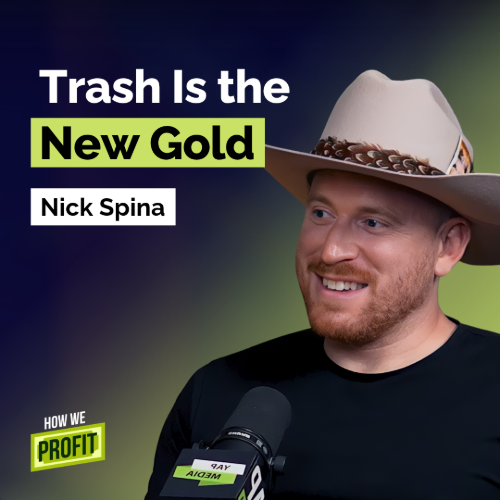
Hala Taha: Today's guest is Nick Spina, founder of Denovia, which is a company developing technology that turns plastic waste into valuable materials. Today, we'll break down how Denovia's business model works and what it takes to turn a groundbreaking technology into a scalable business.
Nick Spina: Essentially, there's billions of pounds of waste that are waiting to go into our process, and buyers wanna buy billions of pounds of the outputs that we have. We can turn that into about $1,000 a ton. We're not in the machine business, we're in the licensing business. So how we make money [00:01:00] is we take a percentage of the revenue that they generate per facility.
We'll take 25% of that. We wanna remain the tech company, essentially the Denovia shovel for waste management companies around the world to be able to dig for their own gold. It works actually very similar to how a McDonald's will work.
Hala Taha: If you are hiring an expensive executive now, what are you putting in place?
Nick Spina: Those people need to be heavily, heavily compensated based on-
Hala Taha: Hey, Yap Gang. Welcome back to another episode of How We Profit. If you're new here, this is a Young and Profiting series where we break down how entrepreneurs build their businesses and make their money. Today's guest is Nick Spina, founder of Denovia.
Nick, welcome to How We Profit.
Nick Spina: Thank you for having me.
Hala Taha: I'm excited to really dive into everything you got going on, because you have a very interesting yet complex business, and I think people are gonna learn a lot from what you're doing. So for those young and profiters who don't know what Denovia is, talk to us about what your business is, [00:02:00] and what problem are you solving?
Nick Spina: So Denovia in a nutshell, so what we've been able to figure out is we've been able to recycle hard to recycle plastic waste, or all plastic waste actually really, but specifically focusing on PET and polyester is our core. Uh, so you know, your Nestle plastic water bottles, um, and textiles and all that kind of fun stuff.
So it's called advanced molecular recycling, and what we b- we believe is the fastest of its kind in the world, of what we do and the most sustainable as well, and we've successfully com- commercialized it. Plastic is made of, uh, core chemicals or chemical monomers. And so at the molecular level, we're able to break apart those monomers or those chemicals of plastic waste.
We purify them. And then we put it back together again into new virgin state plastic, which we can sell over into the market again, over and over and over again till end of time.
Hala Taha: Interesting. And so who do you exactly sell to? Because from my understanding, it's not like you have, like, [00:03:00] plants. You basically are licensing the technology to other companies that are then able to break down plastic and use it in a new way.
Is that right?
Nick Spina: That's exactly it, yeah. So our, our, our business model is, is complete licensing. So, um, we wanna remain the tech company, and then we give essentially the Denovia shovel for waste management companies around the world to be able to dig for their own gold. You know, y- you can imagine, like, Waste Management, uh, Waste Connections, you know, the largest waste management companies on the planet.
So they're currently collecting the majority of the waste out there. And believe it or not, only about 9% of your blue bin is actually recycled. So with Denovia technology, we're actually able to recycle nearly 100% of that now, um, if the contents are plastic. So the beautiful thing about that is that the waste is currently collected by these waste management companies, but unfortunately they're incinerating it or landfilling it, or worse, ends up in the ocean or whatnot.
But we're able [00:04:00] to now divert that from going into incineration, uh, directly into new product.
Hala Taha: Oh, wow. So it's actually a much better version of recycling, because you can actually get the product reused. So give us an example. Like, if somebody is breaking down a water bottle, what can they make out of the plastic if they get, if it gets recycled?
Nick Spina: Um, well, I mean, like, for, just from, like, a basic level, you can make it back into another water bottle. But m- more ideally, we wanna make it into a more high-quality product. Uh, for example, we work with one of the largest companies on the planet out of Germany, and they make adhesives specifically for 60% of phones on the planet.
So, uh, these high-quality adhesives, we can actually use one of the chemicals in plastic, purify that into 99.5% or more purity, uh, which we've actually been successfully verified that we're able to do, and then that can be put into something that can be a longer-lasting type of plastic product, um, with a higher margin as well, which is beautiful.
So from a business standpoint, why [00:05:00] Denovia is driving so much, um, y- you know, traction towards it from large businesses is not only because we're sustainable, but we're taking something... For example, it costs them or, uh, waste management companies about 200 to $400 a ton to incinerate waste. And, uh, what we do is now we can actually s- uh, divert it, put it through Denovia's technology, so it's not being lit on fire anymore.
It's going through our process. We break it down, we rebirth it, resell it for about $1,000 a ton So, you know, th- now these businesses are able to make money on something that was currently a loss- Wow ... and not a sustainable route for them.
Hala Taha: So it's, the old saying is, you know, "One man's trash is another one's treasure."
So you're turning that trash into treasure.
Nick Spina: Hell yeah.
Hala Taha: Okay. So before we get into all these questions that I have about Denovia in terms of, like, how you actually make money, how you market, and get in contact with these waste management companies, I really wanna understand your journey and why you're the guy that started [00:06:00] Denovia.
So first off, like, really succinctly, like, what is your mission with Denovia right now?
Nick Spina: So our mission with Denovia is to be able to completely change the world, how we think about plastic waste, and what we actually do with it. Um, so we're, we do have the solution to the world's plastic waste problem, and, uh, w- and it's, the difference between us, uh, between today and where we're going, is simply scaling it up to make the biggest impact that we possibly can.
Hala Taha: And, like, what's your goal? Is it to, to make sure that, like, every plastic that's out there is more sustainably recycled with your technology?
Nick Spina: Correct. And I, and I think it, we can definitely become the status quo recycling method on the planet when it becomes a plastic.
Hala Taha: Okay. And just to be clear, what's the difference between what you do and what traditional recycling does?
Nick Spina: So the difference between, uh, what Denovium's technology and mechanical recycling does, um... So mechanical recycling, you're essentially taking a piece of plastic, and you heat and mold it into different shapes.
Hala Taha: Mm.
Nick Spina: And you can only do that, you [00:07:00] know, five or 10 times before the plastic becomes brittle-
Hala Taha: Okay
Nick Spina: and it ends up in a landfill or an incinerator anyway, anyways. Okay. So with Denovium, we're able to actually technically rebirth plastic, because we break it down on the molecular level, purify those molecules, and we put it back together again, making virgin-state plastic products. So-
Hala Taha: Well, that's incredible.
Like, that's such a big problem that you're solving. You actually started, or, like, one of your first big companies was actually a meal prep company in Canada.
Nick Spina: I actually started something before that when I was-
Hala Taha: Oh, okay.
Nick Spina: Yeah. So I, I mean, I've been entrepreneurial since I was a kid. Like, I was shoveling neighbors' driveways, collecting 20 bucks a driveway type of thing.
Hala Taha: Serial entrepreneur.
Nick Spina: Yeah. I just had fun with it. And then, um, but, you know, my first, like, um, really serious business is when I, I went out on my own and opened up, uh, a venue that held 2,500 people every night as a bar.
Hala Taha: Oh, cool.
Nick Spina: Yeah, when I was 23. And
Hala Taha: then- So that was your first foray into entrepreneurship and hospitality.
Nick Spina: Yeah, running my own business, my own balance sheet, all that kinda stuff. And then, yes, I, I had the idea of, uh, delivering [00:08:00] fully cooked meals directly to people's doorsteps in 2015. Um, and then that started obviously really small, as most businesses do start. You know, we started with, like, 60 meals a, a week or something like that, and then it just kept on doubling sales and kept snowballing.
Um- Yeah, you
Hala Taha: got to, like, 50,000 meals a week at one point.
Nick Spina: I think it was more than that- Wow ... at, at one point. We delivered directly, you know, across Canada. Uh, we, we even have, like, a geo map, uh, y- where basically it would show all of our deliveries, and it was, like, every single building in Toronto had multiple every week or something like that at one point.
It's pretty neat.
Hala Taha: Let's stay on this business just, just for a couple minutes. Talk to us about some initial strategies you did to get to your first 100 customers, and then also, like, maybe, like, midpoint in your journey, like, what you did to really scale up the business to those, like, 50,000-plus per week meals.
Nick Spina: For sure. Well, I think at the base of every business is relationships. And, um, so we reached out to people that we knew at first. Uh, and people, you know, were like, "Yes, I would love, you know, this idea. I don't wanna cook any more of my own food at [00:09:00] home." So, um, they ordered from us, and we would supply them with a week's ful- uh, worth of meals.
They would tell their friends, their family. They'd bring more and more people on board. Mm, so word of mouth. Word of mouth was extremely important. And, you know, that kept mark- marketing costs down, uh, in the start of it. But then, um, as we started scaling, um, we put a lot of money into Facebook, Instagram, social media marketing.
And then we figured out, well, okay, well, how much does it cost to gain a customer? How much are they spending over, you know, 12 months? And then we figured out that the LTV of the customer is, like, very strong and it was a scalable business. And then we started spending. You know, we put all the profit of that business back into marketing, and then we grew.
You know, we were spending, I think, at one point, like, a, you know, half a million dollars a month on marketing or more.
Hala Taha: Wow.
Nick Spina: Um, and just-
Hala Taha: Paid ads or...?
Nick Spina: Paid ads mostly, yeah. And then we did a lot of referral type of stuff for, like... Y- we would put, like, refer- referral cards inside each box that they can bring three friends on board.
Um, loyalty programs and all that kind of stuff. And you kind of [00:10:00] have to layer it to be able to... You know, 'cause each, you know, if a referral brings another 10%, you know, paid ads, it's the top of funnel, and then you have other different forms of marketing in between that. So you stack it all. Then loyalty so you can increase LTV.
It's just a numbers game, really.
Hala Taha: That's awesome. And manufacturing, did you outsource your manufacturing or did you start your own manufacturing facility for your meal prep?
Nick Spina: When we first started, um... So I was so dedicated to this business that I actually started... Our, our model at first was kind of like Uber.
So we figured out, well, most restaurants are closed at night. Or in the very early morning, and then they would open up maybe for dinner and start cooking, you know, their own food around like 4:00. So we actually would go in there at like 11:00 PM- ... on Saturday night, and then we would actually stay awake the entire night until 4:00 PM the next day.
Hala Taha: Oh my gosh.
Nick Spina: And then so I did that for about a year, and we had multiple locations that we scaled into, but then logistics was really tough between all of them to deliver food [00:11:00] to them and all that kind of fun stuff. So then we decided to open up our own facilities.
Hala Taha: Nice.
Nick Spina: Um, so then the first facility we opened up was like a, a 1950s Italian bakery.
Hala Taha: Oh, cool.
Nick Spina: Yeah, it was, it was super neat. But we, we had, uh, y- you know, every, the cobwebs everywhere. Uh, it was a tiny space, but it had this gigantic oven that you could fit 24 trays of like- Oh, wow ... whatever you were baking into it at one time. So I just looked at the production, uh, capabilities of it, and that was a fantastic launch pad for us.
And then, yeah, we grew into, you know, 60,000 square feet eventually.
Hala Taha: Nice.
Nick Spina: And then we ended up buying a number of different companies, and, uh, I think we bought five or six different companies, and then we scaled. We had seven facilities across Canada-
Hala Taha: Wow ...
Nick Spina: or something like that with, uh, you know, hundreds of people, if not thousands, actually involved with like, including like, and direct-to-door delivery and logistics businesses and all that kind of fun stuff.
Hala Taha: So basically you, you got your foot into manufacturing. You started to scale the manufacturing, and because you had those backend capabilities, it [00:12:00] was, um... So you started to acquire businesses or did people start to like rent out those fac- facilities from you as well?
Nick Spina: Um, no, we bought them.
Hala Taha: Okay. Yeah. So you started buying brands- Yeah
and then you would, uh, create the product in your facilities.
Nick Spina: Correct. Yeah. Yeah. And then so what, what we decided to do was, well, why would we try to start something from zero when something is already successfully operating? Yeah. Or, or sometimes these brands wouldn't be hyper profitable or at all- Hmm
and they just needed help with, you know, their own, um, you know, manufacturing or, you know, something along those lines where there's, uh, you know, a benefit to be able to, uh, acquire them and then cut costs or whatever. And some, some... Our, our thesis on that worked, uh, and then it didn't for some of the brands because some of the brands might have been too small or for whatever reason.
But in the middle of this is kind of like when we also discovered the Denovia technology.
Hmm.
Yeah, and that technology s- the way it started has, has rapidly changed as we've gone along here. But, you know, the base or the, you know, the first kind of [00:13:00] spark to it was, was back in those days.
Hala Taha: Yeah, and, uh, from my research what I saw is at first you were trying to tackle like food waste, and then you turned your attention to like food packaging.
So talk to us first about like food waste, what you discovered, some of the things that you did, and then also with the food packaging, you know, what were you working on that led you to Denovia?
Nick Spina: Yeah, so with the food waste specifically, uh, we built the worm farm. Um, so that was, you know, a really big part of it at first, all the food scraps would go to feed these worms.
And then, um, the, the worms would, you know, turn it into worm castings, which is worm poop Hmm And then that would be used as high-quality soil that got delivered back out to the farms.
Hala Taha: Oh, really cool.
Nick Spina: Yeah, so that, that was, uh, you know, f- I never thought I'd be in the worm poop business- ... but I was. And then the other side of things, we actually hired on a group of, uh, engineers and scientists to be able to, uh, essentially...
'Cause we wanted to get away from 100, like all of our plastic.
Hala Taha: Hmm.
Nick Spina: So, uh, the last remaining piece of plastic in our business was a plastic food tray, [00:14:00] and nothing could replace it that could be made out of, uh, you know, a sustainable, uh, material.
Hala Taha: Oh, wow.
Nick Spina: Yeah, so we m- uh, actually made one out of sugarcane pulp, and, uh, with this group of engineers, and, um, it could do everything that plastic could do.
It could be heated. It could be frozen. It could hold liquid, all that kind of fun stuff. And then, um, but with that same group is when we kind of initially discovered the, the early stages of Denovys technology.
Hala Taha: That's so cool. And when you were trying to make things more sustainable for your meal prep businesses and your different brands, was that actually co- like helped you reduce costs, or did that actually cost you money to do?
Like, uh, how did you as an entrepreneur justify the investment to, like research that or whatever, or did it actually help drive sales because it was like the sustainability aspect of it?
Nick Spina: Y- yeah, it would've helped. Like, it, it, usually the beginning phases of things are, are usually like a little bit of an upfront cost.
But, um, with a lot of it, we were fortunate enough to have the Canadian government come in and [00:15:00] actually help fund some of it-
Hala Taha: Oh, cool ...
Nick Spina: which is kind of nice. Um, so it's definitely from a consumer standpoint that a lot of people care about, hey, well, I would like to buy a product that, you know, does good for the earth rather than bad.
Hala Taha: Yeah. Um, I'd love to tap into that a little bit. How did you get the attention of the Canadian government and get them to help you fund some of this?
Nick Spina: Yeah, well, through, through the, uh, universities that we worked with. Oh, okay. Yeah, yeah. So they came in and, uh, you know, there's different funding programs and whatnot that help.
Like we would come in with a check, and they would come in with a check as well and... Yeah, and then we, and we just kept, uh, you know, our foot on the gas and just kept going. Fast-forward, we work with a number of different universities and, uh, and colleges and whatnot, and, and we've got a number of people on, uh, y- you know, who are on our research and development team, and we still use some of those same funding sources.
Hala Taha: Really cool. So basically, you've discovered the technology to break down this plastic to a molecular, molecular level- With the help of colleges. So who owns the IP for this?
Nick Spina: The IP has, has changed a [00:16:00] lot since day one. Okay. Um, because what we had to do is we also had to commercialize it. So, um, and the important thing behind that, well, you know what happens when you have a, an IP that could potentially change the world?
Well, you're gonna have a lot of groups around the world that want that.
Hala Taha: Mm-hmm.
Nick Spina: Right? And, and, you know, there's some countries on the planet where, you know, or, or, or businesses in these countries that would love to steal it.
Hala Taha: Yeah.
Nick Spina: And so on. So our biggest defense on IP is actually not... Because when you, when you patent something, then that gets launched out into the open of how it's patented or, or the actual process or whatnot.
So, uh, we've actually decided for the time being to k- hold that IP close to our chest, like the KFC recipe, and not tell anybody.
Hala Taha: Not even patent it. Just don't,
Nick Spina: don't right now.
Hala Taha: So you're saying
Nick Spina: it's too risky.
Hala Taha: Too
Nick Spina: risky.
Hala Taha: It's too risky to patent it.
Nick Spina: We've already had groups that have, like, you know, done, uh, patent search, that have been open with us, patent searches on us, and said, "Hey, well, you know, how does your process work?
We can't find your patents. We did an extensive search on you." And I'm kind of like, "You know, [00:17:00] well, you're never gonna know."
Hala Taha: Wow. So you actually feel like it's more secure to not have a patent.
Nick Spina: For the time being. Okay. Uh, you know, we, we will definitely, uh, patent it at some point, but, you know, you're gonna wanna patent 100 different types of patents and, you know, to create kind of a moat around your IP-
Hala Taha: Mm-hmm
Nick Spina: and so on. But for where we're at right now in our journey, it's so important just to keep that close to your chest-
Hala Taha: Mm-hmm ...
Nick Spina: um, and, you know, not, uh, release that to the world.
Hala Taha: So you obviously were not the expert in recycling and waste management, so how has that really impacted you as an entrepreneur and the CEO of this group?
What did you need to learn? How did you get the confidence? Who did you need to hire?
Nick Spina: Well, I've got a thesis on these things. I, I think, like- You know, as I've gone along in my journey, it's really important, I think, for the entrepreneur or the founder to understand how nearly 100% of the business works. Um, so I took it upon myself to actually, uh, learn how the technology worked, and then I've actually done direct, you know, hands-on with...
Like, I have, like, a little lab in my place. [00:18:00] And, like, I would actually do dep- like, live depolymerizations in my h- like, my- Oh,
Hala Taha: wow. Yeah So you were like, "I need to get hands-on."
Nick Spina: Hands-on. Mm-hmm. Yeah. There's a- there's photos of me, like, with, like, a- a lab suit on- Super cool ... or whatever. Like, yeah, so that my fiance took of me and all that kind of stuff.
So it's- it's- it's comical, but I understand it, too, at a very deep level of how this works and also how to modify the technology to do even better. Um, but- but- but you're right. Like, you know, now we have a lot of PhDs or, you know, actually former deans of engineering, uh, that are on board with us and- and work on this new, well, full time, actually.
So just continuously optimizing the technology to do better. But I think something really important about it is, like, one is having a technology that works, but number two is how do you make money with it?
Hala Taha: Mm-hmm.
Nick Spina: And that's- Yeah ... the important part. And
Hala Taha: that's where you come in.
Nick Spina: Yeah. So that- that's exactly it.
Yeah. So it's like, okay, well, you know, how do we actually monetize this and make money with this business? Well, um, you... a- and that's how you grab the attention of the big companies because they usually wanna drive a profit.
Yeah.
They wanna [00:19:00] do good, you know. A- and- and talking about, and these are words of, uh, Steve, uh, Ackerman on our board, and he used to run the largest hedge funds in the world.
And he says, you know, uh, Wall Street wants to do good for the earth, but they're not willing to lose a ton of money doing it. So if you can have a business that can make money and- And it- ... be good for the earth- Yeah ... you're gonna get a flow of people coming into it that are very interested in writing checks or, and using, ad- adopting the technology.
Hala Taha: I love that. So I actually had, uh, Naveen Jain on the show. He's the founder- Amazing ... of Viome. And he always talks about- I've used the
Nick Spina: products.
Hala Taha: Oh, yeah. Yeah. He's amazing. He's like a billionaire. He's so successful. And he talks about this idea of moonshot ideas- Mm ... where basically you've got a big enough mission that really changes the world.
And with AI and everything, he's really trying to get entrepreneurs to really think about, like, what can you do for a company that's not just, like, something generic, like selling, like what I do, social and podcast services or, you know. How are you actually gonna change the world? And you obviously have [00:20:00] like a moonshot idea, and he's got this framework called, uh, why this, why now, why me?
And I'd love you to kind of answer those questions. So, like, why this? Like, how bad is this plastics problem, for, for those of us who don't know? You know, why you? Why do you feel like you're the right person to tackle this problem, and why now?
Nick Spina: Why this is because, you know, there's literally, um, floating piles of trash in the ocean that are as big as the state of Texas.
Hala Taha: Whoa.
Nick Spina: And, uh, they're clogging up, you know, so many different things beyond that, but also the environmental effects that it has on wildlife to the climate. And now it's coming to a point where... Like we even have a group in, in California where they've got 55 million pounds of water bottles that, you know, the, the, the, the government has come in and said, "Hey, you know, you got...
You're gonna get charged or a fine," sorry, "for having these water bottles here. You need to do something with them." So they truck it over state border. It becomes a [00:21:00] problem in their state.
Hala Taha: Oh my
Nick Spina: gosh. So, so anyway, so why is that? Uh, something has to be done with it. There isn't a, there hasn't been a solution till Denovium's technology has come along- Hmm
for this waste.
Hala Taha: Which is crazy.
Nick Spina: It's bananas. And, and it's the weirdest thing, but, like, I get it because now that I'm, now that I know and how I understand the technology is incredibly complex, and, like, i- if one thing is off, it won't work.
Hala Taha: Got it.
Nick Spina: You know? So, like, a- and we just happened to, you know, the stars aligned, we found the right people, and they already had the beginning spark of this technology that allowed us to innovate and take it and commercialize it.
Hmm.
Um, so very fortunate, you know, timing on that side. Um, but, and then, and so there's an understanding of why the problem has built up. But, um, but, you know, I guess why from a business standpoint, well, you know, now we can literally take trash and turn it into gold.
Hala Taha: Yeah.
Nick Spina: You know, g- al- almost literally. So-
Hala Taha: Yeah, so why now is you found the technology.
Nick Spina: We found the technology. Yeah. [00:22:00] And, and then why me? Well, because I'm the crazy entrepreneur that I don't sleep until I get the job done.
Mm-hmm.
And, um, you know, I simply just am so infatuated with this, and see, um, you know, there's, there's the one... There's two sides of me. There's the one side that, you know, is resilient and just, I'll just keep going at it until I figure it out.
But then number two is the, is the logical, you know, businessman side of me that looks at the data and the opportunity. And, uh, you know, the world needs this. And all the indicators are pointing in the right direction. Um, so it's fascinating.
Hala Taha: Yeah. And, and Naveen always says that these moonshot companies can actually be easier to, to scale than more simple companies because people are so attracted to the mission.
Yeah. So you might, like, attract really great talent, or people will work for less because you're solving, like, a big world problem, or governments will help you, right? Because you're solving a big problem. Maybe m- more investors are interested because it helps them [00:23:00] with their conscience, not only their wallet, right?
So talk to us about how this mission has attracted... Or maybe that's not true at all. You know, maybe you haven't seen that. But has it attracted opportunities?
Nick Spina: 100%. I mean, a lot of people involved are very familiar names in the business. Um, so, like, y- y- yeah, yeah, either y- y- you know, from a, a government side or, you know, from, uh, you know, a, a finance side to even people you've had on this very show.
Hala Taha: Oh, yeah?
Nick Spina: Yeah, that are involved in the business. So-
Hala Taha: Is Gary Vee involved? 'Cause I know he's involved in one of your companies. He,
Nick Spina: he's a partner.
Hala Taha: Oh, he is?
Nick Spina: Yeah.
Hala Taha: Cool.
Nick Spina: Yeah, he's a partner in Denovia.
Hala Taha: Wow.
Nick Spina: So, um, but if you're talking about this through, like, a financial perspective, usually it, it is referred to as TAM, total addressable market, you know, and, and people can imagine the plastic waste problem is this gigantic-
Yeah
right? Like, there could be 100 different Denovias around the world that all have similar technologies that would, could all be gi- become gigantic companies. Yeah. Like, that's how big the waste problem is. In fact, actually, one of our groups that [00:24:00] we just, uh, that we're working with and working towards deploying a license with, has two, nearly two billion pounds of waste that they wanna convert over- Wow
into a sustainama- sustainable material. That's one company, and that's not the biggest. You know? So two billion pounds-
Hala Taha: Wow ...
Nick Spina: is insanity.
Hala Taha: Wow.
Nick Spina: Yeah.
Hala Taha: I might want a piece of Denov- I'm just kidding.
Nick Spina: I know a guy.
Hala Taha: Yeah. Um, okay. So let's go back to business. Help us understand, like, what is somebody actually buying from you?
Like, are they buying- Software, tech? Is it know-how? Like, what are they buying from you?
Nick Spina: Yeah, so there's different sides to this of how you can have a relationship with Denovia, but from a licensing perspective, we take our, our technology or know-how, and then, for example, Waste Management Company 123, uh, they might have 50 facilities, and they might have billions of pounds of waste that they collect.
And then so what we do specifically is we'll go to them and we say, "Hey, well, we have the Denovia Shovel. Do you want it?" They [00:25:00] usually need it. They don't just want it.
Hala Taha: Denovia Shovel. What is that?
Nick Spina: So to dig your own gold with.
Hala Taha: That's the technology including the equipment.
Nick Spina: Yes.
Hala Taha: So, so- Okay, and you ship the equipment to them or, like, they have to buy the equipment?
Nick Spina: We've got manufacturing partners all around the world.
Hala Taha: Okay.
Nick Spina: And then so how it works is, uh, we come to an agreement. We say, "Okay, well, you know, you have this much waste, this m- many facilities. You need X amount of Denovia technology per facility or machinery." And then what we do is we say, "Okay, well, now..."
They usually pay upfront for the total CapEx cost of that equipment. It usually pays off with under, in, in, in under two years.
Hala Taha: Okay. So they're paying outright for the equipment. Yeah. Are you making any margin on that? Of course you are.
Nick Spina: Um, a little bit. Okay. But we're, we're not in the machine business.
Okay. We're in the licensing business. Okay. So how we make money is we actually take a percentage of the revenue that they generate per facility.
Hala Taha: Got it.
Nick Spina: So and then that's how we'll grow, and we wanna be able to have this machinery working for 30 years or more. And then so they'll [00:26:00] be operating this, you know, driving, and I mentioned earlier is about $1,000 a ton, so we'll take 25% of that.
And then we give, you know, corporate Denovium support, uh, on how to operate it. It works actually very similar to how a McDonald's will work. Okay. You know, you pay X amount, a million, for a McDonald's. McDonald's corporate will come and help build it with you, and then they'll have staff on site for about six months helping hire people, train them up, and then we'll hand the keys over.
We monitor from afar, and then we support, and that's how that works.
Hala Taha: Are you also helping them sell the gold that you're creating from this plastic to other companies?
Nick Spina: Well, the beautiful thing about this is that it's a commodity, so a lot of, you know, d- for example, like terephthalic acid, ethylene glycol, like you can sell those individually.
There's also a byproduct called K2SO4, which is like a potassium sulfate. You can actually make it into a, um, fertilizer. You can sell it for like $700 a ton.
Hala Taha: So is it, is it totally predictable, then? Like you're
Nick Spina: like- For
Hala Taha: the most part ... you [00:27:00] have X ton of waste, it's gonna, and that equals X amount of profit.
And then we split it. We, it's a rev share.
Nick Spina: For the most part, yeah. And then so we have partners, um, you know, all around the world that need the product r- really badly actually, and I'll get into that in a second of why it's so important for them, too, why the demand's there. But, um, so we, we essentially will sell it to these Fortune 500s that are making, you know, vast amounts of products all around the world.
It could go into car parts. It can even go into medical equipment. It can go into, you know, smartphones and the iPad that you're holding right there. So- So
Hala Taha: are you doing the selling, then?
Nick Spina: We have the partner that comes in, does the buying. Um- Okay ... but for some of the groups, though, they actually make their own products out of it.
So it might be a little bit different from partner to partner, but, um, but typically we'll come in with a partner, they'll buy it.
Hala Taha: And then so the rev share, does that happen, um, at the, like, raw material level then? Not necessarily if they, if they create a new product, do you get a rev share on the new product, or is it just like the raw material you're [00:28:00] getting a rev share on?
Nick Spina: If, if it go- Like, it depends on the partner again, but if it goes back into like a, l- like a pol- like a pol- polymer or like a, you repolymerize it back into something, then, you know, that could be the end product that we're actually selling. Um, or, you know, right now one of the businesses actually just needs the, uh, just the monomers.
Um, and then they actually make it into things themselves. So, um, it really dep- It's business-to-business, you know, scenarios.
Hala Taha: In terms of the machinery, you said basically you're s- you're h- staffing it initially, and then, like, training their team to take it over?
Nick Spina: Typically, yeah. So, and y- as, as you can imagine, you know, we're, we're in the
Like, we're building up and scaling up Vancouver right now. And, um, you know, so we still have to Like we understand from like an engineering standpoint, operational standpoint how to run these things, but also it's like, well, running them 24 hours a day, you know, we can do so much, only so much predictability on when, like, something might have wear and tear.
So kinda like a car part, like, uh, an alternator [00:29:00] in your car might go- Yeah ... after 100,000 kilometers, so to prepare to switch that out at certain times. So there's still some things that we have to learn on that side. Um, but n- not, not a lot. Like, typical scaling problems of a technology like this that really hasn't been done before, right?
So, um, some- a, a little bit of a slight learning curve, um, but then after that we're gonna be able to d- deploy 50 locations simultaneously type of thing.
Hala Taha: All right, so let's talk numbers. How big is your company? How much revenue are you generating?
Nick Spina: So we don't have revenue right now. So we, we are, you know, completely all focused on driving the technology forward and being, you know, the best of its kind in the world.
And, um, we continuously just keep putting money into, uh, optimization of our technology and also into engineering. So now, uh, first things first is to scale up Vancouver. We've got a plant there with an ARC unit that's actually about a 1,000 liter unit. Um, we've successfully depolymerized in about 30 seconds there, but now we're gonna scale it up even [00:30:00] more, and we'll be depolymerizing millions of pounds of waste there.
And then we do have a lot of different licensing partnerships all around the world, in different countries as well, um, you know, from the UAE to, uh, Dominican Republic to the Philippines. Um, and also, of course, you know, we work in the US and Canada ourselves and basically control those regions. But, um, essentially there's billions of pounds of waste that are waiting to go into our process, and buyers wanna buy billions of pounds of the outputs that we have.
So now we're focusing on, well, let's engineer this thing very well because we don't wanna deploy 50 units around the world and then them have issues.
Hala Taha: Yeah.
Nick Spina: And then, you know, we're having to go fix them, and that can really hurt our brand and, you know, if the technology isn't sustain... or, uh, sustainable, uh, from, from like an operational standpoint Um, you know, it can't run 24 hours a day without having issues, then, you know, we don't want that.
So we've, we've invested heavily into the engineering side. We've brought on a, a director of engineering as well.
Hala Taha: Um- Yeah, but you have no- nobody, none of these companies are paying you yet? [00:31:00]
Nick Spina: No, we've got, we've g- I mean, like, we could flip on the revenue switch pretty quickly here and, you know. But that's, um, you know, not, not the core.
We will be, in the next 12 months, driving some pretty significant revenue.
Hala Taha: When do you think that, like, first initial, I guess, like, end-to-end process is gonna happen, where you're successfully turning plastic into new material- Like- ... and selling it and making revenue?
Nick Spina: Like, millions of pounds? Yeah. Um, I would give us, like, 12 months.
Hala Taha: Got it.
Nick Spina: Yeah, give or take. So, I mean- That's
Hala Taha: exciting.
Nick Spina: It's very exciting. Yeah, so it's, it's one of those things where, you know, am, am I hungry for revenue? Of course.
Hala Taha: Yeah.
Nick Spina: You know? But a- am I hungry for sustainable revenue without issues? Even more.
Hala Taha: Mm-hmm.
Nick Spina: So-
Hala Taha: Yeah ...
Nick Spina: it's exciting.
Hala Taha: Uh, you were teasing that you wanted to tell me more about the market demand.
Nick Spina: When you look into, you know, why different groups really need this, uh, you know, not from just a, a technology standpoint or the use of the technology to transform their business, but, um, from, you know, the outputs. For example, like, when, when [00:32:00] oil starts getting above $100 a barrel, um, it starts becoming very, um, you know, not really from an economic standpoint, uh, unsustainable for groups to buy virgin state plastic.
So, uh, specifically in Germany or Europe, actually, uh, there's a, a, a regulation that has come out that says all plastic manufacturers need to use 25% recycled plastic in their products. That's for, that's across the board. But the problem is is that with mechanical recycled plastic, typically, they, they only have a certain qu- quantum that, um, y- you know, for, uh, that is high quality, and then the rest of it is not high quality.
So groups looking for high quality recycled plastic is limited. Yeah. And the supply from a chemical recycled side is not consistent. So now with Denovium technology, we can supply a recycled product that is the same quality as virgin state. So it, it checks all the boxes on that side, too. So that's why these groups...
Y- you know, there's one of our partners that has 60 [00:33:00] billion euros in revenue. 30 billion is, uh, is in, is in, you know, they actually use terephthalic acid as one of the, uh, one of the, uh, chemicals in their process or their product. So this is why they need it so badly from us.
Hala Taha: Well, how much money have you raised?
Nick Spina: We've raised in, uh, into the small millions.
Hala Taha: Mm.
Nick Spina: Um, we only raise what we need. So, you know, if, if we raise more, it's more dilutive or whatever. And the beautiful thing is that we don't really need too much financing after this point because the partners pay for nearly 100% of the CapEx.
Hala Taha: Really smart. It's so interesting to me because people don't often think there's so much money in waste management, but it's really these, like, unsexy businesses, these boring businesses that really can be cash cows.
Nick Spina: They can be. And I mean, I think it's a sexy business, but it's a messy business literally. But it's beautiful because there's always gonna be waste- Mm-hmm ... and there's tons of it. Now, specifically talking about one of our partnerships in the Port of [00:34:00] Vancouver, so we have, uh, our technology inside Tiamac's facility, and Tiamac actually takes off, uh, nearly 100% of the waste off of every single ship in a British Columbia port.
So the, uh, Maersk of the world, Norwegian Cruise Lines, uh, you know, Canadian Royal Navy, you name it. Mm. So with Dinovia's site in Vancouver, we're, we've actually been testing that exact waste that has come off of those ships with Dinovia's technology, and it's been fantastic. So now with scaling up Vancouver, we have partners that also wanna deliver more waste into V- into that site, but also for this current partnerships, for Timex partnerships with the cruise lines and whatnot, um, we're able to m- to put a big dent in, into that ocean waste as well.
Hala Taha: Yeah. It makes sense that you're gonna need to, like, test it at scale before you can go out and actually sell something. Right. So basically you're using these cruise lines to test it at scale.
Nick Spina: Right. Got it. Exactly.
Hala Taha: Okay. Now, talk to me about, like, some of the costs that might not be so obvious. Like, what are some of the hidden costs in creating a company [00:35:00] like this?
Nick Spina: Um, I think, like, y- y- you definitely had to put a lot of money into the, the research and development of it. Mm. Um, you know, so what does that mean? Okay, well, you're gonna have to have really smart people on board that you're gonna have to pay to work for you. So, um, that, there's also, you know, staffing costs of, of, like, management and that kinda stuff.
But, um, also, you know, on the legal side, like, you're negotiating a lot of contracts and so on, um, you know, on the IP front, so how do you handle that properly? Um, and then beyond that is also y- y- y- you know, how do you f- how do you finance, uh, you know, the CapEx and whatnot of, like, the research and development side and, you know, the chemicals and all that kind of fun stuff that goes into the process to develop it.
Mm. So, um, I would say those are probably the majority of the bulk of things. Um, but then, um, y- you know, there's other things, too, which is, like, y- you know, social media and, like, all that kind of fun stuff. Yeah. But, you know, it's typically a smaller line item.
Hala Taha: Mm-hmm. And how long did you take to really, like, laser in on your business [00:36:00] model?
Because I think the way that you set up your business model is super smart, that you're actually not the one buying the equipment, and you've done it in a smart way where you don't have to raise a ton and a ton of capital. How did you think through, like, exactly how you were gonna set it up?
Nick Spina: Well, I mean, this isn't my first time around the sun, so, like, I've, I've been down that road, and I've raised a bunch of capital for a number of different businesses.
Um, and you kinda just get a little bit better as you go along. Um, you take that wisdom with you forward, and you figure out how to do a little bit better. So with this time around the sun, you only raise as much money as you need. You know? Because if you raise more than that, then you're gonna be more dilutive, and it's not beneficial to your current shareholder base.
Um, but, uh, also, too, I think, like, something that's really important this time around is that we have, um, you know, a core of partners in the business that are typically almost all hands-on. So, um, you know, that is able to reduce management costs in terms of, like, you know, salaries of people that you'd typically, in a status quo company, paying them, you know, 150 a year or whatever the number is, and then a lot of them are [00:37:00] equity incentivized.
So you have to align your agreements with the people in your business where you both win together and you both lose together, so then you have the, you know, the, the, the, y- you have the same interests,
Hala Taha: right? Yeah. Give me an example of, like, what you're offering some of your, like, executives.
Nick Spina: Um, well, like, I'll, I'll...
Maybe I'll talk about, like, our advisory board. Sure. Yeah, so, like, our board, you know, heavily equity incentivized, and they're also investors in the business.
Okay.
So, you know, they've got some money at stake here. If it doesn't work out, then they lose a bit of money, you know? And then, and then, and then that's typically how it works.
So they don't care about just showing up, but they care about actually, uh, you know, being productive and providing good, uh, advice. And, and for example, I, I didn't come up with the idea of licensing it, actually. I was actually thinking about building our own facilities. Mm. And we initially set out to actually raise about $40 million.
Hala Taha: Oh, wow.
Nick Spina: And then which we had pretty much all committed. And, uh, like we were getting term sheets in and all that kind of fun stuff. And then, um, Steve Ackerman on our board. So Steve [00:38:00] Ackerman ran the largest hedge funds in the world.
Hala Taha: Mm. Yeah, I think I'm familiar with him.
Nick Spina: Yeah. And then, and then, uh, St- Andy Smith is also, he's a former COO of FedEx Global, he's on our board as well.
And we got together, and Andy, and Andy, or, uh, Steve said, "Hey, well, you know, I think we should license this because we can raise a lot less dough. It's a lot less, uh, you know, capital intensive, and it's gonna be an easier path from A to Z." And I looked at him and I said, "You son of a bitch." "I'm gonna have to change my whole model and say no to the people that wanna put the $40 million in."
But it's such a better idea. It's such, so much better, right? So kudos to him, you know. Uh, so I can't take credit on that side, but, um, yeah, it's, uh... But, but, but that's how you have to line up y- everybody internally, so everyone wins together and everyone loses together.
Hala Taha: Yeah. The, the other thing that's really fascinating to me is all the partnerships that you've had to create, the fact that you needed to find a manufacturing company that could build the technology, all the different colleges that you work with for research, finding the right investors that are gonna give you actually strategic advice and not just money.
Nick Spina: Right.
Hala Taha: And then even the waste management companies, [00:39:00] like, this whole new world of, like, you probably didn't even know any waste management companies before you started, and you had to figure out, like- Not really ... who are all the big players and who's my audience, right? Uh, talk to me about how you navigated all the different people that you needed to find out about and businesses.
Nick Spina: Yeah, it's an interesting point that you mentioned there. So, y- you know, we brought on somebody that was, like, an ultim- like, y- you know, if you don't have these current relationships, you're gonna have to reach out to them. Well, I also, too, how do you get to the top of these executives and how do you get them to listen, right?
Well, you have to have, you know, you can't really just have, like, a cold lead and it... But sometimes that actually works, right? So sometimes cold leads or cold outreach actually does get a reply.
Hala Taha: And you're doing something so different. Yeah. You don't really have competitors, so if, like, this is a big, somebody's sitting on a billion pounds of plastic waste, and you're like, "Hey, I could turn this into gold."
Nick Spina: Well, at some point, I think, so there's a certain point, and I think it's called a Rogers adaptive curve, but you, you get to a certain point where, you know, y- you're trying to reach out to people, and then [00:40:00] you drive enough momentum and excitement behind your business and your vision, that starts to go the other way, and people start reaching out to you.
And then that's what we're pri- we don't really reach out to anyone anymore. Mm. It's pretty much all inbound. Um, and, like, that's how this two billion pound company got in touch with us.
Hala Taha: Nice.
Nick Spina: They heard about us in articles and all that kind of fun stuff. Mm-hmm. And, uh, so, like, pri- primarily things are, like, all inbound now and in- including for investors.
Hala Taha: Okay, I'm gonna talk about the, how that happened. But first, like, what, in the beginning, what did you do? Did you have to hire somebody who already knew the right people?
Nick Spina: It was my own relationships at the start. Like, for example, I knew the CEO of Goodwill.
Hala Taha: Mm.
Nick Spina: And they're a partner of ours. And so I just had a coffee with them, and then I just, you know, we were just kind of casually talking and catching up on some, some things and, and then, uh, it came about, you know, "Hey, Nick, what are you working on?
Okay, well, listen-"
Hala Taha: What, what does a partner mean, though, pre-revenue?
Nick Spina: Uh, so someone that is committed to working with you, you know, now and in the future.
Hala Taha: Okay.
Nick Spina: Yeah. So for example, Goodwill has millions and millions of pounds of hospital gowns that [00:41:00] we, we've actually successfully depolymerized. So we're planning on depolymerizing, like, I think f- 50 million pounds to start of hospital gowns with them.
Hala Taha: Wow.
Nick Spina: Yeah. So that's what I mean by partner. I mean, a partner can be also, like, a, a partner, uh, investor in the business and whatnot, but there's ... They're, they're specifically a feedstock partner.
Hala Taha: Got it. Okay. Let's, let's talk marketing. What are you doing to get all these inbound leads? I, I see you're doing a lot of PR, right?
Nick Spina: I just like working on the business and then capturing the real behind-the-scenes as we go along, and I just post about it.
Hala Taha: Oh, so you've- Yeah ... got a big social following.
Nick Spina: Uh, I do, yeah, and then also, too, a lot of people involved do. Um, and then also, you know, we've had a r- really big help from different partners of ours that have kind of gone out and, and shouted us out as well, and then that at some point, you know, people hear the story and just wanna get involved and, or they might have something, uh, a use for this technology, and they wanna partner with, uh, with us on that.
So yeah, a lot of it is, uh, "Hey, I heard that you were working on this, and I wanna get involved."
Hala Taha: So [00:42:00] what platforms are you actually focused on right now in terms of ... If that's where a lot of your inbound is coming from, you're saying, is from, like, your, your posts.
Nick Spina: Any social platform you can imagine. Um- Instagram,
Hala Taha: TikTok
Nick Spina: Instagram. I don't really go on- LinkedIn ... TikTok too much. LinkedIn. Okay. Yeah, LinkedIn's good. A lot of reach. You know, a lot lesser engagement, but a lot of- Yeah ... reach on Lin- LinkedIn, I've noticed. Um, yeah, so, um, Instagram, you know, is pretty good, but it, uh, they all have different, uh, you know, types of groups of people on them and whatnot.
But yeah, I just, I just post our story, and, uh, about what's going on, and, you know, people just follow along, and, you know, uh, want, usually wanna get involved at
Hala Taha: some point. People love behind the scenes. People love just, like- Yeah ... understanding your journey, what you're working on. So give me, like, your ... For somebody out there that's an entrepreneur, that's working on an unsexy business, what's your best piece of advice for them to grow on social?
Nick Spina: Y- you know, I think in our journey, as entrepreneurs, I think, like, y- you know, it really depends on what you want out of it. Once upon a time, there was clothing brands, and then, you know, people [00:43:00] would just buy a sweater 'cause they liked it. But then the branding and the mission behind that clothing brand started to become more apparent and important for the consumer.
So, uh, we started something called Saltwater Collective, and, um, m- that was, we gave a percentage of our profit stores cl- cleaning up the ocean.
Mm.
So, uh, it had a mission behind it.
Yeah.
Right? You know, I think, uh, you know, if you can't really build on the product side of your business, you can really focus on the brand side of it and grow the story behind your brand.
If you wanna make an impact or, you know, sustainability-wise, you can kinda get it involved into a segment of sustainability if you want to.
Hala Taha: Okay. I want to, uh, play a game with you. It's called Founder Failure File.
Nick Spina: Okay.
Hala Taha: So I'm just gonna ask you some questions. And this... And you're a serial entrepreneur, so you've had lots of businesses.
So you can pull from whatever business you want, tell us some stories. We learn from mistakes, right? We don't only learn from the highlight reel. So, um, I want to understand [00:44:00] what is the biggest business investment you made that didn't deliver the return that you expected?
Nick Spina: Hmm.
Hala Taha: You're like, "How m- how much time do we have?"
Nick Spina: Yeah. I, I mean, I mean, you know, as long as you have more wins than losses, then I think you're gonna do pretty well. But, um, that, that's just a natural, uh, you know, part of being an entrepreneur, is that not everything is gonna be a win. And, you know, I've, I've made investments in things or bought companies that, you know, didn't work out, and we spent a lot of money on them.
Um, you know, like the legal bill for one company was almost half a million dollars, right, in, in cash. And, like, and then the business just didn't really work out that well. And like, yeah, I t- that was something, you know, should I have not done it? Well, it, it added benefits to the business, but it also caused more problems in the end.
I've spent a lot of money on things that have worked out. I've spent a lot of money on things that haven't worked out. Uh, more things have worked out than not, which is good. Um, but, uh, yeah, the, the, the really unique thing, though, about Denovia is that the [00:45:00] equity value of the company, you know, to put this in perspective of groups that are driving little to no value, publicly traded, actually, you know, I think was recently, uh, one company was, was at next to no revenue.
Their technology took hours and hours to work, not able to be profitable in my opinion, and, uh, they were losing, what, $150 million a year or more. Oh, my gosh. And they're trading at a $2 billion mar- uh, market cap. So, like, a- and then for- from our perspective, you know, we have, uh, a technology that works, that we have r- you know, revenue that is papered, that we could flip the switch on and start deploying these facilities.
And i- you know, so that's where the real driver is. So anyways, when you're looking at, like, business 1.0, it's like typically an entrepreneur will look to, "Well, how much can this business profit?" But then you start really focusing on equity value, as you start driving forward into, like, the bigger type of, uh, businesses and ventures, and that's how you, you know, can make the real money.
Hala Taha: Yeah. Do you think you're gonna be a [00:46:00] billionaire?
Nick Spina: One day.
Hala Taha: I feel like you are with this business model. Yeah. I feel, I feel like it's, as long as... I, I mean, what, what is your biggest threat, I guess? Somebody taking the same technology- Well, I mean- ... and doing it better, right?
Nick Spina: I mean, like, you could argue that, like, y- y- you know, I think, like, billionaire status is also, like, irrelevant also if it's just in stock value.
You know, you could argue that- That's true ... Denovi's worth a lot of money today. You could also argue that, well, we don't have revenue today, so it's not. So that's why, you know, it's important that, well, there's stages in business where you get these things valued at. So th- we're really focused right now on, well, getting to our Series A and, um, and then at that point we'll put a, a firm valuation on the business, but drive revenue at that point, and sustainable profitable revenue, which could put us into the multi-billions of value.
Um, so you could argue today we're worth that much.
Yeah.
But, you know, I'm not. And, and I think, uh, in, in fact, it's almost irrelevant because, um, I'm just focusing on getting us to that next step. [00:47:00] And then, uh, but, you know, billionaire status I also, I, I don't care about. You know? That's
Hala Taha: not what drives you.
Nick Spina: No. It is not what drives me. And, and in fact, uh, I, I think making an impact here, and I view, you know, money as something that is, uh, you know, kind of like fuel in a car. Mm. Right? The more fuel you have, the farther you can go.
Hala Taha: All right. One story that I thought was really interesting is, uh, earlier in your career or entrepreneurial journey, you had a major investment that didn't arrive fully.
And you were left needing $200,000 for payroll in two days.
Nick Spina: That was a fucked up experience. So Yeah. Do you
wanna tell that
story? Yeah, well, def- yeah. How did you find that? I told this to you? I don't know.
Hala Taha: I guess somebody found it on my team.
Nick Spina: That, that's amazing. Yeah. Yeah. Yeah. I, I... And, and oddly, I've had, yeah, similar things happen a few times, but, like, this specific one, I did a deal with this group, and they were gonna put a couple million dollars into the business, and it was specifically- Which
Hala Taha: business?
Nick Spina: Uh, into one of our food [00:48:00] companies. And then so what we did is we took that money, and it was something along the lines that we were getting $500,000 a month, and that was to be spent on marketing. So what we did is we spent all the money we had thinking that this money was all gonna come in, right? And it was.
Contractually it was there, right? So I signed the contract, we got the first tranche of money, and then literally two days... So they were gonna send 500, 500, 500, 500, and then- Okay ... whatever. Then, then we would slowly pay them back or something like that. But then what happened is we did the first 500, or we did the first 500, 28 days go by or something silly like that, and I reach out to them.
I said, "Hey, just get ready to send us the next 500," and they, and they said, "Sorry, Nick, we're out of money."
Hala Taha: Oh, my God.
Nick Spina: And I was like, "I have payroll-" "... like, in two days," or something like that. They're
Hala Taha: like, "Well, we didn't expect you to be out of money."
Nick Spina: Yeah. It was, it was wild. And then, you know, so I'm trying to find payroll or whatever, and within, like, two days, you know, I was able to pull it together and all that kind of stuff.
But [00:49:00] it's, like, these moments in business where, like-
Hala Taha: But what did you do, though? What did you do to get 200K in two days?
Nick Spina: Well, I would've reached around to people I knew Like
Hala Taha: investors.
Nick Spina: Yeah, investors and all that kind of stuff, and just, like, pulled together the cash, which was completely great and fine.
And, and you- and I think it's in these moments that you really learn, like, and, and are tested, like, well, you know, what happens when you need to lean on people, and certain people, are they gonna be there for you, or are they not going to be, right? And those are the core partners I'm talking about that you need to bring along with you to the moon.
And that's so i- you know, important to the, your business, is how close and how reliable people are in your business when you need them.
Hala Taha: Yeah.
Nick Spina: Um, and then, uh, those are the people that deserve to make the big bucks when, you know, you really hit that moonshot.
Hala Taha: Yeah.
Nick Spina: Right? So, um, i- anyways, but that was a very, you know, made me sick to my stomach type of moment, uh, having to pull that together last minute, you know, n- and none of the money was, uh, y- you know, guaranteed to come in, not from that party, but from investors and whatnot, right?
So- Hmm ... uh, anyways, uh, [00:50:00] fun experience of learning. When you get a document signed, it doesn't mean, mean that the deal's done- Yeah. ... until the full money's in the bank.
Hala Taha: So true. People pay late.
Nick Spina: Yeah.
Hala Taha: What is, like, the biggest leadership lesson that you've ever had personally that you feel like really taught you something, that made you the leader who you are today at Denovia?
Nick Spina: I think, like, you know, there's a couple things that could answer that. But, like, a lot of people think that there's, like, a recipe for, you know, how to do X, Y, and Z, but really it's like, uh, the, there isn't. You know? There's, there's certain framework that you can deal with it, but at the end of the day, people are human.
And I think, like, you know, i- if, if you have, if you're just human with people and understand people's emotions and, you know, that goes into these things, because 90% of the time people are acting emotionally in, in, in certain situations, especially work or when it comes to people's jobs or, you know, you could, you're com- you're maybe making a decision to fire them.
Like, people are thinking emotionally rather than logically in those decisions. [00:51:00] So, um, s- when you know that, you can speak to them in a little bit of a different way to try to manage different situations properly.
Hala Taha: Yeah.
Nick Spina: Um, and I think that's, like, so important, is to understand that, you know, people make decisions primarily emotionally rather than logically.
Um, and anyways, um, a- and also just having the, a certain leg- level of integrity where you, if you say you're gonna do something, you do it.
Hala Taha: Yep.
Nick Spina: And then building that trust with people. And then if you can't do something, you say it. Because if you're lingering and it lingers on, that can also cause other problems, and it will cause people to distrust, distrust you.
Um, so I, I think that's really important, is like, you know, being very clear with people. Yeah, and
Hala Taha: honest it sounds like. Yeah.
Nick Spina: And honest. And I think that also is very good because it drives natural momentum for the company. But n- but, but, you know, things with business is like this-
Hala Taha: Yeah ...
Nick Spina: all the time, right?
And, uh, but the beautiful thing is there's also, um, you know, from- A, a, a level like Denovia is that it is something [00:52:00] that doesn't exist, and there's such need for it. So there's a business need for it. So, you know, it's different than, you know, maybe being in an industry that's losing momentum-
Hala Taha: Yeah ...
Nick Spina: or, or doesn't have a need for it.
Hala Taha: Yeah, you guys don't really have that many probably ups and downs at Denovia because there's just so much need for it. So it just keeps propelling forward, and you're so on the cutting edge of it.
Nick Spina: Right. Like, there's challenges for sure, but it, it's not like, oh, like-
Hala Taha: It's a rocket ship.
Nick Spina: Yeah, like everyone's excited to fix, you know- Yeah
like tweak things or upgrade it or whatever because it's just like, you know, you're, you're getting a little bit closer to the moon by fixing it.
Hala Taha: What was your most expensive or worst hiring mistake?
Nick Spina: One. Um, no, I, I, I made a, you know, at o- at one point, uh, you know, I've been down the road of, of hiring the, the gray-haired executives that knew everything.
A- and typically with these people, they're really good at sales. You know, they can sell you on it, but then the thing is, is that if you don't have [00:53:00] a win-win, lose-lose contract with them, they're not motivated on, based on what you want. Mm. You know? So if you're paying them a big fat salary, they're motivated to collect that salary and also to do as little work as possible, right?
'Cause people are naturally lazy, especially if they're not motivated.
Hala Taha: Yeah.
Nick Spina: So a lot of these people, I call them salary suckers. I love that. And they just sit there, and they, they kind of salary suck y- Like, it's crazy. And then by the end of the ... You know, then you have to fire them, and then these people, you know, cause issues and all that kind of stuff.
And- They already
Hala Taha: made 300K or 400K
Nick Spina: or whatever ... they're out the door- Yeah ... and they're happy. There's no risk to them. Mm-hmm. You know, they just lost their income, but they'll go get another job.
Hala Taha: What does a win-win, lose-lose situation look like? Like, how are you ... Like, if you are hiring an expensive executive now, what are you putting in place?
Nick Spina: Uh, you know, it depends on the level of executive. But if you're talking about someone who should be running the company beside you- Mm ... those people need to be heavily, heavily compensated based on equity in the company. [00:54:00] So therefore, if the company doesn't work out, it doesn't work out for both of you.
Hala Taha: Yeah.
Nick Spina: But if it works out, it works out for both of you.
Hala Taha: Mm-hmm.
Nick Spina: So therefore, they're thinking the same way that you think, and they're not thinking, "Hey, I just need to show up and collect, you know, my paycheck- Yeah ... and, you know, say yes all the time."
Hala Taha: Mm-hmm.
Nick Spina: You know? You want people to actually get in, get your hand, their hands dirty with you, and make the company succeed.
So that, that, that's a big thing. And I, I don't really even typically like saying executives anymore. It's more so big partners, like people- Mm ... who work beside you.
Yeah.
Um, but it depends. Like, every business is different, and ev- every business has different needs. And you will have to hire executives to run certain segments of your company.
But I still truly believe in ha- uh, uh, a lower salary and, and a higher equity, uh, kind of, um, you know, uh, L-tip plan for them. Yeah. Uh, so then they can get the upside win for you, but also cover their bills.
Hala Taha: That makes sense. Is there any other mistake that when I brought this up, you're like, "I gotta share this story"?
Nick Spina: So many. Yeah, the, the-
Hala Taha: What's the first that comes to mind?
Nick Spina: Like-
Hala Taha: One last [00:55:00] failure, big mistake you did ...
Nick Spina: a big mistake, like I've hired, you, you know, uh, a whole team of executives, and they produce no work. Or, or, uh, you know, they, they didn't make the company grow. And I think, like, another thing, too, is, like, listening to people that you trust internally without, like...
There's a saying, like, "Trust but verify." Mm-hmm. And I think, like, uh, uh, you know, looking back at maybe some of my ventures is, like, verifying that the things that they're saying is, like, you know... I, I don't think it's truthful, but a lot of people like to deliver good news and not bad news.
Yeah.
So, and bad news is what you need to fix, like, in the company to make it go in the right direction.
So, you know, for example, like, someone might have spent a million dollars of your marketing budget and, and only drove $300,000 in sales back, so you would've lost the rest of it.
Hala Taha: Yeah.
Nick Spina: Right? But, like, they might come to you and
Hala Taha: say- They would just tell you they made 300K in sales.
Nick Spina: Yeah, not being very clear of, like, how much money they spent to get it, right?
So it's like that's a very, like, simple, you know, uh, explanation, but things [00:56:00] along that line.
Hala Taha: Yeah.
Nick Spina: Those lines. And, uh, y- y- you know, I think internally in a business you need to keep your finger on the pulse of everything that's moving-
Hala Taha: Yeah ...
Nick Spina: uh, and monitoring it on a regular cadence. And, and not just trusting people, but, like, looking into the numbers, because the numbers is what drives the business.
Hala Taha: Yeah. Well, I can see that you're so excited about Denovia. Like, what kind of energy is, uh, driven from creating, like, a moonshot company for you?
Nick Spina: I think, like, for many people on the team, it's, like, hard to sleep. I think, like, a lot of people are just naturally really excited about it, um, and, and to be a part of something that can actually change the world.
And it's, it's crazy, because it's- It's, uh, you know, something that, like, s- seems like, well, you know, how are we the ones? Yeah. Right? But, but the, the only answer to that is just because we are, you know? Like, we were able to come across a technology that actually works, and I think, like, you know, anyone who's also seen the technology work in front of their eyes, [00:57:00] like, it, it gives them this, like, you know, they jump up and down naturally, like, "Holy."
Hala Taha: Mm-hmm. This is- I just got goosebumps.
Nick Spina: It's crazy, you know, to watch plastic actually separate in front of your eyes at the molecular level, and it just, like, kind of evapor- evaporates and turns an entire glass into, like, a, a, a, like, kind of looks like a glass of milk. Like, I wouldn't drink it, but it, it, it, uh...
And then it settles, and that's, like, you know, the terephthalic acid separating from the ethylene glycol. Um, and then, yeah, you're able to make that into new products all over and over again. So the question is less of a why we got here. We're here, and we have this technology, and it works. And then now we have some of the smartest people, in my opinion, in the world working on this with us to be able to scale it up to the next level to put a ding in the universe.
Hala Taha: Yeah. So for the young Improfters tuning in right now who are inspired to think of their own moonshot company to help solve one of the world's biggest problems, what do you want to say to them?
Nick Spina: I think just, you know, [00:58:00] focus on keep moving forward, and don't get discouraged by thin- when things don't work.
'Cause if you continuously keep trying, you're gonna figure out a way to keep moving forward. And when it comes to, you know, whether it's this venture or your next venture, like, this venture may or may not be the one, but it might be that venture where you're learning a lot of your experience at, and you're able to take that experience and those relationships forward to your next venture.
So, um, I, I think it's, sometimes it's a lot harder said than done because when you're in the middle of all of it, you might truly believe that this is the venture that is going to be the one, but, you know, it might actually not be.
Hala Taha: And, and- Yeah, it could just be your way to learn what you need to learn- It could be a-
to do what you're truly meant to do ...
Nick Spina: 100%, and it could be a stepping stone into something much, much bigger.
Hala Taha: And that goes to, it's also, like, think about some, some of us have companies already, and is this really what you're meant to do forever?
Nick Spina: Yeah.
Hala Taha: You know?
Nick Spina: 100%.
Hala Taha: Yeah.
Nick Spina: And that's another thing, too, is, like, some people might be working [00:59:00] in companies and, you know, they might be doing it for 5 or 10 years, and, like, they might be making money, but they might just be tired of it.
Hala Taha: Yeah.
Nick Spina: Right? And that's, like, another thing which causes a lot of unhappiness, and, you know, people, you know, might wanna... It might be an, a, a good idea to get out of that business while it's doing well and sell it and, you know, get cashed up and then go and, and start something else like you have decided. Go and change the
Hala Taha: world.
Nick Spina: Go and change the world. Like
Hala Taha: Nick.
Nick Spina: Hell yeah.
Hala Taha: Yeah. Well, this was such an incredible conversation. Thank you so much for joining us on Halley Profit.
Nick Spina: Thank you for having me.
Hala Taha: And that, Yap Fam, is how Nick and Denovia profit. Today's big lesson: you don't always have to own the infrastructure to build a scalable business.
By licensing its technology, Denovia can let other companies cover the cost of recycling facilities while earning their share of revenue. So sometimes the smartest way you grow is to let your partners handle the heavy lifting. Thanks for listening to How We Profit, the Young and Profiting series, where real entrepreneurs share the real numbers behind their businesses.
This is your [01:00:00] host, Hala Taha, signing off.
Episode Transcription
Enter your name and email address below and I'll send you periodic updates about the podcast.

