The Underrated Business Model That Creates More Millionaires Than the NFL | Entrepreneurship | How We Profit | E3 | Part 1
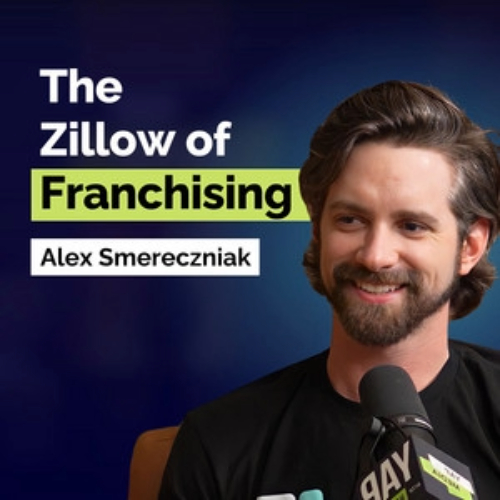
Starting a business from scratch is not the only path to entrepreneurship, and Alex Smereczniak learned that through franchising. After building and exiting his first franchise business, he saw how confusing, outdated, and commission-driven the franchise-buying process could be. Spotting those gaps led him to build Franzy, a data-driven marketplace that helps aspiring entrepreneurs buy franchises with more transparency. In part 1 of this How We Profit episode, Alex breaks down the realities of raising capital for an unsexy business, why franchising creates more millionaires than most people realize, how he sold 118 franchise locations in a year, and the lessons he learned from scaling.
In this episode, Hala and Alex will discuss:
(00:00) Introduction
(02:26) Franzy: The Zillow of Franchising
(06:49) Why Franchising Creates More Millionaires
(12:30) Starting a Business vs Buying a Franchise
(16:08) Is Franchising Really Passive Income?
(19:09) Alex’s Franchising Journey
(35:13) Raising Millions for Unsexy Businesses
(39:24) Stepping Down as CEO: The Real Story
(45:42) The Cost of Starting Franzy
(56:10) Using Data to Create Entrepreneurs
(58:32) Franzy’s Revenue, Marketing, and Operations
Alex Smereczniak is the co-founder and CEO of Franzy, an AI-driven franchise discovery platform that helps aspiring business owners find and evaluate franchise opportunities. Before Franzy, he co-founded 2ULaundry and LaundroLab, a tech-enabled laundry delivery and laundromat franchise business. He has experience building marketplace businesses, raising venture capital, and scaling franchise systems.
Sponsored By:
Indeed – Get a $75 sponsored job credit to boost your job’s visibility at Indeed.com/profiting
Shopify – Start your $1/month trial at Shopify.com/profiting.
Quo – Run your business communications the smart way. Try Quo for free, plus get 20% off your first 6 months when you go to quo.com/profiting
Remitly – Transfer money internationally across 100+ currencies with no hidden fees. Download the Remitly app or visit remitly.com to get started. Use code BUSINESS to get a $100 bonus after you send $300 or more. New customers only.
Prolon – Reset your body with Prolon’s five-day plant-based program. Go to ProlonLife.com/PROFITING for 15% off sitewide plus a $40 bonus gift when you subscribe to their 5-Day Program.
Northwest Registered Agent – Get a complete business identity with Northwest. Visit northwestregisteredagent.com/YAPFree and start using free resources to build something amazing.
Cash App – If you’ve been curious about bitcoin but haven’t made the jump yet, Cash App makes it easy. Sign up at https://click.cash.app/ui6m/qmgmlraz
For a limited time, new customers can get $10 added to their balance. Just use code CASHAPP10 when you sign up, and—don’t forget this part—send at least $5 to a friend in the first two weeks. Terms apply. Cash App is a financial services platform, not a bank. Banking services provided by Cash App’s bank partner(s). Bitcoin services provided by Block, Inc. brand. For additional information, see the Bitcoin disclosures at cash.app/legal/podcast
Resources Mentioned:
Alex’s Platform, Franzy: https://franzy.com/
Alex’s Instagram: instagram.com/alexfromfranzy/
Alex’s Twitter: x.com/AlexfromFranzy
Alex’s LinkedIn: linkedin.com/in/alex-smereczniak-40310329
Active Deals – youngandprofiting.com/deals
Key YAP Links
Reviews – ratethispodcast.com/yap
YouTube – youtube.com/c/YoungandProfiting
Newsletter – youngandprofiting.co/newsletter
LinkedIn – linkedin.com/in/htaha/
Instagram – instagram.com/yapwithhala/
Social + Podcast Services: yapmedia.com
Transcripts – youngandprofiting.com/episodes-new
Entrepreneurship, Entrepreneurship Podcast, Business, Business Podcast, Self Improvement, Self-Improvement, Personal Development, Starting a Business, Strategy, Investing, Sales, Selling, Psychology, Productivity, Entrepreneurs, AI, Artificial Intelligence, Technology, Marketing, Negotiation, Money, Finance, Side Hustle, Startup, Mental Health, Career, Leadership, Mindset, Health, Growth Mindset, Online Business, Solopreneur, Networking
Learn more about your ad choices. Visit megaphone.fm/adchoices
Speaker: [00:00:00] Franchise businesses trade at a, like, 1 to 3X higher multiple than an independent business.
Speaker 2: Oh, wow.
Speaker: You got five businesses with 600K in revenue. You're a $3 million business now with 20% margins, 600K a year in cash flow. Pretty good life.
Speaker 2: If you've ever thought, "I wanna own a business, but I don't wanna start from scratch," this episode is especially for you.
You're listening to part two of my conversation with Alex Smirnsky, co-founder and CEO of Franzi.
Speaker: I used to hate it. I love franchising now. I think it's such a clear, de-risked path to wealth creation. I think it's the most overlooked path to wealth in America that- Yeah ... doesn't get talked about.
Speaker 2: Let's talk about how profitable a marketplace business like this is.
Speaker: When we first started, we did just under half a million in revenue in our first 11 months. You know, now this is our second year. We will 7X the revenue we did last year. And so our gross margin is about 80 to 83%. So it's like a software business. That's really
Speaker 2: good. Out of all these categories, which are the most interesting and profitable for people to [00:01:00] really look at?
Speaker: And you weren't afraid of risk, food does so well. They print money. For, like, the more risk-averse person, I love
Speaker 2: Okay, so I wanna keep talking to you about Franzi. I wanna understand who your customer is and how you're marketing to them.
Speaker: Yeah. So our customer, there's, like, three ICPs for ideal customer personas.
It's the corporate escapee, the person who is ... definitely has all the skills you need to be successful in entrepreneurship- Mm-hmm ... but doesn't know where to start. They've gotten comfortable. They have a good income, but finally something happened. It was the kids are older. They just can't stand their boss anymore.
They don't see a path forward the way they used to, and they're ready to go do their own thing. Like, that group loves Franzi. They love the data. They love the support that we provide. The second group is what I'd call, like, kinda like hackers or, like, serial entrepreneurs. They're the ones we just talked about.
Yeah. They own short-term rentals. Maybe they were doing drop shipping when that was, you know, hot. They're, they've got their hands in a couple different [00:02:00] things. You know, maybe their core- their own core business and they wanna add other things to it. Yeah. So they'll come to us as like a, "Hey, I wanna add some of these concepts and this concept, and this is what I already do.
Is there any that are complementary to what I already do? I have these, these rentals, or is there, like, a home services repair, you know, franchise I could layer on that would also benefit my-" Yeah ... you know, core business?" So we get, we get that. And then the third bucket is your, like, professional franchisees.
They're the ones that this is all they do. They have 30 units already, 40 units, 50 units, and they might be what are called MUMBOs, multi-unit, multi-brand operators. So they own 20 Dave's Hot Chickens. They own 10 Jersey Mike's. They own- That's so interesting ... and they crush it, and they're just looking for the next concept.
They're like, "Hey, Franzi, do you guys have any ... You know, I don't have a taco concept. Are there any, like, up-and-coming ones that I can get into quickly before other people grab the territory?" So some of this is, like, a land grab, and you gotta get the right brand early enough. Others, it's being good at identifying maybe diamonds in the, you know, the rough where it was a bad operator who's selling, or their kids don't want [00:03:00] it, and you're looking, you know- Yeah
you're looking for the right thing. It's more hunting. Um- But there's two. There's, there's both, and Franzi helps all three of those buckets
Speaker 2: This is so much more exciting than this concept, you know, uh, that Codie Sanchez and o- and I love her, but, like, just buying a boring business from somebody who's retiring.
Like, buying a franchise to me just seems so much more exciting and fun 'cause it's more branded and, like, there's just so many different opportunities and less of, like, turning something around and just kind of, like, taking something over and picking a good location.
Speaker: Well, the thing that I think gets discounted is the upside is insane because if you
Again, let's use the three Jersey Mike's-
Speaker 2: Mm-hmm ...
Speaker: you know, example again. Now that we're in the system, like, we're part of the club. Other franchisees of other brands respect us. We have credibility. "Oh, you've done it before." And so our ability to go start acquiring, "Oh, well, Terry over here has 10. He's trying to sell three of them.
Let's bolt those onto our three Jersey Mike's. Now we've got six. [00:04:00] Oh, this guy's selling all five of his. We can go buy his now." And we're now getting that deal flow that outsiders don't get.
Speaker 2: Mm.
Speaker: Plus the, again, the credibility of people wanting to sell to us because we've proven ourselves as operators. The brand loves it.
And the, the final, you know, ultimate upside is when we go to exit, franchise businesses trade at a, like, 1 to 3X higher multiple than an independent business. Oh,
Speaker 2: wow.
Speaker: Because you're part of the system that's de-risked, banks like to lend you more than You know, yours and I's sandwich shop, you know, it, they don't wanna loan to the, the one-off.
They wanna loan to the group that has 200 stores worth of data and have proven that they have, you know, long-standing credit and are safe and more durable, and so easier access to lending, better exit multiples when you sell. I used to, again, be a, a hater, and the more I've gotten into them, obviously a total fanboy- Yeah
and I'm biased, but- Not a hater anymore ... franchising is a great, great, great path to build a huge business if you want to.
Speaker 2: Let's talk about how [00:05:00] profitable a marketplace business like this is. Like, how much are you spending a month in expenses? Like, what are your biggest costs- Yeah ... to run this business?
How much are you profiting every month?
Speaker: When we first started, we did just under half a million in revenue in our first 11 months, which for a startup, you know, is in the top, like, three-ish percent. Like, I was, you know, we're happy with it, but I told you the college thing of, like, 120K- Yeah. ... a week, so I'm always like, "More, more, more."
Um. You're like, "
Speaker 2: I beat this in college."
Speaker: Yeah. And VC- you kinda said it earlier, VCs have this expectation if you're gonna get on that treadmill of the top 1% usually triples, triples, doubles, doubles. So if you start at, like, three to 500K, they want you to do, uh, one and a half million the next year, and then four and a half million, and then 9 million, and then 20 million, basically.
So, like, in four years, that's quick. You're a $15 to $20 million business in- Yeah ... four years. Like, they want you to go fast, and then from there, they dump a bunch of money on you, and you go. Yeah. Um-
Speaker 2: And they don't care about you being profitable. They just want you to grow. Like,
Speaker: use the money- That's the goal, yeah
to grab market [00:06:00] share, build product. And so at first when we were gonna be bootstrapped, we were like, "We need to be profitable right away, and I think we can 'cause we'll be doing the most, most of the selling ourselves and, you know, coaching and advising." And then when we decided to take venture, it was like, "All right, we're building for a different outcome here.
We're building- Mm-hmm ... for a national, maybe even c- you know, global, Canada, Europe, et cetera. Like, there's franchises everywhere. There's a much larger outcome we can go after now. And so second year, you know, now this is our second year. We will 7X, I think it's 6 or 7X the revenue we did last year. We're already, we already, we already beat our projection for this year last month.
We just started hockey sticking earlier this year, um, mostly 'cause we have capital and we can do things faster.
Speaker 2: Yeah.
Speaker: And the gross margin on a marketplace, you know, we're paying out, um, you know, commissions or success fees to our coaches and advisors who work with individuals, so they get compensated, you know, a part of that flat fee that we charge a brand.
And so our gross margin is about 80 to 83%, so it's like a software business. That's really good. Yeah. Yeah. It's, it's a software business essentially. [00:07:00] Um, and then our net margin is a bit of a loaded question 'cause we're plowing everything- In marketing, yeah ... back into marketing, into, uh, new product development.
We have engineers that were at Palantir previously, that were at Fullstory, these unicorn businesses who were making half a million dollars a year as a software engineer. We're not paying them that much, but they have equity and still a pretty healthy salary. So to invest in a team like that, you end up burning money.
There's this idea of a burn rate with startups. Yeah. How much cash are you basically losing each month? So we're still burning cash. April was profitable 'cause it was such a, a big month for us. We did more revenue in April than all of last year in Q1 combined.
Speaker 2: Wow.
Speaker: So it's... And like May is looking like the same.
June's gonna maybe
Speaker 2: one and a half. Amazing. So word is, word is out. People are buying.
Speaker: What is- People wanna be free. Yeah. They want their own businesses.
Speaker 2: Yeah. It's... More than ever, people wanna be entrepreneurs. What are the marketing channels that are really working for you?
Speaker: Yep. So there's three main ones.
It's, uh, organic, so our, our own podcast [00:08:00] content, coming on and, you know, sharing our story, and franchising on, on shows like this. Um, that's been probably the primary focus of ours, just 'cause, you know, Hormozi's an investor of ours.
Speaker 2: Oh, amazing.
Speaker: And he re- you know, over and over is like, "Organic is the best lead channel of, of anyone."
You know, paid and referral is probably the next, like paid search- Yep ... 'cause someone's coming with intent or a referral because they're also coming with intent and trust And then they're like, "And then, you know, maybe paid, uh, like meta ads." Uh, and then it was like flyers, event- I don't know, he had like a whole list- Yeah
but he always has organic at the top, and so we very early on made a concerted effort to say we gotta get good at this, even though it's not my natural like skill set or disposition. I'm trying to figure it out. Yeah. Um, but so organic. Second is paid, so, uh, paid search and paid, um, uh, social. So Facebook ads, Instagram ads do, actually do, do pretty well.
Uh, and then the last bucket is like referral and affiliate partnerships- Mm ... falls into that bucket. So we'll do digital partnerships with other online creators, influencers, [00:09:00] content, um, you know, creators in business, uh, and then offline relationships as well. So partnerships with... There's a group called the IFA.
It's the largest nonprofit organization for franchising. So like can we partner with them? Can we partner with other folks that have access to some sort of distribution?
Speaker 2: In terms of your team, how many people are on your team, and what is like day-to-day of Franzi look like? What are the problems you guys are solving?
Speaker: Yeah, so we're still somewhat lean, I would say. We're under 20, uh, under 20 people, which again, with what we're doing, we're building two products effectively now.
Speaker 2: Yeah, that's, that's not a lot of people.
Speaker: It's-
Speaker 2: So customer service, are you outsourcing it or?
Speaker: So we are coaching. We have full-time coaches on our team.
They're able to handle way more volume than a traditional broker because of all these tools we've built. So a traditional broker, a lot of their time was spent on follow-ups and drafting emails and putting one-pagers together. Like we've AI'd the hell out of that to the point where it's perfect, like it's actually better than what [00:10:00] was happening- Mm-hmm
historically, but it's done instantly. And so our team can truly spend time doing what humans do best, and that's conversing with other human beings and helping them and coaching them and building relationships with them versus time behind a computer doing admin type work. Um, and so if you cut out half of what they were doing previously, which was, you know, 40% to 50% admin work, they now can talk to twice as many people and still have- Mm
a high level of quality and support for that individual's goals and mission, et cetera. Um, so we're able to do it a lot more efficiently as a result of that. So 19 people It's the best team I've ever worked with.
Speaker 2: Yay.
Speaker: Very, very smart people, hardworking, and I just try to stay out of their way. Yeah,
Speaker 2: fam, one thing I've learned building a remote team is that talent is everywhere.
Your next amazing contractor, editor, designer, or team member might not be in the same city or down the street. They might be across the world. But hiring globally is one thing, and paying globally is a whole different headache. Different currencies, fees that [00:11:00] are not always clear, and the last thing I want is somebody on my team wondering when their money is coming.
That's why I'm excited to partner with Remitly. The app helps you send payments in over 100 currencies globally with transparent pricing and no hidden fees. Setup takes minutes, so paying international contractors, freelancers, or vendors doesn't have to become another messy task on your list. And to me, this goes beyond convenience.
Paying people on time without making them chase you is how you build trust. For my Yap listeners, use code business to get $100 bonus after you send $300 or more with Remitly. To redeem, visit the rewards tab and enter the code. New customers only. Again, you can use code business to get $100 bonus after you send $300 or more with Remitly.
Just visit the rewards tab in the Remitly app. New customers only. Franzy's awesome. Like, I feel like you're building such an awesome business. Uh, so congratulations. Thank you. I know that [00:12:00] you have a five-step framework. So I am going to go over each step with you And for anybody who's interested in a franchise, they can really, you know, just study this episode and get a lot more clarity on what is a good fit for them.
So step one is define your why before anything else. Why is getting clear so important?
Speaker: So this was something I learned along the way, and it was ... 'Cause people would come, "H- how do I make the most money? How do I get rich?" And I'm like, "Whoa, whoa, whoa. Let's just take a step back." Not everyone is in it purely for that.
Like, yes, of course, we wanna make money and profit and it's important, but some people come and they're like, "I don't see my kids. Like, I, I ... My hours are this, and like, if I could even just replace my income or even a little less, but I had more freedom and flexibility, I would do that." And so we ask, we spend a lot of time with people on, "What's motivating you to do this?
Is it more quality of life and, you know, balance and control? Is it legacy for your kids?" Some people come and they're like, "I wanna open [00:13:00] up this business with my son or with my daughter." Um-
Speaker 2: Hmm,
Speaker: like a family business ... 'cause they've made a ton of money already, and he's like, "I just wanna do something that'll teach my kids entrepreneurship, and franchising feels like a good, safe, again, way to do that."
Um, so some it's legacy, some it's freedom and control, some it is purely money and they're like, "I just wanna make this many dollars." Um, some it's a hobby and it's just for fun. Like, a- there's some, like, retirees that will come to us and they're like, "I'm getting bored. I wanna just like go open up something."
And we're like, "Okay." So we really spend a lot of time on why is this important, and that dictates the rest. And sometimes we tell people, depending on their why, "Franchising's not for you." So if someone comes us, comes to us and they're like, "I wanna start something from scratch. I wanna have a say in everything that I do and not be told what to do anymore," and we're like, "Well, franchising, there's gonna be a playbook-" Yeah
"and you kinda have to follow it. And like, yes, you can still be entrepreneurial, for sure. You're still the owner of the business, but you can't go like buy McDonald's and start selling, like, lobster rolls." Or like, you know, like it's just like you gotta stay in a certain lane. Um, and some people aren't the right fit for that.
Yeah. And we're also very transparent and [00:14:00] honest, 'cause it's a waste of everyone's time. The brands won't like us. You'll end up being unhappy in two years. We might've made a quick buck, but it's not- It's not worth it long term ...
Speaker 2: that's,
Speaker: that's not worth it in the long run, no.
Speaker 2: What are some of the common, like, misalignment points with people?
Like, they come in and maybe, like, have their eyes set on something, and, and y- there's misalignment. What are the common ones?
Speaker: Yeah, so one is this idea of, like, it's mailbox money. They're like, "Yeah, I'll just come in. I wanna put 200K in. It's gonna spit out 400K in the first year, and then every year after that it'll be great."
I was like, "If that were true, I would be doing that repeatedly-" "... over and over and over again." There is a lot of work. No matter what you do, like fast money is, is not good in my opinion. You're gonna have to work hard no matter what you do, whether it's franchising or not. And, you know, that we have to con- kinda condition people on a little bit is like, this isn't just a, like, set it and forget it thing, especially in the first year or two.
So there's misalignment on the time commitment sometimes. Um, the next big one is people will come because they- They like a product or they, you know, they saw this thing happen, [00:15:00] and they're dead set on it. They don't wanna budge. And we talk to them and we're like, "Huh, this is like not aligned with your skillset at all-
or your risk tolerance that you just shared with us, or what you have finan- Like, "Yeah, but I love golf. I want a golf simulator."
Speaker 2: Mm.
Speaker: And we're like-
Speaker 2: Again, the passion thing. Like, it's not about what you're passionate
Speaker: about. No. If that aligns, it's a great bonus for sure. Yeah. Like, if it happens to be like you can...
The risk makes sense, and the skillset, and the golf sim works out, and then you can take your buddies there and send- Mm-hmm ... friend, friends and family or whatever, they're like, great, it's a bonus, but it shouldn't be the core driver of why you're making the decision.
Speaker 2: Okay, step two, know your operator profile.
So what are the common profiles of different operators out there, and then what kind of businesses are conducive to those personalities?
Speaker: Yep. So a big one is honestly a lot of veterans, which is another reason I love franchising. A lot of brands give veteran discounts. Almost every brand gives some sort of, like, 10 to 15% discount on the franchise fees, and, um, pretty meaningful.
And veterans make phenomenal franchisees because if you think about [00:16:00] being in the military and in some of the situations that they're in, it's very regimented and structured, but in the moment if, you know, combat starts to happen, like, it's all chaos and reacting and adaptive and, uh, a little, not entrepreneurial, but a lot of the same kind of skills- Yeah
of being able to react quickly, think quickly, make decisions quickly. And some ex- ex-military and, and veterans do so well in franchising because there's some structure and there's regimen, there's a playbook, but the reality is, in the day-to-day of running any of these businesses, you're gonna have to react and adapt, and you can't be like, "Oh, on page 52- Yeah
the customer got mad. What do I do?" It's like you're, you're reacting, or my employee got some issue that happened, and I have to work with them to solve it. Um, and so there's that persona of, like, the ex-military operator. And whether you're ex-military, you know, or, or not, it's that persona of someone who's really good at managing teams, managing people, good with structure and regimen.
Um, there's just a sub-persona within that group that's ex-military. The other one is your, like, your ShamWow guy, the seller- ... [00:17:00] the marketer, the promoter. They're very good at, like, high-ticket sales. Um, maybe not as good at... I mean, they could probably inspire and rally a team, but they might not be great at, like-
Speaker 2: Executing
Speaker: executing the, like, day-to-day, like, logistical chaos that they have to put together. But they can probably go sell a bunch of 15, you know, $1,000 pool installation jobs or 5 to $10,000 fencing jobs, and so maybe home services, big-ticket home services is good for them because it's a smaller team, you know, one or two people, you know, instead of a team of...
Some restaurants, pe- people don't realize this. I didn't realize it until I got into it. A McDonald's has 40 to 60 employees.
Speaker 2: Oh, wow.
Speaker: Because there's, there's three shifts. Do 24 hour... Yes. 24 hours, seven days a week. Yeah. And even if it's not 24/7, most restaurants still have, like, 30 to 50 employees, so it's a lot.
I mean, it's a lot of people, a lot of turnover, and, like, that's a different skill set than- Yep ... the smaller, more specialized team. Um, so those are the two big ones for sure. So are you more sales/marketing oriented, less, you know, good on the complex people operations, or are [00:18:00] you more of, like, a structured, maybe you don't wanna go knock on doors, and so you need a brand that has a lot of heavy marketing support from the parent and, like, a really recognizable, reputable brand?
Speaker 2: How do you know if you're better suited for, like, B2B versus B2C?
Speaker: So we'll-- Some of the questions we ask to get into that a little bit. Some people come in with a pretty strong opinion of like, "I know what I'm good at. I don't wanna talk to other like, you know, ones and twosie kind of B2C type conversations.
I wanna go deal with other professionals making a, you know, professional business decision." Um, part of it's their personality. Some people come in, they're very friendly, they're charismatic, they're bubbly, which could work for both, but it's in a way where It's like the friend across the street that you trust for, again, a, a recommendation for your home or for a smaller ticket decision.
Speaker 2: Mm-hmm.
Speaker: And there's others who are way more sophisticate. They come off more polished, sophisticated. Uh, maybe their background is in doing enterprise level sales. So those we put into more of a B2B bucket and say you would... You can just tell how they- 'Cause they
Speaker 2: can do high ticket sales.
Speaker: Yes.
Speaker 2: Mm.
Speaker: And just the way they carry themselves [00:19:00] is more polished versus the other person who's probably just as intelligent, it's not an intelligence thing, it's just the way they communicate's maybe more informal, it's fun, it's likable, bubbly.
They are selling, I'd say, like, different things or usually have better success selling different things.
Speaker 2: Yeah. And I would imagine that the B2C person might not be the person selling- Right ... the thing, right? They're just kind of operating or
Speaker: B2- Well, it's more marketing too. Yeah. They're... Yeah. It's like they're creative.
They're f- they're coming up with fun, crazy ideas- Mm-hmm ... and, like, they want the freedom to go do that. And the, the brand does allow you at a local level to do a lot of that. You can't go rogue and, you know, change the logos and, and certain things like that. But if you wanna go run local events at the PTA meetings- Mm
or at kids' sporting events or do collabs with other local small businesses, like, there's a persona that's really good at that, and then there's this other persona who's like, "I wanna deal with business professionals all day." Yeah. "And, like, line up my meetings a week in advance." And two very different personalities and skill sets.
Speaker 2: Step [00:20:00] three, match on financials and markets. So what kind of numbers and economics are you typically looking at to judge whether it's a good franchise opportunity or not?
Speaker: The first part of that too, and I'll come back to the, the question, is- Yeah ... we need people to have 50K, 30K at the lowest end of cash available to them, and 150K or so net worth.
So anything below that, it does get really hard. There's some franchises that are 10K, 15K to get into, but you're essentially buying yourself a job, which is okay. It, you know, it can work, and you can do well at it. It's just there's-
Speaker 2: What's an example of that?
Speaker: So, like, there's, like, bucket and a mop type franchise where you're basically buying the rights to a territory of commercial cleaning.
So, like, but you're the one probably going there with family members or some employees- Mm ... to actually clean the office building. It might be even this, you know, podcast building that we're in might be a customer. They'll pay 200 bucks a month, and now they're on a route. And every day we're gonna go clean office buildings, bathrooms- Got it
empty trash, vacuum, et cetera.
Speaker 2: So it's like, it's no location. It's just like a van and- [00:21:00]
Speaker: A bucket and a mop. And I, it's, I say that jokingly- Got it ... but, like, that's kind of it.
Speaker 2: And the brand.
Speaker: And the brand that you get. Yeah. And so what you're buying there is they help you find customers, and, like, they're doing that from corporate, and they maybe have national partnerships with Regus, the- Mm-hmm
the office- Mm-hmm ... you know, management business. And so maybe they're feeding you leads and, and deals- Mm-hmm ... and that's the value that you get. But it's only eight grand to get into it, and you can make 30 grand and not do that great, or you might be really good at this and grind it out. And I've heard of some of these people with huge territories, and they're doing You have half a million-plus in cash flow.
So like, it's possible, and it gives a person who maxes out a credit card to get in, this- The opportunity, yeah ... the opportunity. But more often than not, there's a term in franchising, they call them sharecroppers, who do this because they are kind of just like, "All right, let's sell 200 of these a month," knowing that 100 of them are gonna, in two months, give up- Mm
and fail, and I, I don't love that personally, but-
Speaker 2: Yeah ...
Speaker: it's still a path where 100 of them are making it and succeeding and are probably very [00:22:00] happy. It's just, you get into that volume like that, it starts to feel a little bit like, oh, you're just, like, selling as much as you can.
Speaker 2: Yeah, it feels like a scam or- Yeah
Speaker: yeah,
Speaker 2: something.
Speaker: So I don't like it as much. And then there's, like, a fun one that I think is real, and this is more of a side hustle. It's called Card My Yard, and it's... You've probably seen it before. You drive around a neighborhood and you see these, like, "Happy Birthday, Alex," or, "Congratulations"- Mm-hmm, mm-hmm
whatever, and that's a franchise. You know- Oh ... they, they sell you the kit of all the letters and stuff, and they, again, help you with mar- local marketing and advertising, and then a family will pay you 60 bucks to go card their yard- Oh, cool ... and put that up. Again, we don't try to play God and say, "Hey, these are the, these are the best 10."
You know, we have our own opinions. What I think is great my co-founder might actually disagree with on some things and say, "Well, I like these," 'cause it does go back to your individual personality, your risk tolerance, et cetera. Instead of, like, trying to vet a brand based on is this 10K to get into, like Card My Yard, 'cause there really is an audience for that and the right fit for that as well, even though it's 10K to get into it, all the way up to there's one called, uh, Big Blue Swim [00:23:00] School, and then, uh, Slick City.
It's like indoor slides, but it's like this- Oh ... massive, like, kids' birthday par- Like, 4 million to build that out, though, 'cause it's this huge complex. And so it's not so much, like, what does this cost to get into or even the economics of the business, 'cause some people, again, it's not about the money.
They're just like, "It's a real estate play for me."
Speaker 2: Mm. "
Speaker: I just want this thing to break even even 'cause I'm... the real estate's gonna appreciate in value over the next five years- It's a tax play or- ... and that's why I'm doing it." Yeah, or it's an opportunity zone thing. So there's all these reasons people might do it that aren't always purely bottom-line profit- Mm
for that specific operating business. A lot of the times it is. So the thing that we really vet for on Franzi is, is there any, like, male intent or potentially potential fraud? Does the, the founding team's background check out? Do they, um, have experience doing this? Is there red flags around all these stores that have opened and are now closing?
So there's things that we look for that we are starting to surface as, you know, potential flags. So we'll, if you look at a brand profile, it might flag that, hey, [00:24:00] this brand has had 30% more closures in the last year than they did four years ago.
Speaker 2: Mm.
Speaker: Something's up. Like, why are they closing? Or is it consolidation that looks like closures?
Like, at least ask the brand this when you talk to them if you are interested in this brand still.
Speaker 2: Yeah.
Speaker: So we're surfacing insights like that to de-risk it for people.
Speaker 2: Do most people get a loan to actually get their franchise? So most people are just putting down, like, the 20% of their loan to buy the franchise?
Speaker: Yeah. So that's why we said that 30 to 50K. You can get into concepts for less than that, but if you have 30 to 50 grand in cash, it opens up so many brands you can get into with an SBA loan. If you have 30 grand and that's, you know, 20%, you can buy a business, you know, for 150-ish K and, and maybe bring another partner in.
So 150K options, there's actually a lot of them. Mm. So that's why we say at a minimum have 30 to 50K, 'cause that gets you into 150 to 250K businesses.
Speaker 2: Yeah, gang, do you wanna look and feel your best this summer? And I don't just mean looking good on the outside, I mean feeling [00:25:00] amazing from the inside all the way down to your cells.
Yep, your cells. It's ProLon's five-day fasting mimicking diet. ProLon is a plant-based nutrition program with soups, snacks, and beverages that keep your body in a fasting state while still nourishing you. It is so cool. It is the only nutrition program clinically proven to trigger autophagy, your body's natural cellular cleanup mechanism.
And I learned about autophagy from Dave Asprey and other biohackers who have been on the show. And autophagy can support longevity, and it can even reverse your biological age. But I was always scared to do a real fast. I work out a lot. I didn't wanna lose my muscle, and not eating for days, well, it scared me.
It sounds too hard. Then with my birthday coming up, I wanted a reset, and I wanted to lose about five pounds. I wanted to feel lighter. I wanted to feel my best, and that's how I came across ProLon. Everything comes prepackaged, labeled day by day. There's no prep, no planning, no guessing. I wasn't hungry during the fast, and I had so [00:26:00] much energy.
I loved it so much that now I'm planning to do it three times a year. With ProLon, I'll be young and profiting forever because with three resets, you can actually reverse your age by 2.5 years, which is just insane. That means every year I'll basically be getting younger. And if you're ready for your own reset, for a limited time, ProLon is offering Young and Profiting listeners 15% off sitewide plus a $40 bonus gift when you subscribe to their five-day program.
Just visit prolonglife.com/profiting to claim your 15% off discount and your bonus gift. Prolonglife.com/profiting. Okay, step four. Do the real due diligence on the franchisor. So- What are some of the ways that people can do due diligence? And then also, is like a really well-known brand like Dunkin' Donuts or McDonald's, are those always the best choices?
Speaker: So the way to diligence, I mean, one, use a tool like Franzi. There's all this data that's very digestible. Typically, I would've said go to the FDD, the [00:27:00] franchise disclosure document. One, they're hard to find 'cause there's only 11 states that, like, publicly register them, and they're buried in government websites, so they're hard to find.
If you do find them, they're 200 pages of legal documents, which aren't super exciting to read. It's hard to know what you're looking at. And so Franzi, and there's other platforms, so use those as, as well, that show you revenue, cost to get into it, what, what's the royalty, what's the franchise fee, everything you need, just, you know, quick at your fingertips, so that's a good way.
The best way, though, is talk to other franchisees of that brand- Yeah ... at random. As you go through the process, they're gonna... It's almost like an interview process. If you've ev- Yeah ... if you've ever interviewed someone and you ask for references, they give you the three best. They're not gonna give you the boss that, like- Yeah
they know didn't like them or that they got fired by- Yep ... or whatever. It's like, sure, those are great, but you know what they're gonna say. Same thing when you're buying a franchise. The brand serves up, "Here's the three you should talk to," and they're, like, the h- the most successful money-making, highest achieving franchisees- Yeah
which is great. You wanna hear what they did and how they did it, [00:28:00] but you should go then secret shop and find your own. Maybe that, you know, and that's listed in the FDD and on our site. You can go look at all the old franchisees. Go look them up on LinkedIn and cold outreach to them. And-
Speaker 2: Mm-hmm ...
Speaker: you might have to email or message five of them, but one or two will say yes, and you might learn, yeah, the brand said they were gonna do X and they really did Y.
And then you need to- Hmm ... as an individual decide, is this believable? Am I hearing this enough times? Or is this they were a bad operator and they're bitter about it? And so, like, there is some of that that you have to s- sift through and filter through.
Speaker 2: Yeah.
Speaker: But that is the single best way to understand is the concept legitimate and viable, is by talking to the many people who have done it before you.
Speaker 2: Yeah. I wonder if there's a world in which you can be the platform where franchisees can provide their reviews and things like that.
Speaker: More to come. We're, we're, we're- ... we're starting to work on some stuff now that, uh- We'll certainly spotlight and, and highlight that better. What's a red flag with a franchise?
Like as you're- A lot of closures. Mm. Like, if they've started closing a bunch of, bunch of locations, something's not working. There's a reason. Either there's competition coming that's[00:29:00]
just beating them, and they're not profitable, and they're, they're better off closing than losing money each month.
Speaker 2: Mm.
Speaker: Um, they've cannibalized themselves. So Subway did this on purpose, and it's, you know, biting them in the butt now, but-
Speaker 2: Subway also had, like, yoga mats in their bread,
Speaker: so Yeah. It was like they found out it, like, wasn't technically bread because there was so much sugar in it.
Yeah. It was like a donut actually was, like, the technical definition- Yeah ... for their bread. Um, they did a lot of things wrong at the end especially. They just got greedy, and some brands will do that. They'll... You and I have protected territory again, and then all of a sudden three years from now they're like, "We need to open more locations 'cause that's how we as the franchisor make money.
Let's cut, you know, our territory in half and sell three more." And we're like, "What? So we just lost half of our customer base and have all these fixed costs and..." So brands can do that. It's not You know, there's, there's a lot of protection in the, the legal documents for the brand and the franchisee, but just you gotta be mindful of stuff like that [00:30:00] and make sure you are picking a brand with high integrity people- Yeah
and that the franchisees all love and get along with.
Speaker 2: Older franchises might not be good at, like, updating their marketing tactics or their support systems. Am I wrong in that assumption?
Speaker: You're totally right. I mean, you see it in some of even just, like, the, the, the lipstick on the building, right? It's like a lot of the restaurants that are refreshing the outside and modernizing the drive-through, and-
Speaker 2: Mm-hmm
Speaker: that's a good sign. You, you as a franchisee have to pay for that, and some franchisees hate it, but in order to stand out and be, you know, up with the competition- Yeah ... you need to have menu innovation, and you need to have better technology and a better experience. So yeah, brands that are investing in that pretty aggressively is a good thing, even though you as a franchisee will probably be paying for it in some form or fashion.
You should be constantly innovating and growing and wanting a brand that is doing that.
Speaker 2: Okay, step five, using transparent data instead of commissioned broker.
Speaker: Yeah, so that's at our core, again, how we get paid. That's Franzi. That's Franzi. We get paid flat. It's the [00:31:00] same across all brands. So we, I don't wanna say we don't care which business you get into, but from a financial s- perspective, we don't care which business you get into.
What we care about is are you gonna be successful in this business? 'Cause if you are, you're probably gonna buy more locations eventually, and hopefully they're through us- Yep ... and you're eventually gonna add another brand at some point, and hopefully it's through us. And as we grow as a tech company, we're gonna have other products and services, and hopefully we've built this amazing relationship with you that you wanna come to us for, "Hey, I need help with this.
Do you have a software solution for that?"
Speaker 2: Mm-hmm. "
Speaker: Do you have a services solution for that?" And so everything at our core has to be done through the mission of how do we create the next million entrepreneurs, and how do we... You know, in order to do that, they need to be successful. It's not the next million failed entrepreneurs.
Yeah. It's the next million successful entrepreneurs.
Speaker 2: Okay, so we talked all about in part one, in case you guys missed it, we talked all about Franzi and his platform. Right now, we're gonna go through different case studies and opportunities of franchise opportunities, and we're gonna have Alex kind of vet them for us and help us understand why it's good, why it's bad.
So we've got this artificial turf [00:32:00] installation, which we were talking about earlier. It's a project-based home services business. There's no storefront, right? There's no lease, which means that the startup costs are, are pretty low. And, uh, the initial investment your team, Brett on your team actually gave me, is 121,000 to 163,000.
Uh, the average territory revenue is a little under 600,000, and the net margin is 21,000 So talk to us about why this kind of business is really hot right now.
Speaker: It is one of the most popular businesses on our platform, and again, there's 4,000 brands- Mm ... you can go look at. I think part of it is it's new.
There's home services for everything. There's gutter cleaning, there's window washing, there's roofing, there's HVAC. How many turf businesses have you ever heard of? And I hadn't, you know, really heard of many at all before. And so I think it's becoming a, a trend, which is good to be a part of, and not a trend that's just gonna go away.
I think [00:33:00] people like the idea of convenience, and when I... You know, I live in a condo now, but I had a house, you know, previously and I hated cutting the grass. I'm so busy with all those startup stuff- Yeah, nobody likes to
Speaker 2: do that ... I'm like,
Speaker: I come home, I want it to look nice, but I don't wanna do it. And then I'm paying someone I'm...
you know, to do it, and I'm like, I find myself really caring about this thing co- constantly and how it's done, and it was just, it was just like distraction more than it was, uh, a thing that I enjoyed.
Speaker 2: Yeah.
Speaker: If I had a bunch of turf that looked perfect all the time and green and good for dogs and kids, like sign me up.
And I think another part of it is some cities are starting to regulate and outlaw the ability for you to grow natural gas- or sorry, natural grass. So Las Vegas recently said, "No, you know, you can't grow natural grass in the city limits anymore." There's a lot of cities in Florida starting to think about, hey, you can't use water for things like this, and so turf is really the only option if you want greenery, otherwise it's like rocks or I don't know, something else
Speaker 2: Says the water restrictions driving up demand
Speaker: So the South and the Southeast, you know, [00:34:00] California are really good for these concepts.
It works in other, you know, colder markets, but really works where there's a lot of heat and you're constantly watering and grass is dying, and this just solves it permanently.
Speaker 2: Like, for a franchise, is 21% margin good?
Speaker: So it, the thing that's interesting about franchising, it covers everything, hospitality, food, health and wellness, and so it's really almost industry dependent.
Just like you would weigh maybe a fitness concept versus a, you know, other health and wellness concept, it doesn't matter if it's franchised or not, the margin is gonna be probably pretty similar across both. And so I think businesses that are over 20% margin regardless of the industry is, is usually pretty good.
Yeah. Unless it's super low revenue volume, anything over 20%, like, you have wiggle room. There's a lot of buffer there. And what I like about this brand or this concept is while the revenue's somewhat low per territory, less than 600,000, most people are buying up two, three, four, five territories at once 'cause the incremental cost to do this is another 30 [00:35:00] grand, 20 grand.
You're not having to spend 120 to 180 each time.
Speaker 2: Yeah. I was thinking that, that you'd have to spend 120, but now, but now it's, you just get an
Speaker: SBA loan. It's just the right to the
Speaker 2: territory. Yeah.
Speaker: One, it's just the right to the territory, so that 120 to 100 and, you know, 80K is really, like, get the truck, get the initial materials, three months of working capital, you know, and some installation equipment, et cetera.
Once you have that, the territory is really what's valuable in a business like this 'cause it's all services based. So you're now buying, if it's 60K for one territory, 50K for the second, 40K for the third-
Speaker 2: But you don't necessarily have to buy the trucks, more trucks.
Speaker: No. I mean, if you got... So if you're at a point- If you need it, yeah
where you have jobs, right, but that's a good pro- it's champagne problems- Yeah. ... and you got growth happening. And so we've had a number of people buy three, four, five, six territories, and you do the math, you got five businesses with 600K in revenue. You're a $3 million business now with 20% margins, 600K a year in cash flow.
Pretty good life. I mean, how many people do you know making 600 grand a year? It is. It's not a
Speaker 2: lot Not, [00:36:00] not a lot of people. Um, so one of my former clients was Brian Scudamore. Yeah. He was my, he was my client for years. I ran all his social and, and- No way ... podcasts and stuff. You did mention that. He's 1-800-GOT-JUNK?,
and he also has, like, a, a paint company. So are home services franchise businesses, are they generally, like, desirable?
Speaker: I think so. They're easier to get into, and the overhead is not as high, so to me, the risk is lower from a fixed cost perspective. What scares me sometimes, and I'm doing some physical retail businesses myself, is, like, once you build, you're not moving it.
It's there. And so if you pick the wrong location, you're, you're dead, you know, and, like, that freaks me out. What I like about home services is you got a huge territory with a bunch of houses, and if one neighborhood's not working, another one might. Mm-hmm. And the cost usually is some equipment that even if it doesn't work out, you can sell back.
I can't sell all the improvements I did at this retail location. Hmm. All the drywall and plumbing and electrical work we did- That's true ... that's there, but if it's my [00:37:00] truck that I bought and my, you know, power washer or, you know, window cleaning equipment, I can probably sell it back, not for, you know, one-to-one dollars, but probably half or some amount.
So worst-case scenario, I'm not out as much. So I like it for the lower risk, lower cost, and some of these home services business, there's garage, uh-
Speaker 2: Garage clean-out?
Speaker: It's like garage clean-out, and, like, I call it, like, Pimp My Garage, like the Pimp My Ride, you know, version for your garage. And they'll do over a million dollars in revenue as a- Wow
services business, putting epox- you know, epoxying people's floors and putting custom shelving in a garage, and it's not a super complicated business.
Speaker 2: It's just such a cool way to just make money. Um, all right. Next one. This one's really interesting. Pediatric speech and ABA therapy. These are therapy services reimbursed largely through insurance Uh, the customer's families with children who need speech or ABA therapy, which is...
Is that aus- autism therapy? Yes.
Speaker: Effectively helping [00:38:00] those with autism or speech deficits to find exercises and, and therapies that they can do to form the habits that help, you know, improve, improve those, uh, deficits and, um, you know, navigate life and develop those skills in a, in an easier way.
Speaker 2: Interesting. So the initial investment is, uh, anywhere from 300,000 to $800,000, but the location revenue can be over a million dollars, $1.3 million for mature locations, top locations, uh, doing a million and a half per year. So they're, they're very lucrative. So what's, uh, what's the opportunity in this? Are these becoming more popular?
Speaker: Yeah. So I think, yeah, and I don't know that it's necessarily people are being... You know, there's more and more people with autism. I think there's just a lot more attention- Care, yeah ... and care to, uh, you know, mental health, special needs, way more than there was historically. I think people in the past were kind of like rub some dirt on it, basically- Yeah
and you just... People wouldn't pay attention, and now there's [00:39:00] way more science and, and research behind it. And so I think it's 1 in 34 have some level of autism. And so it's centers that help, you know, people develop skills to better cope and navigate life that might, that may have autism or other, um, you know, disabilities or learning, um, you know, issues.
And so these facilities are becoming more popular. The cost for the, the location being 3 to, you know, 800K is depending on the size, the market that you're in. But to then your point, 1.4 million in revenue. The margins, I imagine, it's not listed in their FDD, but it's probably similar to a fitness concept where you have trainers or some sort of professional there, and usually those businesses have mid-20s to mid 30% margins.
So I imagine it's like 23 to 33%-ish margin on 1.4 million. Again, a great business. The mission behind it's phenomenal. So some people come to us, again, it's not about the money. They're like, "I wanna help because- Yeah ... my child has XYZ." And so this is one of those businesses where there's a, you know, a fantastic mission at its [00:40:00] core, plus you can make money, plus you can provide care in a way that's, you know, above what's been done traditionally.
Speaker 2: It's also recession-proof.
Speaker: Yeah. You're, you're gonna need this regardless. I mean, what parent isn't gonna pay, especially if insurance is covering it? Yeah. Makes it a no-brainer. Insurance pays more than, you know, a lot of retail businesses would. It's, you know, almost guaranteed, and it's somewhat of a recurring revenue model because you're gonna have clients for A series of months.
You know, it's not like it's one-off, come in, okay, I learned some, you know, skills, and I'm out. It's like any kind of therapy or physical therapy, mental, you know, going to a psychologist or a therapist is, you know, for mental health, you're gonna go multiple times for a series of time, and so you have this kind of recurring, I'd, I'd say, client base built in that's never going away.
You know, once they matriculate, the next group is already coming, and it just doesn't stop.
Speaker 2: Okay. I wanna go back to the turf one for a second.
Speaker: Yeah.
Speaker 2: What are the elements of success? Like, what do you think that person needs to do to [00:41:00] actually, like, have a well-running territory?
Speaker: Yep. So turf is one of those, like, medium to larger ticket sales.
It's not like it's tens of thousands, but it's not 500 bucks either.
Speaker 2: Mm.
Speaker: And so this is where I would look. And the, the team is small. You don't need a huge team. So this is where I'd go back to the shamwow, you know- Yeah ... v- per- personality. That's like the marketing guy, yeah. You want the person who's, like, gonna go do content in their local market and be like, "Your backyard could look like this," and sending...
You know, I could see someone sending DMs or AI images of like, "Hey, I got your, this picture of your house from Zillow, and I made it look like it has turf. Like, doesn't this look way better? Here's a before and after that I just created of your actual house." Some people might get creeped out by that, but I could see a bunch of people being like, "Wow, that looks really good."
And so you're gonna want someone who's creative like that and is coming up with out-of-the-box ideas and getting in front of each single house in their territory and... 'Cause that's, each, each one's an opportunity. And the team to install the turf is one or two people, so you don't need to have this huge, complex operation.
Um, and so I think s- for someone [00:42:00] to be successful there, you want a founder or an operator that is marketing/sales led.
Speaker 2: And then on the therapy side, what are the key things to make sure that your business is profitable on that side? Like, what do they need to worry about or lean into?
Speaker: Yeah. I think the quality of the therapist is really important.
It's such an emotional thing. It's such an important thing, um, that the level of training and the caliber of the individual you have first and foremost in the location, 'cause that's what will keep people coming back. There's support groups and Facebook groups, et cetera, for families with children with autism, and so they're gonna be all talking to each other about, "Hey, we found X, Y, Z facility.
It's amazing. We work with Tiffany or John there, and they're like-" Mm-hmm. That's gonna happen. And so it starts with the quality of the service you provide, I think, first and foremost, and word of mouth will be big for this business. The second thing is, uh, likely partnerships with You know, what are other adjacent services?
Is it hospitals? Is it, you know-
Speaker 2: How to plug your distribution line,
Speaker: [00:43:00] yeah. Yeah, finding those, like, one-to-many distribution outlets, 'cause this isn't gonna be like a Facebook mar- Yeah ... or like a local marketing thing. This is gonna be much more relational, emotional- Community based ... referral based, community based.
Yeah. Like, what community partners can you find that share similar clientele?
Speaker 2: Okay, number three: a sunless spray tanning and skill wellness studio. So beauty and wellness, small format studio. Investment is 300,000 to 600,000. Average net revenue is 650,000. Well, I guess operating margin is 25%, because there's retail products as well.
Speaker: Yep.
Speaker 2: So how do you feel about these spray tanning type studios? Are they good?
Speaker: So this is one where it would probably be someone who's more into this because it's a lifestyle or a passion decision. It's, "Hey, you know, traditional tanning's bad for you, but I still wanna look good and have good, you know, s- skin health and, you know, beauty there."
And so [00:44:00] this could be someone who's very passionate about that, maybe doesn't need this to be the sole source of income, and so they're doing this as a little bit of a... not a side hustle, but a side source of income, and they like it. Um, and they like interacting with the clientele. They like being that person that, you know, that owns it, because there's other things that you could do that you'd make more money than this one.
Speaker 2: Yeah, and way less initial investment.
Speaker: Right. This, to me, is one of those ones where people are gonna, again, it's a, a passion thing. Uh, they want a physical location, and it's not about building this empire or this massive wealth-producing thing. Um, because this one as well, uh, what I was gonna say was even though it's, you know, 3 to 600K or so, depending on the size, the margin's really good, but the operation's not that complicated.
You know, you've got people that come in, they book times, they go in. It's usually equipment that's applying a lot of the, the- Yeah ... the spray tan, and so you don't need a ton of people either. So it's simple, um, which [00:45:00] makes the lower revenue, lower, you know, I think return profile relative to your fixed costs a little bit- Hmm
more attractive 'cause you can kind of... This is one of those more potentially semi-absentee businesses.
Speaker 2: Interesting. And so you could open up multiple locations. Like, if you got a lot of cash, it could be a good one for you if you're passionate about it.
Speaker: Mm-hmm.
Speaker 2: All right, next one. Reformer Pilates studio. My dream.
My dream- These are fantastic ... business. If I c- quit Yap today, I'd be owning Pilates businesses. So basically, you're investing anywhere from 500,000 to $700,000, which to me sounds high 'cause there's such little invol- whenever I think about Pilates, I know the machines, but, like, doesn't seem like there's that much involved.
Average studio revenue is over a million dollars a year. Uh, EBITDA margin is 30% nearly And, um, there's memberships, packages, class pass. [00:46:00] Uh, so not, not so bad.
Speaker: Mm-mm. I love this one personally. So it's, it has recurring revenue, membership based. It's like a SaaS, you know, software as a service type of business.
And I've talked to Ellen Latham a few times. She's the founder of Orange Theory. Um, and her story is phenomenal. Orange Theory really revolutionized, like, this kind of concept, where it was, "We're gonna go beat, you know, the big gyms and do this very bespoke, kind of curated, specific, you know, training programs, et cetera," and people will pay for it.
They love it. They're part of a community. Yeah. It's kind of cult-like a little bit in a good way. Um, and she was telling me that at their height, they were trading at, like, 20 to 25x multiples-
Speaker 2: Wow ...
Speaker: which is insane. And so I think the multiple's good, again, because there's recurring revenue built in and there's such a loyal, you know, following.
Um, so for that brand with the high margin, the recurring revenue, yes, the build-out's more expensive, but the revenue justifies it. I mean, the average location I think is, like, 350K in [00:47:00] EBITDA or 360K.
Speaker 2: 349.
Speaker: I don't know. You get a couple of these open, and again, you have a pretty good lifestyle and
Speaker 2: a cash machine.
Yeah, I love this. This validates my dream.
Speaker: And this one, you know, when you were talking about getting into a franchise, you need, like, a trainer or someone to run the gym anyway- Yeah ... unless you were planning on it being you, and maybe you're like, "I don't really wanna do that."
Speaker 2: No.
Speaker: Um, it's a great one to find, like, an operating partner model, um, 'cause you're just not gonna be running 17 classes at once, so now you need 17 people.
So you really need a small handful of really good, reliable trainers- Yeah ... some equipment, and a location, and you're good.
Speaker 2: I love it. Okay, let's move on to the fifth one, gourmet coffee shop. So we've got a coffee shop. It takes anywhere from 260 to $900,000 depending on the format. Averaged unit gross sales per year is 600,000.
Top 50% make 840,000 a year.
Speaker: So the margin, I think I pulled it last night, it's [00:48:00] 15%. Um, and this one is interesting because there's this, like, Lego, you know, set of being able to, to, to set up the, the layout. So do you wanna have drive-through, no drive-through? Do you want, uh, a retail, you know, kind of sit-down area- Mm-hmm
walk-in area? And so that's why the range is so big on the cost from 300K to, I think it's 800K or so. I think, yeah. And so that gives you flexibility, and that's where earlier we talked about how entrepreneurial are you. This is where you get to be entrepreneurial. Do I wanna go for this, or do I wanna, you know, scale it back?
Do I wanna add that later? Is that even possible? Can I do my build-out in a way where I can add it later? Um, and coffee is, especially these, like, more bespoke coffee shops are crushing. Around Seven Brew, if you're, if you're familiar, they've... Blackstone has invested in them. They are opening, I wanna say it's, like, multiple locations a day right now.
Oh,
Speaker 2: wow
Speaker: Um, and it's just drive-through. It's like a little... It's like that, uh, Washington or Seattle style coffee shop where it's just a core and then like three drive-through lanes, and they're just, [00:49:00] it's speed. Versus Starbucks has become, you kind of go
Speaker 2: in-
Speaker: Hang, work ... there's 17 customizations for every person's drink- Yeah
and you sit there and you hang out. And that was really good at the time. You know, Howard Schultz was like, "I want this to be the third place. You know, I want this to be a, a place that people can come and just sit and do work or meet people or dates or whatever it is." And I think the world is just increasingly becoming busier and busier and busier, and there's a huge subset that doesn't wanna wait, and 7 Brew and this concept as well is built for speed.
And so, you know, this drive-through element, that's why the top 50% of the drive-through group of this concept are doing 800,000 instead of 600,000. The issue I have is the margin's just lower, and it's- Yeah ... 'cause food and bev. Most food and bev is gonna be worst case, high single digits, best case, low 20%.
Speaker 2: This seems like another business where somebody's gonna go into it 'cause they just love coffee.
Speaker: Yeah.
Speaker 2: And like not realize that it's not the best choice compared to other options that are [00:50:00] out there.
Speaker: Well, and this one in particular has like very good, high quality gourmet style coffee. Some of the other concept that I, concepts that I mentioned, 7 Brew, Dutch Bros., is like this. It's way more targeted at a younger demographic.
It's almost like they're selling custom energy drinks in some cases- Hmm ... or these like dirty sodas as well. Um, and those do way more volume. Way more volume, higher margin, because it's just way simpler. This is, I think it's lower margin because it's, it's like very, you know, high quality beans, and their roasting process is protected, and they're doing all these other, you know, fancier things and selling a premium product.
Speaker 2: Is a coffee franchise more of a real estate business than a, than an actual product business?
Speaker: Yes. So Dunkin', very much like McDonald's, way more value in the real estate that they own than the actual operating business. Most people think of Dunkin', it's like, oh, it's donuts, it's coffee, and, you know, America runs on Dunkin', and it's the whole business.
But the franchisees behind Dunkin' [00:51:00] are all primarily in it for the, the real estate ownership.
Speaker 2: It could be if you wanna get into like commercial real estate, you open up franchises knowing that the real value, like it's n- maybe you get a little bit of money every year from the franchise, but the real value is owning the commercial real estate.
Speaker: Yeah, some of the like OG franchise guys that I know that are, you know, 60s, 70s now, they started out with A small handful of Burger Kings or Pizza Huts when Pizza Hut was really blowing up 20 years ago, 30 years ago, and they then started buying the real estate underneath as they became more successful individually from the operating business.
And then eventually they hit a point where like, "I'm sick of doing this and dealing with employees and turnover and customers and all this stuff." Yeah. "Like, but I own all this real estate now, but what can go into a Pizza Hut with that, like, very unique roof?" Yeah. And they're like, it's like, "Well, why don't I just sell my Pizza Huts?
I'll make some money, but now I got tenants in all of my locations that I own that are gonna at least run this for five to 10 years." Yeah. Because the franchise agreement is typically a [00:52:00] five to 10-year agreement. And so I think it's a brilliant play. Like, you can start out, operate, work your way up. Again, hard work up front is always gonna be there.
Speaker 2: Yep.
Speaker: Then you find yourself as a commercial real estate owner and a path to easily selling to a perfect tenant 'cause it's already built out, it's already there, and it's this staple, this name brand of... 'cause it's a franchise versus Hala's and Alex's, you know- Yeah ... taco stand that no one knows and we go to sell.
Speaker 2: So you could resell just the franchise rights and not-
Speaker: Yes, just the operating
Speaker 2: business ... and not the, the property.
Speaker: Yes.
Speaker 2: And you can do that on Franzi.
Speaker: Yes.
Speaker 2: Okay. So out of all these categories, uh, and all the categories that are available on Franzi, what are the most interesting and profitable for people to really look at?
Speaker: Yeah, I hate giving the it depends answer, but it, it so much does on the individual and the person. So let, let me break up like two personas, you know? Okay. So for, like the more risk-averse person who is scared about real estate, like, I love home services because it's stuff that's not gonna go away. Even during COVID, everyone's doing all these home [00:53:00] projects and- Yeah
home services just skyrocketed. Maybe some people cut back on the convenience-oriented things, like someone coming to cut their grass, but your HVAC goes out, you're not gonna s- live in 90-degree, you know, weather in your hou- Yeah ... or, you know, heat in your house. And so some of these staples, I think if you're willing to out-compete the local options, which many of them are mom and pop.
So it's s- still you who's also mom and pop, but with the power of a brand behind you- Mm-hmm ... and the power of a, a network of other franchisees to learn from. Um, so I love home services for that more risk-averse group, both the operational-minded and the jam wild sales-minded- Yeah ... operator. Um, if it was you had endless money and you weren't afraid of risk- Food does so well.
It's risky, it's lower margin, but if you get in the right concept, like Dave's Hot Chicken, or now there's one called Mike's Red Tacos. It's out of California. It's like birria-style tacos. It's- I'm
Speaker 2: so surprised you said that. I'm so surprised. Have you, have you
Speaker: heard of Mike's?
Speaker 2: No, but I'm... No, I haven't. But I, I'm surprised you say, you said food, 'cause I always thought, like, restaurant business was so difficult, and so-
Speaker: Well, I think I [00:54:00] mentioned it in the, you know, the first part, but that Economist article saying that McDonald's has minted more millionaires- Mm
than any other company in the history of mankind. Everybody needs to eat. What they say about restaurants is true. I think it's like, again, me starting my own barbecue shop on my own, let's, even if I was really good at it, is so hard. Yeah. You have supply chain stuff and menu stu- like, you're doing all these things on your own.
I couldn't tell you how to, you know, do all the menu for McDonald's, but if McDonald's gave me the whole playbook and I just need to now operate this four-wall location, I can do that.
Speaker 2: Mm-hmm.
Speaker: But all the other stuff that they figured out before me with tens of millions, even hundreds of millions of dollars, and the technology and the food innovation and the supply chain.
They got farmers in Argentina that they're getting all the, you know, st- burger meat for 10 cents a pound versus- Yeah ... me paying $1.50 or whatever. Um, that's what makes it so accessible, and the chance of success of a restaurant drastically higher than an independent restaurant. If- Yeah ... if it was independent, I would agree with you.
If it's franchised, I'd say if you get the [00:55:00] right brand, especially at the right time, they print money. Mc- average McDonald's prints 6 to 700K in cash flow-
Speaker 2: Wow ...
Speaker: a year.
Speaker 2: I'm so... That's so surprising.
Speaker: It's like you- Chick-fil-A ... you s- $9 to $10 million average unit volume for one Chick-fil-A.
Speaker 2: I figured that with Chick-fil-A is so hot.
These, these brands also get so, like, trendy, right? Like, Chick-fil-A for so long was, like, so trendy, and I think some of the other ones you were just mentioning, like, they kinda just, like, blow up where, and everybody wants to go try the new one in their town,
Speaker: and- Mm-hmm. There was a guy that I met Probably five years ago now.
He was a McDonald's franchisee. His dad started out before him, and I think had two or three of them. Mm-hmm. He then took it from two or three to 30.
Speaker 2: Wow.
Speaker: And we asked him, we're like, "What, what's the average McDonald's do? How much does your portfolio do?" He's like, "Well, the average does..." And at the time I think it was like $4.5 million in revenue.
There, it's now up to like five and a half or close to six. So four and a half, he's like, "That's for the average." He's like, "I have top locations." And he like wasn't just bragging, he was being serious. [00:56:00] He's like, "Mine's in the top quartile, so I'm doing like five and a half per." So we're like, all right, 30 locations, five and a half, so like you're doing like $150, $160 million- Wow
a year in revenue off of something that you started, you know, 15 years ago, c- 20 years ago with your dad at three. I was like, "What's the margin?" He's like, "Ah, I'm probably making like 600K per location." So we did the math again and we're like, "Oh my God- You're loaded ... you're, you're paid like an NFL quarterback," you know?
And then we, and we caught up with him a- about a year ago. He's now up to close to 90 locations. And so just like once you get going and you have that level of cash flow, it's like- It's
Speaker 2: just you're- ... you're
Speaker: the Monopoly man. Yeah. You're just like, "All right, I'm gonna buy 10 more. I'm gonna buy five more."
'Cause you already have the team in place, you already understand the system, and it's just like you're so big now- It's just a repeatable
Speaker 2: process that you can just do over and
Speaker: over again. Yeah, the momentum can't stop. There's another anecdote I wanna share, and this guy was an investment banker, so he knows deals.
This is back when we talk about skill, you know, brand fit. He's like, "I'm an investment banker. I like just looking at deals. I don't need to be passionate about food or fitness or [00:57:00] whatever." And he was at an Orange Theory, and he asked the owner, he's like, "I'm just curious, like how much do you make?" And he showed him the numbers, and he's like, "You make that off of two locations?"
He's like, "I make that off of one location." So this individual went and bought two or three Orange Theories. I think he started with one, quickly got to two or three, and then he started using SBA financing. He was good at raising money as an investment banker, so he started putting deals together and saying, "Hey, here's what I'll pay you if you invest in this."
Mm. So he might not own 100% of the equity of what he was doing, but he, in seven years, got to 120 locations.
Speaker 2: Oh my God.
Speaker: Mostly food, Dave's Hot Chicken, um, Restore Hyper Wellness, uh, Pop Up Bagels, Marco's Pizza, and all of those have av- average unit volumes of two to $3.5 million. So on 120 locations, we're talking like a 3 to $500 million a year business, a half a billion dollar a year business- That's
Speaker 2: insane
Speaker: in seven years. And you never
Speaker 2: invented anything.
Speaker: In seven years. So like that's fat. If you think about seven years from now, I'm 34 years old. If I started doing what he did, [00:58:00] by 41, I'm done. I don't have to work again. I can sell this portfolio for Depending on the multiple and the EBIT, the EBITDA on that business is probably 75 to 125 million.
For seven times that I could sell, and even if I only own 30% of it, I'm selling for multiple tens of millions of dollars, and I can decide I'm, I'm done. And so this is what I like about franchising- It's amazing ... is there's these playbooks, and if you're willing to do the work and are-
Speaker 2: You could really build, like, a whole empire.
Yes. What did you call them? Like Mumbo or like-
Speaker: Mumbos.
Speaker 2: Mumbos.
Speaker: Multi-unit, multi-brand operators. That's exactly what this individual did. Yeah. He started out with Orange Theory, and then he just added another, added another. Oh, this is a hot brand. It's not developed in Florida yet. I'm gonna go buy the rights to five and build those over the five years.
Um, it truly is... I'm, I know I'm, you know, fanboying again, but I used to hate it. I love franchising now. I think it's such a clear de-risked path to wealth creation. I think it's the most overlooked path to wealth in [00:59:00] America that- Yeah ... doesn't get talked about.
Speaker 2: I mean, I've talked about franchising on this show before.
Like, I mentioned Brian Scudamore was my client. He used to come talk about it once in a while. And it always felt, like, a little bit obscure. Like, yeah, sure, I guess people can start franchises- ... but, like, it just seemed so not easy to figure it out and not easy to find opportunities. So it's really cool that you're solving this problem with Franzi, and now people can go on there and vet opportunities and learn more, and, uh, hopefully you create your goal of a million entrepreneurs.
Speaker: We're on our way.
Speaker 2: Yeah. So Alex, this was an awesome interview. Thank you so much for breaking down everything about Franzi in part one, going through these case studies in part two so people can really think about what kind of franchise is great for them. I end my show with two questions that I ask all of my guests.
So the first one is, what is one actionable thing our Young and Profiters can do today to become more profitable?
Speaker: So if it's, if [01:00:00] it's an existing business, I, it's the easiest and most effective answer is raise your price.
Speaker 2: Mm.
Speaker: Most people are scared to do it. They're terrified. They think they're gonna churn a bunch of customers.
Think about Amazon with Prime or Netflix. When they charge us $3 more, we, we get upset for, like, a week, and then the- Yeah, you forget about it ... but they just created, like, hundreds of millions of dollars in profit, not revenue, profit, because they have so much volume now. And Alex Hormozi talks about this a lot too.
He's like, "Yeah, I used to have 200 members at my, 200, you know, members at my gym, and they'd pay, you know, 100 bucks a month. So I raised the price to 300, and I provide a little, you know, more value to justify that price. I churned half my customers, and I have 100 people paying 300 instead of 200 paying 100.
Not only am I generating more revenue, my cost stayed the same."
Speaker 2: Mm. "‘
Speaker: Cause I had the gym, I had the equipment, everything else already. So not only did I generate more revenue, I'm vastly more profitable than I was." The answer more often than not is raise your price, but people are terrified to do it. Yeah.
You need to do it thoughtfully, and you do it in a way where your value is, is matching it, but raise your price. You'll make more money like that, [01:01:00] and your business will obviously become simpler as well doing it. If the answer is in general, I'd go to franzi.com and check on- ... buying a business and- Yep ... join the, join the movement.
Speaker 2: Love it. I love that advice. Um, okay, and then what is your secret to profiting in life? And this can go beyond business, beyond finance, however you wanna answer it.
Speaker: Yeah, I've decided a while ago, it's like I know we have one life here, and I wanna live it fully. And that's with having good times with my friends.
That's working very hard to build a business and have an impact. It's loving my family as, you know, as, as fully as I can. And so my secret has been I don't wanna be, you know, 80, 90 looking back like, "I wish I would've done that with more intention or more effort or harder." Uh, and so my advice is just like every day, whether it's a hard day or not, like get up, do it fully, uh, because it is short.
I mean, it's, it's, you know, I probably have another 40, 50 years or whatever it is, and I wanna go [01:02:00] at it as aggressive and as, as fully as I can.
Speaker 2: I love that. Well, Alex, thank you so much for joining us on Young and Profiting podcast.
Speaker: Thanks for having me.
Speaker 2: And that's how Alex and Franzi profit. This two-part conversation showed us that franchising is not just McDonald's, Subways, or the big brands we already know.
It can be home services, fitness, therapy, beauty, food, and so many other business models. What resonated most with me is that entrepreneurship does not always have to start with a blank page. For the right person, franchising can be a way to start with a proven playbook, real data, brand support, and a business model that's already been tested.
But as Alex made clear, franchising is not passive. You still need to run your business, drive marketing, and sales. You still need to know your why, understand your operator profile, run the numbers, do the due diligence, and pick a business that actually fits your skills, lifestyle, capital, and risk tolerance.
So if you're thinking about business ownership and you've got some money, keep your mind open and consider franchises. Don't [01:03:00] just chase the sexiest franchise idea. Look for the model you can operate well, scale wisely, and profit from over time. Thanks for listening to How We Profit Wednesdays, the Young and Profiting format where real entrepreneurs share real numbers, real margins, and the real story of how their businesses actually work.
I'm Hala Taha, and I'll see you next time
Episode Transcription
Enter your name and email address below and I'll send you periodic updates about the podcast.

