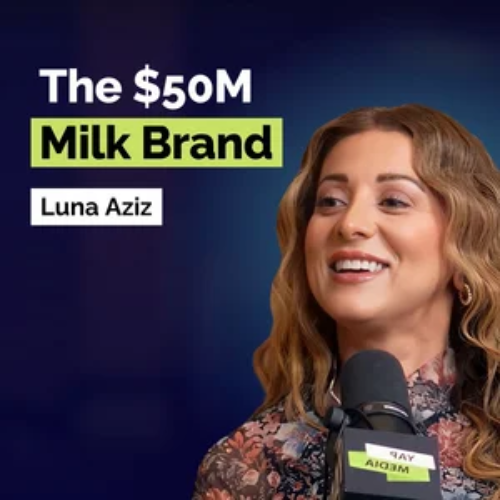
This Mom Turned a $750 Etsy Side Hustle Into a $50M Wellness Brand | Entrepreneurship | How We Profit | E6
Starting a business was never part of Luna Aziz’s plan. After struggling with low milk supply as a new mom, she began experimenting with her own herbal formulations and sharing them on Etsy. She had no investors, no marketing budget, and no plan beyond helping other moms. Then one customer’s recommendation in a Facebook breastfeeding group generated dozens of orders overnight, turning her side hustle into Legendairy Milk, a $50 million wellness brand. In this episode, Luna shares how entrepreneurs can build a trusted consumer brand through education and community, choose the right sales channels, and scale without losing customer relationships.
In this episode, Hala and Luna will discuss:
(00:00) Introduction
(01:23) Bootstrapping Legendairy Milk With $750
(11:30) Growing a Community Before Selling Products
(14:18) Scaling to $50M Through Organic Marketing
(19:13) The Real Cost of Building a Supplement Company
(34:18) Legendairy Milk’s Sales and Distribution Strategies
(50:45) Building a Leadership Team That Scales
(54:55) Lessons From Luna’s Biggest Business Mistakes
(1:03:58) SWOT Analysis of a $50M Business
(1:09:53) How to Build a Supplement Brand From Scratch
Luna Aziz is the founder and CEO of Legendairy Milk, a women’s wellness supplement brand headquartered in Austin, Texas. She bootstrapped the company from a $750 startup and grew it into a $50 million brand with approximately 70% of the U.S. lactation supplement market. Luna was named one of Inc.’s 2026 Female Founders 500 for expanding the brand from pregnancy and postpartum support into broader women’s wellness.
Sponsored By:
Indeed – Get a $75 sponsored job credit to boost your job’s visibility at Indeed.com/profiting
Shopify – Start your $1/month trial at Shopify.com/profiting.
Northwest Registered Agent – Get a complete business identity with Northwest. Visit northwestregisteredagent.com/YAPFree and start using free resources to build something amazing.
Mindstone – Master practical AI skills without the complexity with Mindstone’s AI Competency Programme. Head to experience.mindstone.com/yap and get 10% off.
AT&T – Stay connected with reliable, secure internet built for entrepreneurs. Switch to AT&T Business at business.att.com.
Quince – Make your summer wardrobe feel easier. Go to Quince.com/profiting for free shipping on your order and 365-day returns. Now available in Canada, too.
Resources Mentioned:
Luna’s Company: Legendairy Milk: legendairymilk.com
Luna’s LinkedIn: linkedin.com/in/lunaaziz
Luna’s Instagram: instagram.com/itslunaaziz
Luna’s TikTok: tiktok.com/@itslunaaziz
Active Deals – youngandprofiting.com/deals
Key YAP Links
Reviews – ratethispodcast.com/yap
YouTube – youtube.com/c/YoungandProfiting
Newsletter – youngandprofiting.co/newsletter
LinkedIn – linkedin.com/in/htaha/
Instagram – instagram.com/yapwithhala/
Social + Podcast Services: yapmedia.com
Transcripts – youngandprofiting.com/episodes-new
Entrepreneurship, Entrepreneurship Podcast, Business, Business Podcast, Self Improvement, Self-Improvement, Personal Development, Starting a Business, Strategy, Investing, Sales, Selling, Psychology, Productivity, Entrepreneurs, AI, Artificial Intelligence, Technology, Marketing, Negotiation, Money, Finance, Side Hustle, Startup, Mental Health, Career, Leadership, Mindset, Health, Growth Mindset, Passive Income, Online Business, Solopreneur, Networking
Luna Aziz: [00:00:00] different formulations, um, that ultimately worked for me. I found, you know, I would test, "Okay, I'm gonna try this formulation for a week and see if it increased my milk supply." Yeah. And if it did, I would continue with the next formulation. And, um, at that point, I was four months postpartum, and for me, I just felt like I had accumulated so much knowledge- Mm-hmm
over this period of time that I just wanted to share it with other moms because it felt like I was very isolated alone, and that I was the only one going through low milk supply. So, um, I posted the products, the formulations, I ordered bottles and, you know, more pills and all of that, uh, more ingredients, and I posted, um, them on Etsy.
I had a little printer. I made my own little clip art labels. Mm-hmm. I mean, it was- Really scrappy. Very scrappy. Um, just working in my little studio in my house and, um, I thought, you know, maybe if there's just, you know, another mom out there who's experiencing the same thing, at least she has other options.
Yeah. And maybe I'll get one order a month just as a fun hobby.
Hala Taha: Mm-hmm.
Luna Aziz: And someone in a, a Facebook breastfeeding group [00:01:00] of 20,000 moms, someone had purchased the product and was raving about it in the group. And I remember I, I received like 50 orders overnight one day. Wow. And I was doing everything myself, so I was still making all of the pills.
I was still bottling everything, packaging, labeling, um, putting them and sealing them into boxes, putting the shipping label on there. I was also communicating with all of the moms through Etsy. So what I would typically do was go through kind of a whole litany of things that they could be doing to help them to increase their milk supply before we would even talk about the product.
Mm-hmm. So it was almost like troubleshooting, customer service- Educating ... lactation education, and then also helping with the product. So, uh, I didn't sleep for the first year. I worked probably until about 2:00 or 3:00 in the morning every night helping moms, connecting with moms, and then I would wake up at 7:00 with a baby and do it all over again.
Mm-hmm. Um, so I do not recommend that. You will get stretched very thin very quickly. Um, that's where burnout will happen, absolutely. But I felt like I was just called to do this, and it was something I was so passionate about. And [00:02:00] in that process, I connected with so other, so many other moms who are going through it as well, and I realized, oh, this isn't isolated to just me.
This is something that is, uh, much more chronic and serious than we probably talk about. Because a decade ago, social media wasn't, isn't what it is now. Yeah.
Hala Taha: People weren't connecting on the same level that they can now. Mm-hmm. So it was, it was pretty amazing to, to create that community early on. Yeah.
Something that I love about your story is that it doesn't feel like you were actually doing it for the money. Like, that you didn't have this big goal, like, "I'm launching a supplement company. I'm gonna raise money. I want X, uh, client profile." You didn't do market research. You just started small, built it brick by brick, used community.
And something else that I s- find fascinating is that- You don't really put yourself out there too much. You're more of an introvert, and, um, you were kind of this... You know that faceless brand trend? I feel like you were doing it before- Yes ... maybe that was even a thing. [00:03:00] And I'm just curious, like, how did you get the demand when you weren't necessarily putting your face out there or, or feeling comfortable?
Like, how did you get over that if you did have to put your face out there from time to time? And walk us through, like, how your marketing strategy developed over time. Uh, I'd love to hear that.
Luna Aziz: For sure, yeah. And, you know, to your point, it was a business created by accident. This was definitely not an intentional business.
I thought I was gonna be a stay-at-home mom. I was on maternity leave. Um-
Hala Taha: Crazy. 50 million. Yeah, fam, 50 million.
Luna Aziz: So I, um, yeah, to your point, I never really wanted it to be about me, even though the, the mission was my underlying issues with my own milk supply, um, connecting with so many moms and realizing that we were all experiencing very similar experiences, whether it was breastfeeding struggles or low milk supply, we all just needed support.
Hala Taha: Yeah.
Luna Aziz: Um, so what, uh, you'll find on our social media especially is we, uh, work with a lot of moms where we are, um, filming with them, um, while they're actively breastfeeding or we're talking kind of [00:04:00] educational, um, tips and tricks to help with nursing or pumping. And what I wanted moms to see was themselves in those videos.
Yeah. So it really wasn't important for me to be there, um, to be featured in it, because I wanted, you know, all walks of life, women who are experiencing various issues and complexities related to breastfeeding. I wanted mom to connect with that person- Mm-hmm ... and not with me. Um, and I think that really resonated, and it created a community that is so diverse.
But also, I think we've, we've earned a lot of trust- Yep ... because it's very much education first and the product second. Yeah. So I was thinking about that, that Janet Jackson song, um, What Have You Done for Me Lately?
Hala Taha: Yeah.
Luna Aziz: I think a lot of brands, um, are doing this now, which is great, but you have to put yourself in the place of your customer- Mm-hmm
and what you can do for them. They don't care about your product necessarily. You have to understand what journey they're going through and the pain points and inflection points of, of where your product could be helpful. But first they need to understand, you know, and, and be supported in whatever they're going through, and I think that's...
we've done a fantastic job of that, of making [00:05:00] sure moms feel like this is a judgment-free zone and community for them. Um, because that's honestly something that I didn't have- Yeah ... with my first baby, and I wanted to create that community with Legendary Milk.
Hala Taha: Yeah. And now you've got over a million followers across all your different platforms.
Your company really hasn't spent a ton of money in paid advertising. Everything has been truly organic, word-of-mouth driven, uh, using Facebook and Instagram primarily, primarily. Um- One thing that I love about your brand is that it has, like, such a fun personality. And, uh, you've got product names like Smitten Kitten- Yes.
Pump Princess, Girls Gotta Go, and it's, like, really silly. And something that I teach my students, I teach a LinkedIn masterclass about personal branding, is that you need to have a relationship with your audience, and you need to really define what that relationship is, and you also need to have a personality.
Like, how do you show up?
Luna Aziz: Sure.
Hala Taha: And you've really infused personality in the brand [00:06:00] even though it's more of a, like, faceless brand. Talk to us about that.
Luna Aziz: So I think humor in marketing is so underrated, and some brands are doing it really well. And I wanted to bring that cheekiness to, to your point because, you know, I think in the postpartum period, especially for the newborn, if...
I always joke, "If you're not laughing, you're crying." Um, it's just the hormonal rollercoaster that you're going on. And so, you know, initially with the lactation supplements, we have these, um, kind of, uh, '50s housewife kind of vibe with the, the women on there, and they all have this little speech bubble where there's kind of an inside joke, where if you were a breastfeeding mom, you would kind of understand.
It's like that rite of passage where you're like, "Oh, I get it now." Yeah. It's kind of an inside joke. Um, and I wanted moms to just feel like they weren't alone, um, that we're all going through it, and they're doing a fantastic job, and, and, um, you have the support of this community to, you know, to hold you up when you're having a tough day.
So I hope that they open up, you know, their cupboard and they look at that and they're like, "It's not so bad because I know there are other moms going through this, too."
Hala Taha: Yeah.
Luna Aziz: Um, and then we, we s- we kind [00:07:00] of, um, you know, channeled that into our women's health supplements as well with Smitten Kitten and all of that.
And you think about, again, taboo topics, taboo products, I mean, so much is swept under the rug when it comes to women's health and vaginal health and- Yeah ... um, just even research on women and, and how our bodies are so vastly different than men's when it come, when it comes to any of the research, you know, around pain and just medicine and all that.
Just, it's kind of crazy to think about. Um, so we wanted to make sure that it was in your face. We're not hiding it. Um, it's something to be proud of, to be a woman, to experiencing these things, to, to be validated in them. I think a lot of women have had to be their own personal advocate when they go to the doctor's because things are swept under the rug.
Hala Taha: Yeah.
Luna Aziz: And certain symptoms that you, you experience where you're like, "I don't feel right. My body doesn't feel right." And the doctor's like, "Oh, that's just part of being a woman" or-
Hala Taha: Mm-hmm ... "
Luna Aziz: That's part of the hormones going, you know, during perimenopause or menopause," whatever. And I love that women are finally saying, "No, it's not."
Yeah. "It's not normal, and if you can't [00:08:00] advocate for me, then I will do it for myself." And we're looking for solutions outside of, you know, just the preliminary, preliminary, preliminary help that you're gonna get from a doctor.
Hala Taha: And you're making it, um, accessible, right? For sure. You're making it really accessible.
You're making it less taboo. I love your mascot, uh, Puterous. Yes. Tell us about that and, and, like, did you think of that?
Luna Aziz: Yes. So we, uh, we definitely wanted something to go in line with this kind of cheekiness, but also just opening the door and the window to women's health and reproductive health. And I never imagined that we would have a human-sized, uh, uterus, uh-
on the team. But it is really eye-opening when we go to public, uh, events or we've walked through Walmart, because our s- our products are sold in Walmart and Target stores. And so we walked into these stores and, um, pri- primi- it's primarily men. Um, they'll look at it and not know what it is- ... for one. Um, they have no idea that it's a part of the female anatomy.
So it's kind of a great educational tool [00:09:00] as well. Um, but it's opened a lot of conversations about it too, and that this is just a normal part of a woman's body, and it's not anything to be ashamed of.
Hala Taha: Yeah. So... When I think of the relationship that you have with your audience, I think of like you're like a mom, right?
You're telling people maybe, like, what they wish their mom had told them- Yes ... or felt comfortable to talk to their mom about, or even, like, their sister or best friend, right? That's
Luna Aziz: what we get a lot is kind of that big sister
Hala Taha: energy. Big sister,
Luna Aziz: yeah. Like passing down, you've been through it, you've gone through the trenches.
Like, what would you want to share with that next generation of, of women who are going through this?
Hala Taha: Yeah. So for the listeners out there, something to think about is, like, what is your relationship to your audience? Are you a mom? Are you a cheerleader? Are you a mentor? A big sister, right? So I love that.
Um, okay. So let's talk about your actual, like, business and the cost of creating a supplement. So you started with $750. Yes. Which is crazy. I actually just interviewed John Paul DeJoria, who's the, uh, founder of Paul Mitchell and Patrón. Mm-hmm. And he [00:10:00] started Paul Mitchell with $750. That's crazy. So you both start...
He's got a billion-dollar company. You've got a $50 million company. Uh, but man, like, you've had exceptional growth. Thank you. You, you started manufacturing all the bottles by yourself. Now you have, like, a huge facility in Austin where you're manufacturing everything in the US. Uh, talk to us about some of the early, like, big learning lessons about being in the supplement industry, like in terms of, like, manufacturing and what you had to figure out, and what is the most expensive part of the process?
What is the most lucrative part of selling a supplement? So
Luna Aziz: I, I talked about the first year I was making everything in-house, and then, um, my husband, you know, part of my friend said, "You either have to shit or get off the pot." "This is either a company or it's not. It's either a really valid business idea or it's not, and you can't kind of have one foot- Yeah
uh, you know, uh, there and one foot with us, and so y- y- you're stretched too thin." [00:11:00] Um, so we ended up finding a manufacturer in Dallas who made supplements, uh, very trusted manufacturer, and our initial PO was the smallest that they had ever received. They were taking-
Hala Taha: How much?
Luna Aziz: It was only 500 bottles over the span of, I think, five products.
So-
Hala Taha: And how much do you think that cost back then?
Luna Aziz: Oh, gosh. I can't... It was a tiny, tiny, a few thousand dollars maybe. It was a tiny PO.
Hala Taha: Okay. So you did, like, a run, 500 bottles It was $1,000 or something like that ... smallest,
Luna Aziz: yes. Okay. They were not expecting... I mean, I, we had, you know, been vetted by other manufacturers and tried to talk to them.
They were like, they just closed the door on us. They're like, "This is too small. We're not taking the hit on this." Because there are s- expenses involved- Yeah ... with even, um, running a small PO like that on their line, right? Especially when they had bigger, um, clients than us. Mm-hmm. And you did all the bottle design, marketing, you did it all yourself?
Absolutely. We had a fantastic designer who, you know, initially it was my clip art, and then I, I found a designer who basically took the ideas straight out of my head and put them on paper. Nice. She was so [00:12:00] talented, and, um, she helped create our website, and the women that are featured on there as well, um, and really just, I think, cemented the, kind of that housewife theme, that very cheeky, you know- Yeah
uh, look that we have. Um, so we, we worked with this manufacturer. They really took a chance on us, and now we are their biggest client. Um- Cool ... we still are with them 10 years later. Um, I'm very much of the, you know, you take a chance on me, then you have my loyalty kind of for life. Yeah. And so I appreciated that they're one of the few that didn't slam the door on us.
Um, and so that was initial, like, first year just creating growth because at that point, you know, it had started to expand beyond the Facebook groups, and moms were talking about it in their, their mom communities and kind of... I mean, word of mouth is so powerful. Yeah, it
Hala Taha: is.
Luna Aziz: Especially when it comes to moms.
Yeah. They have so much purchasing power. Mm-hmm. Um, so, you know, it was still very organic, very bootstrap, but it was definitely growing. And our, our social media, um, exposure had also grown quite a bit because I was really focused on the education. So [00:13:00] moms were starting to follow us. They were starting to share with their new mom friends.
And interesting thing is I, I started to notice that, um, when I was out and about, or even now 10 years later, I might be at a conference where a mom will come up and say, "You saved me during my breastfeeding, uh, troubles, my... Anything that I was going through, I would go to your page and find some sort of tip or trick that would help me, and I never used your products.
But I had a girlfriend who was going through clogged ducts or mastitis, and I immediately recommended your products." Mm-hmm. And that is so hard to replicate. Yeah. Like, just the, the trust that they had in us, I don't take that for granted, and I truly appreciate every interaction I have with these moms because it's just so rewarding.
It's, you know, I tell my team, we're not selling a bag of chips here. Like, there's- Yeah ... very much a, a tangible connection, emotional connection that we're making with these moms. Sometimes they reach out to us at the lowest point in their postpartum period. They are ready to quit that moment, that day- Mm-hmm
and our customer service team has to rally around them and be their cheerleader sometimes because they may not have that support at home.
Hala Taha: Yeah.
Luna Aziz: [00:14:00] And I take that very seriously.
Hala Taha: And now your company controls, like, 70% of the lactate supplement market, so you've, like, completely dominated this market, and a lot of it has to do with the trust that you've built with your community.
You provide trust with educational content, um, also through your customer support, which every person has to have 90 hours of training-
Luna Aziz: Yes
Hala Taha: And they're, uh, breast milk, like, experts? Like- They are, yes ... who are... Like, yeah, talk to me about it. So
Luna Aziz: there's a, so there's a, a lactation training that they take, to your point, just understanding the foundations of breastfeeding.
Not every customer service person that we hire is a mom, so they may not understand. Yeah. And I always think about breastfeeding as almost like a foreign language- Mm-hmm ... um, where there's so many complexities to it, and if you haven't lived it, you don't really understand, you can't put yourself in the shoes of what a mom might be experiencing.
So they go through this training so that they are able to effectively troubleshoot moms who, who reach out. And initially what happens is if mom reaches out, for example, and just says, "Hey, I'm having trouble with my milk [00:15:00] supply. I'm, I'm concerned I'm not giving enough to my baby." Um, right off the bat, um, our customer service team has a list of questions that they're asking to help troubleshoot with this mom.
Product isn't even mentioned. It's really just about kind of understanding what's going on behind the scenes with this mom. How can we help just give free advice- Yeah ... free support to them. Um, and then, you know, way down the line after we've kind of gone through this dialogue, that is when we might recommend a product.
But we understand that it's just a complement to what mom is already doing at home, whether it's nursing more, pumping more, you know, um, working with a lactation consultant. We're going to find, you know, what that, it could be multi-product, but we're gonna help to provide
Hala Taha: solutions
Luna Aziz: beyond just our products to them.
Hala Taha: Yeah. I really want to dig deep on, like, the cost and, like, how to actually create a supplement brand and the cost involved Something that people don't often think about, uh, when I'm thinking about how much does a bottle of pills cost, I'm thinking about the product itself, the marketing, the packaging, the [00:16:00] shipping, but there's also this, like, research portion beforehand that I think people don't think about.
So how long is the typical research process for you guys, and what are the costs involved
Luna Aziz: in the research process? That is a, a huge part for us, um, because we are not trying to launch a million different products a year. Um, we are very pointed in what we launch, and our entire product development team consists of women.
So we will have very candid roundtable discussions about just our own personal experiences with hormonal challenges, and ovarian cysts, and vaginal health, and perimenopause. And, um, I love those conversations, 'cause very rarely do you ever kind of hear that from people because it's so taboo, right? So
Hala Taha: your own team becomes your market
Luna Aziz: research.
Absolutely, yes. And I do think that we obsessively follow what our customers are saying, too. And I think in the early days, that was a huge part of our s- success, is I was in those Facebook groups listening to what moms really wanted and, and trying to address those needs. So just, I mean, I think that's a, a tip for anyone [00:17:00] who is, is creating a brand or a small company right now is be obsess- obsessively following what your customers are saying.
Yeah. 'Cause I'm sure there's little pearls and tidbits that you can take from that, and be- maybe have your next, you know, product idea come from that. Um, but yeah, we would have these roundtable discussions. I was definitely very much at the heart of it as well because I think for any product that we launch, I want...
I like to think about it as, you know, in the heart of what was going on in my life where I was having any sort of issues, for example, I have PCOS-
Hala Taha: Yeah ...
Luna Aziz: would this product help me in the, the depths of my issues with hormonal imbalance? And if it wasn't something that would be helpful, we're not gonna launch it.
Yeah. Because I wanna be able to feel very pride, you know, very proud- Mm-hmm ... of what we've launched. Stand behind. And be able to stand behind it. Um, I rem- remember, I'm, I'm aging myself, but the Hair Club for Men founder, I don't know if you've ever seen those commercials, um, it was for, I think it was for t- toupees or the hairspray- Uh-huh
to cover, um, bald spots, but he said, "I'm not only a, um"- founder, but I'm also a customer, or something like that. I mean, [00:18:00] it's so true. Like, there isn't anything that we have launched that I wouldn't take for myself or wouldn't give to all of my friends and family, and very much do so. Um, so that was super important to me to have a women-only product development team so that we could have these really candid conversations.
Mm-hmm. Um, and then to your point, the research part. So it takes us about a year and a half to actually develop and, uh, launch a product. Wow. So we are, um, typically in our, especially with our women's health products, we're looking for ingredients that have clinical studies behind them. Um, typically, we're opting using, using branded ingredients, because they'll have a plethora of research behind them that we can then use for some of the claims that we might put on the bottles.
Um, we're also sharing all those clinical studies on our product pages and our PDP images. Um, the thing that's interesting about supplements is it's kind of like the Wild Wild West in the US, and, um- I was
Hala Taha: literally just gonna ask you about
Luna Aziz: this. Yeah. It's, there's really not... I mean, I know the FDA says that they somewhat regulate supplements.
Uh, they don't to the level that I would like them to, to be honest. And it's a little bit [00:19:00] scary when I see some of the supplements that have come out and, um, just the lack of third-party testing and certification and, I mean, a huge chunk of, of the money that we spend and the time is on that part, the third-party testing, the lab testing, all of the certifications.
So halal certified, kosher certified, non-GMO project verified- Wow ... certified organic. I mean, sometimes I- I'll look at a bottle of something sold on Amazon, and they'll just have the generic organic label on that. They didn't do any testing to, to make sure that every part of that was actually organic, all the way down to the capsule.
The capsule also has to be certified organic to be able to have the green, the green label. Yeah. Um, and so I think a lot of, uh, supplement companies will cut corners because they don't think consumers understand or maybe care about those things. Yeah. And I very much care, because we are working with a very vulnerable population when it comes to moms and babies.
And I remember I was so discerning when I was breastfeeding, because anything that I was ingesting, I was so worried about what, how it [00:20:00] would translate and transfer into my, my breast milk.
Hala Taha: Yeah.
Luna Aziz: So we understand that we, um, have to be at a higher level and elevate, you know, our, our supplement standards.
Maybe the rest of the US can do whatever they want, but we, we understand that we are working with-
Hala Taha: Yeah, it's really interesting. It's, it's, it's like you really get what you pay for. You might find a really cheap supplement on Amazon-
Luna Aziz: For sure ...
Hala Taha: but maybe that means they haven't invested in research or certifications, or the quality is just generally low.
So I feel like people really need to be aware of that.
Luna Aziz: Absolutely.
Hala Taha: Um, what kind of things should people be looking for with their supplements?
Luna Aziz: I think if, you know, any of those certifications are important to you, make sure that you are looking for the actual certification, um, we call it bug, the, the actual label on there instead of the generic version.
Mm-hmm. So there should be something that looks like the actual formal label, like non-GMO has its own label. Um, so do USDA organic. It's like a little, like a logo type thing. Absolutely. Yeah. Yeah, it's just kind of the circular little, little label on, uh, [00:21:00] on the bottle, and you can tell it's generic 'cause it, there's...
it doesn't look like the formal label- Mm-hmm ... that you have. Um, and you can go to all of those websites and actually see what the label should look like. Um, kosher and halal are two other ones. They're actually organiz- organizations that, um, you know, uh, for like, let's say, like for example, for rabbis, um, they have a kosher certification.
So this is a group of rabbis that will, um, go to your facility, to your manufacturing facility, and look at every process of how you manufacture and sterilize and sanitize- That's so
Hala Taha: interesting ...
Luna Aziz: the line and making sure that it's, it's kosher, um, acceptable. So, um, for someone to just put a generic kosher on there, they didn't do any of the documentation- Mm-hmm
didn't pay for the, the multiple rounds of testing that, um, would suffice for the rabbi. So just something to be aware of if that's important to you. What would be the most surprising thing people would, uh, find out about the price to develop a supplement? Like, is the actual ingredients of the supplement, like, the cheapest part about everything?[00:22:00]
I wouldn't say it's necessarily the che- I, I mean, I think that I... maybe it's a unique situation for us because we're working with a lot of herbs that are a little bit unique and very specific to lactation. Mm-hmm. So there are certain ones, um, that we source from different countries or certain countries actually that we refuse to work with.
So we will not source any ingredients from China. Um, they have a monopoly on a lot of these, these crops and herbs. We don't feel great about some of the testing that we've, has come back in terms of heavy metals and, and whatnot, and we just don't feel good about using those ingredients. It does make it a lot harder to source when you're not using the huge behemoth that is- Yeah
China that's growing everything. Um, so we have to be really mindful of seasonality, um, ordering herbs ahead of time. So sometimes we have to order in- Just to be able to have enough inventory to make the product. Um, so we have a fantastic supply chain team who, who handles all of that. But, um, I think that is kind of unique probably to, to us a little bit because we do have very high standards when it comes to the ingredients that we [00:23:00] use.
Hala Taha: Well, I'm assuming anybody tuning in that wants to launch any sort of supplement or something that we digest is going to have similar quality standards, so it's just such great insight to be giving us. Um, I love this. Uh, you've been doing such a great job- Thank you ... managing your business. Like, you've been doing a really incredible job, so I wanna just let you know that.
Um, what are some of the metrics that you guys are following as a business? Like, what are some of the key metrics
Luna Aziz: So we are omni-channel, which comes with, uh, wonderful, you know, there's pros and cons obviously to, to being omni-channel. So we're, we sell our products on Shopify. We're on Amazon, of course, you know, unfortunately, you kind of have to be in this day and age.
Hala Taha: I'm gonna ask you
Luna Aziz: about that. Um, we're also in Target stores and Walmart stores. Um, I like to be where moms are, and that's typically where moms are shopping is, you know, Target and Walmart. I remember with my, my baby, that was kind of my escape. Yeah. I would go grab a Starbucks, and we would spend an hour just moseying around the aisles, you know, just while you waste some time.
It was [00:24:00] like me, my me time.
Hala Taha: Mm-hmm.
Luna Aziz: Um, so we're in a little less than 2,000 Target stores, uh- That's amazing ... nationwide. Thank you. Um, 4,000 Walmart stores nationwide. We're also in some small, um... I shouldn't even say small 'cause H-E-B's amazing.
Hala Taha: Yeah.
Luna Aziz: Uh, but it's more of a local, uh, grocery chain, so- It's
Hala Taha: like our Austin, um, pride.
Luna Aziz: Absolutely. Oh,
Hala Taha: who doesn't love- Everybody in Austin loves H-E-B.
Luna Aziz: Who doesn't love H-E-B? Yeah. So we're in H-E-B stores. Um, we're in Meijer, which is kind of a Northwest grocery, um, chain as well. But we've been really mindful about where we go because it doesn't make sense for us to be everywhere- Mm-hmm
especially because we are a niche market. We're focused very much on postpartum and lactation, so some retailers just don't make sense. Um, and then beyond that, we're also on TikTok Shop, which I have a lot of opinions about TikTok Shop, both good and bad. Um, but yeah, be- just, you know, by virtue of us being omni-channel, um, sometimes it can be hard to kind of wrap your mind around all of the numbers and, um, the sales and, and the profits and, and where you're [00:25:00] kind of hemorrhaging money.
Um, TikTok Shop being one of them. Um, if anyone is watching and knows how to be profitable on that channel, please let me know because it's, I, I find that it's one where we spend a lot of money on- Hmm ... influencers and samples and ad spend, and there really isn't any profit to be found on that, that channel.
Hala Taha: Interesting.
Luna Aziz: Um, but- So
Hala Taha: much hype.
Luna Aziz: So much hype, and we do have sales on there by, by, you know, I shouldn't say that, but commission rates are so high. The, the hidden fees associated with that channel, um, it's, it's very expensive to sell on there. Mm-hmm. And so what we found is it's, I wouldn't say it's necessarily even a sales channel as opposed to like a marketing channel for us because- It's like more
Hala Taha: brand awareness
Luna Aziz: it is. It truly is, and we've seen a halo effect where it's impacting our retail sales- Mm-hmm ... and it's also impacting Amazon sales because someone might see a video on TikTok Shop about a product and won't initially buy on there, but they might go into Target and buy it. I think it's the
Hala Taha: lack of trust.
It is. Because you haven't done much with paid ads, so that's almost like- Being viral, going viral is sort [00:26:00] of like a paid ad. For sure. Because people are not necessarily going to follow.
Luna Aziz: Oh, absolutely.
Hala Taha: But they're gonna see the content, and it's almost as if they, they saw an ad, but then they see you in Target, and suddenly you have more credibility- True
than just a TikTok brand.
Luna Aziz: Absolutely. Yeah. I think there's kind of this inherent thought that if you're in a retail store, that there's been some sort of vetting that's happened- Yeah ... behind the scenes, and that this is a good brand, you know?
Hala Taha: Or it's, like, so popular, right? Absolutely. Mm-hmm.
Luna Aziz: Yes.
Hala Taha: It validates that.
Okay, so let's talk distribution channels. I think this is one of the most interesting parts of your story. So you started on Etsy. Mm-hmm. Are you still on Etsy?
Luna Aziz: Yes. Yeah, I mean, we're on- Yeah ... Etsy, but it's, it's not-
Hala Taha: A
Luna Aziz: big channel for you ... we don't sell to the level, yes.
Hala Taha: Well, starting, I always tell people who are not entrepreneurs, "Yeah, I mean, just start an Etsy store."
I feel like it's such a great-
Luna Aziz: Oh, absolutely ...
Hala Taha: first place to start. And, like, being able to channel demand, you knew that moms are on Etsy- Mm-hmm ... because they're planning their baby showers, they're planning... Like, they're already on that- Oh, that's right ... website heavily, so you ended up being where they're shopping.
And then what was the next thing that [00:27:00] you started? Was it your Shopify store? Shopify
Luna Aziz: was next. And, you know, to your point, I mean, 10 years ago Etsy looked very different, too, and we still have our Etsy shop because we garnered so many reviews. Mm-hmm. And I think that is another trusted resource, right? I think sometimes now we may have to question reviews, because you just don't know where they're coming from, or is it more of, like, kind of that gray market where, like, people are paying for reviews.
And so these were legitimate customers leaving their reviews. We had fantastic, you know, a rate, fantastic, fantastic rating, fantastic feedback. So I just wanted moms to see that and say, especially in the early days when they didn't know about us- Yeah ... or they were learning about us initially, to say, "Oh, this, okay, this is legitimate.
This actually helped a mom to increase her milk supply." Um, so then we moved to Shopify, and then a few years in, uh, we were actually approached by our, the Target buyer. So she had just had a baby- Mm ... and that's how she found us. So what typically- Oh, amazing. Yeah. What typically happens is, um, most of the time mom doesn't hear about us in the conception period, in the pregnancy period.
She's in a kind of a whole other realm- Yeah ... of thinking about [00:28:00] just preparing for baby. And it's shortly after she gives birth that she finds us.
Hala Taha: Mm-hmm.
Luna Aziz: Um, so that was the case with this, this Target buyer. '
Hala Taha: Cause they never know if they're gonna have issues or-
Luna Aziz: Absolutely. Yeah. Yeah, and I don't want them to expect that they're going to have problems.
Um, and if they, if they do, of course, they have our community to, to pull from. They don't always have to use the products. So
Hala Taha: Target was the first retailer that picked you up- Yes ... and it was actually a fan.
Luna Aziz: It was a fan. It was a customer.
Hala Taha: That's amazing. Um,
Luna Aziz: and she loved the products, and I mean, talk about, like, building trust already and not really having to have any, um, proof of concept or proof of business because she was a customer.
Hala Taha: Yeah.
Luna Aziz: Um, and so she was the first to take a chance on us and brought in a few of our SKUs. They did very well in store, I think because of, one is the product packag- packaging. It's just cheeky, and it looks- Mm-hmm ... a little bit different than everything else on shelf. Yeah. It's fun. Um, and the other thing is we were kind of behind the scenes, I was building this huge social media- Yeah
community in a way that other lactation brands weren't really focused on. Mm-hmm. They were very much focused about kind of shoving product down mom's throat, [00:29:00] and I went from a different avenue of I want to just support mom in whatever she's going through. Yeah. And the products can be kind of a support after the fact.
Um, and it worked for us. It was definitely a model that has, you know, s- stood the test of time over the last 10 years.
Hala Taha: Okay. So you started off on Etsy. You go build a Shopify site and your DTC. Let's, let's pause at that moment Uh, first of all, did you, did you create the Shopify website by yourself?
Luna Aziz: We had, um, our designer was kind of a triple whammy.
She was a graphic designer/illustrator/coder for websites, so she kind of built in the first website. Was that your
Hala Taha: main hire initially?
Luna Aziz: She was, yeah, she was one of the first. Um, she, she's fantastic. I mean, just so talented. And so we had kind of a basic Shopify site- Yeah ... that worked for a few years, and it's, you know, it gets more compli- complicated and more bugs happen, but it definitely worked for our purposes, um, at that time.
And I think 10 years ago, if you think about D2C, I mean, there was a lot more power in D2C at that point. Um, you could have full control of [00:30:00] your, your customer data and all of that on there. Um, it was, like, very cheap to acquire a customer, um, on, on Shopify.
Hala Taha: Hmm.
Luna Aziz: I would say that over time, um, that is not one of our main sales channels
Hala Taha: anymore.
So D2C has become less, uh, important, but it was a good way for you to start. Oh, absolutely. Yeah. So for new founders who wanna try Shopify, you can go to shopify.com/profiting. They're one of our long-term sponsors. Oh,
Luna Aziz: wonderful.
Hala Taha: And they're amazing, right? Yes. Like, they're so good to, uh- Get your feet wet in the D2C space.
I
Luna Aziz: agree.
Hala Taha: Um, and so you were using Facebook and Instagram to drive people to your Shopify site. Yes. Um, and then you went retail. Has retail become your main distribution channel? I would say it's a mix between retail and Amazon-
Luna Aziz: Okay ... if I, if I had to
Hala Taha: pick- And were you weary of putting your stuff on Amazon at first?
Luna Aziz: Yes. Why? Um, you know, I, I have mixed feelings about Amazon. I understand that a lot of us shop on there. I [00:31:00] shop on there as well, and I understand when mom is in panic mode, and she needs something right now, it absolutely makes sense.
Hala Taha: Yeah.
Luna Aziz: She's not going to wait a week if she has an active clogged duct or mastitis, and I wouldn't expect her to.
So I, I appreciated the expediency of being able to deliver our products to moms when they needed it, you know, right then.
Hala Taha: Yeah.
Luna Aziz: Um, what we initially started with was just kind of dipping our toe with Amazon and not, um, putting all of our SKUs on there. Mm-hmm. We just wanted to understand what was happening, and to be honest, I was the one who listed our products, and I'm not an Amazon expert-
by any means. Um, I remember a few years after that, we had an Amazon agency do an audit, and they're like, "You don't even have product photos on here. You have, like, one image." And I'm like, "Yeah, we... This is, that was me." Yeah. I was our Amazon expert for a while. Um, you know, now we have an Amazon team, and we have really cleaned up and optimized our listings and all of that.
And now, of course, we do have way more SKUs on there than we did before. But there are still some, um, some products that we have not put on Amazon, um, because they do well on D2C. [00:32:00] Um, it, I think it's still important for us to have a presence there as well.
Hala Taha: Yeah.
Luna Aziz: Um, we've tested certain things on TikTok Shop just to see kind of what happens in terms of, you know, your point about virality.
Um, I think that it's a great channel to see kind of what happens and test and learn and then see that, that halo effect happen with Amazon and, um, retail. So oftentimes what we'll do is, um, for a product launch, we might just start with TikTok Shop-
Hala Taha: Hmm ...
Luna Aziz: and start to get, you know, some new DCs and content creation going on, getting a little bit of buzz and virality- Yeah
and then we'll launch on Amazon.
Hala Taha: Oh, so interesting, and then you still don't put all of your products on Amazon. Is it because you want some sort of, like, exclusivity for your
Luna Aziz: D2C
Hala Taha: website? Yes,
Luna Aziz: absolutely. There's, uh, there's a little bit of exclusivity with a certain product that we have. Uh, they're called silicone collection cups.
They're a, a pump part that you use with your breast pump. Mm-hmm. Um, and there are a lot of them out there, uh, but we found a lot of success with just keeping them exclusive to D2C and to TikTok Shop. Interesting. Um, and it's one of our best sellers at this point. Um-
Hala Taha: Really? I think
Luna Aziz: maybe [00:33:00] because you can't get it everywhere.
Hala Taha: Yeah. What's the difference between selling something on Amazon versus selling something on retail? Like, is there any cost differences, shipping differences, minimums- Yeah ... uh, even the relationship part of it? The interesting thing about that is 10 years ago if you had asked me that, I would've said D2C
Luna Aziz: is where the margins are the best It's so cheap to acquire- Mm-hmm
a customer. Facebook works exactly the way that you want to- Yeah ... when it comes to ads. Um, it's actually very different right now. Um, I was talking to our CFO about this. The margins are virtually the same between D2C, retail, and Amazon now. Oh,
Hala Taha: interesting.
Luna Aziz: So there, it... And I think that's great for us because we're agnostic, right?
Yeah. We're, we're going to go where mom is and, and if it's Amazon for a period of time, makes sense.
Hala Taha: So you can
Luna Aziz: keep the
Hala Taha: prices also the
Luna Aziz: same- Absolutely ... across the
Hala Taha: board?
Luna Aziz: They are, uh, the same across the board. Um, and that's actually really important if you're looking to go into retail is those prices do have to stay the same because you will get dinged on Amazon.
You may learn, lose the buy box. Yeah. I mean, there's all of these kind of rules around, you know, the retailers are looking very [00:34:00] closely to make sure that you're not offering a certain discounted price on Amazon or even on TikTok Shop versus what it's gonna look like in retail, and you might get dinged for that.
Mm-hmm. So we have a fantastic sales team, and that's kind of their job is to be responsible for, like, making sure that there's, um, price matching no, no matter where you go. So interesting. So that's
Hala Taha: a big thing that your sales team is actually focused on-
Luna Aziz: Oh, absolutely ... is price matching. Yes.
Hala Taha: Um, so you're in so many amazing retailers, Target, Walmart, H-E-B, Sprouts.
Mm-hmm. This is, like, every person's dream who's in business, right? How did you do it? Like what Like- Are you really good at relationships? Were you doing email campaigns? Did you know the titles you were reaching out to, or did it just like happen?
Luna Aziz: I think, uh, I wish I had a, a secret formula to share, um, with anyone watching.
I do think that it came back to like building a brand- Mm ... and, and building such a strong community of, of moms. Um, I think that the retailers couldn't help but notice.
Hala Taha: [00:35:00] Did everybody just follow Target? Like Target put it in, and then Walmart was like-
Luna Aziz: They,
Hala Taha: yes ... there's probably people in the aisles- Oh, absolutely
Luna Aziz: they do
of the
Hala Taha: dif- different stores and-
Luna Aziz: I know there's a, a lot of- Yeah, so- ... kind of drama that happens with the buyers going into each other's aisles
Hala Taha: and- That's so cool-
Luna Aziz: Yes ... that that happens. So they, they definitely, um... You know, and, and Walmart was something I had to think about because I didn't know if that's necessarily where moms are, are going to shop, but now it's actually proven to be, um, a place where our products sell really well.
Um, and we're in 4,000 stores nationwide, which is pretty, pretty surreal to think about. Um, but I think it just came very organically and naturally, and it came back to some of the buyers actually being customers of ours. The, the brand, um, social media presence was just so strong.
Hala Taha: Mm-hmm.
Luna Aziz: And to your point, um, we were able to kind of usurp any other competitor because what we were doing couldn't be replicated.
Hala Taha: Yeah.
Luna Aziz: Um, I remember our salesperson came from a, um, a competitor, and she said, "We used to go onto your social media, and we would try to [00:36:00] pinpoint what it was that people loved about you. Like, why were you getting so many followers and so much engagement and so many comments? And we couldn't understand it, and we're trying to kind of pi- you know, piece apart why, why it's working."
And so I think, you know, uh, once you have that good formula, like the, the sales and the, the following will come with it. Um, and you don't have to shove your products down someone's throat to get there.
Hala Taha: Yeah. You have such an amazing founder story. Like what a cool story. Thank you. No investors, bootstrapped it all, reinvested all your revenue, just grew brick by brick, so much organic.[a]
Like, do you ever feel like this is just like fate? Like it's
Luna Aziz: just- I'm definitely where I need, I should be, and I'm still so passionate about what I do. I mean, every day too, we get constant messages from moms saying, "You know, you helped me through such a tough time in my breastfeeding journey. I couldn't have done it without you."
Um-
Hala Taha: So it's your mission.
Luna Aziz: Oh, absolutely. Sure. And I think the people that we hire are very mission-driven too. Mm. We're primarily women, I mean, which makes sense. [00:37:00] Um, our team really cares about these moms and babies that we're helping, and so we're all so passionate about it, which is fun to s- to kind of just hear people's thoughts.
You're like, "Oh, wow, I didn't know you cared so much." But, um, also it just resonates with me because I wanna work with other people who care to this deep of a level.
Hala Taha: Mm.
Luna Aziz: Um, and I think it just elevates- And we started out with a very small skeleton crew. I mean, I think with every founder you feel like you can do it best, and ultimately find that you're actually the one stagnating growth.
Because you think that you're the Jill of all trades and that you are the expert, and actually there are people who are much smarter than you and much more capable in certain areas, and you should probably focus in on your strengths.
Hala Taha: Yeah.
Luna Aziz: And I learned that the hard way- Yep ... the whole time. Um, and now we have a fantastic, very capable, very smart team that I learn from every single day.
Hala Taha: Yeah, you were telling me offline that, you know, you're not really paying attention too much to the finances necessarily, and I'm really the same way. I've been getting more into it with my business, but I get [00:38:00] more excited about creating new products, building community, being the visionary of the brand, and I've hired around the places where I'm weak.
Absolutely. And every good founder should do that. So at some point you were super burned out, and you were like, "I need a leadership team." Even your husband, I think, works for you. Yes. I'm curious of, of what he does for you guys. But like how have you designed your team?
Luna Aziz: Oh, absolutely. Yeah, so my husband is our COO, and, um, we also have a very strong CFO.
She is a dynamo. Mm-hmm. Um, she's terrifying in the best ways. She's just so smart, so capable. I mean, I... when people say we all have the same hours in the day, she doesn't. I don't know how she gets the stuff done. She amazes me every single day. Um, and she, she's very much looking at financials and really digging in and trying to understand, because we are omni-channel, just not letting anything get out of control.
Because that can happen very quickly where, you know, we were looking at TikTok Shop, for example, the other day, and we're like, "What are all of these hidden fees?" All of a sudden, we're paying 10% more [00:39:00] than we were the previous month. Mm-hmm. And that can happen very quickly when you're omni-channel because you just, you have to be able to kind of like, get full control over- Yeah
what all the distribu- u- distribution looks like in your sales channels. Um, so I, I really credit her with helping us to get organized and implementing processes and all of that which were very much needed. Um, but yeah, I mean, we, we operated under a skeleton crew for quite a while, and then we started, um, hiring, um, in marketing, um, accounting and finance regulatory.
So we have an in-house regulatory person who's essentially just looking to make sure that any claims that we make are substantiated, that we have research behind them and all that. I think it's really important, and I think a lot of brands get in trouble because, again, back to the Wild Wild West where there's certain things you just can't say.
Yeah. Again, they're not proven. There's no research behind them, and that's where you kind of get the slap on the wrist from the FDA. So it's super important that you, you know, if you're thinking about working in supplements, um, that you have a regulatory team behind you, even if you're going to hire someone to do that for you, [00:40:00] um, uh, you outsource that.
It's, it's super important to have that. Um, but primarily our management team are women. Um, our head of product development is a woman, um, CFO, head of marketing, um, head of sales, and I, I just- And you have a board now
Hala Taha: too, right?
Luna Aziz: We do have a board, and I think it was really important for me to see women in manager and director roles because I don't know about you, but I never had a female manager- Mm-hmm.
Same ... um, before starting the company. I just never saw that happen. Um, and so I wanted, especially young women who were starting with us, maybe this is their first job out of college, um, to be able to see role models- Yeah ... in, in their bosses and think that, "I wanna be like this person in 10 years." Um, and so I think it's, it's fostered a lot of, um, mutual respect amongst the team.
We have clear expectations. Um, I'll get on my soapbox for a second about the one thing that I, uh, is a pet peeve of mine is when, um, small businesses or companies will say we're all a family.
Hala Taha: Mm-hmm.
Luna Aziz: I don't think that [00:41:00] my team members are my family. Um, I think it is actually, um, inappropriate to kind of even, even to, to relate to that, because I have a family.
I have two kids and, um, there are certain things that they can say or do that I accept- Mm-hmm ... because they're part of, you know, they're my kids.
Hala Taha: Yeah.
Luna Aziz: So the other day my, you know, my son said, "I really didn't like the ham sandwich you made. It was really dry and terrible. I want- ... avocado maybe next time." I have to accept that abuse from my son, um, because he's my kid.
Hala Taha: Yeah.
Luna Aziz: But I think that, um, when we, we're permissive and we say that this is part of your family, well, you don't pay your family to interact with you and hang out- Mm-hmm ... with you for eight hours a day. Mm-hmm. And you don't, um, fire, terminate, or let go of your family. Yeah. You know, I think that, um, it sets unrealistic expectations.
Yeah. I think what, um, I'm always expecting from my team is mutual respect, mutual res- support, clear expectations, and I think that we've really fostered that environment where we are kind to each other. Um, we're able to have constructive discussions and discourse even if [00:42:00] we don't agree on things, 'cause again, we're all very passionate about- Mm-hmm
what we're doing. Um, but ultimately we are here to help moms and babies, and I think we've done a fantastic job of that. So how many people are on your team in total, would you
Hala Taha: say?
Luna Aziz: There's about 40 of us all together.
Hala Taha: In
Luna Aziz: all Austin-based? So we do have some remote people, because I do think, um, when you start to specialize with, for example, for Amazon, we found a team in California- Mm-hmm
where that was kind of their bread and butter. Um, it wasn't something that we could necessarily find in Austin. Cool. So, um, wherever we need to, basically, where it makes the most sense, we're, we're going to outsource, but we do try to
Hala Taha: keep, um,
Luna Aziz: everyone in the Austin office if we
Hala Taha: can. Very cool. Okay. I want to do a little segment called Founder Failure File.
Okay. So I'm gonna just read off some questions to you, uh, because we all learn best from failure, and why not help other people tuning in, uh, not repeat the same mistakes that you necessarily
Luna Aziz: did?
Hala Taha: Right. So are
Luna Aziz: you cool with this? Sounds good.
Hala Taha: All right, let's do it. What was your worst product launch?
Luna Aziz: There have been a lot.[00:43:00]
There've been many. Um, we... This was probably, if I went back to why it failed first, it would be because we weren't listening to our customers, um, in the way that we should have. Again, obsessively listening to the customer and what they wanted. Um, there were these breast milk bags. So if you are a pumping mom, you, um, you collect your milk into these m- milk bags- Mm-hmm
that you then store, um, in the fridge or freezer, and then you feed it to your baby at a different time. And, um, we had gotten some, uh, feedback from moms saying that their milk smelled off or tasted off after they thawed the milk. And in me doing more research because I had to put the why hat back on and understand and do the, you know, do the deep dive, um, uh, we realized that it can be due to light exposure.
Mm-hmm. Um, and so we created a bag that actually was completely opaque and had an oxidation layer, um, inserted inside of it so that it couldn't... it w- basically prevented oxidation of the milk. Really cool product. Yeah. [00:44:00] Um, very neat, and I think kind of ahead of its time. But then we realized, oh, um, because it was completely opaque, when Mom poured her, her bottle of milk in, she couldn't see any measurement lines of where she ac- actually how much she had pumped, and that was really important to Mom.
Because she's breaking these bags, putting them in the freezer. She needs to know the exact amount for, you know, a month from now when she goes and th- and thaws that milk and feeds it to baby. So again, great idea, but we weren't, like, thinking about-
Hala Taha: You didn't think it through. Absolutely,
Luna Aziz: yes. The whole
Hala Taha: process.
Yeah.
Luna Aziz: So that was a, a flub on our part, and, uh, the product didn't really sell. And, and the people who, who did like it, um, that was their main complaint, is, "I, I can't see the milk anymore." And, but unfortunately the whole solution was it was going to help, um, make your milk taste better and prevent the oxidation.
But obviously-
Hala Taha: But you learned from it, right? Because then you put out another sort of physical product- Yes ... right, that wasn't a supplement. Yes. And did you do it differently this time?
Luna Aziz: So we've done... Yeah, we... So we de- definitely primarily focused on, um, supplements. We've kind of [00:45:00] expanded into gear a little bit.
Um, we have one product, um, I'd say is kind of like a spinoff of that one, which is a Honey Bear straw cup that has done phenomenally. Mm-hmm. I don't think any of us expected that it would do as well. But it was another kind of remake of a product that already exists and just trying to make it better.
Yeah. So we, again, looked at the customer feedback. What were moms really wanting, and were we able to create a, a version of that, um, that was better? Mm-hmm. And, and I think the sales have proven that. What was your biggest marketing flop?
Hala Taha: I probably ... Is it TikTok? TikTok Shop?
Luna Aziz: Oh gosh, there's so many. TikTok, um, certain, you know, influencers and creators that we worked with that were, uh, you know, early on, um, certain, like, reality TV stars.
Hala Taha: Mm-hmm.
Luna Aziz: That, gosh, I remember one was asking for, like, $20,000 to do one post, and we did it, and it, I think we got, like, two sales from it. Oh, God. You just don't know, and, you know, it's early days, and everyone was kind of into this very, like, the big, you know, influencers. Yeah. That's what you were supposed to gravitate towards, and you spend your [00:46:00] money towards that.
Um, so, you know, we lived and learned. It was, it was a good learning lesson. But I do think TikTok Shop, I can't even say that it's a bad investment because it has helped from a marketing perspective, to your point about brand awareness. But from a purely sales channel, I would never put all my eggs into that basket.
Hala Taha: On the flip side, I know that Facebook, Instagram has worked really well for you. Is there any other marketing channel that you wanna highlight that we didn't talk about that you're like- People might not think
Luna Aziz: about that Hmm, I'm trying to think. I mean, Google for sure, Google Ads are, is another.
Hala Taha: Okay. Um- So you are doing a bit of ads?
Luna Aziz: Bit of ads as well, yes. We've, we've definitely started, um, incorporating more on Facebook, Instagram, TikTok, and Google as well. Mm. We also have email marketing. Um, we have a, a pretty robust email marketing, um, channel as well, uh, quite a few subscribers that we've acc- accumulated over the last decade. Um, and I'd say the same promise that we use for social media is what we do for email marketing, so it's very much education first, and then product [00:47:00] second.
And that has worked well for us. What was your most painful inventory mistake? So, um, this is kind of the inverse of probably what a lot of, um, founders have done, is we're pretty conservative when it comes to, um, our purchase orders. Even now, I'm still very conservative because you just never know- Mm ... if something is going to perform well or not.
And we do have an, a warehouse in East Austin, but, you know, we have to conserve space as we do have quite a few other SKUs, and we have to be mindful and, and smart about, you know, what we order. Um, because it needs to be funneling in and out frequently. So
Hala Taha: a lot of it is, like, projections of
Luna Aziz: what you might order.
Absolutely, yes. You have to be forecasting. Um, and, you know, sometimes it's like, this is how you forecast. It's like, that sounds good. I'll throw a number at the wall. Uh, but I remember we had laun- we were about to launch, um, a drink mix. It was the first time we'd ever done this. It was called She's Thirsty.
And, um, it's a really fun packaging. I m- I love our, our She's Thirsty packaging, and it's for pregnant and postpartum moms, breastfeeding moms, to make sure they [00:48:00] stay hydrated. Um, you know, especially during the summer months when you're pregnant, gosh, you're just, like, chronically thirsty. When you're breastfeeding, you're chronically thirsty.
Um, it had a, a coconut water, uh, base to it, so it was a dehydrated coconut. And then we had these really fun flavors. It tastes, it tastes amazing.
Hala Taha: Yeah.
Luna Aziz: And, um, I guess I didn't really expect the demand for it- Yeah ... and the excitement for it. And so we had a pretty conservative purchase order, and we immediately sold out.
Mm. Like, within days. Which sometimes is not a good thing. It isn't. Now, it, it can be a good and bad thing. I mean, there was definitely, it created a sense of urgency- Mm-hmm ... and we had people signing up for the wait list. But also, you don't wanna be out of stock too long, 'cause people forget about it, right?
Mm-hmm. They move on to the next thing, or they try to find something that's comparable to whatever that is. Um, and so then we made a bigger purchase order, and that sold out. So it just kept happening until we were like, "Okay, we have to kind of go big with this, probably bigger than we've ever done before, and take the chance and take a risk."
Hala Taha: What's a decision that you made too
Luna Aziz: slowly? [00:49:00] A couple of things would be, um, hiring out a very capable and competent team early, earlier than we, or earlier, you know, I think we were too late on it. Mm-hmm. And I put way too much stress and pressure on myself, and, uh, experienced very, uh, debilitating, like, physical and emotional burnout from it.
Hala Taha: Mm-hmm.
Luna Aziz: Um, and I was also managing, you know, two children and, you know, my, a, a husband and, um, family life and whole, you know, just household chores, and just there was just so much on my plate. And, um, I wish I didn't think I had had to be the end-all be-all for the entire business, 'cause that's a lot of pressure to put on one person.
And there are some amazing people that we've hired that I wish I'd hired earlier. Mm-hmm. Um, and then the other thing is I think we probably could have tried, um, especially with Facebook, it was much cheaper to acquire a customer like 10 years ago than it is now. The algorithm has changed so much, it's much more difficult to even, um, [00:50:00] have ad spend on there anymore.
And, um, I wish that we had maybe pulled the trigger a little bit earlier when it came to actually doing paid ads. Mm-hmm. 'Cause there were several years where we weren't doing that, and it was very much word of mouth.
Hala Taha: Yeah.
Luna Aziz: And, um, it worked well for us, but I, I think we probably could have expedited the business a little bit more by doing that.
Hala Taha: I feel like sometimes when you start a business, your, like, your brand is carrying you in the beginning.
Luna Aziz: It is. For
Hala Taha: us, it is. And at some point, you're gonna have to invest in a different way or try something new and kind of get to that next level. And retail was, like, really big for you-
Luna Aziz: Oh, absolutely ...
Hala Taha: uh, in terms of, like, growth spurts.
They
Luna Aziz: took us to the next step, absolutely. They took you to the next level. And I think we talked about, like, it garners a certain level of trust and authenticity to the brand when you see something in retail because you do think, "Oh, this has been a vetted brand. There's been some sort of testing to bring this into store," or, or it's just very well-loved, right?
Or you kind of start to think, "Oh, I wonder if I wanna try that now-" Yeah ... "because it's there." It seemed a bit effortless for you to get into these retail stores, but what was your biggest retail
Hala Taha: challenge?
Luna Aziz: There are hidden costs, [00:51:00] um, and dings that happen when it comes to inventory stock-outs, um, not shipping inventory on time.
What
Hala Taha: does stock-outs mean?
Luna Aziz: So, you know, if, um, they, let's say they put in a purchase order for 100 units, and at this moment in time you only have 50 units available to send, you will get dinged for that. Mm-hmm. And they will, um, they will heavily fine you,
Hala Taha: charge- Like, charge you? Oh my God.
Luna Aziz: They will charge you for that.
Um, if you don't ship the products at a certain date, if it doesn't get there in time, they will fine you. Um, so I mean, just there's all the hidden costs that you don't realize, um, until you're in it. Um, and some retailers are better than others and easier to work with, but they all have certain, um, rules and re- requirements.
Um- It
Hala Taha: sounds like your husband has to worry about
Luna Aziz: that. That's, yeah, most of the, like, supply ch- I always say he s- he does the not fun stuff. But yeah, most of the supply chain and, um, our CFO is, is fantastic about making sure we're, we're keeping up on all that inventory as well.
Hala Taha: I love that. Okay, another game I wanna play with you is a SWOT analysis. I [00:52:00] thought it'd be fun. It's just a great way to, I think, to kind of recap some of the things that we talked about. Um, and this conversation has been incredible. Thank you. I appreciate that. I feel like people have really learned a lot, and I feel like we've got a lot of great stories out of
Luna Aziz: you.
Hala Taha: Definitely. Um, okay, so what would you say Legendary Milk's biggest strength is?
Luna Aziz: I would say, um, the brand loyalty and trust. I think that has carried us for the last decade, and I hope it continues to carry us
And what would you say your biggest weakness is as a business right now? Hmm. That's a good question. Um-
I think that there's still, uh, I'll-- like, I think I mentioned, there's so much stigma around breastfeeding and, um, what that looks like in the US. There just, I mean Go read our Facebook and, and TikTok comments. They're outrageous. Like, people are still so disgusted by breastfeeding. And so I think there's just a, [00:53:00] a hurdle of providing that education about why breastfeeding is so important- Mm-hmm
and why breastfeeding rates are so low in the US. And so kind of getting past that hurdle is something we've been working on for the last 10 years and advocating, um, you know, for, for moms to not feel like this is just such an underserved community. Um, it's still something that's very, I think there's still a lot of work to be done.
Hmm. Um, so that has been a huge hurdle because we'll, you know, we'll be randomly posting about a mom breastfeeding and, you know, and typically it's an older woman for some reason, and she'll just be like, "Oh, that's gross. Cover up." And it takes away from the mom being able to learn and, you know- Yeah, and
Hala Taha: just feel confident and-
Luna Aziz: Absolutely, and I think it's deleterious to her breastfeeding journey to see things like that.
Yeah.
Hala Taha: So,
Luna Aziz: um, I don't know that that's, you know, bad for the business, but I just think at the heart, I've al- it's always a, been about, for me, to support mom, and I just, I hate to see comments like that because I think it, it takes away from the progress, I think, we
Hala Taha: have. So it's, like, battling, like, the culture around it- Absolutely
and, like, making it okay to look for this, talk about this. I
Luna Aziz: think it's [00:54:00] gotten better, but there's just- Yeah ... so much work to be done, and I think that, um, other countries have got it right, and it's just a part of life, you
Hala Taha: know? It's- Yeah. Well, maybe you need to go on more podcasts.
Luna Aziz: Maybe,
Hala Taha: yes. I think that is the solution.
How about you being, uh, a bootstrap business and not having an investor and, like, I know a lot of, uh... I just talked to a lady who has this company called Rebel Cheese. She's making about 20 million. She's also in retail doing great, and for the first time ever, she's, like, raising like $5 million or something to help with marketing and paid ads and get her to that next level.
Do you feel like it's a weakness or a strength that you bootstrapped?
Luna Aziz: I don't see it as necessarily a weakness. Um, you know, we've, we don't have any debt. We've never had any capital investment, no loans. I think that also we've not had any overnight success. You know, I think you probably have had brands where maybe they're a few years old and, and maybe they had a, uh, someone, like, within the celebrity world who posted about them, and that was just, like, overnight success, which is amazing.
But we've kind of just [00:55:00] been slowly chipping away at it over the last 10 years. It's been consistent, and we've been profitable every single year. But we didn't get from zero to 50 million in the first year. Hmm. Um, and I, I appreciate that stability and consistency 'cause I don't think a lot of brands think of it that way or operate that way.
They wanna have that, like, overnight crazy success. Yeah. And I don't think that that helps with longevity if that's what you're really thinking about, where if you wanna be here in 10 or 20 years, I think probably the better way is to think about it in small increments and just slowly, continuously to grow.
Hala Taha: Yeah. So is this more of a lifestyle brand for you that you wanna do forever, or do you guys plan on selling the business?
Luna Aziz: I would like to continue. I mean, I still have a lot of energy and passion for what we're doing, and I think it can also expand beyond Um, just postpartum too. I mean, I think that there are so many chapters of a woman's life that are underserved.
Mm-hmm. I'm now going into perimenopause and, I mean, talk about, like, people sweeping symptoms and, and is- chronic issues under the rug. Like, that's a [00:56:00] huge aspect of it where there's not enough research done for women. Mm-hmm. And we're told that all of these hormonal imbalances and issues are just normal.
Yes. It's just part of being a woman. Um, and I don't accept that. So I think there, there's a way for a Legendary Milk to expand beyond kind of the postpartum area. And kind
Hala Taha: of grow with you as you grow. Absolutely, yes. And as your passions change. Definitely. Which is just, like, really awesome that your customer gets to really grow with you.
Um, okay, so let's talk about opportunities. What do you think are the biggest opportunities of your brand, Legendary-
Luna Aziz: We, I think there's still opportunities for retail expansion. I mean, there's still s- various retailers that we're talking to. Um, international expansion. We've-- I talked a little bit about, you know, the US being the Wild Wild West, and I actually really appreciate that in other countries, there's a whole plethora of documentation that has to be happen from like the government level to even get your products i- you know, to be sold there, because they, they just have a lot more scrutiny on them.
Um, so, you know, I think that's a goal for us is to start selling, um, in Canada and [00:57:00] Australia and parts of the Middle East, and there are breastfeeding moms all over the world. Yeah. Um, and we would like to be able to cater to them as well. So definitely opportunities for international expansion, and then just expanding the product line as well.
I think there's still, um, opportunities for us in conception, fertility, the pregnancy period, um, and postpartum as well. Amazing. Okay. Last, threats. What do you think are the biggest threats of your business? I, I don't see it necessarily as a threat, but I do see competitors pop up all the time, which I appreciate because, you know, kind of speaking about back to, you know, when I started this ten years ago, there weren't a lot of options.
Mm-hmm. It was Spendi Greek and kind of cookies and lactation cookies and rice, and that was it. And I think that mom should have options. I think it's really important to, for her to feel like, um, you know, that we all have unique body chemistries- Yeah ... and what works for one mom might not work for another o- o- another.
And I don't want her to ever feel like she's run out of options and solutions for her. Mm-hmm. So I see other brands [00:58:00] popping up all the time, and I love that. I think it's great to have healthy competition, and it makes us better too.
Hala Taha: Yeah, I love that. Well, thank you for that SWOT sprint. Of course. I feel like that went really well.
I'm gonna do that with every founder, um- That's very fun ... from now on. Um, so let's talk about if somebody can actually copy this. Now, of course, you own seventy percent of the lactation supplement market, so you've got a mo- I don't think anyone's gonna try to- ... compete against you. But if they wanna launch a different supplement for hair loss or what- whatever, you know, problem that they're suffering from that they found a solution for, what is some industry secret that you feel like you really gotta let them know?
Luna Aziz: Oh, absolutely. I mean, I think, again, religiously following your customers' feedback and comments. Take it to heart. Understand what they're telling you. That is a goldmine. Mm-hmm. I mean, they're giving you
free feedback. So you're reading reviews? We're reading reviews. We're- I'm gonna go testify our reviews too. Oh my gosh. Read the reviews. Read... I mean, we will get DMs from moms just unprovoked, just unsolicited feedback of like, "Hey, I liked this product, but I wish it had been X, Y, and Z." And we take [00:59:00] that to heart.
We have a whole spreadsheet where we're following that feedback. I think it's really important to under-- I mean This is, this is the jackpot you're hitting when your customers are actually willing to give you feedback. Think about all of the different products that you use on a daily basis. Do you typically go to these brands and tell them what you did or did not like about it?
Probably not.
Hala Taha: Yeah.
Luna Aziz: So, if they're g- like, giving that to you unprompted, that's a goldmine.
Hala Taha: Yeah.
Luna Aziz: So, definitely be reading that, um, reading the feedback. Go to the places that your customers are at. So, I join the Reddit forums, I look at the Facebook groups. Again, I wanna be... I'm not actively breastfeeding, but I wanna understand what moms' pain points are- Mm-hmm
and what they're experiencing in this period of time in 2026.
Hala Taha: Yeah.
Luna Aziz: Because it looks very different than 2016 when I had my baby. Um- Yeah. So, um, I think that's really important for any brand, is I promise you they are not interested in your product. Find a way to relate to them in a way that you understand their pain point, and then relate it to your product.
Hala Taha: Mm-hmm.
Luna Aziz: Um, go back to that [01:00:00] Janet Jackson song, What Have You Done for Me Lately, and think about that in any time that you make a social media post, um, you make an email, you do a paid ad. Think about the pain point for that respective customer and what, you know, put yourself in their shoes and what you would want- Mm-hmm
from them.
Hala Taha: So smart. If somebody wanted to start a supplement brand, I know you started with $750, but that was 10 years ago. Right.
Luna Aziz: Very different time, so. Um- What do you think is, like, the appropriate budget that they should save up for if they wanna bootstrap it? I think it's so different now. I wish I, I could even quantify, like, what that would look like now, because I know it's a much more saturated market, so competitive, and you have these, like, million-dollar brands who have so much investment behind them already.
Mm-hmm. You know? Um, I think Rootes, Rootes is one of them. Yeah. Right? Like, they had so much backing behind them, celebrity backing, I know the investors already, and were able to kind of catapult sales from that. It's a lot harder if you don't have that. Yeah. Um, but I think you have to understand what, um, what [01:01:00] your premise is as well.
You know, I think Rootes, I think they said something about the science wasn't important to them, the clinical research. It was about it just tasting good from a compliance standpoint. Mm-hmm. And so that's what their laurels are. That's, you know, kind of their, their mission, is to make good-tasting supplements that maybe aren't necessarily as effective.
And that's fine, because I think that there's a lot of consumers who wouldn't... They enjoy the s- the gummies. They wanna keep taking them and, and they'll continue to take them and probably get some benefit from it.
Hala Taha: Yeah.
Luna Aziz: Um, and so I think just understanding what you bring to the market that's new. Yeah, what
Hala Taha: makes you different?
Luna Aziz: Absolutely. What are your key differentiators? Because it's a very saturated market, and I have seen, um, small brands just burn- Mm-hmm ... burn to the ground because they didn't understand how they-
Hala Taha: Okay, so let's say you're, uh, somebody who wants to be a founder of a founder. You saved up $10,000 to launch your product.
Luna Aziz: What would you tell them to do? [01:02:00] I would say, um, find out what your strengths are and outsource everything else early on, um, because they, I promise there are experts in the field who are more educated on this, more competent, who could absolutely help you right out the gate. Um, definitely bring, bringing some sort of awareness or creating some sort of awareness on social media.
Um, that's free advertisement for you. Create a presence there.
Hala Taha: So it's like figure out what your brand is-
Luna Aziz: Absolutely ...
Hala Taha: like what do you stand for, what's your mission?
Luna Aziz: Figure that out
Hala Taha: for sure.
Luna Aziz: Yes. Um, definitely. I think there's something to guerrilla marketing. I think, um, Kendra Scott does this a lot- Mm-hmm
or she did, you know, early on, where any time that she was opening up a new store, she very much, um, entrenched herself in community events and really creating a presence in whatever city or, or town that she was in. Okay,
Hala Taha: so start local.
Luna Aziz: So start local. I think that there's definitely some, um, some validity to that, and also is a great way to get kind of a mini focus group-
Hala Taha: Mm
Luna Aziz: of people who can give you feedback on- Yeah,
Hala Taha: before
Luna Aziz: you
Hala Taha: invest a ton of money ... what do you like, don't like. Absolutely. Yeah, before trying to get investors. 'Cause
Luna Aziz: there's probably, [01:03:00] like, holes, because you're, you're on, like, tunnel vision, right? Mm-hmm. You have a certain goal in mind and think this is gonna be the next great product, but there are probably holes that someone could pick through it because they're not so closely attached to it the way that you are.
Hala Taha: Yeah. Amazing. Um, so would you recommend that... So you were saying start local, but how about Amazon? Do you feel like that's, like, the second step is, like, getting your stuff on Amazon or, or- Yes ... should
Luna Aziz: it be DTC
Hala Taha: or
Luna Aziz: on a website? Uh, I mean, I think that there's benefits to both. I will say Amazon has changed so much over the last 10 years, and probably what I did where we listed, I helped, I launched everything on our Amazon by myself, probably wouldn't cut it these days.
I just think it's very competitive on there now, and you have to have your optimized listings and your, um, your A+ content and your PDP images and, um, there's a lot of compliance that comes with that with supplements. So that's another thing is, uh, that we didn't touch on is just getting insurance-
Hala Taha: Mm ...
Luna Aziz: um, is really important.
Amazon will, will require it of you, and it's just something good to [01:04:00] have, um, in case, God forbid, anything happen. It's really important that you have insurance for the, the business because supplements, um, are, again, something that you ingest and, you know, there comes a, a level of risk when it, when it, associated with that.
Hala Taha: What's your advice to, and this is my last question to you. This has been, like, a really incredible conversation.
Luna Aziz: Appreciate that.
Hala Taha: For somebody who's out there tuning in and they really wanna start a business, and they're similar to you in terms of, like, they're a little bit more introverted but they have a great idea, what is your final
Luna Aziz: piece of advice to them?
I think I would go back to start small, reinvest in the business, and obsessively follow what your consumers or future consumers are saying- Mm ... and what they want. Um, 'cause there's, there's probably some validity to what you want to launch, but they, they'll pick at those holes and make it better for you.
Hala Taha: Mm. Luna, thank you so much for
Luna Aziz: joining us on How We Profit. Thank you. It was a pleasure. On Future Profiting. Thank you so much. Thank you. [01:05:00] I appreciate
Hala Taha: it.
Luna Aziz: Cool. Great job. That
_Assigned to [email protected]_
Episode Transcription
Enter your name and email address below and I'll send you periodic updates about the podcast.

